tire size GMC YUKON DENALI 2004 User Guide
[x] Cancel search | Manufacturer: GMC, Model Year: 2004, Model line: YUKON DENALI, Model: GMC YUKON DENALI 2004Pages: 468, PDF Size: 3.18 MB
Page 380 of 468
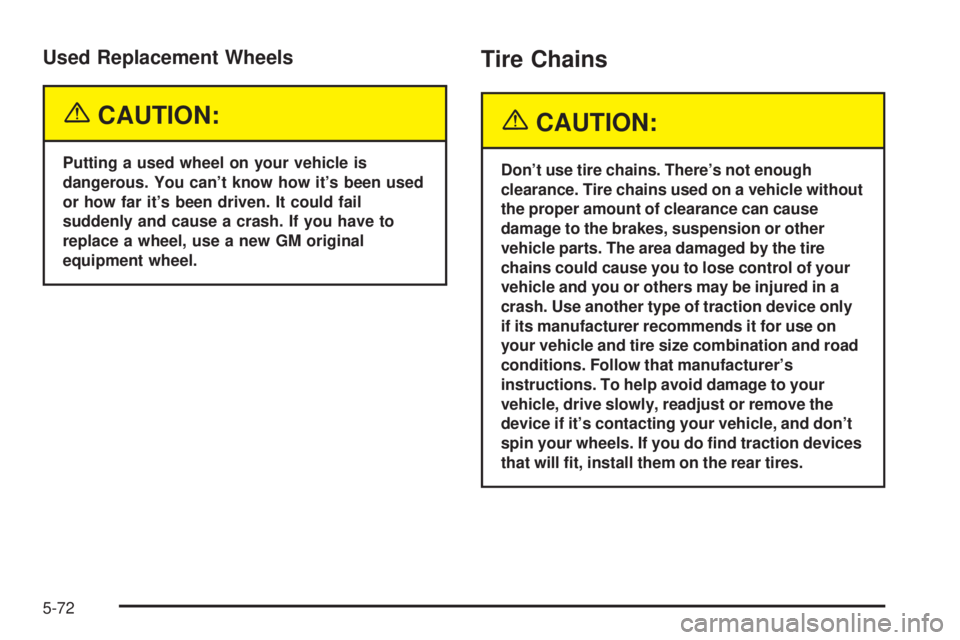
Used Replacement Wheels
{CAUTION:
Putting a used wheel on your vehicle is
dangerous. You can't know how it's been used
or how far it's been driven. It could fail
suddenly and cause a crash. If you have to
replace a wheel, use a new GM original
equipment wheel.
Tire Chains
{CAUTION:
Don't use tire chains. There's not enough
clearance. Tire chains used on a vehicle without
the proper amount of clearance can cause
damage to the brakes, suspension or other
vehicle parts. The area damaged by the tire
chains could cause you to lose control of your
vehicle and you or others may be injured in a
crash. Use another type of traction device only
if its manufacturer recommends it for use on
your vehicle and tire size combination and road
conditions. Follow that manufacturer's
instructions. To help avoid damage to your
vehicle, drive slowly, readjust or remove the
device if it's contacting your vehicle, and don't
spin your wheels. If you do ®nd traction devices
that will ®t, install them on the rear tires.
5-72
Page 400 of 468
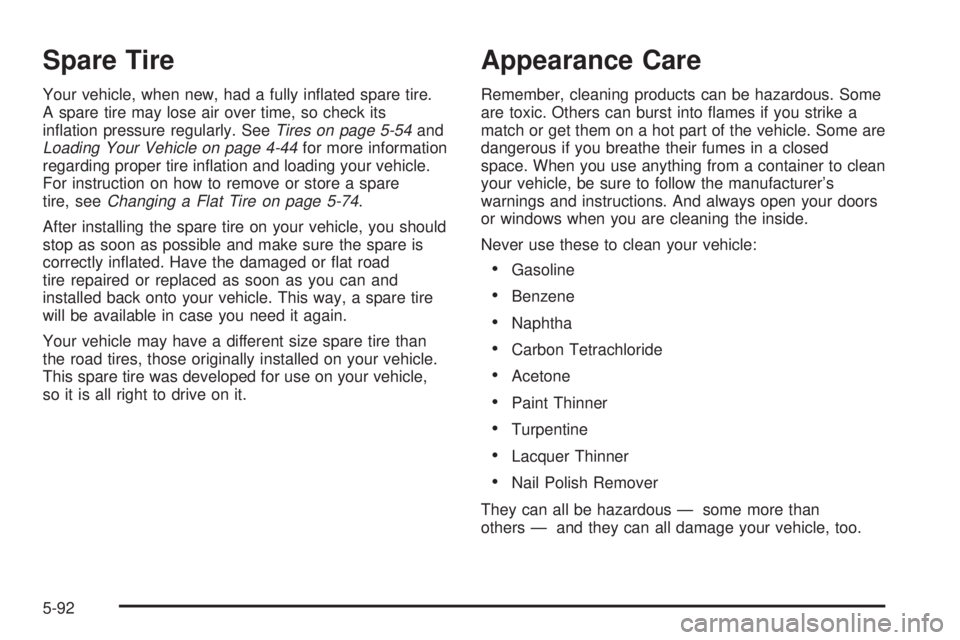
Spare Tire
Your vehicle, when new, had a fully in¯ated spare tire.
A spare tire may lose air over time, so check its
in¯ation pressure regularly. See
Tires on page 5-54andLoading Your Vehicle on page 4-44for more information
regarding proper tire in¯ation and loading your vehicle.
For instruction on how to remove or store a spare
tire, see
Changing a Flat Tire on page 5-74.
After installing the spare tire on your vehicle, you should
stop as soon as possible and make sure the spare is
correctly in¯ated. Have the damaged or ¯at road
tire repaired or replaced as soon as you can and
installed back onto your vehicle. This way, a spare tire
will be available in case you need it again.
Your vehicle may have a different size spare tire than
the road tires, those originally installed on your vehicle.
This spare tire was developed for use on your vehicle,
so it is all right to drive on it.
Appearance Care
Remember, cleaning products can be hazardous. Some
are toxic. Others can burst into ¯ames if you strike a
match or get them on a hot part of the vehicle. Some are
dangerous if you breathe their fumes in a closed
space. When you use anything from a container to clean
your vehicle, be sure to follow the manufacturer's
warnings and instructions. And always open your doors
or windows when you are cleaning the inside.
Never use these to clean your vehicle:
·Gasoline
·Benzene
·Naphtha
·Carbon Tetrachloride
·Acetone
·Paint Thinner
·Turpentine
·Lacquer Thinner
·Nail Polish Remover
They can all be hazardous Ð some more than
others Ð and they can all damage your vehicle, too.
5-92
Page 466 of 468
Storage Areas (cont.)
Rear Storage Area.......................................2-45
Storing a Flat or Spare Tire, Jack and Tools.......5-84
Stuck in Sand, Mud, Ice or Snow......................4-41
Sun Visors.....................................................2-16
Sunroof.........................................................2-47
T
Tachometer....................................................3-32
Taillamps.......................................................5-51
Temperature and Compass Display....................2-32
Testing the Alarm............................................2-17
Theft-Deterrent, Radio.....................................3-96
Theft-Deterrent Systems...................................2-16
Content Theft-Deterrent................................2-16
Passlock
ž...................................................2-18
Third Row......................................................1-66
Third Row ± Lap Belt......................................1-40
Throttle, Adjustable..........................................2-21
TIGHTEN FUEL CAP......................................3-62
Tilt Wheel........................................................ 3-7
Tilting the 50/50 Split Bench Seat.....................1-13
Tilting the Full Bench Seat...............................1-18
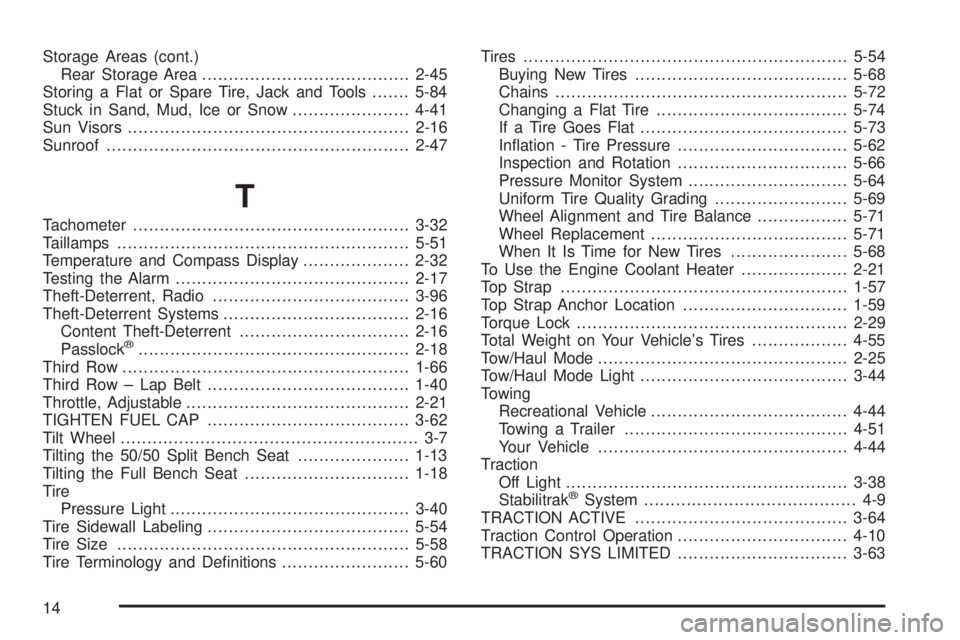
Tire
Pressure Light.............................................3-40
Tire Sidewall Labeling......................................5-54
Tire Size.......................................................5-58
Tire Terminology and De®nitions........................5-60Tires.............................................................5-54
Buying New Tires........................................5-68
Chains.......................................................5-72
Changing a Flat Tire....................................5-74
If a Tire Goes Flat.......................................5-73
In¯ation - Tire Pressure................................5-62
Inspection and Rotation................................5-66
Pressure Monitor System..............................5-64
Uniform Tire Quality Grading.........................5-69
Wheel Alignment and Tire Balance.................5-71
Wheel Replacement.....................................5-71
When It Is Time for New Tires......................5-68
To Use the Engine Coolant Heater....................2-21
Top Strap......................................................1-57
Top Strap Anchor Location...............................1-59
Torque Lock...................................................2-29
Total Weight on Your Vehicle's Tires..................4-55
Tow/Haul Mode...............................................2-25
Tow/Haul Mode Light.......................................3-44
Towing
Recreational Vehicle.....................................4-44
Towing a Trailer..........................................4-51
Your Vehicle...............................................4-44
Traction
Off Light.....................................................3-38
Stabilitrak
žSystem........................................ 4-9
TRACTION ACTIVE........................................3-64
Traction Control Operation................................4-10
TRACTION SYS LIMITED................................3-63
14