lock GMC YUKON XL 2018 Owners Manual
[x] Cancel search | Manufacturer: GMC, Model Year: 2018, Model line: YUKON XL, Model: GMC YUKON XL 2018Pages: 425, PDF Size: 7.37 MB
Page 282 of 425

GMC Yukon/Yukon XL/Denali Owner Manual (GMNA-Localizing-U.S./
Canada/Mexico-11349262) - 2018 - crc - 6/20/17
Vehicle Care 2811. Positive (+) Terminal. See
Jump Starting - North America
0 351 .
2. Battery - North America 0 298 .
3. Coolant Surge Tank and
Pressure Cap. See Cooling
System 0 291 .
4. Engine Air Cleaner/Filter 0 290 .
5. Automatic Transmission
Dipstick. See “ How to Check
Automatic Transmission Fluid ”
under Automatic Transmission
Fluid (6 Speed Transmission)
0 286 or Automatic
Transmission Fluid (8 and 10
Speed Transmission) 0 289 .
6. Remote Negative ( – ) Location
(Out of View). See Jump
Starting - North America 0 351 .
7. Engine Cooling Fans (Out of
View). See Cooling System
0 291 .
8. Engine Oil Fill Cap. See “ When
to Add Engine Oil ” under
Engine Oil 0 283 . 9. Engine Oil Dipstick. See
“ Checking Engine Oil ” under
Engine Oil 0 283 .
10. Windshield Washer Fluid
Reservoir. See “ Adding Washer
Fluid ” under Washer Fluid
0 296 .
11. Brake Fluid Reservoir. See
Brake Fluid 0 297 .
12. Engine Compartment Fuse
Block 0 310 .
Page 284 of 425
GMC Yukon/Yukon XL/Denali Owner Manual (GMNA-Localizing-U.S./
Canada/Mexico-11349262) - 2018 - crc - 6/20/17
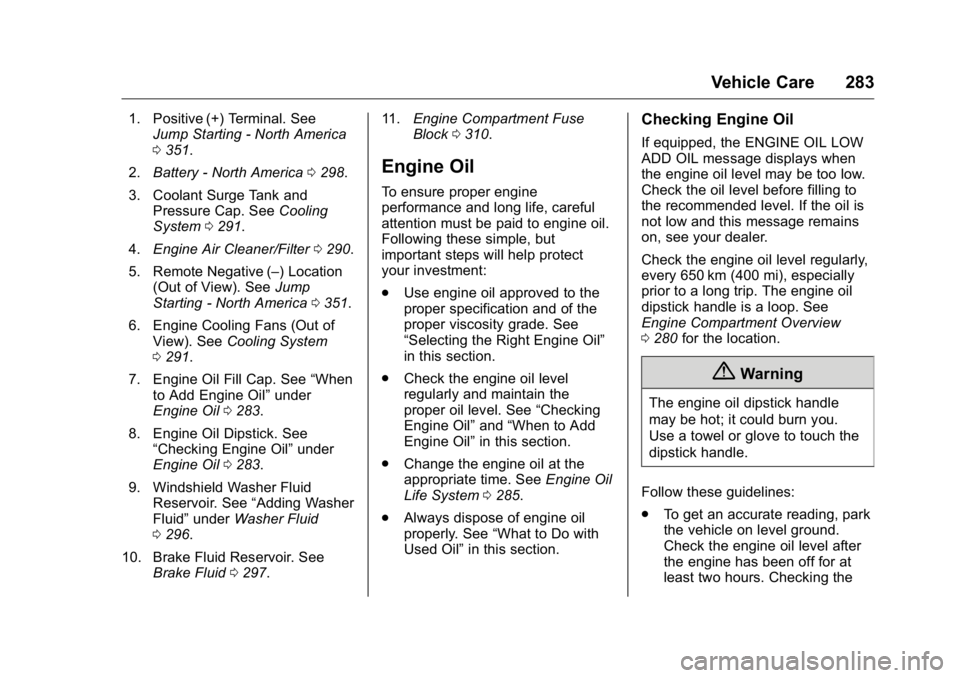
Vehicle Care 2831. Positive (+) Terminal. See
Jump Starting - North America
0 351 .
2. Battery - North America 0 298 .
3. Coolant Surge Tank and
Pressure Cap. See Cooling
System 0 291 .
4. Engine Air Cleaner/Filter 0 290 .
5. Remote Negative ( – ) Location
(Out of View). See Jump
Starting - North America 0 351 .
6. Engine Cooling Fans (Out of
View). See Cooling System
0 291 .
7. Engine Oil Fill Cap. See “ When
to Add Engine Oil ” under
Engine Oil 0 283 .
8. Engine Oil Dipstick. See
“ Checking Engine Oil ” under
Engine Oil 0 283 .
9. Windshield Washer Fluid
Reservoir. See “ Adding Washer
Fluid ” under Washer Fluid
0 296 .
10. Brake Fluid Reservoir. See
Brake Fluid 0 297 . 11. Engine Compartment Fuse
Block 0 310 .
Engine Oil To ensure proper engine
performance and long life, careful
attention must be paid to engine oil.
Following these simple, but
important steps will help protect
your investment:
.
Use engine oil approved to the
proper specification and of the
proper viscosity grade. See
“ Selecting the Right Engine Oil ”
in this section.
.
Check the engine oil level
regularly and maintain the
proper oil level. See “ Checking
Engine Oil ” and “ When to Add
Engine Oil ” in this section.
.
Change the engine oil at the
appropriate time. See Engine Oil
Life System 0 285 .
.
Always dispose of engine oil
properly. See “ What to Do with
Used Oil ” in this section. Checking Engine Oil If equipped, the ENGINE OIL LOW
ADD OIL message displays when
the engine oil level may be too low.
Check the oil level before filling to
the recommended level. If the oil is
not low and this message remains
on, see your dealer.
Check the engine oil level regularly,
every 650 km (400 mi), especially
prior to a long trip. The engine oil
dipstick handle is a loop. See
Engine Compartment Overview
0 280 for the location.
{ WarningThe engine oil dipstick handle
may be hot; it could burn you.
Use a towel or glove to touch the
dipstick handle.
Follow these guidelines:
.
To get an accurate reading, park
the vehicle on level ground.
Check the engine oil level after
the engine has been off for at
least two hours. Checking the
Page 289 of 425
GMC Yukon/Yukon XL/Denali Owner Manual (GMNA-Localizing-U.S./
Canada/Mexico-11349262) - 2018 - crc - 6/20/17
288 Vehicle Care
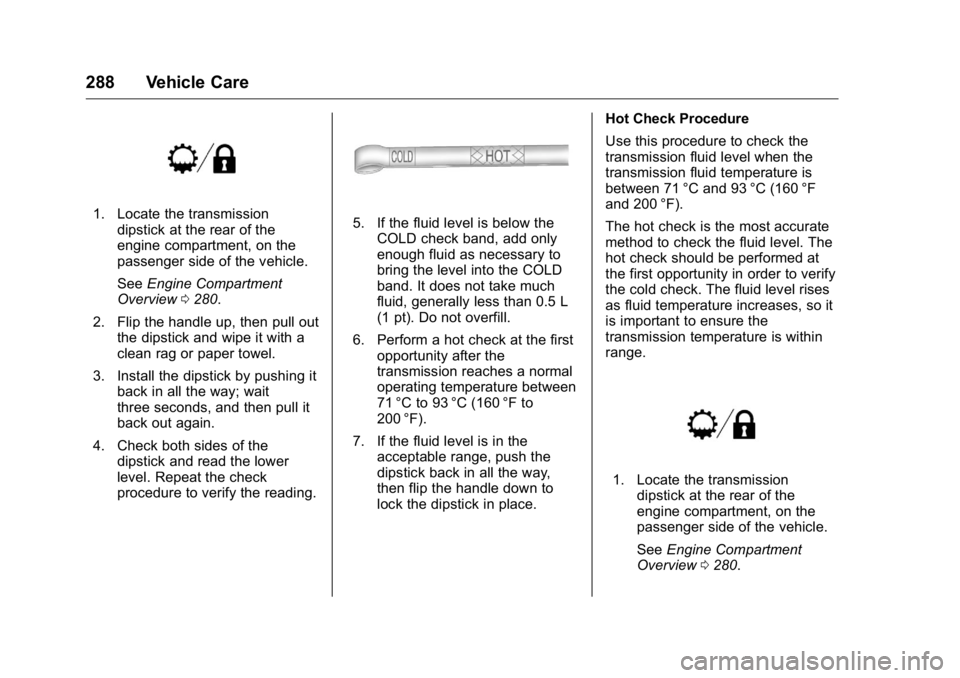
1. Locate the transmission
dipstick at the rear of the
engine compartment, on the
passenger side of the vehicle.
See Engine Compartment
Overview 0 280 .
2. Flip the handle up, then pull out
the dipstick and wipe it with a
clean rag or paper towel.
3. Install the dipstick by pushing it
back in all the way; wait
three seconds, and then pull it
back out again.
4. Check both sides of the
dipstick and read the lower
level. Repeat the check
procedure to verify the reading. 5. If the fluid level is below the
COLD check band, add only
enough fluid as necessary to
bring the level into the COLD
band. It does not take much
fluid, generally less than 0.5 L
(1 pt). Do not overfill.
6. Perform a hot check at the first
opportunity after the
transmission reaches a normal
operating temperature between
71 °C to 93 °C (160 °F to
200 °F).
7. If the fluid level is in the
acceptable range, push the
dipstick back in all the way,
then flip the handle down to
lock the dipstick in place. Hot Check Procedure
Use this procedure to check the
transmission fluid level when the
transmission fluid temperature is
between 71 °C and 93 °C (160 °F
and 200 °F).
The hot check is the most accurate
method to check the fluid level. The
hot check should be performed at
the first opportunity in order to verify
the cold check. The fluid level rises
as fluid temperature increases, so it
is important to ensure the
transmission temperature is within
range.
1. Locate the transmission
dipstick at the rear of the
engine compartment, on the
passenger side of the vehicle.
See Engine Compartment
Overview 0 280 .
Page 290 of 425
GMC Yukon/Yukon XL/Denali Owner Manual (GMNA-Localizing-U.S./
Canada/Mexico-11349262) - 2018 - crc - 6/20/17
Vehicle Care 2892. Flip the handle up, then pull out
the dipstick and wipe it with a
clean rag or paper towel.
3. Install the dipstick by pushing it
back in all the way; wait
three seconds, and then pull it
back out again.
4. Check both sides of the
dipstick and read the lower
level. Repeat the check
procedure to verify the reading.
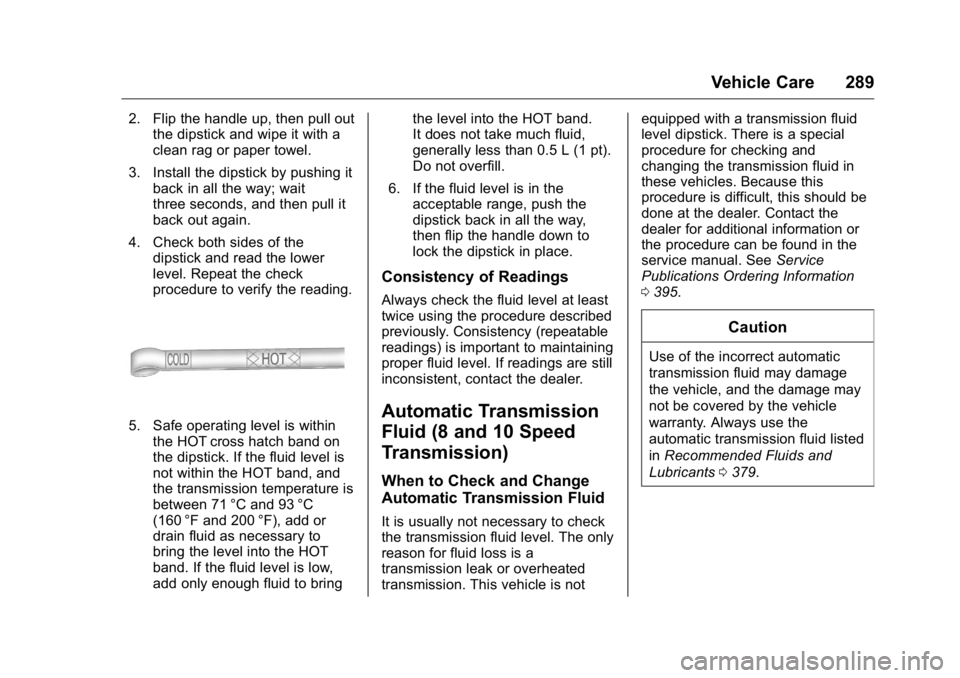
5. Safe operating level is within
the HOT cross hatch band on
the dipstick. If the fluid level is
not within the HOT band, and
the transmission temperature is
between 71 °C and 93 °C
(160 °F and 200 °F), add or
drain fluid as necessary to
bring the level into the HOT
band. If the fluid level is low,
add only enough fluid to bring the level into the HOT band.
It does not take much fluid,
generally less than 0.5 L (1 pt).
Do not overfill.
6. If the fluid level is in the
acceptable range, push the
dipstick back in all the way,
then flip the handle down to
lock the dipstick in place.
Consistency of Readings Always check the fluid level at least
twice using the procedure described
previously. Consistency (repeatable
readings) is important to maintaining
proper fluid level. If readings are still
inconsistent, contact the dealer.
Automatic Transmission
Fluid (8 and 10 Speed
Transmission) When to Check and Change
Automatic Transmission Fluid
It is usually not necessary to check
the transmission fluid level. The only
reason for fluid loss is a
transmission leak or overheated
transmission. This vehicle is not equipped with a transmission fluid
level dipstick. There is a special
procedure for checking and
changing the transmission fluid in
these vehicles. Because this
procedure is difficult, this should be
done at the dealer. Contact the
dealer for additional information or
the procedure can be found in the
service manual. See Service
Publications Ordering Information
0 395 .
CautionUse of the incorrect automatic
transmission fluid may damage
the vehicle, and the damage may
not be covered by the vehicle
warranty. Always use the
automatic transmission fluid listed
in Recommended Fluids and
Lubricants 0 379 .
Page 294 of 425
GMC Yukon/Yukon XL/Denali Owner Manual (GMNA-Localizing-U.S./
Canada/Mexico-11349262) - 2018 - crc - 6/20/17
Vehicle Care 293the full cold mark. If it is not, there
may be a leak in the cooling
system.
If coolant is visible but the coolant
level is not at or above the full cold
mark, see “ How to Add Coolant to
the Coolant Surge Tank, ” following.
How to Add Coolant to the
Coolant Surge Tank
{ WarningSpilling coolant on hot engine
parts can burn you. Coolant
contains ethylene glycol and it will
burn if the engine parts are hot
enough.
{ Warning
Plain water, or other liquids such
as alcohol, can boil before the
proper coolant mixture will. With
plain water or the wrong mixture,
the engine could get too hot but
there would not be an overheat
(Continued) Warning (Continued) warning. The engine could catch
fire and you or others could be
burned.
{ WarningSteam and scalding liquids from a
hot cooling system are under
pressure. Turning the pressure
cap, even a little, can cause them
to come out at high speed and
you could be burned. Never turn
the cap when the cooling system,
including the pressure cap, is hot.
Wait for the cooling system and
pressure cap to cool.
Caution
Failure to follow the specific
coolant fill procedure could cause
the engine to overheat and could
(Continued) Caution (Continued) cause system damage. If coolant
is not visible in the surge tank,
contact your dealer.
If no coolant is visible in the surge
tank, add coolant.
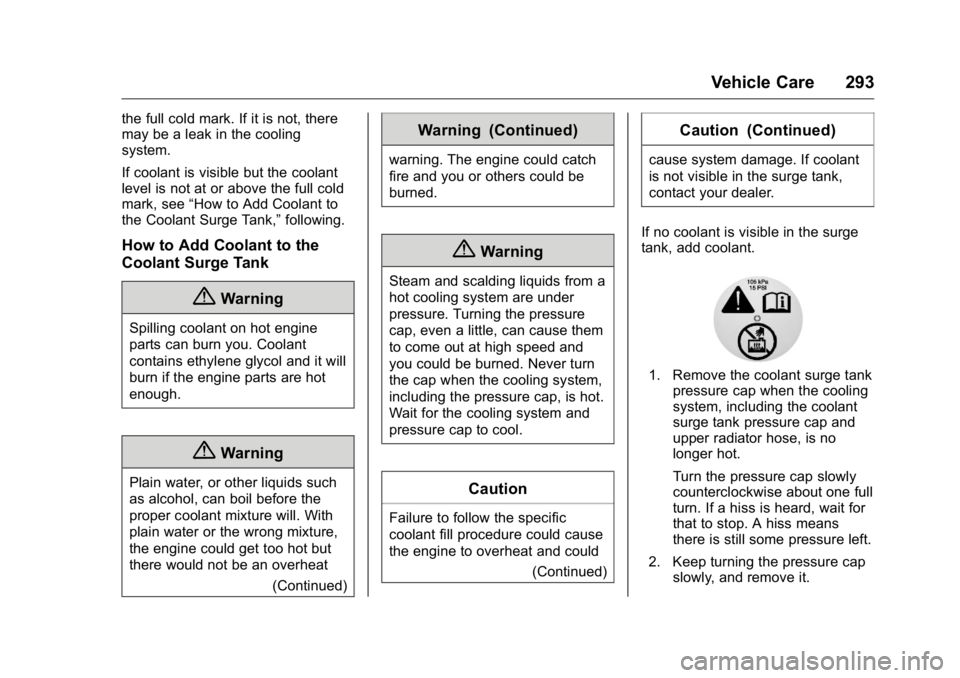
1. Remove the coolant surge tank
pressure cap when the cooling
system, including the coolant
surge tank pressure cap and
upper radiator hose, is no
longer hot.
Turn the pressure cap slowly
counterclockwise about one full
turn. If a hiss is heard, wait for
that to stop. A hiss means
there is still some pressure left.
2. Keep turning the pressure cap
slowly, and remove it.
Page 303 of 425
GMC Yukon/Yukon XL/Denali Owner Manual (GMNA-Localizing-U.S./
Canada/Mexico-11349262) - 2018 - crc - 6/20/17
302 Vehicle Care to its sale or delivery to the
ultimate purchaser or while it is
in use; or
2. The use of the vehicle after
such device or element of
design has been removed or
rendered inoperative by any
person.
Among those acts presumed to
constitute tampering are the acts
listed below.
Insulation:
Removal of the noise shields or any
underhood insulation.
Engine:
Removal or rendering engine speed
governor, if the vehicle has one,
inoperative so as to allow engine
speed to exceed manufacturer
specifications.
Fan and Drive:
.
Removal of fan clutch, if the
vehicle has one, or rendering
clutch inoperative.
.
Removal of the fan shroud, if the
vehicle has one. Air Intake:
.
Removal of the air cleaner
silencer.
.
Modification of the air cleaner.
Exhaust:
.
Removal of the muffler and/or
resonator.
.
Removal of the exhaust pipes
and exhaust pipe clamps.
Starter Switch Check
{ WarningWhen you are doing this
inspection, the vehicle could
move suddenly. If the vehicle
moves, you or others could be
injured.
1. Before starting this check, be
sure there is enough room
around the vehicle.
2. Apply both the parking brake
and the regular brake. Do not use the accelerator
pedal, and be ready to turn off
the engine immediately if it
starts.
3. Try to start the engine in each
gear. The vehicle should start
only in P (Park) or N (Neutral).
If the vehicle starts in any other
position, contact your dealer for
service.
Automatic Transmission
Shift Lock Control
Function Check
{ WarningWhen you are doing this
inspection, the vehicle could
move suddenly. If the vehicle
moves, you or others could be
injured.
1. Before starting this check, be
sure there is enough room
around the vehicle. It should be
parked on a level surface.
Page 304 of 425
GMC Yukon/Yukon XL/Denali Owner Manual (GMNA-Localizing-U.S./
Canada/Mexico-11349262) - 2018 - crc - 6/20/17
Vehicle Care 3032. Apply the parking brake. Be
ready to apply the regular
brake immediately if the vehicle
begins to move.
3. With the engine off, turn the
ignition on, but do not start the
engine. Without applying the
regular brake, try to move the
shift lever out of P (Park) with
normal effort. If the shift lever
moves out of P (Park), contact
your dealer for service.
Ignition Transmission
Lock Check If equipped with a Key Access
ignition, while parked and with the
parking brake set, try to turn the
ignition off in each shift lever
position.
.
The ignition should turn off only
when the shift lever is in
P (Park).
.
The key should come out only
when the ignition is off.
Contact your dealer if service is
required. Park Brake and P (Park)
Mechanism Check
{ WarningWhen you are doing this check,
the vehicle could begin to move.
You or others could be injured
and property could be damaged.
Make sure there is room in front
of the vehicle in case it begins to
roll. Be ready to apply the regular
brake at once should the vehicle
begin to move.
Park on a fairly steep hill, with the
vehicle facing downhill. Keeping
your foot on the regular brake, set
the parking brake.
.
To check the parking brake's
holding ability: With the engine
running and the transmission in
N (Neutral), slowly remove foot
pressure from the regular brake
pedal. Do this until the vehicle is
held by the parking brake only. .
To check the P (Park)
mechanism's holding ability:
With the engine running, shift to
P (Park). Then release the
parking brake followed by the
regular brake.
Contact your dealer if service is
required.
Wiper Blade Replacement Windshield wiper blades should be
inspected for wear or cracking.
For the proper type and size, see
Maintenance Replacement Parts
0 380 .
Front Wiper Blade
Replacement To replace the wiper blade
assembly:
1. Pull the windshield wiper
assembly away from the
windshield.
Page 305 of 425
GMC Yukon/Yukon XL/Denali Owner Manual (GMNA-Localizing-U.S./
Canada/Mexico-11349262) - 2018 - crc - 6/20/17
304 Vehicle Care
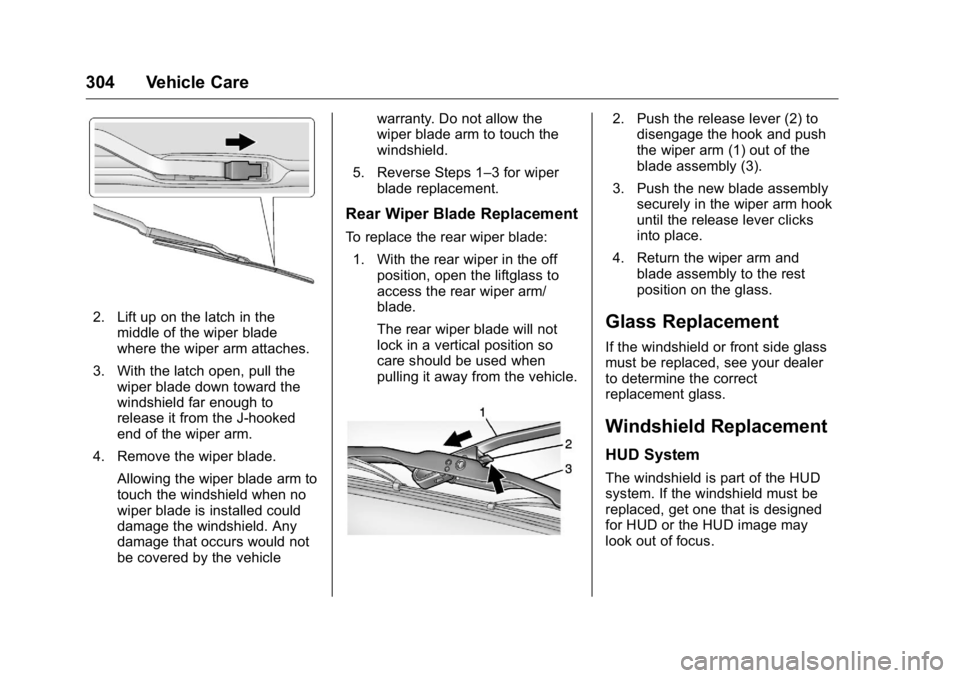
2. Lift up on the latch in the
middle of the wiper blade
where the wiper arm attaches.
3. With the latch open, pull the
wiper blade down toward the
windshield far enough to
release it from the J-hooked
end of the wiper arm.
4. Remove the wiper blade.
Allowing the wiper blade arm to
touch the windshield when no
wiper blade is installed could
damage the windshield. Any
damage that occurs would not
be covered by the vehicle warranty. Do not allow the
wiper blade arm to touch the
windshield.
5. Reverse Steps 1 – 3 for wiper
blade replacement.
Rear Wiper Blade Replacement To replace the rear wiper blade:
1. With the rear wiper in the off
position, open the liftglass to
access the rear wiper arm/
blade.
The rear wiper blade will not
lock in a vertical position so
care should be used when
pulling it away from the vehicle. 2. Push the release lever (2) to
disengage the hook and push
the wiper arm (1) out of the
blade assembly (3).
3. Push the new blade assembly
securely in the wiper arm hook
until the release lever clicks
into place.
4. Return the wiper arm and
blade assembly to the rest
position on the glass.
Glass Replacement If the windshield or front side glass
must be replaced, see your dealer
to determine the correct
replacement glass.
Windshield Replacement HUD System
The windshield is part of the HUD
system. If the windshield must be
replaced, get one that is designed
for HUD or the HUD image may
look out of focus.
Page 308 of 425
GMC Yukon/Yukon XL/Denali Owner Manual (GMNA-Localizing-U.S./
Canada/Mexico-11349262) - 2018 - crc - 6/20/17
Vehicle Care 307
LED Lighting This vehicle has several LED lamps.
For replacement of any LED lighting
assembly, contact your dealer.
Fog Lamps
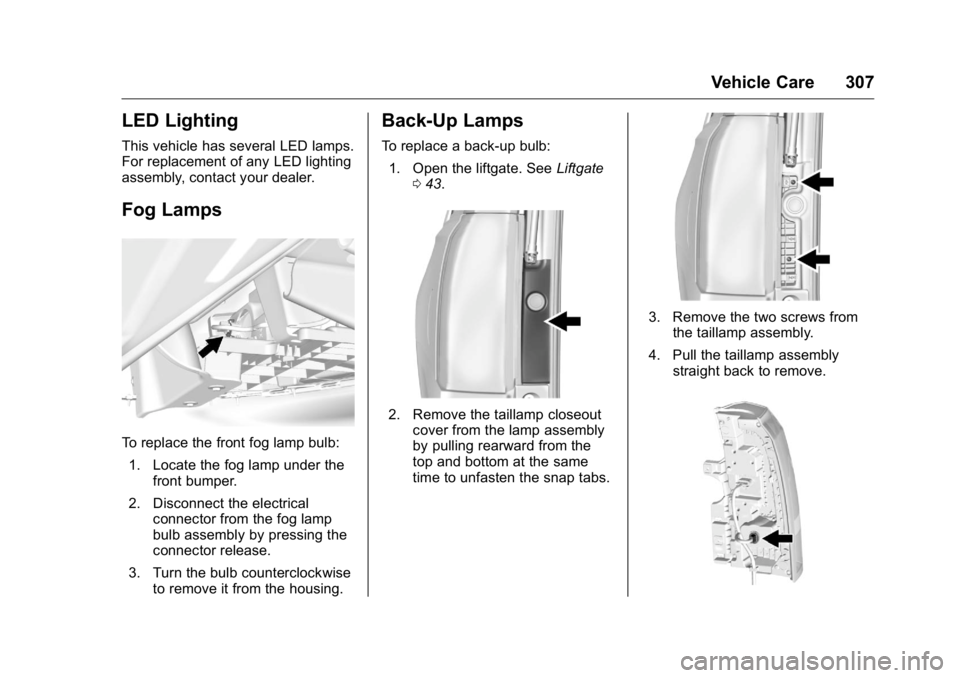
To replace the front fog lamp bulb:
1. Locate the fog lamp under the
front bumper.
2. Disconnect the electrical
connector from the fog lamp
bulb assembly by pressing the
connector release.
3. Turn the bulb counterclockwise
to remove it from the housing. Back-Up Lamps To replace a back-up bulb:
1. Open the liftgate. See Liftgate
0 43 .
2. Remove the taillamp closeout
cover from the lamp assembly
by pulling rearward from the
top and bottom at the same
time to unfasten the snap tabs. 3. Remove the two screws from
the taillamp assembly.
4. Pull the taillamp assembly
straight back to remove.
Page 309 of 425
GMC Yukon/Yukon XL/Denali Owner Manual (GMNA-Localizing-U.S./
Canada/Mexico-11349262) - 2018 - crc - 6/20/17
308 Vehicle Care 5. Turn the bulb socket
counterclockwise to remove it
from the taillamp assembly.
6. Pull the bulb straight out from
the socket.
7. Put a new bulb into the socket,
insert it into the taillamp
assembly, and turn the bulb
socket clockwise until it clicks.
8. Reinstall the taillamp assembly
and tighten the screws.
9. Reinstall the taillamp cover by
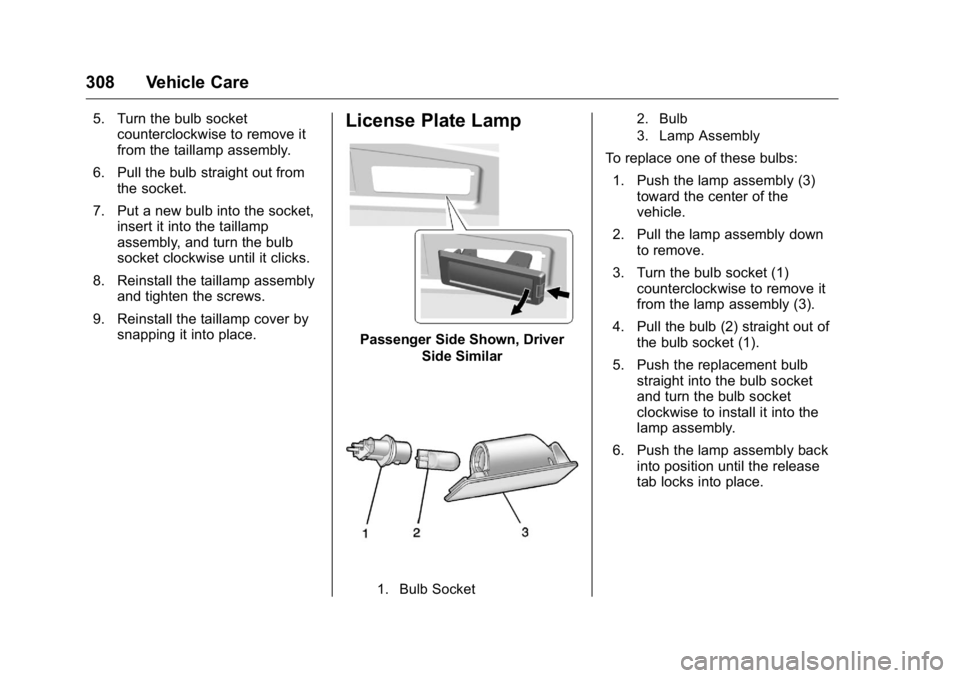
snapping it into place. License Plate Lamp
Passenger Side Shown, Driver
Side Similar
1. Bulb Socket 2. Bulb
3. Lamp Assembly
To replace one of these bulbs:
1. Push the lamp assembly (3)
toward the center of the
vehicle.
2. Pull the lamp assembly down
to remove.
3. Turn the bulb socket (1)
counterclockwise to remove it
from the lamp assembly (3).
4. Pull the bulb (2) straight out of
the bulb socket (1).
5. Push the replacement bulb
straight into the bulb socket
and turn the bulb socket
clockwise to install it into the
lamp assembly.
6. Push the lamp assembly back
into position until the release
tab locks into place.