ABS GREAT WALL HOVER 2006 Service User Guide
[x] Cancel search | Manufacturer: GREAT WALL, Model Year: 2006, Model line: HOVER, Model: GREAT WALL HOVER 2006Pages: 425, PDF Size: 26.05 MB
Page 201 of 425
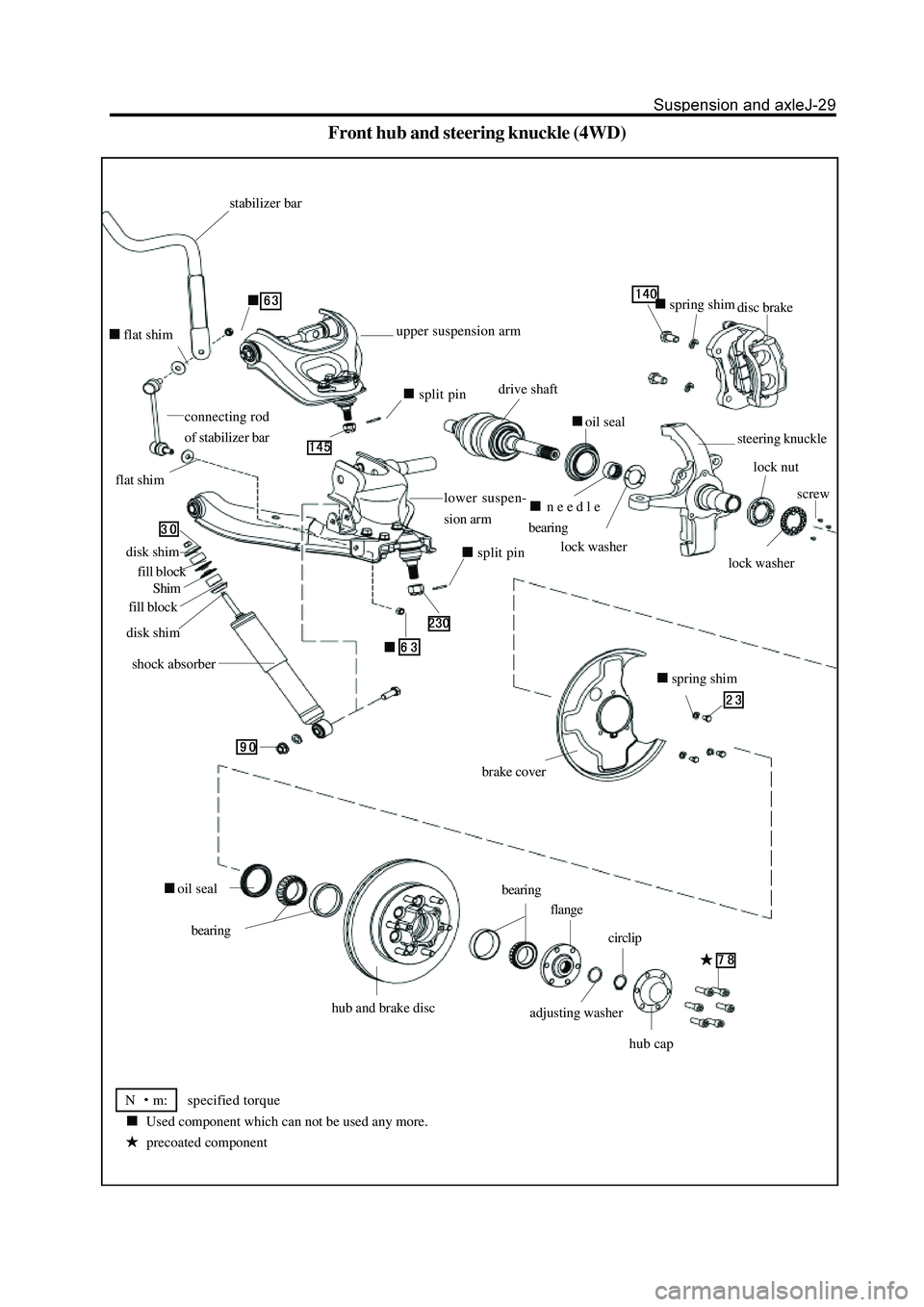
N m: specified torque
Used component which can not be used any more.
precoated component
Front hub and steering knuckle (4WD)
stabilizer bar
flat shim
connecting rod
of stabilizer bar
hub and brake disc
flange
adjusting washer
circlip
hub cap
spring shimdisc brake
split pin
lower suspen-
sion arm
split pin
upper suspension arm
drive shaft
oil seal
needle
bearing
lock washer
steering knuckle
lock nut
lock washer
screw
brake cover
spring shim
flat shim
disk shimShim
fill blockfill block disk shim
oil seal
bearingbearing shock absorber
Page 210 of 425
clip
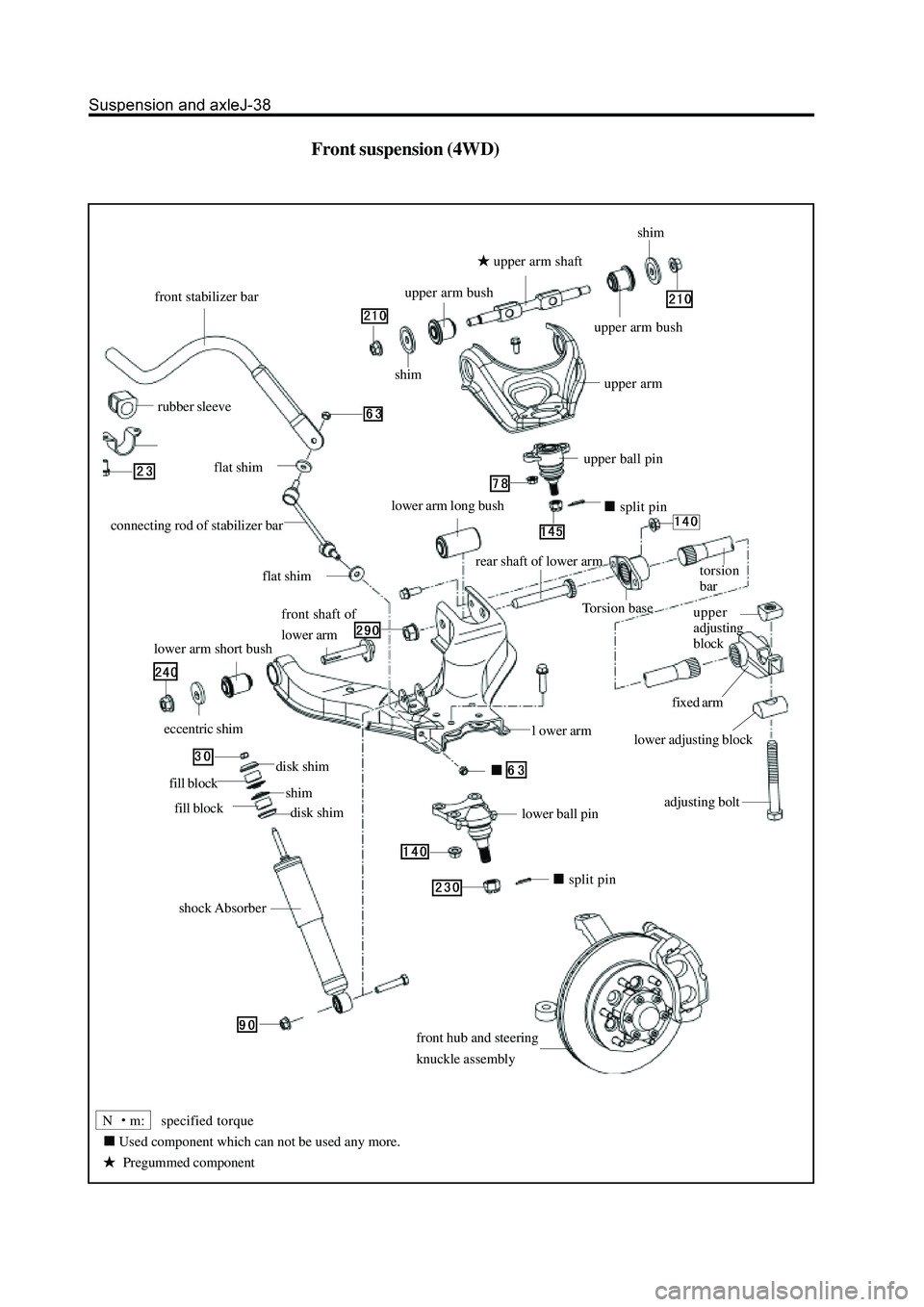
Front suspension (4WD)
N m: specified torque
Used component which can not be used any more.
Pregummed component
rubber sleeve
front shaft of
lower arm
disk shim
fill blockshimfill blockdisk shim
shock Absorber
front hub and steering
knuckle assembly
split pin
lower ball pinadjusting bolt
lower adjusting block
fixed arm
upper
adjusting
block
l ower arm
rear shaft of lower arm
Torsion base
torsion
bar
lower arm long bushsplit pin
upper ball pin
upper arm
shim
upper arm bush
upper arm shaft
upper arm bush
shim
front stabilizer bar
flat shim
connecting rod of stabilizer bar
flat shim
lower arm short bush
eccentric shim
Page 287 of 425

Brake-1
Chapter 8
Brake
Cautions...................................................................................... 2
Troubleshooting............................................................................2
Check and adjustment..................................................................5
Brake pedal..................................................................................7
Parking brake...............................................................................8
Front brake...................................................................................9
Rear brake...................................................................................16
Rear parking brake......................................................................22
Sensor load proportional valve.....................................................29
Antilock Braking System (ABS)..................................................31
Page 304 of 425
Brake-18
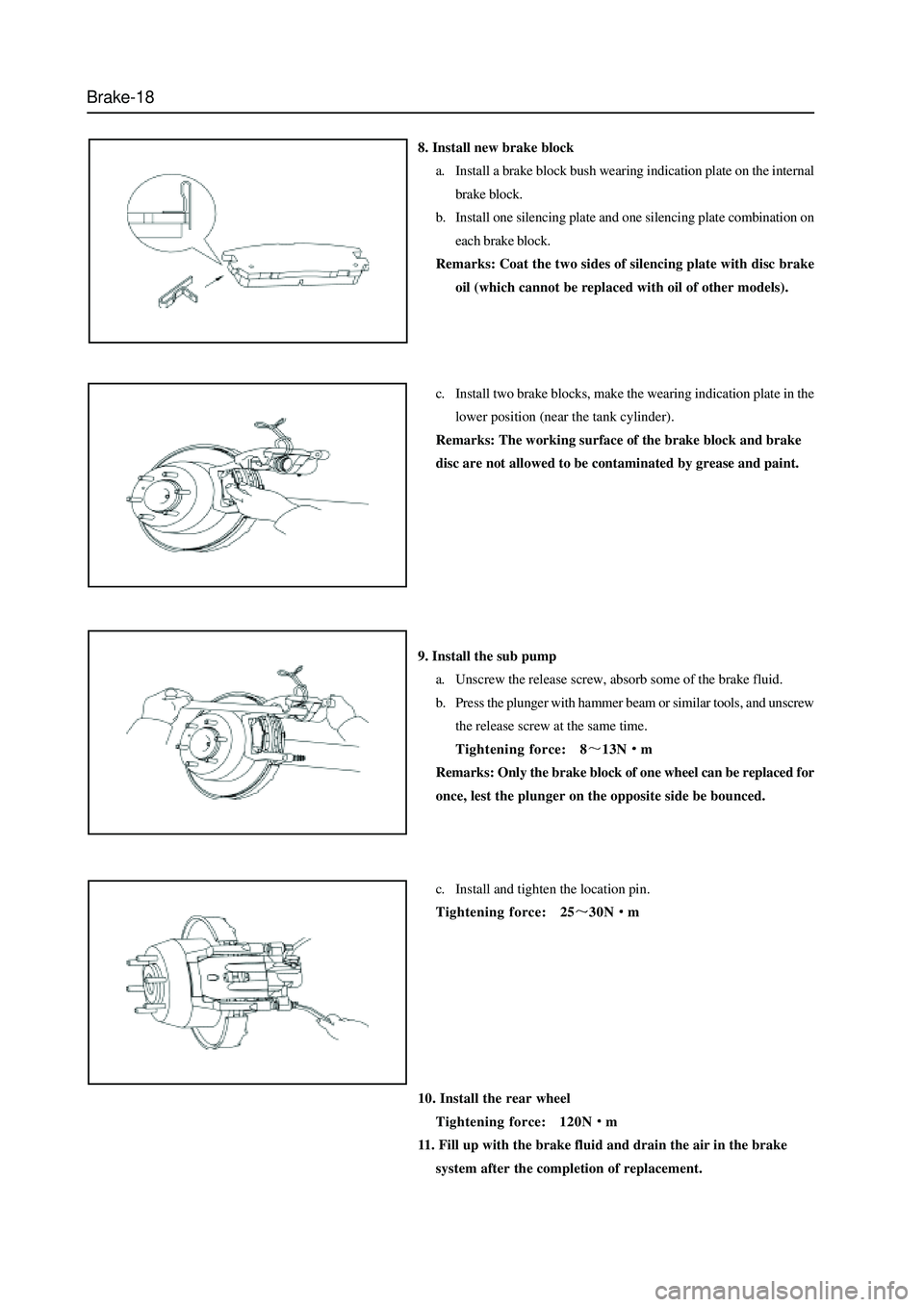
8. Install new brake block
a. Install a brake block bush wearing indication plate on the internal
brake block.
b. Install one silencing plate and one silencing plate combination on
each brake block.
Remarks: Coat the two sides of silencing plate with disc brake
oil (which cannot be replaced with oil of other models).
c. Install two brake blocks, make the wearing indication plate in the
lower position (near the tank cylinder).
Remarks: The working surface of the brake block and brake
disc are not allowed to be contaminated by grease and paint.
9. Install the sub pump
a. Unscrew the release screw, absorb some of the brake fluid.
b. Press the plunger with hammer beam or similar tools, and unscrew
the release screw at the same time.
Tightening force: 8
13Nm
Remarks: Only the brake block of one wheel can be replaced for
once, lest the plunger on the opposite side be bounced.
c. Install and tighten the location pin.
Tightening force: 25
30Nm
10. Install the rear wheel
Tightening force: 120N
m
11. Fill up with the brake fluid and drain the air in the brake
system after the completion of replacement.
Page 317 of 425
Brake-31
Antilock Braking System (ABS)
Cautions
1. It must not remove or install the electric elements and wire bunch plug when the ignition switch is in ON to avoid
the damage of ECU. It should turn off the ignition switch if needs disassembly.
2. Pay attention to do not knock or impact the ABS ECU during the maintenance and repair, for it will damage the
ABS ECU easily.
3. The wheel speed sensor and hydraulic unit (integrated with ECU) of BOSCH ABS8.0 can not be repaired, it should
be replaced in integral if damaged.
4. After the brake system is maintained, the brake pedal maybe soft. Discharge the air according to the normal brake
system.
5. It must use the brake fluid from original manufacturer; the brake fluid of different number cannot be used in mixed,
otherwise it will cause the failure of brake system. Select the tyre of original type as most as possible
Repair of Antilock Braking System (ABS)
1. It should process the failure diagnosis for the brake system before process the ABS failure diagnosis. It can
diagnose out the failure rapidly by using Table 1. In Table 1, the small number means the failure which occurs most
possibly. Check each element according to the sequence and maintain or replace it if necessary.
2. Check the following elements for normal operation before the diagnosis:
Brake fluid level and brake fluid quality
Pressure of tyre, size of tyre, shape and depth of tyre figure
Other brake component
These components will affect the brake effect of the ABS. Check the system sensor, connecting wire and connector for correct
installation, arrangement and connection. Ensure the completeness of fuse, repair or replace it if necessary.
3. Process the analysis and diagnosis according to the ABS advanced by owner. Use the diagnosis instrument (Annex
1) for final check and confirmation. It must process the run inspection after the competition of all ABS maintenance.
The test condition is shown as follows:
a. Confirm the tyre complies with the requirement, the tyre pressure is normal.
b. The brake system (including brake light ) is normal
c. The brake system is without leakage.
d. The position and installation of wheel speed sensor is correct.
e. All fuses are normal.
4. test method:
Run for 1 min at least when the vehicle speed is beyond 40Km/h, process a proper brake. Then read out the failure code to
ensure the ABS is without failure code.