Checking the fuses:
1 .Turn off the ignition and all other switches.
2. If you find a blown or possibly faulty fuse, use the fuse remover, stored beside the spare fuse to pull the blown fuse out of its clips.
3. Check all other fuses as well as the one you suspect.
4. Push in a new fuse of the same rating, and make sure it fits tightly in the clips. If it fits loosely, have your dealer fix it.If you don't have a spare, take a fuse of the same rating (or lower)
out of a circuit you may not need, like the radio or cigarette lighter.
Remember to replace the borrowed fuse and the missing spares.
CAUTION:
A blown fuse may be just a symptom of some other problem. If a new fuse blows right away, the cause should be diagnosed and
corrected by a qualified Honda technician. Never replace a fuse with anything but another fuse of the same or lower rating. A
higher capacity fuse could cause damage and even start a fire.
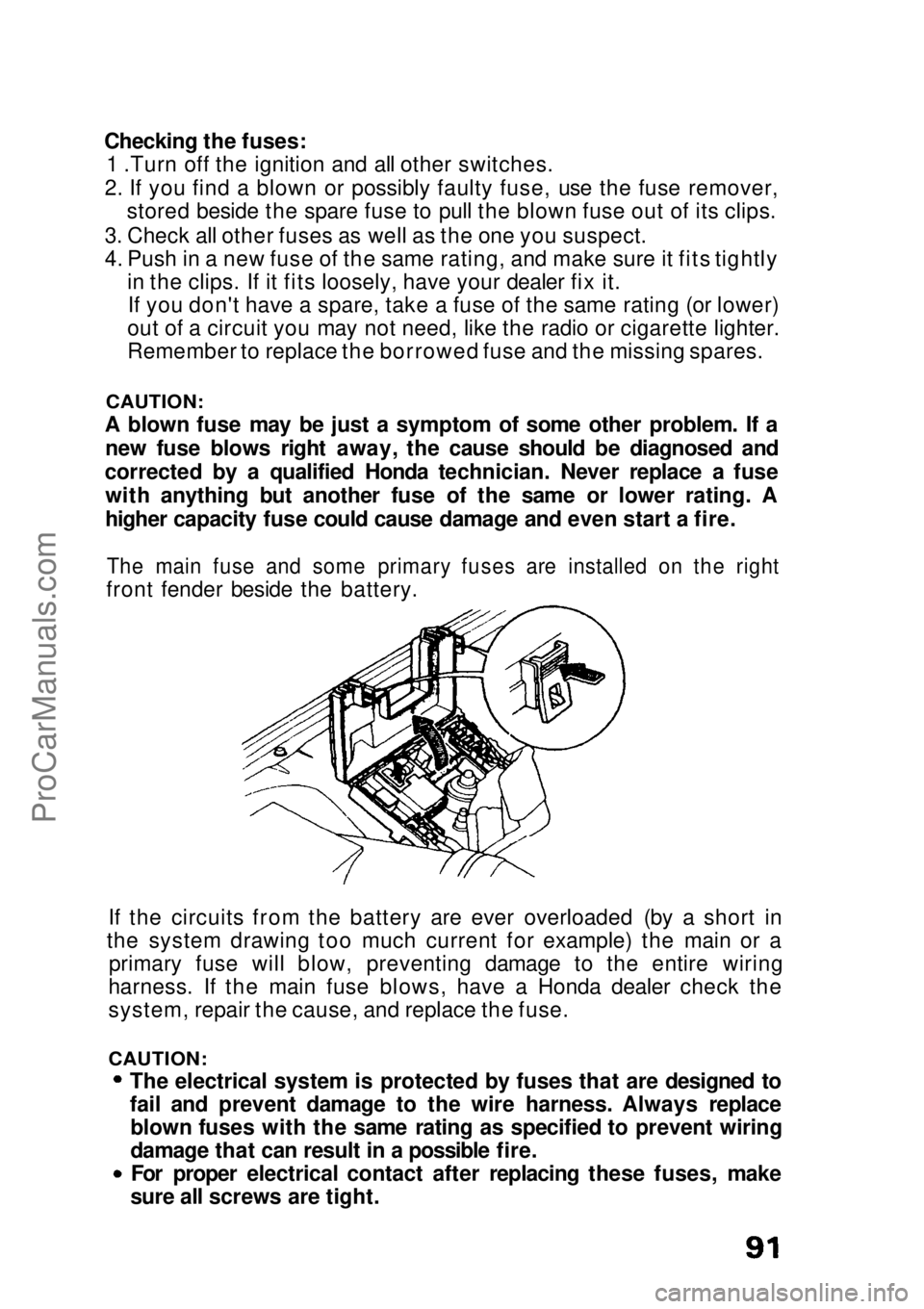
The main fuse and some primary fuses are installed on the right
front fender beside the battery.
If the circuits from the battery are ever overloaded (by a short in
the system drawing too much current for example) the main or a primary fuse will blow, preventing damage to the entire wiring
harness. If the main fuse blows, have a Honda dealer check the
system, repair the cause, and replace the fuse.
CAUTION:
The electrical system is protected by fuses that are designed to
fail and prevent damage to the wire harness. Always replaceblown fuses with the same rating as specified to prevent wiring
damage that can result in a possible fire.For proper electrical contact after replacing these fuses, make
sure all screws are tight.ProCarManuals.comMain Menu s t
Appearance Care (cont'd)
Preventive Service
Check all drain holes in the doors and body panels for clogging and
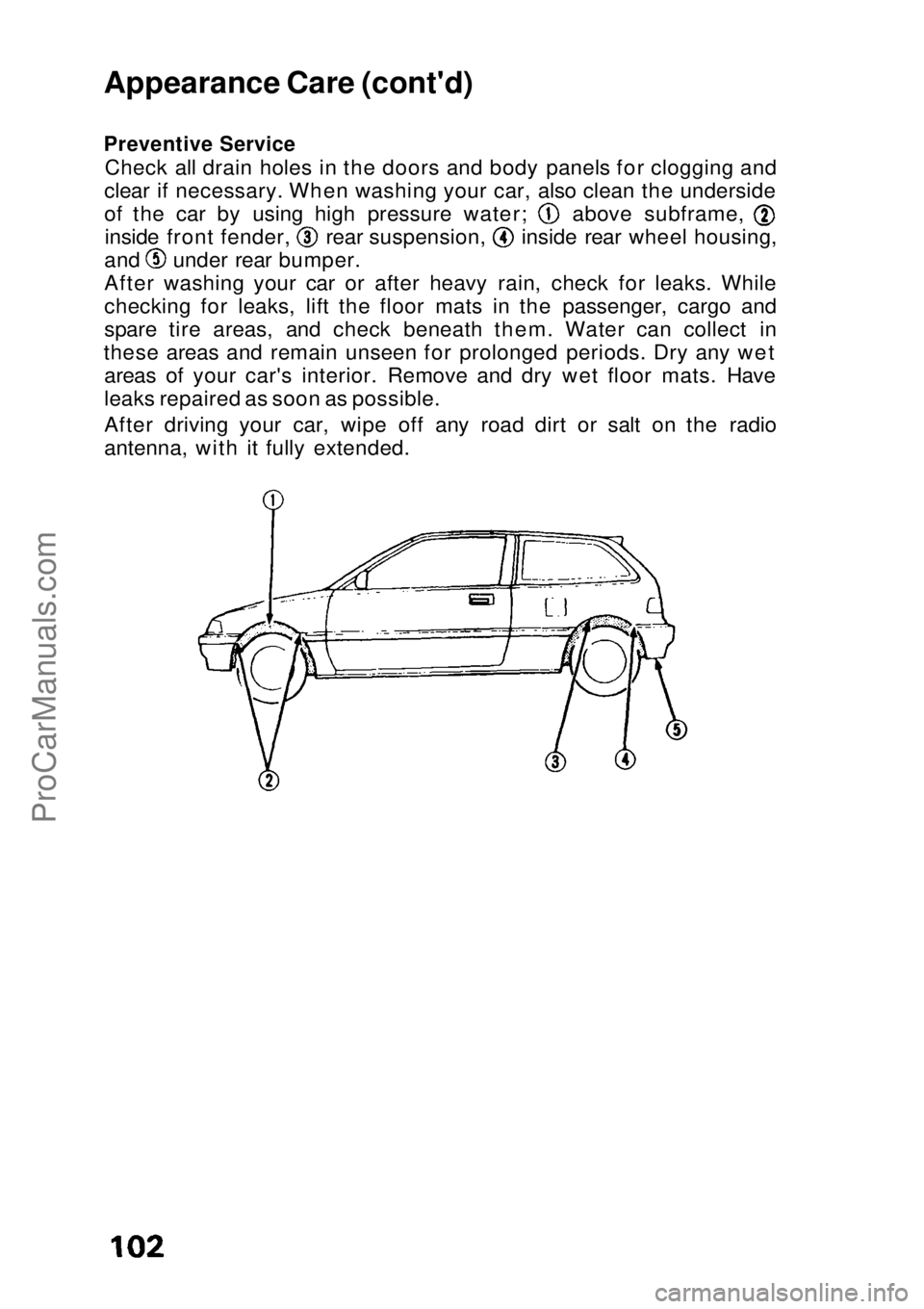
clear if necessary. When washing your car, also clean the underside of the car by using high pressure water; above subframe,
inside front fender, rear suspension, inside rear wheel housing,
and under rear bumper.
After washing your car or after heavy rain, check for leaks. While
checking for leaks, lift the floor mats in the passenger, cargo and
spare tire areas, and check beneath them. Water can collect in
these areas and remain unseen for prolonged periods. Dry any wet areas of your car's interior. Remove and dry wet floor mats. Have
leaks repaired as soon as possible.
After driving your car, wipe off any road dirt or salt on the radio
antenna, with it fully extended.ProCarManuals.comMain Menu s t