traction control HONDA CIVIC 1991 Owners Manual
[x] Cancel search | Manufacturer: HONDA, Model Year: 1991, Model line: CIVIC, Model: HONDA CIVIC 1991Pages: 136, PDF Size: 1.33 MB
Page 62 of 136
Shifting the 4 or 5 Speed
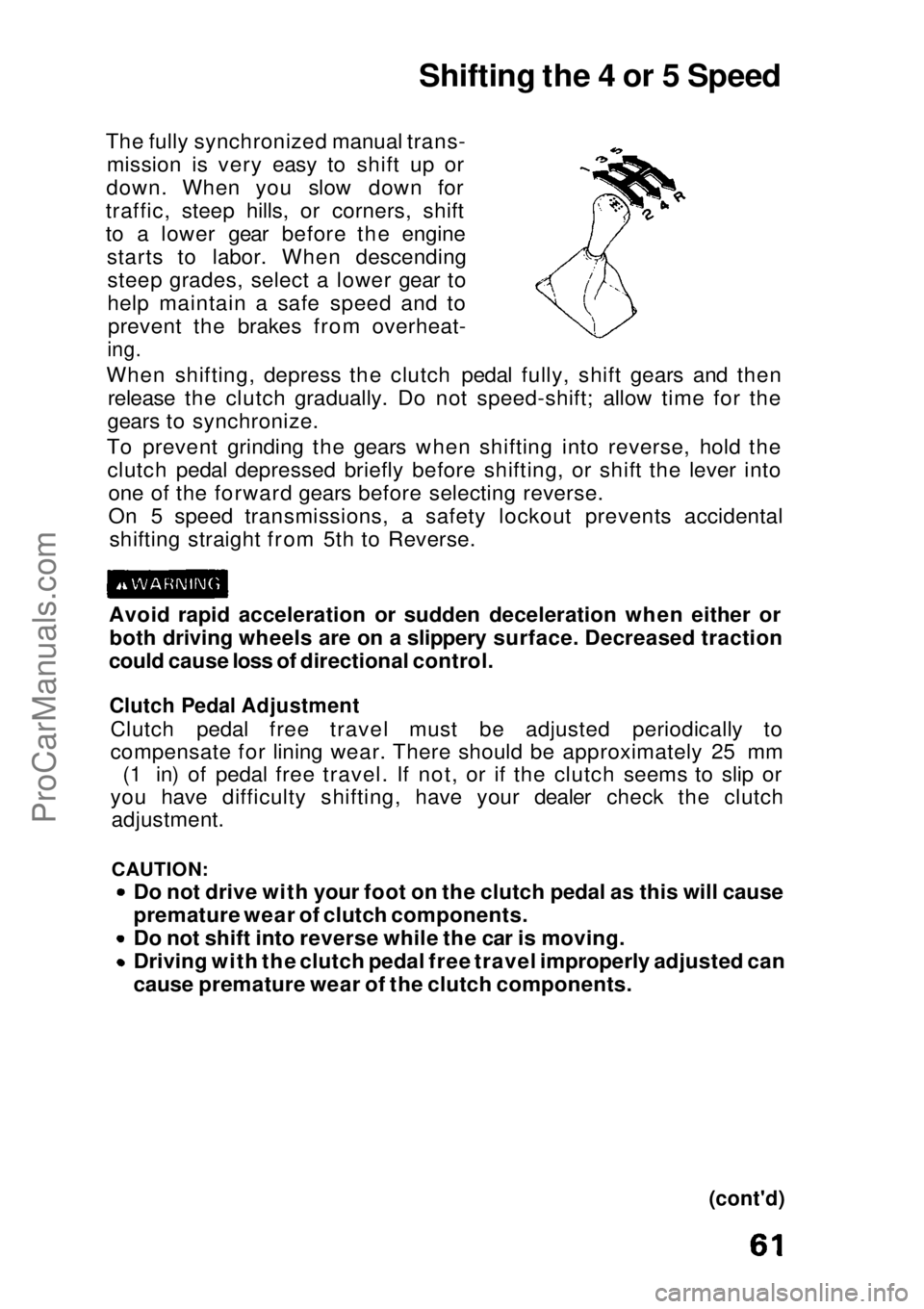
The fully synchronized manual trans- mission is very easy to shift up or
down. When you slow down for
traffic, steep hills, or corners, shift
to a lower gear before the engine starts to labor. When descendingsteep grades, select a lower gear to
help maintain a safe speed and toprevent the brakes from overheat-
ing.
When shifting, depress the clutch pedal fully, shift gears and then release the clutch gradually. Do not speed-shift; allow time for the
gears to synchronize.
To prevent grinding the gears when shifting into reverse, hold the clutch pedal depressed briefly before shifting, or shift the lever into one of the forward gears before selecting reverse.
On 5 speed transmissions, a safety lockout prevents accidentalshifting straight from 5th to Reverse.
Avoid rapid acceleration or sudden deceleration when either or both driving wheels are on a slippery surface. Decreased traction
could cause loss of directional control.
Clutch Pedal Adjustment
Clutch pedal free travel must be adjusted periodically to
compensate for lining wear. There should be approximately 25 mm (1 in) of pedal free travel. If not, or if the clutch seems to slip or
you have difficulty shifting, have your dealer check the clutch adjustment.
CAUTION:
Do not drive with your foot on the clutch pedal as this will cause
premature wear of clutch components.
Do not shift into reverse while the car is moving. Driving with the clutch pedal free travel improperly adjusted can
cause premature wear of the clutch components.
(cont'd)ProCarManuals.comMain Menu s t
Page 122 of 136
DOT Tire Quality Grades
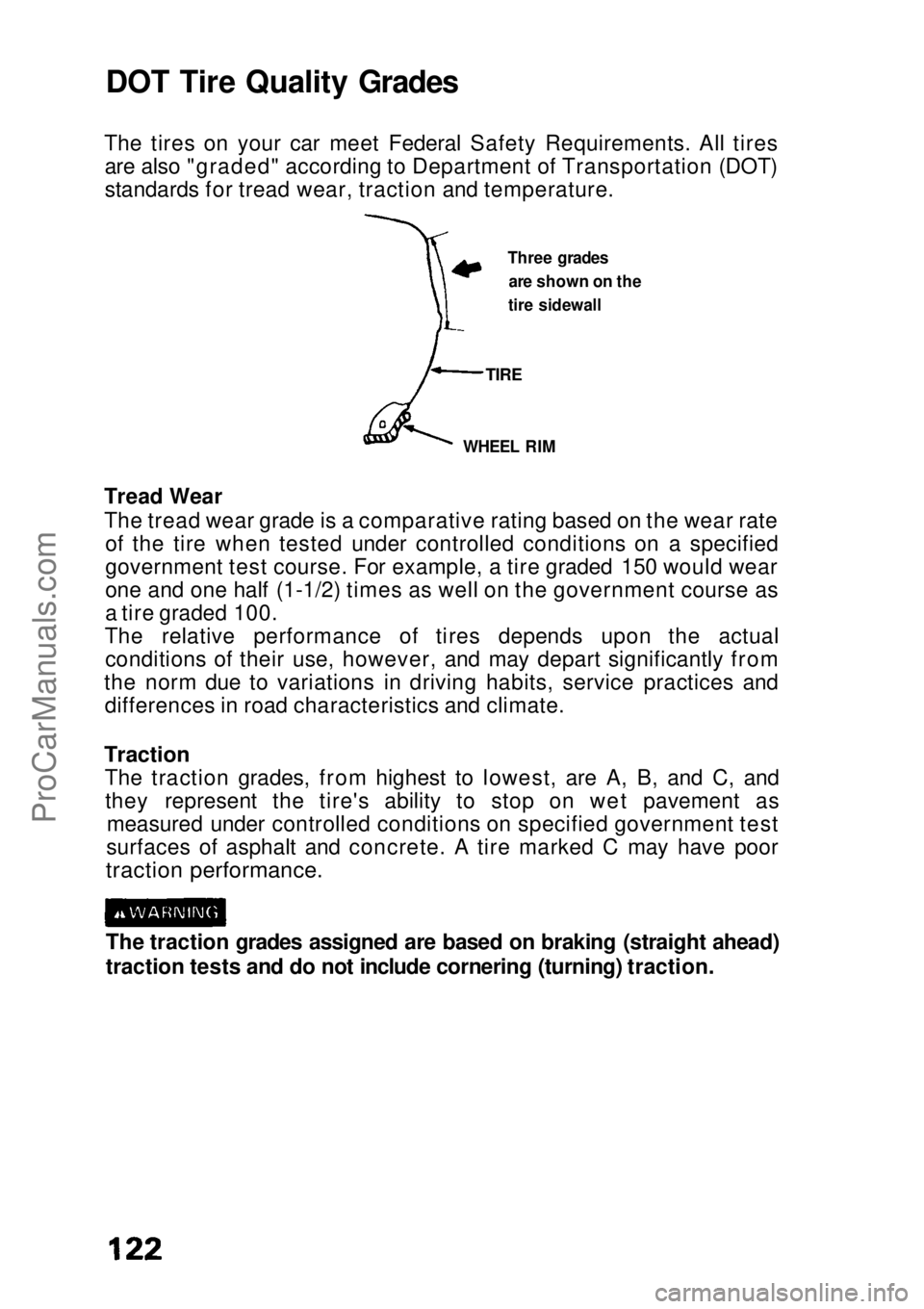
The tires on your car meet Federal Safety Requirements. All tires are also "graded" according to Department of Transportation (DOT)
standards for tread wear, traction and temperature.
Tread Wear
The tread wear grade is a comparative rating based on the wear rate of the tire when tested under controlled conditions on a specified
government test course. For example, a tire graded 150 would wear
one and one half (1-1/2) times as well on the government course as
a tire graded 100.
The relative performance of tires depends upon the actual conditions of their use, however, and may depart significantly from
the norm due to variations in driving habits, service practices and differences in road characteristics and climate.
Traction
The traction grades, from highest to lowest, are A, B, and C, andthey represent the tire's ability to stop on wet pavement as measured under controlled conditions on specified government test
surfaces of asphalt and concrete. A tire marked C may have poor
traction performance.
The traction grades assigned are based on braking (straight ahead)
traction tests and do not include cornering (turning) traction. Three grades
are shown on the
tire sidewall
TIRE
WHEEL RIMProCarManuals.comMain Menu s t