maintenance schedule HONDA ODYSSEY 1998 User Guide
[x] Cancel search | Manufacturer: HONDA, Model Year: 1998, Model line: ODYSSEY, Model: HONDA ODYSSEY 1998Pages: 272, PDF Size: 2.67 MB
Page 163 of 272
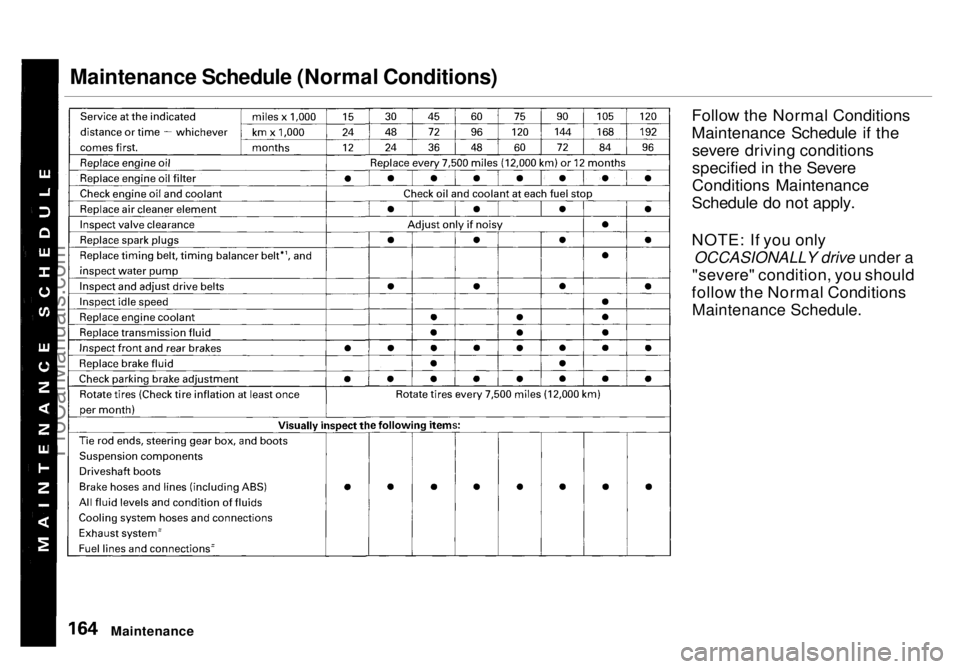
Maintenance Schedule (Normal Conditions)
Follow the Normal Conditions
Maintenance Schedule if thesevere driving conditions
specified in the Severe
Conditions Maintenance
Schedule do not apply.
NOTE: If you only
OCCASIONALLY drive under a
"severe" condition, you should
follow the Normal Conditions
Maintenance Schedule.
MaintenanceProCarManuals.comMain Menu Table of Contents s t
Page 164 of 272
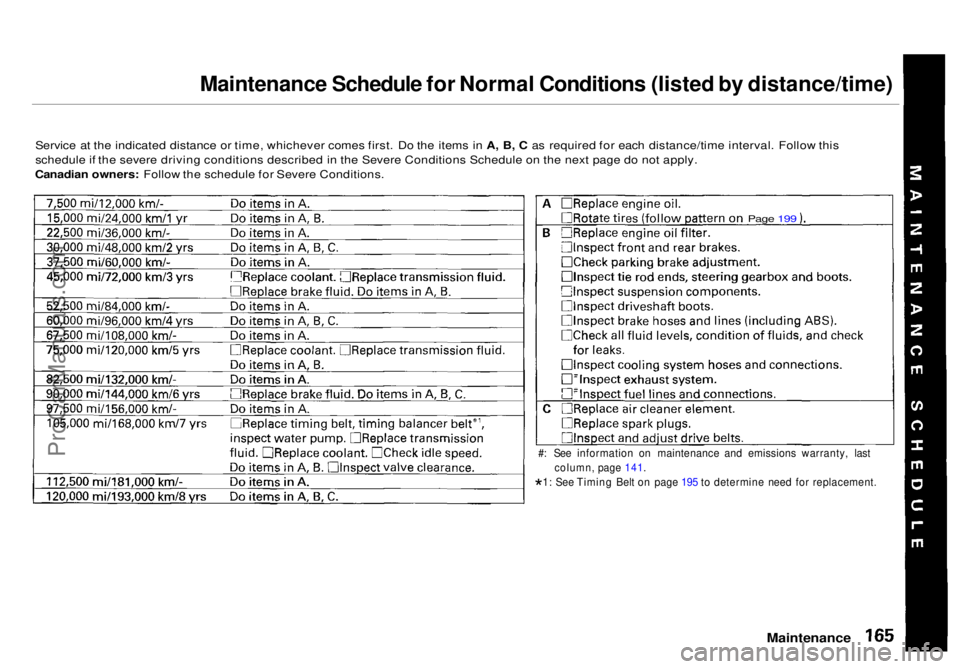
Maintenance Schedule for Normal Conditions (listed by distance/time)
Service at the indicated distance or time, whichever comes first. Do the items in A, B, C as required for each distance/time interval. Follow this
schedule if the severe driving conditions described in the Severe Conditions Schedule on the next page do not apply.
Canadian owners: Follow the schedule for Severe Conditions.
Maintenance
#: See information on maintenance and emissions warranty, last
column, page 141.
* 1: See Timing Belt on page 195 to determine need for replacement.
Page 199ProCarManuals.comMain Menu Table of Contents s t
Page 165 of 272
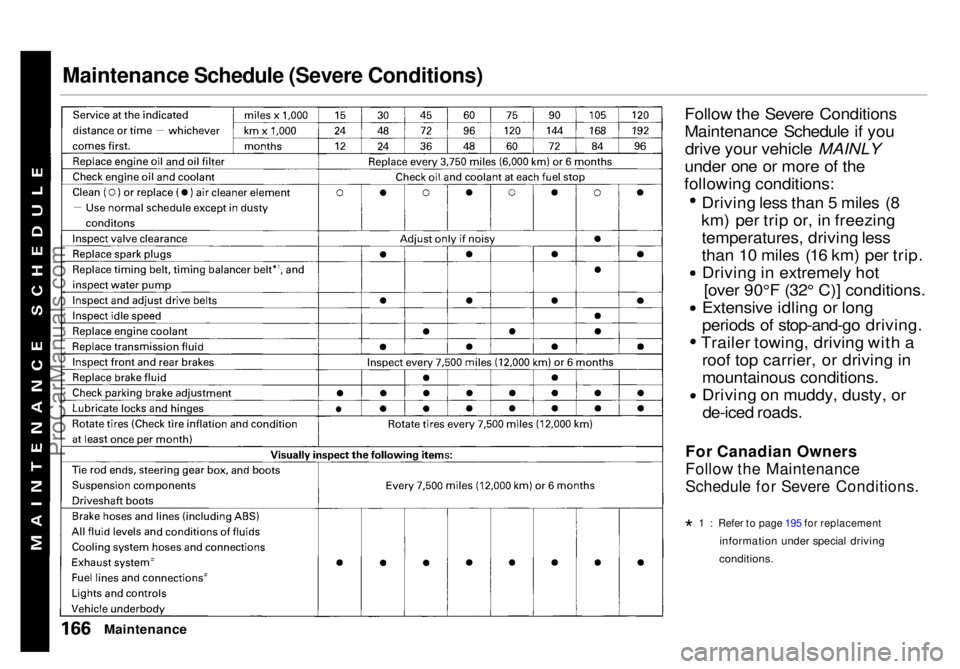
Maintenance Schedule (Severe Conditions)
Follow the Severe Conditions
Maintenance Schedule if youdrive your vehicle MAINLY
under one or more of the
following conditions:
Driving less than 5 miles (8
km) per trip or, in freezing temperatures, driving less
than 10 miles (16 km) per trip. Driving in extremely hot
[over 90°F (32° C)] conditions. Extensive idling or long
periods of stop-and-go driving.
Trailer towing, driving with a roof top carrier, or driving in
mountainous conditions. Driving on muddy, dusty, or
de-iced roads.
For Canadian Owners
Follow the Maintenance
Schedule for Severe Conditions.
* 1: Refer to page 195 for replacement
information under special driving
conditions.
MaintenanceProCarManuals.comMain Menu Table of Contents s t
Page 166 of 272
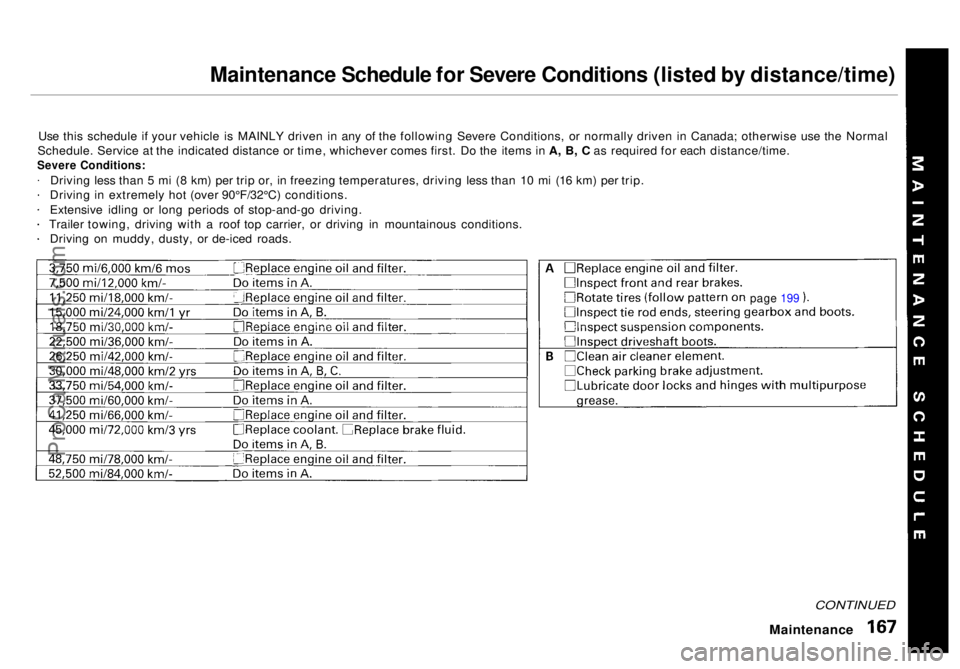
Maintenance Schedule for Severe Conditions (listed by distance/time)
Use this schedule if your vehicle is MAINLY driven in any of the following Severe Conditions, or normally driven in Canada; otherwise use the Normal
Schedule. Service at the indicated distance or time, whichever comes first. Do the items in A, B, C as required for each distance/time.
Severe Conditions:
Driving less than 5 mi (8 km) per trip or, in freezing temperatures, driving less than 10 mi (16 km) per trip.
Driving in extremely hot (over 90°F/32°C) conditions.
Extensive idling or long periods of stop-and-go driving.
Trailer towing, driving with a roof top carrier, or driving in mountainous conditions. Driving on muddy, dusty, or de-iced roads.
CONTINUED
Maintenance
page 199ProCarManuals.comMain Menu Table of Contents s t
Page 167 of 272
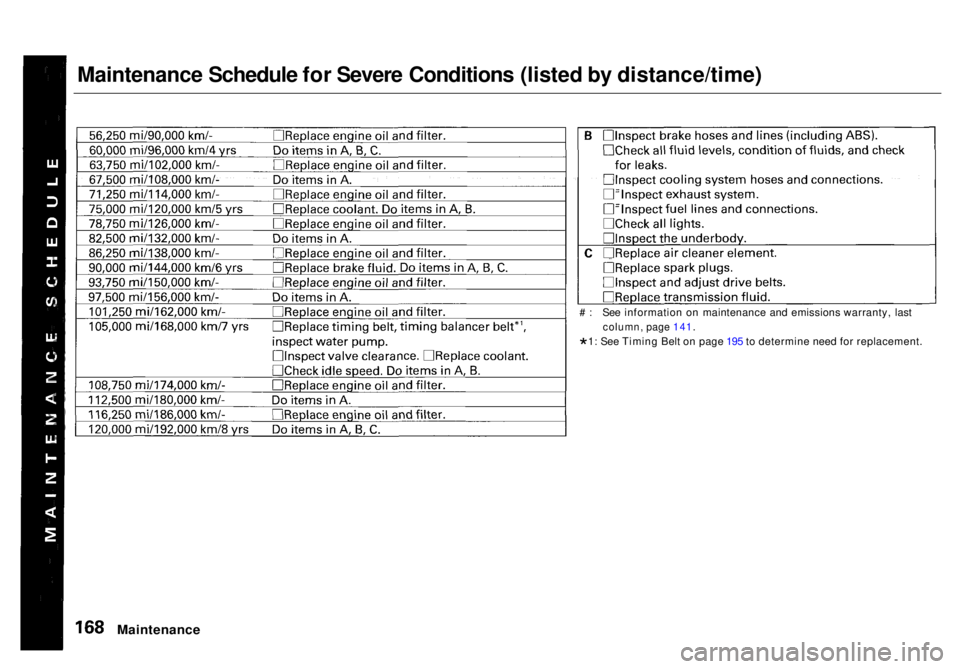
Maintenance Schedule for Severe Conditions (listed by distance/time)
Maintenance
# : See information on maintenance and emissions warranty, last
column, page 141.
* 1: See Timing Belt on page 195 to determine need for replacement.ProCarManuals.comMain Menu Table of Contents s t
Page 168 of 272
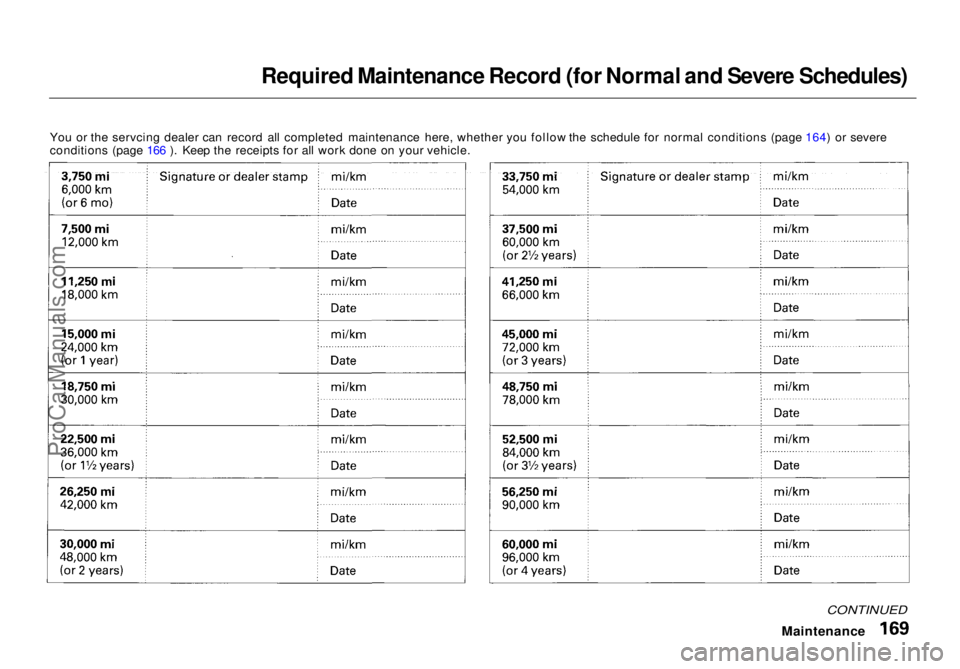
Required Maintenance Record (for Normal and Severe Schedules)
You or the servcing dealer can record all completed maintenance here, whether you follow the schedule for normal conditions (page 164) or severe
conditions (page 166 ). Keep the receipts for all work done on your vehicle.
CONTINUED
MaintenanceProCarManuals.comMain Menu Table of Contents s t
Page 169 of 272
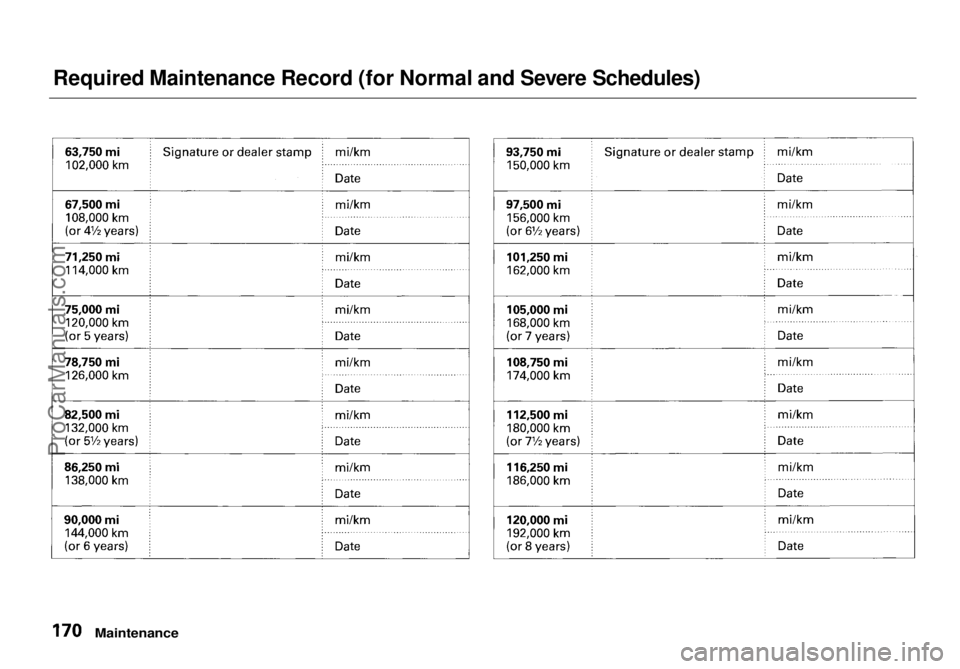
Required Maintenance Record (for Normal and Severe Schedules)
MaintenanceProCarManuals.comMain Menu Table of Contents s t
Page 173 of 272
Engine Oil
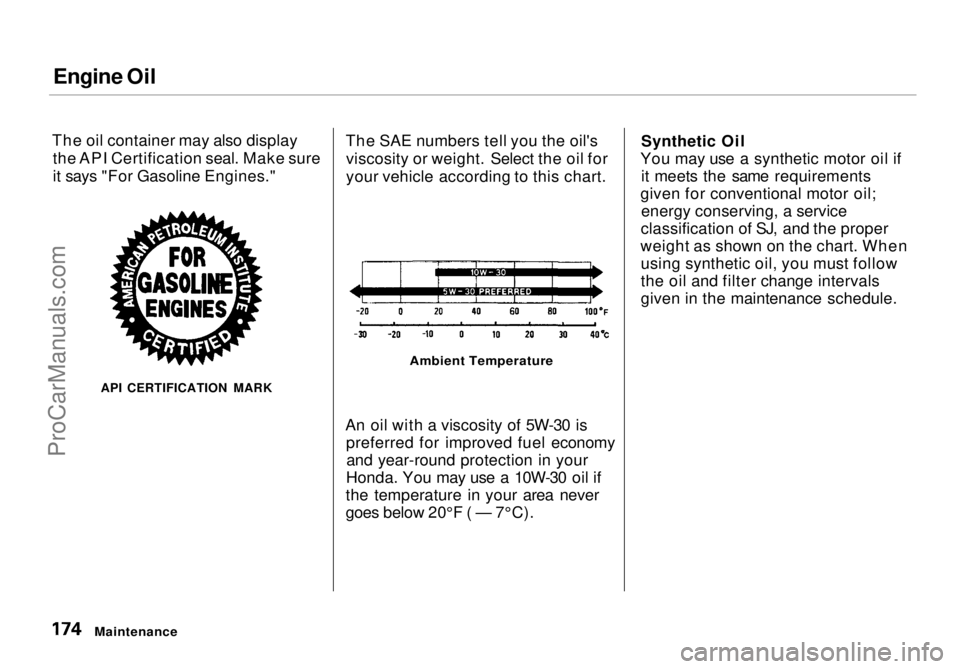
The oil container may also display the API Certification seal. Make sure
it says "For Gasoline Engines."
API CERTIFICATION MARK The SAE numbers tell you the oil's
viscosity or weight. Select the oil for
your vehicle according to this chart.
An oil with a viscosity of 5W-30 is preferred for improved fuel economyand year-round protection in your
Honda. You may use a 10W-30 oil if
the temperature in your area never
goes below 20°F ( — 7°C). Synthetic Oil
You may use a synthetic motor oil if it meets the same requirements
given for conventional motor oil; energy conserving, a service
classification of SJ, and the proper
weight as shown on the chart. When using synthetic oil, you must follow
the oil and filter change intervals
given in the maintenance schedule.
Maintenance
Ambient TemperatureProCarManuals.comMain Menu Table of Contents s t
Page 174 of 272
Engine Oil
Additives Your Honda does not need any oil
additives. Purchasing additives for
the engine or transmission will not
increase your vehicle's performance
or longevity. It only increases the
cost of operating your vehicle. Changing the Oil and Filter
Always change the oil and filter according to the time and distance (miles/kilometers) recommenda-
tions in the maintenance schedule.
The oil and filter collect contami- nants that can damage your engine if
they are not removed regularly.
Changing the oil and filter requires
special tools and access from
underneath the vehicle. The vehicle should be raised on a service station-
type hydraulic lift for this service. Unless you have the knowledge and
proper equipment, you should have
this maintenance done by a skilled
mechanic.
1. Run the engine until it reaches normal operating temperature,
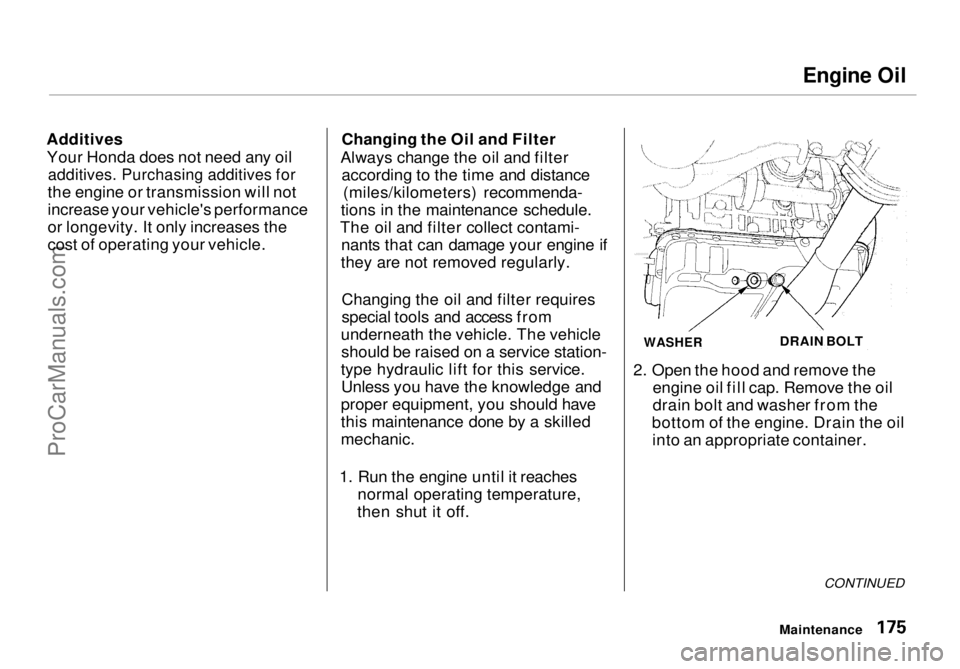
then shut it off. 2. Open the hood and remove the
engine oil fill cap. Remove the oil
drain bolt and washer from the
bottom of the engine. Drain the oil into an appropriate container.
CONTINUED
Maintenance
WASHER
DRAIN BOLTProCarManuals.comMain Menu Table of Contents s t
Page 178 of 272
Cooling System
Replacing Engine Coolant
The cooling system should be completely drained and refilled with
new coolant according to the time
and distance recommendations in
the maintenance schedule. Only use Genuine Honda antifreeze/coolant.
Draining the coolant requires access
to the underside of the vehicle. Unless you have the tools and
knowledge, you should have this
maintenance done by a skilled
mechanic.
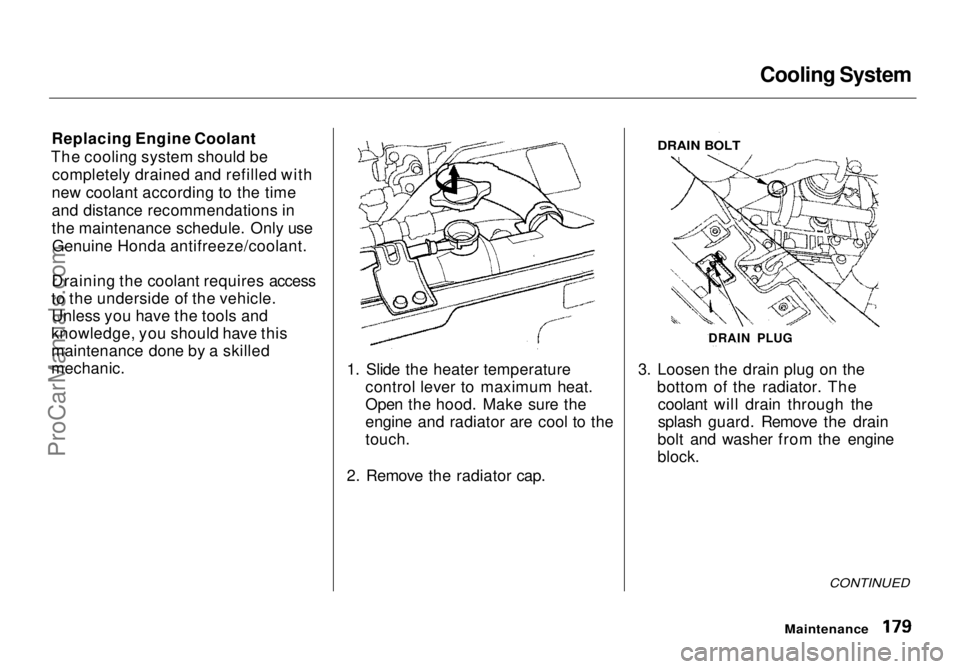
1. Slide the heater temperature
control lever to maximum heat.
Open the hood. Make sure the
engine and radiator are cool to the
touch.
2. Remove the radiator cap. 3. Loosen the drain plug on the
bottom of the radiator. Thecoolant will drain through the
splash guard. Remove the drain
bolt and washer from the engine
block.
CONTINUED
Maintenance
DRAIN PLUG
DRAIN BOLTProCarManuals.comMain Menu Table of Contents s t