brake HONDA PRELUDE 1990 Owner's Manual
[x] Cancel search | Manufacturer: HONDA, Model Year: 1990, Model line: PRELUDE, Model: HONDA PRELUDE 1990Pages: 143, PDF Size: 2.07 MB
Page 98 of 143
Brakes
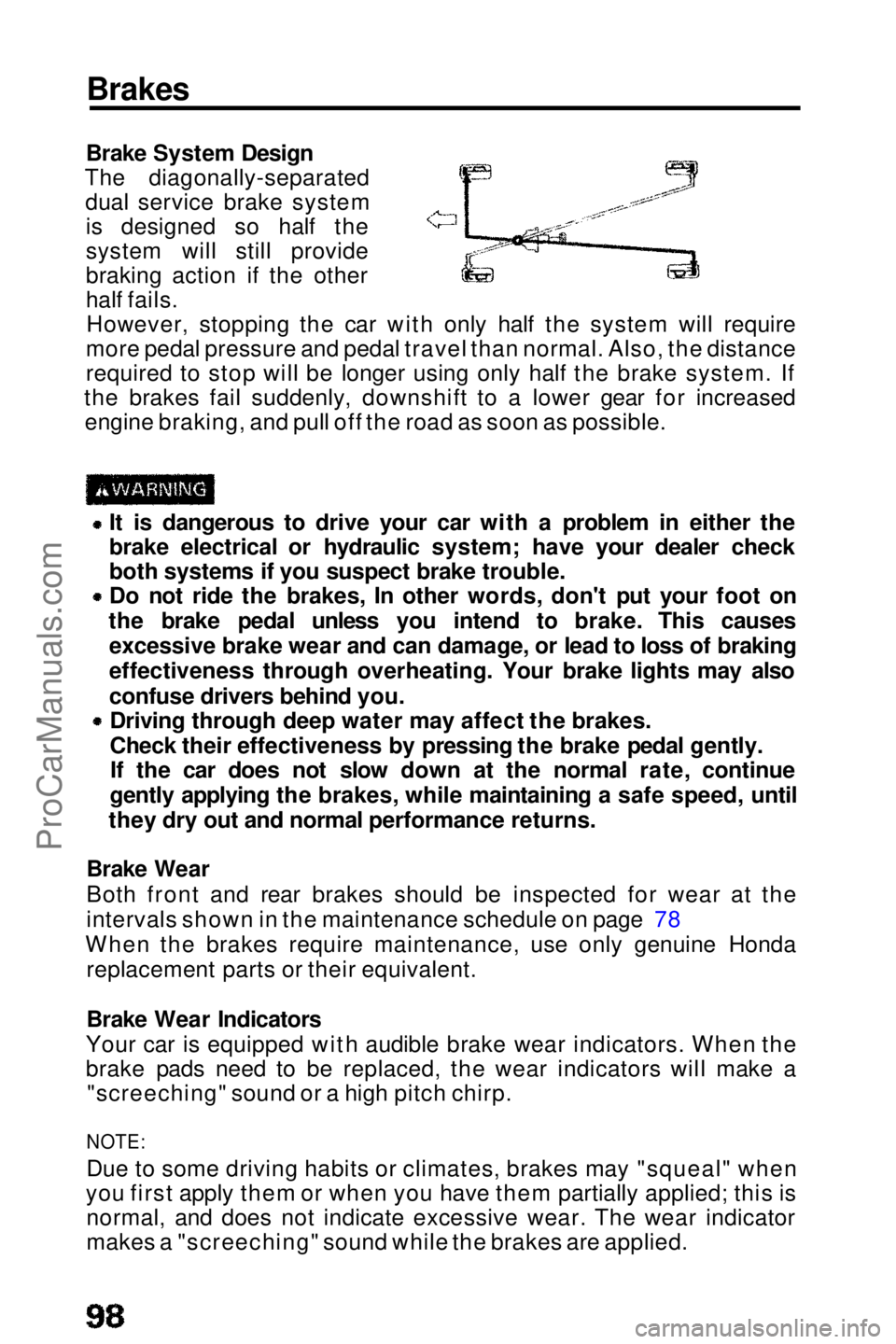
Brake System Design
The diagonally-separated dual service brake systemis designed so half the
system will still provide
braking action if the other
half fails.However, stopping the car with only half the system will require
more pedal pressure and pedal travel than normal. Also, the distance
required to stop will be longer using only half the brake system. If
the brakes fail suddenly, downshift to a lower gear for increased engine braking, and pull off the road as soon as possible.
It is dangerous to drive your car with a problem in either the
brake electrical or hydraulic system; have your dealer check
both systems if you suspect brake trouble. Do not ride the brakes, In other words, don't put your foot on
the brake pedal unless you intend to brake. This causes excessive brake wear and can damage, or lead to loss of braking
effectiveness through overheating. Your brake lights may also
confuse drivers behind you.Driving through deep water may affect the brakes.
Check their effectiveness by pressing the brake pedal gently.If the car does not slow down at the normal rate, continue
gently applying the brakes, while maintaining a safe speed, until
they dry out and normal performance returns.
Brake Wear
Both front and rear brakes should be inspected for wear at the
intervals shown in the maintenance schedule on page 78
When the brakes require maintenance, use only genuine Honda replacement parts or their equivalent.
Brake Wear Indicators
Your car is equipped with audible brake wear indicators. When the
brake pads need to be replaced, the wear indicators will make a "screeching" sound or a high pitch chirp.
NOTE:
Due to some driving habits or climates, brakes may "squeal" when
you first apply them or when you have them partially applied; this is normal, and does not indicate excessive wear. The wear indicator
makes a "screeching" sound while the brakes are applied.ProCarManuals.comMain Menu t s
Page 99 of 143
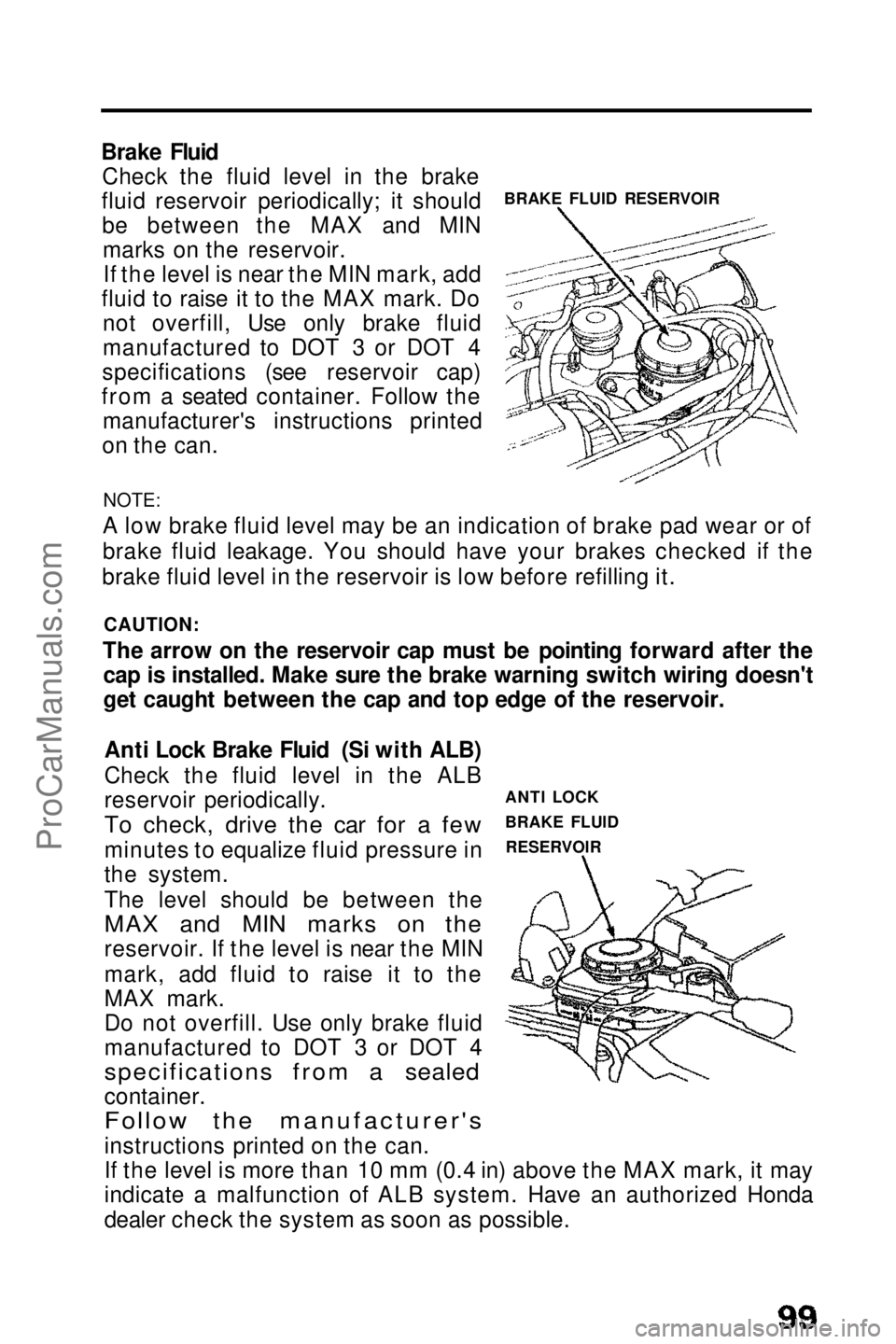
BRAKE FLUID RESERVOIR
Brake Fluid
Check the fluid level in the brake
fluid reservoir periodically; it should be between the MAX and MINmarks on the reservoir.If the level is near the MIN mark, add
fluid to raise it to the MAX mark. Do not overfill, Use only brake fluid
manufactured to DOT 3 or DOT 4
specifications (see reservoir cap)
from a seated container. Follow the manufacturer's instructions printed
on the can.
NOTE:
A low brake fluid level may be an indication of brake pad wear or of
brake fluid leakage. You should have your brakes checked if the
brake fluid level in the reservoir is low before refilling it.
CAUTION:
The arrow on the reservoir cap must be pointing forward after the cap is installed. Make sure the brake warning switch wiring doesn't
get caught between the cap and top edge of the reservoir.
ANTI LOCK
BRAKE FLUIDRESERVOIR
Anti Lock Brake Fluid (Si with ALB)
Check the fluid level in the ALB
reservoir periodically.
To check, drive the car for a few
minutes to equalize fluid pressure in
the system.
The level should be between the
MAX and MIN marks on the
reservoir. If the level is near the MIN
mark, add fluid to raise it to the
MAX mark.
Do not overfill. Use only brake fluid
manufactured to DOT 3 or DOT 4
specifications from a sealed
container.
Follow the manufacturer's
instructions printed on the can.
If the level is more than 10 mm (0.4 in) above the MAX mark, it may
indicate a malfunction of ALB system. Have an authorized Honda
dealer check the system as soon as possible.ProCarManuals.comMain Menu t s
Page 103 of 143
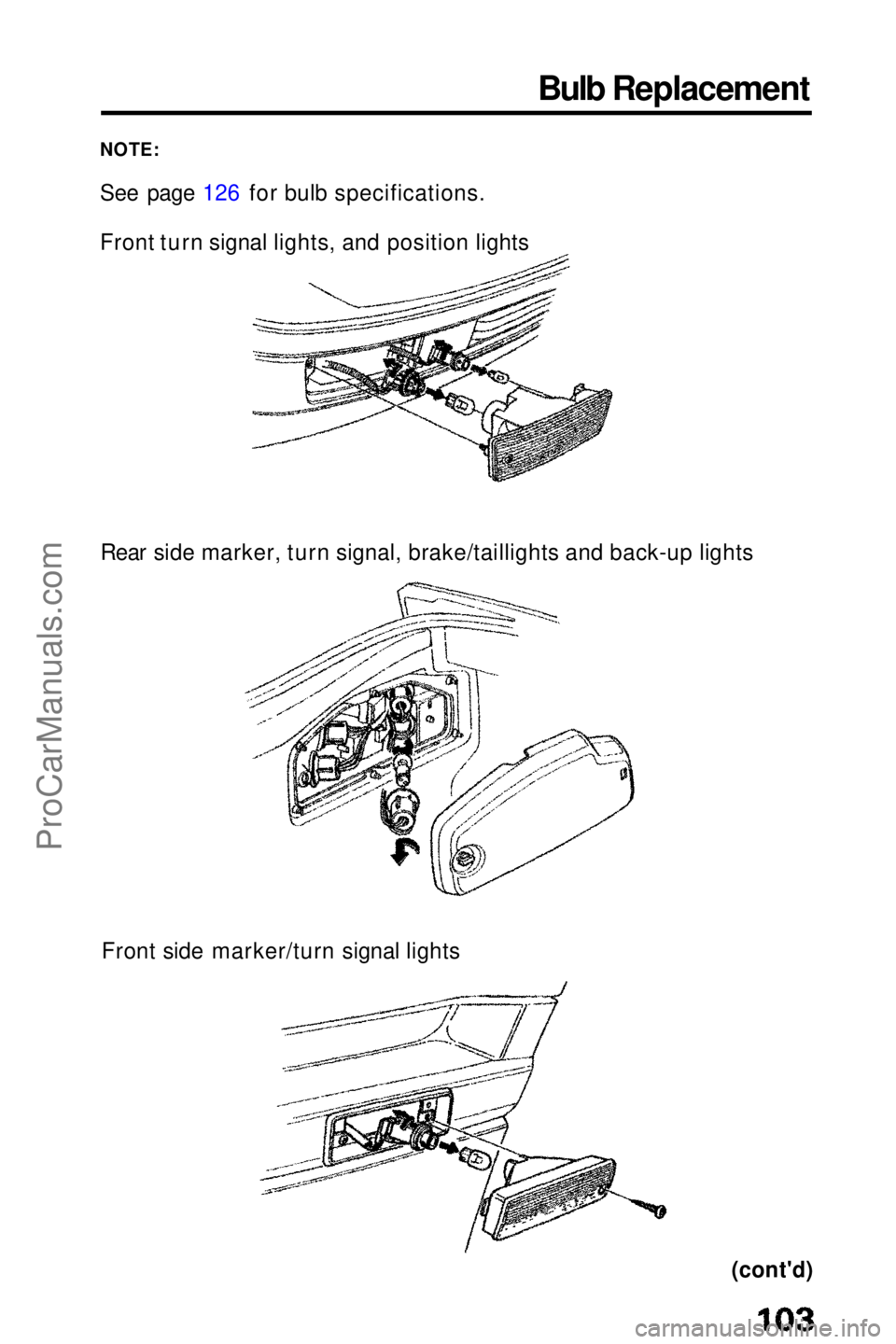
Bulb Replacement
NOTE:
See page 126 for bulb specifications.
Front turn signal lights, and position lights
Rear side marker, turn signal, brake/taillights and back-up lights
Front side marker/turn signal lights
(cont'd)ProCarManuals.comMain Menu t s
Page 104 of 143
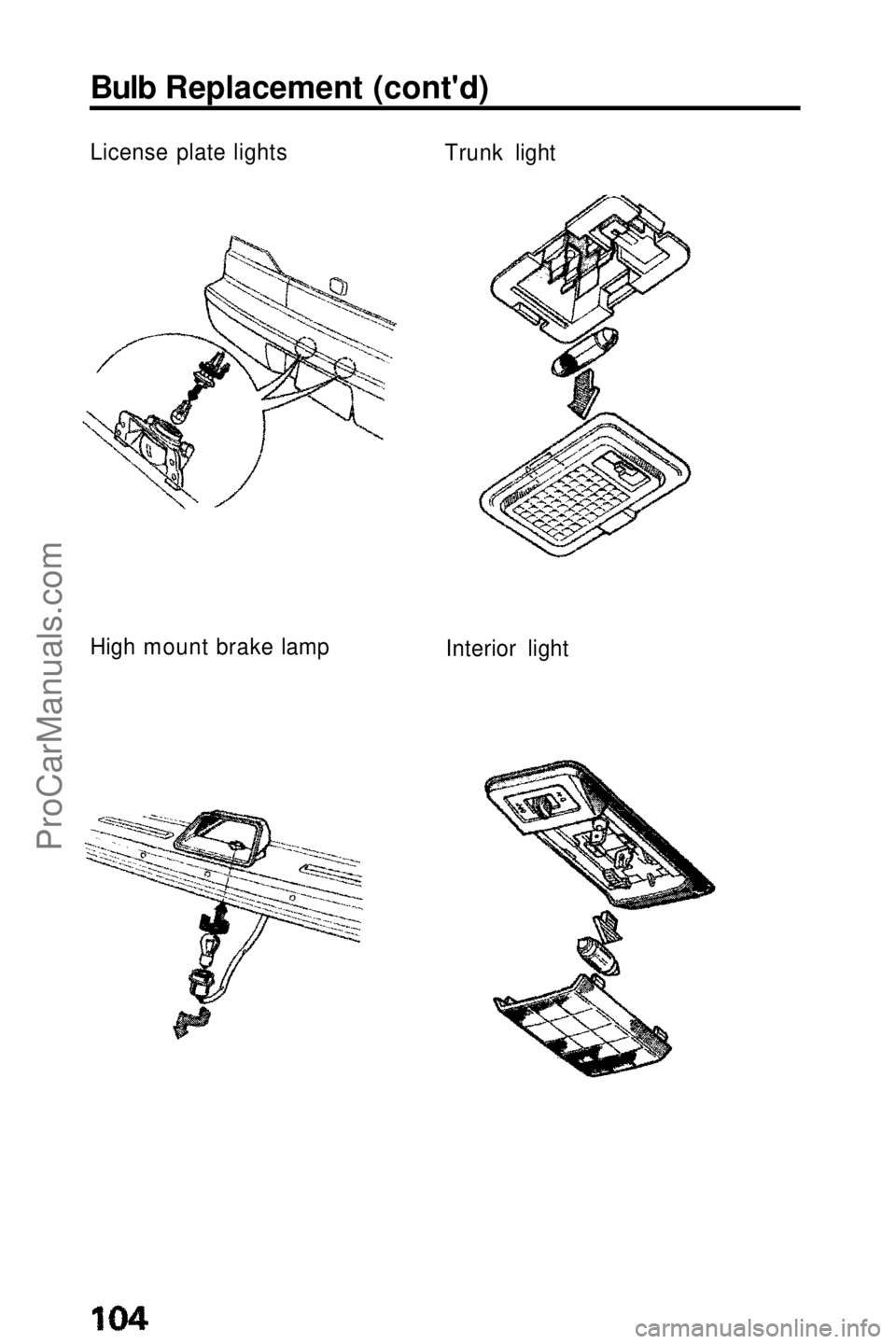
Bulb Replacement (cont'd)
License plate lights
Trunk light
High mount brake lamp
Interior lightProCarManuals.comMain Menu t s
Page 107 of 143
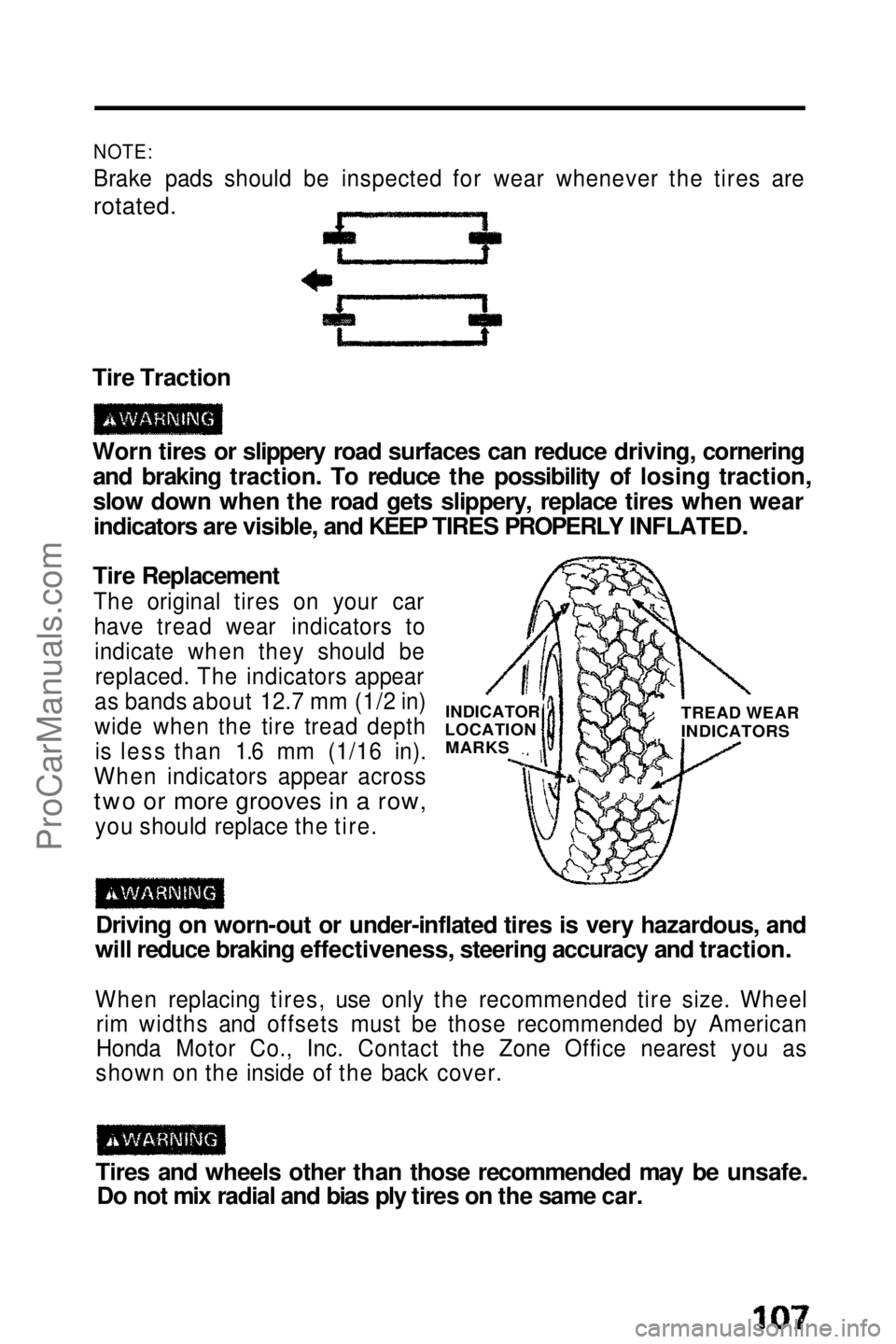
NOTE:
Brake pads should be inspected for wear whenever the tires are
rotated.
Tire Traction
Worn tires or slippery road surfaces can reduce driving, cornering and braking traction. To reduce the possibility of losing traction,
slow down when the road gets slippery, replace tires when wearindicators are visible, and KEEP TIRES PROPERLY INFLATED.
Tire Replacement
The original tires on your carhave tread wear indicators toindicate when they should bereplaced. The indicators appear
as bands about 12.7 mm (1/2 in)
wide when the tire tread depth is less than 1.6 mm (1/16 in).
When indicators appear across
two or more grooves in a row,
you shoul d
replace the tire.
Driving on worn-out or under-inflated tires is very hazardous, and
will reduce braking effectiveness, steering accuracy and traction.
When replacing tires, use only the recommended tire size. Wheel rim widths and offsets must be those recommended by American
Honda Motor Co., Inc. Contact the Zone Office nearest you as
shown on the inside of the back cover.
Tires and wheels other than those recommended may be unsafe. Do not mix radial and bias ply tires on the same car. INDICATOR
LOCATION MARKS TREAD WEAR
INDICATORSProCarManuals.comMain Menu t s
Page 116 of 143
Changing a Flat Tire
Do not attempt to change a tire unless the car is on firm, level
ground and well out of the flow of traffic.
Park the car on a firm, level surface, apply the parking brake, turn
on the hazard warning switch and put the transmission in gear (Park
for automatic).
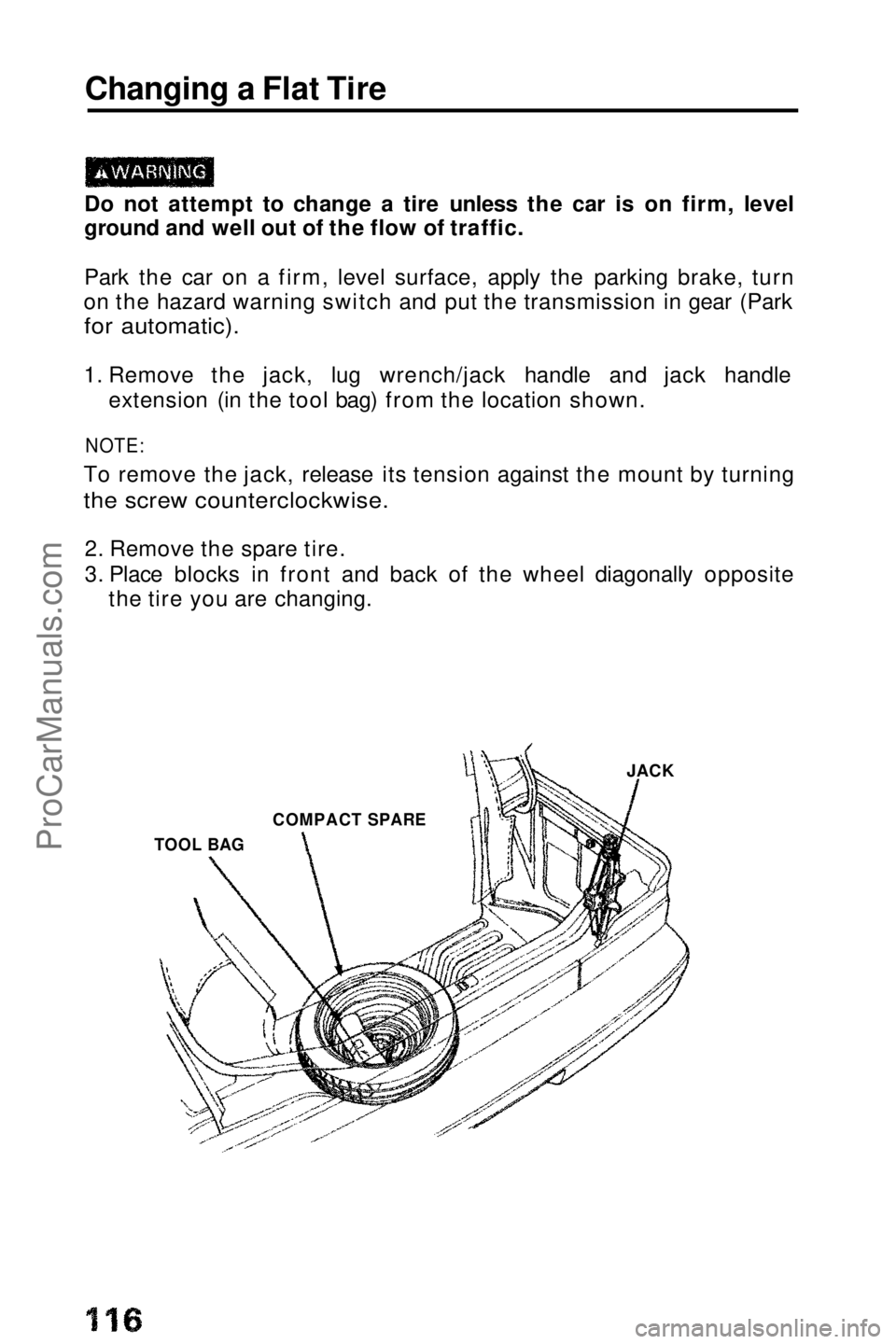
1. Remove the jack, lug wrench/jack handle and jack handle extension (in the tool bag) from the location shown.
NOTE:
To remove the jack, release its tension against the mount by turning
the screw counterclockwise.
2. Remove the spare tire.
3. Place blocks in front and back of the wheel diagonally opposite the tire you are changing.
JACK
COMPACT SPARE
TOOL BAGProCarManuals.comMain Menu t s
Page 119 of 143
Jump Starting
To start a car with a dead battery, use another battery of the same voltage, and the proper jumper cables. Procedures other than those below could cause injury or
damage from battery acid spray, explosion or charging system
overload.
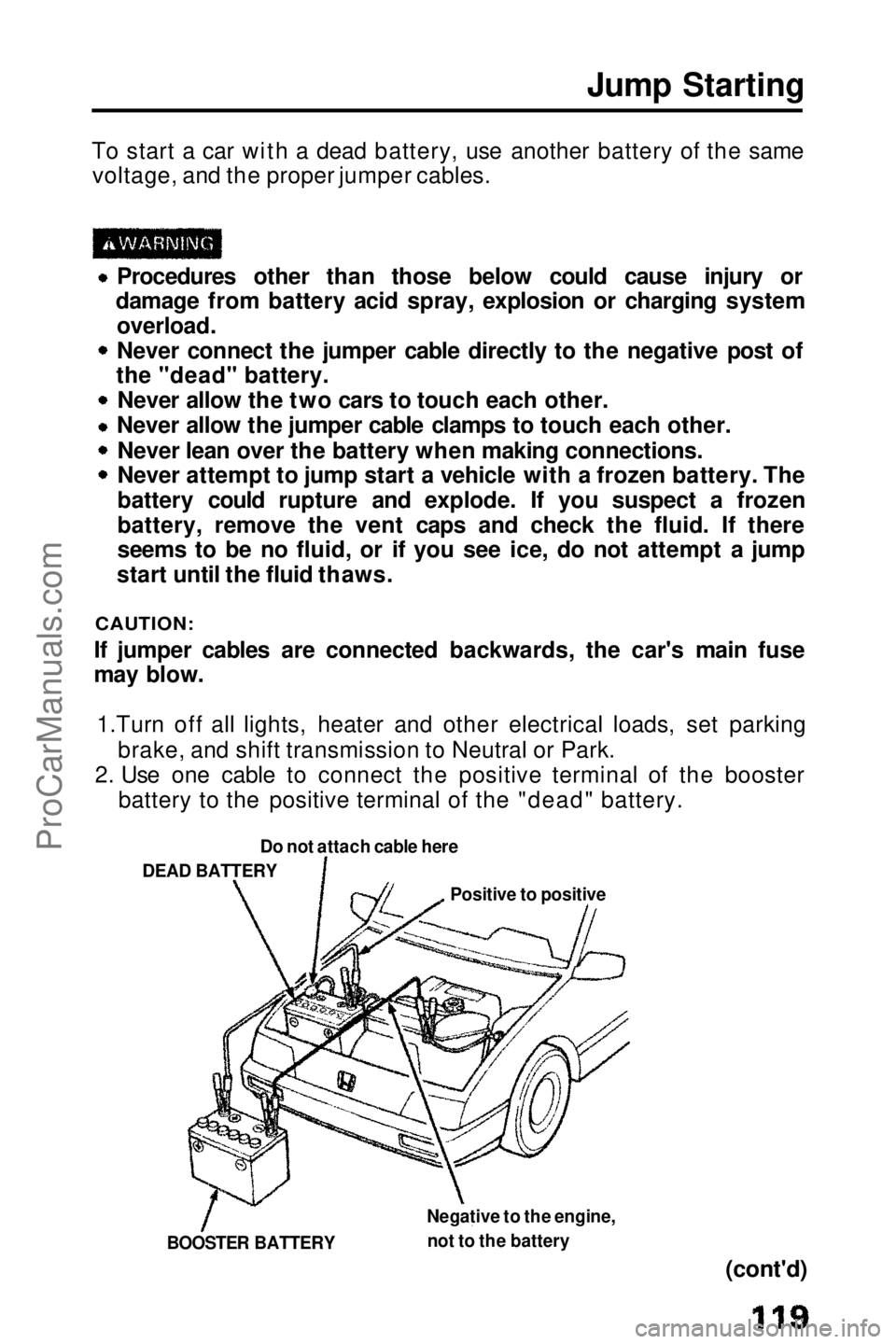
Never connect the jumper cable directly to the negative post of
the "dead" battery.
Never allow the two cars to touch each other.
Never allow the jumper cable clamps to touch each other.
Never lean over the battery when making connections.
Never attempt to jump start a vehicle with a frozen battery. The
battery could rupture and explode. If you suspect a frozen
battery, remove the vent caps and check the fluid. If there
seems to be no fluid, or if you see ice, do not attempt a jump
start until the fluid thaws.
CAUTION:
If jumper cables are connected backwards, the car's main fuse
may blow.
1.Turn off all lights, heater and other electrical loads, set parking
brake, and
shift transmission to Neutral or Park.
2. Use one cable to connect the positive terminal of the booster battery to the positive terminal of the "dead" battery.
(cont'd)
Do not attach cable here
DEAD BATTERY
Positive to positive
Negative to the engine, not to the battery
BOOSTER BATTERYProCarManuals.comMain Menu t s
Page 137 of 143
Index
(cont'd)
Air Conditioner
Operation.....................................
43
Service.......................................108
Air Filte
r ...........................................95
Air Pressure, Tires........................105
Aluminum Alloy Wheels...............111
Antifreeze ..................See
"Radiator coolant"
Anti Lock Brakes(ALB) ..................18 ALB Warning Light .....................
24
ALB Fluid
.....................................
99
Anti-theft Steering
Column Lock
System.........................................58
Appearance Care .........................
110
Ashtrays..........................................38
Audio System
.................................
47
Automatic Transmission
Driving Technique ......................68
Fluid.............................................87
Operation....................................67
Shift Lever
Position
Indicator .................................
21 Battery
Charging System Warning
Light.......................................23
Jump Starting ...........................119 Maintenance .............................100
Specification ........................... 126
Beeper System Fasten Seat Belt Beeper ............13
Key Reminder .............................58
Light Reminder Chime ................30
Belts,Seat...............See "Seat Belts"
Brake Lamp Warning Light.............25
Brakes Brake Failure Warning Light .......................................23
Brake Fluid...................................99
Brake System Design .................98
Brake Wear .................................98
Brake Wear Indicators................98
Parking Brake ..............................39
Parking Brake Warning Light .......................................23
Break-in Period ..................................2
Bulb
Replacement.............................103
Specification .............................126
Buzzer ............See "Beeper System"
Capacities......................................125
Care and Cleaning.........................110
Catalytic Converter .....................134
Certification Label ........................127
Chains,Tires ................................. 106
Child Restraint System ..................14
Cigarette Lighter .............................38
Clock................................................37
COMPACT Spare Tire .................114Coolant Temperature Gauge .........20
Cooling(with A/C) ...........................44 Cooling System ...............................88
Crankcase Emission ControlSystem ..........................................
130
Cruise Control
Opeartion...................................
35Indicator .....................................22
Defogger.........................................28
Defroster .........................................45
Dimmer Switch, Headlights...........31
Doors
Locks............................................3
Warning Light ............................25
Emergency
Changing Flat Tire ...................116
Hazard Warning System ..........33If the Retractable Headlights do not operate ...................123
If the Sunroof Won't
Close .....................................54
If Your Car Gets Stuck ...........122
Jump Starting .........................119Towing.....................................121Warning and
Indicator
Lights....................................21
ProCarManuals.comMain Menu t s
Page 139 of 143
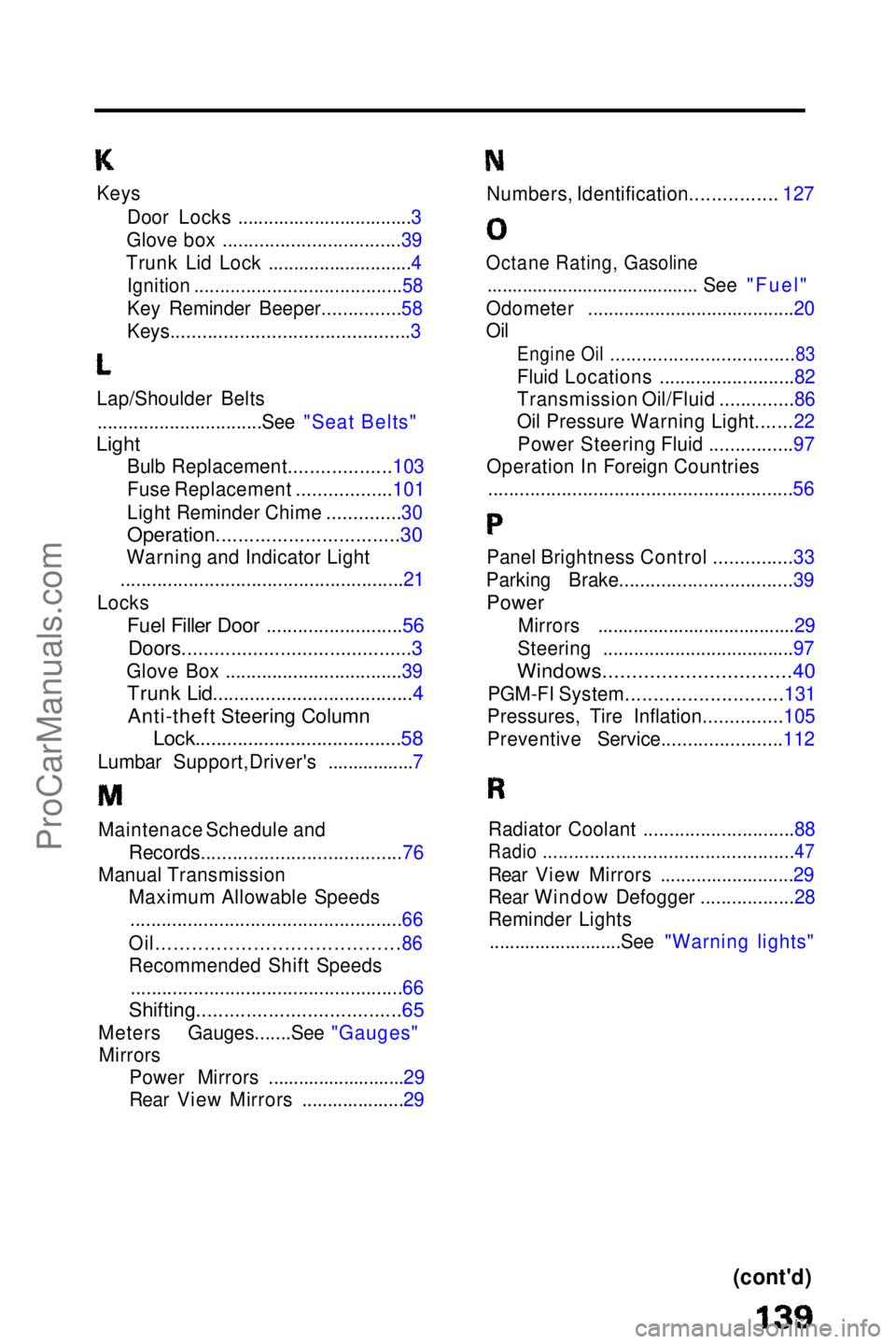
Keys
Door Locks ..................................3
Glove box ..................................39
Trunk Lid Lock ............................4
Ignition ........................................58
Key Reminder Beeper...............58Keys.............................................3
Lap/Shoulder Belts
................................Se
e "Seat Belts"
Light
Bulb Replacement...................103
Fuse Replacement ..................101
Light Reminder
Chime ..............30
Operation.................................30
Warning and Indicator Light
......................................................21
Locks
Fuel Filler Door ..........................56
Doors..........................................3
Glove Bo
x ..................................39
Trunk Lid......................................4
Anti-theft Steering
Column
Lock.......................................58
Lumbar Support,Driver's .................7
Maintenace Schedule
and
Records......................................76
Manual Transmission Maximum Allowable Speeds
....................................................66
Oil........................................86
Recommended Shift
Speeds
....................................................66
Shifting.....................................65
Meters Gauges.......See
"Gauges"
Mirrors Power Mirrors ...........................29
Rear View Mirrors ....................29 Numbers, Identification................ 127
Octane Rating,
Gasoline
.......................................... See "Fuel"
Odometer ........................................20Oil
Engine Oil ...................................83
Fluid Locations ..........................82Transmission Oil/Fluid ..............86Oil Pressure Warning Light.......22
Power Steering Fluid ................97
Operation In
Foreign Countries
..........................................................56
Panel Brightness Control ...............33
Parking Brake.................................
39
Power
Mirrors .......................................29
Steering .....................................
97
Windows................................40
PGM-FI System............................131
Pressures, Tire Inflation...............105
Preventive Service.......................
112
(cont'd)
Radiator Coolant .............................88
Radio ................................................47
Rear View Mirrors ..........................29
Rear Window Defogger ..................28
Reminder Lights
..........................See "Warning lights"ProCarManuals.comMain Menu t s