brakes Hyundai Accent 2012 Owner's Guide
[x] Cancel search | Manufacturer: HYUNDAI, Model Year: 2012, Model line: Accent, Model: Hyundai Accent 2012Pages: 370
Page 257 of 370
611
What to do in an emergency
You may not be able to identify a low
tire by simply looking at it. Always
use a good quality tire pressure
gauge to measure the tire's inflation
pressure. Please note that a tire that
is hot (from being driven) will have a
higher pressure measurement than a
tire that is cold.
A cold tire means the vehicle has
been sitting for 3 hours and driven for
less than 1 mile (1.6 km) in that 3
hour period.
Allow the tire to cool before measur-
ing the inflation pressure. Always be
sure the tire is cold before inflating to
the recommended pressure.This device complies with Part 15
of the FCC rules.
Operation is subject to the following
two conditions:
1.This device may not cause harmful
interference, and
2.This device must accept any inter- ference received, including inter-
ference that may cause undesired
operation.
CAUTION
Do not use any tire sealantexcept the Tire Mobility Kitapproved by HYUNDAI if yourvehicle is equipped with a TirePressure Monitoring System.Other liquid sealants can dam-age the tire pressure sensors.
WARNING - Protecting TPMS
Tampering with, modifying, or
disabling the Tire Pressure
Monitoring System (TPMS) com-
ponents may interfere with the
system's ability to warn the driv-
er of low tire pressure condi-
tions and/or TPMS malfunctions.
Tampering with, modifying, or
disabling the Tire Pressure
Monitoring System (TPMS) com-
ponents may void the warranty
for that portion of the vehicle.
WARNING- TPMS
The TPMS cannot alert you to severe and sudden tire dam-
age caused by external fac-
tors such as nails or road
debris.
If you feel any vehicle instabil- ity, immediately take your foot
off the accelerator, apply the
brakes gradually and with
light force, and slowly move to
a safe position off the road.
WARNING
Changes or modifications not
expressly approved by the party
responsible for compliance
could void the user’s authority
to operate the equipment.
Page 274 of 370
What to do in an emergency
28
6
Use extreme caution when towing the
vehicle. A driver must be in the vehicle to
steer it and operate the brakes.
Towing in this manner may be done only
on hard-surfaced roads for a short dis-
tance and at low speeds. Also, the
wheels, axles, power train, steering and
brakes must all be in good condition.
Do not use the tow hooks to pull a vehi-
cle out of mud, sand or other condi-
tions from which the vehicle cannot be
driven out under its own power.
Avoid towing a vehicle heavier than the vehicle doing the towing.
The drivers of both vehicles should communicate with each other frequent-
ly. Before emergency towing, check that
the hook is not broken or damaged.
Fasten the towing cable or chain securely to the hook.
Do not jerk the hook. Apply steady and even force.
To avoid damaging the hook, do not pull from the side or at a vertical angle.
Always pull straight ahead.CAUTION
Attach a towing strap to the tow hook.
Using a portion of the vehicle other than the tow hooks for tow-ing may damage the body of yourvehicle.
Use only a cable or chain specifi- cally intended for use in towingvehicles. Securely fasten thecable or chain to the towing hook provided.WARNING
Use extreme caution when towing
the vehicle.
driving maneuvers which would
place excessive stress on the
emergency towing hook and tow-
ing cable or chain. The hook and
towing cable or chain may break
and cause serious injury or dam-
age.
If the disabled vehicle cannot be moved, do not forcibly continue
the towing. Contact an authorized
Hyundai dealer or a commercial
tow truck service for assistance.
Tow the vehicle as straight ahead as possible.
Keep away from the vehicle dur- ing towing.
Page 275 of 370
629
What to do in an emergency
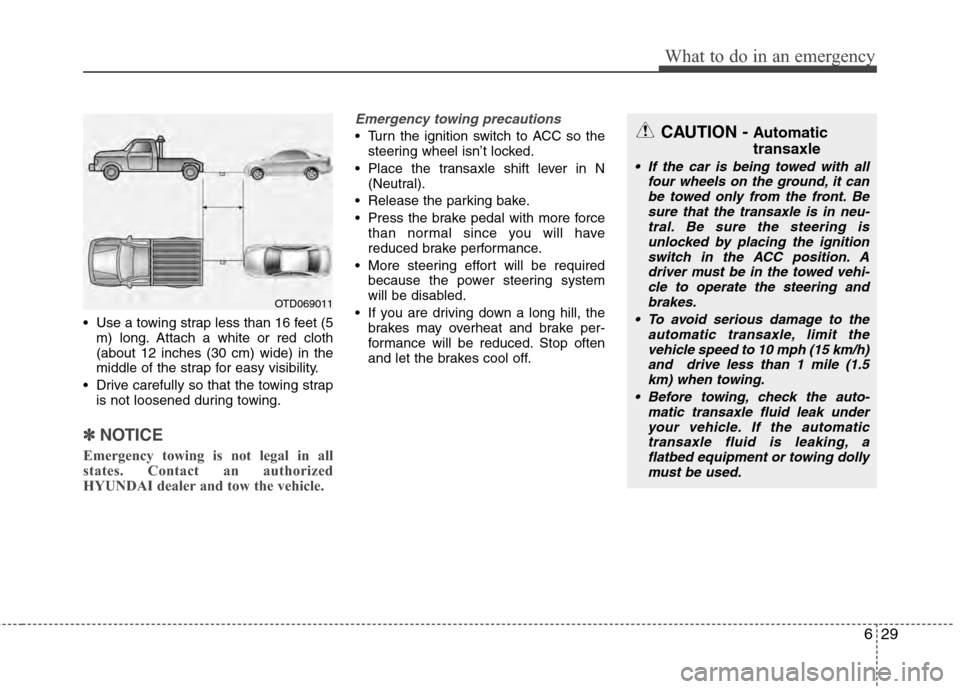
Use a towing strap less than 16 feet (5m) long. Attach a white or red cloth
(about 12 inches (30 cm) wide) in the
middle of the strap for easy visibility.
Drive carefully so that the towing strap is not loosened during towing.
✽ ✽ NOTICE
Emergency towing is not legal in all
states. Contact an authorized
HYUNDAI dealer and tow the vehicle.
Emergency towing precautions
Turn the ignition switch to ACC so the
steering wheel isn’t locked.
Place the transaxle shift lever in N (Neutral).
Release the parking bake.
Press the brake pedal with more force than normal since you will have
reduced brake performance.
More steering effort will be required because the power steering system
will be disabled.
If you are driving down a long hill, the brakes may overheat and brake per-
formance will be reduced. Stop often
and let the brakes cool off.CAUTION - Automatic
transaxle
If the car is being towed with all four wheels on the ground, it canbe towed only from the front. Besure that the transaxle is in neu-tral. Be sure the steering isunlocked by placing the ignition switch in the ACC position. Adriver must be in the towed vehi- cle to operate the steering andbrakes.
To avoid serious damage to the automatic transaxle, limit thevehicle speed to 10 mph (15 km/h)and drive less than 1 mile (1.5km) when towing.
Before towing, check the auto- matic transaxle fluid leak underyour vehicle. If the automatic transaxle fluid is leaking, aflatbed equipment or towing dollymust be used.
OTD069011
Page 281 of 370
Maintenance
67
SCHEDULED MAINTENANCE SERVICE
Follow Normal Maintenance Schedule if
the vehicle is usually operated where
none of the following conditions apply. If
any of the following conditions apply, fol-
low Maintenance Under Severe Usage
Conditions.
Repeated short distance driving.
Driving in dusty conditions or sandyareas.
Extensive use of brakes.
Driving in areas where salt or other corrosive materials are being used.
Driving on rough or muddy roads.
Driving in mountainous areas.
Extended periods of idling or low speed operation.
Driving for a prolonged period in cold temperatures and/or extremely humid
climates.
More than 50% driving in heavy city traffic during hot weather above 90°F
(32°C).If your vehicle is operated under theabove conditions, you should inspect,replace or refill more frequently than thefollowing Normal Maintenance Schedule.After 120 months or 150,000 miles(240,000 km) continue to follow the pre-scribed maintenance intervals.
Page 343 of 370
Maintenance
68
7
APPEARANCE CARE
Exterior care
Exterior general caution
It is very important to follow the label
directions when using any chemical
cleaner or polish. Read all warning and
caution statements that appear on the
label.
Finish maintenance
Washing
To help protect your vehicle’s finish from
rust and deterioration, wash it thoroughly
and frequently at least once a month with
lukewarm or cold water.
If you use your vehicle for off-road driv-
ing, you should wash it after each off-
road trip. Pay special attention to the
removal of any accumulation of salt, dirt,
mud, and other foreign materials. Make
sure the drain holes in the lower edges of
the doors and rocker panels are kept
clear and clean.
Insects, tar, tree sap, bird droppings,
industrial pollution and similar deposits
can damage your vehicle’s finish if not
removed immediately.
Even prompt washing with plain water
may not completely remove all these
deposits. A mild soap, safe for use on
painted surfaces, may be used. After washing, rinse the vehicle thor-
oughly with lukewarm or cold water. Do
not allow soap to dry on the finish.
CAUTION
Do not use strong soap, chemical
detergents or hot water, and donot wash the vehicle in directsunlight or when the body of the vehicle is warm.
Be careful when washing the side windows of your vehicle.
Especially, with high-pressurewater, water may leak through thewindows and wet the interior.
To prevent damage to the plastic parts and lamps, do not cleanwith chemical solvents or strong detergents.
WARNING - Wet brakes
After washing the vehicle, test the
brakes while driving slowly to see if
they have been affected by water. If
braking performance is impaired,
dry the brakes by applying them
lightly while maintaining a slow for-
ward speed.
CAUTION
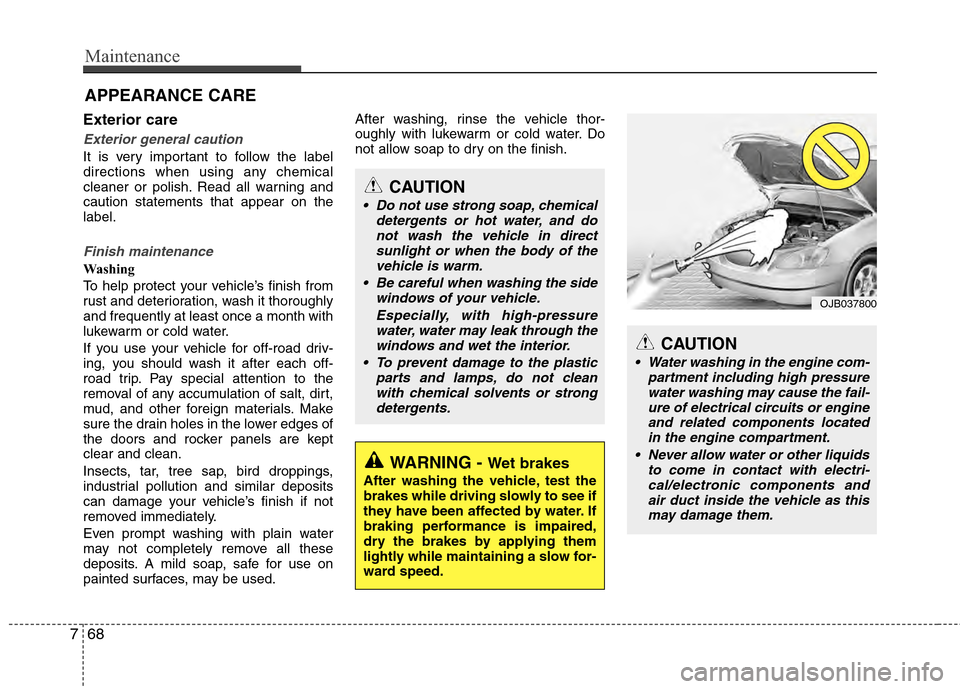
Water washing in the engine com- partment including high pressurewater washing may cause the fail- ure of electrical circuits or engineand related components located in the engine compartment.
Never allow water or other liquids to come in contact with electri-cal/electronic components andair duct inside the vehicle as this may damage them.
OJB037800
Page 345 of 370
Maintenance
70
7
Aluminum wheel maintenance
The aluminum wheels are coated with a
clear protective finish.
Do not use any abrasive cleaner, pol-
ishing compound, solvent, or wire
brushes on aluminum wheels. They
may scratch or damage the finish.
Use only a mild soap or neutral deter- gent, and rinse thoroughly with water.
Also, be sure to clean the wheels after
driving on salted roads. This helps pre-
vent corrosion.
Avoid washing the wheels with high- speed car wash brushes.
Do not use any cleaners containing acid or acid detergents. It may damage
and corrode the aluminum wheels
coated with a clear protective finish.
Corrosion protection
Protecting your vehicle from corrosion
By using the most advanced design and
construction practices to combat corro-
sion, we produce cars of the highest
quality. However, this is only part of the
job. To achieve the long-term corrosion
resistance your vehicle can deliver, the
owner's cooperation and assistance is
also required.
Common causes of corrosion
The most common causes of corrosion
on your car are:
allowed to accumulate underneath the
car.
Removal of paint or protective coatings by stones, gravel, abrasion or minor
scrapes and dents which leave unpro-
tected metal exposed to corrosion.WARNING
After washing the vehicle, test the
brakes while driving slowly to see if
they have been affected by water. If
braking performance is impaired,
dry the brakes by applying them
lightly while maintaining a slow for-
ward speed.
Page 363 of 370
Index
2I
Active eco system ............................................................5-31
Air bag warning label ......................................................3-60
Air bag warning light ......................................................3-37
Air bags ........................................................................\
....3-34Air bag warning label ..................................................3-60
Air bag warning light ..................................................3-37
Curtain air bag ............................................................3-51
Driver's and passenger's front air bag ..........................3-46
Occupant detection system ..........................................3-41
Side impact air bag ......................................................3-50
SRS components and functions ..................................3-37
Air cleaner ........................................................................\
7-28
Antenna (Roof) ................................................................4-88
Anti-lock brake system (ABS) ........................................5-19
Appearance care ..............................................................7-68 Exterior care ................................................................7-68
Interior care ..................................................................7-72
Armrest(front) ..................................................................3-6
Audio system ....................................................................4-88\
Roof antenna ................................................................4-88
Steering wheel audio control ......................................4-89
Automatic climate control system ....................................4-70 Air conditioning ..........................................................4-75
Automatic heating and air conditioning ......................4-71
Manual heating and air conditioning ..........................4-72
Automatic transaxle Sports mode ....................................5-12
Automatic transaxle ..........................................................5-10 Aux, USB and iPod port ..................................................4-87
Base curb weight ..............................................................5-47
Battery ........................................................................\
......7-34
Battery saver function ......................................................4-51
Before driving ..................................................................5-3
Bottle holders, see cup holders ........................................4-83
Brake system ....................................................................5-16\
Anti-lock brake system (ABS) ....................................5-19
Electronic stability program (ESP) ..............................5-21
Hill-start assist control ................................................5-26
Parking brake ..............................................................5-17
Power brakes ................................................................5-16
Vehicle stability management ......................................5-25
Brakes/clutch fluid............................................................7-26
Bulb replacement ..............................................................7-59
Bulb wattage ....................................................................8-2
California perchlorate notice ............................................7-77
Capacities (Lubricants) ....................................................8-4
Care Exterior care ................................................................7-68
Interior care ..................................................................7-72
Tire care ......................................................................7-\
37
A
B
C
Page 365 of 370
Index
4I
Emergency starting ..........................................................6-4Jump starting ................................................................6-4
Push starting ................................................................6-5
Emergency while driving ................................................6-2
Emission control system ..................................................7-74 Crankcase emission control system ............................7-74
Evaporative emission control System ..........................7-74
Exhaust emission control system ................................7-75
Engine ........................................................................\
......8-2
Engine compartment ........................................................2-4
Engine coolant ..................................................................7-23
Engine number..................................................................8-7
Engine oil........................................................................\
..7-21
Engine overheats ..............................................................6-6
Engine temperature gauge ................................................4-36
Engine will not start ........................................................6-3
Evaporative emission control System ..............................7-73
Exhaust emission control system ....................................7-74
Explanation of scheduled maintenance items ..................7-18
Exterior care ....................................................................7-68\
Flat tire (with spare tire) ..................................................6-12 Jack and tools ..............................................................6-12
Changing tires ..............................................................6-13
Compact spare tire ......................................................6-18
Removing and storing the spare tire ............................6-13 Flat tire (with tire mobility kit) ........................................6-20
Floor mat anchor(s) ..........................................................4-86
Fluid
Brakes/clutch fluid ......................................................7-26
Washer fluid ................................................................7-27
Folding the rear seat ........................................................3-10
Front passenger and rear seat belt ....................................3-16
Front seat adjustment........................................................3-5
Fuel filler lid ....................................................................4-22\
Fuel gauge ........................................................................\
4-37
Fuel requirements ............................................................1-3
Fuses ........................................................................\
........7-50 Fuse/relay panel description ........................................7-54
Instrument panel fuse ..................................................7-51
Memory fuse ................................................................7-52
Multi fuse ....................................................................7-53\
Gauge Engine temperature gauge ..........................................4-36
Fuel gauge ....................................................................4-37\
GAW (Gross axle weight) ................................................5-47
GAWR (Gross axle weight rating) ..................................5-47
Glove box ........................................................................\
4-81
GVW (Gross vehicle weight) ..........................................5-47
GVWR (Gross vehicle weight rating) ..............................5-47
F
G
Page 368 of 370

I7
Index
Parking brake ....................................................................5-17\
Parking brake ....................................................................7-26\
Power brakes ....................................................................5-16\
Power outlet ......................................................................4-\
84
Power window lock button ..............................................4-18
Pre-tensioner seat belt ......................................................3-19
Push starting ....................................................................6-5
Rear center belt ................................................................3-17
Rear seat ........................................................................\
..3-8
Recommended cold tire inflation pressures ....................7-36
Recommended lubricants and capacities..........................8-4Recommended SAE viscosity number ........................8-5
Refrigerant label ..............................................................8-7
Remote keyless entry........................................................4-6
Replacement light bulb ....................................................7-59
Road warning....................................................................6-2
Rocking the vehicle ..........................................................5-34
Roof antenna ....................................................................4-88\
Scheduled maintenance service ........................................7-6
Maintenance under severe usage conditions................7-17
Normal maintenance schedule ....................................7-7
Seat belt warning ..............................................................3-14
Seat belts ........................................................................\
..3-13 Rear center belt ............................................................3-17
Hight adjustment ..........................................................3-15
Pre-tensioner seat belt ..................................................3-19
Seat belt - Driver's 3-point system ..............................3-15
Seat belt warning ........................................................3-14
Seat belts - Front passenger and rear seat....................3-16
Seatback pocket ................................................................3-8
Seating capacity ................................................................5-43
Seats ........................................................................\
..........3-2 Armrest(front) ..............................................................3-6
Folding the rear seat ....................................................3-10
Front seat adjustment ..................................................3-5
Headrest(front) ............................................................3-6
Headrest(rear) ..............................................................3-8
Rear seat ......................................................................3-\
8
Seatback pocket ..........................................................3-8
Side impact air bag ..........................................................3-50
Sliding armrest..................................................................4-80
Smooth cornering ............................................................5-35
Snow tires ........................................................................\
5-38
PS
R