Tire Hyundai Accent 2020 Owner's Manual
[x] Cancel search | Manufacturer: HYUNDAI, Model Year: 2020, Model line: Accent, Model: Hyundai Accent 2020Pages: 445, PDF Size: 42.28 MB
Page 17 of 445
I-4
Explanation of scheduled maintenance items.................7-13
Exterior Features .............................................................3-41
Fuel Filler Door ..........................................................3-48
Hood ...........................................................................3-41
Smart Trunk ................................................................3-44
Trunk ..........................................................................3-42
Exterior Overview.............................................................1-2
Forward Collision-avoidance Assist (FCA)
system-Radar Type ......................................................5-35
FCA Sensor ................................................................5-39
FCA Warning Message and System Control..............5-37
Limitations of the System ..........................................5-42
System Malfunction ...................................................5-40
System Setting and Activation ...................................5-35
Fuses ...............................................................................7-46
Fuse/Relay Panel Description ....................................7-50
Instrument Panel Fuse Replacement ..........................7-47
Hazard Warning Flasher ...................................................6-2If the Engine Overheats ....................................................6-6
If the Engine Will Not Start ..............................................6-3
If the Engine Doesn't Turn Over or
Turns Over Slowly ....................................................6-3
If the Engine Turns Over Normally but
Doesn't Start ..............................................................6-3
If You Have a Flat Tire ...................................................6-14
Changing Tires ...........................................................6-15
Jack and Tools ............................................................6-14
Ignition switch ..................................................................5-5
Engine Start/Stop Button ..............................................5-8
Key Ignition Switch .....................................................5-5
Important safety precautions.............................................2-2
Air Bag Hazards ...........................................................2-2
Always Wear Your Seat Belt ........................................2-2
Control Your Speed ......................................................2-2
Driver Distraction.........................................................2-2
Keep Your Vehicle in Safe Condition ..........................2-2
Restrain All Children....................................................2-2
In Case of an Emergency While Driving .........................6-2
If the Engine Stalls at a Crossroad or Crossing ...........6-2
If the Engine Stalls While Driving...............................6-2
If you Have a Flat Tire While Driving.........................6-3
Index
F
I
H
HCa HMA INDEX.qxp 4/9/2019 3:13 PM Page 4
Page 20 of 445
I-7
Smartstream intelligent variable transmission
(Smartstream IVT).......................................................5-18
Smartstream intelligent variable transmission
(Smartstream IVT) operation ..................................5-18
Good driving practices ...............................................5-23
Special driving conditions ..............................................5-51
Driving at Night .........................................................5-52
Driving in Flooded Areas ...........................................5-53
Driving in the Rain .....................................................5-52
Hazardous Driving Conditions ...................................5-51
Highway Driving ........................................................5-53
Rocking the Vehicle ...................................................5-51
Smooth Cornering ......................................................5-52
Steering Wheel ................................................................3-17
Electric Power Steering (EPS) ...................................3-17
Heated steering wheel ................................................3-19
Horn ............................................................................3-19
Tilt Steering/Telescope Steering.................................3-18
Storage Compartment ...................................................3-120
Center Console Storage ............................................3-120
Glove Box ................................................................3-121
Multi Box .................................................................3-122
Sliding Armrest ........................................................3-120
Sunglass Holder........................................................3-121
Sunroof............................................................................3-36
Resetting the sunroof..................................................3-38
Sliding the sunroof .....................................................3-37
Sunroof opening and closing......................................3-37
Sunshade.....................................................................3-38
Tilting the sunroof ......................................................3-37Theft-Alarm System .......................................................3-17
Tire Pressure Monitoring System (TPMS) .......................6-8
Changing a Tire with TPMS ......................................6-12
Check Tire Pressure......................................................6-8
Low Tire Pressure LCD Display with
Position Indicator ....................................................6-10
Low Tire Pressure Telltale..........................................6-10
Tire Pressure Monitoring System.................................6-9
TPMS Malfunction Indicator .....................................6-11
Tire Specification and Pressure Label ............................8-10
Tires and wheels ......................................................7-31, 8-4
All Season Tires .........................................................7-43
Check Tire Inflation Pressure .....................................7-33
Low Aspect Ratio Tires ..............................................7-44
Radial-Ply Tires ..........................................................7-44
Recommended Cold Tire Inflation Pressures.............7-32
Snow Tires ..................................................................7-44
Summer Tires .............................................................7-43
Tire Care .....................................................................7-31
Tire Maintenance ........................................................7-36
Tire Replacement........................................................7-35
Tire Rotation...............................................................7-33
Tire Sidewall Labeling ...............................................7-36
I
Index
T
HCa HMA INDEX.qxp 4/9/2019 3:13 PM Page 7
Page 21 of 445
I-8
Tire Terminology and Definitions ..............................7-40
Tire Traction ...............................................................7-36
Wheel Alignment and Tire Balance ...........................7-34
Wheel Replacement....................................................7-36
Towing ............................................................................6-21
Emergency Towing.....................................................6-23
Removable Towing Hook...........................................6-22
Tie-down Hook...........................................................6-24
Towing Service ...........................................................6-21
Trailer Towing.................................................................5-63
Trip Computer .................................................................3-77
Type A ........................................................................3-77
Type B ........................................................................3-81
Vehicle Certification Label ...............................................8-9
Vehicle Identification Number (VIN) ...............................8-9
Vehicle load limit ............................................................5-58
Tire Loading Information Label.................................5-59
Volume and Weight ...........................................................8-5Washer fluid ....................................................................7-22
Checking the Washer Fluid Level ..............................7-22
Windows .........................................................................3-32
Manual windows ........................................................3-35
Power Windows..........................................................3-32
Windshield Defrosting and Defogging .........................3-115
Auto Defogging System
(Only for Automatic Climate Control System) .....3-118
Rear Window Defroster ............................................3-119
Winter driving .................................................................5-54
Snow or Icy Conditions..............................................5-54
Winter Precautions .....................................................5-56
Wiper blades ...................................................................7-26
Blade Inspection .........................................................7-26
Blade Replacement .....................................................7-26
Wipers and Washers ........................................................3-92
Windshield Washers ...................................................3-93
Windshield Wipers .....................................................3-92
Index
V
W
HCa HMA INDEX.qxp 4/9/2019 3:13 PM Page 8
Page 23 of 445
1-2
E EX
XT
TE
ER
RI
IO
OR
R
O
OV
VE
ER
RV
VI
IE
EW
W
Your vehicle at a glance
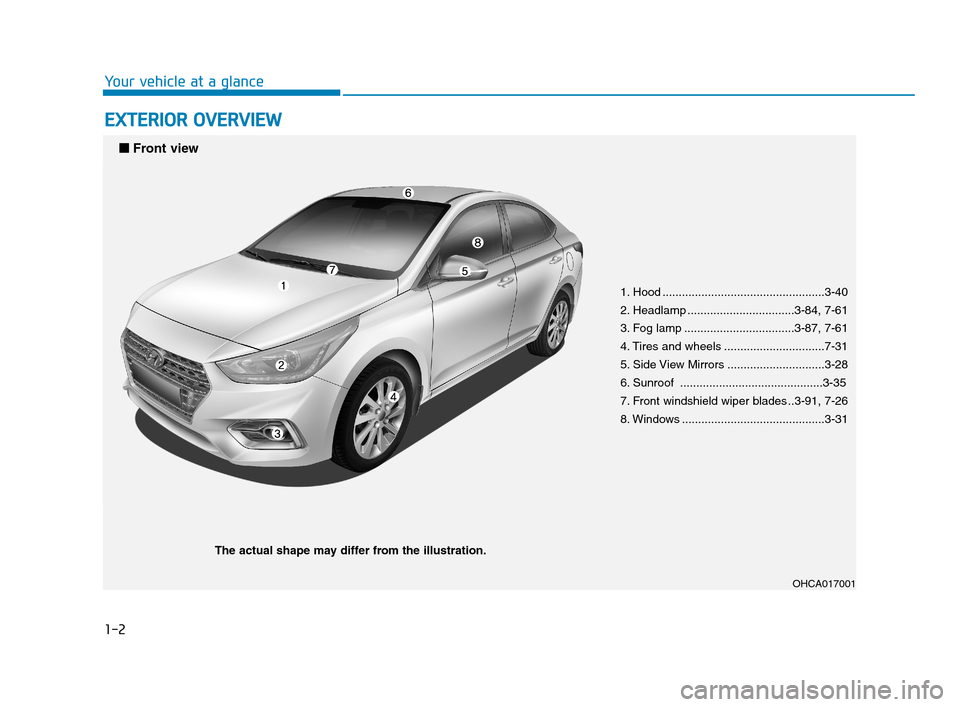
1. Hood ..................................................3-40
2. Headlamp .................................3-84, 7-61
3. Fog lamp ..................................3-87, 7-61
4. Tires and wheels ...............................7-31
5. Side View Mirrors ..............................3-28
6. Sunroof ............................................3-35
7. Front windshield wiper blades ..3-91, 7-26
8. Windows ............................................3-31
OHCA017001
■ ■
Front view
The actual shape may differ from the illustration.
HCa HMA 1.qxp 4/9/2019 2:53 PM Page 2
Page 29 of 445
2-2
You will find many safety precautions
and recommendations throughout
this section, and throughout this man-
ual. The safety precautions in this sec-
tion are among the most important.
Always Wear Your Seat Belt
A seat belt is your best protection in
all types of accidents. Air bags are
designed to supplement seat belts,
not replace them. So even though
your vehicle is equipped with air bags,
ALWAYS make sure you and your
passengers wear your seat belts, and
wear them properly.
Restrain All Children
All children under age 13 should ride
in your vehicle properly restrained in
a rear seat, not the front seat. Infants
and small children should be
restrained in an appropriate child
restraint. Larger children should use
a booster seat with the lap/shoulder
belt until they can use the seat belt
properly without a booster seat.
Air Bag Hazards
While air bags can save lives, they can
also cause serious or fatal injuries to
occupants who sit too close to them, or
who are not properly restrained. Infants,
young children, and shorter adults are
at the greatest risk of being injured by
an inflating air bag. Follow all instruc-
tions and warnings in this manual.
Driver Distraction
Driver distraction presents a serious
and potentially deadly danger, espe-
cially for inexperienced drivers. Safety
should be the first concern when
behind the wheel and drivers need to
be aware of the wide array of potential
distractions, such as drowsiness,
reaching for objects, eating, personal
grooming, other passengers, and
using cellular phones.
Drivers can become distracted when
they take their eyes and attention off
the road or their hands off the wheel to
focus on activities other than driving. To
reduce your risk of distraction or get-
ting into an accident:
• ALWAYS set up your mobile devices
(i.e., MP3 players, phones, naviga-
tion units, etc.) when your vehicle is
parked or safely stopped. ONLY use your mobile device when
allowed by laws and when conditions
permit safe use. NEVER text or
email while driving. Most states have
laws prohibiting drivers from texting.
Some states and cities also prohibit
drivers from using handheld phones.
NEVER let the use of a mobile
device distract you from driving. You
have a responsibility to your passen-
gers and others on the road to
always drive safely, with your hands
on the wheel as well as your eyes
and attention on the road.
Control Your Speed
Excessive speed is a major factor in
crash injuries and deaths. Generally,
the higher the speed, the greater the
risk, but serious injuries can also occur
at lower speeds. Never drive faster than
is safe for current conditions, regard-
less of the maximum speed posted.
Keep Your Vehicle in Safe
Condition
Having a tire blowout or a mechanical
failure can be extremely hazardous. To
reduce the possibility of such prob-
lems, check your tire pressures and
condition frequently, and perform all
regularly scheduled maintenance.
I IM
MP
PO
OR
RT
TA
AN
NT
T
S
SA
AF
FE
ET
TY
Y
P
PR
RE
EC
CA
AU
UT
TI
IO
ON
NS
S
Safety system of your vehicle
HCa HMA 2.QXP 5/7/2018 12:00 PM Page 2
Page 44 of 445
2-17
Safety system of your vehicle
2
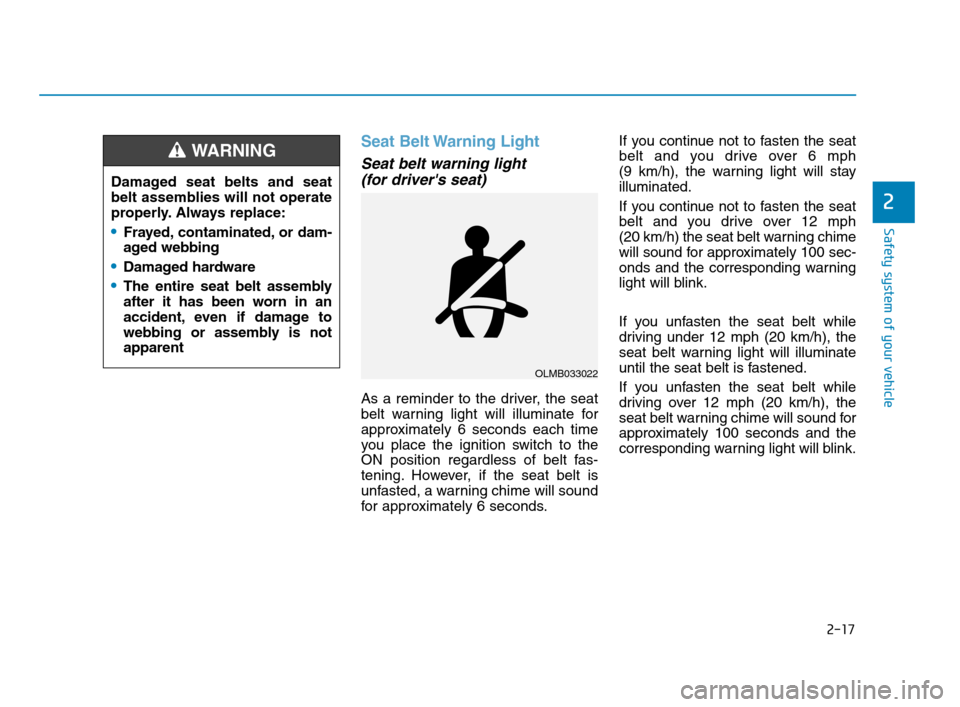
Seat Belt Warning Light
Seat belt warning light
(for driver's seat)
As a reminder to the driver, the seat
belt warning light will illuminate for
approximately 6 seconds each time
you place the ignition switch to the
ON position regardless of belt fas-
tening. However, if the seat belt is
unfasted, a warning chime will sound
for approximately 6 seconds.If you continue not to fasten the seat
belt and you drive over 6 mph
(9 km/h), the warning light will stay
illuminated.
If you continue not to fasten the seat
belt and you drive over 12 mph
(20 km/h) the seat belt warning chime
will sound for approximately 100 sec-
onds and the corresponding warning
light will blink.
If you unfasten the seat belt while
driving under 12 mph (20 km/h), the
seat belt warning light will illuminate
until the seat belt is fastened.
If you unfasten the seat belt while
driving over 12 mph (20 km/h), the
seat belt warning chime will sound for
approximately 100 seconds and the
corresponding warning light will blink. Damaged seat belts and seat
belt assemblies will not operate
properly. Always replace:
Frayed, contaminated, or dam-
aged webbing
Damaged hardware
The entire seat belt assembly
after it has been worn in an
accident, even if damage to
webbing or assembly is not
apparent
WARNING
OLMB033022
HCa HMA 2.QXP 5/7/2018 12:01 PM Page 17
Page 54 of 445
2-27
Safety system of your vehicle
2
A seat belt cannot provide proper
protection if the person is lying down
in the rear seat or if the front or rear
seats are in a reclined position.Care of Seat Belts
Seat belt systems should never be
disassembled or modified. In addi-
tion, care should be taken to assure
that seat belts and belt hardware are
not damaged by seat hinges, doors
or other abuse.
Periodic inspection
All seat belts should be inspected
periodically for wear or damage of
any kind. Any damaged parts should
be replaced as soon as possible by
an authorized HYUNDAI dealer.
Keep belts clean and dry
Seat belts should be kept clean and
dry. If belts become dirty, they can be
cleaned by using a mild soap solu-
tion and warm water. Bleach, dye,
strong detergents or abrasives
should not be used because they
may damage and weaken the fabric.
When to replace seat belts
The entire seat belt assembly or
assemblies should be replaced if the
vehicle has been involved in an acci-
dent. This should be done even if no
damage is visible. Additional ques-
tions concerning seat belt operation
should be directed to an authorized
HYUNDAI dealer.
NEVER ride with a reclined
seatback when the vehicle is
moving.
Riding with a reclined seatback
increases your chance of seri-
ous or fatal injuries in the event
of a collision or sudden stop.
Drivers and passengers should
always sit well back in their
seats, properly belted, and with
the seatbacks upright.
WARNING
HCa HMA 2.QXP 5/7/2018 12:01 PM Page 27
Page 56 of 445
2-29
Safety system of your vehicle
2
Child restraint system (CRS)
Infants and younger children must be
restrained in an appropriate rear-fac-
ing or forward-facing CRS that has
first been properly secured to the
rear seat of the vehicle. Read and
comply with the instructions for
installation and use provided by the
manufacturer of the child restraint.
Selecting a Child Restraint
System (CRS)
When selecting a CRS for your child,
always:
Make sure the CRS has a label
certifying that it meets applicable
Federal Motor Vehicle Safety
Standards (FMVSS 213).
Select a child restraint based on
your child's height and weight. The
required label or the instructions
for use typically provide this infor-
mation.
Select a child restraint that fits the
vehicle seating position where it
will be used.
Read and comply with the warn-
ings and instructions for installation
and use provided with the child
restraint system. (Continued)Always follow the child
restraint system manufactur-
er's instructions for installa-
tion and use.
Always properly restrain your
child in the child restraint.
If the vehicle head restraint
prevents proper installation of
a child seat (as described in
the child restraint system
manual), the head restraint of
the respective seating posi-
tion shall be readjusted or
entirely removed.
Do not use an infant carrier or
a child safety seat that
"hooks" over a seatback, it
may not provide adequate
protection in an accident.
After an accident, have a
HYUNDAI dealer check the
child restraint system, seat
belts, tether anchors and
lower anchors.
An improperly secured child
restraint can increase the risk
of SERIOUS INJURY or DEATH
in an accident. Always take the
following precautions when
using a child restraint system:
NEVER install a child or infant
restraint in the front passen-
ger's seat.
Always properly secure the
child restraint to a rear seat of
the vehicle.
(Continued)
WARNING
HCa HMA 2.QXP 5/7/2018 12:01 PM Page 29
Page 58 of 445
2-31
Safety system of your vehicle
2
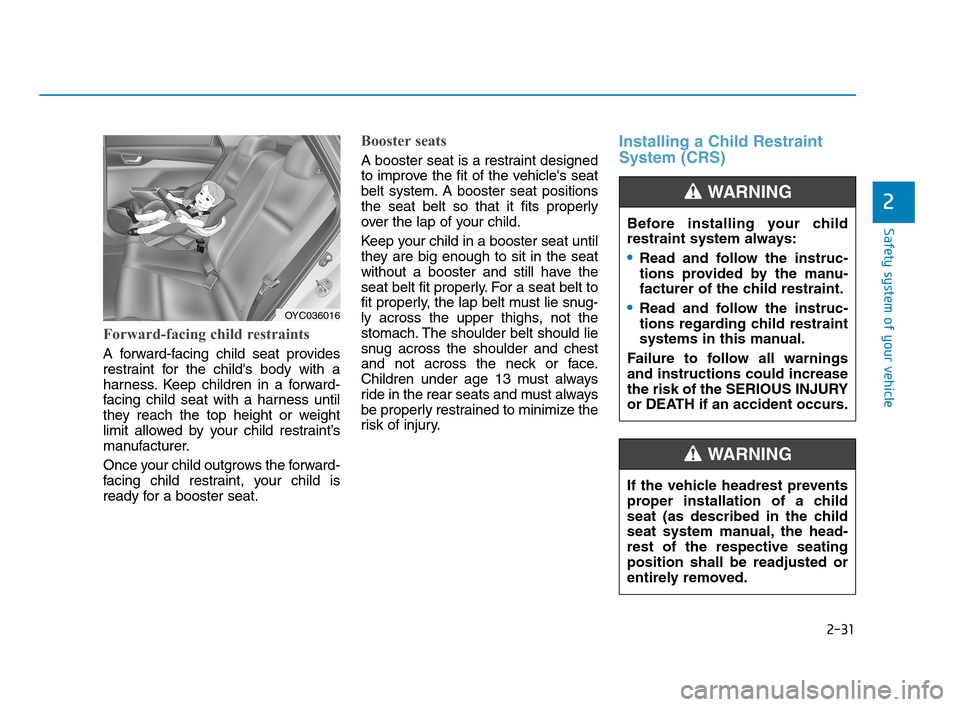
Forward-facing child restraints
A forward-facing child seat provides
restraint for the child's body with a
harness. Keep children in a forward-
facing child seat with a harness until
they reach the top height or weight
limit allowed by your child restraint’s
manufacturer.
Once your child outgrows the forward-
facing child restraint, your child is
ready for a booster seat.
Booster seats
A booster seat is a restraint designed
to improve the fit of the vehicle's seat
belt system. A booster seat positions
the seat belt so that it fits properly
over the lap of your child.
Keep your child in a booster seat until
they are big enough to sit in the seat
without a booster and still have the
seat belt fit properly. For a seat belt to
fit properly, the lap belt must lie snug-
ly across the upper thighs, not the
stomach. The shoulder belt should lie
snug across the shoulder and chest
and not across the neck or face.
Children under age 13 must always
ride in the rear seats and must always
be properly restrained to minimize the
risk of injury.
Installing a Child Restraint
System (CRS)
Before installing your child
restraint system always:
Read and follow the instruc-
tions provided by the manu-
facturer of the child restraint.
Read and follow the instruc-
tions regarding child restraint
systems in this manual.
Failure to follow all warnings
and instructions could increase
the risk of the SERIOUS INJURY
or DEATH if an accident occurs.
WARNING
If the vehicle headrest prevents
proper installation of a child
seat (as described in the child
seat system manual, the head-
rest of the respective seating
position shall be readjusted or
entirely removed.
WARNING
OYC036016
HCa HMA 2.QXP 5/7/2018 12:01 PM Page 31
Page 135 of 445
3-47
Convenient features of your vehicle
3
Information
• If you press the door unlock button
(2), the Smart Trunk function will
be deactivated temporarily. But, if
you do not open any door for 30 sec-
onds, the smart trunk function will
be activated again.
• If you press the trunk open button
(3) for more than 1 second, the
trunk opens.
• If you press the door lock button (1)
or trunk open button (3) when the
Smart Trunk function is not in the
Detect and Alert stage, the smart
trunk function will not be deactivated.
• In case you have deactivated the
Smart Trunk function by pressing
the smart key button and opened a
door, the smart trunk function can
be activated again by closing and
locking all doors.
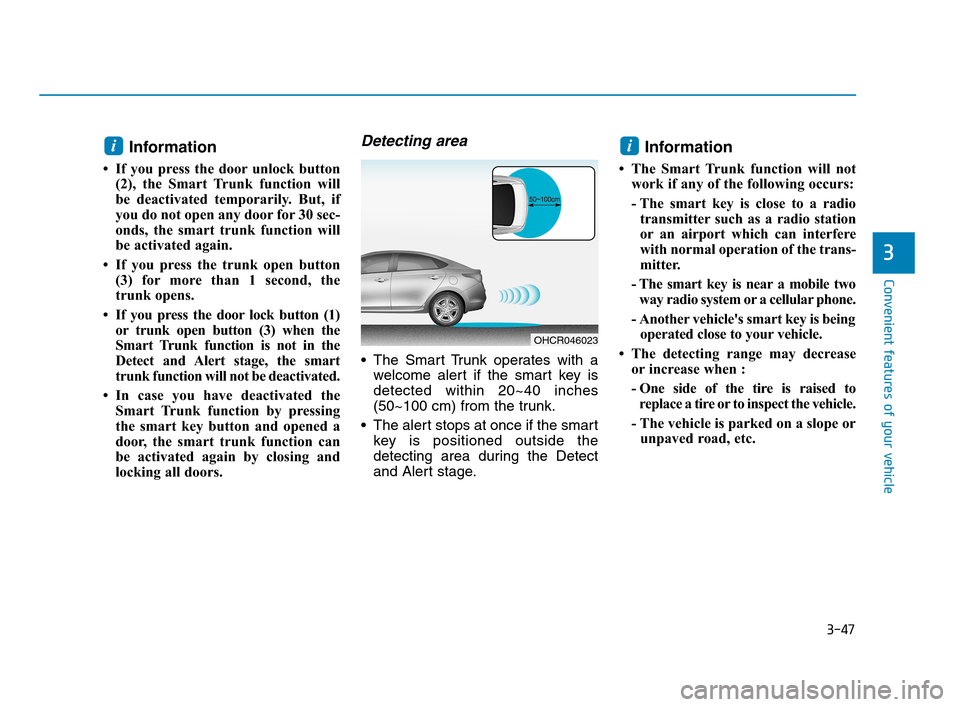
Detecting area
The Smart Trunk operates with a
welcome alert if the smart key is
detected within 20~40 inches
(50~100 cm) from the trunk.
The alert stops at once if the smart
key is positioned outside the
detecting area during the Detect
and Alert stage.
Information
• The Smart Trunk function will not
work if any of the following occurs:
- The smart key is close to a radio
transmitter such as a radio station
or an airport which can interfere
with normal operation of the trans-
mitter.
- The smart key is near a mobile two
way radio system or a cellular phone.
- Another vehicle's smart key is being
operated close to your vehicle.
• The detecting range may decrease
or increase when :
- One side of the tire is raised to
replace a tire or to inspect the vehicle.
- The vehicle is parked on a slope or
unpaved road, etc.
ii
OHCR046023
HCa HMA 3a(~84).qxp 4/9/2019 3:01 PM Page 47