coolant HYUNDAI COUPE 2016 Owner's Manual
[x] Cancel search | Manufacturer: HYUNDAI, Model Year: 2016, Model line: COUPE, Model: HYUNDAI COUPE 2016Pages: 475, PDF Size: 14.78 MB
Page 396 of 475
727
Maintenance
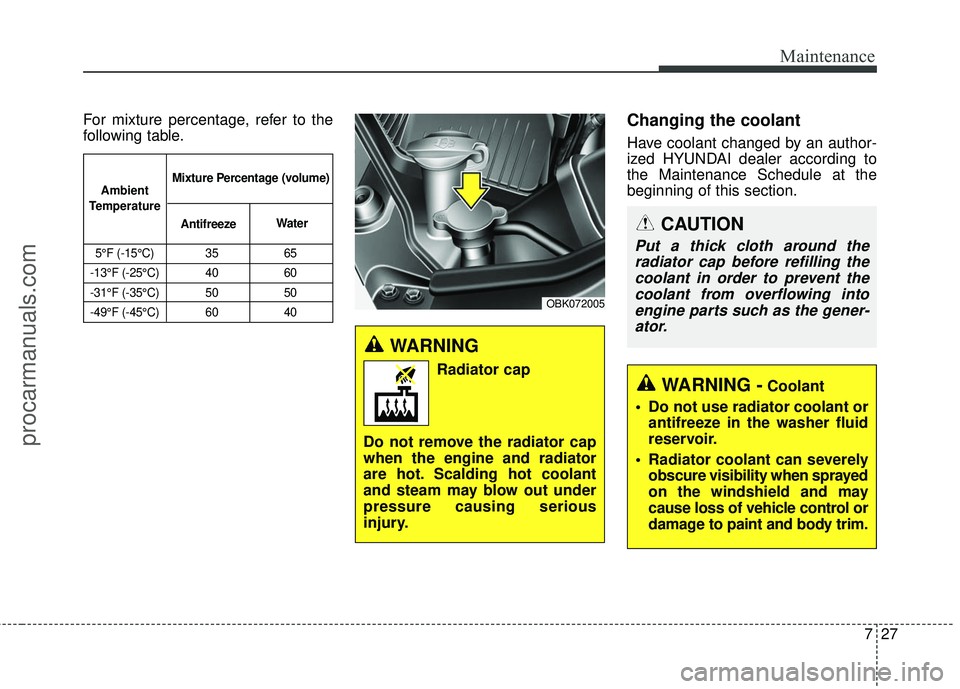
For mixture percentage, refer to the
following table.Changing the coolant
Have coolant changed by an author-
ized HYUNDAI dealer according to
the Maintenance Schedule at the
beginning of this section.
WARNING
Radiator cap
Do not remove the radiator cap
when the engine and radiator
are hot. Scalding hot coolant
and steam may blow out under
pressure causing serious
injury.
CAUTION
Put a thick cloth around the radiator cap before refilling thecoolant in order to prevent thecoolant from overflowing intoengine parts such as the gener-ator.
WARNING -Coolant
Do not use radiator coolant or antifreeze in the washer fluid
reservoir.
Radiator coolant can severely obscure visibility when sprayed
on the windshield and may
cause loss of vehicle control or
damage to paint and body trim.
5°F (-15°C) 35 65
-13°F (-25°C) 40 60
-31°F (-35°C) 50 50
-49°F (-45°C) 60 40
Ambient
Temperature Mixture Percentage (volume)
Antifreeze Water
OBK072005
procarmanuals.com
Page 400 of 475
731
Maintenance
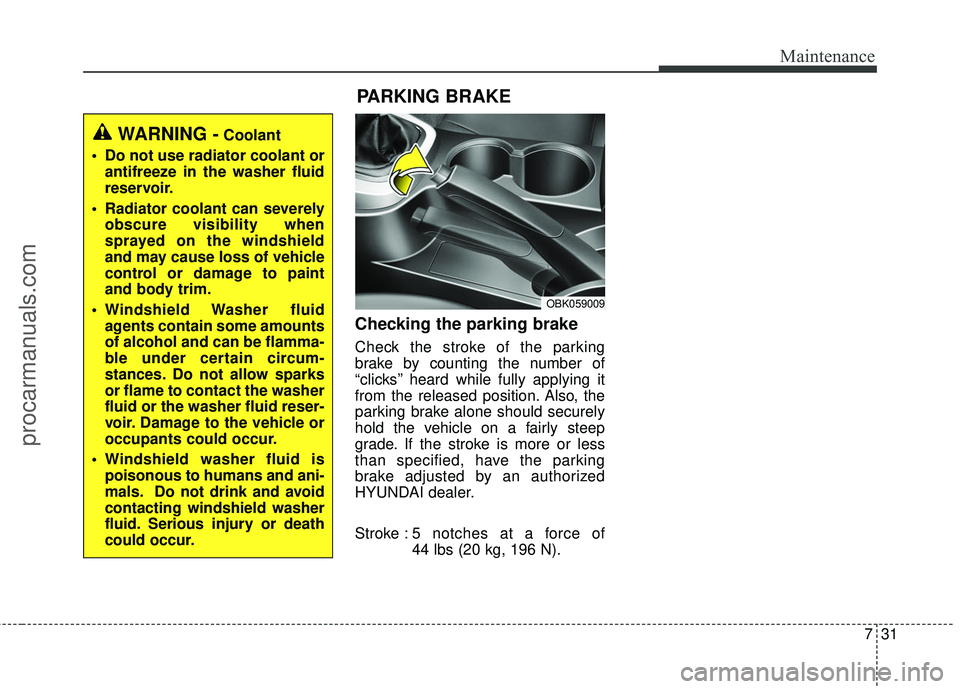
Checking the parking brake
Check the stroke of the parking
brake by counting the number of
“clicks’’ heard while fully applying it
from the released position. Also, the
parking brake alone should securely
hold the vehicle on a fairly steep
grade. If the stroke is more or less
than specified, have the parking
brake adjusted by an authorized
HYUNDAI dealer.
Stroke : 5 notches at a force of
44 lbs (20 kg, 196 N).
WARNING -Coolant
Do not use radiator coolant or antifreeze in the washer fluid
reservoir.
Radiator coolant can severely obscure visibility when
sprayed on the windshield
and may cause loss of vehicle
control or damage to paint
and body trim.
Windshield Washer fluid agents contain some amounts
of alcohol and can be flamma-
ble under certain circum-
stances. Do not allow sparks
or flame to contact the washer
fluid or the washer fluid reser-
voir. Damage to the vehicle or
occupants could occur.
Windshield washer fluid is poisonous to humans and ani-
mals. Do not drink and avoid
contacting windshield washer
fluid. Serious injury or death
could occur.
OBK059009
PARKING BRAKE
procarmanuals.com
Page 420 of 475
751
Maintenance
Tire terminology and definitions
Air Pressure: The amount of air
inside the tire pressing outward on
the tire. Air pressure is expressed in
pounds per square inch (psi) or kilo-
pascal (kPa).
Accessory Weight: This means the
combined weight of optional acces-
sories. Some examples of optional
accessories are, automatic transmis-
sion, power seats, and air conditioning.
Aspect Ratio: The relationship of a
tire's height to its width.
Belt: A rubber coated layer of cords
that is located between the plies and
the tread. Cords may be made from
steel or other reinforcing materials.
Bead: The tire bead contains steel
wires wrapped by steel cords that
hold the tire onto the rim.
Bias Ply Tire : A pneumatic tire in
which the plies are laid at alternate
angles less than 90 degrees to the
centerline of the tread.
Cold Tire Pressure: The amount of
air pressure in a tire, measured in
pounds per square inch (psi) or kilo-
pascals (kPa) before a tire has built
up heat from driving. Curb Weight: This means the weight
of a motor vehicle with standard and
optional equipment including the max-
imum capacity of fuel, oil and coolant,
but without passengers and cargo.
DOT Markings: A code molded into
the sidewall of a tire signifying that
the tire is in compliance with the U.S.
Department of Transportation motor
vehicle safety standards. The DOT
code includes the Tire Identification
Number (TIN), an alphanumeric des-
ignator which can also identify the
tire manufacturer, production plant,
brand and date of production.
GVWR: Gross Vehicle Weight Rating
GAWR FRT: Gross Axle Weight
Rating for the Front Axle.
GAWR RR: Gross Axle Weight
Rating for the Rear axle.
Intended Outboard Sidewall
: The
side of an asymmetrical tire, that
must always face outward when
mounted on a vehicle.
Kilopascal (kPa): The metric unit for
air pressure.
Light truck (LT) tire: A tire designat-
ed by its manufacturer as primarily
intended for use on lightweight trucks
or multipurpose passenger vehicles. Load ratings
: The maximum load
that a tire is rated to carry for a given
inflation pressure.
Load Index: An assigned number
ranging from 1 to 279 that corre-
sponds to the load carrying capacity
of a tire.
Maximum Inflation Pressure : The
maximum air pressure to which a
cold tire may be inflated. The maxi-
mum air pressure is molded onto the
sidewall.
Maximum Load Rating : The load
rating for a tire at the maximum per-
missible inflation pressure for that
tire.
Maximum Loaded Vehicle Weight:
The sum of curb weight; accessory
weight; vehicle capacity weight; and
production options weight.
Normal Occupant Weight: The
number of occupants a vehicle is
designed to seat multiplied by 150
pounds (68 kg).
Occupant Distribution : Designated
seating positions.
procarmanuals.com
Page 453 of 475
Maintenance
84
7
Canister
Fuel vapors generated inside the fuel
tank are absorbed and stored in the
onboard canister. When the engine is
running, the fuel vapors absorbed in
the canister are drawn into the surge
tank through the purge control sole-
noid valve.
Purge Control Solenoid Valve
(PCSV)
The purge control solenoid valve is
controlled by the Engine Control
Module (ECM); when the engine
coolant temperature is low during
idling, the PCSV closes so that evap-
orated fuel is not taken into the
engine. After the engine warms-up
during ordinary driving, the PCSV
opens to introduce evaporated fuel to
the engine.
3. Exhaust emission control
system
The Exhaust Emission Control
System is a highly effective system
which controls exhaust emissions
while maintaining good vehicle per-
formance.
Vehicle modifications
This vehicle should not be modified.
Modification of your vehicle could
affect its performance, safety or
durability and may even violate gov-
ernmental safety and emissions reg-
ulations.
In addition, damage or performance
problems resulting from any modifi-
cation may not be covered under
warranty.
If you use unauthorized electronic
devices, it may cause the vehicle to
operate abnormally, wire damage,
battery discharge and fire. For your
safety, do not use unauthorized
electronic devices.
Engine exhaust gas precautions
(carbon monoxide)
Carbon monoxide can be present with other exhaust fumes.
Therefore, if you smell exhaust
fumes of any kind inside your vehi-
cle, have it inspected and repaired
immediately. If you ever suspect
exhaust fumes are coming into
your vehicle, drive it only with all
the windows fully open. Have your
vehicle checked and repaired
immediately.
Do not operate the engine in con- fined or closed areas (such as
garages) any more than what is
necessary to move the vehicle in or
out of the area.
When the vehicle is stopped in an open area for more than a short
time with the engine running,
adjust the ventilation system (as
needed) to draw outside air into the
vehicle.
Never sit in a parked or stopped vehicle for any extended time with
the engine running.
procarmanuals.com
Page 459 of 475
Specifications, Consumer information, Reporting safety defects
48
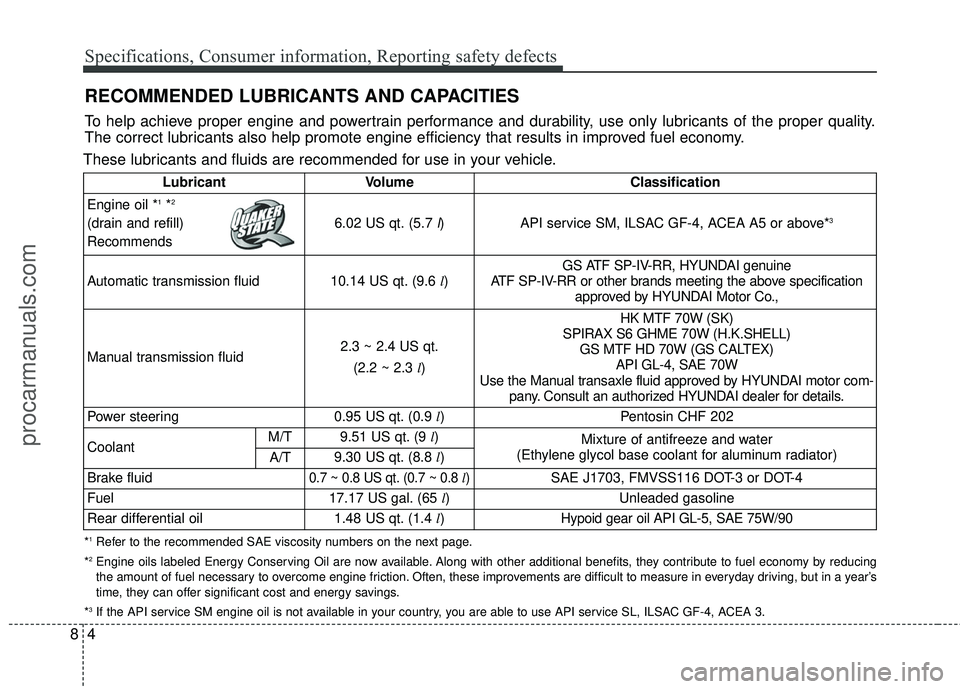
RECOMMENDED LUBRICANTS AND CAPACITIES
These lubricants and fluids are recommended for use in your vehicle.
*1Refer to the recommended SAE viscosity numbers on the next page.
*2Engine oils labeled Energy Conserving Oil are now available. Along with other additional benefits, they contribute to fuel econo my by reducing
the amount of fuel necessary to overcome engine friction. Often, these improvements are difficult to measure in everyday driving, but in a year’s
time, they can offer significant cost and energy savings.
*
3If the API service SM engine oil is not available in your country, you are able to use API service SL, ILSAC GF-4, ACEA 3.
To help achieve proper engine and powertrain performance and durability, use only lubricants of the proper quality.
The correct lubricants also help promote engine efficiency that results in improved fuel economy.
LubricantVolumeClassification
Engine oil *1*2
(drain and refill)
Recommends6.02 US qt. (5.7 l)API service SM, ILSAC GF-4, ACEA A5 or above*3
Automatic transmission fluid10.14 US qt. (9.6 l)
GS ATF SP-IV-RR, HYUNDAI genuine
ATF SP-IV-RR or other brands meeting the above specification approved by HYUNDAI Motor Co.,
Manual transmission fluid2.3 ~ 2.4 US qt.
(2.2 ~ 2.3 l)
HK MTF 70W (SK)
SPIRAX S6 GHME 70W (H.K.SHELL) GS MTF HD 70W (GS CALTEX) API GL-4, SAE 70W
Use the Manual transaxle fluid approved by HYUNDAI motor com- pany. Consult an authorized HYUNDAI dealer for details.
Power steering0.95 US qt. (0.9 l)Pentosin CHF 202
CoolantM/T9.51 US qt. (9 l) Mixture of antifreeze and water
(Ethylene glycol base coolant for aluminum radiator)
A/T9.30 US qt. (8.8 l)
Brake fluid0.7 ~ 0.8 US qt. (0.7 ~ 0.8 l )SAE J1703, FMVSS116 DOT-3 or DOT-4
Fuel17.17 US gal. (65 l)Unleaded gasoline
Rear differential oil1.48 US qt. (1.4 l)Hypoid gear oil API GL-5, SAE 75W/90
procarmanuals.com
Page 467 of 475
 ··················\
··")
I3
Index
Brake system··················\
··················\
············ ·5-25
Anti-lock brake system (ABS) ··················\
·······5-29
Electronic stability program (ESC) ··················\
··5-31
Parking brake ··················\
··················\
·········5-27
Power brakes ··················\
··················\
········· ·5-25
Brakes/clutch fluid ··················\
··················\
····· ·7-28
Bulb replacement ··················\
··················\
······· ·7-67
Bulb wattage ··················\
··················\
···············8-2
California perchlorate notice ··················\
·············7-86
Capacities (Lubricants) ··················\
··················\
···8-4
Care Exterior care ··················\
··················\
········· ·7-76
Interior care ··················\
··················\
·········· ·7-82
Tire care ··················\
··················\
·············· ·7-41
Cargo capacity ··················\
··················\
·········· ·5-53
Cargo weight ··················\
··················\
············ ·5-57
Center console storage ··················\
················· ·4-120
Central door lock switch ··················\
················· ·4-18
Certification label ··················\
··················\
······· ·5-55
Certification label ··················\
··················\
·········8-6
Chains Tire chains ··················\
··················\
············ ·5-49
Changing tires ··················\
··················\
··········· ·6-13
Checking tire inflation pressure ··················\
·········7-43 Child restraint system
··················\
··················\
·· ·3-27
Lower anchor ··················\
··················\
·········3-34
Passerger's seat ··················\
··················\
······ ·3-38
Seat belt ··················\
··················\
··············· ·3-30
Tether anchor system ··················\
················· ·3-32
Cigarette lighter ··················\
··················\
······· ·4-121
Climate control air filter ··················\
···········4-100, 112
Climate control air filter replacement ··················\
···7-33
Clock (Digital) ··················\
··················\
········· ·4-124
Collision sensors ··················\
··················\
·········3-55
Combined instrument, see instrument cluster ···········4-45
Compact spare tire replacement ··················\
·········7-46
Compass ··················\
··················\
················· ·4-37
Consumer information ··················\
··················\
··· ·8-8
Coolant ··················\
··················\
··················\
· ·7-25
Cooling fluid, see engine coolant ··················\
·······7-25
Crankcase emission control system ··················\
·····7-83
Cruise control system ··················\
··················\
·· ·5-37
Cup holder ··················\
··················\
··············4-120
Curtain air bag ··················\
··················\
·········· ·3-54
Dashboard illumination, see instrument panel illumination· ·4-46
Dashboard, see instrument cluster··················\
·······4-45
Daytime running light (DRL) ··················\
············4-83
Defogging (Windshield) ··················\
················ ·4-114
D
C
procarmanuals.com
Page 468 of 475
··················\
··········4-117
Defroster (Front window) Front windshield deicer ··················\
······")
Index
4I
Defogging logic (Windshield)··················\
··········4-117
Defroster (Front window) Front windshield deicer ··················\
···············4-91
Defroster (Rear window) ··················\
················ ·4-91
Defrosting (Windshield) ··················\
·················4-114
Digital clock ··················\
··················\
··········· ·4-124
Dimensions ··················\
··················\
·················8-2
Display illumination, see instrument panel illumination · · ·4-46
Displays, see instrument cluster ··················\
·········4-45
Door locks ··················\
··················\
··············· ·4-16
Central door lock switch ··················\
··············4-18
Speed sensing door lock system ··················\
·····4-19
Drinks holders, see cup holders ··················\
········4-122
Driver's 3-point seat belt ··················\
················· ·3-18
Driver's and passenger's front air bag ··················\
···3-48
Driving at night ··················\
··················\
········· ·5-44
Driving in flooded areas ··················\
················· ·5-46
Driving in the rain ··················\
··················\
······ ·5-45
Driving off-road ··················\
··················\
········· ·5-46
DRL ··················\
··················\
··················\
···· ·4-83
Economical operation ··················\
··················\
·· ·5-41
Electric chromic mirror (ECM) ··················\
··········4-35
Electronic stability program (ESC) ··················\
·····5-31
Emergency fuel filler lid release ··················\
·········4-29 Emergency starting
Jump starting ··················\
··················\
·········· ·6-4
Push starting ··················\
··················\
··········· ·6-5
Emergency while driving ··················\
················· ·6-2
Emission control system ··················\
················· ·7-83
Crankcase emission control system ··················\
··7-83
Evaporative emission control System ·················7-83
Exhaust emission control system ··················\
····7-84
Engine compartment ··················\
················· ·2-6, 7-3
Engine compartment fuse label ··················\
··········7-60
Engine compartment panel fuse ··················\
·········7-57
Engine coolant ··················\
··················\
·········· ·7-25
Engine coolcant temperature gauge ··················\
·····4-47
Engine number ··················\
··················\
··········· ·8-7
Engine oil ··················\
··················\
·················7-23
Engine overheats ··················\
··················\
········· ·6-6
Engine Specification ··················\
··················\
····· ·8-2
Engine start/stop button ··················\
··················\
· ·5-8
Engine will not start ··················\
··················\
····· ·6-3
Escort function ··················\
··················\
·········· ·4-83
Evaporative emission control system ··················\
···7-83
Exhaust emission control system ··················\
········7-84
Explanation of scheduled maintenance items ···········7-20
Exterior care ··················\
··················\
··············7-76
Exterior overview (front) ··················\
················· ·2-2
Exterior overview (rear) ··················\
··················\
· ·2-3
E
procarmanuals.com
Page 469 of 475

I5
Index
Flat tire··················\
··················\
··················\
· ·6-12
Jack and tools ··················\
··················\
·········6-12
Changing tires ··················\
··················\
······· ·6-13
Removing and storing the spare tire ··················\
·6-13
Jack label ··················\
··················\
··············6-20
Floor mat anchor(s) ··················\
··················\
··· ·4-125
Fluid Automatic tranmission fluid ··················\
··········7-30
Brakes/clutch fluid ··················\
··················\
·· ·7-28
Manual tranmission fluid ··················\
··············7-30
Power steering fluid ··················\
··················\
· ·7-29
Washer fluid ··················\
··················\
·········· ·7-30
Folding the outside rearviwe mirror · · · · · · · ···············4-44
Folding the rear seat ··················\
··················\
···· ·3-13
Front seat adjustment (manual) ··················\
···········3-4
Front seat adjustment (Power) ··················\
············3-5
Front windshield deicer ··················\
··················\
·4-92
Fuel additives ··················\
··················\
··············1-5
Fuel filler lid··················\
··················\
··············4-27 Emergency fuel filler lid release ··················\
·····4-29
Fuel gauge ··················\
··················\
··············· ·4-48
Fuel requirements ··················\
··················\
·········1-3
Alcohol and methanol ··················\
··················\
·1-4
Fuel additives ··················\
··················\
···········1-5
Fuse switch ··················\
··················\
·············· ·7-57Fuses
··················\
··················\
··················\
···· ·7-55
Engine compartment panel fuse ··················\
······7-57
Fuse switch··················\
··················\
··········· ·7-57
Fuse/relay panel description ··················\
··········7-58
Instrument panel fuse ··················\
················· ·7-55
Label ··················\
··················\
··················\
·7-58
Multi fuse ··················\
··················\
··············7-58
Gauge · · · · · · · · · · · · · · · · · · · · · · · · · · ··················\
··············4-46
Engine coolant temperature gauge ··················\
···4-47
Fuel gauge ··················\
··················\
············ ·4-48
Multi gauge ··················\
··················\
·········· ·4-71
GAW (Gross axle weight) ··················\
···············
·5-57
GA
WR (Gross axle weight rating) ··················\
······5-57
Glass antenna ··················\
··················\
·········· ·4-128
Glove box ··················\
··················\
·············· ·4-120
Glove box lamp ··················\
··················\
········· ·4-90
GVW (Gross vehicle weight) ··················\
············5-57
GVWR (Gross vehicle weight rating) ··················\
··5-57
Hazard warning flasher ··················\
··············4-81, 6-2
Hazardous driving conditions ··················\
············5-43
Headlamp welcome function ··················\
·············4-82
F
G
H
procarmanuals.com
Page 470 of 475

Index
6I
Headlight escort function··················\
················ ·4-82
Headrest ··················\
··················\
··················\
··3-7
Highway driving ··················\
··················\
·········5-46
HomeLink system ··················\
··················\
······ ·4-38
Hood ··················\
··················\
··················\
···· ·4-26
Horn ··················\
··················\
··················\
···· ·4-34
How to use this manual ··················\
··················\
··1-2
Immobilizer system ··················\
··················\
·······4-4
Indicator symbols on the instrument cluster ··············1-8
Indicators and warnings ··················\
················· ·4-61
Inside rearview mirror ··················\
··················\
· ·4-35
Instrument cluster ··················\
··················\
······· ·4-45
Engine coolant temperature gauge ··················\
···4-47
Fuel gauge ··················\
··················\
············ ·4-48
Instrument panel illumination ··················\
········4-46
LCD display warning ··················\
················· ·4-56
Odometer ··················\
··················\
··············4-49
Speedometer ··················\
··················\
········· ·4-46
Tachometer ··················\
··················\
··········· ·4-47
Trip computer ··················\
··················\
·········4-49
User setting mode ··················\
··················\
··· ·4-53
Warning and indicators ··················\
··············· ·4-61
Instrument panel fuse ··················\
··················\
·· ·7-56
Instrument panel fuse label ··················\
···············7-59 Instrument panel illumination
··················\
············4-46
Instrument panel overview ··················\
················ ·2-5
Interior care ··················\
··················\
·············· ·7-82
Interior features ··················\
··················\
·········4-121
Ashtray ··················\
··················\
·············· ·4-122
Aux, USB and iPod port ··················\
············ ·4-127
Cigarette lighter ··················\
··················\
···· ·4-121
Cup holder ··················\
··················\
·········· ·4-122
Digital clock ··················\
··················\
······· ·4-124
Floor mat anchor(s) ··················\
··················\
·4-125
Outside thermometer ··················\
················ ·4-125
Power outlet ··················\
··················\
·········4-124
Sunvisor ··················\
··················\
··············4-123
Interior light ··················\
··················\
··············4-89
Glove box lamp ··················\
··················\
······ ·4-90
Map lamp ··················\
··················\
··············4-89
T
runk room lamp ··················\
··················\
···· ·4-90
Vanity mirror lamp ··················\
··················\
·· ·4-90
Interior overview ··················\
··················\
········· ·2-4
IPOD ··················\
··················\
··················\
···4-170
Jack and tools ··················\
··················\
··········· ·6-12
Jump starting ··················\
··················\
·············· ·6-4
J
I
procarmanuals.com