engine compartment Hyundai Genesis Coupe 2016 s User Guide
[x] Cancel search | Manufacturer: HYUNDAI, Model Year: 2016, Model line: Genesis Coupe, Model: Hyundai Genesis Coupe 2016Pages: 475, PDF Size: 15.71 MB
Page 372 of 475
73
Maintenance
ENGINE COMPARTMENT
73
Maintenance
ENGINE COMPARTMENT
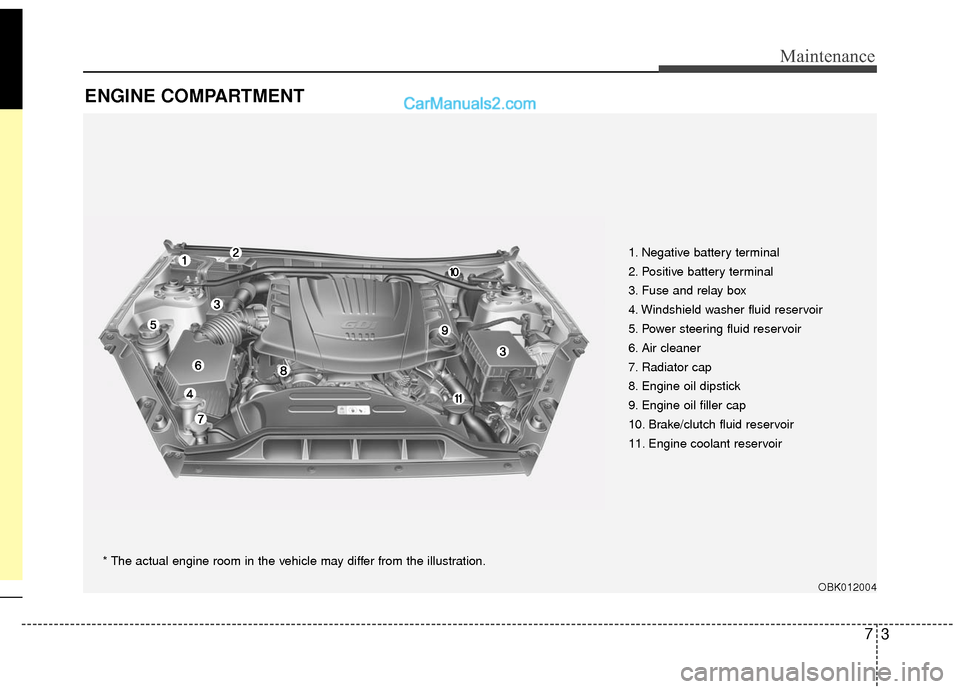
1. Negative battery terminal
2. Positive battery terminal
3. Fuse and relay box
4. Windshield washer fluid reservoir
5. Power steering fluid reservoir
6. Air cleaner
7. Radiator cap
8. Engine oil dipstick
9. Engine oil filler cap
10. Brake/clutch fluid reservoir
11. Engine coolant reservoir
OBK012004
* The actual engine room in the vehicle may differ from the illustration.
Page 425 of 475
Maintenance
56
7
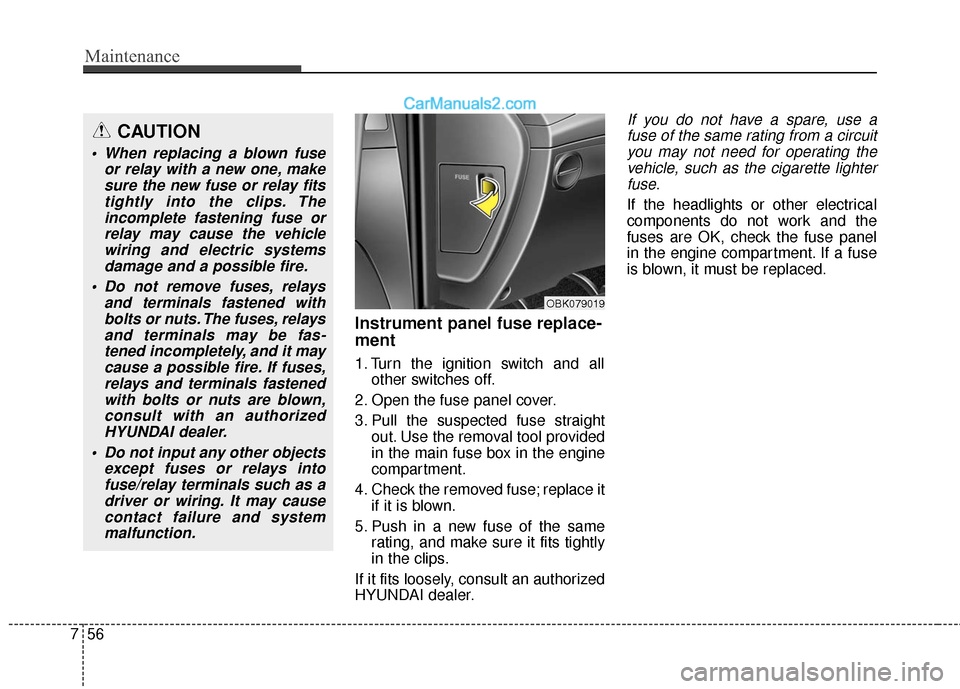
Instrument panel fuse replace-
ment
1. Turn the ignition switch and all
other switches off.
2. Open the fuse panel cover.
3. Pull the suspected fuse straight out. Use the removal tool provided
in the main fuse box in the engine
compartment.
4. Check the removed fuse; replace it if it is blown.
5. Push in a new fuse of the same rating, and make sure it fits tightly
in the clips.
If it fits loosely, consult an authorized
HYUNDAI dealer.
If you do not have a spare, use a fuse of the same rating from a circuityou may not need for operating thevehicle, such as the cigarette lighterfuse.
If the headlights or other electrical
components do not work and the
fuses are OK, check the fuse panel
in the engine compartment. If a fuse
is blown, it must be replaced.
OBK079019
CAUTION
When replacing a blown fuse or relay with a new one, makesure the new fuse or relay fitstightly into the clips. Theincomplete fastening fuse orrelay may cause the vehiclewiring and electric systemsdamage and a possible fire.
Do not remove fuses, relays and terminals fastened withbolts or nuts. The fuses, relaysand terminals may be fas-tened incompletely, and it maycause a possible fire. If fuses,relays and terminals fastenedwith bolts or nuts are blown,consult with an authorizedHYUNDAI dealer.
Do not input any other objects except fuses or relays intofuse/relay terminals such as adriver or wiring. It may causecontact failure and systemmalfunction.
Page 426 of 475
757
Maintenance
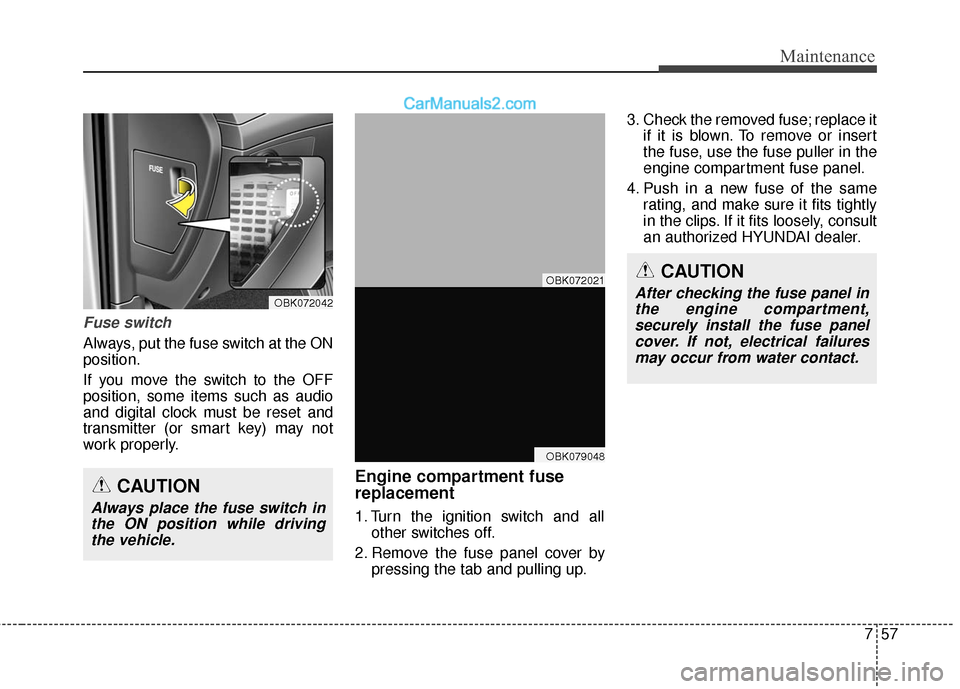
Fuse switch
Always, put the fuse switch at the ON
position.
If you move the switch to the OFF
position, some items such as audio
and digital clock must be reset and
transmitter (or smart key) may not
work properly.
Engine compartment fuse
replacement
1. Turn the ignition switch and allother switches off.
2. Remove the fuse panel cover by pressing the tab and pulling up. 3. Check the removed fuse; replace it
if it is blown. To remove or insert
the fuse, use the fuse puller in the
engine compartment fuse panel.
4. Push in a new fuse of the same rating, and make sure it fits tightly
in the clips. If it fits loosely, consult
an authorized HYUNDAI dealer.
CAUTION
Always place the fuse switch inthe ON position while drivingthe vehicle.
OBK072042
OBK072021
OBK079048
CAUTION
After checking the fuse panel inthe engine compartment,securely install the fuse panelcover. If not, electrical failuresmay occur from water contact.
Page 431 of 475
Maintenance
62
7
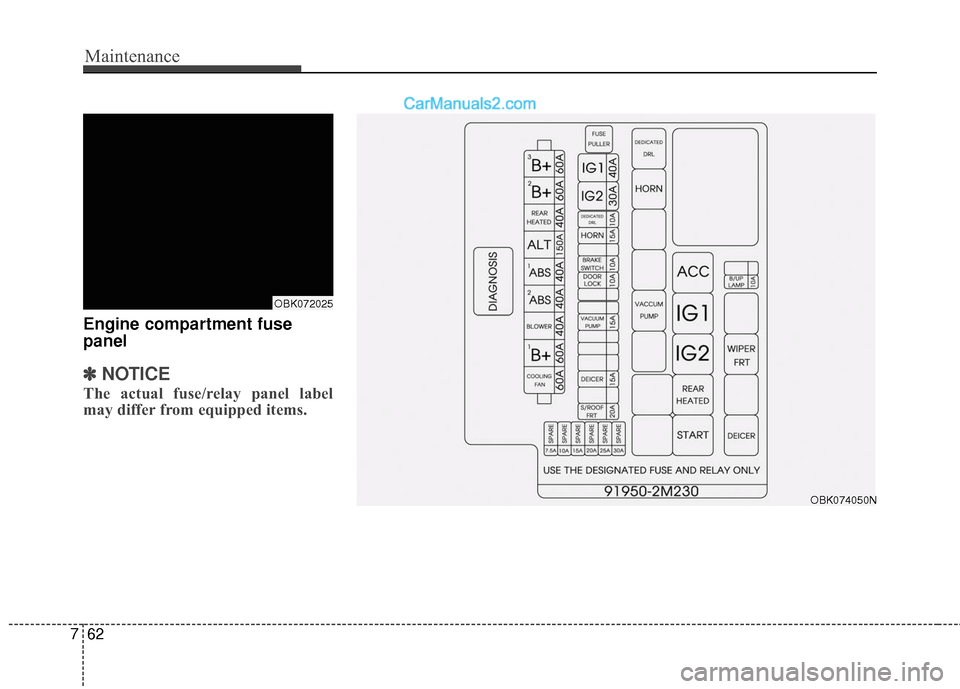
Engine compartment fuse
panel
✽ ✽
NOTICE
The actual fuse/relay panel label
may differ from equipped items.
OBK072025
OBK074050N
Page 432 of 475
763
Maintenance
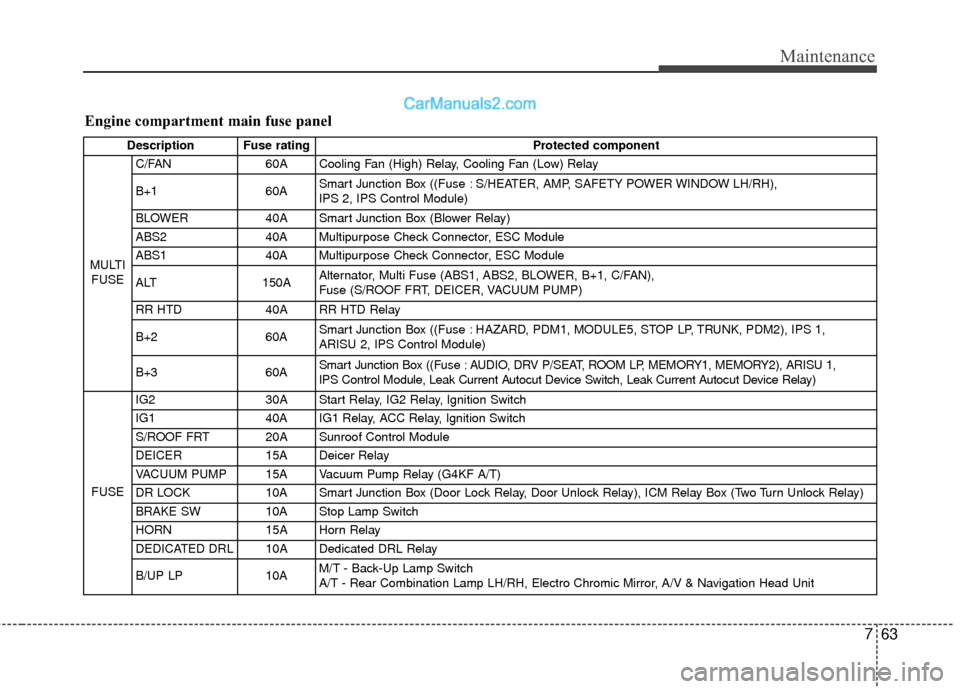
Engine compartment main fuse panel
Description Fuse ratingProtected component
MULTI FUSE C/FAN
60A Cooling Fan (High) Relay, Cooling Fan (Low) Relay
B+1 60ASmart Junction Box ((Fuse : S/HEATER, AMP, SAFETY POWER WINDOW LH/RH),
IPS 2, IPS Control Module)
BLOWER 40A Smart Junction Box (Blower Relay)
ABS2 40A Multipurpose Check Connector, ESC Module
ABS1 40A Multipurpose Check Connector, ESC Module
ALT 150AAlternator, Multi Fuse (ABS1, ABS2, BLOWER, B+1, C/FAN),
Fuse (S/ROOF FRT, DEICER, VACUUM PUMP)
RR HTD 40A RR HTD Relay
B+260ASmart Junction Box ((Fuse : HAZARD, PDM1, MODULE5, STOP LP, TRUNK, PDM2), IPS 1,
ARISU 2, IPS Control Module)
B+360ASmart Junction Box ((Fuse : AUDIO, DRV P/SEAT, ROOM LP, MEMORY1, MEMORY2), ARISU 1,
IPS Control Module, Leak Current Autocut Device Switch, Leak Current Autocut Device Relay)
FUSE IG2
30A Start Relay, IG2 Relay, Ignition Switch
IG140AIG1 Relay, ACC Relay, Ignition Switch
S/ROOF FRT 20A Sunroof Control Module
DEICER 15A Deicer Relay
VACUUM PUMP 15A Vacuum Pump Relay (G4KF A/T)
DR LOCK 10A Smart Junction Box (Door Lock Relay, Door Unlock Relay), ICM Relay Box (Two Turn Unlock Relay)
BRAKE SW 10A Stop Lamp Switch
HORN 15A Horn Relay
DEDICATED DRL 10A Dedicated DRL Relay
B/UP LP 10AM/T - Back-Up Lamp Switch
A/T - Rear Combination Lamp LH/RH, Electro Chromic Mirror, A/V & Navigation Head Unit
Page 433 of 475
Maintenance
64
7
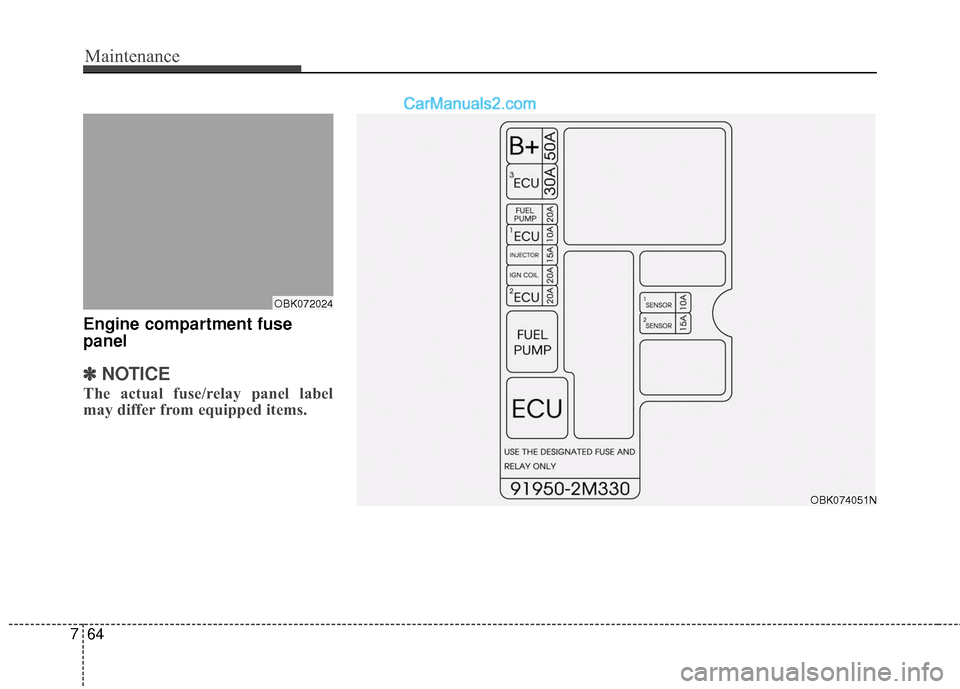
Engine compartment fuse
panel
✽ ✽
NOTICE
The actual fuse/relay panel label
may differ from equipped items.
OBK072024
OBK074051N
Page 434 of 475
765
Maintenance
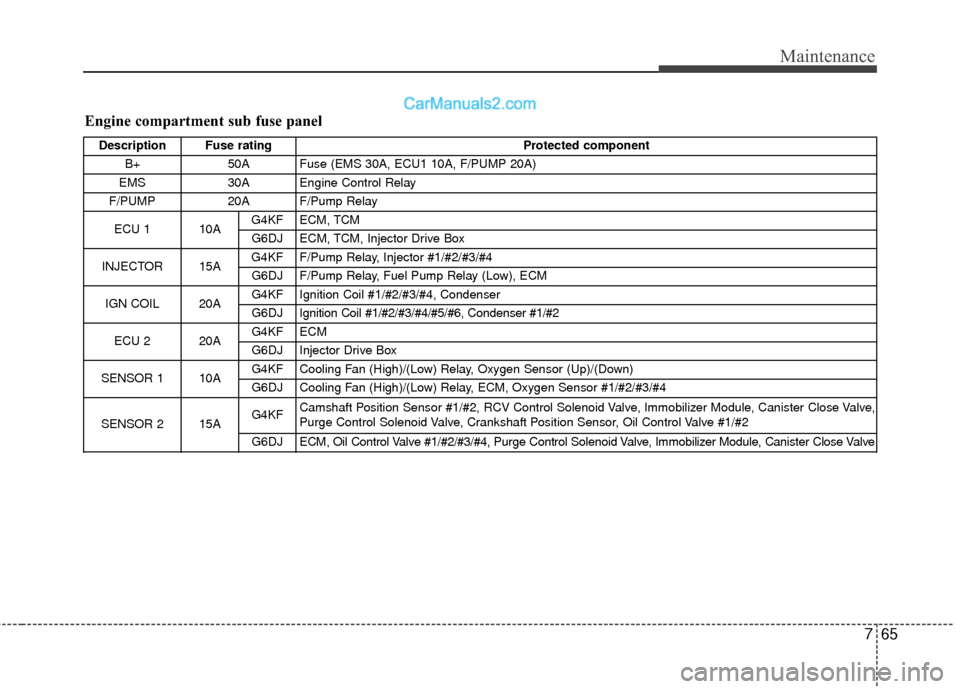
Engine compartment sub fuse panel
Description Fuse ratingProtected component
B+ 50A Fuse (EMS 30A, ECU1 10A, F/PUMP 20A)
EMS 30A Engine Control Relay
F/PUMP 20A F/Pump Relay
ECU 1 10A G4KF ECM, TCM
G6DJ ECM, TCM, Injector Drive Box
INJECTOR 15A G4KF F/Pump Relay, Injector #1/#2/#3/#4
G6DJ F/Pump Relay, Fuel Pump Relay (Low), ECM
IGN COIL20AG4KFIgnition Coil #1/#2/#3/#4, Condenser
G6DJIgnition Coil #1/#2/#3/#4/#5/#6, Condenser #1/#2
ECU 2 20A G4KF ECM
G6DJInjector Drive Box
SENSOR 1 10A G4KF Cooling Fan (High)/(Low) Relay, Oxygen Sensor (Up)/(Down)
G6DJ Cooling Fan (High)/(Low) Relay, ECM, Oxygen Sensor #1/#2/#3/#4
SENSOR 2 15A G4KF
Camshaft Position Sensor #1/#2, RCV Control Solenoid Valve, Immobilizer Module, Canister Close Valve,
Purge Control Solenoid Valve, Crankshaft Position Sensor, Oil Control Valve #1/#2
G6DJ ECM, Oil Control Valve #1/#2/#3/#4, Purge Control Solenoid Valve, Immobilizer Module, Canister Close Valve
Page 446 of 475
777
Maintenance
Waxing
A good coat of wax is a barrier
between your paint and contaminate.
Keeping a good coat of wax on your
vehicle will help protect it.
Wax the vehicle when water will no
longer bead on the paint.
Always wash and dry the vehicle
before waxing. Use a good quality
liquid or paste wax, and follow the
manufacturer’s instructions. Wax all
metal trim to protect it and to main-
tain its luster.
Removing oil, tar, and similar materi-
als with a spot remover will usually
strip the wax from the finish. Be sure to
re-wax these areas even if the rest of
the vehicle does not yet need waxing.CAUTION
Wiping dust or dirt off thebody with a dry cloth willscratch the finish.
Do not use steel wool, abra- sive cleaners, or strong deter-gents containing highly alka-line or caustic agents onchrome-plated or anodizedaluminum parts. This mayresult in damage to the protec-tive coating and cause discol-oration or paint deterioration.
CAUTION
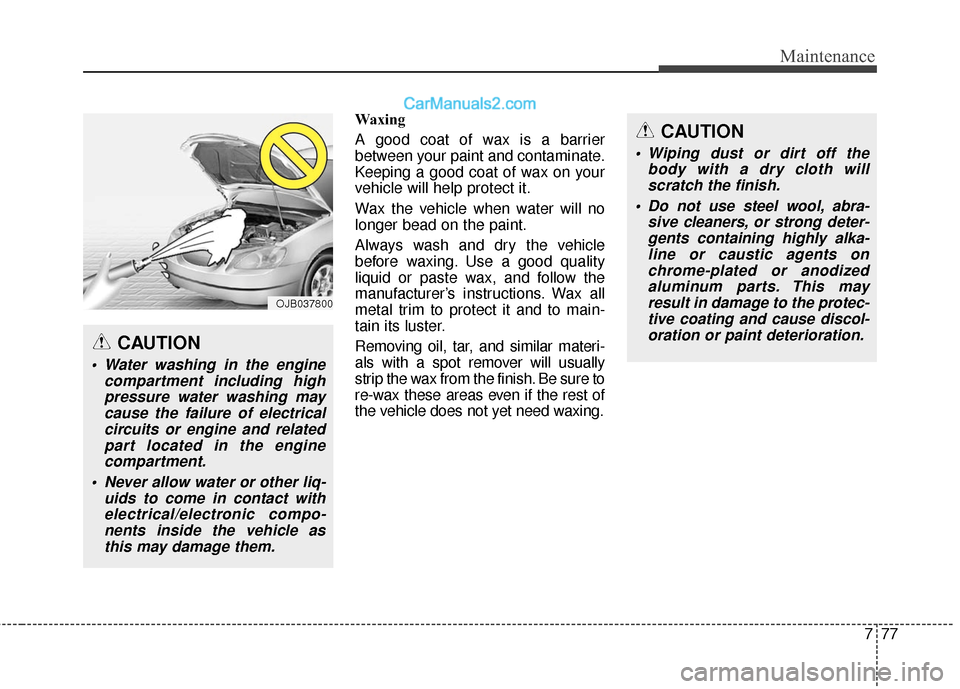
Water washing in the engine compartment including highpressure water washing maycause the failure of electricalcircuits or engine and relatedpart located in the enginecompartment.
Never allow water or other liq- uids to come in contact withelectrical/electronic compo-nents inside the vehicle asthis may damage them.
OJB037800
Page 468 of 475
··················\
··········4-117
Defroster (Front window) Front windshield deicer ··················\
······")
Index
4I
Defogging logic (Windshield)··················\
··········4-117
Defroster (Front window) Front windshield deicer ··················\
···············4-91
Defroster (Rear window) ··················\
················ ·4-91
Defrosting (Windshield) ··················\
·················4-114
Digital clock ··················\
··················\
··········· ·4-124
Dimensions ··················\
··················\
·················8-2
Display illumination, see instrument panel illumination · · ·4-46
Displays, see instrument cluster ··················\
·········4-45
Door locks ··················\
··················\
··············· ·4-16
Central door lock switch ··················\
··············4-18
Speed sensing door lock system ··················\
·····4-19
Drinks holders, see cup holders ··················\
········4-122
Driver's 3-point seat belt ··················\
················· ·3-18
Driver's and passenger's front air bag ··················\
···3-48
Driving at night ··················\
··················\
········· ·5-44
Driving in flooded areas ··················\
················· ·5-46
Driving in the rain ··················\
··················\
······ ·5-45
Driving off-road ··················\
··················\
········· ·5-46
DRL ··················\
··················\
··················\
···· ·4-83
Economical operation ··················\
··················\
·· ·5-41
Electric chromic mirror (ECM) ··················\
··········4-35
Electronic stability program (ESC) ··················\
·····5-31
Emergency fuel filler lid release ··················\
·········4-29 Emergency starting
Jump starting ··················\
··················\
·········· ·6-4
Push starting ··················\
··················\
··········· ·6-5
Emergency while driving ··················\
················· ·6-2
Emission control system ··················\
················· ·7-83
Crankcase emission control system ··················\
··7-83
Evaporative emission control System ·················7-83
Exhaust emission control system ··················\
····7-84
Engine compartment ··················\
················· ·2-6, 7-3
Engine compartment fuse label ··················\
··········7-60
Engine compartment panel fuse ··················\
·········7-57
Engine coolant ··················\
··················\
·········· ·7-25
Engine coolcant temperature gauge ··················\
·····4-47
Engine number ··················\
··················\
··········· ·8-7
Engine oil ··················\
··················\
·················7-23
Engine overheats ··················\
··················\
········· ·6-6
Engine Specification ··················\
··················\
····· ·8-2
Engine start/stop button ··················\
··················\
· ·5-8
Engine will not start ··················\
··················\
····· ·6-3
Escort function ··················\
··················\
·········· ·4-83
Evaporative emission control system ··················\
···7-83
Exhaust emission control system ··················\
········7-84
Explanation of scheduled maintenance items ···········7-20
Exterior care ··················\
··················\
··············7-76
Exterior overview (front) ··················\
················· ·2-2
Exterior overview (rear) ··················\
··················\
· ·2-3
E
Page 469 of 475

I5
Index
Flat tire··················\
··················\
··················\
· ·6-12
Jack and tools ··················\
··················\
·········6-12
Changing tires ··················\
··················\
······· ·6-13
Removing and storing the spare tire ··················\
·6-13
Jack label ··················\
··················\
··············6-20
Floor mat anchor(s) ··················\
··················\
··· ·4-125
Fluid Automatic tranmission fluid ··················\
··········7-30
Brakes/clutch fluid ··················\
··················\
·· ·7-28
Manual tranmission fluid ··················\
··············7-30
Power steering fluid ··················\
··················\
· ·7-29
Washer fluid ··················\
··················\
·········· ·7-30
Folding the outside rearviwe mirror · · · · · · · ···············4-44
Folding the rear seat ··················\
··················\
···· ·3-13
Front seat adjustment (manual) ··················\
···········3-4
Front seat adjustment (Power) ··················\
············3-5
Front windshield deicer ··················\
··················\
·4-92
Fuel additives ··················\
··················\
··············1-5
Fuel filler lid··················\
··················\
··············4-27 Emergency fuel filler lid release ··················\
·····4-29
Fuel gauge ··················\
··················\
··············· ·4-48
Fuel requirements ··················\
··················\
·········1-3
Alcohol and methanol ··················\
··················\
·1-4
Fuel additives ··················\
··················\
···········1-5
Fuse switch ··················\
··················\
·············· ·7-57Fuses
··················\
··················\
··················\
···· ·7-55
Engine compartment panel fuse ··················\
······7-57
Fuse switch··················\
··················\
··········· ·7-57
Fuse/relay panel description ··················\
··········7-58
Instrument panel fuse ··················\
················· ·7-55
Label ··················\
··················\
··················\
·7-58
Multi fuse ··················\
··················\
··············7-58
Gauge · · · · · · · · · · · · · · · · · · · · · · · · · · ··················\
··············4-46
Engine coolant temperature gauge ··················\
···4-47
Fuel gauge ··················\
··················\
············ ·4-48
Multi gauge ··················\
··················\
·········· ·4-71
GAW (Gross axle weight) ··················\
···············
·5-57
GA
WR (Gross axle weight rating) ··················\
······5-57
Glass antenna ··················\
··················\
·········· ·4-128
Glove box ··················\
··················\
·············· ·4-120
Glove box lamp ··················\
··················\
········· ·4-90
GVW (Gross vehicle weight) ··················\
············5-57
GVWR (Gross vehicle weight rating) ··················\
··5-57
Hazard warning flasher ··················\
··············4-81, 6-2
Hazardous driving conditions ··················\
············5-43
Headlamp welcome function ··················\
·············4-82
F
G
H