wheel HYUNDAI I40 2014 Owners Manual
[x] Cancel search | Manufacturer: HYUNDAI, Model Year: 2014, Model line: I40, Model: HYUNDAI I40 2014Pages: 534, PDF Size: 11.05 MB
Page 473 of 534
Downloaded from www.Manualslib.com manuals search engine Maintenance
68
7
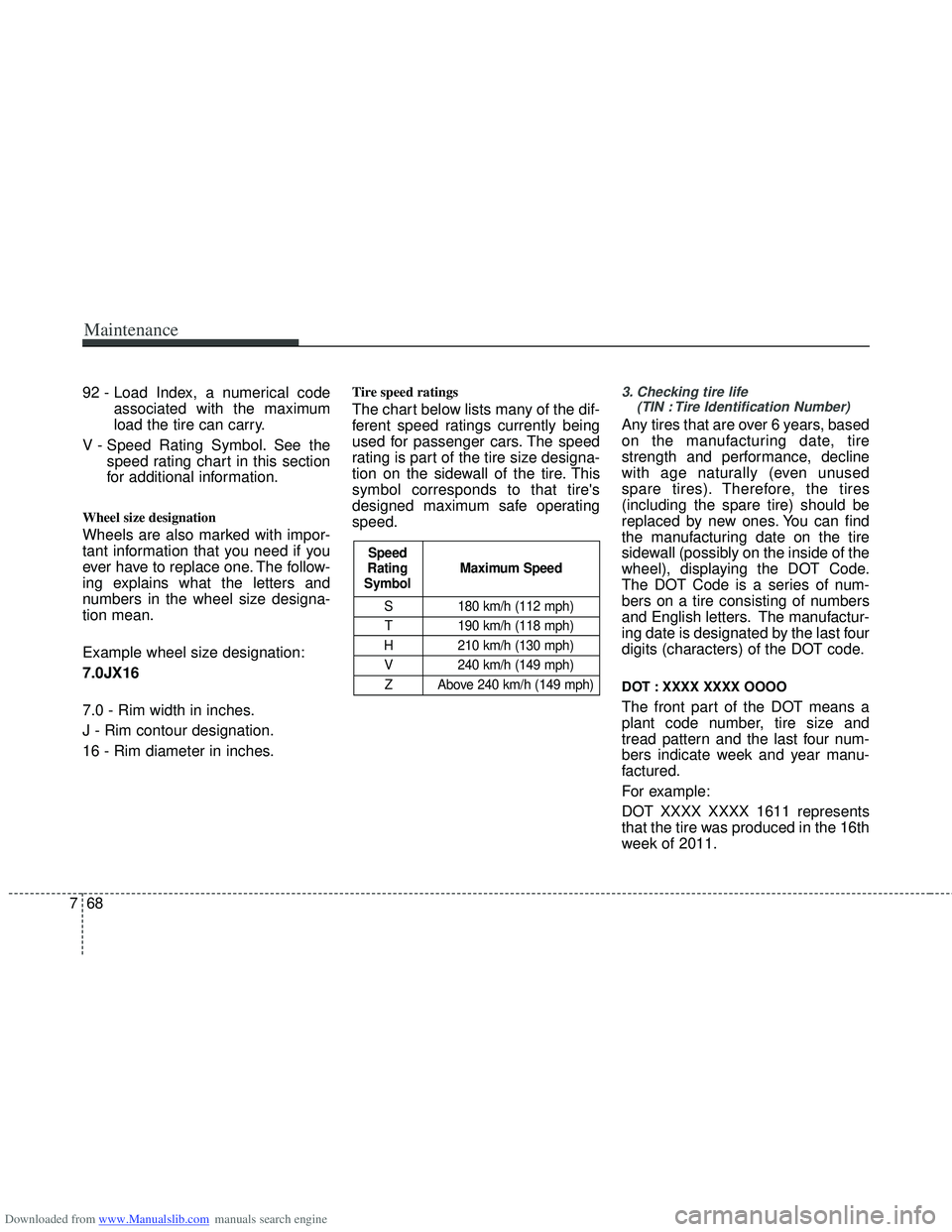
S 180 km/h (112 mph)
T 190 km/h (118 mph)
H 210 km/h (130 mph) V 240 km/h (149 mph)Z Above 240 km/h (149 mph)
Maximum Speed
Speed
Rating
Symbol
92 - Load Index, a numerical code associated with the maximum
load the tire can carry.
V - Speed Rating Symbol. See the speed rating chart in this section
for additional information.
Wheel size designation
Wheels are also marked with impor-
tant information that you need if you
ever have to replace one. The follow-
ing explains what the letters and
numbers in the wheel size designa-
tion mean.
Example wheel size designation:
7.0JX16
7.0 - Rim width in inches.
J - Rim contour designation.
16 - Rim diameter in inches.
Tire speed ratings
The chart below lists many of the dif-
ferent speed ratings currently being
used for passenger cars. The speed
rating is part of the tire size designa-
tion on the sidewall of the tire. This
symbol corresponds to that tire's
designed maximum safe operating
speed.
3. Checking tire life
(TIN : Tire Identification Number)
Any tires that are over 6 years, based
on the manufacturing date, tire
strength and performance, decline
with age naturally (even unused
spare tires). Therefore, the tires
(including the spare tire) should be
replaced by new ones. You can find
the manufacturing date on the tire
sidewall (possibly on the inside of the
wheel), displaying the DOT Code.
The DOT Code is a series of num-
bers on a tire consisting of numbers
and English letters. The manufactur-
ing date is designated by the last four
digits (characters) of the DOT code.
DOT : XXXX XXXX OOOO
The front part of the DOT means a
plant code number, tire size and
tread pattern and the last four num-
bers indicate week and year manu-
factured.
For example:
DOT XXXX XXXX 1611 represents
that the tire was produced in the 16th
week of 2011.
Page 475 of 534
Downloaded from www.Manualslib.com manuals search engine Maintenance
70
7
Traction - AA, A, B & C
The traction grades, from highest to
lowest, are AA, A, B and C. Those
grades represent the tires ability to
stop on wet pavement as measured
under controlled conditions on spec-
ified government test surfaces of
asphalt and concrete. A tire marked
C may have poor traction perform-
ance.
Temperature -A, B & C
The temperature grades are A (the
highest), B and C representing the
tire’s resistance to the generation of
heat and its ability to dissipate heat
when tested under controlled condi-
tions on a specified indoor laboratory
test wheel.
Sustained high temperature can
cause the material of the tire to
degenerate and reduce tire life, and
excessive temperature can lead to
sudden tire failure. Grades B and A
represent higher levels of perform-
ance on the laboratory test wheel
than the minimum required by the
law.
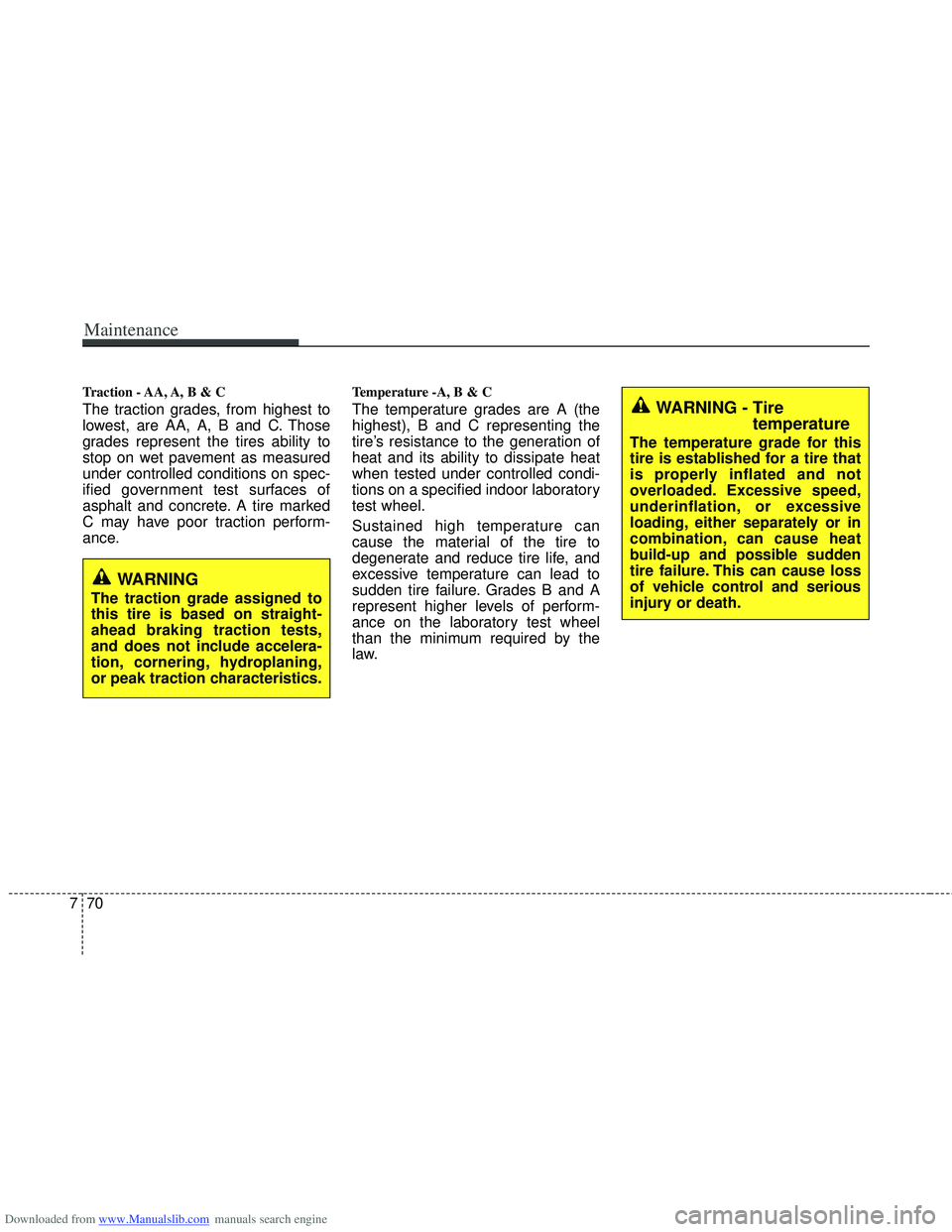
WARNING
The traction grade assigned to
this tire is based on straight-
ahead braking traction tests,
and does not include accelera-
tion, cornering, hydroplaning,
or peak traction characteristics.
WARNING - Tire
temperature
The temperature grade for this
tire is established for a tire that
is properly inflated and not
overloaded. Excessive speed,
underinflation, or excessive
loading, either separately or in
combination, can cause heat
build-up and possible sudden
tire failure. This can cause loss
of vehicle control and serious
injury or death.
Page 481 of 534
Downloaded from www.Manualslib.com manuals search engine Maintenance
76
7
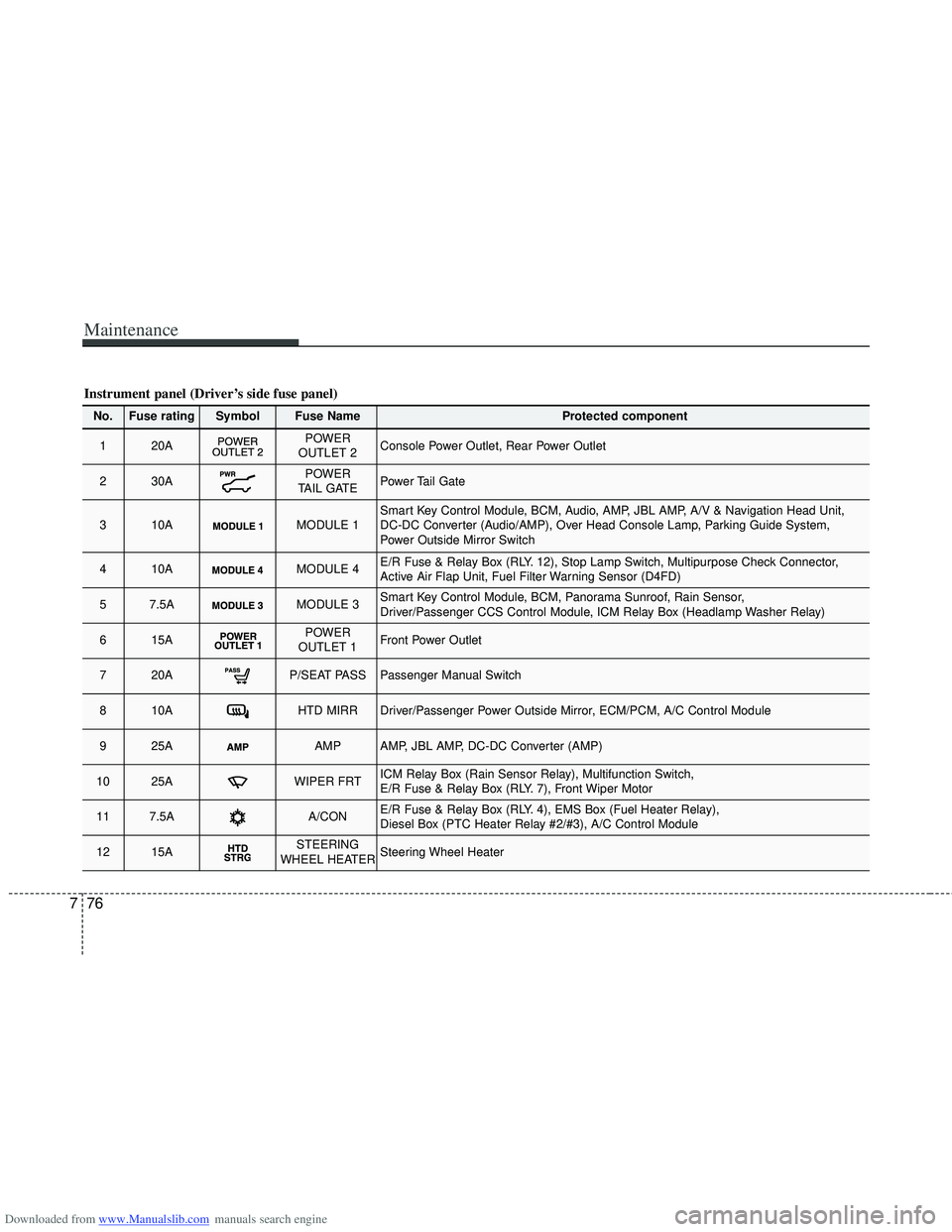
Instrument panel (Driver’s side fuse panel)
No.Fuse ratingSymbol Fuse NameProtected component
120APOWER
OUTLET 2Console Power Outlet, Rear Power Outlet
230APOWER
TAIL GATEPower Tail Gate
310AMODULE 1Smart Key Control Module, BCM, Audio, AMP, JBL AMP, A/V & Navigation Head Unit,
DC-DC Converter (Audio/AMP), Over Head Console Lamp, Parking Guide System,
Power Outside Mirror Switch
410AMODULE 4E/R Fuse & Relay Box (RLY. 12), Stop Lamp Switch, Multipurpose Check Connector,
Active Air Flap Unit, Fuel Filter Warning Sensor (D4FD)
57.5AMODULE 3Smart Key Control Module, BCM, Panorama Sunroof, Rain Sensor,
Driver/Passenger CCS Control Module, ICM Relay Box (Headlamp Washer Relay)
615APOWER
OUTLET 1Front Power Outlet
720AP/SEAT PASSPassenger Manual Switch
810AHTD MIRRDriver/Passenger Power Outside Mirror, ECM/PCM, A/C Control Module
925AAMPAMP, JBL AMP, DC-DC Converter (AMP)
1025AWIPER FRTICM Relay Box (Rain Sensor Relay), Multifunction Switch,
E/R Fuse & Relay Box (RLY. 7), Front Wiper Motor
117.5AA/CONE/R Fuse & Relay Box (RLY. 4), EMS Box (Fuel Heater Relay),
Diesel Box (PTC Heater Relay #2/#3), A/C Control Module
1215ASTEERING
WHEEL HEATERSteering Wheel Heater
Page 494 of 534
Downloaded from www.Manualslib.com manuals search engine 789
Maintenance
5. To aim the low beam left or right, turnthe driver (1) clockwise or counter-
clockwise. To aim the low beam up or
down, turn the driver (2) clockwise or
counterclockwise.
To aim the high beam up or down, turnthe driver (3) clockwise or counter-
clockwise. AFLS type
1. Turn off the engine
2. Turn the light switch to the low beam
position.
3. Position the tires straight ahead with the steering wheel.
4. Turn on the engine.
5. Inflate the tires to the specified pres- sure and remove any loads from the
vehicle except the driver, spare tire,
and tools.
6. The vehicle should be placed on a flat floor.
7. Draw vertical lines (Vertical lines pass- ing through respective head lamp cen-
ters) and a horizontal line (Horizontal
line passing through center of head
lamps) on the screen.
8. With the head lamp and battery in nor- mal condition, aim the head lamps so
the brightest portion falls on the hori-
zontal and vertical lines.
9. To aim the low beam left or right, turn the driver (1) clockwise or counter-
clockwise. To aim the low beam up or
down, turn the driver (2) clockwise or
counterclockwise. To aim the high
beam up or down, turn the driver (3)
clockwise or counterclockwise.
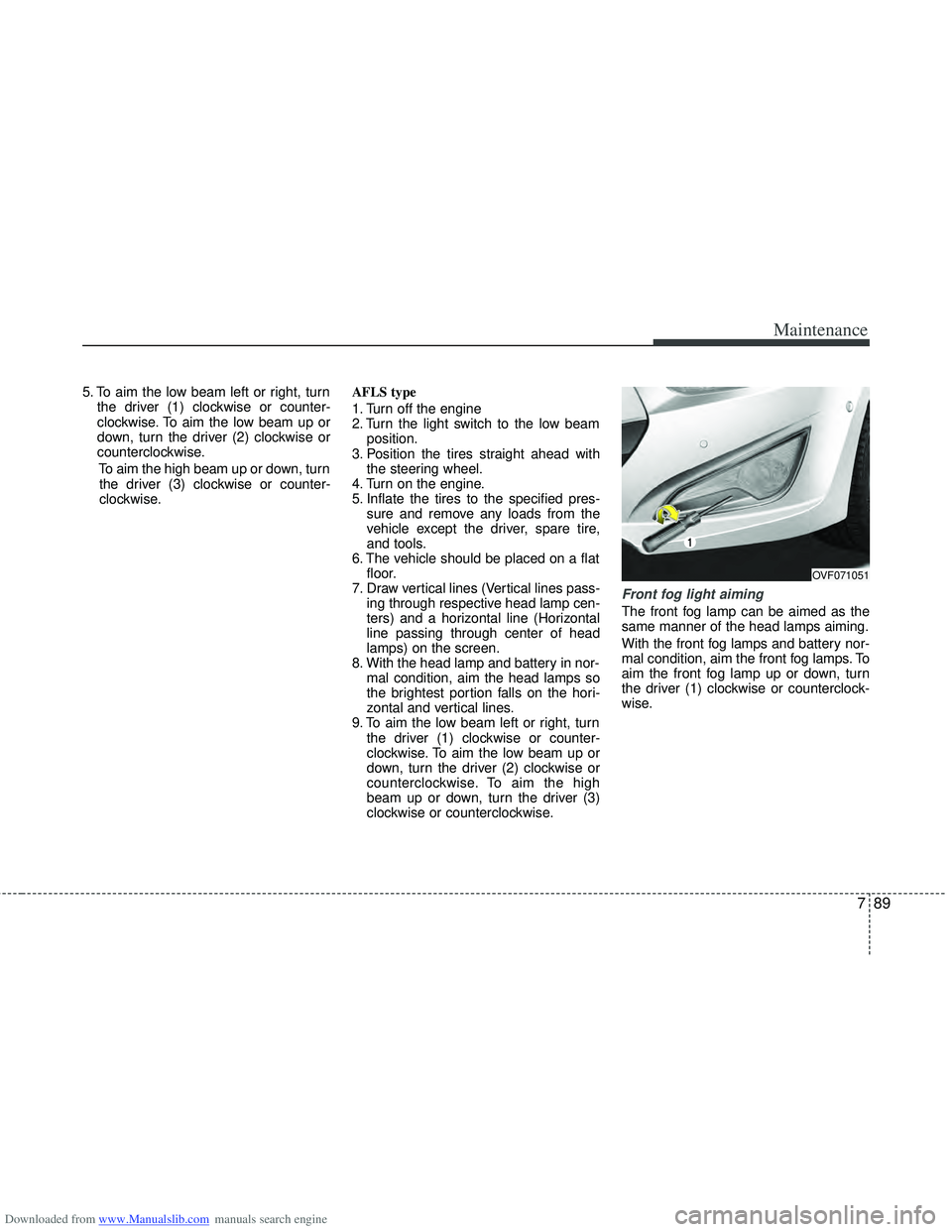
Front fog light aiming
The front fog lamp can be aimed as the
same manner of the head lamps aiming.
With the front fog lamps and battery nor-
mal condition, aim the front fog lamps. To
aim the front fog lamp up or down, turn
the driver (1) clockwise or counterclock-
wise.
OVF071051
Page 506 of 534
Downloaded from www.Manualslib.com manuals search engine 7101
Maintenance
Bright-metal maintenance
To remove road tar and insects, use atar remover, not a scraper or other
sharp object.
To protect the surfaces of bright-metal parts from corrosion, apply a coating of
wax or chrome preservative and rub to
a high luster.
During winter weather or in coastal areas, cover the bright metal parts with
a heavier coating of wax or preserva-
tive. If necessary, coat the parts with
non-corrosive petroleum jelly or other
protective compound.
Underbody maintenance
Corrosive materials used for ice and
snow removal and dust control may col-
lect on the underbody. If these materials
are not removed, accelerated rusting can
occur on underbody parts such as the
fuel lines, frame, floor pan and exhaust
system, even though they have been
treated with rust protection.
Thoroughly flush the vehicle underbody
and wheel openings with lukewarm or
cold water once a month, after off-road
driving and at the end of each winter. Pay
special attention to these areas because
it is difficult to see all the mud and dirt. It
will do more harm than good to wet down
the road grime without removing it. The
lower edges of doors, rocker panels, and
frame members have drain holes that
should not be allowed to clog with dirt;
trapped water in these areas can cause
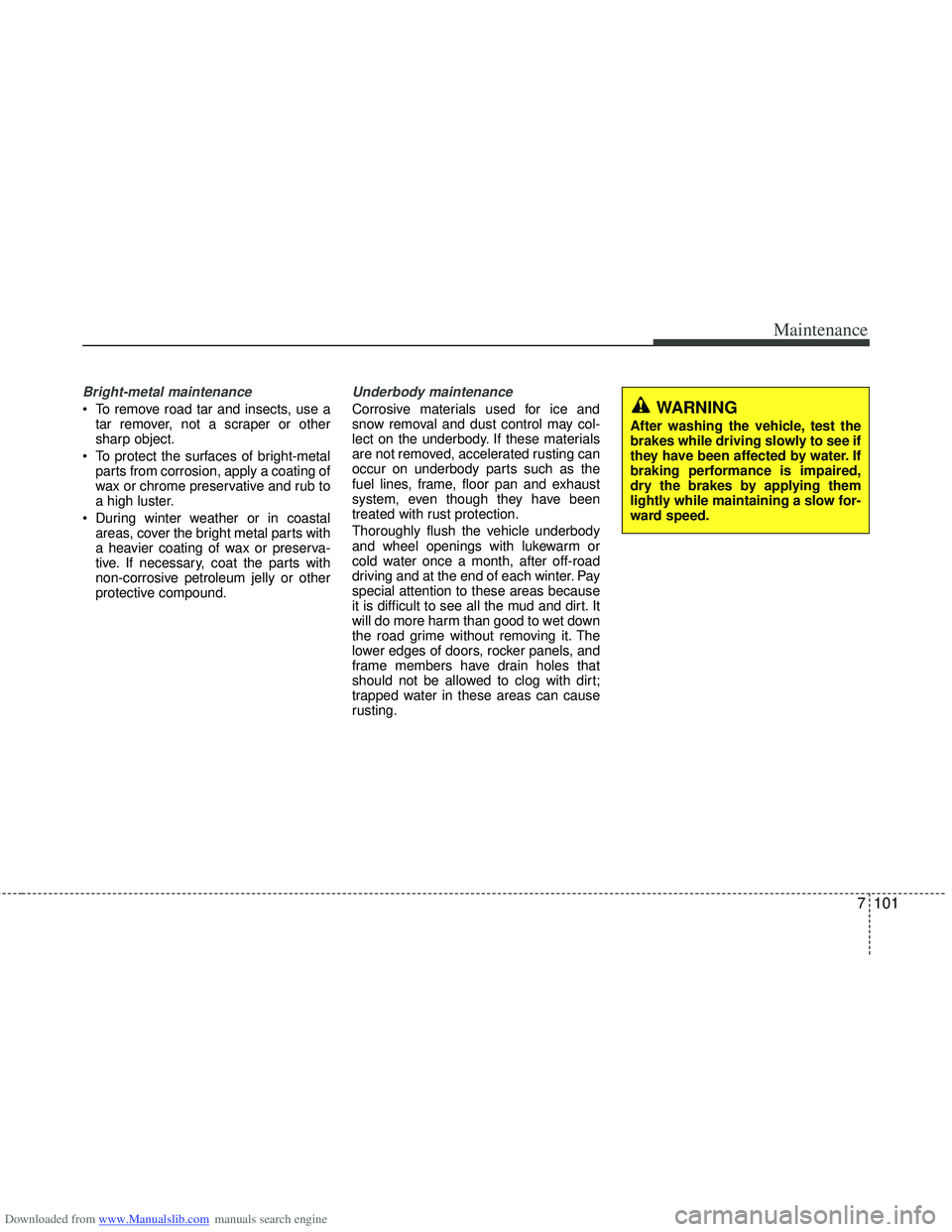
rusting.WARNING
After washing the vehicle, test the
brakes while driving slowly to see if
they have been affected by water. If
braking performance is impaired,
dry the brakes by applying them
lightly while maintaining a slow for-
ward speed.
Page 507 of 534
Downloaded from www.Manualslib.com manuals search engine Maintenance
102
7
Aluminum wheel maintenance
The aluminum wheels are coated with a
clear protective finish.
Do not use any abrasive cleaner, pol-
ishing compound, solvent, or wire
brushes on aluminum wheels. They
may scratch or damage the finish.
Use only a mild soap or neutral deter- gent, and rinse thoroughly with water.
Also, be sure to clean the wheels after
driving on salted roads. This helps pre-
vent corrosion.
Avoid washing the wheels with high- speed car wash brushes.
Do not use any acid detergent. It may damage and corrode the aluminum
wheels coated with a clear protective
finish.
Corrosion protection
Protecting your vehicle from corrosion
By using the most advanced design and
construction practices to combat corro-
sion, we produces cars of the highest
quality. However, this is only part of the
job. To achieve the long-term corrosion
resistance your vehicle can deliver, the
owner's cooperation and assistance is
also required.
Common causes of corrosion
The most common causes of corrosion
on your car are:
allowed to accumulate underneath the
car.
Removal of paint or protective coatings by stones, gravel, abrasion or minor
scrapes and dents which leave unpro-
tected metal exposed to corrosion.
High-corrosion areas
If you live in an area where your car is
regularly exposed to corrosive materials,
corrosion protection is particularly impor-
tant. Some of the common causes of
accelerated corrosion are road salts,
dust control chemicals, ocean air and
industrial pollution. Moisture breeds corrosion
Moisture creates the conditions in which
corrosion is most likely to occur. For
example, corrosion is accelerated by
high humidity, particularly when tempera-
tures are just above freezing. In such
conditions, the corrosive material is kept
in contact with the car surfaces by mois-
ture that is slow to evaporate.
Mud is particularly corrosive because it is
slow to dry and holds moisture in contact
with the vehicle. Although the mud
appears to be dry, it can still retain the
moisture and promote corrosion.
High temperatures can also accelerate
corrosion of parts that are not properly
ventilated so the moisture can be dis-
persed. For all these reasons, it is par-
ticularly important to keep your car clean
and free of mud or accumulations of
other materials. This applies not only to
the visible surfaces but particularly to the
underside of the car.
To help prevent corrosion
You can help prevent corrosion from get-
ting started by observing the following:
Page 509 of 534
Downloaded from www.Manualslib.com manuals search engine Maintenance
104
7
Interior care
Interior general precautions
Prevent caustic solutions such as per-
fume and cosmetic oil from contacting
the dashboard because they may cause
damage or discoloration. If they do con-
tact the dashboard, wipe them off imme-
diately. See the instructions that follow for
the proper way to clean vinyl.
Cleaning the upholstery and interior
trim
Vinyl
Remove dust and loose dirt from vinyl
with a whisk broom or vacuum cleaner.
Clean vinyl surfaces with a vinyl cleaner.
Fabric
Remove dust and loose dirt from fabric
with a whisk broom or vacuum cleaner.
Clean with a mild soap solution recom-
mended for upholstery or carpets.
Remove fresh spots immediately with a
fabric spot cleaner. If fresh spots do not
receive immediate attention, the fabric
can be stained and its color can be
affected. Also, its fire-resistant properties
can be reduced if the material is not
properly maintained.
Cleaning the lap/shoulder belt web-bing
Clean the belt webbing with any mild
soap solution recommended for cleaning
upholstery or carpet. Follow the instruc-
tions provided with the soap. Do not
bleach or re-dye the webbing because
this may weaken it.
Cleaning the interior window glass
If the interior glass surfaces of the vehi-
cle become fogged (that is, covered with
an oily, greasy or waxy film), they should
be cleaned with glass cleaner. Follow the
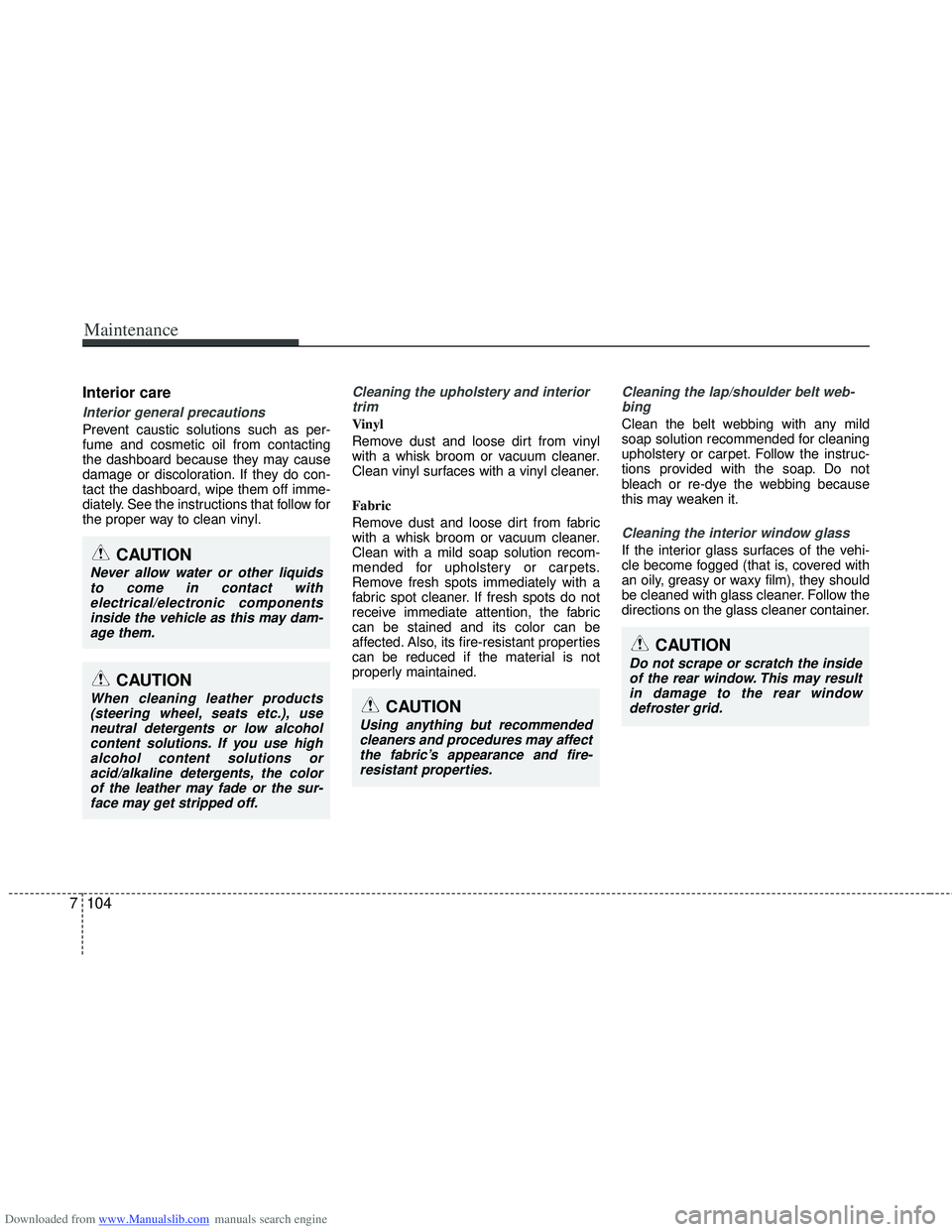
directions on the glass cleaner container.CAUTION
Never allow water or other liquids to come in contact withelectrical/electronic componentsinside the vehicle as this may dam-age them.
CAUTION
Using anything but recommended cleaners and procedures may affectthe fabric’s appearance and fire-resistant properties.
CAUTION
When cleaning leather products(steering wheel, seats etc.), useneutral detergents or low alcoholcontent solutions. If you use highalcohol content solutions oracid/alkaline detergents, the color of the leather may fade or the sur-face may get stripped off.
CAUTION
Do not scrape or scratch the insideof the rear window. This may resultin damage to the rear windowdefroster grid.
Page 514 of 534
Downloaded from www.Manualslib.com manuals search engine 8
Dimensions / 8-2
Engine / 8-2
Bulb wattage / 8-3
Tires and wheels / 8-4
Weight and volume / 8-4
Recommended lubricants and capacities / 8-5
Vehicle identification number (VIN) / 8-8
Vehicle certification label / 8-8
Tire specification and pressure label / 8-9
Engine number / 8-9
E-mark label / 8-10
Specifications & Consumer information
Page 515 of 534
Downloaded from www.Manualslib.com manuals search engine Specifications & Consumer information
28
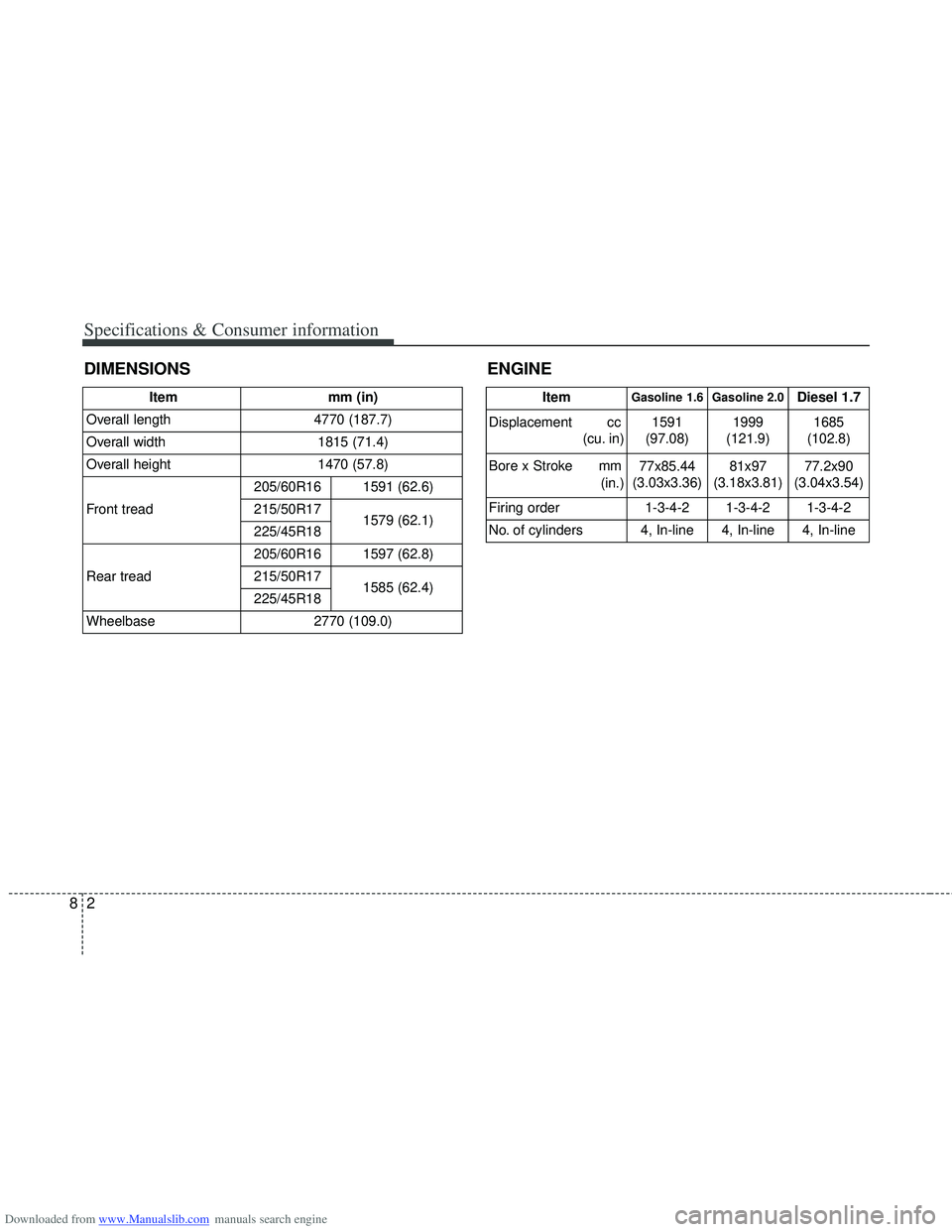
DIMENSIONSENGINE
ItemGasoline 1.6 Gasoline 2.0Diesel 1.7
Displacement cc (cu. in) 1591
(97.08) 1999
(121.9) 1685
(102.8)
Bore x Stroke mm (in.)77x85.44
(3.03x3.36) 81x97
(3.18x3.81) 77.2x90
(3.04x3.54)
Firing order 1-3-4-2 1-3-4-2 1-3-4-2
No. of cylinders 4, In-line 4, In-line 4, In-lineItemmm (in)
Overall length4770 (187.7)
Overall width1815 (71.4)
Overall height 1470 (57.8)
Front tread
205/60R161591 (62.6)
215/50R171579 (62.1)225/45R18
Rear tread
205/60R161597 (62.8)
215/50R171585 (62.4)225/45R18
Wheelbase2770 (109.0)
Page 517 of 534
Downloaded from www.Manualslib.com manuals search engine Specifications & Consumer information
48
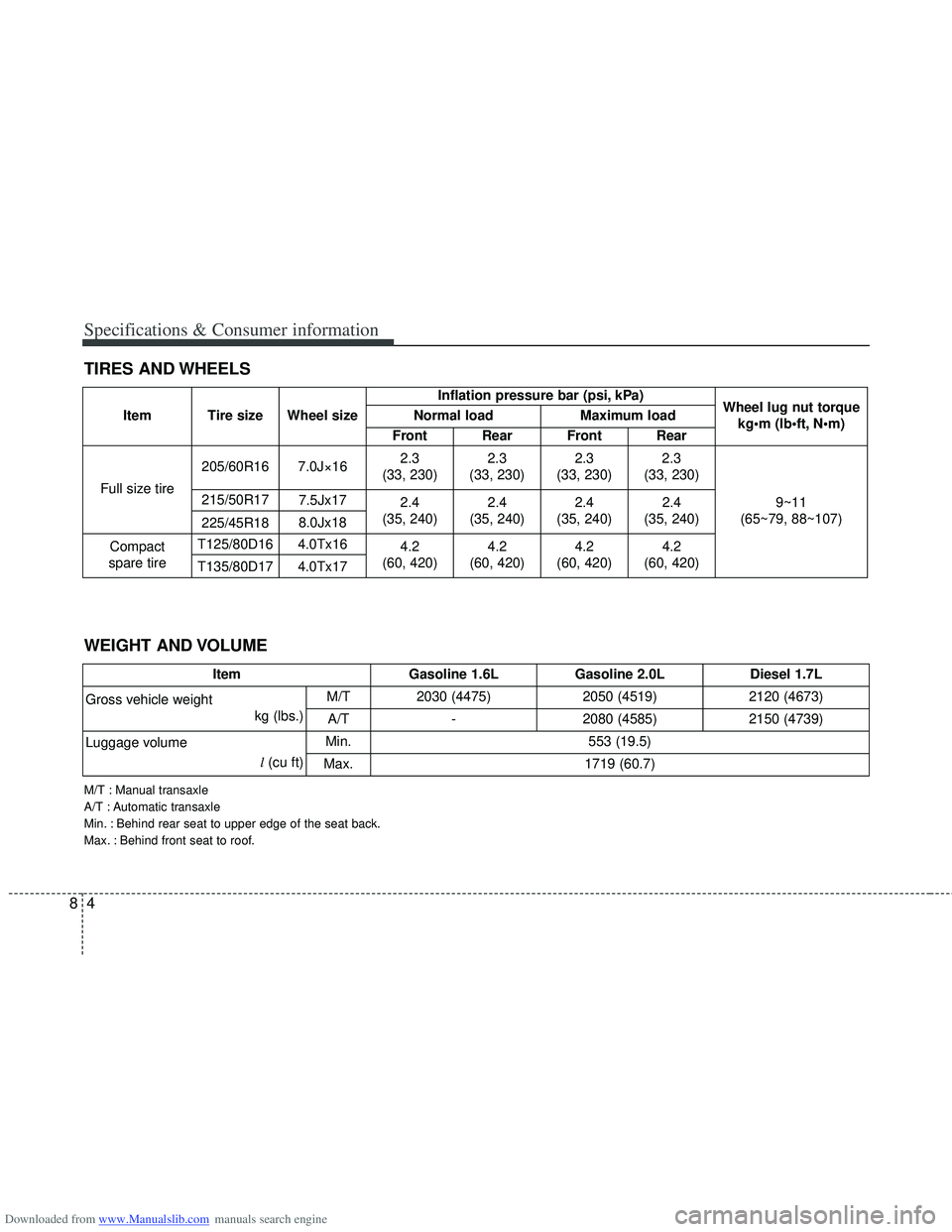
TIRES AND WHEELS
Item Tire size Wheel sizeInflation pressure bar (psi, kPa)
Wheel lug nut torque
Normal load Maximum load
Front Rear Front Rear
Full size tire 205/60R16 7.0J×16
2.3
(33, 230) 2.3
(33, 230) 2.3
(33, 230) 2.3
(33, 230)
9~11
(65~79, 88~107)
215/50R17
225/45R18 7.5Jx17
8.0Jx18
2.4
(35, 240) 2.4
(35, 240) 2.4
(35, 240) 2.4
(35, 240)
Compact
spare tire T125/80D16
T135/80D17 4.0Tx16
4.0Tx17
4.2
(60, 420) 4.2
(60, 420) 4.2
(60, 420) 4.2
(60, 420)
WEIGHT AND VOLUME
Item Gasoline 1.6LGasoline 2.0L Diesel 1.7L
Gross vehicle weight kg (lbs.)M/T 2030 (4475)
2050 (4519)2120 (4673)
A/T-2080 (4585)2150 (4739)
Luggage volume l(cu ft) Min. 553 (19.5)
Max. 1719 (60.7)
M/T : Manual transaxle
A/T : Automatic transaxle
Min. : Behind rear seat to upper edge of the seat back.
Max. : Behind front seat to roof.