Led Hyundai Sonata 2020 Owner's Manual
[x] Cancel search | Manufacturer: HYUNDAI, Model Year: 2020, Model line: Sonata, Model: Hyundai Sonata 2020Pages: 537, PDF Size: 14.54 MB
Page 505 of 537
Maintenance8-58
High Mounted Stop Lamp
Replacement
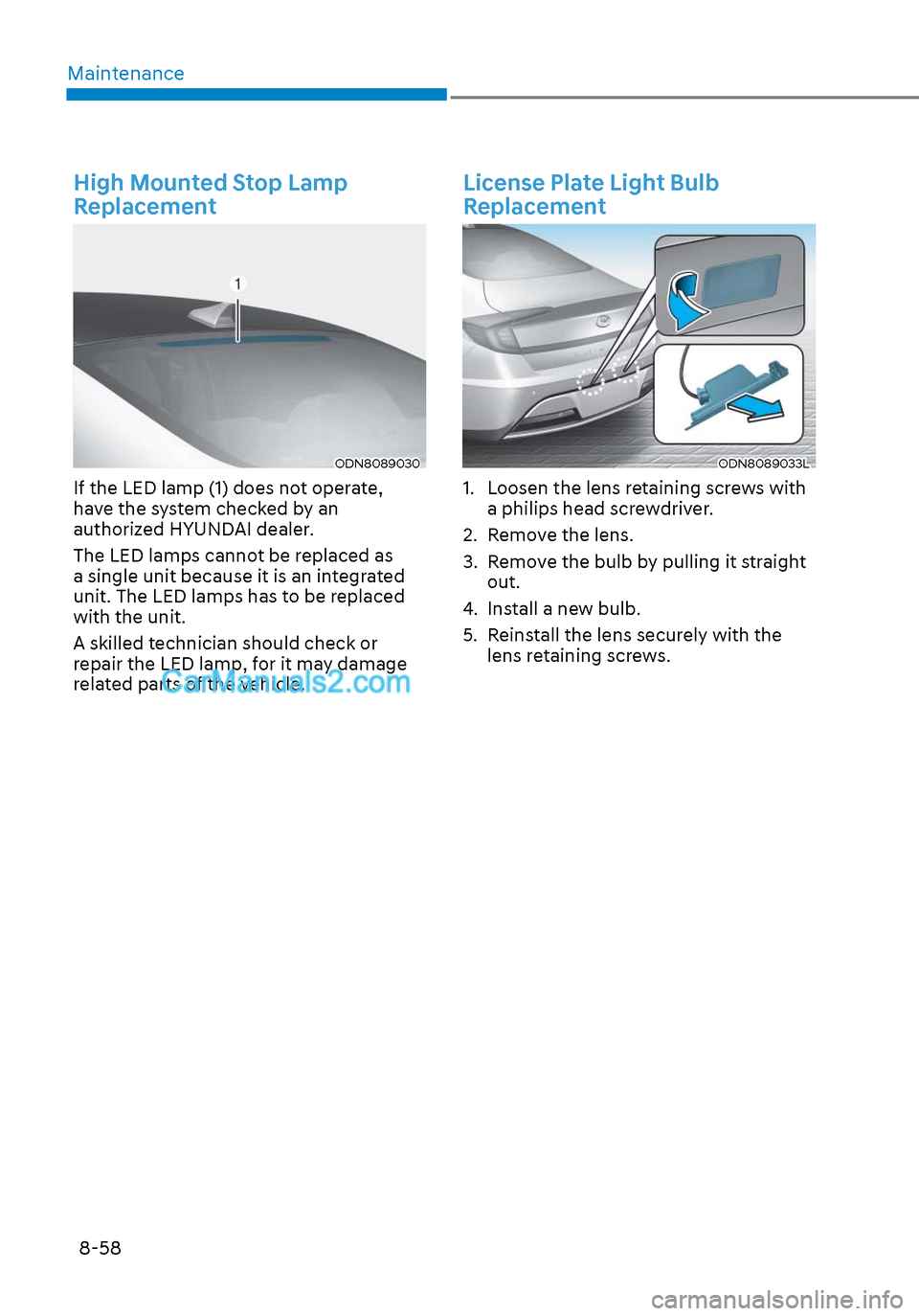
ODN8089030ODN8089030
If the LED lamp (1) does not operate,
have the system checked by an
authorized HYUNDAI dealer.
The LED lamps cannot be replaced as
a single unit because it is an integrated
unit. The LED lamps has to be replaced
with the unit.
A skilled technician should check or
repair the LED lamp, for it may damage
related parts of the vehicle.
License Plate Light Bulb
Replacement
ODN8089033LODN8089033L
1. Loosen the lens retaining screws with a philips head screwdriver.
2. Remove the lens.
3. Remove the bulb by pulling it straight out.
4. Install a new bulb.
5. Reinstall the lens securely with the lens retaining screws.
Page 507 of 537
Maintenance8-60
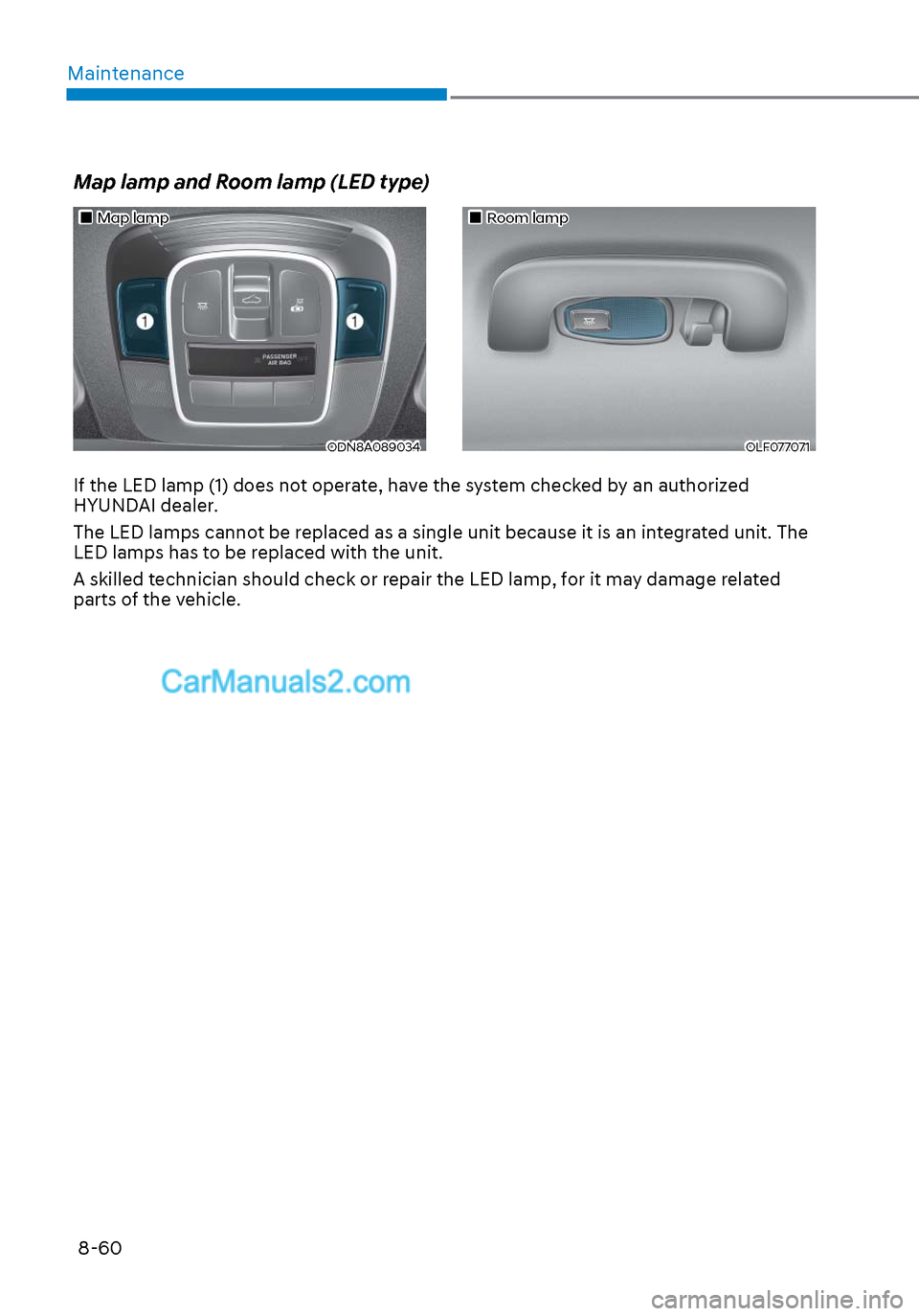
Map lampMap lamp
ODN8A089034ODN8A089034
Room lampRoom lamp
OLF077071OLF077071
Map lamp and Room lamp (LED type)
If the LED lamp (1) does not operate, have the system checked by an authorized
HYUNDAI dealer.
The LED lamps cannot be replaced as a single unit because it is an integrated unit. The
LED lamps has to be replaced with the unit.
A skilled technician should check or repair the LED lamp, for it may damage related
parts of the vehicle.
Page 511 of 537
Maintenance8-64
NOTICE
• Do not use abrasive cleaner,
polishing compound, solvent, or wire
brushes on aluminum wheels.
• Clean the wheel when it has cooled.
• Use only a mild soap or neutral
detergent, and rinse thoroughly with
water. Also, clean the wheels after
driving on salted roads.
• Do not wash the wheels with high-
speed car wash brushes.
• Do not use any cleaners containing
acid or alkaline detergents.
Corrosion protection
Protecting your vehicle from corrosion
By using the most advanced design
and cons
truction practices to combat
corrosion, HYUNDAI produces vehicles
of the highest quality. However, this is
only part of the job. To achieve the long-
term corrosion resistance your vehicle
can deliver, the owner’s cooperation and
assistance is also required.
Common causes of corrosion
The most common causes of corrosion
on y
our vehicle are:
• Road salt, dirt and moisture that is allowed to accumulate underneath
the vehicle.
• Removal of paint or protective coatings by stones, gravel, abrasion
or minor scrapes and dents which
leave unprotected metal exposed to
corrosion.
High-corrosion areas
If you live in an area where your vehicle is
r
egularly exposed to corrosive materials,
corrosion protection is particularly
important. Some of the common causes
of accelerated corrosion are road salts,
dust control chemicals, ocean air and
industrial pollution. Moisture breeds corrosion
Moisture creates the conditions in
which corr
osion is most likely to occur.
For example, corrosion is accelerated
by high humidity, particularly when
temperatures are just above freezing. In
such conditions, the corrosive material is
kept in contact with the car surfaces by
moisture that is slow to evaporate.
Mud is particularly corrosive because it is
slow to dry and holds moisture in contact
with the vehicle. Although the mud
appears to be dry, it can still retain the
moisture and promote corrosion.
High temperatures can also accelerate
corrosion of parts that are not properly
ventilated so the moisture can be
dispersed. For all these reasons, it is
particularly important to keep your
vehicle clean and free of mud or
accumulations of other materials. This
applies not only to the visible surfaces
but particularly to the underside of the
vehicle.
To help prevent corrosion
Keep your vehicle clean
The bes
t way to prevent corrosion is
to keep your vehicle clean and free of
corrosive materials. Attention to the
underside of the vehicle is particularly
important.
• If you live in a high-corrosion area — where road salts are used, near the
ocean, areas with industrial pollution,
acid rain, etc.—, you should take extra
care to prevent corrosion. In winter,
hose off the underside of your vehicle
at least once a month and be sure to
clean the underside thoroughly when
winter is over.
•
Page 515 of 537
Maintenance8-68
1. Crankcase Emission Control System
The positive crankcase ventilation system
is employed to prevent air pollution
caused by blow-by gases being emitted
from the crankcase. This system supplies
fresh filtered air to the crankcase through
the air intake hose. Inside the crankcase,
the fresh air mixes with blow-by gases,
which then pass through the PCV valve
into the induction system.
2. Evaporative Emission Control System Including Onboard
Refueling Vapor Recovery
(ORVR)
The Evaporative Emission Control System
is designed to prevent fuel vapors from
escaping into the atmosphere. The
ORVR system is designed to allow the
vapors from the fuel tank to be loaded
into a canister while refueling at the gas
station, preventing the escape of fuel
vapors into the atmosphere.
Canister
Fuel vapors generated inside the fuel
tank are absorbed and stored in the
onboard canister. When the engine is
running, the fuel vapors absorbed in the
canister are drawn into the surge tank
through the purge control solenoid valve.
Purge Control Solenoid Valve (PCSV)
The purge control solenoid valve
is controlled by the Engine Control
Module (ECM); when the engine coolant
temperature is low during idling, the
PCSV closes so that evaporated fuel
is not taken into the engine. After the
engine warms-up during ordinary
driving, the PCSV opens to introduce
evaporated fuel to the engine.
3. Exhaust Emission Control System
The Exhaust Emission Control System is
a highly effective system which controls
exhaust emissions while maintaining
good vehicle performance.
When the engine starts or fails to start,
excessive attempts to restart the engine
may cause damage to the emission
system.
Engine exhaust (carbon monoxide)
precautions
• Carbon monoxide can be present
with other exhaust fumes. If you smell
exhaust fumes of any kind in your
vehicle, drive with all the windows
fully open. Have your vehicle checked
and repaired immediately.
WARNING
Engine exhaust gases contain carbon
monoxide (CO). Though colorless and
odorless, it is dangerous and could be
lethal if inhaled. Follow the instructions
on this page to avoid CO poisoning.
WARNING
CALIFORNIA PROPOSITION 65
WARNING
Engine exhaust and a wide variety of
automobile components and parts,
including components found in the
interior furnishings in a vehicle, contain
or emit chemicals known to the State
of California to cause cancer and
birth defects and reproductive harm.
In addition, certain fluids contained
in vehicles and certain products of
component wear contain or emit
chemicals known to the State of
California to cause cancer and birth
defects or other reproductive harm.
Page 525 of 537

IndexI-6
Emission control system ........................................................................\
.............. 8-67 Crankcase emission control system ................................................................ 8-68
Evaporative emission control System ............................................................. 8-68
Exhaust emission control system .................................................................... 8-68
Engine compartment ........................................................................\
.............. 2-6, 8-3
Engine compartment panel fuse replacement ...................................................... 8-48
Engine coolant ........................................................................\
............................. 8-21
Engine coolant temperature gauge........................................................................\
. 4-4
Engine number ........................................................................\
............................. 2-14
Engine oil ........................................................................\
..................................... 8-19
Engine specification........................................................................\
....................... 2-7
Engine Start/Stop button ........................................................................\
................ 6-9
Evaporative emission control System .................................................................. 8-68
Event Data Recorder (EDR) ........................................................................\
.......... 1-8
Exhaust emission control system ........................................................................\
. 8-68
Explanation of scheduled maintenance items ...................................................... 8-16
Exterior care........................................................................\
................................. 8-61
Exterior features........................................................................\
........................... 5-64 Hood ...................................................................\
............................................. 5-64
Trunk ...................................................................\
............................................ 5-65
Emergency trunk safety release....................................................................... 5-66
Fuel Filler Door ........................................................................\
....................... 5-70
Exterior overview Front view ........................................................................\
................................. 2-2
Rear view ........................................................................\
.................................. 2-3
F
Flat tire ........................................................................\
......................................... 7-12 Changing spare tire ........................................................................\
................ 7-12
Floor mat anchor(s)........................................................................\
.................... 5-151
Fluid Brake fluid ........................................................................\
............................... 8-24
Washer fluid ........................................................................\
............................ 8-25
Forward Collision-Avoidance Assist (FCA) ....................................................... 6-40 FCA-Junction Turning function ...................................................................... 6-55
Forward/Reverse Parking Distance Warning (PDW) .......................................... 5-99
Page 530 of 537

I
I-11
LCD display modes ........................................................................\
..................... 4-20Trip computer mode ........................................................................\
................ 4-21
Turn By Turn (TBT) mode ........................................................................\
...... 4-21
Driving assist mode ........................................................................\
................. 4-21
Master warning mode ........................................................................\
.............. 4-22
User settings mode ........................................................................\
.................. 4-22
Light ..................................................................\
................................................... 5-74
AUTO headlamp position ........................................................................\
....... 5-74
Daytime running light (DRL)...........................................\
............................... 5-74
Parking lamp position ........................................................................\
............. 5-75
Headlamp position ........................................................................\
.................. 5-75
High beam operation ........................................................................\
............... 5-75
High Beam Assist (HBA) ........................................................................\
....... 5-76
Turn signals ........................................................................\
............................. 5-79
Lane change signals ........................................................................\
................ 5-79
Battery saver function ........................................................................\
............. 5-79
Headlamp delay function ........................................................................\
........ 5-79
Headlamp leveling device ........................................................................\
....... 5-80
Light bulbs ........................................................................\
................................... 8-55
Lubricants and capacities ........................................................................\
............. 2-11
Luggage compartment lamp ........................................................................\
........ 5-82
M
Maintenance Maintenance services ........................................................................\
................ 8-4
Owner maintenance ........................................................................\
................... 8-5
Scheduled maintenance services ....................................................................... 8-7
Normal maintenance schedule .................................................................... 8-8,12
Maintenance under severe usage conditions .............................................. 8-11,15
Explanation of scheduled maintenance items ................................................. 8-16
Tire maintenance ........................................................................\
..................... 8-38
Maintenance services ........................................................................\
..................... 8-4
Page 532 of 537
 .................")
I
I-13
R
Range ..................................................................\
................................................... 4-6
Rear Cross-Traffic Collision Warning (RCCW) ................................................ 6-121
Rear Cross-Traffic Collision Avoidance Assist (RCCA) ................................... 6-121
Rear Occupant Alert (ROA) system .................................................................... 5-36
Rear seat adjustment ........................................................................\
.................... 3-10Folding the rear seat ........................................................................\
................ 3-10
Rear seat head restraints ........................................................................\
.............. 3-14
Adjusting the height up and down .................................................................. 3-14
Rear View Monitor (RVM) ........................................................................\
.......... 5-86
Recommended cold tire inflation pressures ......................................................... 8-34
Recommended lubricants and capacities ............................................................. 2-11
Refrigerant label ........................................................................\
.......................... 2-15
Remote key ........................................................................\
.................................... 5-4 Locking ................................................................\
............................................. 5-4
Unlocking ..............................................................\
............................................ 5-4
Trunk unlocking ........................................................................\
........................ 5-5
Mechanical key ........................................................................\
......................... 5-5
Battery replacement ........................................................................\
.................. 5-6
Remote Smart Parking Assist (RSPA) ............................................................... 5-104
Remote start ........................................................................\
................................. 6-12
Reverse Parking Collision-Avoidance Assist (PCA) ........................................... 5-89
Reverse Parking Distance Warning (PDW) ......................................................... 5-95
Rocking the vehicle ........................................................................\
................... 6-133
Rotation (Tire) ........................................................................\
............................. 8-36
S
Safety messages ........................................................................\
............................. 1-4
Scheduled maintenance services........................................................................\
.... 8-7
Seat belt warning light Driver’s seat ........................................................................\
............................ 3-20
Front passenger’s seat ........................................................................\
............ 3-20