power steering HYUNDAI VELOSTER 2012 User Guide
[x] Cancel search | Manufacturer: HYUNDAI, Model Year: 2012, Model line: VELOSTER, Model: HYUNDAI VELOSTER 2012Pages: 385, PDF Size: 24.4 MB
Page 289 of 385
What to do in an emergency
24 6
Distributing the sealant
11. Immediately drive approximately
2 miles (3 km) to evenly distribute
the sealant in the tire.Setting the tire inflation pressure
12. After driving approximately 2
miles (3 km), stop at a suitable
location.
13. Connect connection hose (9) of
the compressor directly to the tire
valve.
14. Connect between compressor
and the vehicle power outlet
using the cable and connectors.
15. Adjust the tire inflation pressure
to 32 psi (220 kPa). With the igni-
tion switched on, proceed as fol-
lows.
- To increase the inflation pres-
sure:Switch on the compressor,
position I. To check the current
inflation pressure setting, briefly
switch off the compressor.✽ ✽
NOTE
The pressure gauge may show high-
er than actual reading when the
compressor is running. To get an
accurate tire reading, the compres-
sor needs to be turned off.
- To reduce the inflation pres-
sure:Press the button (8) on the
compressor.
16. Remove the speed restriction
label(0) from the sealant bottle(1)
and place it in a highly visible
place in the vehicle such as on
the steering wheel to remind you
not to drive too fast.
WARNING
Do not let the compressor run for
more than 10 minutes, otherwise
the device will overheat and may
be damaged.
CAUTION
Do not exceed a speed of 35
mph (60 km/h). If possible, do
not fall below a speed of 12 mph
(20 km/h).
While driving, if you experience
any unusual vibration, ride dis-
turbance or noise, reduce your
speed and drive with caution
until you can safely pull off of
the side of the road.
Call for road side service or tow-
ing.
CAUTION
Be careful not to overinflate the
tire and stay away from the tire
when filling it.
Page 293 of 385
What to do in an emergency
28 6
If towing service is not available in an
emergency, your vehicle may be tem-
porarily towed using a cable or chain
secured to the emergency towing hook
attached to the front (or under the rear)
of the vehicle.
Use extreme caution when towing the
vehicle. A driver must be in the vehicle to
steer it and operate the brakes.
Towing in this manner may be done only
on hard-surfaced roads for a short dis-
tance and at low speeds. Also, the
wheels, axles, power train, steering and
brakes must all be in good condition.
Do not use the tow hooks to pull a vehi-
cle out of mud, sand or other condi-
tions from which the vehicle cannot be
driven out under its own power.
Avoid towing a vehicle heavier than the
vehicle doing the towing.
The drivers of both vehicles should
communicate with each other frequent-
ly. Before emergency towing, check that
the hook is not broken or damaged.
Fasten the towing cable or chain
securely to the hook.
Do not jerk the hook. Apply steady and
even force.
To avoid damaging the hook, do not
pull from the side or at a vertical angle.
Always pull straight ahead.CAUTION
Attach a towing strap to the tow
hook.
Using a portion of the vehicle
other than the tow hooks for tow-
ing may damage the body of your
vehicle.
Use only a cable or chain specifi-
cally intended for use in towing
vehicles. Securely fasten the
cable or chain to the towing hook
provided.WARNING
Use extreme caution when towing
the vehicle.
driving maneuvers which would
place excessive stress on the
emergency towing hook and tow-
ing cable or chain. The hook and
towing cable or chain may break
and cause serious injury or dam-
age.
If the disabled vehicle cannot be
moved, do not forcibly continue
the towing. Contact an authorized
Hyundai dealer or a commercial
tow truck service for assistance.
Tow the vehicle as straight ahead
as possible.
Keep away from the vehicle dur-
ing towing.
Page 294 of 385
629
What to do in an emergency
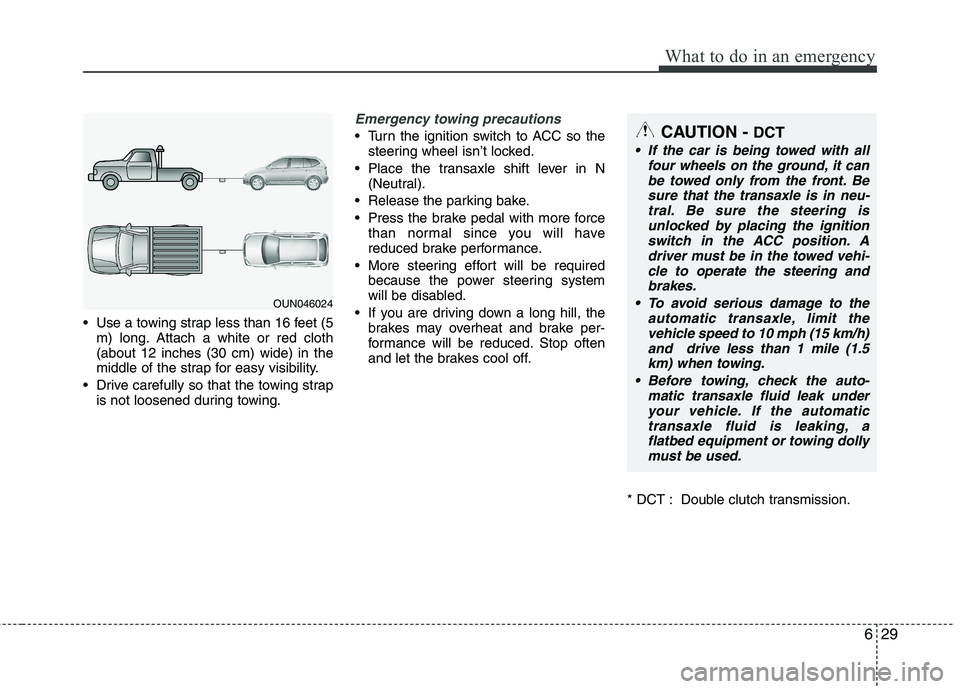
Use a towing strap less than 16 feet (5
m) long. Attach a white or red cloth
(about 12 inches (30 cm) wide) in the
middle of the strap for easy visibility.
Drive carefully so that the towing strap
is not loosened during towing.
Emergency towing precautions
Turn the ignition switch to ACC so the
steering wheel isn’t locked.
Place the transaxle shift lever in N
(Neutral).
Release the parking bake.
Press the brake pedal with more force
than normal since you will have
reduced brake performance.
More steering effort will be required
because the power steering system
will be disabled.
If you are driving down a long hill, the
brakes may overheat and brake per-
formance will be reduced. Stop often
and let the brakes cool off.
* DCT : Double clutch transmission.CAUTION - DCT
If the car is being towed with all
four wheels on the ground, it can
be towed only from the front. Be
sure that the transaxle is in neu-
tral. Be sure the steering is
unlocked by placing the ignition
switch in the ACC position. A
driver must be in the towed vehi-
cle to operate the steering and
brakes.
To avoid serious damage to the
automatic transaxle, limit the
vehicle speed to 10 mph (15 km/h)
and drive less than 1 mile (1.5
km) when towing.
Before towing, check the auto-
matic transaxle fluid leak under
your vehicle. If the automatic
transaxle fluid is leaking, a
flatbed equipment or towing dolly
must be used.
OUN046024
Page 302 of 385
Maintenance
8 7
NORMAL MAINTENANCE SCHEDULE (CONT.)
37,500 miles (60,000 km) or 30 months
❑Rotate tire
❑Inspect battery condition
❑Inspect air cleaner filter
❑Inspect vacuum hose
❑Inspect manual transaxle fluid (if equipped)
❑Inspect double clutch transmission fluid (if equipped)
❑Replace engine oil and filter
(37,500 miles (60,000 km) or 60 months)
*1: Fuel filter & Fuel tank air filter are considered to be maintenance free but
periodic inspection is recommended for this maintenance schedule depends
on fuel quality. If there are some important safety matters like fuel flow
restriction, surging, loss of power, hard starting problem etc, replace the fuel
filter immediately regardless of maintenance schedule and consult an
authorized HYUNDAI dealer for details.
30,000 miles (48,000 km) or 24 months
❑Rotate tire
❑Inspect battery condition
❑Inspect vacuum hose
❑Inspect air conditioning refrigerant
❑Inspect brake hoses and lines
❑Inspect exhaust pipe and muffler
❑Inspect front brake disc/pads, calipers
❑Inspect rear brake disc/pads (if equipped)
❑Inspect rear brake drums/linings (if equipped)
❑Inspect electronic throttle control
❑Inspect steering gear box, linkage & boots/lower arm ball joint,
upper arm ball joint
❑Inspect suspension mounting bolts
❑Inspect brake/clutch (if equipped) fluid
❑Inspect fuel filter *1
❑Inspect fuel lines, fuel hoses and connections
❑Inspect fuel tank air filter (if equipped) *1
❑Inspect parking brake
❑Inspect vapor hose and fuel filler cap
❑Replace climate control air filter (for evaporator and blower unit)
❑Replace air cleaner filter
❑Replace engine oil and filter
(30,000 miles (48,000 km) or 48 months)
Page 304 of 385
Maintenance
10 7
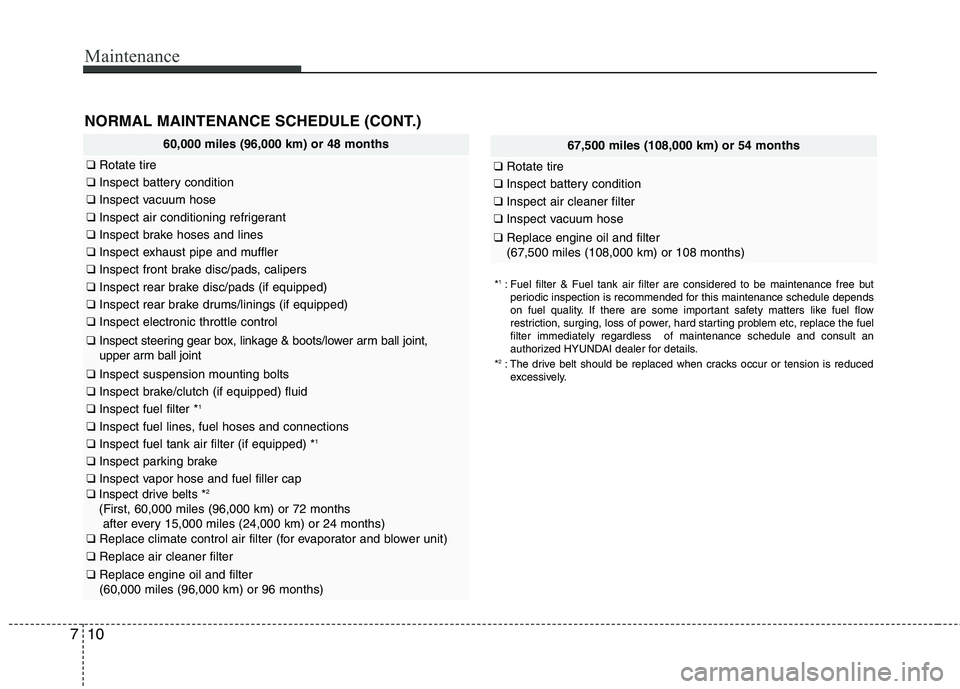
60,000 miles (96,000 km) or 48 months
❑Rotate tire
❑Inspect battery condition
❑Inspect vacuum hose
❑Inspect air conditioning refrigerant
❑Inspect brake hoses and lines
❑Inspect exhaust pipe and muffler
❑Inspect front brake disc/pads, calipers
❑Inspect rear brake disc/pads (if equipped)
❑Inspect rear brake drums/linings (if equipped)
❑Inspect electronic throttle control
❑Inspect steering gear box, linkage & boots/lower arm ball joint,
upper arm ball joint
❑Inspect suspension mounting bolts
❑Inspect brake/clutch (if equipped) fluid
❑Inspect fuel filter *1
❑Inspect fuel lines, fuel hoses and connections
❑Inspect fuel tank air filter (if equipped) *1
❑Inspect parking brake
❑Inspect vapor hose and fuel filler cap❑Inspect drive belts *2
(First, 60,000 miles (96,000 km) or 72 months
after every 15,000 miles (24,000 km) or 24 months)
❑Replace climate control air filter (for evaporator and blower unit)
❑Replace air cleaner filter
❑Replace engine oil and filter
(60,000 miles (96,000 km) or 96 months)
67,500 miles (108,000 km) or 54 months
❑Rotate tire
❑Inspect battery condition
❑Inspect air cleaner filter
❑Inspect vacuum hose
❑Replace engine oil and filter
(67,500 miles (108,000 km) or 108 months)
NORMAL MAINTENANCE SCHEDULE (CONT.)
*1: Fuel filter & Fuel tank air filter are considered to be maintenance free but
periodic inspection is recommended for this maintenance schedule depends
on fuel quality. If there are some important safety matters like fuel flow
restriction, surging, loss of power, hard starting problem etc, replace the fuel
filter immediately regardless of maintenance schedule and consult an
authorized HYUNDAI dealer for details.
*
2: The drive belt should be replaced when cracks occur or tension is reduced
excessively.
Page 306 of 385
Maintenance
12 7
NORMAL MAINTENANCE SCHEDULE (CONT.)
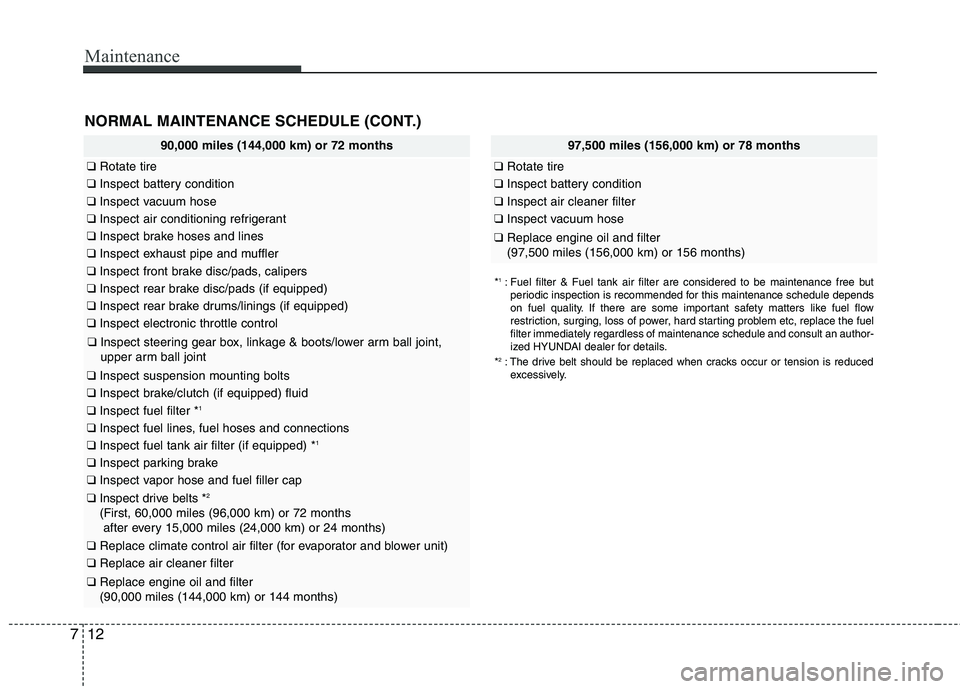
97,500 miles (156,000 km) or 78 months
❑Rotate tire
❑Inspect battery condition
❑Inspect air cleaner filter
❑Inspect vacuum hose
❑Replace engine oil and filter
(97,500 miles (156,000 km) or 156 months)
90,000 miles (144,000 km) or 72 months
❑Rotate tire
❑Inspect battery condition
❑Inspect vacuum hose
❑Inspect air conditioning refrigerant
❑Inspect brake hoses and lines
❑Inspect exhaust pipe and muffler
❑Inspect front brake disc/pads, calipers
❑Inspect rear brake disc/pads (if equipped)
❑Inspect rear brake drums/linings (if equipped)
❑Inspect electronic throttle control
❑Inspect steering gear box, linkage & boots/lower arm ball joint,
upper arm ball joint
❑Inspect suspension mounting bolts
❑Inspect brake/clutch (if equipped) fluid
❑Inspect fuel filter *1
❑Inspect fuel lines, fuel hoses and connections
❑Inspect fuel tank air filter (if equipped) *1
❑Inspect parking brake
❑Inspect vapor hose and fuel filler cap
❑Inspect drive belts *2
(First, 60,000 miles (96,000 km) or 72 months
after every 15,000 miles (24,000 km) or 24 months)
❑Replace climate control air filter (for evaporator and blower unit)
❑Replace air cleaner filter
❑Replace engine oil and filter
(90,000 miles (144,000 km) or 144 months)
*1: Fuel filter & Fuel tank air filter are considered to be maintenance free but
periodic inspection is recommended for this maintenance schedule depends
on fuel quality. If there are some important safety matters like fuel flow
restriction, surging, loss of power, hard starting problem etc, replace the fuel
filter immediately regardless of maintenance schedule and consult an author-
ized HYUNDAI dealer for details.
*
2: The drive belt should be replaced when cracks occur or tension is reduced
excessively.
Page 308 of 385
Maintenance
14 7
NORMAL MAINTENANCE SCHEDULE (CONT.)
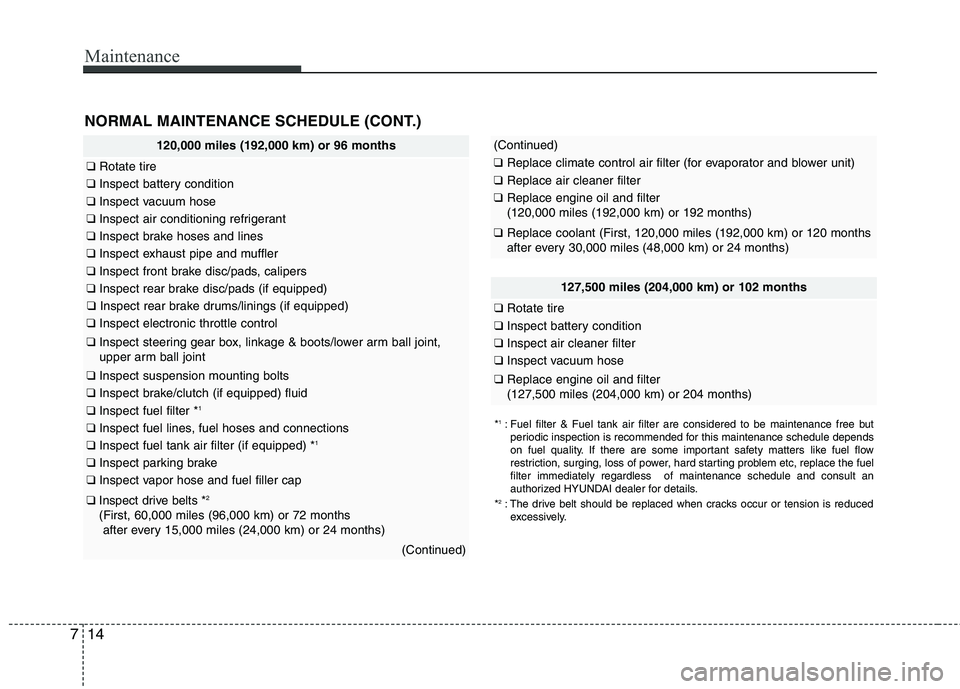
120,000 miles (192,000 km) or 96 months
❑Rotate tire
❑Inspect battery condition
❑Inspect vacuum hose
❑Inspect air conditioning refrigerant
❑Inspect brake hoses and lines
❑Inspect exhaust pipe and muffler
❑Inspect front brake disc/pads, calipers
❑Inspect rear brake disc/pads (if equipped)
❑Inspect rear brake drums/linings (if equipped)
❑Inspect electronic throttle control
❑Inspect steering gear box, linkage & boots/lower arm ball joint,
upper arm ball joint
❑Inspect suspension mounting bolts
❑Inspect brake/clutch (if equipped) fluid
❑Inspect fuel filter *1
❑Inspect fuel lines, fuel hoses and connections
❑Inspect fuel tank air filter (if equipped) *1
❑Inspect parking brake
❑Inspect vapor hose and fuel filler cap
❑Inspect drive belts *2
(First, 60,000 miles (96,000 km) or 72 months
after every 15,000 miles (24,000 km) or 24 months)
(Continued)
*1: Fuel filter & Fuel tank air filter are considered to be maintenance free but
periodic inspection is recommended for this maintenance schedule depends
on fuel quality. If there are some important safety matters like fuel flow
restriction, surging, loss of power, hard starting problem etc, replace the fuel
filter immediately regardless of maintenance schedule and consult an
authorized HYUNDAI dealer for details.
*
2: The drive belt should be replaced when cracks occur or tension is reduced
excessively.
127,500 miles (204,000 km) or 102 months
❑Rotate tire
❑Inspect battery condition
❑Inspect air cleaner filter
❑Inspect vacuum hose
❑Replace engine oil and filter
(127,500 miles (204,000 km) or 204 months)
(Continued)
❑Replace climate control air filter (for evaporator and blower unit)
❑Replace air cleaner filter
❑Replace engine oil and filter
(120,000 miles (192,000 km) or 192 months)
❑Replace coolant (First, 120,000 miles (192,000 km) or 120 months
after every 30,000 miles (48,000 km) or 24 months)
Page 310 of 385
Maintenance
16 7
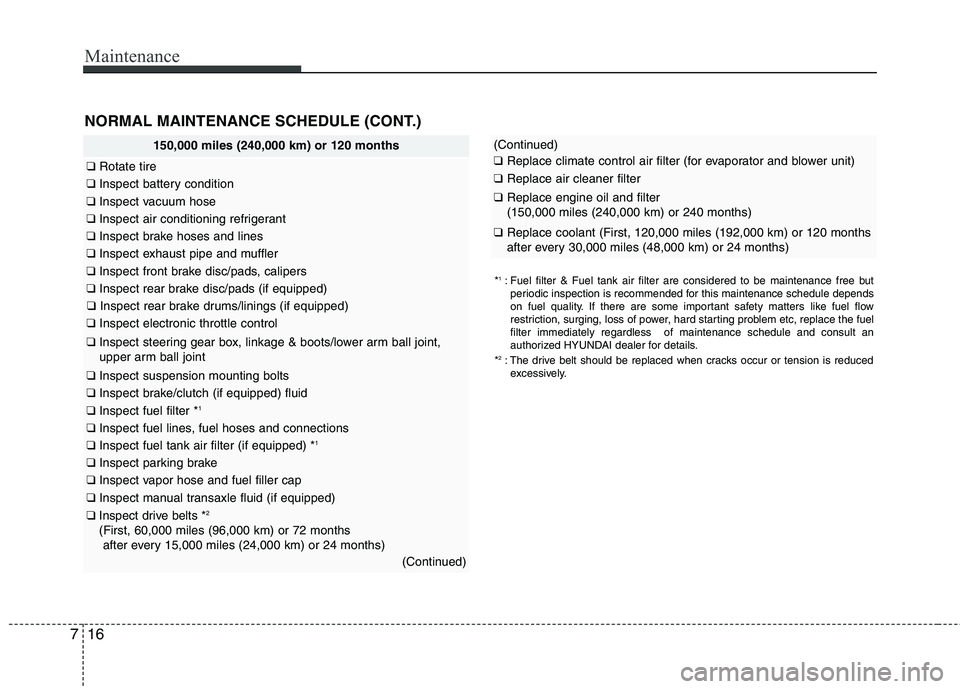
150,000 miles (240,000 km) or 120 months
❑Rotate tire
❑Inspect battery condition
❑Inspect vacuum hose
❑Inspect air conditioning refrigerant
❑Inspect brake hoses and lines
❑Inspect exhaust pipe and muffler
❑Inspect front brake disc/pads, calipers
❑Inspect rear brake disc/pads (if equipped)
❑Inspect rear brake drums/linings (if equipped)
❑Inspect electronic throttle control
❑Inspect steering gear box, linkage & boots/lower arm ball joint,
upper arm ball joint
❑Inspect suspension mounting bolts
❑Inspect brake/clutch (if equipped) fluid
❑Inspect fuel filter *1
❑Inspect fuel lines, fuel hoses and connections
❑Inspect fuel tank air filter (if equipped) *1
❑Inspect parking brake
❑Inspect vapor hose and fuel filler cap
❑Inspect manual transaxle fluid (if equipped)
❑Inspect drive belts *2
(First, 60,000 miles (96,000 km) or 72 months
after every 15,000 miles (24,000 km) or 24 months)
(Continued)
NORMAL MAINTENANCE SCHEDULE (CONT.)
*1: Fuel filter & Fuel tank air filter are considered to be maintenance free but
periodic inspection is recommended for this maintenance schedule depends
on fuel quality. If there are some important safety matters like fuel flow
restriction, surging, loss of power, hard starting problem etc, replace the fuel
filter immediately regardless of maintenance schedule and consult an
authorized HYUNDAI dealer for details.
*
2: The drive belt should be replaced when cracks occur or tension is reduced
excessively.
(Continued)
❑Replace climate control air filter (for evaporator and blower unit)
❑Replace air cleaner filter
❑Replace engine oil and filter
(150,000 miles (240,000 km) or 240 months)
❑Replace coolant (First, 120,000 miles (192,000 km) or 120 months
after every 30,000 miles (48,000 km) or 24 months)
Page 377 of 385
Index
2I
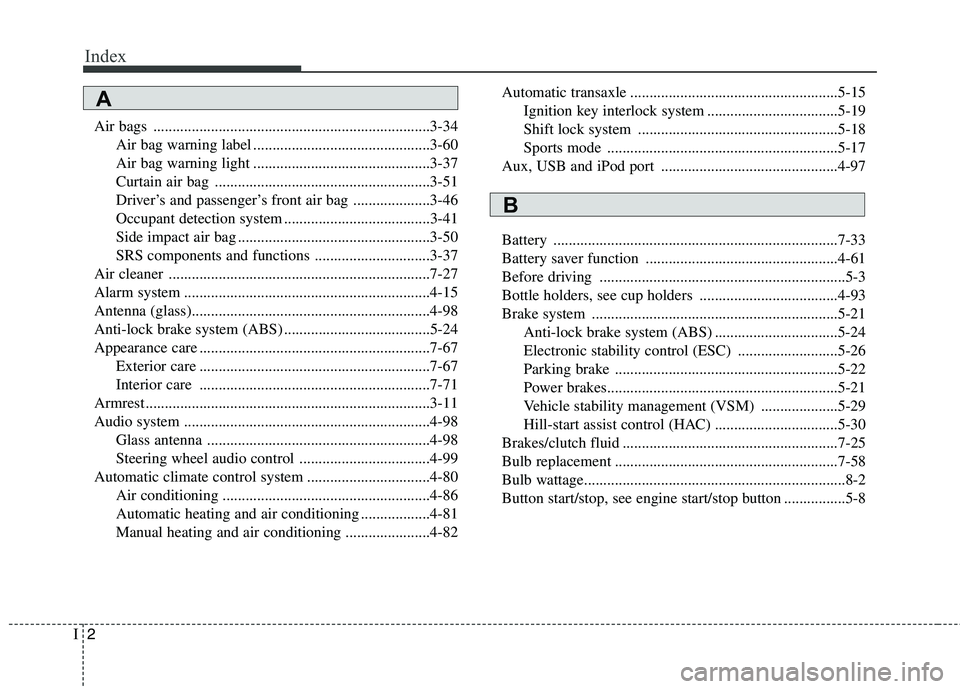
Air bags ........................................................................3-34
Air bag warning label ..............................................3-60
Air bag warning light ..............................................3-37
Curtain air bag ........................................................3-51
Driver’s and passenger’s front air bag ....................3-46
Occupant detection system ......................................3-41
Side impact air bag ..................................................3-50
SRS components and functions ..............................3-37
Air cleaner ....................................................................7-27
Alarm system ................................................................4-15
Antenna (glass)..............................................................4-98
Anti-lock brake system (ABS) ......................................5-24
Appearance care ............................................................7-67
Exterior care ............................................................7-67
Interior care ............................................................7-71
Armrest ..........................................................................3-11
Audio system ................................................................4-98
Glass antenna ..........................................................4-98
Steering wheel audio control ..................................4-99
Automatic climate control system ................................4-80
Air conditioning ......................................................4-86
Automatic heating and air conditioning ..................4-81
Manual heating and air conditioning ......................4-82Automatic transaxle ......................................................5-15
Ignition key interlock system ..................................5-19
Shift lock system ....................................................5-18
Sports mode ............................................................5-17
Aux, USB and iPod port ..............................................4-97
Battery ..........................................................................7-33
Battery saver function ..................................................4-61
Before driving ................................................................5-3
Bottle holders, see cup holders ....................................4-93
Brake system ................................................................5-21
Anti-lock brake system (ABS) ................................5-24
Electronic stability control (ESC) ..........................5-26
Parking brake ..........................................................5-22
Power brakes............................................................5-21
Vehicle stability management (VSM) ....................5-29
Hill-start assist control (HAC) ................................5-30
Brakes/clutch fluid ........................................................7-25
Bulb replacement ..........................................................7-58
Bulb wattage....................................................................8-2
Button start/stop, see engine start/stop button ................5-8
A
B
Page 379 of 385
Index
4I
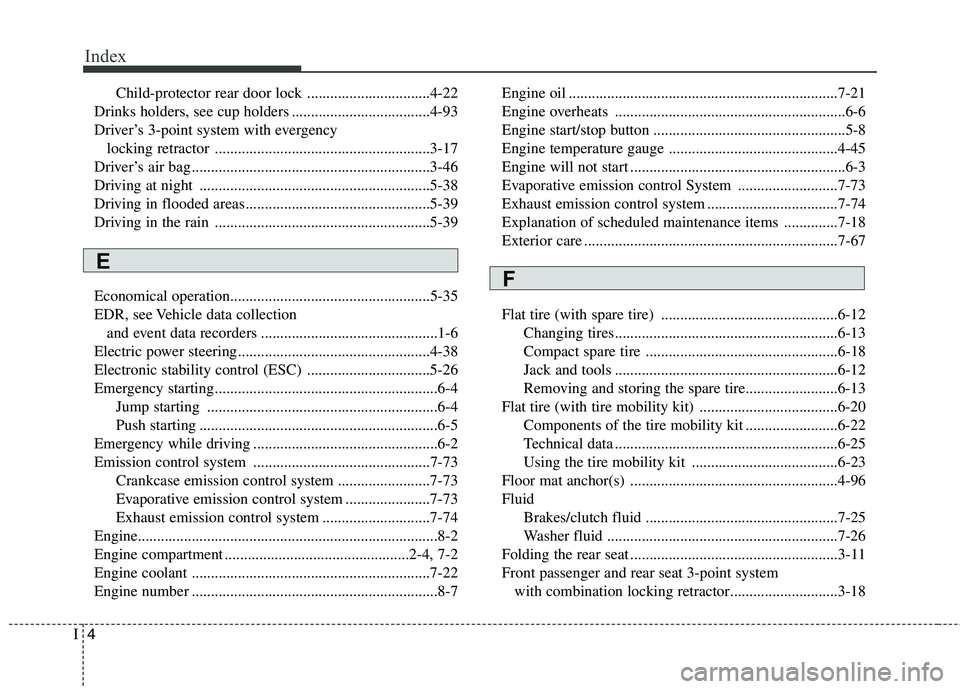
Child-protector rear door lock ................................4-22
Drinks holders, see cup holders ....................................4-93
Driver’s 3-point system with evergency
locking retractor ........................................................3-17
Driver’s air bag ..............................................................3-46
Driving at night ............................................................5-38
Driving in flooded areas................................................5-39
Driving in the rain ........................................................5-39
Economical operation....................................................5-35
EDR, see Vehicle data collection
and event data recorders ..............................................1-6
Electric power steering..................................................4-38
Electronic stability control (ESC) ................................5-26
Emergency starting..........................................................6-4
Jump starting ............................................................6-4
Push starting ..............................................................6-5
Emergency while driving ................................................6-2
Emission control system ..............................................7-73
Crankcase emission control system ........................7-73
Evaporative emission control system ......................7-73
Exhaust emission control system ............................7-74
Engine..............................................................................8-2
Engine compartment ................................................2-4, 7-2
Engine coolant ..............................................................7-22
Engine number ................................................................8-7Engine oil ......................................................................7-21
Engine overheats ............................................................6-6
Engine start/stop button ..................................................5-8
Engine temperature gauge ............................................4-45
Engine will not start ........................................................6-3
Evaporative emission control System ..........................7-73
Exhaust emission control system ..................................7-74
Explanation of scheduled maintenance items ..............7-18
Exterior care ..................................................................7-67
Flat tire (with spare tire) ..............................................6-12
Changing tires..........................................................6-13
Compact spare tire ..................................................6-18
Jack and tools ..........................................................6-12
Removing and storing the spare tire........................6-13
Flat tire (with tire mobility kit) ....................................6-20
Components of the tire mobility kit ........................6-22
Technical data ..........................................................6-25
Using the tire mobility kit ......................................6-23
Floor mat anchor(s) ......................................................4-96
Fluid
Brakes/clutch fluid ..................................................7-25
Washer fluid ............................................................7-26
Folding the rear seat ......................................................3-11
Front passenger and rear seat 3-point system
with combination locking retractor............................3-18
F
E