tire pressure ISUZU AXIOM 2002 Service User Guide
[x] Cancel search | Manufacturer: ISUZU, Model Year: 2002, Model line: AXIOM, Model: ISUZU AXIOM 2002Pages: 2100, PDF Size: 19.35 MB
Page 228 of 2100
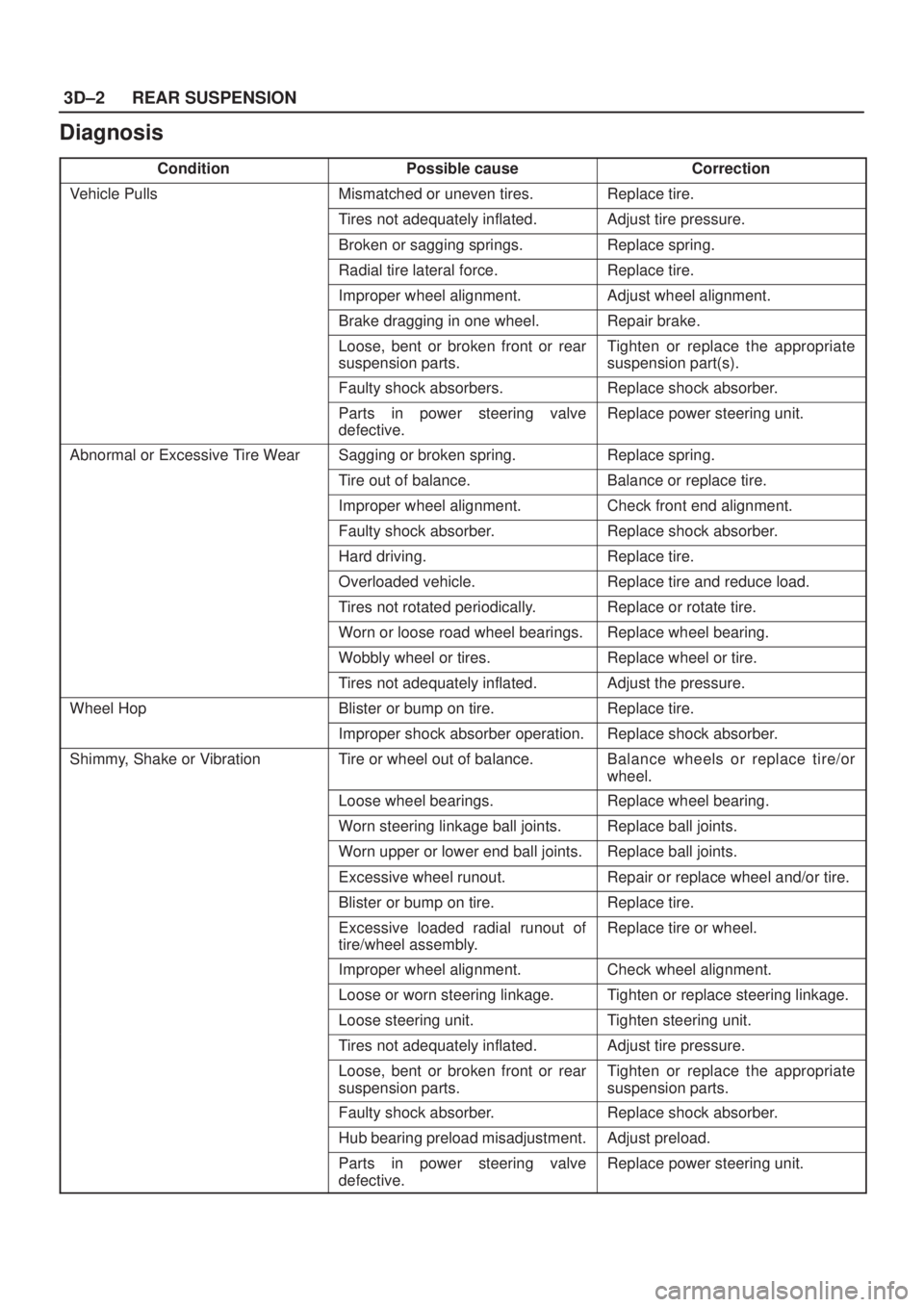
3D±2REAR SUSPENSION
Diagnosis
ConditionPossible causeCorrection
Vehicle PullsMismatched or uneven tires.Replace tire.
Tires not adequately inflated.Adjust tire pressure.
Broken or sagging springs.Replace spring.
Radial tire lateral force.Replace tire.
Improper wheel alignment.Adjust wheel alignment.
Brake dragging in one wheel.Repair brake.
Loose, bent or broken front or rear
suspension parts.Tighten or replace the appropriate
suspension part(s).
Faulty shock absorbers.Replace shock absorber.
Parts in power steering valve
defective.Replace power steering unit.
Abnormal or Excessive Tire WearSagging or broken spring.Replace spring.
Tire out of balance.Balance or replace tire.
Improper wheel alignment.Check front end alignment.
Faulty shock absorber.Replace shock absorber.
Hard driving.Replace tire.
Overloaded vehicle.Replace tire and reduce load.
Tires not rotated periodically.Replace or rotate tire.
Worn or loose road wheel bearings.Replace wheel bearing.
Wobbly wheel or tires.Replace wheel or tire.
Tires not adequately inflated.Adjust the pressure.
Wheel HopBlister or bump on tire.Replace tire.
Improper shock absorber operation.Replace shock absorber.
Shimmy, Shake or VibrationTire or wheel out of balance.Balance wheels or replace tire/or
wheel.
Loose wheel bearings.Replace wheel bearing.
Worn steering linkage ball joints.Replace ball joints.
Worn upper or lower end ball joints.Replace ball joints.
Excessive wheel runout.Repair or replace wheel and/or tire.
Blister or bump on tire.Replace tire.
Excessive loaded radial runout of
tire/wheel assembly.Replace tire or wheel.
Improper wheel alignment.Check wheel alignment.
Loose or worn steering linkage.Tighten or replace steering linkage.
Loose steering unit.Tighten steering unit.
Tires not adequately inflated.Adjust tire pressure.
Loose, bent or broken front or rear
suspension parts.Tighten or replace the appropriate
suspension parts.
Faulty shock absorber.Replace shock absorber.
Hub bearing preload misadjustment.Adjust preload.
Parts in power steering valve
defective.Replace power steering unit.
Page 229 of 2100
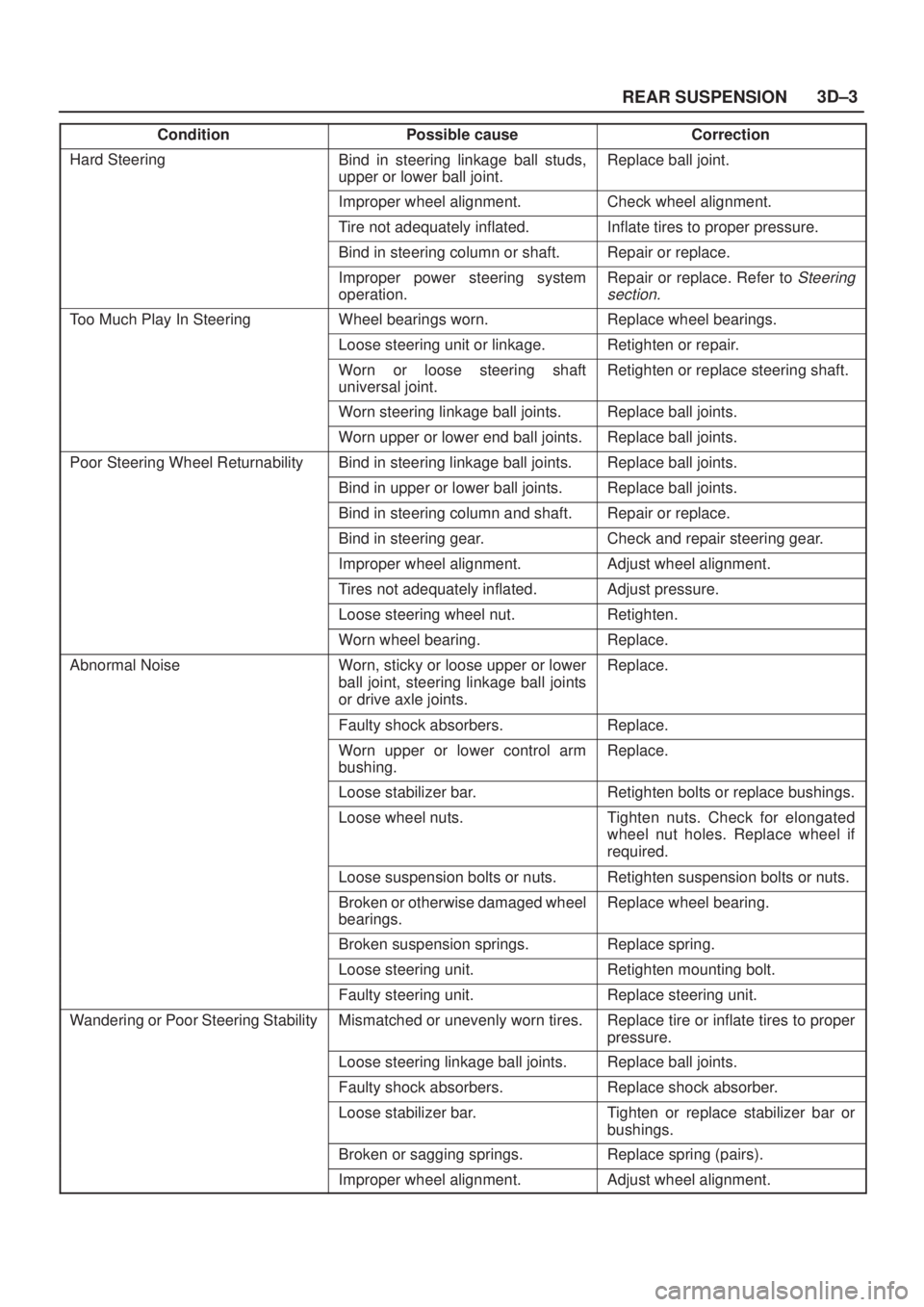
REAR SUSPENSION3D±3
Condition CorrectionPossible cause
Hard SteeringBind in steering linkage ball studs,
upper or lower ball joint.Replace ball joint.
Improper wheel alignment.Check wheel alignment.
Tire not adequately inflated.Inflate tires to proper pressure.
Bind in steering column or shaft.Repair or replace.
Improper power steering system
operation.Repair or replace. Refer to Steering
section.
Too Much Play In SteeringWheel bearings worn.Replace wheel bearings.
Loose steering unit or linkage.Retighten or repair.
Worn or loose steering shaft
universal joint.Retighten or replace steering shaft.
Worn steering linkage ball joints.Replace ball joints.
Worn upper or lower end ball joints.Replace ball joints.
Poor Steering Wheel ReturnabilityBind in steering linkage ball joints.Replace ball joints.
Bind in upper or lower ball joints.Replace ball joints.
Bind in steering column and shaft.Repair or replace.
Bind in steering gear.Check and repair steering gear.
Improper wheel alignment.Adjust wheel alignment.
Tires not adequately inflated.Adjust pressure.
Loose steering wheel nut.Retighten.
Worn wheel bearing.Replace.
Abnormal NoiseWorn, sticky or loose upper or lower
ball joint, steering linkage ball joints
or drive axle joints.Replace.
Faulty shock absorbers.Replace.
Worn upper or lower control arm
bushing.Replace.
Loose stabilizer bar.Retighten bolts or replace bushings.
Loose wheel nuts.Tighten nuts. Check for elongated
wheel nut holes. Replace wheel if
required.
Loose suspension bolts or nuts.Retighten suspension bolts or nuts.
Broken or otherwise damaged wheel
bearings.Replace wheel bearing.
Broken suspension springs. Replace spring.
Loose steering unit. Retighten mounting bolt.
Faulty steering unit.Replace steering unit.
Wandering or Poor Steering StabilityMismatched or unevenly worn tires.Replace tire or inflate tires to proper
pressure.
Loose steering linkage ball joints.Replace ball joints.
Faulty shock absorbers.Replace shock absorber.
Loose stabilizer bar.Tighten or replace stabilizer bar or
bushings.
Broken or sagging springs.Replace spring (pairs).
Improper wheel alignment.Adjust wheel alignment.
Page 230 of 2100
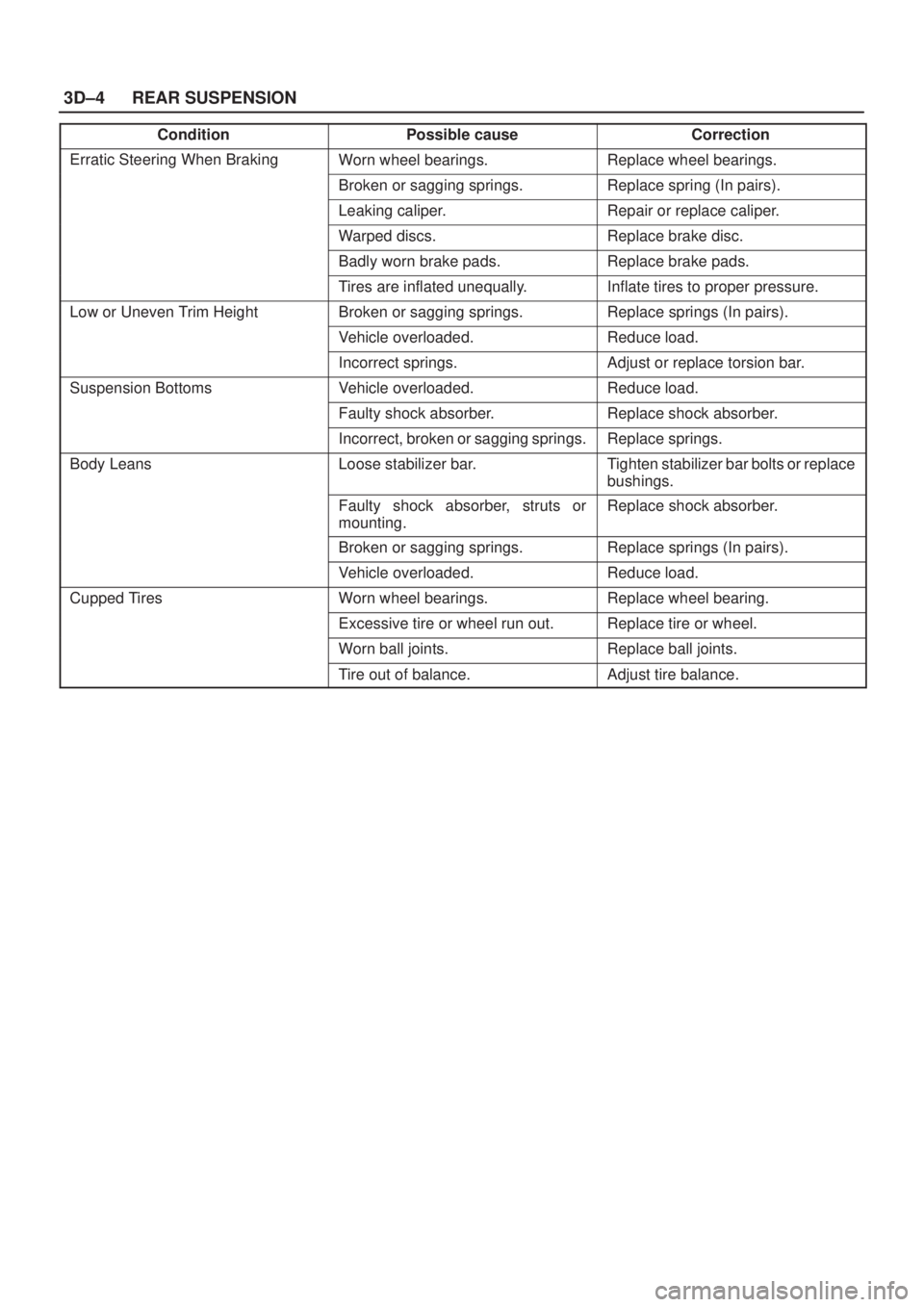
3D±4REAR SUSPENSION
Condition CorrectionPossible cause
Erratic Steering When BrakingWorn wheel bearings.Replace wheel bearings.
Broken or sagging springs.Replace spring (In pairs).
Leaking caliper.Repair or replace caliper.
Warped discs.Replace brake disc.
Badly worn brake pads.Replace brake pads.
Tires are inflated unequally.Inflate tires to proper pressure.
Low or Uneven Trim HeightBroken or sagging springs.Replace springs (In pairs).
Vehicle overloaded.Reduce load.
Incorrect springs.Adjust or replace torsion bar.
Suspension BottomsVehicle overloaded. Reduce load.
Faulty shock absorber.Replace shock absorber.
Incorrect, broken or sagging springs.Replace springs.
Body LeansLoose stabilizer bar.Tighten stabilizer bar bolts or replace
bushings.
Faulty shock absorber, struts or
mounting.Replace shock absorber.
Broken or sagging springs.Replace springs (In pairs).
Vehicle overloaded.Reduce load.
Cupped TiresWorn wheel bearings.Replace wheel bearing.
Excessive tire or wheel run out.Replace tire or wheel.
Worn ball joints.Replace ball joints.
Tire out of balance.Adjust tire balance.
Page 246 of 2100

3D±20REAR SUSPENSION
Diagnosis
ConditionPossible causeCorrection
Vehicle PullsMismatched or uneven tires.Replace tire.
Tires not adequately inflated.Adjust tire pressure.
Broken or sagging springs.Replace spring.
Radial tire lateral force.Replace tire.
Improper wheel alignment.Adjust wheel alignment.
Brake dragging in one wheel.Repair brake.
Loose, bent or broken front or rear
suspension parts.Tighten or replace the appropriate
suspension part(s).
Faulty shock absorbers.Replace shock absorber.
Parts in power steering valve
defective.Replace power steering unit.
Abnormal or Excessive Tire WearSagging or broken spring.Replace spring.
Tire out of balance.Balance or replace tire.
Improper wheel alignment.Check front end alignment.
Faulty shock absorber.Replace shock absorber.
Hard driving.Replace tire.
Overloaded vehicle.Replace tire and reduce load.
Tires not rotated periodically.Replace or rotate tire.
Worn or loose road wheel bearings.Replace wheel bearing.
Wobbly wheel or tires.Replace wheel or tire.
Tires not adequately inflated.Adjust the pressure.
Wheel HopBlister or bump on tire.Replace tire.
Improper shock absorber operation.Replace shock absorber.
Shimmy, Shake or VibrationTire or wheel out of balance.Balance wheels or replace tire/or
wheel.
Loose wheel bearings.Replace wheel bearing.
Worn steering linkage ball joints.Replace ball joints.
Worn upper or lower end ball joints.Replace ball joints.
Excessive wheel runout.Repair or replace wheel and/or tire.
Blister or bump on tire.Replace tire.
Excessive loaded radial runout of
tire/wheel assembly.Replace tire or wheel.
Improper wheel alignment.Check wheel alignment.
Loose or worn steering linkage.Tighten or replace steering linkage.
Loose steering unit.Tighten steering unit.
Tires not adequately inflated.Adjust tire pressure.
Loose, bent or broken front or rear
suspension parts.Tighten or replace the appropriate
suspension parts.
Faulty shock absorber.Replace shock absorber.
Hub bearing preload misadjustment.Adjust preload.
Parts in power steering valve
defective.Replace power steering unit.
Page 247 of 2100

REAR SUSPENSION3D±21
Condition CorrectionPossible cause
Hard SteeringBind in steering linkage ball studs,
upper or lower ball joint.Replace ball joint.
Improper wheel alignment.Check wheel alignment.
Tire not adequately inflated.Inflate tires to proper pressure.
Bind in steering column or shaft.Repair or replace.
Improper power steering system
operation.Repair or replace. Refer to Steering
section.
Too Much Play In SteeringWheel bearings worn.Replace wheel bearings.
Loose steering unit or linkage.Retighten or repair.
Worn or loose steering shaft
universal joint.Retighten or replace steering shaft.
Worn steering linkage ball joints.Replace ball joints.
Worn upper or lower end ball joints.Replace ball joints.
Poor Steering Wheel ReturnabilityBind in steering linkage ball joints.Replace ball joints.
Bind in upper or lower ball joints.Replace ball joints.
Bind in steering column and shaft.Repair or replace.
Bind in steering gear.Check and repair steering gear.
Improper wheel alignment.Adjust wheel alignment.
Tires not adequately inflated.Adjust pressure.
Loose steering wheel nut.Retighten.
Worn wheel bearing.Replace.
Misassemble Transfer Gear ASMReassemble Transfer Gear to proper
portion
Abnormal NoiseWorn, sticky or loose upper or lower
ball joint, steering linkage ball joints
or drive axle joints.Replace.
Faulty shock absorbers.Replace.
Worn upper or lower control arm
bushing.Replace.
Loose stabilizer bar.Retighten bolts or replace bushings.
Loose wheel nuts.Tighten nuts. Check for elongated
wheel nut holes. Replace wheel if
required.
Loose suspension bolts or nuts.Retighten suspension bolts or nuts.
Broken or otherwise damaged wheel
bearings.Replace wheel bearing.
Broken suspension springs. Replace spring.
Loose steering unit. Retighten mounting bolt.
Faulty steering unit.Replace steering unit.
Wandering or Poor Steering StabilityMismatched or unevenly worn tires.Replace tire or inflate tires to proper
pressure.
Loose steering linkage ball joints.Replace ball joints.
Faulty shock absorbers.Replace shock absorber.
Loose stabilizer bar.Tighten or replace stabilizer bar or
bushings.
Broken or sagging springs.Replace spring (pairs).
Improper wheel alignment.Adjust wheel alignment.
Page 248 of 2100

3D±22REAR SUSPENSION
Condition CorrectionPossible cause
Erratic Steering When BrakingWorn wheel bearings.Replace wheel bearings.
Broken or sagging springs.Replace spring (pairs).
Leaking caliper.Repair or replace caliper.
Warped discs.Replace brake disc.
Badly worn brake pads.Replace brake pads.
Tires are inflated unequally.Inflate tires to proper pressure.
Low or Uneven Trim HeightBroken or sagging springs.Replace springs (In pairs).
Vehicle overloaded.Reduce load.
Incorrect springs.Adjust or replace torsion bar.
Trim Height out of specAdjust Trim height
Suspension BottomsVehicle overloaded. Reduce load.
Faulty shock absorber.Replace shock absorber.
Incorrect, broken or sagging springs.Replace springs.
Body LeansTrim Height out of specAdjust Trim height
Loose stabilizer bar.Tighten stabilizer bar bolts or replace
bushings.
Faulty shock absorber, struts or
mounting.Replace shock absorber.
Broken or sagging springs.Replace springs (In pairs).
Vehicle overloaded.Reduce load.
Cupped TiresWorn wheel bearings.Replace wheel bearing.
Excessive tire or wheel run out.Replace tire or wheel.
Worn ball joints.Replace ball joints.
Tire out of balance.Adjust tire balance.
Page 264 of 2100
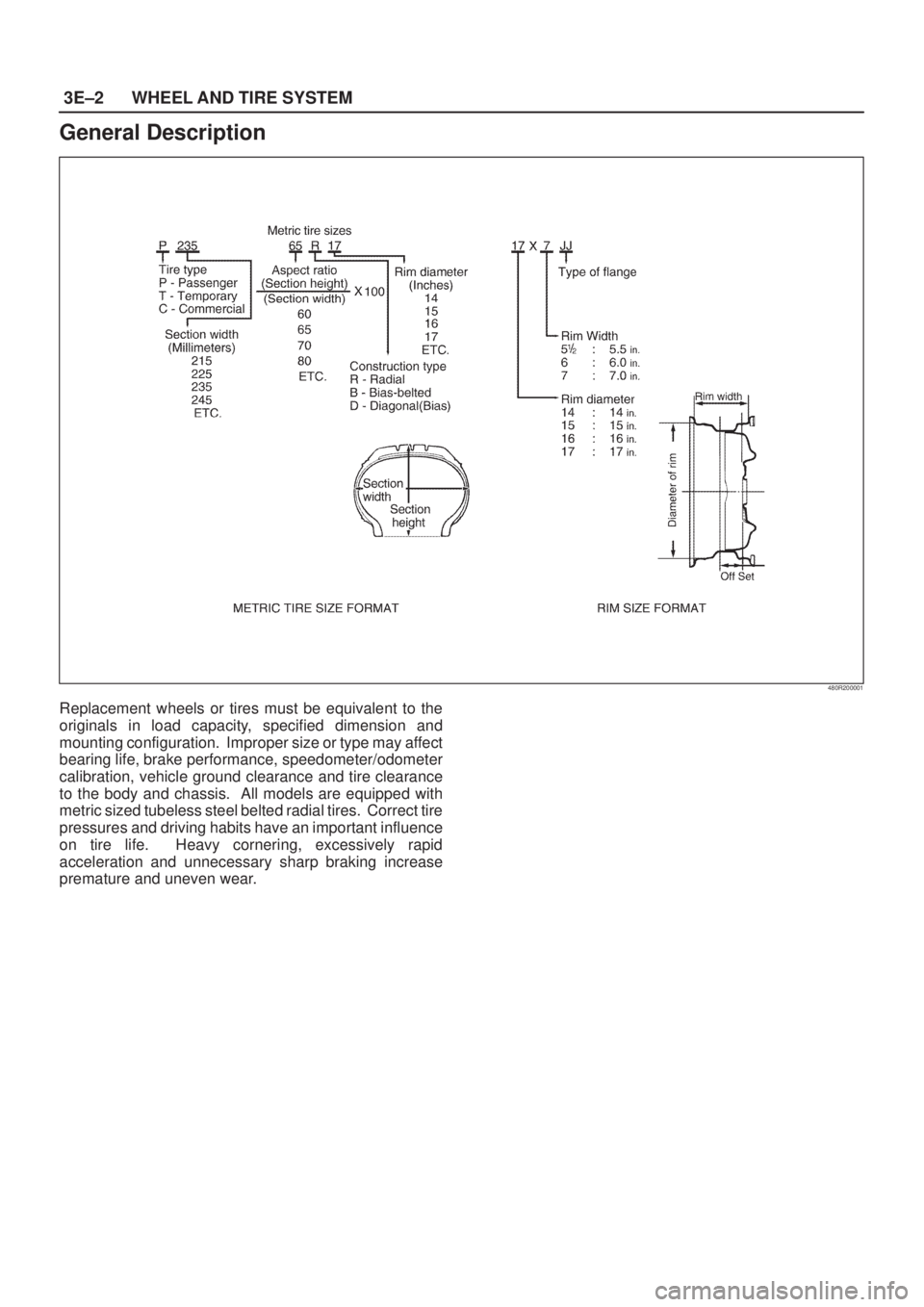
3E±2WHEEL AND TIRE SYSTEM
General Description
480R200001
Replacement wheels or tires must be equivalent to the
originals in load capacity, specified dimension and
mounting configuration. Improper size or type may affect
bearing life, brake performance, speedometer/odometer
calibration, vehicle ground clearance and tire clearance
to the body and chassis. All models are equipped with
metric sized tubeless steel belted radial tires. Correct tire
pressures and driving habits have an important influence
on tire life. Heavy cornering, excessively rapid
acceleration and unnecessary sharp braking increase
premature and uneven wear.
Page 265 of 2100

WHEEL AND TIRE SYSTEM3E±3
Diagnosis
ConditionPossible causeCorrection
Vehicle PullsMismatched or uneven tires.Replace tire.
Tires not adequately inflated.Adjust tire pressure.
Broken or sagging springs.Replace spring.
Radial tire lateral force.Replace tire.
Improper wheel alignment.Adjust wheel alignment.
Brake dragging in one wheel.Repair brake.
Loose, bent or broken front or rear
suspension parts.Tighten or replace the appropriate
suspension part(s).
Faulty shock absorbers.Replace shock absorber.
Parts in power steering valve
defective.Replace power steering unit.
Abnormal or Excessive Tire WearSagging or broken spring.Replace spring.
Tire out of balance.Balance or replace tire.
Improper wheel alignment.Check front end alignment.
Faulty shock absorber.Replace shock absorber.
Hard driving.Replace tire.
Overloaded vehicle.Replace tire and reduce load.
Tires not rotated periodically.Replace or rotate tire.
Worn or loose road wheel bearings.Replace wheel bearing.
Wobbly wheel or tires.Replace wheel or tire.
Tires not adequately inflated.Adjust the pressure.
Wheel HopBlister or bump on tire.Replace tire.
Improper shock absorber operation.Replace shock absorber.
Shimmy, Shake or VibrationTire or wheel out of balance.Balance wheels or replace tire/or
wheel.
Loose wheel bearings.Replace wheel bearing.
Worn steering linkage ball joints.Replace ball joints.
Worn upper or lower end ball joints.Replace ball joints.
Excessive wheel runout.Repair or replace wheel and/or tire.
Blister or bump on tire.Replace tire.
Excessive loaded radial runout of
tire/wheel assembly.Replace tire or wheel.
Improper wheel alignment.Check wheel alignment.
Loose or worn steering linkage.Tighten or replace steering linkage.
Loose steering unit.Tighten steering unit.
Tires not adequately inflated.Adjust tire pressure.
Loose, bent or broken front or rear
suspension parts.Tighten or replace the appropriate
suspension parts.
Faulty shock absorber.Replace shock absorber.
Hub bearing preload misadjustment.Adjust preload.
Parts in power steering valve
defective.Replace power steering unit.
Page 266 of 2100

3E±4WHEEL AND TIRE SYSTEM
Condition CorrectionPossible cause
Hard SteeringBind in steering linkage ball studs,
upper or lower ball joint.Replace ball joint.
Improper wheel alignment.Check wheel alignment.
Tire not adequately inflated.Inflate tires to proper pressure.
Bind in steering column or shaft.Repair or replace.
Improper power steering system
operation.Repair or replace. Refer to Steering
section.
Too Much Play In SteeringWheel bearings worn.Replace wheel bearings.
Loose steering unit or linkage.Retighten or repair.
Worn or loose steering shaft
universal joint.Retighten or replace steering shaft.
Worn steering linkage ball joints.Replace ball joints.
Worn upper or lower end ball joints.Replace ball joints.
Poor Steering Wheel ReturnabilityBind in steering linkage ball joints.Replace ball joints.
Bind in upper or lower ball joints.Replace ball joints.
Bind in steering column and shaft.Repair or replace.
Bind in steering gear.Check and repair steering gear.
Improper wheel alignment.Adjust wheel alignment.
Tires not adequately inflated.Adjust pressure.
Loose steering wheel nut.Retighten.
Worn wheel bearing.Replace.
Abnormal NoiseWorn, sticky or loose upper or lower
ball joint, steering linkage ball joints
or drive axle joints.Replace.
Faulty shock absorbers.Replace.
Worn upper or lower control arm
bushing.Replace.
Loose stabilizer bar.Retighten bolts or replace bushings.
Loose wheel nuts.Tighten nuts. Check for elongated
wheel nut holes. Replace wheel if
required.
Loose suspension bolts or nuts.Retighten suspension bolts or nuts.
Broken or otherwise damaged wheel
bearings.Replace wheel bearing.
Broken suspension springs. Replace spring.
Loose steering unit. Retighten mounting bolt.
Faulty steering unit.Replace steering unit.
Wandering or Poor Steering StabilityMismatched or unevenly worn tires.Replace tire or inflate tires to proper
pressure.
Loose steering linkage ball joints.Replace ball joints.
Faulty shock absorbers.Replace shock absorber.
Loose stabilizer bar.Tighten or replace stabilizer bar or
bushings.
Broken or sagging springs.Replace spring (pairs).
Improper wheel alignment.Adjust wheel alignment.
Page 267 of 2100
WHEEL AND TIRE SYSTEM3E±5
Condition CorrectionPossible cause
Erratic Steering When BrakingWorn wheel bearings.Replace wheel bearings.
Broken or sagging springs.Replace spring (pairs).
Leaking caliper.Repair or replace caliper.
Warped discs.Replace brake disc.
Badly worn brake pads.Replace brake pads.
Tires are inflated unequally.Inflate tires to proper pressure.
Low or Uneven Trim HeightBroken or sagging springs.Replace springs (In pairs).
Vehicle overloaded.Reduce load.
Incorrect springs.Adjust or replace torsion bar.
Suspension BottomsVehicle overloaded. Reduce load.
Faulty shock absorber.Replace shock absorber.
Incorrect, broken or sagging springs.Replace springs.
Body LeansLoose stabilizer bar.Tighten stabilizer bar bolts or replace
bushings.
Faulty shock absorber, struts or
mounting.Replace shock absorber.
Broken or sagging springs.Replace springs (In pairs).
Vehicle overloaded.Reduce load.
Cupped TiresWorn wheel bearings.Replace wheel bearing.
Excessive tire or wheel run out.Replace tire or wheel.
Worn ball joints.Replace ball joints.
Tire out of balance.Adjust tire balance.
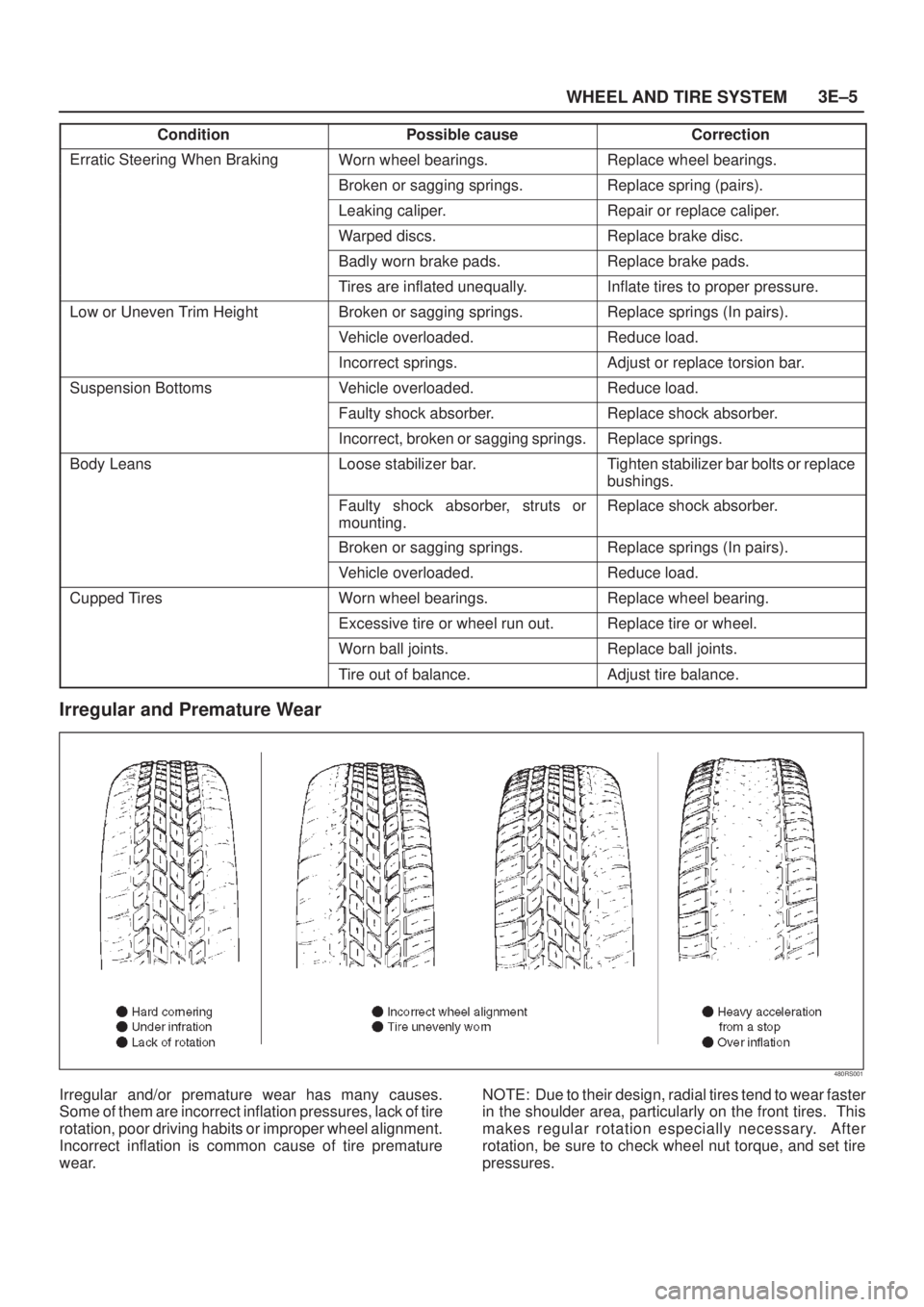
Irregular and Premature Wear
480RS001
Irregular and/or premature wear has many causes.
Some of them are incorrect inflation pressures, lack of tire
rotation, poor driving habits or improper wheel alignment.
Incorrect inflation is common cause of tire premature
wear.NOTE: Due to their design, radial tires tend to wear faster
in the shoulder area, particularly on the front tires. This
makes regular rotation especially necessary. After
rotation, be sure to check wheel nut torque, and set tire
pressures.