Vents JEEP COMPASS LATITUDE 2018 Owners Manual
[x] Cancel search | Manufacturer: JEEP, Model Year: 2018, Model line: COMPASS LATITUDE, Model: JEEP COMPASS LATITUDE 2018Pages: 518, PDF Size: 4.8 MB
Page 64 of 518
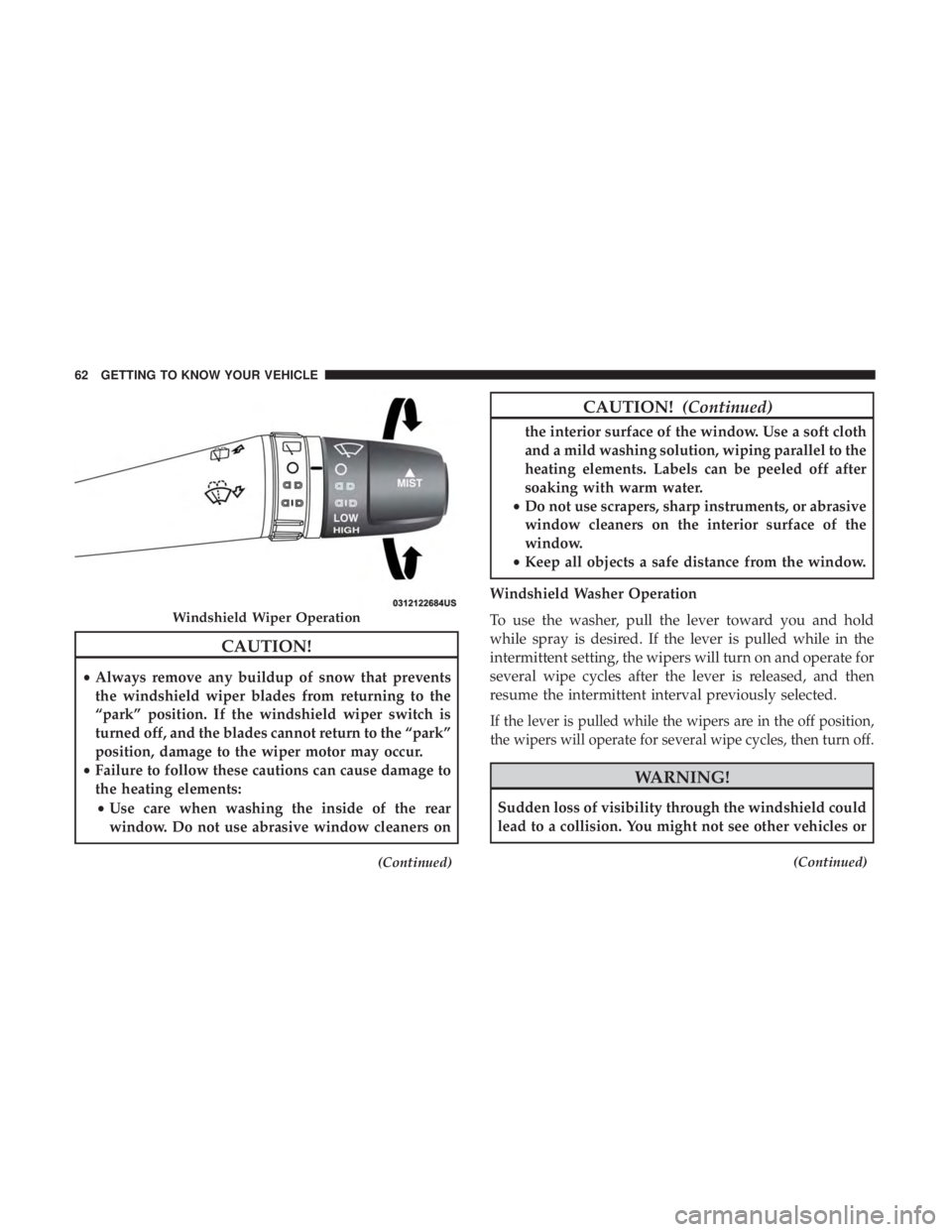
CAUTION!
•Always remove any buildup of snow that prevents
the windshield wiper blades from returning to the
“park” position. If the windshield wiper switch is
turned off, and the blades cannot return to the “park”
position, damage to the wiper motor may occur.
• Failure to follow these cautions can cause damage to
the heating elements:
• Use care when washing the inside of the rear
window. Do not use abrasive window cleaners on
(Continued)
Page 136 of 518
SAFETY FEATURES
Anti-Lock Brake System (ABS)
The Anti-Lock Brake System (ABS) provides increased
vehicle stability and brake performance under most brak-
ing conditions. The system automatically prevents wheel
lock, and enhances vehicle control during braking.
The ABS performs a self-check cycle to ensure that the ABS
is working properly each time the vehicle is started and
driven. During this self-check, you may hear a slight
clicking sound as well as some related motor noises.
ABS is activated during braking when the system detects one
or more wheels begin to lock. Road conditions such as ice,
snow, gravel, bumps, railroad tracks, loose debris, or panic
stops may increase the likelihood of ABS activation(s).
You also may experience the following when ABS activates:
•The ABS motor noise (it may continue to run for a short
time after the stop).
• The clicking sound of solenoid valves.
• Brake pedal pulsations.
• A slight drop of the brake pedal at the end of the stop.
These are all normal characteristics of ABS.
Page 157 of 518
system will hold the vehicle at standstill for two seconds
and then release the brakes.
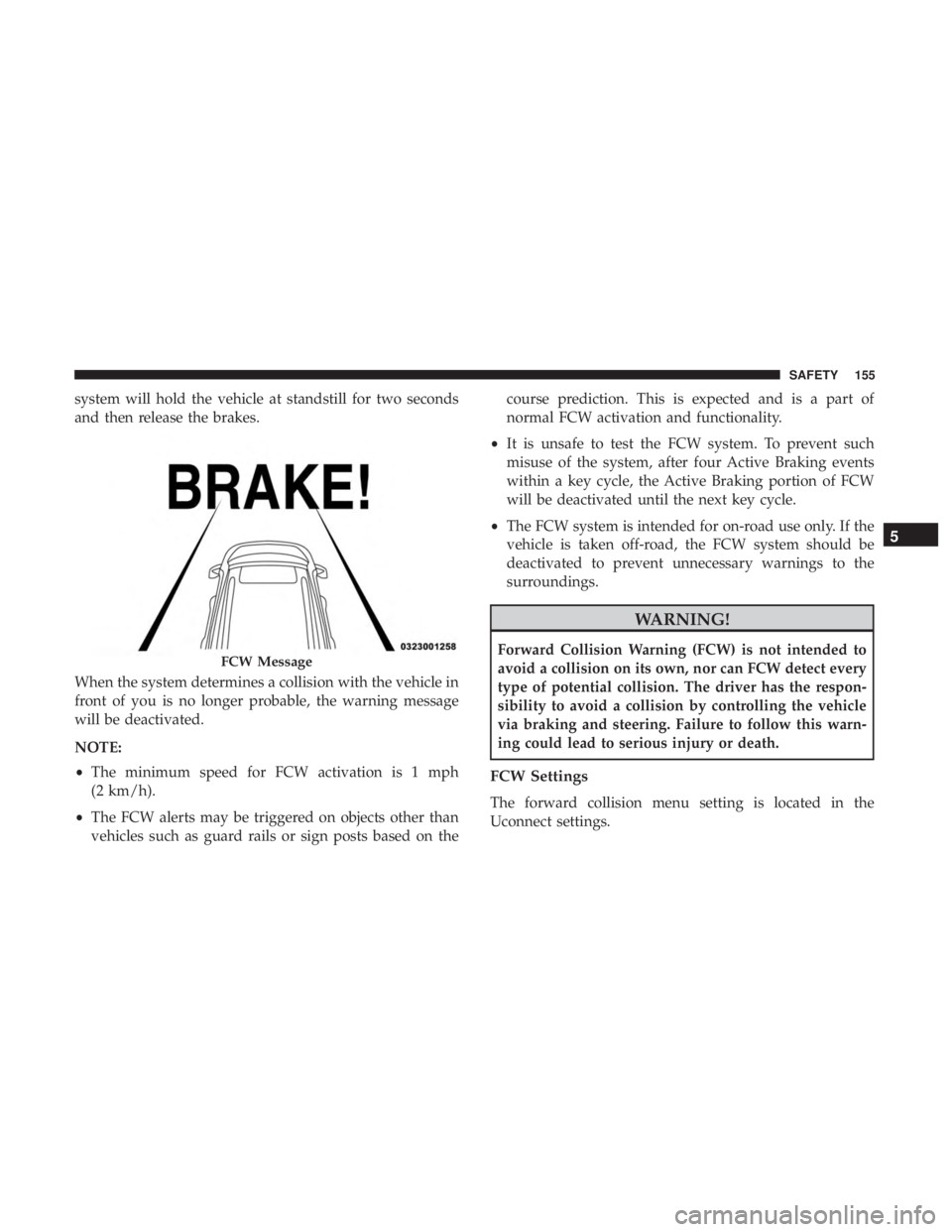
When the system determines a collision with the vehicle in
front of you is no longer probable, the warning message
will be deactivated.
NOTE:
•The minimum speed for FCW activation is 1 mph
(2 km/h).
• The FCW alerts may be triggered on objects other than
vehicles such as guard rails or sign posts based on the course prediction. This is expected and is a part of
normal FCW activation and functionality.
• It is unsafe to test the FCW system. To prevent such
misuse of the system, after four Active Braking events
within a key cycle, the Active Braking portion of FCW
will be deactivated until the next key cycle.
• The FCW system is intended for on-road use only. If the
vehicle is taken off-road, the FCW system should be
deactivated to prevent unnecessary warnings to the
surroundings.
Page 195 of 518
The SABICs may help reduce the risk of partial or complete
ejection of vehicle occupants through side windows in
certain side impact events.
Page 254 of 518
operating conditions), the transmission may use second
gear (rather than first gear) during launches, to mini-
mize wheel slippage.
• SAND: For off-road driving or use on surfaces with poor
traction, such as dry sand. The transmission is set to
provide maximum traction.
• MUD: For off-road driving or use on surfaces with poor
traction, such as roads covered by mud or wet grass.
• ROCK (Trailhawk only): This mode is only available in
4WD LOW range. The device sets the vehicle to maxi-
mize traction and allow the highest steering capacity for
off-road surfaces. This mode gives you the maximum
performance off-road. Use for low speed obstacles such
as large rocks, deep ruts, etc.
NOTE:
• Rock mode is only available on the vehicles equipped
with the Off-Road package.
• Activate the Hill Descent Control for steep downhill
control. See “Electronic Brake Control System” in this
section for further information.POWER STEERING
The electric power steering system will give you good
vehicle response and increased ease of maneuverability in
tight spaces. The system will vary its assist to provide light
efforts while parking and good feel while driving. If the
electric steering system experiences a fault that reduces
assist or prevents the vehicle from providing assist, you
will still have the ability to steer the vehicle manually.
Page 407 of 518
•Do not use any harsh solvents or any other form of
protectants on Stain Repel products.
Seat Belt Maintenance
Do not bleach, dye or clean the belts with chemical solvents
or abrasive cleaners. This will weaken the fabric. Sun
damage can also weaken the fabric.
If the belts need cleaning, use a mild soap solution or
lukewarm water. Do not remove the belts from the vehicle
to wash them. Dry with a soft cloth.
Replace the belts if they appear frayed or worn or if the
buckles do not work properly.