ECU JEEP LIBERTY 2005 Owners Manual
[x] Cancel search | Manufacturer: JEEP, Model Year: 2005, Model line: LIBERTY, Model: JEEP LIBERTY 2005Pages: 1272, PDF Size: 11.21 MB
Page 15 of 1272
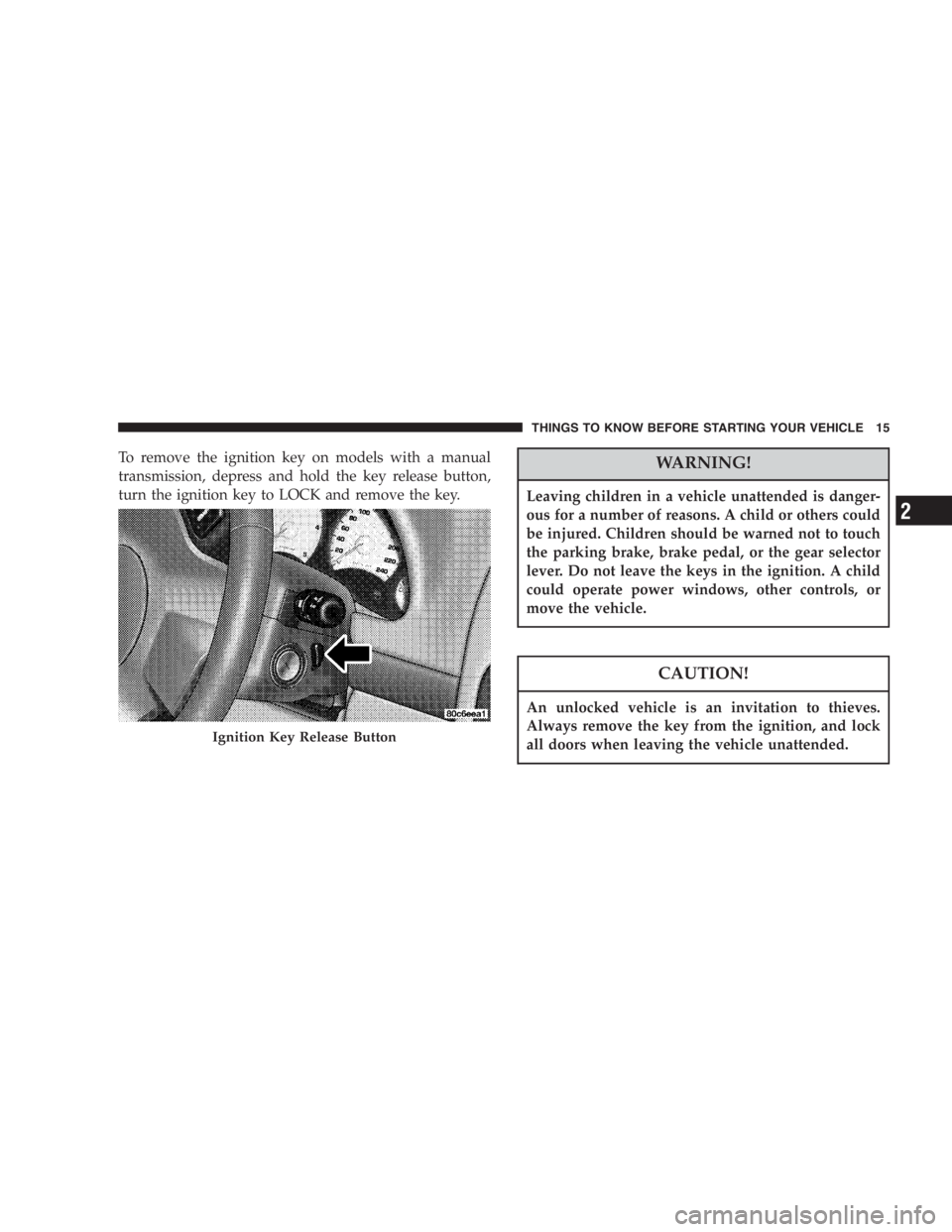
Be certain that the seatback is securely locked into
position. If the seatback in not securely locked into
position the seat will not provide the proper stability
for child seats and/or passengers. An improperly
latched seat could cause serious injury.
Page 30 of 1272
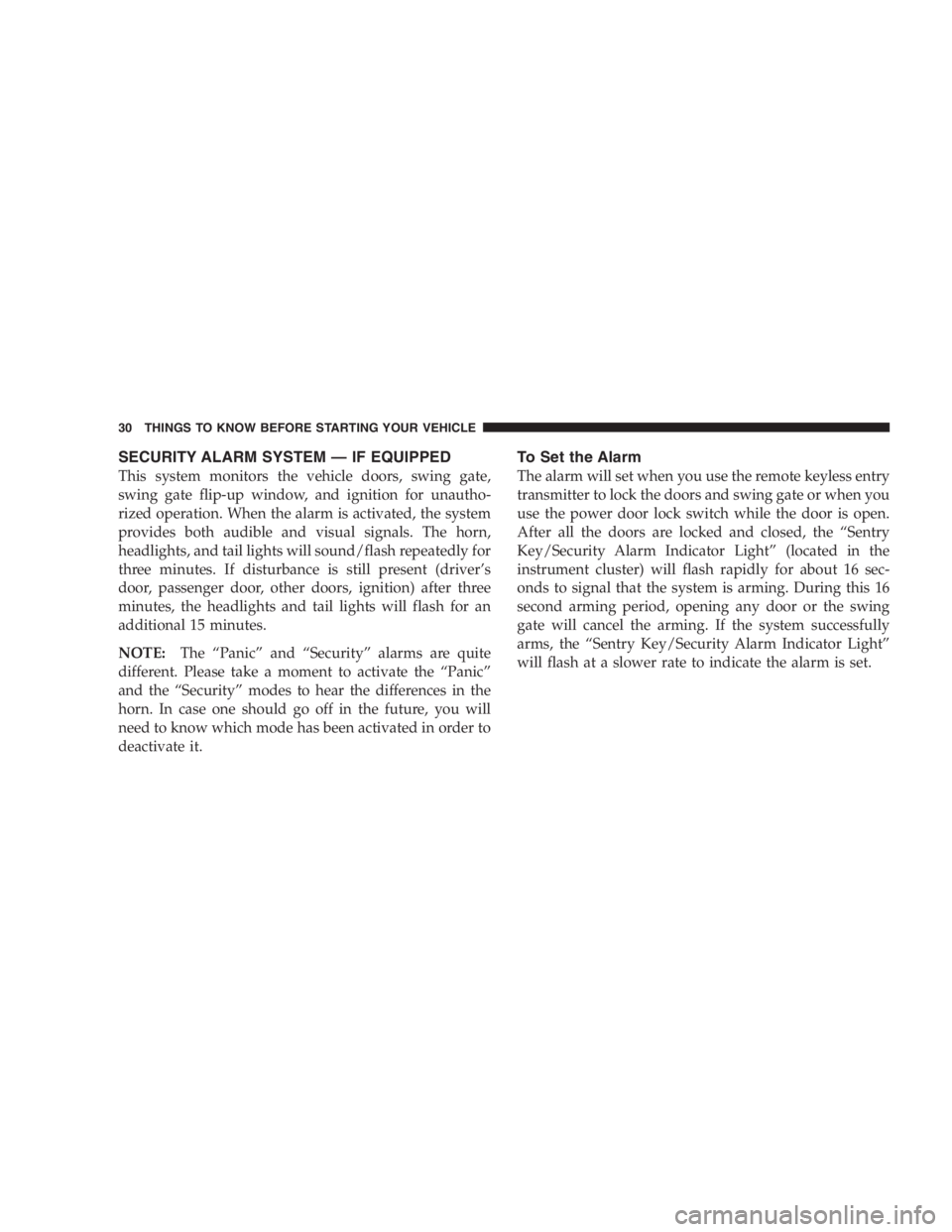
Cargo must be securely tied before driving your
vehicle. Improperly secured loads can fly off the
vehicle, particularly at high speeds, resulting in
personal injury or property damage. Follow the roof
rack “Cautions” when carrying cargo on your roof
rack.
Page 152 of 1272
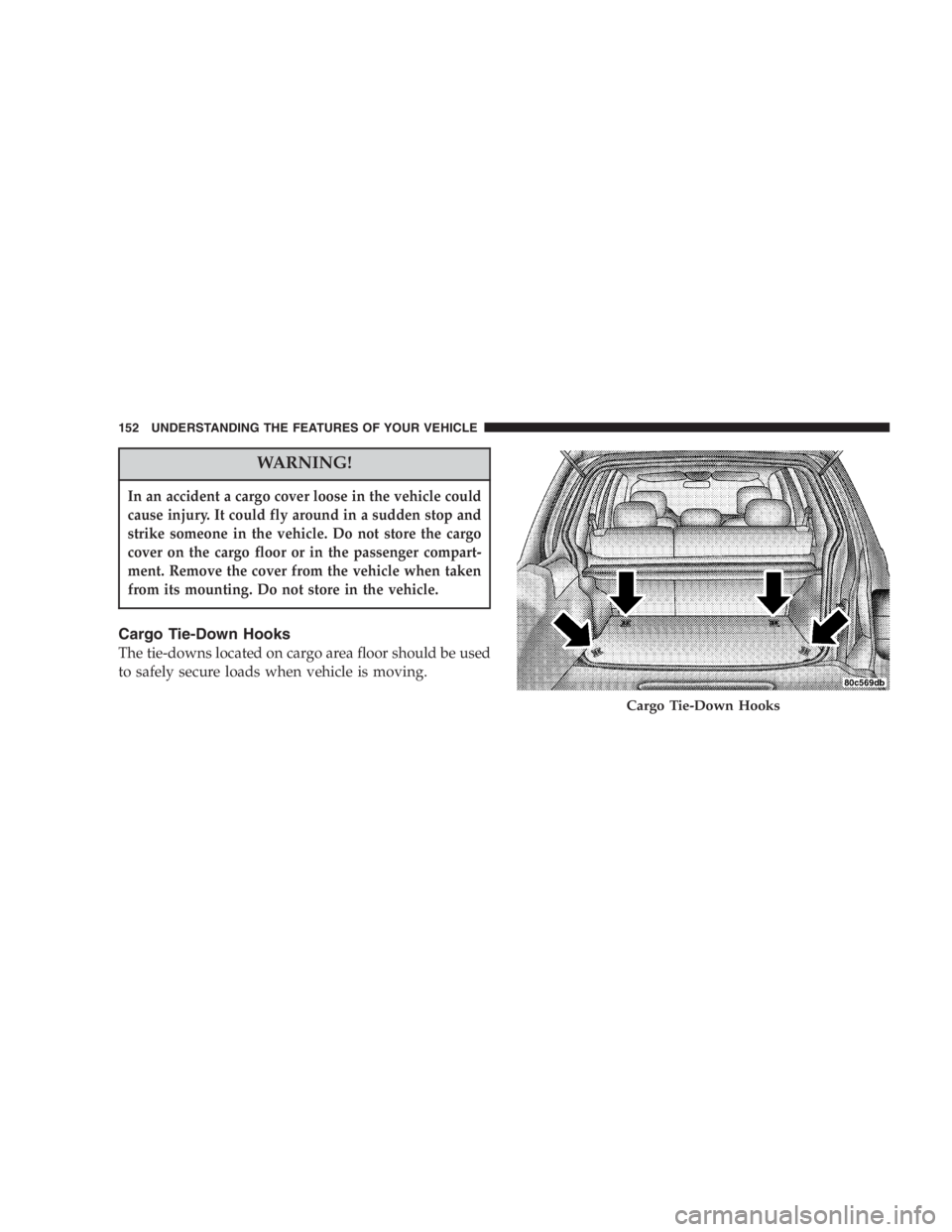
To avoid injury stand back when opening. Glass will
automatically rise.
NOTE:The transmitter can be programmed to unlatch
the flip-up window immediately upon activation of the
“Rear Release” button (without pressing and holding)
(within 23–50 feet (7–15 meters) of the vehicle) by per-
forming the following procedure:
1. Press and hold the “Unlock” button on the transmitter.
2. Continue to hold the “Unlock” button, wait at least 4
but no longer than 10 seconds, then press the “Rear
Release” button.
3. Release both buttons.
4. Repeating steps 1–3 will restore original transmitter
operation.NOTE:Unlatching the flip-up window will unlock the
swing gate. After closing the flip-up window, press the
“Lock” button on the transmitter to lock the swing gate.
Panic Alarm
The panic mode flashes the park lights, and sounds the
horn for about 3 minutes or until the alarm is turned off.
To Use the Panic Alarm
Press and hold the PANIC button for at least 1 second to
activate the panic alarm. Press and hold the PANIC
button a second time to deactivate the alarm. The alarm
will also shut itself off after starting the vehicle and
accelerating to 15 mph (24 km/h).
NOTE:The “Panic” and “Security” alarms are quite
different. Please take a moment to activate the “Panic”
and the “Security” modes to hear the differences in the
horn. In case one should go off in the future, you will
need to know which mode has been activated in order to
deactivate it.
THINGS TO KNOW BEFORE STARTING YOUR VEHICLE 27
Page 197 of 1272
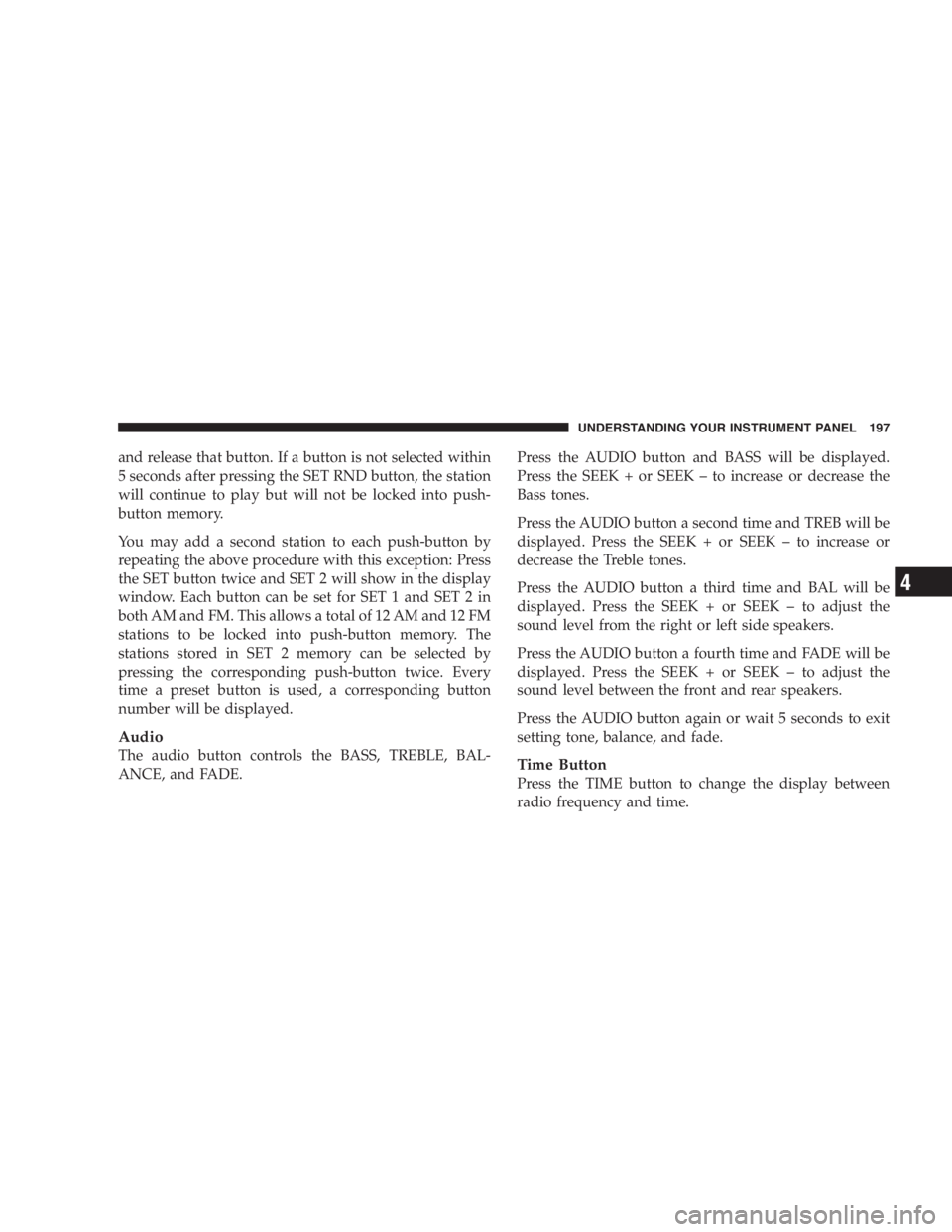
An incorrectly anchored tether strap could lead to
increased head motion and possible injury to the
child. Use only the anchor positions directly behind
the child seat to secure a child restraint top tether
strap.
Children Too Large for Booster Seats
Children who are large enough to wear the shoulder belt
comfortably, and whose legs are long enough to bend
over the front of the seat when their back is against the
seat back should use the lap/shoulder belt in a rear seat.
•Make sure that the child is upright in the seat.
•The lap portion should be low on the hips and as snug
as possible.
•Check belt fit periodically. A child’s squirming or
slouching can move the belt out of position.
•If the shoulder belt contacts the face or neck, move the
child closer to the center of the vehicle. Never allow a
child to put the shoulder belt under an arm.
Transporting Pets
Airbags deploying in the front seat could harm your pet.
An unrestrained pet will be thrown about and possibly
injured, or injure a passenger during panic braking or in
a collision.
Pets should be restrained in the rear seat in pet harnesses
or pet carriers that are secured by seat belts.
72 THINGS TO KNOW BEFORE STARTING YOUR VEHICLE
Page 227 of 1272
An incorrectly anchored tether strap could lead to
increased head motion and possible injury to the
child. Use only the anchor positions directly behind
the child seat to secure a child restraint top tether
strap.
Children Too Large for Booster Seats
Children who are large enough to wear the shoulder belt
comfortably, and whose legs are long enough to bend
over the front of the seat when their back is against the
seat back should use the lap/shoulder belt in a rear seat.
•Make sure that the child is upright in the seat.
•The lap portion should be low on the hips and as snug
as possible.
•Check belt fit periodically. A child’s squirming or
slouching can move the belt out of position.
•If the shoulder belt contacts the face or neck, move the
child closer to the center of the vehicle. Never allow a
child to put the shoulder belt under an arm.
Transporting Pets
Airbags deploying in the front seat could harm your pet.
An unrestrained pet will be thrown about and possibly
injured, or injure a passenger during panic braking or in
a collision.
Pets should be restrained in the rear seat in pet harnesses
or pet carriers that are secured by seat belts.
72 THINGS TO KNOW BEFORE STARTING YOUR VEHICLE
Page 256 of 1272
Unintended movement of a vehicle could injure
those in and near the vehicle. As with all vehicles,
you should never exit a vehicle while the engine is
running. Before exiting a vehicle, you should always
shift the vehicle into P (Park), remove the key from
the ignition, and apply the parking brake. Once the
key is removed from the ignition, the transmission
shift lever is locked in the P (Park) position, securing
the vehicle against unwanted movement. Further-
more, you should never leave children unattended
inside a vehicle.
Page 292 of 1272
To avoid injury stand back when opening. Glass will
automatically rise.
NOTE:The transmitter can be programmed to unlatch
the flip-up window immediately upon activation of the
“Rear Release” button (without pressing and holding)
(within 23–50 feet (7–15 meters) of the vehicle) by per-
forming the following procedure:
1. Press and hold the “Unlock” button on the transmitter.
2. Continue to hold the “Unlock” button, wait at least 4
but no longer than 10 seconds, then press the “Rear
Release” button.
3. Release both buttons.
4. Repeating steps 1–3 will restore original transmitter
operation.NOTE:Unlatching the flip-up window will unlock the
swing gate. After closing the flip-up window, press the
“Lock” button on the transmitter to lock the swing gate.
Panic Alarm
The panic mode flashes the park lights, and sounds the
horn for about 3 minutes or until the alarm is turned off.
To Use the Panic Alarm
Press and hold the PANIC button for at least 1 second to
activate the panic alarm. Press and hold the PANIC
button a second time to deactivate the alarm. The alarm
will also shut itself off after starting the vehicle and
accelerating to 15 mph (24 km/h).
NOTE:The “Panic” and “Security” alarms are quite
different. Please take a moment to activate the “Panic”
and the “Security” modes to hear the differences in the
horn. In case one should go off in the future, you will
need to know which mode has been activated in order to
deactivate it.
THINGS TO KNOW BEFORE STARTING YOUR VEHICLE 27
Page 337 of 1272
An incorrectly anchored tether strap could lead to
increased head motion and possible injury to the
child. Use only the anchor positions directly behind
the child seat to secure a child restraint top tether
strap.
Children Too Large for Booster Seats
Children who are large enough to wear the shoulder belt
comfortably, and whose legs are long enough to bend
over the front of the seat when their back is against the
seat back should use the lap/shoulder belt in a rear seat.
•Make sure that the child is upright in the seat.
•The lap portion should be low on the hips and as snug
as possible.
•Check belt fit periodically. A child’s squirming or
slouching can move the belt out of position.
•If the shoulder belt contacts the face or neck, move the
child closer to the center of the vehicle. Never allow a
child to put the shoulder belt under an arm.
Transporting Pets
Airbags deploying in the front seat could harm your pet.
An unrestrained pet will be thrown about and possibly
injured, or injure a passenger during panic braking or in
a collision.
Pets should be restrained in the rear seat in pet harnesses
or pet carriers that are secured by seat belts.
72 THINGS TO KNOW BEFORE STARTING YOUR VEHICLE
Page 380 of 1272
Be certain that the seatback is securely locked into
position. If the seatback in not securely locked into
position the seat will not provide the proper stability
for child seats and/or passengers. An improperly
latched seat could cause serious injury.
Page 425 of 1272

Cargo must be securely tied before driving your
vehicle. Improperly secured loads can fly off the
vehicle, particularly at high speeds, resulting in
personal injury or property damage. Follow the roof
rack “Cautions” when carrying cargo on your roof
rack.