wheel size JEEP LIBERTY 2007 Owners Manual
[x] Cancel search | Manufacturer: JEEP, Model Year: 2007, Model line: LIBERTY, Model: JEEP LIBERTY 2007Pages: 1251, PDF Size: 1.35 MB
Page 111 of 1251
The TPMS has been optimized for the original
equipment tires and wheels. TPMS pressures have
been established for the tire size equipped on your
vehicle. Undesirable system operation or sensor
damage may result when using replacement equip-
ment that is not of the same size, type, and/or style.
After-market wheels can cause sensor damage. Do
not use tire sealant from a can, or balance beads if
your vehicle is equipped with a TPMS, as damage to
the sensors may result.
Page 189 of 1251
Significant over or under-inflation of tires, or mixing
sizes of tires or wheels on the vehicle can lead to loss
of braking effectiveness.
Pumping of the Anti-Lock Brakes will diminish
their effectiveness and may lead to an accident.
Pumping makes the stopping distance longer. Just
press firmly on your brake pedal when you need to
slow down or stop.
Page 249 of 1251
Significant over or under-inflation of tires, or mixing
sizes of tires or wheels on the vehicle can lead to loss
of braking effectiveness.
Pumping of the Anti-Lock Brakes will diminish
their effectiveness and may lead to an accident.
Pumping makes the stopping distance longer. Just
press firmly on your brake pedal when you need to
slow down or stop.
Page 267 of 1251
Replacing original tires with tires of a different size
may result in false speedometer and odometer readings.
To avoid damage to your vehicle or tires, observe the
following precautions:
•Because of restricted chain clearance between tires and
other suspension components, it is important that only
chains in good condition are used. Broken chains can
cause serious damage. Stop the vehicle immediately if
noise occurs that could indicate chain breakage. Re-
move the damaged parts of the chain before further use.
•Install chains on the rear wheels as tightly as possible
and then retighten after driving about12mile (0.8 km).•Do not exceed 30 mph (48 km/h).•Drive cautiously and avoid severe turns and large
bumps, especially with a loaded vehicle.
•Do not drive for prolonged period on dry pavement.•Observe the tire chain manufacturer’s instructions on
the method of installation, operating speed, and condi-
tions for use. Always use the lower suggested operating
speed of the chain manufacturer if different than the
speed recommended by the manufacture.
Page 272 of 1251
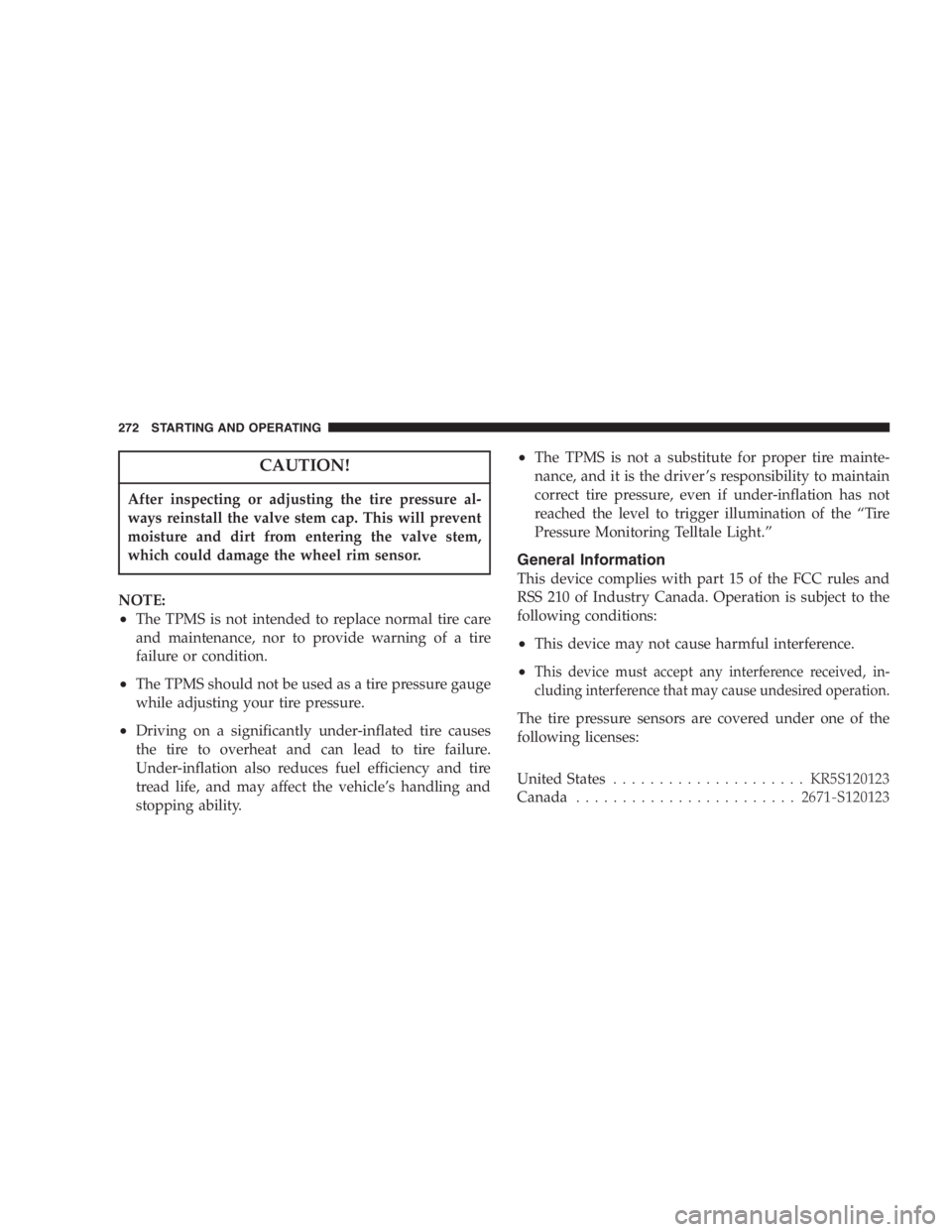
The TPMS has been optimized for the original
equipment tires and wheels. TPMS pressures have
been established for the tire size equipped on your
vehicle. Undesirable system operation or sensor
damage may result when using replacement equip-
ment that is not of the same size, type, and/or style.
After-market wheels can cause sensor damage. Do
not use tire sealant from a can, or balance beads if
your vehicle is equipped with a TPMS, as damage to
the sensors may result.
Page 278 of 1251
The TPMS has been optimized for the original
equipment tires and wheels. TPMS pressures have
been established for the tire size equipped on your
vehicle. Undesirable system operation or sensor
damage may result when using replacement equip-
ment that is not of the same size, type, and/or style.
After-market wheels can cause sensor damage. Do
not use tire sealant from a can, or balance beads if
your vehicle is equipped with a TPMS, as damage to
the sensors may result.
Page 332 of 1251
The TPMS has been optimized for the original
equipment tires and wheels. TPMS pressures have
been established for the tire size equipped on your
vehicle. Undesirable system operation or sensor
damage may result when using replacement equip-
ment that is not of the same size, type, and/or style.
After-market wheels can cause sensor damage. Do
not use tire sealant from a can, or balance beads if
your vehicle is equipped with a TPMS, as damage to
the sensors may result.
Page 357 of 1251
Replacing original tires with tires of a different size
may result in false speedometer and odometer readings.
To avoid damage to your vehicle or tires, observe the
following precautions:
•Because of restricted chain clearance between tires and
other suspension components, it is important that only
chains in good condition are used. Broken chains can
cause serious damage. Stop the vehicle immediately if
noise occurs that could indicate chain breakage. Re-
move the damaged parts of the chain before further use.
•Install chains on the rear wheels as tightly as possible
and then retighten after driving about12mile (0.8 km).•Do not exceed 30 mph (48 km/h).•Drive cautiously and avoid severe turns and large
bumps, especially with a loaded vehicle.
•Do not drive for prolonged period on dry pavement.•Observe the tire chain manufacturer’s instructions on
the method of installation, operating speed, and condi-
tions for use. Always use the lower suggested operating
speed of the chain manufacturer if different than the
speed recommended by the manufacture.
Page 571 of 1251

The TPMS has been optimized for the original
equipment tires and wheels. TPMS pressures and
warnings have been established for the tire size
equipped on your vehicle. Undesirable system op-
eration or sensor damage may result when using
replacement equipment that is not of the same size,
type, and/or style. After-market wheels can cause
sensor damage. Do not use tire sealant from a can, or
balance beads if your vehicle is equipped with a
TPMS, as damage to the sensors may result.
Page 646 of 1251

Significant over or under-inflation of tires, or mixing
sizes of tires or wheels on the vehicle can lead to loss
of braking effectiveness.
Pumping of the Anti-Lock Brakes will diminish
their effectiveness and may lead to an accident.
Pumping makes the stopping distance longer. Just
press firmly on your brake pedal when you need to
slow down or stop.