automatic transaxle fluid KIA Cerato 2010 1.G User Guide
[x] Cancel search | Manufacturer: KIA, Model Year: 2010, Model line: Cerato, Model: KIA Cerato 2010 1.GPages: 321, PDF Size: 6.3 MB
Page 272 of 321
Maintenance20
7
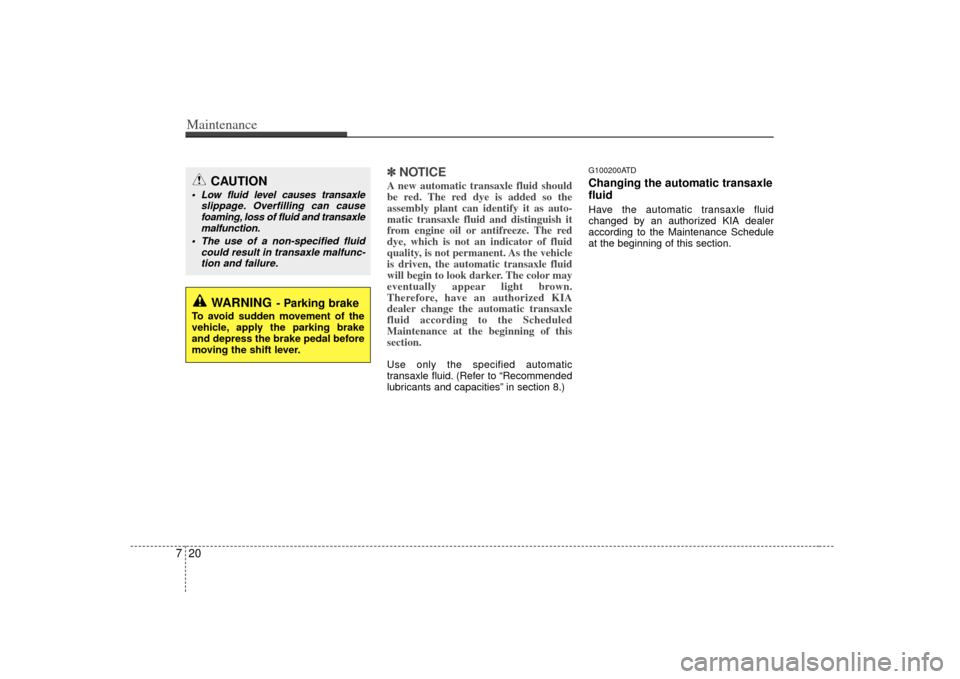
✽
✽
NOTICEA new automatic transaxle fluid should
be red. The red dye is added so the
assembly plant can identify it as auto-
matic transaxle fluid and distinguish it
from engine oil or antifreeze. The red
dye, which is not an indicator of fluid
quality, is not permanent. As the vehicle
is driven, the automatic transaxle fluid
will begin to look darker. The color may
eventually appear light brown.
Therefore, have an authorized KIA
dealer change the automatic transaxle
fluid according to the Scheduled
Maintenance at the beginning of this
section.Use only the specified automatic
transaxle fluid. (Refer to “Recommended
lubricants and capacities” in section 8.)
G100200ATDChanging the automatic transaxle
fluidHave the automatic transaxle fluid
changed by an authorized KIA dealer
according to the Maintenance Schedule
at the beginning of this section.
WARNING
- Parking brake
To avoid sudden movement of the
vehicle, apply the parking brake
and depress the brake pedal before
moving the shift lever.
CAUTION
Low fluid level causes transaxle
slippage. Overfilling can causefoaming, loss of fluid and transaxle malfunction.
The use of a non-specified fluid could result in transaxle malfunc-tion and failure.
Page 314 of 321
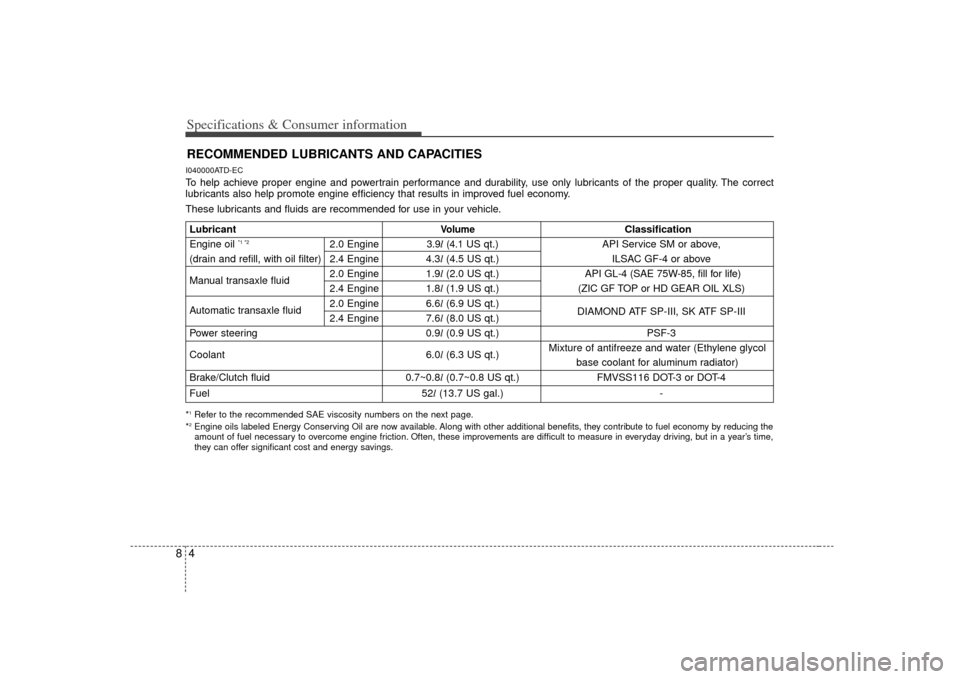
Specifications & Consumer information48RECOMMENDED LUBRICANTS AND CAPACITIES I040000ATD-ECTo help achieve proper engine and powertrain performance and durability, use only lubricants of the proper quality. The correct
lubricants also help promote engine efficiency that results in improved fuel economy.These lubricants and fluids are recommended for use in your vehicle.Lubricant
Volume
Classification
Engine oil
*1 *2
2.0 Engine
3.9
l(4.1
US qt.
)
API Service SM or above,
(drain and refill, with oil filter) 2.4 Engine 4.3 l(4.5 US qt.) ILSAC GF-4 or above
Manual transaxle fluid 2.0 Engine 1.9l
(2.0 US qt.) API GL-4 (SAE 75W-85, fill for life)
2.4 Engine 1.8l (1.9 US qt.) (ZIC GF TOP or HD GEAR OIL XLS)
2.0 Engine 6.6l (6.9 US qt.)
Automatic transaxle fluid
2.4 Engine 7.6l(8.0 US qt.) DIAMOND ATF SP-III, SK ATF SP-III
Power steering 0.9l(0.9 US qt.) PSF-3
Coolant 6.0l(6.3 US qt.)
Brake/Clutch fluid 0.7~0.8l(0.7~0.8 US qt.) FMVSS116 DOT-3 or DOT-4
Fuel 52l(13.7 US gal.) -
Mixture of antifreeze and water (Ethylene glycol
base coolant for aluminum radiator)
*1Refer to the recommended SAE viscosity numbers on the next page.
*2Engine oils labeled Energy Conserving Oil are now available. Along with other additional benefits, they contribute to fuel economy by reducing the
amount of fuel necessary to overcome engine friction. Often, these improvements are difficult to measure in everyday driving, but in a year’s time,
they can offer significant cost and energy savings.
Page 319 of 321

Index2I
Air cleaner ··················\
··················\
··················\
···············7-22
Airbag-supplemental restraint system ··················\
·········3-34
Appearance care··················\
··················\
··················\
·······7-50
Audio system ··················\
··················\
··················\
···········4-88
Automatic climate control system ··················\
···············4-73
Automatic transaxle ··················\
··················\
··················\
·5-15
Automatic transaxle fluid ··················\
··················\
··········7-19
Battery··················\
··················\
··················\
··················\
····7-25
Before driving ··················\
··················\
··················\
············5-3
Brake system··················\
··················\
··················\
············5-22
Brake/clutch fluid ··················\
··················\
··················\
····7-17
Bulb wattage ··················\
··················\
··················\
··············8-2
Child restraint system ··················\
··················\
················3-26
Climate control air filter ··················\
··················\
············7-22
Cruise control system ··················\
··················\
················5-32
Defroster ··················\
··················\
··················\
··················\
4-62
Dimensions ··················\
··················\
··················\
················8-2
Door locks··················\
··················\
··················\
················4-12Economical operation ··················\
··················\
················5-36
Emergency starting ··················\
··················\
··················\
····6-4
Emission control system ··················\
··················\
············7-56
Engine compartment ··················\
··················\
·············2-4/7-2
Engine coolant ··················\
··················\
··················\
·········7-14
Engine number ··················\
··················\
··················\
···········8-7
Engine oil ··················\
··················\
··················\
·················7-13\
ENGINE START/STOP button ··················\
··················\
···5-6
Explanation of scheduled maintenance items ···············7-10
Fuel filler lid ··················\
··················\
··················\
············4-23
Fuel requirements ··················\
··················\
··················\
······1-3
Fuses ··················\
··················\
··················\
··················\
······7-41
Hazard warning flasher··················\
··················\
··············4-55
Hood··················\
··················\
··················\
··················\
·······4-21
How to use this manual ··················\
··················\
···············1-2
If the engine overheats··················\
··················\
·················6-6
If the engine will not start ··················\
··················\
···········6-3
If you have a flat tire ··················\
··················\
··················\
·6-7A
EFHI
BCD