Pressure KIA Cerato 2012 1.G Owner's Guide
[x] Cancel search | Manufacturer: KIA, Model Year: 2012, Model line: Cerato, Model: KIA Cerato 2012 1.GPages: 353, PDF Size: 7.3 MB
Page 293 of 353
Maintenance
14
7
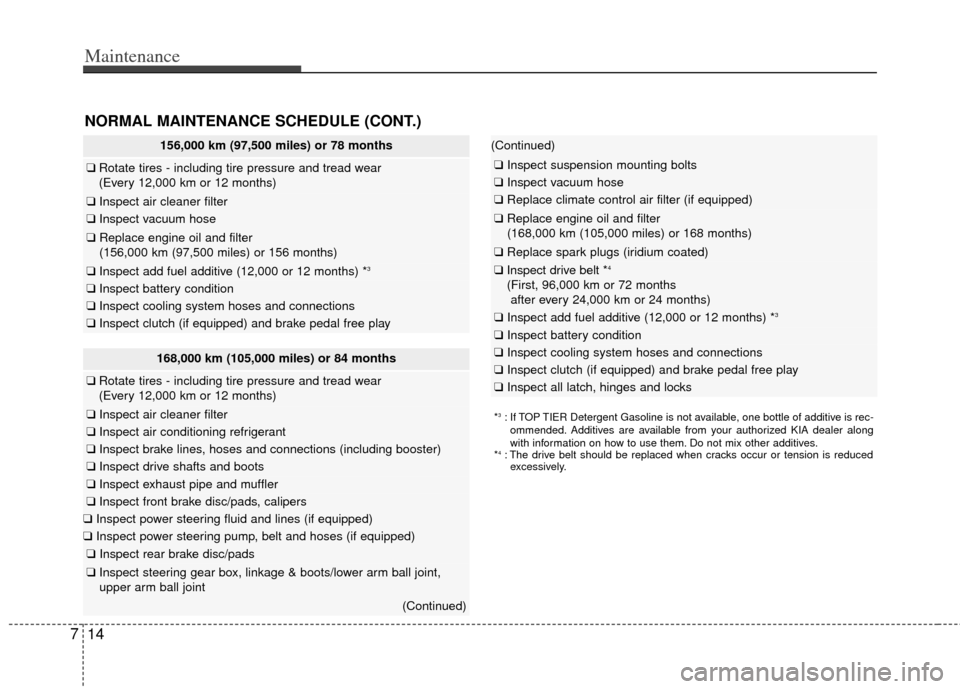
NORMAL MAINTENANCE SCHEDULE (CONT.)
156,000 km (97,500 miles) or 78 months
❑ Rotate tires - including tire pressure and tread wear
(Every 12,000 km or 12 months)
❑ Inspect air cleaner filter
❑Inspect vacuum hose
❑Replace engine oil and filter
(156,000 km (97,500 miles) or 156 months)
❑ Inspect add fuel additive (12,000 or 12 months) *3
❑Inspect battery condition
❑Inspect cooling system hoses and connections
❑Inspect clutch (if equipped) and brake pedal free play
*3: If TOP TIER Detergent Gasoline is not available, one bottle of additive is rec-
ommended. Additives are available from your authorized KIA dealer along
with information on how to use them. Do not mix other additives.
*
4: The drive belt should be replaced when cracks occur or tension is reduced excessively.
168,000 km (105,000 miles) or 84 months
❑ Rotate tires - including tire pressure and tread wear
(Every 12,000 km or 12 months)
❑ Inspect air cleaner filter
❑Inspect air conditioning refrigerant
❑Inspect brake lines, hoses and connections (including booster)
❑Inspect drive shafts and boots
❑Inspect exhaust pipe and muffler
❑Inspect front brake disc/pads, calipers
❑Inspect power steering fluid and lines (if equipped)
❑Inspect power steering pump, belt and hoses (if equipped)
❑ Inspect rear brake disc/pads
❑Inspect steering gear box, linkage & boots/lower arm ball joint,
upper arm ball joint
(Continued)
(Continued)
❑ Inspect suspension mounting bolts
❑Inspect vacuum hose
❑Replace climate control air filter (if equipped)
❑Replace engine oil and filter
(168,000 km (105,000 miles) or 168 months)
❑ Replace spark plugs (iridium coated)
❑Inspect drive belt *4
(First, 96,000 km or 72 months
after every 24,000 km or 24 months)
❑ Inspect add fuel additive (12,000 or 12 months) *3
❑Inspect battery condition
❑Inspect cooling system hoses and connections
❑Inspect clutch (if equipped) and brake pedal free play
❑Inspect all latch, hinges and locks
Page 294 of 353
15
Maintenance
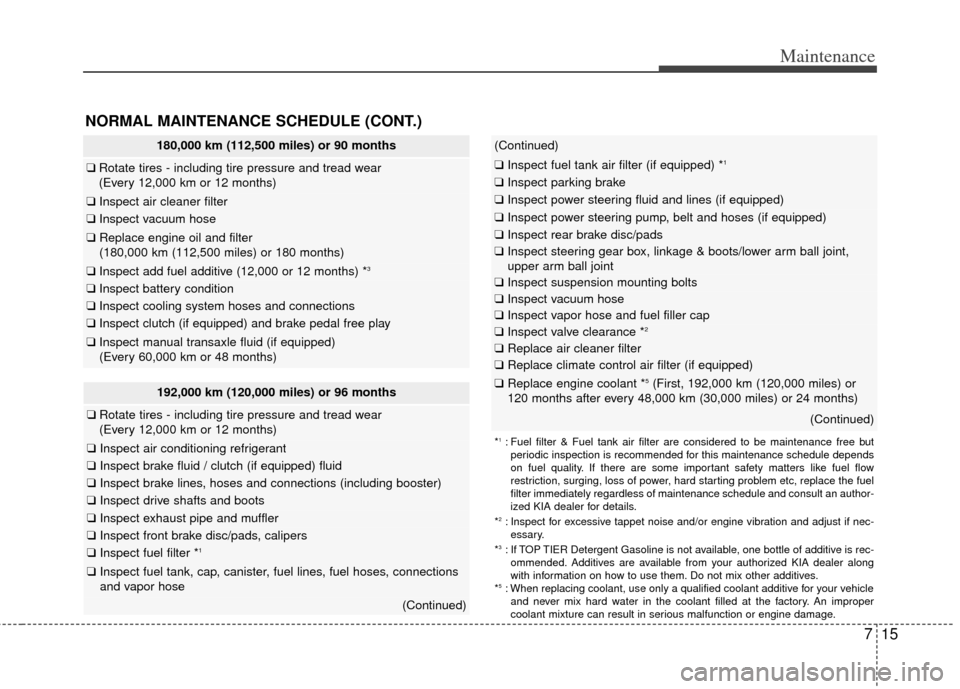
NORMAL MAINTENANCE SCHEDULE (CONT.)
180,000 km (112,500 miles) or 90 months
❑Rotate tires - including tire pressure and tread wear
(Every 12,000 km or 12 months)
❑ Inspect air cleaner filter
❑Inspect vacuum hose
❑Replace engine oil and filter
(180,000 km (112,500 miles) or 180 months)
❑ Inspect add fuel additive (12,000 or 12 months) *3
❑Inspect battery condition
❑Inspect cooling system hoses and connections
❑Inspect clutch (if equipped) and brake pedal free play
❑Inspect manual transaxle fluid (if equipped)
(Every 60,000 km or 48 months)
192,000 km (120,000 miles) or 96 months
❑Rotate tires - including tire pressure and tread wear
(Every 12,000 km or 12 months)
❑ Inspect air conditioning refrigerant
❑Inspect brake fluid / clutch (if equipped) fluid
❑ Inspect brake lines, hoses and connections (including booster)
❑Inspect drive shafts and boots
❑Inspect exhaust pipe and muffler
❑Inspect front brake disc/pads, calipers
❑Inspect fuel filter *1
❑Inspect fuel tank, cap, canister, fuel lines, fuel hoses, connections
and vapor hose
(Continued)
(Continued)
❑ Inspect fuel tank air filter (if equipped) *1
❑Inspect parking brake
❑Inspect power steering fluid and lines (if equipped)
❑Inspect power steering pump, belt and hoses (if equipped)
❑ Inspect rear brake disc/pads
❑Inspect steering gear box, linkage & boots/lower arm ball joint,
upper arm ball joint
❑ Inspect suspension mounting bolts
❑Inspect vacuum hose
❑Inspect vapor hose and fuel filler cap
❑Inspect valve clearance *2
❑Replace air cleaner filter
❑Replace climate control air filter (if equipped)
❑Replace engine coolant *5(First, 192,000 km (120,000 miles) or
120 months after every 48,000 km (30,000 miles) or 24 months)
(Continued)
*1: Fuel filter & Fuel tank air filter are considered to be maintenance free\
but periodic inspection is recommended for this maintenance schedule depends
on fuel quality. If there are some important safety matters like fuel flow
restriction, surging, loss of power, hard starting problem etc, replace the fuel
filter immediately regardless of maintenance schedule and consult an aut\
hor-
ized KIA dealer for details.
*
2: Inspect for excessive tappet noise and/or engine vibration and adjust if nec- essary.
*
3: If TOP TIER Detergent Gasoline is not available, one bottle of additive is rec- ommended. Additives are available from your authorized KIA dealer along
with information on how to use them. Do not mix other additives.
*
5: When replacing coolant, use only a qualified coolant additive for your vehicle and never mix hard water in the coolant filled at the factory. An improper
coolant mixture can result in serious malfunction or engine damage.
7
Page 295 of 353
Maintenance
16
7
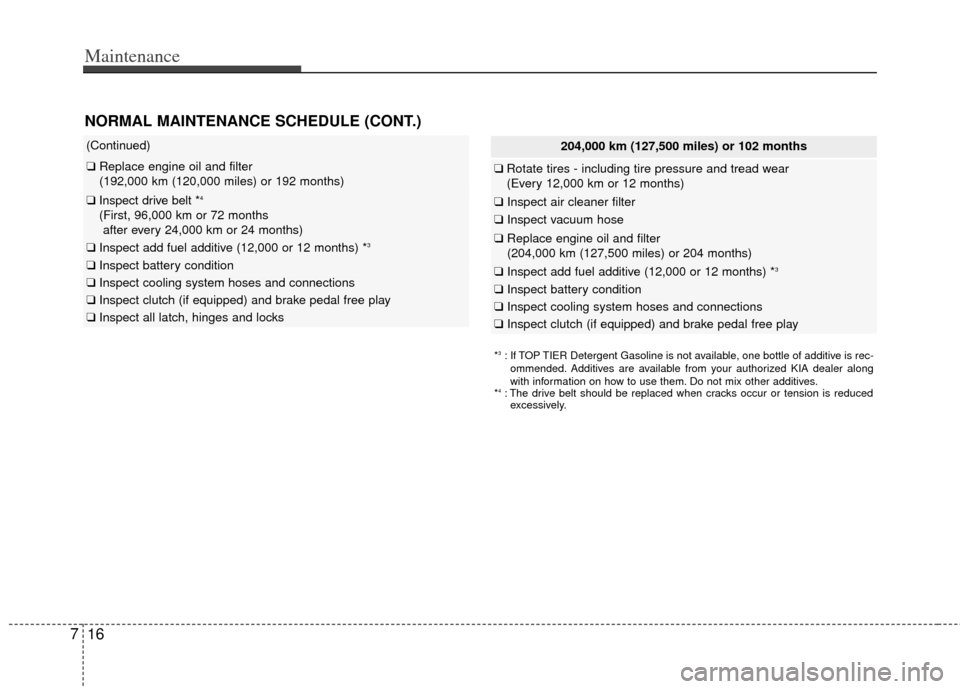
NORMAL MAINTENANCE SCHEDULE (CONT.)
204,000 km (127,500 miles) or 102 months
❑ Rotate tires - including tire pressure and tread wear
(Every 12,000 km or 12 months)
❑ Inspect air cleaner filter
❑Inspect vacuum hose
❑Replace engine oil and filter
(204,000 km (127,500 miles) or 204 months)
❑ Inspect add fuel additive (12,000 or 12 months) *3
❑Inspect battery condition
❑Inspect cooling system hoses and connections
❑Inspect clutch (if equipped) and brake pedal free play
(Continued)
❑Replace engine oil and filter
(192,000 km (120,000 miles) or 192 months)
❑Inspect drive belt *4
(First, 96,000 km or 72 months
after every 24,000 km or 24 months)
❑ Inspect add fuel additive (12,000 or 12 months) *3
❑Inspect battery condition
❑Inspect cooling system hoses and connections
❑Inspect clutch (if equipped) and brake pedal free play
❑Inspect all latch, hinges and locks
*3: If TOP TIER Detergent Gasoline is not available, one bottle of additive is rec-
ommended. Additives are available from your authorized KIA dealer along
with information on how to use them. Do not mix other additives.
*
4: The drive belt should be replaced when cracks occur or tension is reduced excessively.
Page 296 of 353
717
Maintenance
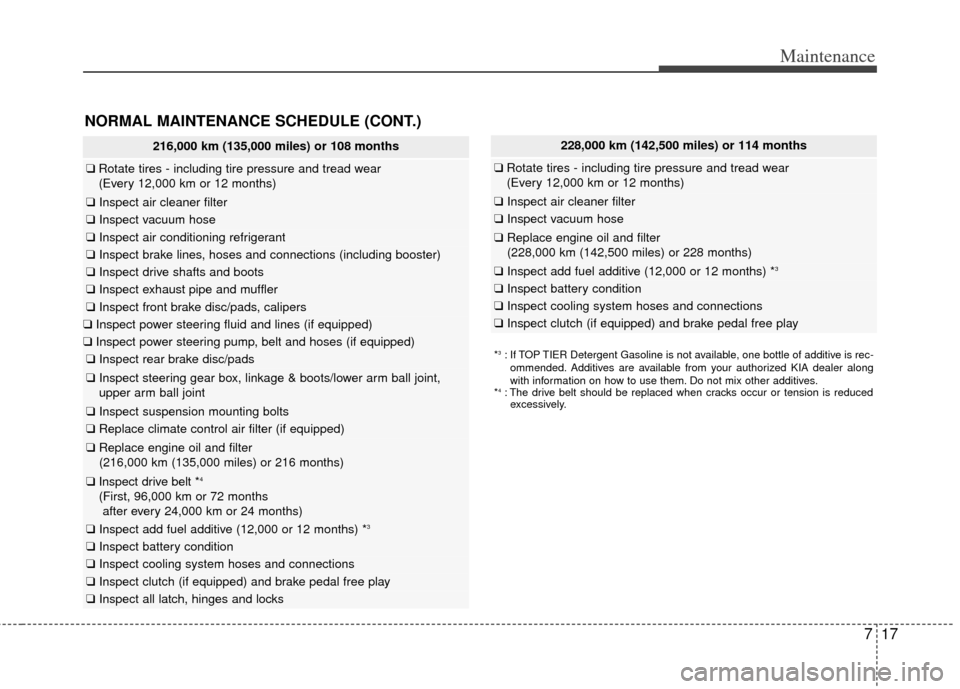
NORMAL MAINTENANCE SCHEDULE (CONT.)
216,000 km (135,000 miles) or 108 months
❑Rotate tires - including tire pressure and tread wear
(Every 12,000 km or 12 months)
❑ Inspect air cleaner filter
❑Inspect vacuum hose
❑Inspect air conditioning refrigerant
❑Inspect brake lines, hoses and connections (including booster)
❑Inspect drive shafts and boots
❑Inspect exhaust pipe and muffler
❑Inspect front brake disc/pads, calipers
❑Inspect power steering fluid and lines (if equipped)
❑Inspect power steering pump, belt and hoses (if equipped)
❑ Inspect rear brake disc/pads
❑Inspect steering gear box, linkage & boots/lower arm ball joint,
upper arm ball joint
❑ Inspect suspension mounting bolts
❑Replace climate control air filter (if equipped)
❑Replace engine oil and filter
(216,000 km (135,000 miles) or 216 months)
❑Inspect drive belt *4
(First, 96,000 km or 72 months
after every 24,000 km or 24 months)
❑ Inspect add fuel additive (12,000 or 12 months) *3
❑Inspect battery condition
❑Inspect cooling system hoses and connections
❑Inspect clutch (if equipped) and brake pedal free play
❑Inspect all latch, hinges and locks
228,000 km (142,500 miles) or 114 months
❑Rotate tires - including tire pressure and tread wear
(Every 12,000 km or 12 months)
❑ Inspect air cleaner filter
❑Inspect vacuum hose
❑Replace engine oil and filter
(228,000 km (142,500 miles) or 228 months)
❑ Inspect add fuel additive (12,000 or 12 months) *3
❑Inspect battery condition
❑Inspect cooling system hoses and connections
❑Inspect clutch (if equipped) and brake pedal free play
*3: If TOP TIER Detergent Gasoline is not available, one bottle of additive is rec-
ommended. Additives are available from your authorized KIA dealer along
with information on how to use them. Do not mix other additives.
*
4: The drive belt should be replaced when cracks occur or tension is reduced excessively.
Page 297 of 353
Maintenance
18
7
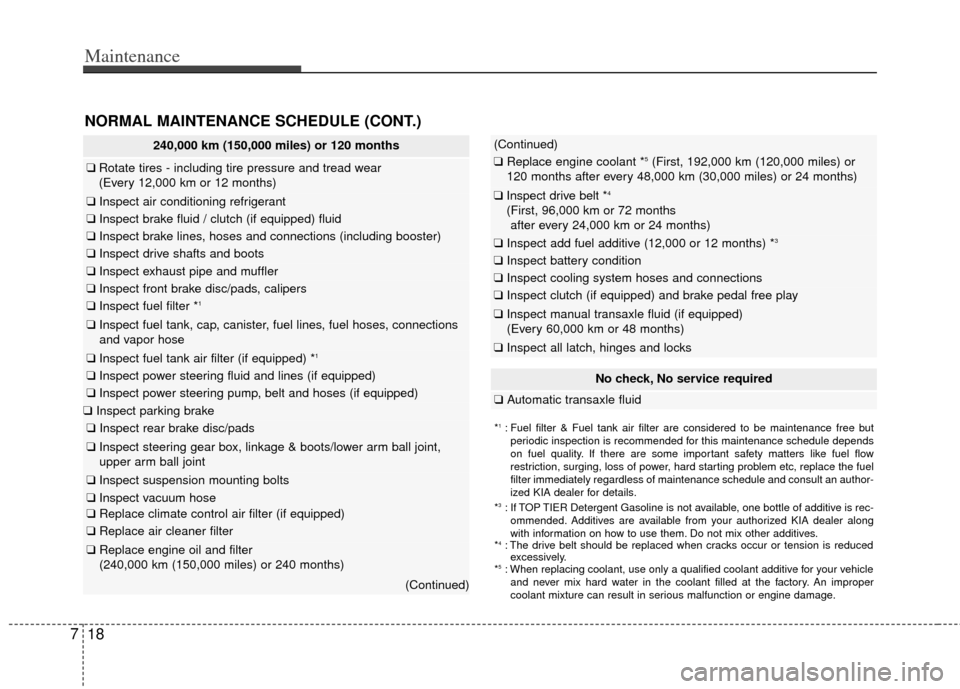
240,000 km (150,000 miles) or 120 months
❑ Rotate tires - including tire pressure and tread wear
(Every 12,000 km or 12 months)
❑ Inspect air conditioning refrigerant
❑Inspect brake fluid / clutch (if equipped) fluid
❑ Inspect brake lines, hoses and connections (including booster)
❑Inspect drive shafts and boots
❑Inspect exhaust pipe and muffler
❑Inspect front brake disc/pads, calipers
❑Inspect fuel filter *1
❑Inspect fuel tank, cap, canister, fuel lines, fuel hoses, connections
and vapor hose
❑ Inspect fuel tank air filter (if equipped) *1
❑Inspect power steering fluid and lines (if equipped)
❑Inspect power steering pump, belt and hoses (if equipped)
❑ Inspect parking brake
❑Inspect rear brake disc/pads
❑Inspect steering gear box, linkage & boots/lower arm ball joint,
upper arm ball joint
❑ Inspect suspension mounting bolts
❑Inspect vacuum hose
❑Replace climate control air filter (if equipped)
❑Replace air cleaner filter
❑Replace engine oil and filter
(240,000 km (150,000 miles) or 240 months)
(Continued)
(Continued)
❑Replace engine coolant *5(First, 192,000 km (120,000 miles) or
120 months after every 48,000 km (30,000 miles) or 24 months)
❑ Inspect drive belt *4
(First, 96,000 km or 72 months
after every 24,000 km or 24 months)
❑ Inspect add fuel additive (12,000 or 12 months) *3
❑Inspect battery condition
❑Inspect cooling system hoses and connections
❑Inspect clutch (if equipped) and brake pedal free play
❑Inspect manual transaxle fluid (if equipped)
(Every 60,000 km or 48 months)
❑ Inspect all latch, hinges and locks
NORMAL MAINTENANCE SCHEDULE (CONT.)
No check, No service required
❑Automatic transaxle fluid
*1: Fuel filter & Fuel tank air filter are considered to be maintenance free\
but
periodic inspection is recommended for this maintenance schedule depends
on fuel quality. If there are some important safety matters like fuel flow
restriction, surging, loss of power, hard starting problem etc, replace the fuel
filter immediately regardless of maintenance schedule and consult an aut\
hor-
ized KIA dealer for details.
*
3: If TOP TIER Detergent Gasoline is not available, one bottle of additive is rec- ommended. Additives are available from your authorized KIA dealer along
with information on how to use them. Do not mix other additives.
*
4: The drive belt should be replaced when cracks occur or tension is reduced excessively.
*
5: When replacing coolant, use only a qualified coolant additive for your vehicle
and never mix hard water in the coolant filled at the factory. An improper
coolant mixture can result in serious malfunction or engine damage.
Page 304 of 353
725
Maintenance
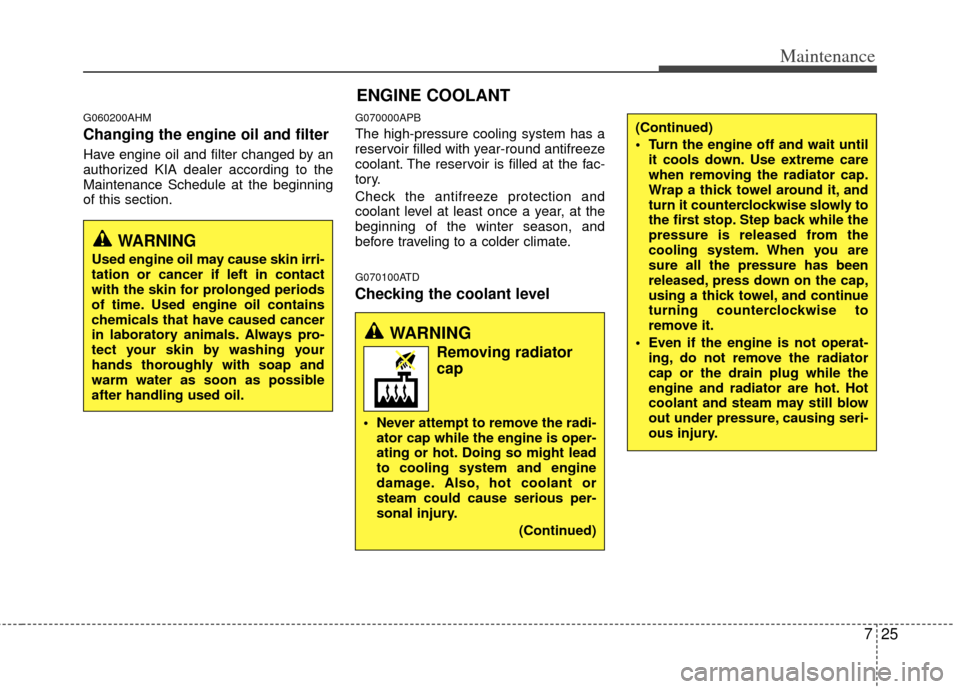
ENGINE COOLANT
G060200AHM
Changing the engine oil and filter
Have engine oil and filter changed by an
authorized KIA dealer according to the
Maintenance Schedule at the beginning
of this section.
G070000APB
The high-pressure cooling system has a
reservoir filled with year-round antifreeze
coolant. The reservoir is filled at the fac-
tory.
Check the antifreeze protection and
coolant level at least once a year, at the
beginning of the winter season, and
before traveling to a colder climate.
G070100ATD
Checking the coolant level
WARNING
Removing radiator
cap
Never attempt to remove the radi-ator cap while the engine is oper-
ating or hot. Doing so might lead
to cooling system and engine
damage. Also, hot coolant or
steam could cause serious per-
sonal injury.
(Continued)
(Continued)
Turn the engine off and wait untilit cools down. Use extreme care
when removing the radiator cap.
Wrap a thick towel around it, and
turn it counterclockwise slowly to
the first stop. Step back while the
pressure is released from the
cooling system. When you are
sure all the pressure has been
released, press down on the cap,
using a thick towel, and continue
turning counterclockwise to
remove it.
Even if the engine is not operat- ing, do not remove the radiator
cap or the drain plug while the
engine and radiator are hot. Hot
coolant and steam may still blow
out under pressure, causing seri-
ous injury.
WARNING
Used engine oil may cause skin irri-
tation or cancer if left in contact
with the skin for prolonged periods
of time. Used engine oil contains
chemicals that have caused cancer
in laboratory animals. Always pro-
tect your skin by washing your
hands thoroughly with soap and
warm water as soon as possible
after handling used oil.
Page 314 of 353
735
Maintenance
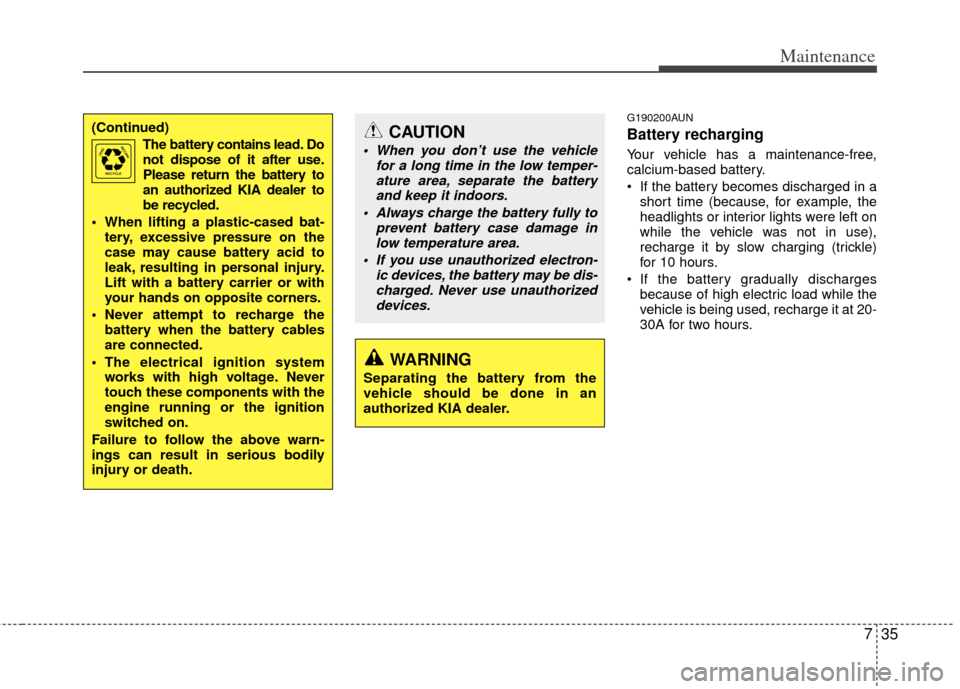
G190200AUN
Battery recharging
Your vehicle has a maintenance-free,
calcium-based battery.
If the battery becomes discharged in ashort time (because, for example, the
headlights or interior lights were left on
while the vehicle was not in use),
recharge it by slow charging (trickle)
for 10 hours.
If the battery gradually discharges because of high electric load while the
vehicle is being used, recharge it at 20-
30A for two hours.
(Continued)
The battery contains lead. Do
not dispose of it after use.
Please return the battery to
an authorized KIA dealer to
be recycled.
When lifting a plastic-cased bat- tery, excessive pressure on the
case may cause battery acid to
leak, resulting in personal injury.
Lift with a battery carrier or with
your hands on opposite corners.
Never attempt to recharge the battery when the battery cables
are connected.
The electrical ignition system works with high voltage. Never
touch these components with the
engine running or the ignition
switched on.
Failure to follow the above warn-
ings can result in serious bodily
injury or death.CAUTION
When you don’t use the vehicle for a long time in the low temper-ature area, separate the batteryand keep it indoors.
Always charge the battery fully to prevent battery case damage inlow temperature area.
If you use unauthorized electron- ic devices, the battery may be dis-charged. Never use unauthorized devices.
WARNING
Separating the battery from the
vehicle should be done in an
authorized KIA dealer.
Page 316 of 353
737
Maintenance
TIRES AND WHEELS
G200100AUN
Tire care
For proper maintenance, safety, and
maximum fuel economy, you must
always maintain recommended tire
inflation pressures and stay within
the load limits and weight distribution
recommended for your vehicle.
G200200AUN-EU
Recommended cold tire inflation
pressures
All tire pressures (including the
spare) should be checked when the
tires are cold. “Cold Tires” means the
vehicle has not been driven for at
least three hours or driven less than
one mile (1.6 km).
Recommended pressures must be
maintained for the best ride, top vehi-
cle handling, and minimum tire wear.
For recommended inflation pressure
refer to “Tire and wheels” in section
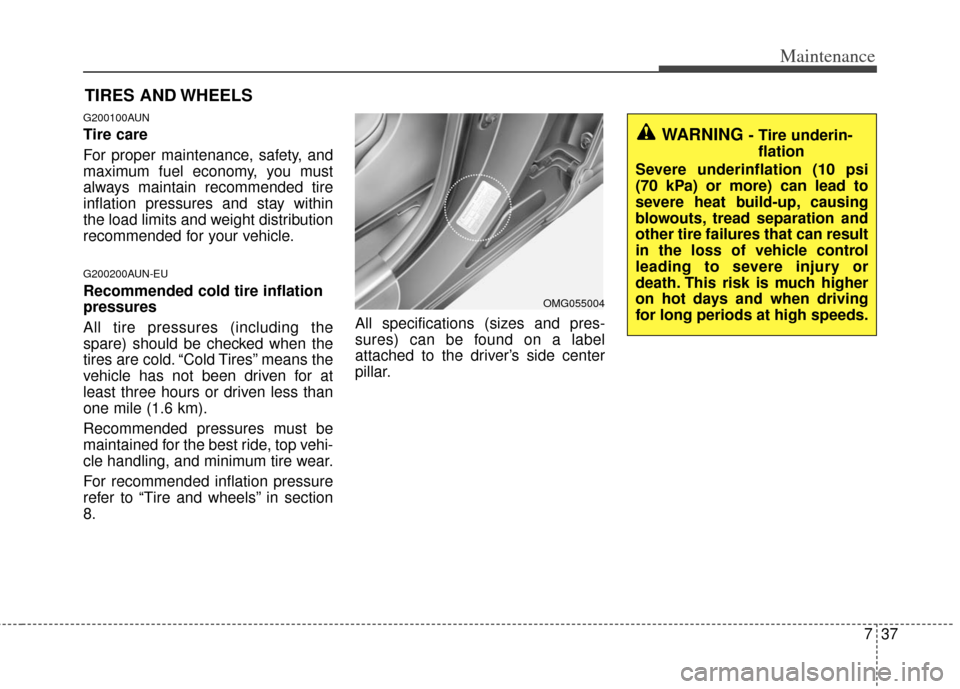
8.All specifications (sizes and pres-
sures) can be found on a label
attached to the driver’s side center
pillar.
WARNING - Tire underin-
flation
Severe underinflation (10 psi
(70 kPa) or more) can lead to
severe heat build-up, causing
blowouts, tread separation and
other tire failures that can result
in the loss of vehicle control
leading to severe injury or
death. This risk is much higher
on hot days and when driving
for long periods at high speeds.
OMG055004
Page 317 of 353
Maintenance
38
7
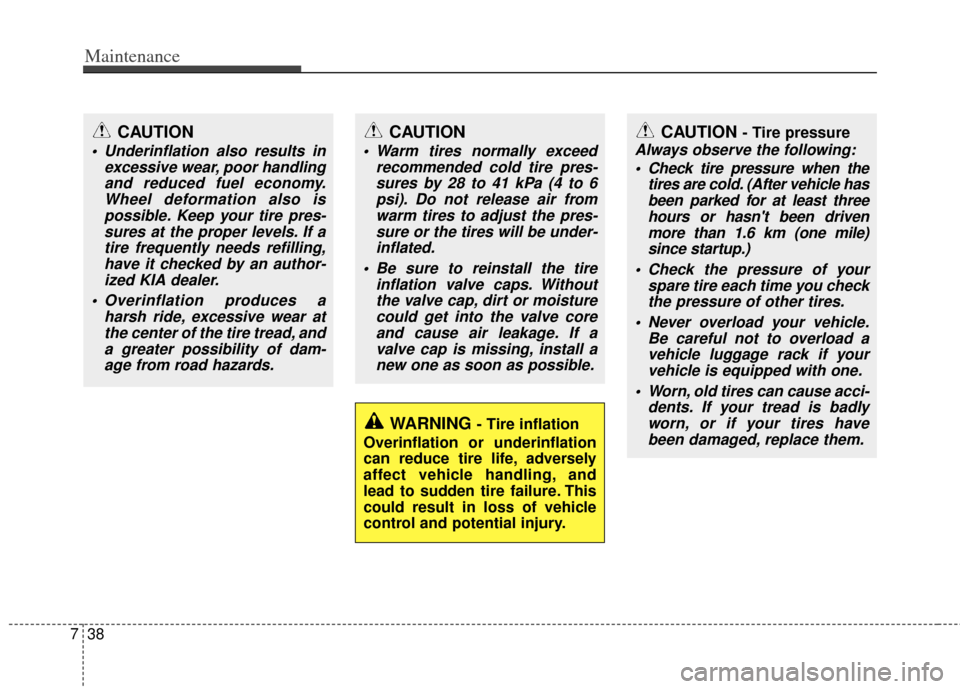
WARNING - Tire inflation
Overinflation or underinflation
can reduce tire life, adversely
affect vehicle handling, and
lead to sudden tire failure. This
could result in loss of vehicle
control and potential injury.
CAUTION - Tire pressure
Always observe the following: Check tire pressure when the tires are cold. (After vehicle hasbeen parked for at least threehours or hasn't been drivenmore than 1.6 km (one mile)since startup.)
Check the pressure of your spare tire each time you checkthe pressure of other tires.
Never overload your vehicle. Be careful not to overload avehicle luggage rack if yourvehicle is equipped with one.
Worn, old tires can cause acci- dents. If your tread is badlyworn, or if your tires havebeen damaged, replace them.
CAUTION
Underinflation also results in excessive wear, poor handlingand reduced fuel economy.Wheel deformation also ispossible. Keep your tire pres-sures at the proper levels. If atire frequently needs refilling,have it checked by an author-ized KIA dealer.
Overinflation produces a harsh ride, excessive wear atthe center of the tire tread, anda greater possibility of dam-age from road hazards.
CAUTION
Warm tires normally exceed recommended cold tire pres-sures by 28 to 41 kPa (4 to 6psi). Do not release air fromwarm tires to adjust the pres-sure or the tires will be under-inflated.
Be sure to reinstall the tire inflation valve caps. Withoutthe valve cap, dirt or moisturecould get into the valve coreand cause air leakage. If avalve cap is missing, install anew one as soon as possible.
Page 318 of 353
739
Maintenance
G200300AUN
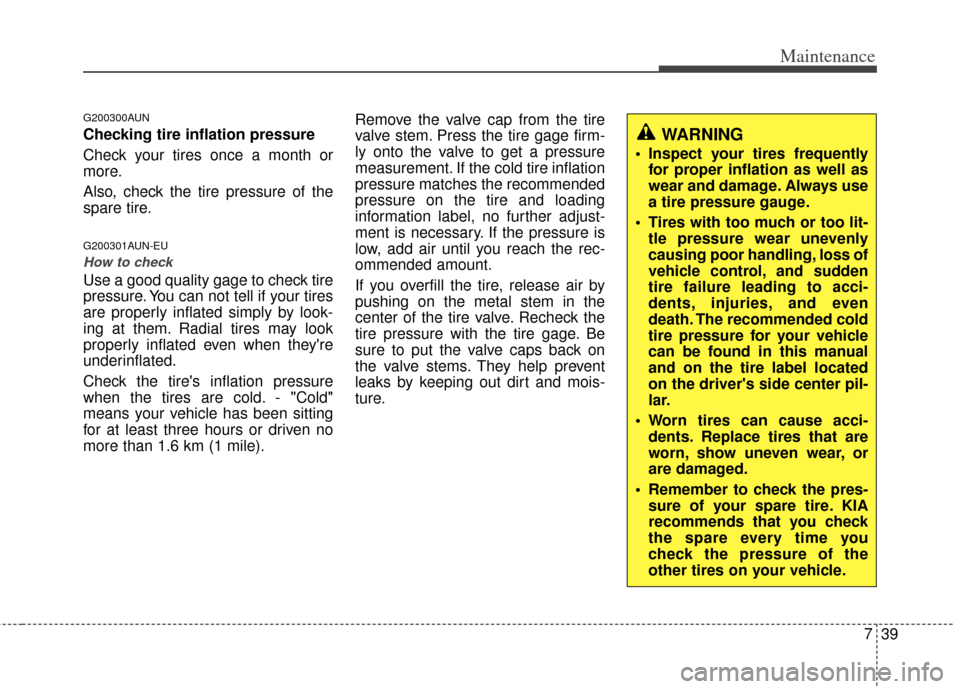
Checking tire inflation pressure
Check your tires once a month or
more.
Also, check the tire pressure of the
spare tire.
G200301AUN-EU
How to check
Use a good quality gage to check tire
pressure. You can not tell if your tires
are properly inflated simply by look-
ing at them. Radial tires may look
properly inflated even when they're
underinflated.
Check the tire's inflation pressure
when the tires are cold. - "Cold"
means your vehicle has been sitting
for at least three hours or driven no
more than 1.6 km (1 mile).Remove the valve cap from the tire
valve stem. Press the tire gage firm-
ly onto the valve to get a pressure
measurement. If the cold tire inflation
pressure matches the recommended
pressure on the tire and loading
information label, no further adjust-
ment is necessary. If the pressure is
low, add air until you reach the rec-
ommended amount.
If you overfill the tire, release air by
pushing on the metal stem in the
center of the tire valve. Recheck the
tire pressure with the tire gage. Be
sure to put the valve caps back on
the valve stems. They help prevent
leaks by keeping out dirt and mois-
ture.
WARNING
Inspect your tires frequently
for proper inflation as well as
wear and damage. Always use
a tire pressure gauge.
Tires with too much or too lit- tle pressure wear unevenly
causing poor handling, loss of
vehicle control, and sudden
tire failure leading to acci-
dents, injuries, and even
death. The recommended cold
tire pressure for your vehicle
can be found in this manual
and on the tire label located
on the driver's side center pil-
lar.
Worn tires can cause acci- dents. Replace tires that are
worn, show uneven wear, or
are damaged.
Remember to check the pres- sure of your spare tire. KIA
recommends that you check
the spare every time you
check the pressure of the
other tires on your vehicle.