air condition KIA Forte 2014 2.G Repair Manual
[x] Cancel search | Manufacturer: KIA, Model Year: 2014, Model line: Forte, Model: KIA Forte 2014 2.GPages: 446, PDF Size: 7.32 MB
Page 405 of 446
757
Maintenance
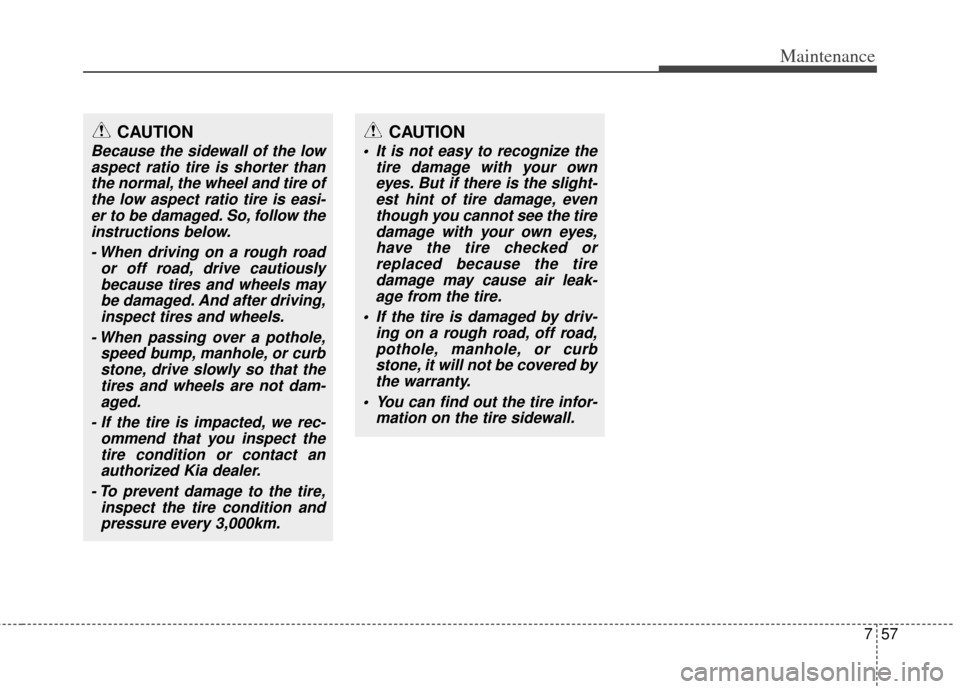
CAUTION
Because the sidewall of the lowaspect ratio tire is shorter thanthe normal, the wheel and tire ofthe low aspect ratio tire is easi-er to be damaged. So, follow theinstructions below.
- When driving on a rough road or off road, drive cautiouslybecause tires and wheels maybe damaged. And after driving,inspect tires and wheels.
- When passing over a pothole, speed bump, manhole, or curbstone, drive slowly so that thetires and wheels are not dam-aged.
- If the tire is impacted, we rec- ommend that you inspect thetire condition or contact anauthorized Kia dealer.
- To prevent damage to the tire, inspect the tire condition andpressure every 3,000km.
CAUTION
It is not easy to recognize the tire damage with your owneyes. But if there is the slight-est hint of tire damage, eventhough you cannot see the tiredamage with your own eyes,have the tire checked orreplaced because the tiredamage may cause air leak-age from the tire.
If the tire is damaged by driv- ing on a rough road, off road,pothole, manhole, or curbstone, it will not be covered bythe warranty.
You can find out the tire infor- mation on the tire sidewall.
Page 422 of 446
Maintenance
74
7
Corrosion protection
Protecting your vehicle from corro-
sion
By using the most advanced design
and construction practices to combat
corrosion, we produce vehicles of
the highest quality. However, this is
only part of the job. To achieve the
long-term corrosion resistance your
vehicle can deliver, the owner's
cooperation and assistance is also
required.
Common causes of corrosion
The most common causes of corro-
sion on your vehicle are:
Road salt, dirt and moisture that is
allowed to accumulate underneath
the vehicle.
coatings by stones, gravel, abra-
sion or minor scrapes and dents
which leave unprotected metal
exposed to corrosion. High-corrosion areas
If you live in an area where your vehi-
cle is regularly exposed to corrosive
materials, corrosion protection is
particularly important. Some of the
common causes of accelerated cor-
rosion are road salts, dust control
chemicals, ocean air and industrial
pollution.
Moisture breeds corrosion
Moisture creates the conditions in
which corrosion is most likely to
occur. For example, corrosion is
accelerated by high humidity, partic-
ularly when temperatures are just
above freezing. In such conditions,
the corrosive material is kept in con-
tact with the vehicle surfaces by
moisture that is slow to evaporate.
Mud is particularly corrosive
because it dries slowly and holds
moisture in contact with the vehicle.
Although the mud appears to be dry,
it can still retain the moisture and
promote corrosion. High temperatures can also acceler-
ate corrosion of parts that are not
properly ventilated so the moisture
can be dispersed. For all these rea-
sons, it is particularly important to
keep your vehicle clean and free of
mud or accumulations of other mate-
rials. This applies not only to the vis-
ible surfaces but particularly to the
underside of the vehicle.
To help prevent corrosion
You can help prevent corrosion from
getting started by observing the fol-
lowing:
Page 428 of 446
Maintenance
80
7
Do not operate the engine in con-
fined or closed areas (such as
garages) any more than what is
necessary to move the vehicle in or
out of the area.
When the vehicle is stopped in an open area for more than a short
time with the engine running,
adjust the ventilation system (as
needed) to draw outside air into the
vehicle.
Never sit in a parked or stopped vehicle for any extended time with
the engine running.
When the engine stalls or fails to start, excessive attempts to restart
the engine may cause damage to
the emission control system.Operating precautions for catalyt-
ic converters (if equipped)
Your vehicle is equipped with a cat-
alytic converter emission control
device.
Therefore, the following precautions
must be observed: Use only UNLEADED FUEL for
gasoline engines.
Do not operate the vehicle when there are signs of engine malfunc-
tion, such as misfire or a noticeable
loss of performance.
Do not misuse or abuse the engine. Examples of misuse are
coasting with the ignition off and
descending steep grades in gear
with the ignition off.
Do not operate the engine at high idle speed for extended periods (5
minutes or more).
Do not modify or tamper with any part of the engine or emission con-
trol system. All inspections and
adjustments must be made by an
authorized Kia dealer.
Avoid driving with a extremely low fuel level. Running out of fuel could
cause the engine to misfire, dam-
aging the catalytic converter.
Failure to observe these precautions
could result in damage to the catalyt-
ic converter and to your vehicle.
Additionally, such actions could void
your warranties.
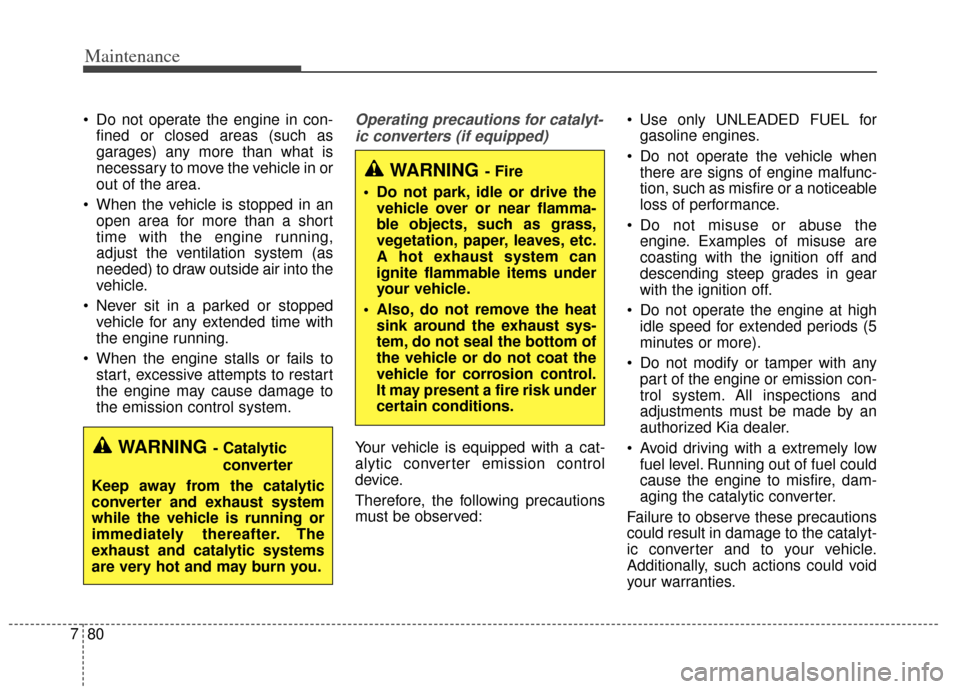
WARNING- Fire
Do not park, idle or drive the vehicle over or near flamma-
ble objects, such as grass,
vegetation, paper, leaves, etc.
A hot exhaust system can
ignite flammable items under
your vehicle.
Also, do not remove the heat sink around the exhaust sys-
tem, do not seal the bottom of
the vehicle or do not coat the
vehicle for corrosion control.
It may present a fire risk under
certain conditions.
WARNING- Catalytic
converter
Keep away from the catalytic
converter and exhaust system
while the vehicle is running or
immediately thereafter. The
exhaust and catalytic systems
are very hot and may burn you.
Page 440 of 446
Index
2I
Active eco system . . . . . . . . . . . . . . . . . . . . . . . . . . . . . 5-40
Air bag-supplemental restraint system . . . . . . . . . . . . . 3-33Air bag warning label. . . . . . . . . . . . . . . . . . . . . . . . 3-55
Air bag warning light . . . . . . . . . . . . . . . . . . . . . . . . 3-36
Ari bag system operation . . . . . . . . . . . . . . . . . . . . . 3-34
Curtain air bag . . . . . . . . . . . . . . . . . . . . . . . . . . . . . 3-48
Do not install a child restraint on a front passenger’sseat . . . . . . . . . . . . . . . . . . . . . . . . . . . . . . . . . . . . \
. . . 3-35
Driver’s and passenger’s front air bag . . . . . . . . . . . 3-44
Inflation/non-inflation conditions of air bag . . . . . . 3-49
Occupant detection system. . . . . . . . . . . . . . . . . . . . 3-39
Side air bag. . . . . . . . . . . . . . . . . . . . . . . . . . . . . . . . 3-47
SRS Care . . . . . . . . . . . . . . . . . . . . . . . . . . . . . . . . . 3-54
SRS components and functions . . . . . . . . . . . . . . . . 3-37
Air cleaner . . . . . . . . . . . . . . . . . . . . . . . . . . . . . . . . . . 7-36\
Filter replacement . . . . . . . . . . . . . . . . . . . . . . . . . . 7-36
Appearance care . . . . . . . . . . . . . . . . . . . . . . . . . . . . . . 7-71 Exterior care . . . . . . . . . . . . . . . . . . . . . . . . . . . . . . . 7-71
Interior care . . . . . . . . . . . . . . . . . . . . . . . . . . . . . . . 7-76
Audio system . . . . . . . . . . . . . . . . . . . . . . . . . . . . . . . 4-144
Aux, USB and iPod
®port . . . . . . . . . . . . . . . . . . . 4-146
Glass antenna . . . . . . . . . . . . . . . . . . . . . . . . . . . . . 4-144
Steering wheel audio control . . . . . . . . . . . . . . . . . 4-145
Automatic climate control system . . . . . . . . . . . . . . . 4-117 Automatic heating and air conditioning. . . . . . . . . 4-118
Manual heating and air conditioning . . . . . . . . . . . 4-119 System operation . . . . . . . . . . . . . . . . . . . . . . . . . . 4-125
Automatic transaxle . . . . . . . . . . . . . . . . . . . . . . . . . . . 5-16 Automatic transaxle operation . . . . . . . . . . . . . . . . . 5-16
Battery. . . . . . . . . . . . . . . . . . . . . . . . . . . . . . . . . . . . \
. . 7-41 Battery recharging . . . . . . . . . . . . . . . . . . . . . . . . . . 7-43
For best battery service . . . . . . . . . . . . . . . . . . . . . . 7-41
Reset items . . . . . . . . . . . . . . . . . . . . . . . . . . . . . . . . 7-43
Before driving . . . . . . . . . . . . . . . . . . . . . . . . . . . . . . . . . 5-3
Brake system. . . . . . . . . . . . . . . . . . . . . . . . . . . . . . . . . 5-22 Anti-lock brake system (ABS) . . . . . . . . . . . . . . . . . 5-25
Electronic stability control (ESC) . . . . . . . . . . . . . . 5-27
Hill-start assist control (HAC) . . . . . . . . . . . . . . . . . 5-31
Parking brake . . . . . . . . . . . . . . . . . . . . . . . . . . . . . . 5-23
Power brakes . . . . . . . . . . . . . . . . . . . . . . . . . . . . . . 5-22
Vehicle stability management (VSM) . . . . . . . . . . . 5-31
Brake/clutch fluid . . . . . . . . . . . . . . . . . . . . . . . . . . . . . 7-34 Checking the brake/clutch fluid level . . . . . . . . . . . 7-34
Bulb wattage . . . . . . . . . . . . . . . . . . . . . . . . . . . . . . . . . . 8-3
Child restraint system . . . . . . . . . . . . . . . . . . . . . . . . . . 3-26 Lower anchor ststem . . . . . . . . . . . . . . . . . . . . . . . . 3-31
Tether Anchor system. . . . . . . . . . . . . . . . . . . . . . . . 3-30
Using a child restraint system . . . . . . . . . . . . . . . . . 3-27
A
B
C
Page 443 of 446
I5
Index
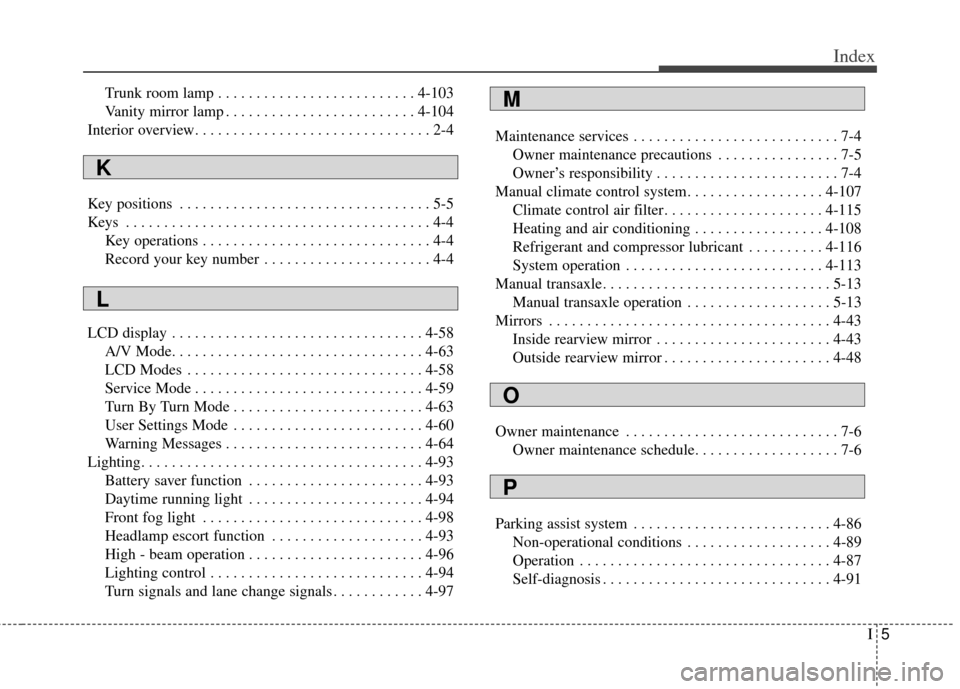
Trunk room lamp . . . . . . . . . . . . . . . . . . . . . . . . . . 4-103
Vanity mirror lamp . . . . . . . . . . . . . . . . . . . . . . . . . 4-104
Interior overview. . . . . . . . . . . . . . . . . . . . . . . . . . . . . . . 2-4
Key positions . . . . . . . . . . . . . . . . . . . . . . . . . . . . . . . . . 5-5
Keys . . . . . . . . . . . . . . . . . . . . . . . . . . . . . . . . . . . . \
. . . . 4-4 Key operations . . . . . . . . . . . . . . . . . . . . . . . . . . . . . . 4-4
Record your key number . . . . . . . . . . . . . . . . . . . . . . 4-4
LCD display . . . . . . . . . . . . . . . . . . . . . . . . . . . . . . . . . 4-58 A/V Mode. . . . . . . . . . . . . . . . . . . . . . . . . . . . . . . . . 4-63
LCD Modes . . . . . . . . . . . . . . . . . . . . . . . . . . . . . . . 4-58
Service Mode . . . . . . . . . . . . . . . . . . . . . . . . . . . . . . 4-59
Turn By Turn Mode . . . . . . . . . . . . . . . . . . . . . . . . . 4-63
User Settings Mode . . . . . . . . . . . . . . . . . . . . . . . . . 4-60
Warning Messages . . . . . . . . . . . . . . . . . . . . . . . . . . 4-64
Lighting. . . . . . . . . . . . . . . . . . . . . . . . . . . . . . . . . . . . \
. 4-93 Battery saver function . . . . . . . . . . . . . . . . . . . . . . . 4-93
Daytime running light . . . . . . . . . . . . . . . . . . . . . . . 4-94
Front fog light . . . . . . . . . . . . . . . . . . . . . . . . . . . . . 4-98
Headlamp escort function . . . . . . . . . . . . . . . . . . . . 4-93
High - beam operation . . . . . . . . . . . . . . . . . . . . . . . 4-96
Lighting control . . . . . . . . . . . . . . . . . . . . . . . . . . . . 4-94
Turn signals and lane change signals . . . . . . . . . . . . 4-97 Maintenance services . . . . . . . . . . . . . . . . . . . . . . . . . . . 7-4
Owner maintenance precautions . . . . . . . . . . . . . . . . 7-5
Owner’s responsibility . . . . . . . . . . . . . . . . . . . . . . . . 7-4
Manual climate control system. . . . . . . . . . . . . . . . . . 4-107 Climate control air filter. . . . . . . . . . . . . . . . . . . . . 4-115
Heating and air conditioning . . . . . . . . . . . . . . . . . 4-108
Refrigerant and compressor lubricant . . . . . . . . . . 4-116
System operation . . . . . . . . . . . . . . . . . . . . . . . . . . 4-113
Manual transaxle. . . . . . . . . . . . . . . . . . . . . . . . . . . . . . 5-13 Manual transaxle operation . . . . . . . . . . . . . . . . . . . 5-13
Mirrors . . . . . . . . . . . . . . . . . . . . . . . . . . . . . . . . . . . . \
. 4-43 Inside rearview mirror . . . . . . . . . . . . . . . . . . . . . . . 4-43
Outside rearview mirror . . . . . . . . . . . . . . . . . . . . . . 4-48
Owner maintenance . . . . . . . . . . . . . . . . . . . . . . . . . . . . 7-6 Owner maintenance schedule. . . . . . . . . . . . . . . . . . . 7-6
Parking assist system . . . . . . . . . . . . . . . . . . . . . . . . . . 4-86 Non-operational conditions . . . . . . . . . . . . . . . . . . . 4-89
Operation . . . . . . . . . . . . . . . . . . . . . . . . . . . . . . . . . 4-87
Self-diagnosis . . . . . . . . . . . . . . . . . . . . . . . . . . . . . . 4-91
K
L
M
O
P