brake KIA PICANTO 2017 Owners Manual
[x] Cancel search | Manufacturer: KIA, Model Year: 2017, Model line: PICANTO, Model: KIA PICANTO 2017Pages: 488, PDF Size: 31.26 MB
Page 446 of 488
Maintenance
68
7
LIGHT BULBS
Use only the bulbs of the specified
wattage.
✽✽ NOTICE
After, driving in heavy rain or washing
the vehicle, headlight and taillight lenses
could appear frosty. This condition is
caused by the temperature difference
between the lamp inside and outside.
This is similar to the condensation on
your windows inside your vehicle during
the rain and doesn’t indicate a problem
with your vehicle. If the water leaks into
the lamp bulb circuitry, we recommend
that the system be checked by an
authorized Kia dealer.WARNING - Working on
the lights
Prior to working on the light, firmly
apply the parking brake, ensure
that the ignition switch is turned tothe LOCK position and turn off the
lights to avoid sudden movement
of the vehicle and burning your fin-
gers or receiving an electric shock.
CAUTION
Be sure to replace the burned-out bulb with one of the same wattagerating. Otherwise, it may causedamage to the fuse or electricwiring system.
CAUTION
If you do not have necessary tools, the correct bulbs and the
expertise, we recommend that youconsult an authorized Kia dealer.
In many cases, it is difficult toreplace vehicle light bulbs because
other parts of the vehicle must be removed before you can get to thebulb. This is especially true if you have to remove the headlight
assembly to get to the bulb(s).
Removing/installing the headlightassembly can result in damage tothe vehicle.
Do not install additional bulb or LED. If you install that, the lamp
may not be operated properly andfuse box or electric wiring system may have problem.
Page 454 of 488
Maintenance
76
7
Exterior care
Exterior general caution
It is very important to follow the label
directions when using any chemical
cleaner or polish. Read all warning andcaution statements that appear on thelabel.
Finish maintenance
Washing
To help protect your vehicle’s finish from
rust and deterioration, wash it thoroughlyand frequently at least once a month with
lukewarm or cold water.
If you use your vehicle for off-road driv-
ing, you should wash it after each off-
road trip. Pay special attention to the
removal of any accumulation of salt, dirt,
mud, and other foreign materials. Make
sure the drain holes in the lower edges of
the doors and rocker panels are keptclear and clean.
Insects, tar, tree sap, bird droppings,
industrial pollution and similar deposits
can damage your vehicle’s finish if not
removed immediately.
Even prompt washing with plain water
may not completely remove all these
deposits. A mild soap, safe for use on
painted surfaces, may be used.
After washing, rinse the vehicle thor-
oughly with lukewarm or cold water. Do
not allow soap to dry on the finish.
APPEARANCE CARECAUTION
Do not use strong soap, chemical
detergents or hot water, and do
not wash the vehicle in direct sunlight or when the body of thevehicle is warm.
Be careful when washing the side windows of your vehicle.Especially, with high-pressurewater, water may leak through the windows and wet the interior.
To prevent damage to the plastic parts and lamps, do not cleanwith chemical solvents or strongdetergents.
WARNING - Wet brakes
After washing the vehicle, test the
brakes while driving slowly to see if
they have been affected by water. If
braking performance is impaired,
dry the brakes by applying them
lightly while maintaining a slow for-
ward speed.
Page 456 of 488
Maintenance
78
7
Finish damage repair
Deep scratches or stone chips in the
painted surface must be repaired
promptly. Exposed metal will quickly rust
and may develop into a major repair
expense.
✽✽
NOTICE
If your vehicle is damaged and requires
any metal repair or replacement, be sure
the body shop applies anti-corrosion
materials to the parts repaired or
replaced.
Bright-metal maintenance
To remove road tar and insects, use a tar remover, not a scraper or other
sharp object.
To protect the surfaces of bright-metal parts from corrosion, apply a coating of
wax or chrome preservative and rub to
a high luster.
During winter weather or in coastal areas, cover the bright metal parts with
a heavier coating of wax or preserva-
tive. If necessary, coat the parts with
non-corrosive petroleum jelly or other
protective compound.
Underbody maintenance
Corrosive materials used for ice and
snow removal and dust control may col-
lect on the underbody. If these materials
are not removed, accelerated rusting can
occur on underbody parts such as the
fuel lines, frame, floor pan and exhaust
system, even though they have been
treated with rust protection.
Thoroughly flush the vehicle underbody
and wheel openings with lukewarm or
cold water once a month, after off-road
driving and at the end of each winter. Payspecial attention to these areas because it
is difficult to see all the mud and dirt. It will
do more harm than good to wet down the
road grime without removing it. The lower
edges of doors, rocker panels, and frame
members have drain holes that should not
be allowed to clog with dirt; trapped water
in these areas can cause rusting.
WARNING
After washing the vehicle, test the
brakes while driving slowly to see if
they have been affected by water. If
braking performance is impaired,
dry the brakes by applying them
lightly while maintaining a slow for-
ward speed.
Page 467 of 488
85
Specifications & Consumer information
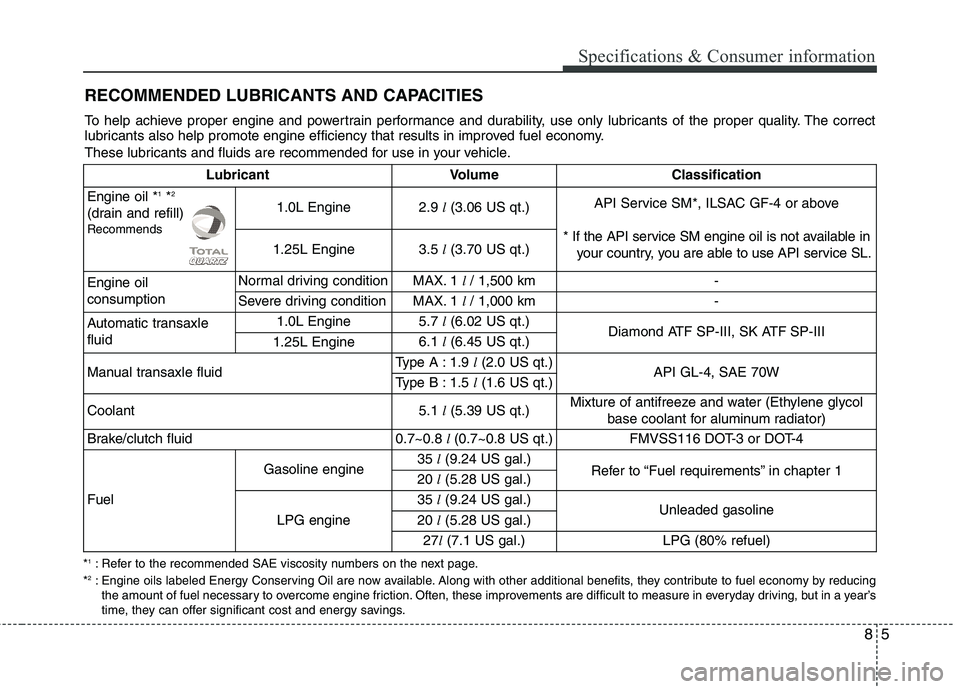
RECOMMENDED LUBRICANTS AND CAPACITIES
* 1
: Refer to the recommended SAE viscosity numbers on the next page.
* 2
: Engine oils labeled Energy Conserving Oil are now available. Along with other additional benefits, they contribute to fuel economy by reducing
the amount of fuel necessary to overcome engine friction. Often, these improvements are difficult to measure in everyday driving, but in a year’s
time, they can offer significant cost and energy savings.
To help achieve proper engine and powertrain performance and durability, use only lubricants of the proper quality. The correct
lubricants also help promote engine efficiency that results in improved fuel economy.
These lubricants and fluids are recommended for use in your vehicle.
Lubricant Volume Classification
Engine oil * 1
*2
(drain and refill) Recommends 1.0L Engine
2.9
l(3.06 US qt.) API Service SM*, ILSAC GF-4 or above
* If the API service SM engine oil is not available in your country, you are able to use API service SL.
1.25L Engine3.5 l(3.70 US qt.)
Engine oil consumption Normal driving condition
MAX. 1
l/ 1,500 km
-
Severe driving condition MAX. 1
l/ 1,000 km
-
Automatic transaxlefluid 1.0L Engine
5.7
l(6.02 US qt.)
Diamond ATF SP-III, SK ATF SP-III
1.25L Engine 6.1
l(6.45 US qt.)
Manual transaxle fluid Type A : 1.9
l(2.0 US qt.)
API GL-4, SAE 70W
Type B : 1.5 l(1.6 US qt.)
Coolant 5.1
l(5.39 US qt.) Mixture of antifreeze and water (Ethylene glycol
base coolant for aluminum radiator)
Brake/clutch fluid 0.7~0.8
l (0.7~0.8 US qt.)
FMVSS116 DOT-3 or DOT-4
Fuel Gasoline engine
35
l(9.24 US gal.)
Refer to “Fuel requirements” in chapter 1
20 l(5.28 US gal.)
LPG engine 35
l(9.24 US gal.)
Unleaded gasoline
20 l(5.28 US gal.)
27 l(7.1 US gal.)LPG (80% refuel)
Page 481 of 488
Index
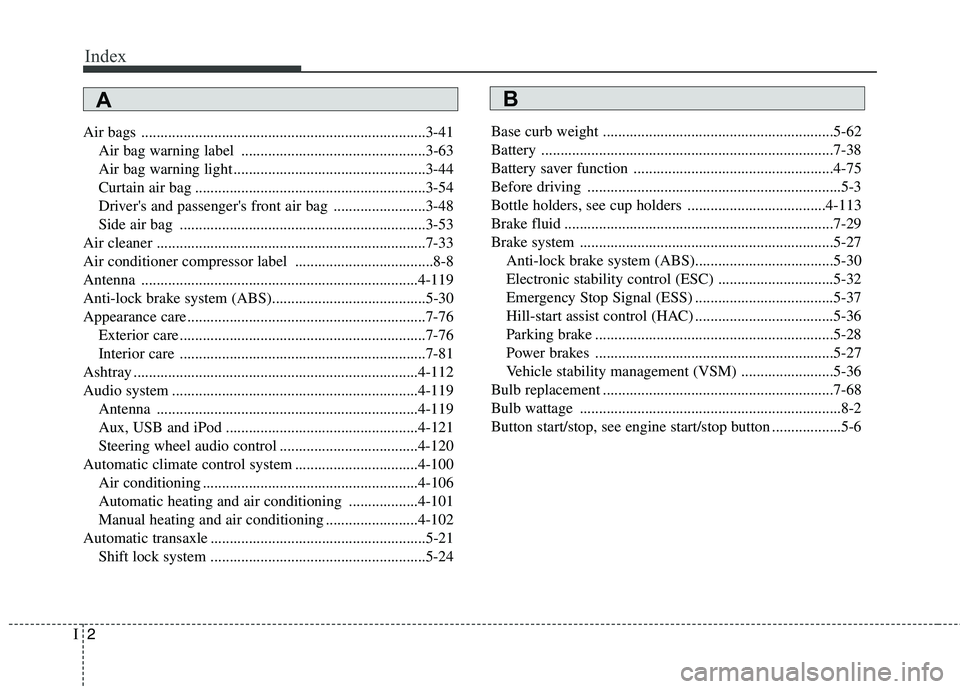
2
I
Air bags ..........................................................................3-41
Air bag warning label ................................................3-63
Air bag warning light ..................................................3-44
Curtain air bag ............................................................3-54
Driver's and passenger's front air bag ........................3-48
Side air bag ................................................................3-53
Air cleaner ......................................................................7-33
Air conditioner compressor label ....................................8-8
Antenna ........................................................................4-119
Anti-lock brake system (ABS)........................................5-30
Appearance care..............................................................7-76 Exterior care ................................................................7-76
Interior care ................................................................7-81
Ashtray ..........................................................................4-112
Audio system ................................................................4-119 Antenna ....................................................................4-119
Aux, USB and iPod ..................................................4-121
Steering wheel audio control ....................................4-120
Automatic climate control system ................................4-100 Air conditioning ........................................................4-106
Automatic heating and air conditioning ..................4-101
Manual heating and air conditioning ........................4-102
Automatic transaxle ........................................................5-21 Shift lock system ........................................................5-24 Base curb weight ............................................................5-62
Battery ............................................................................7-38
Battery saver function ....................................................4-75
Before driving ..................................................................5-3
Bottle holders, see cup holders ....................................4-113
Brake fluid ......................................................................7-29
Brake system ..................................................................5-27
Anti-lock brake system (ABS)....................................5-30
Electronic stability control (ESC) ..............................5-32
Emergency Stop Signal (ESS) ....................................5-37
Hill-start assist control (HAC) ....................................5-36
Parking brake ..............................................................5-28
Power brakes ..............................................................5-27
Vehicle stability management (VSM) ........................5-36
Bulb replacement ............................................................7-68
Bulb wattage ....................................................................8-2
Button start/stop, see engine start/stop button ..................5-6
AB
Page 483 of 488

Index
4
I
Driving at night ..............................................................5-55
Driving in flooded areas ................................................5-57
Driving in the rain ..........................................................5-56
Economical operation ....................................................5-52
Electronic power steering ..............................................4-35
Electronic stability control (ESC) ..................................5-32
Emergency commodity ..................................................6-34
Emergency starting ..........................................................6-5
Jump starting ................................................................6-5
Push starting ..................................................................6-7
Emergency stop signal (ESS) ........................................5-37
Emergency towing ..........................................................6-31
Emergency while driving ..................................................6-3
Emission control system ................................................7-82 Crankcase emission control system ............................7-82
Evaporative emission control system..........................7-82
Exhaust emission control system ................................7-83
Engine compartment..................................................2-4, 7-2
Engine coolant ................................................................7-26Engine coolant temperature gauge..................................4-46
Engine number ..................................................................8-8
Engine oil ........................................................................7-24
Engine overheats ..............................................................6-8
Engine start/stop button ....................................................5-6
Engine will not start..........................................................6-4 Evaporative emission control system..............................7-82
Exhaust emission control system ....................................7-83
Explanation of scheduled maintenance items ................7-21
Exterior care....................................................................7-76
Flat tire ..............................................................................6-9
Changing tires ............................................................6-10
Jack and tools ................................................................6-9
Removing and storing the spare tire ..........................6-10
Fluid Automatic transaxle fluid............................................7-30
Brake fluid ..................................................................7-29
Washer fluid ................................................................7-32
Folding the rear seat........................................................3-12
Front seat adjustment - manual ........................................3-5
Fuel filler lid ..................................................................4-28
Fuel gauge ......................................................................4-44
Fuel requirements ............................................................1-3
Fuses ..............................................................................7-54 Fuse/relay panel description ......................................7-58
Instrument panel fuse ..................................................7-55
Memory fuse ..............................................................7-56
Multi fuse ..........................................................................-
F
E
Page 486 of 488
I7
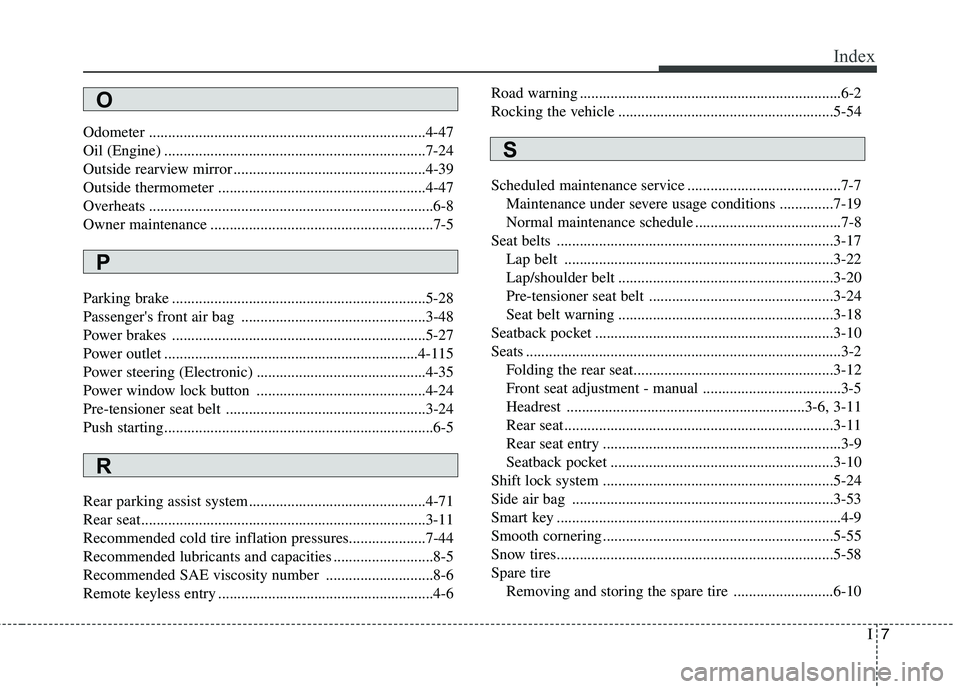
Index
Odometer ........................................................................4-47
Oil (Engine) ....................................................................7-24
Outside rearview mirror ..................................................4-39
Outside thermometer ......................................................4-47
Overheats ..........................................................................6-8
Owner maintenance ..........................................................7-5
Parking brake ..................................................................5-28
Passenger's front air bag ................................................3-48
Power brakes ..................................................................5-27
Power outlet ..................................................................4-115
Power steering (Electronic) ............................................4-35
Power window lock button ............................................4-24
Pre-tensioner seat belt ....................................................3-24
Push starting......................................................................6-5
Rear parking assist system ..............................................4-71
Rear seat..........................................................................3-11Recommended cold tire inflation pressures....................7-44
Recommended lubricants and capacities ..........................8-5
Recommended SAE viscosity number ............................8-6
Remote keyless entry ........................................................4-6 Road warning ....................................................................6-2
Rocking the vehicle ........................................................5-54
Scheduled maintenance service ........................................7-7
Maintenance under severe usage conditions ..............7-19
Normal maintenance schedule ......................................7-8
Seat belts ........................................................................3-17 Lap belt ......................................................................3-22
Lap/shoulder belt ........................................................3-20
Pre-tensioner seat belt ................................................3-24
Seat belt warning ........................................................3-18
Seatback pocket ..............................................................3-10
Seats ..................................................................................3-2 Folding the rear seat....................................................3-12
Front seat adjustment - manual ....................................3-5
Headrest ..............................................................3-6, 3-11
Rear seat ......................................................................3-11
Rear seat entry ..............................................................3-9
Seatback pocket ..........................................................3-10
Shift lock system ............................................................5-24
Side air bag ....................................................................3-53
Smart key ..........................................................................4-9
Smooth cornering............................................................5-55
Snow tires........................................................................5-58Spare tire Removing and storing the spare tire ..........................6-10
P
R
S
O