belt KIA Rio 2011 2.G Service Manual
[x] Cancel search | Manufacturer: KIA, Model Year: 2011, Model line: Rio, Model: KIA Rio 2011 2.GPages: 240, PDF Size: 4.68 MB
Page 206 of 240
715
Maintenance
DRIVE BELTS
Drive belts should be checked periodical-
ly for proper tension and adjusted if nec-
essary. At the same time, belts should be
examined for cracks, wear, fraying or
other evidence of deterioration and
replaced if necessary.
Belt routing should also be checked to be
sure there is no interference between the
belts and other parts of the engine. After
a belt is replaced, the new belt should be
adjusted again after two or three weeks
to eliminate slack resulting from initial
stretching after use.
Checking the compressor drive
belt
Have the drive belts checked in accor-
dance with the maintenance schedule.
Checking the power steering fluid
level
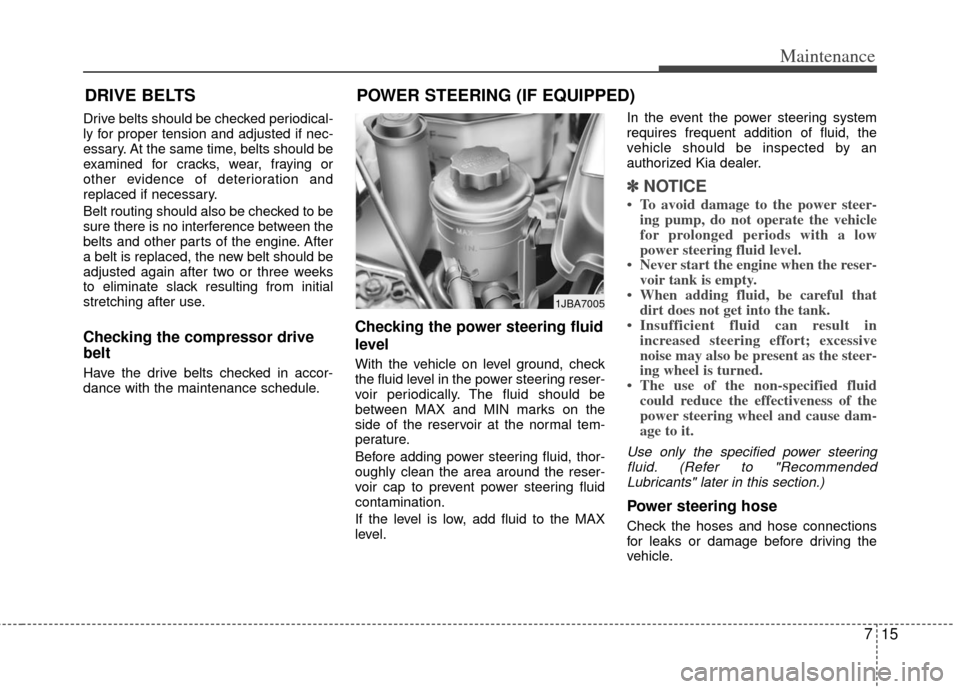
With the vehicle on level ground, check
the fluid level in the power steering reser-
voir periodically. The fluid should be
between MAX and MIN marks on the
side of the reservoir at the normal tem-
perature.
Before adding power steering fluid, thor-
oughly clean the area around the reser-
voir cap to prevent power steering fluid
contamination.
If the level is low, add fluid to the MAX
level.In the event the power steering system
requires frequent addition of fluid, the
vehicle should be inspected by an
authorized Kia dealer.
✽ ✽
NOTICE
• To avoid damage to the power steer-
ing pump, do not operate the vehicle
for prolonged periods with a low
power steering fluid level.
• Never start the engine when the reser- voir tank is empty.
• When adding fluid, be careful that dirt does not get into the tank.
• Insufficient fluid can result in increased steering effort; excessive
noise may also be present as the steer-
ing wheel is turned.
• The use of the non-specified fluid could reduce the effectiveness of the
power steering wheel and cause dam-
age to it.
Use only the specified power steering
fluid. (Refer to "Recommended Lubricants" later in this section.)
Power steering hose
Check the hoses and hose connections
for leaks or damage before driving the
vehicle.
1JBA7005
POWER STEERING (IF EQUIPPED)
Page 222 of 240
731
Maintenance
4. Tire ply composition and material
The number of layers or plies of rub-
ber-coated fabric in the tire. Tire
manufacturers also must indicate the
materials in the tire, which include
steel, nylon, polyester, and others.
The letter "R" means radial ply con-
struction; the letter "D" means diago-
nal or bias ply construction; and the
letter "B" means belted-bias ply con-
struction.
5. Maximum permissible inflationpressure
This number is the greatest amount
of air pressure that should be put in
the tire. Do not exceed the maximum
permissible inflation pressure. Refer
to the Tire and Loading Information
label for recommended inflation
pressure.
6. Maximum load rating
This number indicates the maximum
load in kilograms and pounds that
can be carried by the tire. When
replacing the tires on the vehicle,
always use a tire that has the same
load rating as the factory installed
tire.
7. Uniform tire quality grading
The following information relates to
the tire grading system developed by
the Canadian Motor Vehicle Safety
Standard (CMVSS) for grading tires
by tread wear, traction and tempera-
ture performance. Quality grades can be found where
applicable on the tire sidewall
between tread shoulder and maxi-
mum section width.
For example:
TREADWEAR 200
TRACTION AA
TEMPERATURE A
Tread wear
The tread wear grade is a compara-
tive rating based on the wear rate of
the tire when tested under controlled
conditions on a specified govern-
ment test course. For example, a tire
graded 150 would wear one-and-a-
half times as well on the government
course as a tire graded 100.
The relative performance of tires
depends upon the actual conditions
of their use. However, performance
may differ from the norm because of
variations in driving habits, service
practices and differences in road
characteristics and climate.
These grades are molded on the
side-walls of passenger vehicle tires.
The tires available as standard or
optional equipment on Kia vehicles
may vary with respect to grade.
WARNING
Tires degrade over time, even
when they are not being used.
Regardless of the remaining
tread, it is recommended that
tires generally be replaced after
six (6) years of normal service.
Heat caused by hot climates or
frequent high loading condi-
tions can accelerate the aging
process. Failure to follow this
warning can result in sudden
tire failure, which could lead to a
loss of control and an accident
involving serious injury or
death.
Page 228 of 240
737
Maintenance
Cleaning the lap/shoulder belt
webbing
Clean the belt webbing with any mild
soap solution recommended for cleaning
upholstery or carpet. Follow the instruc-
tions provided with the soap. Do not
bleach or re-dye the webbing because
this may weaken it.
Cleaning the interior window
glass
If the interior glass surfaces of the vehi-
cle become fogged (that is, covered with
an oily, greasy or waxy film), they should
be cleaned with glass cleaner. Follow the
directions on the glass cleaner container.
✽ ✽NOTICE
Do not scrape or scratch the inside of
the rear window. This may result in
damage to the rear window defroster
grid.
Page 234 of 240

Index
29
Air bags··················\
··················\
··················\
··················\
··3-49Air bag warning label··················\
··················\
············3-63
Air bag warning light ··················\
··················\
············3-62
Curtain air bag··················\
··················\
··················\
·····3-54
Driver's air bag ··················\
··················\
··················\
····3-51
Front passenger’s air bag ··················\
··················\
······3-52
Side impact air bag··················\
··················\
················3-53
Air cleaner ··················\
··················\
··················\
···············7-18
Alarm system ··················\
··················\
··················\
·············3-5
Antenna ··················\
··················\
··················\
··················\
··3-82
Anti-lock brake system (ABS) ··················\
··················\
··4-12
Appearance care··················\
··················\
··················\
·······7-34 Exterior care ··················\
··················\
··················\
········7-34
Interior care ··················\
··················\
··················\
·········7-36
Armrest ··················\
··················\
··················\
··················\
··3-22
Audio system ··················\
··················\
··················\
···········3-84 Antenna ··················\
··················\
··················\
···············3-82
Steering wheel audio control ··················\
··················\
3-83
Auto lock mode (Passenger seat belt) ··················\
·········3-44
Automatic transaxle ··················\
··················\
··················\
···4-6 Ignition key interlock system ··················\
··················\
··4-9
Shift lock system ··················\
··················\
··················\
···4-9 Battery··················\
··················\
··················\
··················\
····7-21
Battery saver function ··················\
··················\
················4-31
Before driving ··················\
··················\
··················\
············5-4
Bottle holders, see cup holders ··················\
··················\
··3-76
Brake system··················\
··················\
··················\
··············4-9
Anti-lock brake system (ABS) ··················\
················4-12
Parking brake··················\
··················\
··················\
·······4-10
Power brakes ··················\
··················\
··················\
·········4-9
Brakes fluid··················\
··················\
··················\
··············7-14
Bulb wattage ··················\
··················\
··················\
··············8-4
Capacities (Lubricants) ··················\
··················\
················8-4
Care Exterior care ··················\
··················\
··················\
········7-34
Interior care ··················\
··················\
··················\
·········7-36
Tire care··················\
··················\
··················\
···············7-24
Central door lock switch··················\
··················\
············3-10
Certification label ··················\
··················\
··················\
····5-10
Changing tires ··················\
··················\
··················\
··········6-19
Checking tire inflation pressure··················\
··················\
·7-25
Child-protector rear door lock ··················\
··················\
···3-12
Child restraint system ··················\
··················\
················3-42 Auto lock mode (Passenger seat belt) ··················\
·····3-44
Lower anchor system ··················\
··················\
············3-47
Tether anchor system··················\
··················\
·············3-46
AB
C
Page 238 of 240

Index
69
Outside rearview mirror··················\
··················\
·············3-70
Overheats ··················\
··················\
··················\
··················\
·6-3
Owner maintenance ··················\
··················\
··················\
···7-7
Parking brake ··················\
··················\
··················\
···········4-10
Passenger's front air bag ··················\
··················\
············3-52
Power brakes ··················\
··················\
··················\
··············4-9
Power outlet ··················\
··················\
··················\
·············3-77
Power window lock switch ··················\
··················\
········3-16
Pre-tensioner seat belt··················\
··················\
················3-28
Push starting··················\
··················\
··················\
···············6-5
Rear seat adjustment ··················\
··················\
··················\
3-23
Recommended cold tire inflation pressures ··················\
7-24
Recommended lubricants and capacities ··················\
·······8-4Recommended SAE viscosity number··················\
····7-33
Remote keyless entry ··················\
··················\
··················\
·3-3
Road warning ··················\
··················\
··················\
·············6-2
Rocking the vehicle ··················\
··················\
··················\
···5-6
Scheduled maintenance service ··················\
··················\
···7-3 Seat belts ··················\
··················\
··················\
··················\
3-28
Pre-tensioner seat belt ··················\
··················\
···········3-28
Seat belt warning ··················\
··················\
··················\
·3-33
Seats ··················\
··················\
··················\
··················\
·······3-17 Armrest ··················\
··················\
··················\
················3-22
Headrest ··················\
··················\
··················\
·····3-21, 3-26
Folding the rear seat ··················\
··················\
··············3-23
Front seat adjustment ··················\
··················\
············3-18
Rear seat adjustment ··················\
··················\
·············3-23
Shift lock system ··················\
··················\
··················\
·······4-9
Side impact air bag ··················\
··················\
··················\
··3-53
Snow tires ··················\
··················\
··················\
·········5-8, 7-32
Spare tire Compact spare tire ··················\
··················\
················6-18
Compact spare tire replacement ··················\
··············7-27
Removing and storing the spare tire ··················\
·······6-17
Special driving conditions ··················\
··················\
···········5-6 Driving at night ··················\
··················\
··················\
·····5-7
Driving in flooded areas··················\
··················\
··········5-8
Driving in the rain ··················\
··················\
··················\
·5-7
Hazardous driving conditions ··················\
··················\
·5-6
Rocking the vehicle ··················\
··················\
·················5-6
Speedometer··················\
··················\
··················\
·············4-21
Starting the engine ··················\
··················\
··················\
·····4-3
Steering wheel ··················\
··················\
··················\
·········4-18 Horn··················\
··················\
··················\
··················\
···4-19
Tilt steering ··················\
··················\
··················\
·········4-18
Steering wheel audio control ··················\
··················\
·····3-83
P
R
S