electronic control light KIA Rio 2013 3.G Owner's Manual
[x] Cancel search | Manufacturer: KIA, Model Year: 2013, Model line: Rio, Model: KIA Rio 2013 3.GPages: 385, PDF Size: 9.68 MB
Page 5 of 385

Index
2I
Active eco system ··················\
··················\
··················\
····5-41
Air bag warning label ··················\
··················\
················3-53
Air bag warning light··················\
··················\
·················3-33\
Air bags··················\
··················\
··················\
··················\
··3-30Air bag warning label ··················\
··················\
··············3-53
Air bag warning light ··················\
··················\
··············3-33
Curtain air bag ··················\
··················\
··················\
·······3-45
Driver's and passenger's front air bag··········\
················3-41
Occupant detection system ··················\
··················\
······3-36
Side impact air bag ··················\
··················\
··················\
3-44
SRS components and functions ··················\
·················3-33\
Air cleaner ··················\
··················\
··················\
···············7-31
Antenna (Roof) ··················\
··················\
··················\
······4-102
Anti-lock brake system (ABS) ··················\
··················\
··5-24
Appearance care··················\
··················\
··················\
·······7-60 Exterior care ··················\
··················\
··················\
··········7-60
Interior care ··················\
··················\
··················\
···········7-64
Ashtray ··················\
··················\
··················\
··················\
···4-96
Audio system ··················\
··················\
··················\
·········4-102 Roof antenna··················\
··················\
··················\
········4-102
Steering wheel audio control ··················\
··················\
·4-103
Automatic transaxle ··················\
··················\
··················\
·5-15 Shift lock ··················\
··················\
··················\
···············5-19
Sports mode ··················\
··················\
··················\
···········5-17
Automatic transaxle fluid ··················\
··················\
··········7-30
Aux, USB and iPod port ··················\
··················\
··········4-104 Base curb weight ··················\
··················\
··················\
·····5-56
Battery··················\
··················\
··················\
··················\
····7-34
Battery saver function ··················\
··················\
················4-70
Before driving ··················\
··················\
··················\
············5-3
Bottle holders, see cup holders ··················\
··················\
··4-97
Brake system··················\
··················\
··················\
············5-21
Anti-lock brake system (ABS) ··················\
··················\
5-24
Electronic stability program (ESC) ··················\
···········5-25
Hill-start assist control············\
··················\
··················\
·5-28
Parking brake ··················\
··················\
··················\
·········5-22
Power brakes··················\
··················\
··················\
··········5-21
Vehicle stability management··················\
··················\
··5-29
Brakes/clutch fluid ··················\
··················\
··················\
···7-29
Bulb wattage ··················\
··················\
··················\
··············8-3
Calendar ··················\
··················\
··················\
·················4-10\
0
Capacities (Lubricants) ··················\
··················\
················8-5
Car option ··················\
··················\
··················\
················4-50
Care Exterior care ··················\
··················\
··················\
··········7-60
Interior care ··················\
··················\
··················\
···········7-64
Tire care ··················\
··················\
··················\
·················7-37\
AB
C
Page 58 of 385
Safety features of your vehicle
36
3
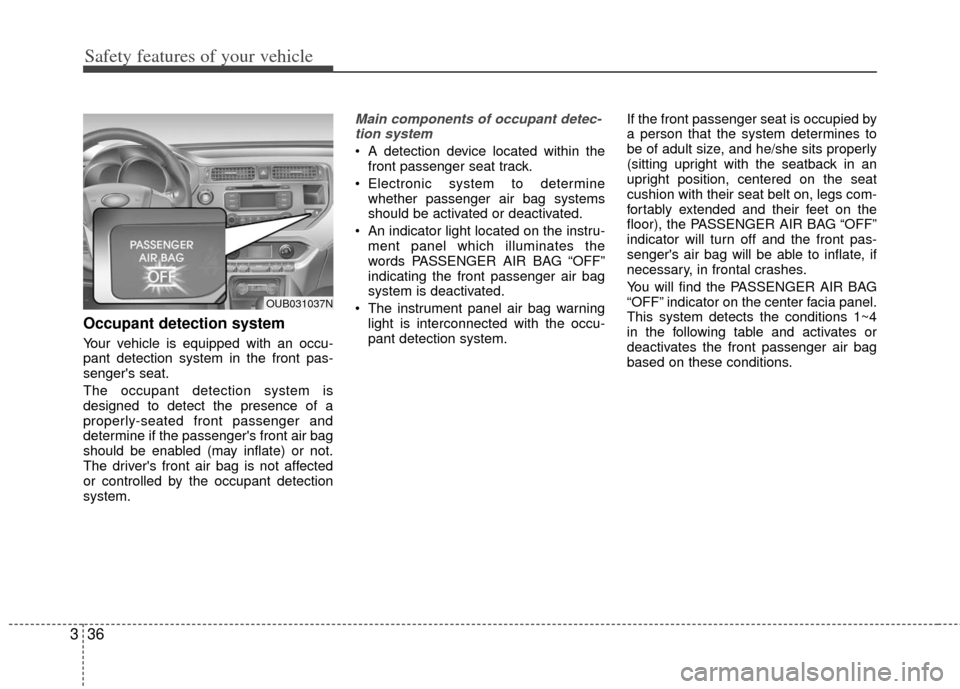
Occupant detection system
Your vehicle is equipped with an occu-
pant detection system in the front pas-
senger's seat.
The occupant detection system is
designed to detect the presence of a
properly-seated front passenger and
determine if the passenger's front air bag
should be enabled (may inflate) or not.
The driver's front air bag is not affected
or controlled by the occupant detection
system.
Main components of occupant detec-
tion system
A detection device located within the front passenger seat track.
Electronic system to determine whether passenger air bag systems
should be activated or deactivated.
An indicator light located on the instru- ment panel which illuminates the
words PASSENGER AIR BAG “OFF”
indicating the front passenger air bag
system is deactivated.
The instrument panel air bag warning light is interconnected with the occu-
pant detection system. If the front passenger seat is occupied by
a person that the system determines to
be of adult size, and he/she sits properly
(sitting upright with the seatback in an
upright position, centered on the seat
cushion with their seat belt on, legs com-
fortably extended and their feet on the
floor), the PASSENGER AIR BAG “OFF”
indicator will turn off and the front pas-
senger's air bag will be able to inflate, if
necessary, in frontal crashes.
You will find the PASSENGER AIR BAG
“OFF” indicator on the center facia panel.
This system detects the conditions 1~4
in the following table and activates or
deactivates the front passenger air bag
based on these conditions.
OUB031037N
Page 134 of 385
459
Features of your vehicle
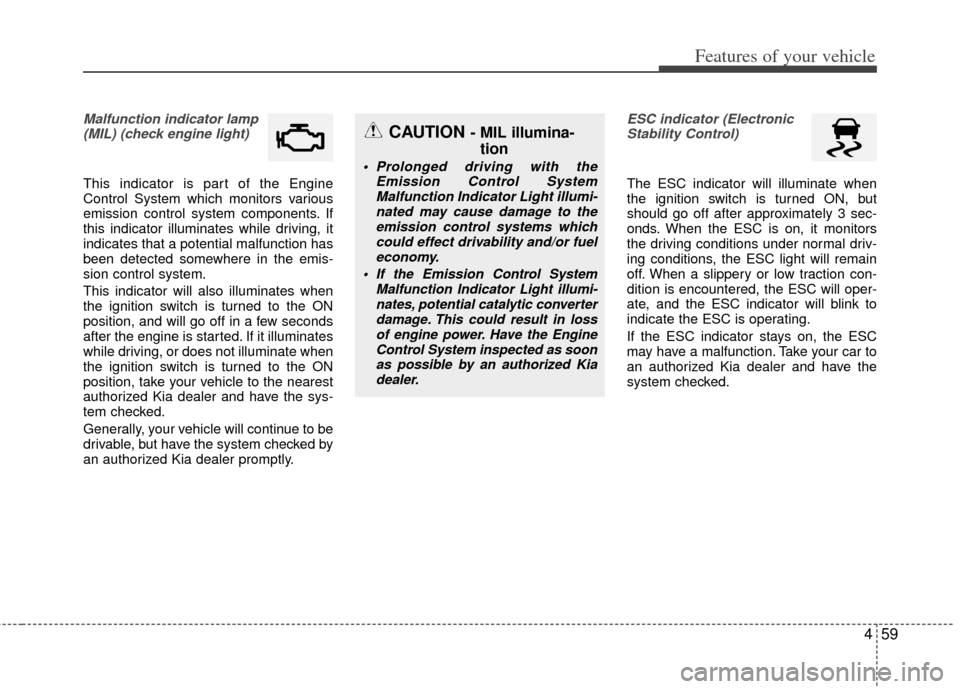
Malfunction indicator lamp(MIL) (check engine light)
This indicator is part of the Engine
Control System which monitors various
emission control system components. If
this indicator illuminates while driving, it
indicates that a potential malfunction has
been detected somewhere in the emis-
sion control system.
This indicator will also illuminates when
the ignition switch is turned to the ON
position, and will go off in a few seconds
after the engine is started. If it illuminates
while driving, or does not illuminate when
the ignition switch is turned to the ON
position, take your vehicle to the nearest
authorized Kia dealer and have the sys-
tem checked.
Generally, your vehicle will continue to be
drivable, but have the system checked by
an authorized Kia dealer promptly.
ESC indicator (ElectronicStability Control)
The ESC indicator will illuminate when
the ignition switch is turned ON, but
should go off after approximately 3 sec-
onds. When the ESC is on, it monitors
the driving conditions under normal driv-
ing conditions, the ESC light will remain
off. When a slippery or low traction con-
dition is encountered, the ESC will oper-
ate, and the ESC indicator will blink to
indicate the ESC is operating.
If the ESC indicator stays on, the ESC
may have a malfunction. Take your car to
an authorized Kia dealer and have the
system checked.
CAUTION - MIL illumina- tion
Prolonged driving with the
Emission Control SystemMalfunction Indicator Light illumi-nated may cause damage to theemission control systems which could effect drivability and/or fueleconomy.
If the EmissionControl System
Malfunction Indicator Light illumi- nates, potential catalytic converterdamage. This could result in lossof engine power. Have the Engine Control System inspected as soonas possible by an authorized Kiadealer.
Page 248 of 385
525
Driving your vehicle
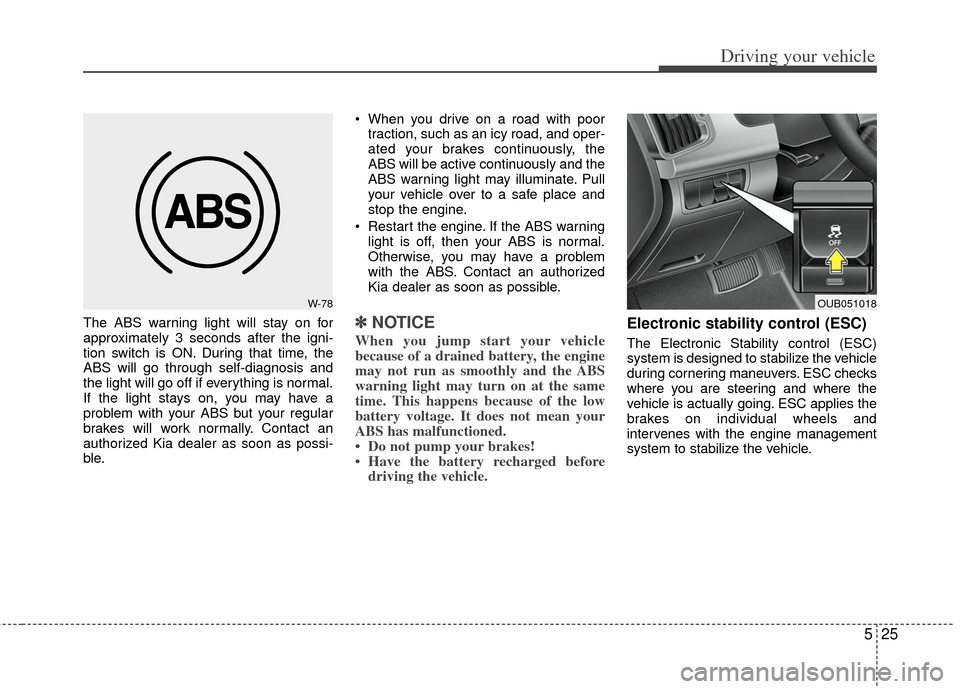
The ABS warning light will stay on for
approximately 3 seconds after the igni-
tion switch is ON. During that time, the
ABS will go through self-diagnosis and
the light will go off if everything is normal.
If the light stays on, you may have a
problem with your ABS but your regular
brakes will work normally. Contact an
authorized Kia dealer as soon as possi-
ble. When you drive on a road with poor
traction, such as an icy road, and oper-
ated your brakes continuously, the
ABS will be active continuously and the
ABS warning light may illuminate. Pull
your vehicle over to a safe place and
stop the engine.
Restart the engine. If the ABS warning light is off, then your ABS is normal.
Otherwise, you may have a problem
with the ABS. Contact an authorized
Kia dealer as soon as possible.✽ ✽ NOTICE
When you jump start your vehicle
because of a drained battery, the engine
may not run as smoothly and the ABS
warning light may turn on at the same
time. This happens because of the low
battery voltage. It does not mean your
ABS has malfunctioned.
• Do not pump your brakes!
• Have the battery recharged before
driving the vehicle.
Electronic stability control (ESC)
The Electronic Stability control (ESC)
system is designed to stabilize the vehicle
during cornering maneuvers. ESC checks
where you are steering and where the
vehicle is actually going. ESC applies the
brakes on individual wheels and
intervenes with the engine management
system to stabilize the vehicle.
W-78OUB051018
Page 249 of 385
Driving your vehicle
26
5
Electronic stability control (ESC) will not
prevent accidents. Excessive speed in
turns, abrupt maneuvers and hydroplan-
ing on wet surfaces can still result in seri-
ous accidents. Only a safe and attentive
driver can prevent accidents by avoiding
maneuvers that cause the vehicle to lose
traction. Even with ESC installed, always
follow all the normal precautions for driv-
ing - including driving at safe speeds for
the conditions.
The Electronic Stability Control (ESC)
system is an electronic system designed
to help the driver maintain vehicle control
under adverse conditions. It is not a
substitute for safe driving practices.
Factors including speed, road conditions
and driver steering input can all affect
whether ESC will be effective in
preventing a loss of control. It is still your
responsibility to drive and corner at
reasonable speeds and to leave a
sufficient margin of safety.
When you apply your brakes under con-
ditions which may lock the wheels, you
may hear a “tik-tik’’ sound from the
brakes, or feel a corresponding sensation
in the brake pedal. This is normal and it
means your ESC is active.ESC operation
ESC ON condition
ON, ESC and ESC OFF indi-
cator lights illuminate for
approximately 3 seconds,
then ESC is turned on.
for at least half a second after
turning the ignition ON to turn
ESC off. (ESC OFF indicator
will illuminate). To turn the
ESC on, press the ESC OFF
button (ESC OFF indicator
light will go off).
you may hear a slight ticking
sound. This is the ESC per-
forming an automatic system
self-check and does not indi-
cate a problem. When operating
When the ESC is in operation,
ESC indicator light blinks.
Control is operating properly,
you can feel a slight pulsation
in the vehicle. This is only the
effect of brake control and
indicates nothing unusual.
or slippery road, pressing the
accelerator pedal may not
cause the engine rpm (revo-
lutions per minute) to
increase.
-
Page 250 of 385
527
Driving your vehicle
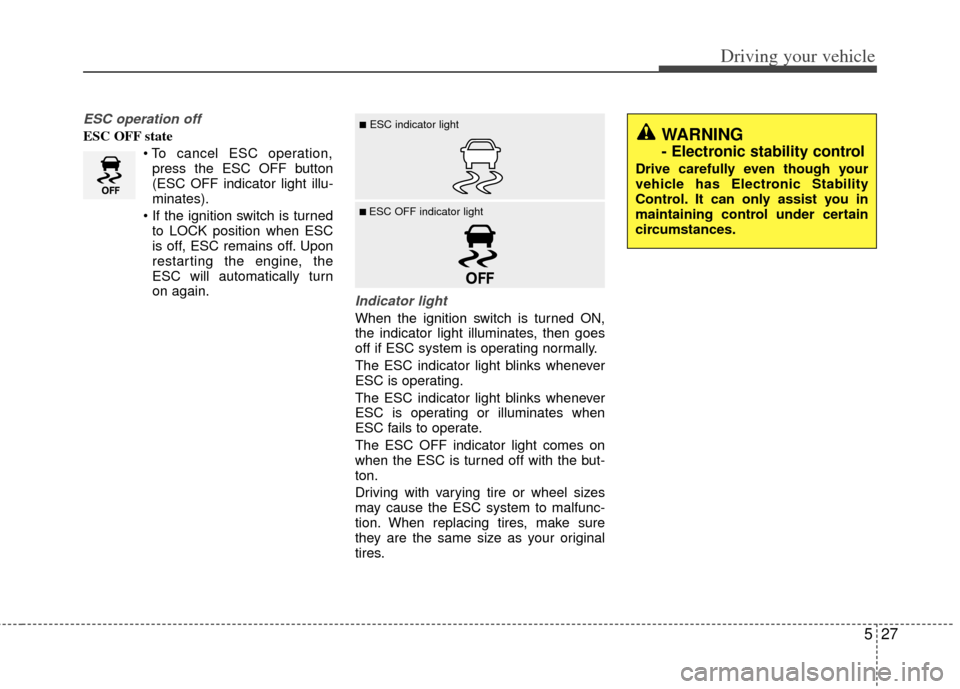
ESC operation off
ESC OFF statepress the ESC OFF button
(ESC OFF indicator light illu-
minates).
to LOCK position when ESC
is off, ESC remains off. Upon
restarting the engine, the
ESC will automatically turn
on again.
Indicator light
When the ignition switch is turned ON,
the indicator light illuminates, then goes
off if ESC system is operating normally.
The ESC indicator light blinks whenever
ESC is operating.
The ESC indicator light blinks whenever
ESC is operating or illuminates when
ESC fails to operate.
The ESC OFF indicator light comes on
when the ESC is turned off with the but-
ton.
Driving with varying tire or wheel sizes
may cause the ESC system to malfunc-
tion. When replacing tires, make sure
they are the same size as your original
tires.
■ESC indicator light
■ ESC OFF indicator light
WARNING
- Electronic stability control
Drive carefully even though your
vehicle has Electronic Stability
Control. It can only assist you in
maintaining control under certain
circumstances.