engine overheat KIA RIO HATCHBACK 2014 User Guide
[x] Cancel search | Manufacturer: KIA, Model Year: 2014, Model line: RIO HATCHBACK, Model: KIA RIO HATCHBACK 2014Pages: 446, PDF Size: 12.98 MB
Page 300 of 446
What to do in an emergency
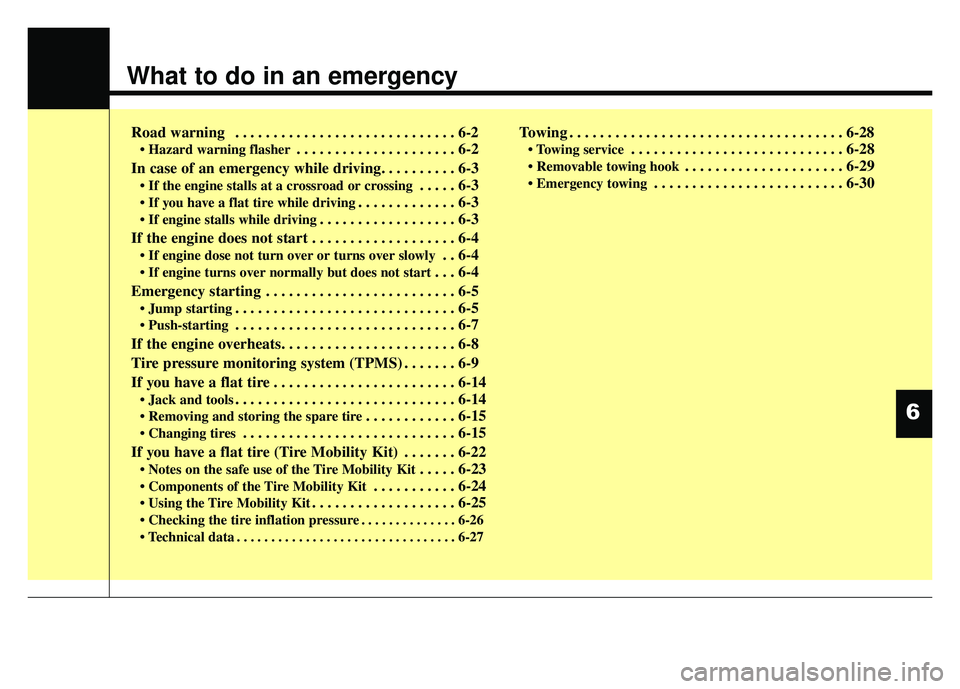
Road warning . . . . . . . . . . . . . . . . . . . . . . . . . . . . . 6-2
• Hazard warning flasher. . . . . . . . . . . . . . . . . . . . . 6-2
In case of an emergency while driving. . . . . . . . . . 6-3
. . . . . 6-3
. . . . . . . . . . . . . 6-3
. . . . . . . . . . . . . . . . . . 6-3
If the engine does not start . . . . . . . . . . . . . . . . . . . 6-4
. . 6-4
. . . 6-4
Emergency starting . . . . . . . . . . . . . . . . . . . . . . . . . 6-5
. . . . . . . . . . . . . . . . . . . . . . . . . . . . . 6-5
. . . . . . . . . . . . . . . . . . . . . . . . . . . . . 6-7
If the engine overheats. . . . . . . . . . . . . . . . . . . . . . . 6-8
Tire pressure monitoring system (TPMS) . . . . . . . 6-9
If you have a flat tire . . . . . . . . . . . . . . . . . . . . . . . . 6-14
. . . . . . . . . . . . . . . . . . . . . . . . . . . . . 6-14
. . . . . . . . . . . . 6-15
. . . . . . . . . . . . . . . . . . . . . . . . . . . . 6-15
If you have a flat tire (Tire Mobility Kit) . . . . . . . 6-22
. . . . . 6-23
. . . . . . . . . . . 6-24
. . . . . . . . . . . . . . . . . . . 6-25
. . . . . . . . . . . . . . 6-26
. . . . . . . . . . . . . . . . . . . . . . . . . . . . . . . . 6-27
Towing . . . . . . . . . . . . . . . . . . . . . . . . . . . . . . . . . . . . \
6-28
. . . . . . . . . . . . . . . . . . . . . . . . . . . . 6-28
. . . . . . . . . . . . . . . . . . . . . 6-29
. . . . . . . . . . . . . . . . . . . . . . . . . 6-30
6
Page 307 of 446
What to do in an emergency
86
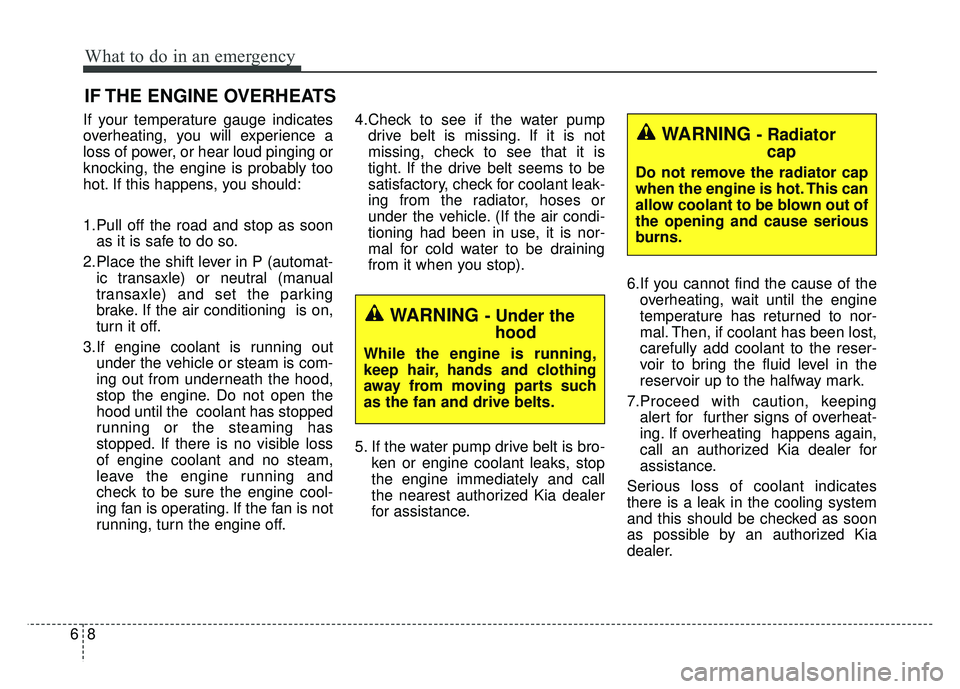
IF THE ENGINE OVERHEATS
If your temperature gauge indicates
overheating, you will experience a
loss of power, or hear loud pinging or
knocking, the engine is probably too
hot. If this happens, you should:
1.Pull off the road and stop as soonas it is safe to do so.
2.Place the shift lever in P (automat- ic transaxle) or neutral (manual
transaxle) and set the parking
brake. If the air conditioning is on,
turn it off.
3.If engine coolant is running out under the vehicle or steam is com-
ing out from underneath the hood,
stop the engine. Do not open the
hood until the coolant has stopped
running or the steaming has
stopped. If there is no visible loss
of engine coolant and no steam,
leave the engine running and
check to be sure the engine cool-
ing fan is operating. If the fan is not
running, turn the engine off. 4.Check to see if the water pump
drive belt is missing. If it is not
missing, check to see that it is
tight. If the drive belt seems to be
satisfactory, check for coolant leak-
ing from the radiator, hoses or
under the vehicle. (If the air condi-
tioning had been in use, it is nor-
mal for cold water to be draining
from it when you stop).
5. If the water pump drive belt is bro- ken or engine coolant leaks, stop
the engine immediately and call
the nearest authorized Kia dealer
for assistance. 6.If you cannot find the cause of the
overheating, wait until the engine
temperature has returned to nor-
mal. Then, if coolant has been lost,
carefully add coolant to the reser-
voir to bring the fluid level in the
reservoir up to the halfway mark.
7.Proceed with caution, keeping alert for further signs of overheat-
ing. If overheating happens again,
call an authorized Kia dealer for
assistance.
Serious loss of coolant indicates
there is a leak in the cooling system
and this should be checked as soon
as possible by an authorized Kia
dealer.
WARNING - Under the hood
While the engine is running,
keep hair, hands and clothing
away from moving parts such
as the fan and drive belts.
WARNING - Radiatorcap
Do not remove the radiator cap
when the engine is hot. This can
allow coolant to be blown out of
the opening and cause serious
burns.
Page 322 of 446
623
What to do in an emergency
It is possible that some tires, espe-
cially with larger punctures or dam-
age to the sidewall, cannot be sealed
completely.
Air pressure loss in the tire may
adversely affect tire performance.
For this reason, you should avoid
abrupt steering or other driving
maneuvers, especially if the vehicle
is heavily loaded or if a trailer is in
use.
The Tire Mobility Kit is not designed
or intended as a permanent tire
repair method and is to be used for
one tire only.
This instruction shows you step by
step how to temporarily seal the
puncture simply and reliably.
Read the section "Notes on the safe
use of the Tire Mobility Kit".Notes on the proper use of the
Tire Mobility Kit
Park your car at the side of theroad so that you can work with the
Tire Mobility Kit away from moving
traffic.
To be sure your vehicle will not move, even when you're on fairly
level ground, always set your park-
ing brake.
Only use the Tire Mobility Kit for sealing/inflation passenger car
tires. Only punctured areas located
within the tread region of the tire
can be sealed using the tire mobil-
ity kit.
Do not use on motorcycles, bicy- cles or any other type of tires.
When the tire and wheel are dam- aged, do not use Tire Mobility Kit
for your safety.
Use of the Tire Mobility Kit may not be effective for tire damage larger
than approximately 0.24 in (6 mm).
Please contact the nearest Kia
dealership if the tire cannot be
made roadworthy with the Tire
Mobility Kit. Do not use the Tire Mobility Kit if a
tire is severely damaged by driving
run flat or with insufficient air pres-
sure.
Do not remove any foreign objects such as nails or screws that have
penetrated the tire.
Provided the car is outdoors, leave the engine running. Otherwise
operating the compressor may
eventually drain the car battery.
Never leave the Tire Mobility Kit unattended while it is being used.
Do not leave the compressor run- ning for more than 10 min. at a time
or it may overheat.
Do not use the Tire Mobility Kit if the ambient temperature is below -
22°F (-30°C).
Page 399 of 446
769
Maintenance
Always handle them carefully, and
avoid scratches and abrasions. If the
bulbs are lit, avoid contact with liq-
uids. Never touch the glass with bare
hands. Residual oil may cause the
bulb to overheat and burst when lit. A
bulb should be operated only when
installed in a headlight.
If a bulb becomes damaged or
cracked, replace it immediately and
carefully dispose of it.
Wear eye protection when changing
a bulb. Allow the bulb to cool down
before handling it.1.Turn off the engine and open the
hood.
2.Remove the front bumper upper cover.
3.Remove the headlight assembly from the body of the vehicle. If you
can reach the bulb without remov-
ing the headlight assembly, you do
not need to do step 2 and 3.
4.Disconnect the power connector(s) from the back of the headlight
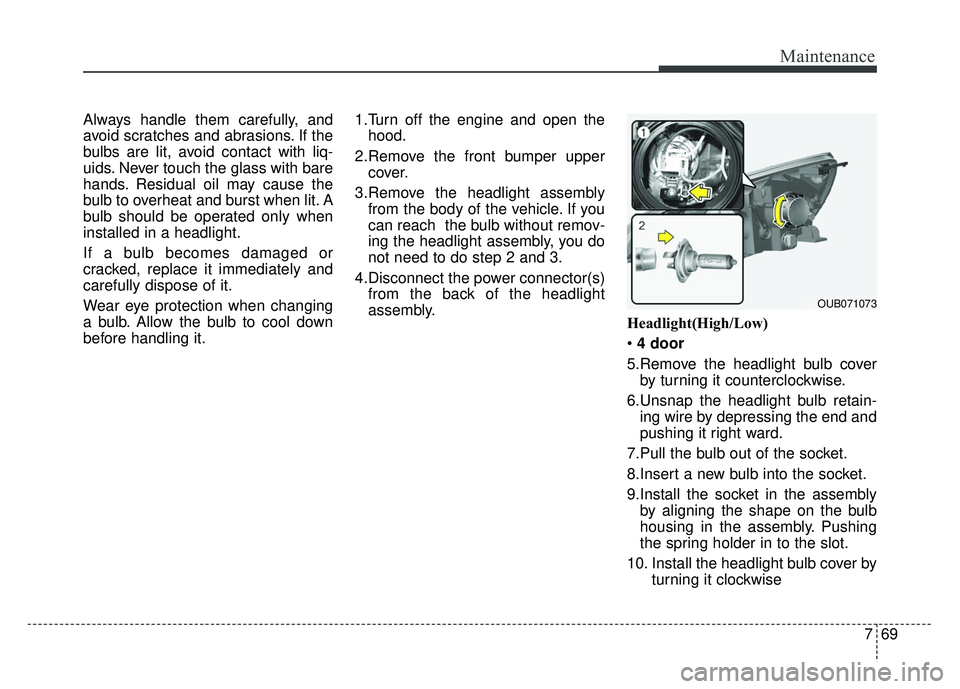
assembly. Headlight(High/Low)
4 door
5.Remove the headlight bulb cover by turning it counterclockwise.
6.Unsnap the headlight bulb retain- ing wire by depressing the end and
pushing it right ward.
7.Pull the bulb out of the socket.
8.Insert a new bulb into the socket.
9.Install the socket in the assembly by aligning the shape on the bulb
housing in the assembly. Pushing
the spring holder in to the slot.
10. Install the headlight bulb cover by turning it clockwise
OUB071073
Page 439 of 446

Index
4I
Economical operation ··················\
··················\
················5-46
Electric power steering ··················\
··················\
··············4-39
Electronic stability program (ESC) ··················\
·············5-27
Emergency starting ··················\
··················\
··················\
····6-5Jump starting ··················\
··················\
··················\
···········6-5
Push starting ··················\
··················\
··················\
············6-7
Emergency while driving ··················\
··················\
·············6-3
Emission control system ··················\
··················\
············7-88 Crankcase emission control system··················\
···········7-88
Evaporative emission control System ··················\
·······7-88
Exhaust emission control system ··················\
··············7-89
Engine ··················\
··················\
··················\
··················\
······8-2
Engine compartment ··················\
··················\
··················\
··2-6
Engine compartment panel fuse ··················\
··················\
7-58
Engine coolant ··················\
··················\
··················\
·········7-27
Engine coolcant temperature gauge··················\
·············4-47
Engine number ··················\
··················\
··················\
···········8-9
Engine oil ··················\
··················\
··················\
·················7-26\
Engine overheats ··················\
··················\
··················\
········6-8
Engine start/stop button ··················\
··················\
···············5-7
Engine will not start··················\
··················\
··················\
···6-4
Evaporative emission control System ··················\
··········7-88
Exhaust emission control system··················\
·················7-89\
Explanation of scheduled maintenance items ···············7-23
Exterior care··················\
··················\
··················\
·············7-81 Flat tire (with spare tire) ··················\
··················\
············6-14
Jack and tools ··················\
··················\
··················\
········6-14
Changing tires··················\
··················\
··················\
········6-15
Compact spare tire ··················\
··················\
··················\
·6-20
Removing and storing the spare tire···········\
·················6-15\
Flat tire (with tire mobility kit) ··················\
··················\
·6-22
Floor mat anchor(s) ··················\
··················\
·················4-10\
7
Fluid Automatic transaxle fluid ··················\
··················\
········7-31
Brakes/clutch fluid··················\
··················\
··················\
·7-30
Washer fluid··················\
··················\
··················\
···········7-31
Folding the outside rearviwe mirror ··················\
············4-44
Folding the rear seat ··················\
··················\
··················\
3-10
Front passenger and rear seat belt ··················\
···············3-17
Front seat adjustment ··················\
··················\
··················\
·3-4
Fuel filler lid ··················\
··················\
··················\
············4-32
Fuel gauge··················\
··················\
··················\
················4-47
Fuel requirements ··················\
··················\
··················\
······1-3
Fuses ··················\
··················\
··················\
··················\
······7-56 Engine compartment panel fuse ··················\
················7-58
Fuse/relay panel description ··················\
··················\
····7-59
Instrument panel fuse ··················\
··················\
··············7-57
Memory fuse··················\
··················\
··················\
··········7-58
Multi fuse ··················\
··················\
··················\
··············7-59
FE
Page 442 of 446

I7
Index
Maintenance schedule··················\
··················\
··················\
7-8
Maintenance under severe usage conditions ·················7-21\
Normal maintenance schedule··················\
··················\
···7-9
Maintenance services ··················\
··················\
··················\
·7-4
Manual climate control system··················\
··················\
··4-87 Air conditioning ··················\
··················\
··················\
····4-92
Climate control air filter ··················\
··················\
··········4-95
Heating and air conditioning ··················\
··················\
···4-88
Manual transaxle··················\
··················\
··················\
······5-13
Memory fuse ··················\
··················\
··················\
············7-58
Mirrors ··················\
··················\
··················\
··················\
···4-42 Day/night rearview mirror ··················\
··················\
·······4-42
Folding the outside rearviwe mirror ··················\
··········4-44
Inside rearview mirror ··················\
··················\
·············4-42
Outside rearview mirror ··················\
··················\
··········4-42
Remote control ··················\
··················\
··················\
······4-43
Multi fuse ··················\
··················\
··················\
·················7-59\
Occupant detection system ··················\
··················\
········3-37
Odometer ··················\
··················\
··················\
·················4-48\
Oil (Engine) ··················\
··················\
··················\
·············7-26
Outside rearview mirror··················\
··················\
·············4-42
Outside rearview mirror remote control ··················\
······4-43
Overheats ··················\
··················\
··················\
··················\
·6-8
Owner maintenance ··················\
··················\
··················\
···7-6 Parking brake··················\
··················\
··················\
··5-24, 7-32
Power brakes ··················\
··················\
··················\
············5-22
Power outlet ··················\
··················\
··················\
···········4-105
Power window lock button ··················\
··················\
········4-28
Pre-tensioner seat belt··················\
··················\
················3-18
Push starting··················\
··················\
··················\
···············6-7
Rear seat··················\
··················\
··················\
··················\
···3-9
Rear-Camera Display··················\
··················\
·················4-75\
Recommended cold tire inflation pressures ··················\
7-42
Recommended lubricants and capacities ··················\
·······8-6
Recommended SAE viscosity number ··················\
········8-7
Refrigerant label ··················\
··················\
··················\
········8-9
Remote control (Mirror) ··················\
··················\
············4-43
Remote keyless entry ··················\
··················\
··················\
·4-8
Remote(or Smart) key battery replacement ··················\
·4-10
Replacement light bulb ··················\
··················\
··············7-68
Road warning ··················\
··················\
··················\
·············6-2
Rocking the vehicle ··················\
··················\
··················\
·5-48
Roof antenna ··················\
··················\
··················\
··········4-109
O
P
R