check engine KIA Sedona 2015 3.G Workshop Manual
[x] Cancel search | Manufacturer: KIA, Model Year: 2015, Model line: Sedona, Model: KIA Sedona 2015 3.GPages: 566, PDF Size: 16.71 MB
Page 489 of 566
Maintenance
36
7
POWER STEERING FLUID (IF EQUIPPED)
Checking the power steering
fluid level
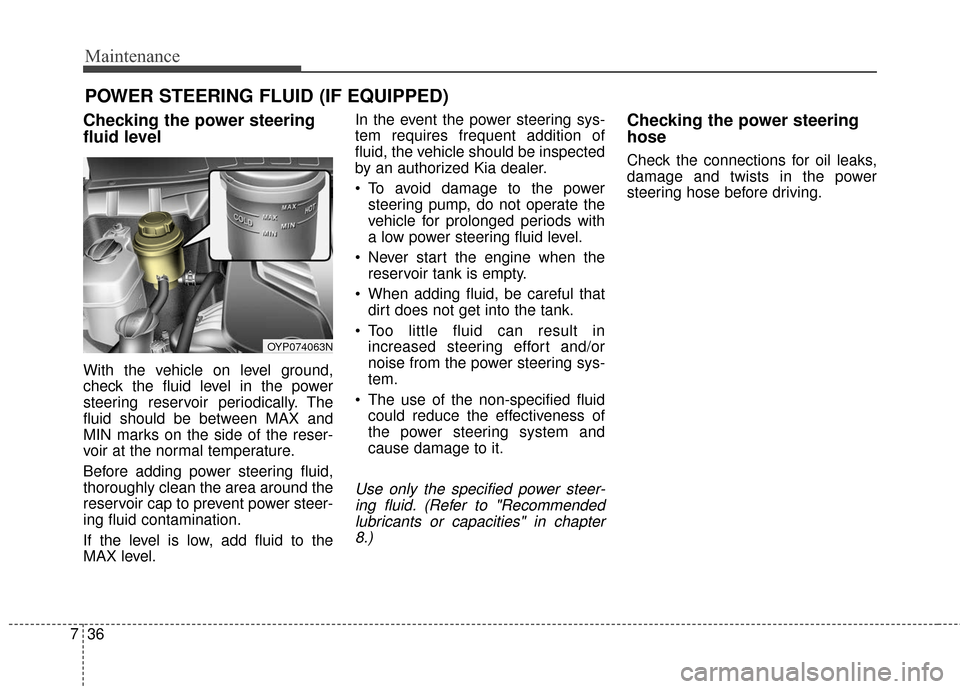
With the vehicle on level ground,
check the fluid level in the power
steering reservoir periodically. The
fluid should be between MAX and
MIN marks on the side of the reser-
voir at the normal temperature.
Before adding power steering fluid,
thoroughly clean the area around the
reservoir cap to prevent power steer-
ing fluid contamination.
If the level is low, add fluid to the
MAX level. In the event the power steering sys-
tem requires frequent addition of
fluid, the vehicle should be inspected
by an authorized Kia dealer.
To avoid damage to the power
steering pump, do not operate the
vehicle for prolonged periods with
a low power steering fluid level.
Never start the engine when the reservoir tank is empty.
When adding fluid, be careful that dirt does not get into the tank.
Too little fluid can result in increased steering effort and/or
noise from the power steering sys-
tem.
The use of the non-specified fluid could reduce the effectiveness of
the power steering system and
cause damage to it.
Use only the specified power steer-ing fluid. (Refer to "Recommendedlubricants or capacities" in chapter8.)
Checking the power steering
hose
Check the connections for oil leaks,
damage and twists in the power
steering hose before driving.
OYP074063N
Page 516 of 566
763
Maintenance
FUSES
A vehicle’s electrical system is pro-
tected from electrical overload dam-
age by fuses.
This vehicle has 2 (or 3) fuse panels,
one located in the driver’s side panel
bolster, the other in the engine com-
partment near the battery.
If any of your vehicle’s lights, acces-
sories, or controls do not work, check
the appropriate circuit fuse. If a fuse
has blown, the element inside the
fuse will melt.
If the electrical system does not
work, first check the driver’s side
fuse panel.
Always replace a blown fuse with
one of the same rating.
If the replacement fuse blows, this
indicates an electrical problem. Avoid
using the system involved and imme-
diately consult an authorized Kia
dealer.
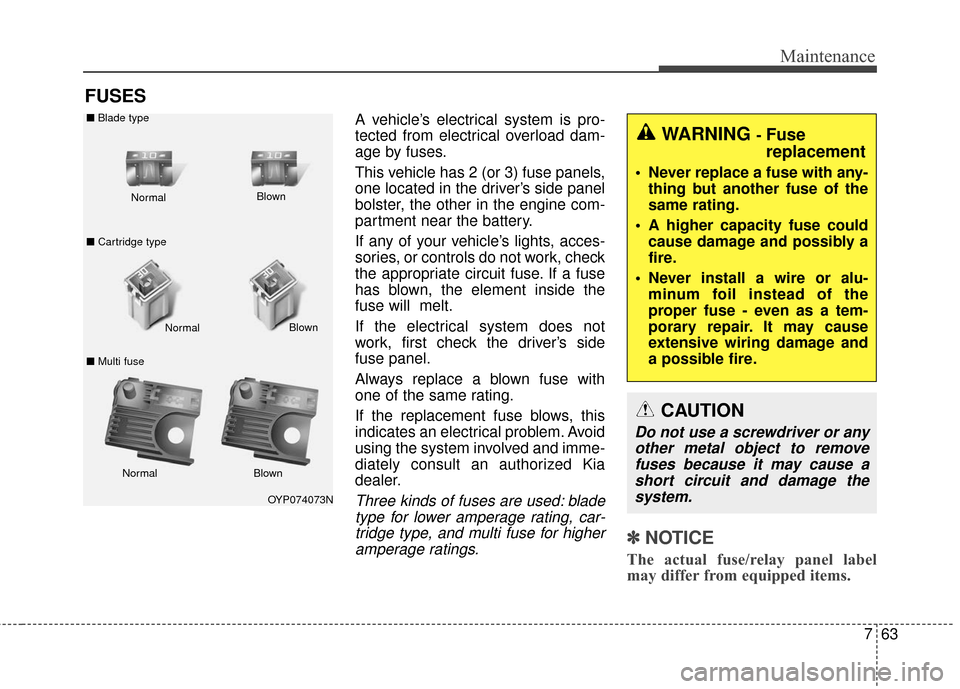
Three kinds of fuses are used: bladetype for lower amperage rating, car-tridge type, and multi fuse for higheramperage ratings.
✽ ✽ NOTICE
The actual fuse/relay panel label
may differ from equipped items.
WARNING - Fuse
replacement
Never replace a fuse with any-
thing but another fuse of the
same rating.
A higher capacity fuse could cause damage and possibly a
fire.
Never install a wire or alu- minum foil instead of the
proper fuse - even as a tem-
porary repair. It may cause
extensive wiring damage and
a possible fire.
CAUTION
Do not use a screwdriver or anyother metal object to removefuses because it may cause ashort circuit and damage thesystem.
OYP074073N
Normal
Normal
■
Blade type
■ Cartridge type
■ Multi fuse Blown
Blown
Normal Blown
Page 517 of 566
Maintenance
64
7
Inner panel fuse replacement
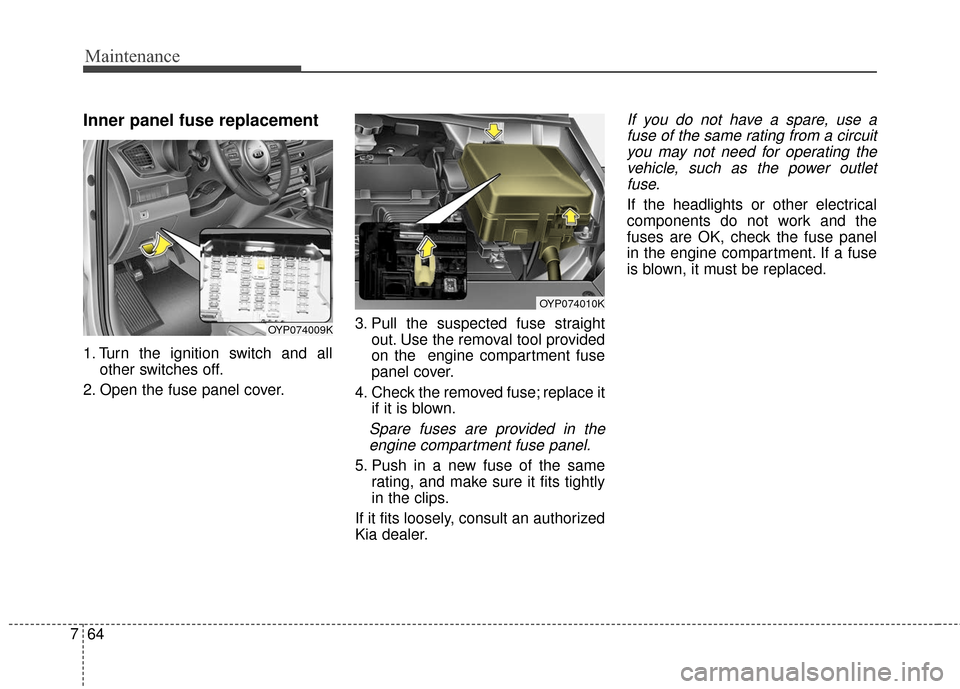
1. Turn the ignition switch and all
other switches off.
2. Open the fuse panel cover. 3. Pull the suspected fuse straight
out. Use the removal tool provided
on the engine compartment fuse
panel cover.
4. Check the removed fuse; replace it if it is blown.
Spare fuses are provided in theengine compartment fuse panel.
5. Push in a new fuse of the same rating, and make sure it fits tightly
in the clips.
If it fits loosely, consult an authorized
Kia dealer.
If you do not have a spare, use a fuse of the same rating from a circuityou may not need for operating thevehicle, such as the power outletfuse.
If the headlights or other electrical
components do not work and the
fuses are OK, check the fuse panel
in the engine compartment. If a fuse
is blown, it must be replaced.
OYP074009K
OYP074010K
Page 518 of 566
765
Maintenance
Fuse switch
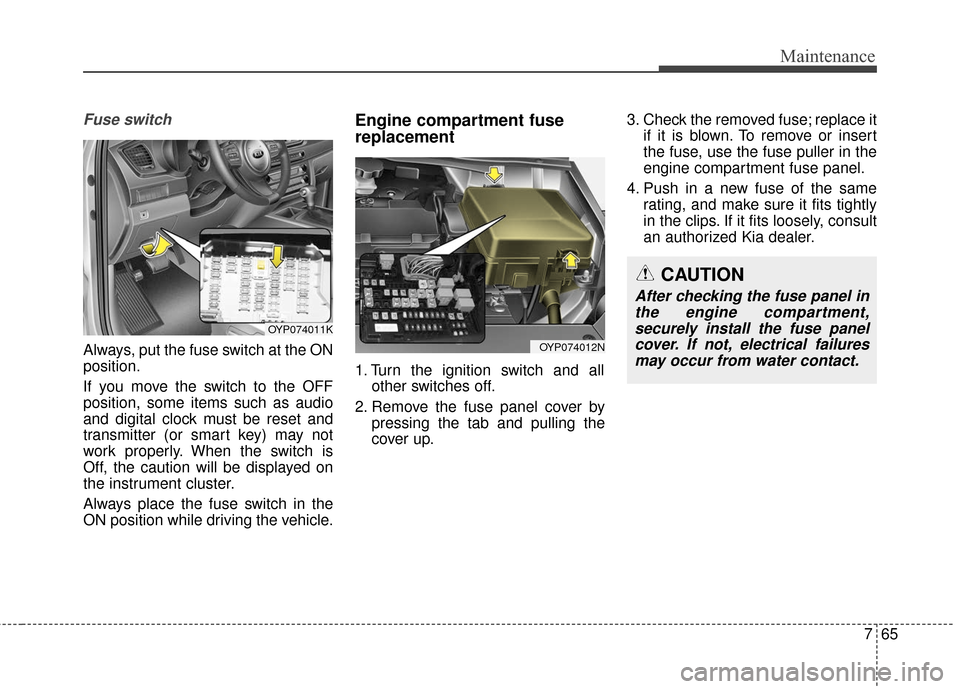
Always, put the fuse switch at the ON
position.
If you move the switch to the OFF
position, some items such as audio
and digital clock must be reset and
transmitter (or smart key) may not
work properly. When the switch is
Off, the caution will be displayed on
the instrument cluster.
Always place the fuse switch in the
ON position while driving the vehicle.
Engine compartment fuse
replacement
1. Turn the ignition switch and allother switches off.
2. Remove the fuse panel cover by pressing the tab and pulling the
cover up. 3. Check the removed fuse; replace it
if it is blown. To remove or insert
the fuse, use the fuse puller in the
engine compartment fuse panel.
4. Push in a new fuse of the same rating, and make sure it fits tightly
in the clips. If it fits loosely, consult
an authorized Kia dealer.
OYP074011K
CAUTION
After checking the fuse panel inthe engine compartment,securely install the fuse panelcover. If not, electrical failuresmay occur from water contact.
OYP074012N
Page 524 of 566
771
Maintenance
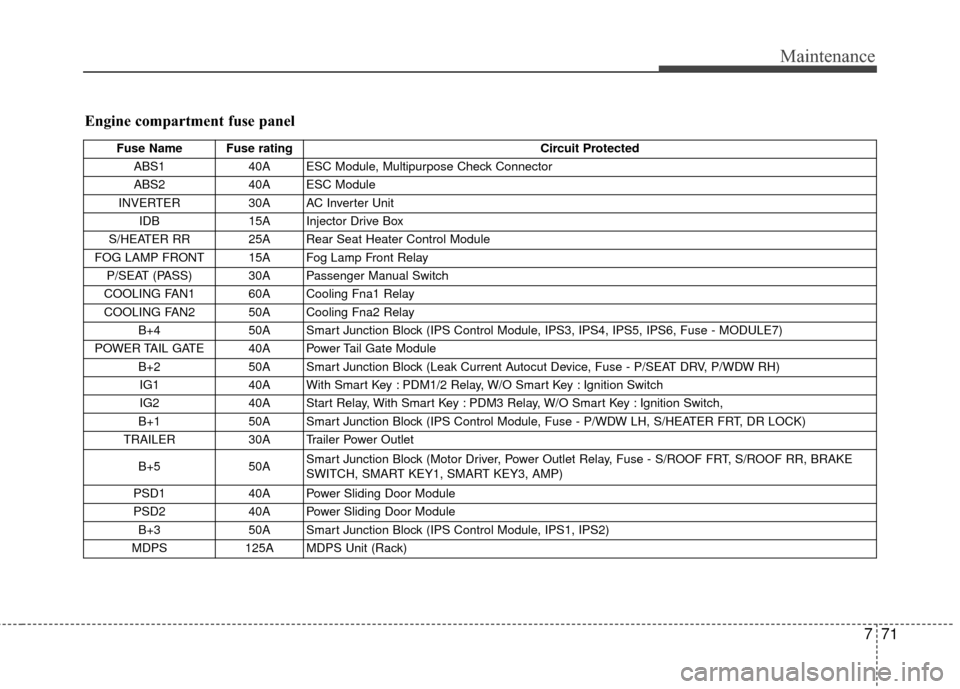
Engine compartment fuse panel
Fuse Name Fuse ratingCircuit Protected
ABS1 40A ESC Module, Multipurpose Check Connector
ABS2 40A ESC Module
INVERTER 30A AC Inverter Unit
IDB 15A Injector Drive Box
S/HEATER RR 25A Rear Seat Heater Control Module
FOG LAMP FRONT 15A Fog Lamp Front Relay P/SEAT (PASS) 30A Passenger Manual Switch
COOLING FAN1 60A Cooling Fna1 Relay
COOLING FAN2 50A Cooling Fna2 Relay B+4 50A Smart Junction Block (IPS Control Module, IPS3, IPS4, IPS5, IPS6, Fuse - MODULE7)
POWER TAIL GATE 40A Power Tail Gate Module B+2 50A Smart Junction Block (Leak Current Autocut Device, Fuse - P/SEAT DRV, P/WDW RH)
IG1 40A With Smart Key : PDM1/2 Relay, W/O Smart Key : Ignition Switch
IG2 40A Start Relay, With Smart Key : PDM3 Relay, W/O Smart Key : Ignition Switch,
B+1 50A Smart Junction Block (IPS Control Module, Fuse - P/WDW LH, S/HEATER FRT, DR LOCK)
TRAILER 30A Trailer Power Outlet
B+5 50ASmart Junction Block (Motor Driver, Power Outlet Relay, Fuse - S/ROOF FRT, S/ROOF RR, BRAKE
SWITCH, SMART KEY1, SMART KEY3, AMP)
PSD1 40A Power Sliding Door Module
PSD2 40A Power Sliding Door Module
B+3 50A Smart Junction Block (IPS Control Module, IPS1, IPS2)
MDPS 125A MDPS Unit (Rack)
Page 545 of 566
Maintenance
92
7
Canister
Fuel vapors generated inside the fuel
tank are absorbed and stored in the
onboard canister. When the engine is
running, the fuel vapors absorbed in
the canister are drawn into the surge
tank through the purge control sole-
noid valve.
Purge Control Solenoid Valve
(PCSV)
The purge control solenoid valve is
controlled by the Engine Control
Module (ECM); when the engine
coolant temperature is low during
idling, the PCSV closes so that evap-
orated fuel is not taken into the
engine. After the engine warms up
during ordinary driving, the PCSV
opens to introduce evaporated fuel to
the engine.
3. Exhaust emission control
system
The Exhaust Emission Control
System is a highly effective system
which controls exhaust emissions
while maintaining good vehicle per-
formance.
Vehicle modifications
This vehicle should not be modified.
Modification of your vehicle could
affect its performance, safety or
durability and may even violate gov-
ernmental safety and emissions reg-
ulations.
In addition, damage or performance
problems resulting from any modifi-
cation may not be covered under
warranty.
If you use unauthorized electronic
devices, it may cause the vehicle to
operate abnormally, wire damage,
battery discharge and fire. For your
safety, do not use unauthorized
electronic devices.
Engine exhaust gas precautions
(carbon monoxide)
Carbon monoxide can be present with other exhaust fumes.
Therefore, if you smell exhaust
fumes of any kind inside your vehi-
cle, have it inspected and repaired
immediately. If you ever suspect
exhaust fumes are coming into
your vehicle, drive it only with all
the windows fully open. Have your
vehicle checked and repaired
immediately.
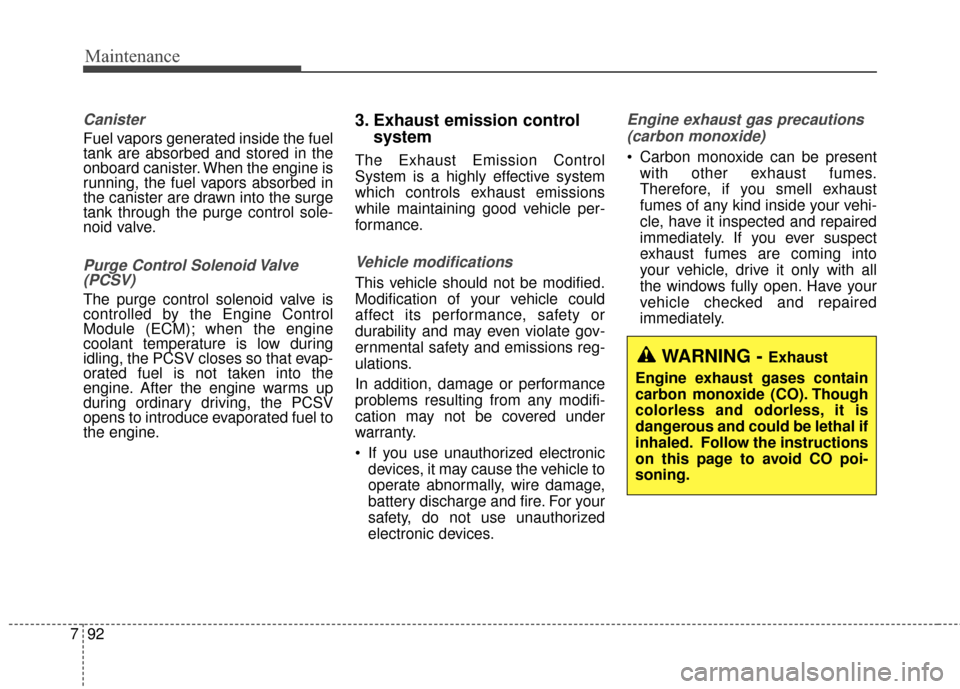
WARNING - Exhaust
Engine exhaust gases contain
carbon monoxide (CO). Though
colorless and odorless, it is
dangerous and could be lethal if
inhaled. Follow the instructions
on this page to avoid CO poi-
soning.
Page 554 of 566
Recommended SAE viscosity
number
Always be sure to clean the area
around any filler plug, drain plug, or
dipstick before checking or draining
any lubricant. This is especially
important in dusty or sandy areas
and when the vehicle is used on
unpaved roads. Cleaning the plug
and dipstick areas will prevent dirt
and grit from entering the engine and
other mechanisms that could be
damaged.Engine oil viscosity (thickness) has
an effect on fuel economy and cold
weather operating (engine start and
engine oil flowability). Lower viscosi-
ty engine oils can provide better fuel
economy and cold weather perform-
ance, however, higher viscosity
engine oils are required for satisfac-
tory lubrication in hot weather.
Using oils of any viscosity other than
those recommended could result in
engine damage.
When choosing an oil, consider the
range of temperature your vehicle
will be operated in before the next oil
change.
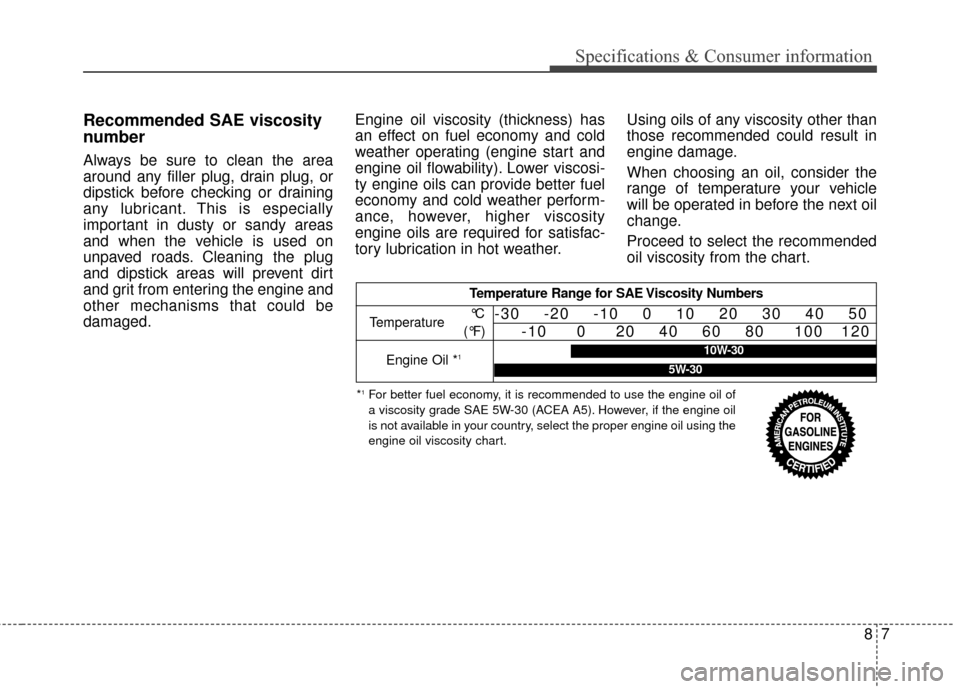
Proceed to select the recommended
oil viscosity from the chart.
Temperature Range for SAE Viscosity Numbers
Temperature
Engine Oil *
1
°C
(°F)-30 -20 -10 0 10 20 30 40 50 -10 0 20 40 60 80 100 120
*1For better fuel economy, it is recommended to use the engine oil of
a viscosity grade SAE 5W-30 (ACEA A5). However, if the engine oil
is not available in your country, select the proper engine oil using the
engine oil viscosity chart.
10W-30
5W-30
87
Specifications & Consumer information
Page 560 of 566
Index
4I
Operating door locks from outside the vehicle . . . . 4-23
Drive mode integrated control system . . . . . . . . . . . . . 5-54 Comfort mode . . . . . . . . . . . . . . . . . . . . . . . . . . . . . 5-55
Drive mode . . . . . . . . . . . . . . . . . . . . . . . . . . . . . . . . 5-54
ECO mode . . . . . . . . . . . . . . . . . . . . . . . . . . . . . . . . 5-54
Economical operation . . . . . . . . . . . . . . . . . . . . . . . . . . 5-71
Emergency starting . . . . . . . . . . . . . . . . . . . . . . . . . . . . . 6-5 Jump starting . . . . . . . . . . . . . . . . . . . . . . . . . . . . . . . 6-5
Push-starting . . . . . . . . . . . . . . . . . . . . . . . . . . . . . . . . 6-6
Emission control system . . . . . . . . . . . . . . . . . . . . . . . . 7-91
Engine . . . . . . . . . . . . . . . . . . . . . . . . . . . . . . . . . . . . \
. . . 8-2
Engine compartment. . . . . . . . . . . . . . . . . . . . . . . . . 2-6,7-3
Engine coolant . . . . . . . . . . . . . . . . . . . . . . . . . . . . . . . 7-32 Changing the coolant . . . . . . . . . . . . . . . . . . . . . . . . 7-34
Checking the coolant level . . . . . . . . . . . . . . . . . . . . 7-32
Engine number . . . . . . . . . . . . . . . . . . . . . . . . . . . . . . . . 8-9
Engine oil . . . . . . . . . . . . . . . . . . . . . . . . . . . . . . . . . . . 7-\
30 Changing the engine oil and filter . . . . . . . . . . . . . . 7-31
Checking the engine oil level . . . . . . . . . . . . . . . . . 7-30
Engine start/stop button . . . . . . . . . . . . . . . . . . . . . . . . . 5-9 Engine start/stop button position . . . . . . . . . . . . . . . . 5-9
Illuminated engine start/stop button. . . . . . . . . . . . . . 5-9
Starting the engine with a smart key . . . . . . . . . . . . 5-11
Explanation of scheduled maintenance items . . . . . . . 7-26
Exterior features Roof rack . . . . . . . . . . . . . . . . . . . . . . . . . . . . . . . . 4-187
Exterior overview . . . . . . . . . . . . . . . . . . . . . . . . . . . . . . 2-2
Folding key . . . . . . . . . . . . . . . . . . . . . . . . . . . . . . . . . . . 4-\
5 Battery replacement . . . . . . . . . . . . . . . . . . . . . . . . . . 4-9
Immobilizer system . . . . . . . . . . . . . . . . . . . . . . . . . 4-10
Key operations . . . . . . . . . . . . . . . . . . . . . . . . . . . . . . 4-5
Record your key number . . . . . . . . . . . . . . . . . . . . . . 4-5
Transmitter precautions . . . . . . . . . . . . . . . . . . . . . . . 4-8
Foward collision warning system (FCWS) . . . . . . . . . 5-68 FCWS Operation . . . . . . . . . . . . . . . . . . . . . . . . . . . 5-68
Limitations of the System . . . . . . . . . . . . . . . . . . . . 5-70
Fuel filler lid . . . . . . . . . . . . . . . . . . . . . . . . . . . . . . . . . 4-52 Closing the fuel filler lid . . . . . . . . . . . . . . . . . . . . . 4-52
Emergency fuel filler lid release . . . . . . . . . . . . . . . 4-55
Opening the fuel filler lid. . . . . . . . . . . . . . . . . . . . . 4-52
Fuel requirements . . . . . . . . . . . . . . . . . . . . . . . . . . . . . . 1-3 Do not use methanol . . . . . . . . . . . . . . . . . . . . . . . . . 1-4
Fuel Additives . . . . . . . . . . . . . . . . . . . . . . . . . . . . . . 1-4
Gasoline containing alcohol and methanol . . . . . . . . 1-3
Operation in foreign countries . . . . . . . . . . . . . . . . . . 1-5
Fuses . . . . . . . . . . . . . . . . . . . . . . . . . . . . . . . . . . . . \
. . . 7-63 Engine compartment fuse replacement . . . . . . . . . . 7-65
Fuse/relay panel description. . . . . . . . . . . . . . . . . . . 7-67
Inner panel fuse replacement . . . . . . . . . . . . . . . . . . 7-64
F
E
Page 562 of 566
Index
6I
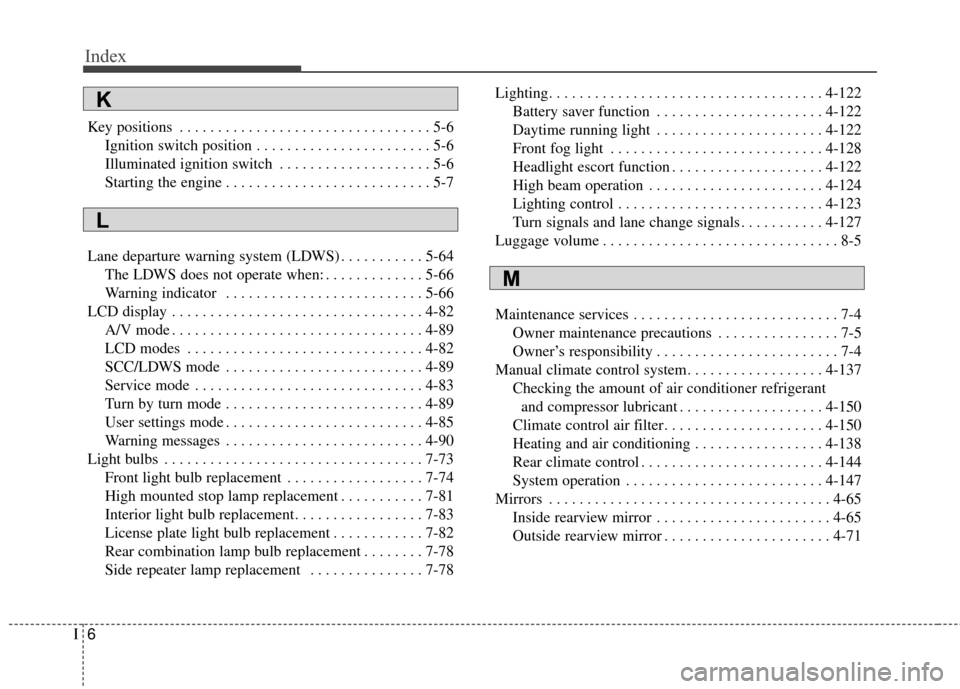
Key positions . . . . . . . . . . . . . . . . . . . . . . . . . . . . . . . . . 5-6Ignition switch position . . . . . . . . . . . . . . . . . . . . . . . 5-6
Illuminated ignition switch . . . . . . . . . . . . . . . . . . . . 5-6
Starting the engine . . . . . . . . . . . . . . . . . . . . . . . . . . . 5-7
Lane departure warning system (LDWS) . . . . . . . . . . . 5-64 The LDWS does not operate when: . . . . . . . . . . . . . 5-66
Warning indicator . . . . . . . . . . . . . . . . . . . . . . . . . . 5-66
LCD display . . . . . . . . . . . . . . . . . . . . . . . . . . . . . . . . . 4-82 A/V mode . . . . . . . . . . . . . . . . . . . . . . . . . . . . . . . . . 4-89
LCD modes . . . . . . . . . . . . . . . . . . . . . . . . . . . . . . . 4-82
SCC/LDWS mode . . . . . . . . . . . . . . . . . . . . . . . . . . 4-89
Service mode . . . . . . . . . . . . . . . . . . . . . . . . . . . . . . 4-83
Turn by turn mode . . . . . . . . . . . . . . . . . . . . . . . . . . 4-89
User settings mode . . . . . . . . . . . . . . . . . . . . . . . . . . 4-85
Warning messages . . . . . . . . . . . . . . . . . . . . . . . . . . 4-90
Light bulbs . . . . . . . . . . . . . . . . . . . . . . . . . . . . . . . . . . 7-73\
Front light bulb replacement . . . . . . . . . . . . . . . . . . 7-74
High mounted stop lamp replacement . . . . . . . . . . . 7-81
Interior light bulb replacement. . . . . . . . . . . . . . . . . 7-83
License plate light bulb replacement . . . . . . . . . . . . 7-82
Rear combination lamp bulb replacement . . . . . . . . 7-78
Side repeater lamp replacement . . . . . . . . . . . . . . . 7-78 Lighting. . . . . . . . . . . . . . . . . . . . . . . . . . . . . . . . . . . . \
4-122
Battery saver function . . . . . . . . . . . . . . . . . . . . . . 4-122
Daytime running light . . . . . . . . . . . . . . . . . . . . . . 4-122
Front fog light . . . . . . . . . . . . . . . . . . . . . . . . . . . . 4-128
Headlight escort function . . . . . . . . . . . . . . . . . . . . 4-122
High beam operation . . . . . . . . . . . . . . . . . . . . . . . 4-124
Lighting control . . . . . . . . . . . . . . . . . . . . . . . . . . . 4-123
Turn signals and lane change signals . . . . . . . . . . . 4-127
Luggage volume . . . . . . . . . . . . . . . . . . . . . . . . . . . . . . . 8-5
Maintenance services . . . . . . . . . . . . . . . . . . . . . . . . . . . 7-4 Owner maintenance precautions . . . . . . . . . . . . . . . . 7-5
Owner’s responsibility . . . . . . . . . . . . . . . . . . . . . . . . 7-4
Manual climate control system. . . . . . . . . . . . . . . . . . 4-137 Checking the amount of air conditioner refrigerantand compressor lubricant . . . . . . . . . . . . . . . . . . . 4-150
Climate control air filter. . . . . . . . . . . . . . . . . . . . . 4-150
Heating and air conditioning . . . . . . . . . . . . . . . . . 4-138
Rear climate control . . . . . . . . . . . . . . . . . . . . . . . . 4-144
System operation . . . . . . . . . . . . . . . . . . . . . . . . . . 4-147
Mirrors . . . . . . . . . . . . . . . . . . . . . . . . . . . . . . . . . . . . \
. 4-65 Inside rearview mirror . . . . . . . . . . . . . . . . . . . . . . . 4-65
Outside rearview mirror . . . . . . . . . . . . . . . . . . . . . . 4-71
K
L
M