power steering KIA Soul 2012 1.G Owner's Manual
[x] Cancel search | Manufacturer: KIA, Model Year: 2012, Model line: Soul, Model: KIA Soul 2012 1.GPages: 393, PDF Size: 8.76 MB
Page 5 of 393

Index
2I
Active eco system ··················\
··················\
··················\
····5-41
Advanced lighting speaker··················\
··················\
·······4-111
Air bag warning label ··················\
··················\
················3-56
Air bag warning light··················\
··················\
·················3-35\
Air bags··················\
··················\
··················\
··················\
··3-32Air bag warning label··················\
··················\
············3-56
Air bag warning light ··················\
··················\
············3-35
Curtain air bag··················\
··················\
··················\
·····3-48
Driver's and passenger's front air bag ··················\
·····3-44
Occupant detection system··················\
··················\
····3-38
Side impact air bag··················\
··················\
················3-47
SRS components and functions ··················\
··············3-36
Air cleaner ··················\
··················\
··················\
···············7-34
Antenna (Roof) ··················\
··················\
··················\
······4-109
Anti-lock brake system (ABS) ··················\
··················\
··5-28
Appearance care··················\
··················\
··················\
·······7-66 Exterior care ··················\
··················\
··················\
········7-66
Interior care ··················\
··················\
··················\
·········7-71
Armrest(front) ··················\
··················\
··················\
············3-9
Ashtray ··················\
··················\
··················\
··················\
·4-100
Audio system ··················\
··················\
··················\
·········4-109 Advanced lighting speaker ··················\
··················\
··4-111
Aux, USB and iPod ··················\
··················\
·············4-111
Roof antenna ··················\
··················\
··················\
·····4-109
Steering wheel audio control··················\
·················4-110 Automatic climate control system ··················\
···············4-85
Air conditioning ··················\
··················\
··················\
··4-92
Automatic heating and air conditioning··················\
··4-87
Manual heating and air conditioning ··················\
······4-88
Automatic transaxle ··················\
··················\
··················\
·5-20 Sports mode··················\
··················\
··················\
·········5-22
Automatic transaxle shift position indicator ·················4-49\
Aux, USB and iPod··················\
··················\
··················\
4-111
Base curb weight ··················\
··················\
··················\
·····5-57
Battery··················\
··················\
··················\
··················\
····7-38
Battery saver function··················\
··················\
················4-65
Before driving ··················\
··················\
··················\
············5-3
Bottle holders, see cup holders ··················\
··················\
4-101
Brake system··················\
··················\
··················\
············5-25 Anti-lock brake system (ABS) ··················\
················5-28
Electronic stability control(ESC) ··················\
············5-30
Hill-start assist control ··················\
··················\
··········5-33
Parking brake ··················\
··················\
··················\
······5-26
Power brakes ··················\
··················\
··················\
·······5-25
Vehicle stability management ··················\
·················5-34\
Brakes/clutch fluid ··················\
··················\
··················\
···7-31
Bulb wattage ··················\
··················\
··················\
··············8-2
Button start/stop, see engine start/stop button·················5-8
A
B
Page 7 of 393

Index
4I
Drinks holders, see cup holders··················\
·················4-10\
1
Driver's 3-point seat belt··················\
··················\
············3-15
Driver's and passenger's front air bag··················\
··········3-44
Driving at night··················\
··················\
··················\
········5-46
Driving in flooded areas ··················\
··················\
············5-47
Driving in the rain ··················\
··················\
··················\
···5-47
Economical operation ··················\
··················\
················5-42
Electric chromic mirror ··················\
··················\
·············4-36
Electric power steering ··················\
··················\
··············4-34
Electronic stability control(ESC)··················\
·················5-30\
Emergency starting ··················\
··················\
··················\
····6-4Jump starting ··················\
··················\
··················\
·········6-5
Push starting ··················\
··················\
··················\
··········6-6
Emergency while driving··················\
··················\
·············6-3
Emission control system ··················\
··················\
············7-72 Crankcase emission control system ··················\
········7-72
Evaporative emission control System ··················\
·····7-72
Exhaust emission control system ··················\
············7-73
Engine ··················\
··················\
··················\
··················\
······8-2
Engine compartment ··················\
··················\
··················\
··2-4
Engine coolant ··················\
··················\
··················\
·········7-28
Engine number ··················\
··················\
··················\
···········8-8
Engine oil ··················\
··················\
··················\
·················7-26\
Engine overheats··················\
··················\
··················\
········6-7
Engine start/stop button ··················\
··················\
···············5-8 Engine temperature gauge ··················\
··················\
·········4-42
Engine will not start··················\
··················\
··················\
···6-4
Evaporative emission control System ··················\
·········7-72
Exhaust emission control system··················\
·················7-73\
Explanation of scheduled maintenance items ···············7-22
Exterior care··················\
··················\
··················\
·············7-66
Exterior features··················\
··················\
··················\
·····4-107
Roof rack ··················\
··················\
··················\
···········4-107
Flat tire (with spare tire) ··················\
··················\
············6-13 Changing tires ··················\
··················\
··················\
·····6-14
Compact spare tire ··················\
··················\
················6-19
Removing and storing the spare tire ··················\
·······6-14
Floor mat anchor(s) ··················\
··················\
·················4-10\
4
Fluid Brakes/clutch fluid ··················\
··················\
················7-31
Washer fluid ··················\
··················\
··················\
········7-32
Folding the rear seat ··················\
··················\
··················\
3-10
Front passenger and rear seat belt ··················\
···············3-17
Front seat adjustment ··················\
··················\
··················\
·3-4
Fuel filler lid ··················\
··················\
··················\
············4-27
Fuel gauge··················\
··················\
··················\
················4-43
Fuel requirements ··················\
··················\
··················\
······1-3
E
F
Page 11 of 393

Index
8I
Seating capacity ··················\
··················\
··················\
·······5-52
Seats ··················\
··················\
··················\
··················\
·········3-2Armrest(front) ··················\
··················\
··················\
·······3-9
Folding the rear seat ··················\
··················\
··············3-10
Front seat adjustment ··················\
··················\
··············3-4
Headrest(front) ··················\
··················\
··················\
······3-6
Headrest(rear) ··················\
··················\
··················\
······3-12
Rear seat ··················\
··················\
··················\
··············3-10
Seat warmer··················\
··················\
··················\
···········3-8
Seatback pocket··················\
··················\
··················\
·····3-9
Shopping bag holder ··················\
··················\
················4-103
Side impact air bag ··················\
··················\
··················\
··3-47
Smart key ··················\
··················\
··················\
··················\
·4-9
Smooth cornering··················\
··················\
··················\
·····5-46
Snow tires ··················\
··················\
··················\
················5-49
Spare tire Compact spare tire ··················\
··················\
················6-19
Compact spare tire replacement ··················\
··············7-45
Removing and storing the spare tire ··················\
·······6-14
Special driving conditions ··················\
··················\
·········5-44 Driving at night ··················\
··················\
··················\
···5-46
Driving in flooded areas··················\
··················\
········5-47
Driving in the rain ··················\
··················\
·················5-47\
Hazardous driving conditions ··················\
·················5-44\
Highway driving··················\
··················\
··················\
··5-48
Rocking the vehicle··················\
··················\
···············5-45
Smooth cornering ··················\
··················\
··················\
5-46
Speedometer··················\
··················\
··················\
·············4-41
Sports mode ··················\
··················\
··················\
·············5-22 SRS components and functions ··················\
··················\
·3-36
Starting difficulties, see engine will not start ··················\
6-4
Steering wheel···············\
··················\
··················\
·············4-34
Electric power steering··················\
··················\
··········4-34
Horn··················\
··················\
··················\
··················\
···4-35
Tilt steering ··················\
··················\
··················\
·········4-35
Steering wheel audio control ··················\
··················\
···4-110
Steps For Determining Correct Load Limit ··················\
5-53
Storage compartment ··················\
··················\
·················4-98\
Center console storage ··················\
··················\
··········4-98
Glove box ··················\
··················\
··················\
············4-98
Luggage box ··················\
··················\
··················\
········4-99
Multi box ··················\
··················\
··················\
·············4-99
Sunroof··················\
··················\
··················\
··················\
···4-30
Sunvisor ··················\
··················\
··················\
·················4-10\
1
Tachometer··················\
··················\
··················\
···············4-41
Tailgate··················\
··················\
··················\
··················\
···4-20
Tether anchor system ··················\
··················\
·················3-28\
Tilt steering ··················\
··················\
··················\
··············4-35
Tire and loading information label ··················\
··············5-52
Tire mobility kit ··················\
··················\
··················\
·······6-21
Tire pressure monitoring system (TPMS) ··················\
·····6-8
Tire specification and pressure label ··················\
·············8-8
T
Page 19 of 393
Introduction
61
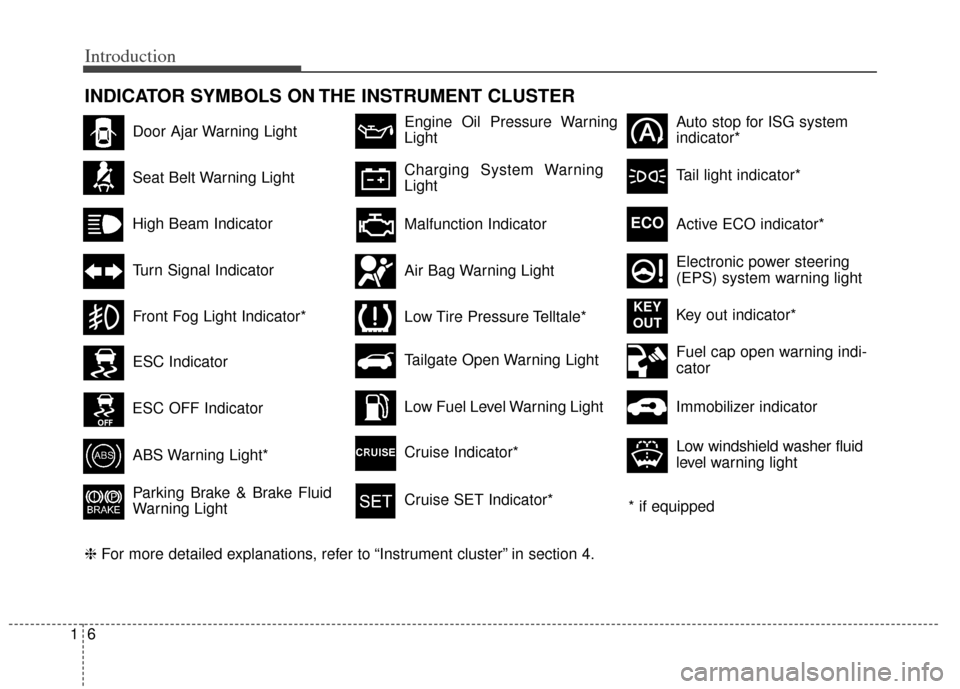
INDICATOR SYMBOLS ON THE INSTRUMENT CLUSTER
Seat Belt Warning Light
High Beam Indicator
Turn Signal Indicator
ABS Warning Light*
Parking Brake & Brake Fluid
Warning Light
Malfunction Indicator
Low Fuel Level Warning Light Tailgate Open Warning Light
❈ For more detailed explanations, refer to “Instrument cluster” in section 4.
Charging System Warning
Light
Door Ajar Warning Light
Front Fog Light Indicator*
Engine Oil Pressure Warning
Light
Air Bag Warning Light
Low Tire Pressure Telltale*
Cruise Indicator*
Cruise SET Indicator*
ESC Indicator
ESC OFF Indicator
Tail light indicator*
Electronic power steering
(EPS) system warning light
Auto stop for ISG system
indicator*
Active ECO indicator*
ECO
Key out indicator*
KEY
OUT
* if equipped
Fuel cap open warning indi-
cator
Low windshield washer fluid
level warning light Immobilizer indicator
Page 21 of 393

Your vehicle at a glance
22
INTERIOR OVERVIEW
1. Door Lock/Unlock Button ..................4-17
2. Outside Rearview Mirror Control Switch* ..............................................4-38
3. Central Door Lock Switch* ................4-18
4. Power Window Lock Button* .............4-24
5. Power Window Switches* .................4-22
6. Fuse Box ...........................................7-54
7. Instrument Panel Illumination Control Knob* ................................................4-41
8. Idle Stop and Go (ISG) OFF button..5-13
9. ESC OFF Button ...............................5-30
10. Hood Release Lever .......................4-25
11. Steering Wheel ...............................4-34
12. Steering Wheel Tilt Lever* ..............4-35
13. Seat...................................................3-2
14. Fuel Filler Lid Release Lever*.........4-27
15. Advanced Lighting Speaker* ........4-111
* if equipped
OAM012001N❈ The actual interior in the vehicle may differ from the illustration.
Page 113 of 393
Features of your vehicle
34
4
Electric power steering (EPS)
The power steering uses a motor to
assist you in steering the vehicle. If
the engine is off or if the power steer-
ing system becomes inoperative, the
vehicle may still be steered, but it will
require increased steering effort.
The motor driven power steering is
controlled by a power steering con-
trol unit which senses the steering
wheel torque and vehicle speed to
command the motor.
The steering becomes heavier as
the vehicle’s speed increases and
becomes lighter as the vehicle’s
speed decreases for optimum steer-
ing control.
Should you notice any change in the
effort required to steer during normal
vehicle operation, have the power
steering checked by an authorized
Kia dealer.
✽ ✽
NOTICE
The following symptoms may occur
during normal vehicle operation:
• The steering effort is high immedi-
ately after turning the ignition
switch on. This happens as the sys-
tem performs the EPS system
diagnostics. When the diagnostics
is completed, the steering wheel
will return to its normal condition.
• A click noise may be heard from the EPS relay after the ignition
switch is turned to the ON or
LOCK position.
• Motor noise may be heard when the vehicle is at a stop or at a low
driving speed.
• The steering effort increases if the steering wheel is rotated continu-
ously when the vehicle is not in
motion. However, after a few min-
utes, it will return to its normal
conditions.
• When you operate the steering wheel in low temperature, abnor-
mal noise could occur. If tempera-
ture rises, the noise will disappear.
This is a normal condition. (Continued)(Continued)
• When the vehicle is stationary, if
you turn the steering wheel all the
way to the left or right continuous-
ly, the steering wheel becomes
heavier from the end. But this is
for your safety, not system mal-
function. As time passes, the steer-
ing wheel return to its normal con-
dition.
If the Electric Power Steering System
does not operate normally, the warn-
ing light will illuminate on the instru-
ment cluster. The steering wheel may
become difficult to control or operate
abnormally. Take your vehicle to an
authorized Kia dealer and have the
vehicle checked as soon as possible.
STEERING WHEEL
Page 139 of 393
Features of your vehicle
60
4
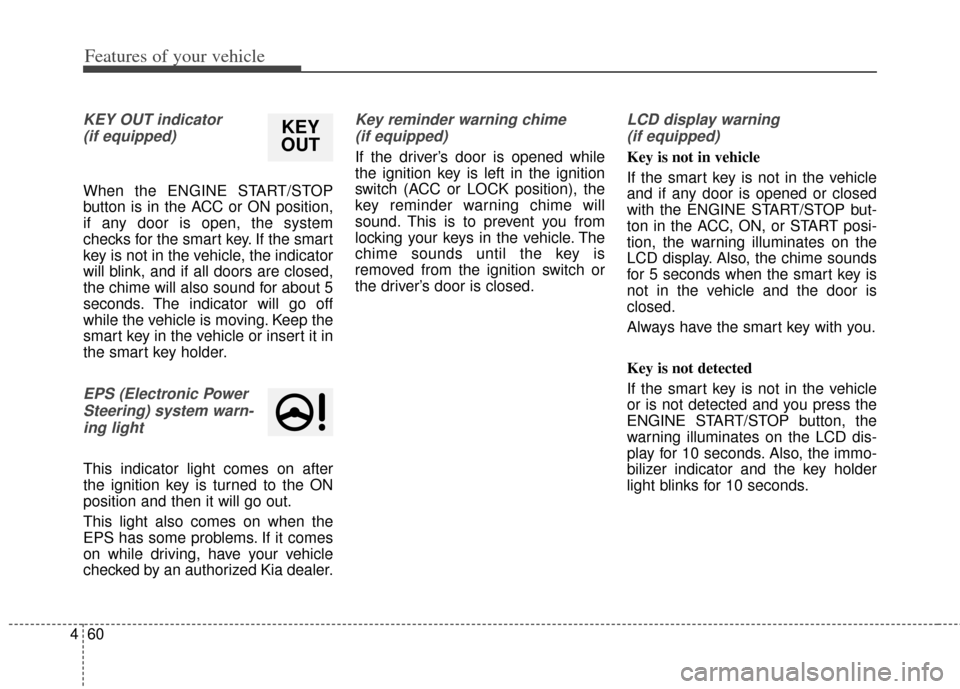
KEY OUT indicator
(if equipped)
When the ENGINE START/STOP
button is in the ACC or ON position,
if any door is open, the system
checks for the smart key. If the smart
key is not in the vehicle, the indicator
will blink, and if all doors are closed,
the chime will also sound for about 5
seconds. The indicator will go off
while the vehicle is moving. Keep the
smart key in the vehicle or insert it in
the smart key holder.
EPS (Electronic PowerSteering) system warn-ing light
This indicator light comes on after
the ignition key is turned to the ON
position and then it will go out.
This light also comes on when the
EPS has some problems. If it comes
on while driving, have your vehicle
checked by an authorized Kia dealer.
Key reminder warning chime (if equipped)
If the driver’s door is opened while
the ignition key is left in the ignition
switch (ACC or LOCK position), the
key reminder warning chime will
sound. This is to prevent you from
locking your keys in the vehicle. The
chime sounds until the key is
removed from the ignition switch or
the driver’s door is closed.
LCD display warning (if equipped)
Key is not in vehicle
If the smart key is not in the vehicle
and if any door is opened or closed
with the ENGINE START/STOP but-
ton in the ACC, ON, or START posi-
tion, the warning illuminates on the
LCD display. Also, the chime sounds
for 5 seconds when the smart key is
not in the vehicle and the door is
closed.
Always have the smart key with you.
Key is not detected
If the smart key is not in the vehicle
or is not detected and you press the
ENGINE START/STOP button, the
warning illuminates on the LCD dis-
play for 10 seconds. Also, the immo-
bilizer indicator and the key holder
light blinks for 10 seconds.
KEY
OUT
Page 214 of 393
4135
Features of your vehicle
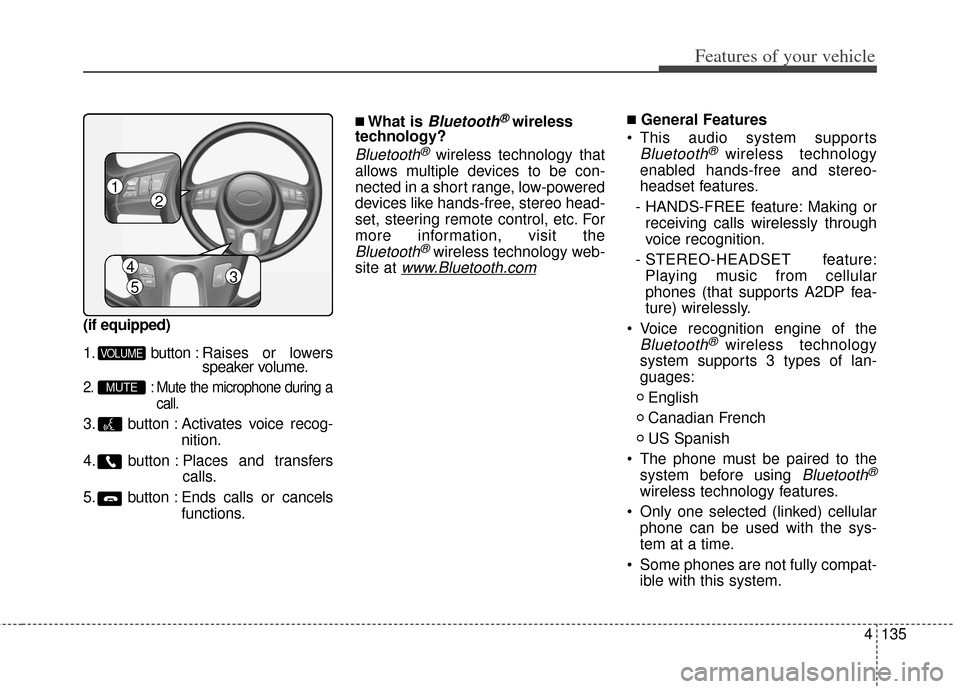
(if equipped)
1. button : Raises or lowersspeaker volume.
2. : Mute the microphone during a
call.
3. button : Activates voice recog- nition.
4. button : Places and transfers calls.
5. button : Ends calls or cancels functions.
■What is Bluetooth®wireless
technology?
Bluetooth®wireless technology that
allows multiple devices to be con-
nected in a short range, low-powered
devices like hands-free, stereo head-
set, steering remote control, etc. For
more information, visit the
Bluetooth®wireless technology web-
site at
www.Bluetooth.com
■General Features
This audio system supports
Bluetooth®wireless technology
enabled hands-free and stereo-
headset features.
- HANDS-FREE feature: Making or receiving calls wirelessly through
voice recognition.
- STEREO-HEADSET feature: Playing music from cellular
phones (that supports A2DP fea-
ture) wirelessly.
Voice recognition engine of the
Bluetooth®wireless technology
system supports 3 types of lan-
guages:
English
Canadian French
US Spanish
The phone must be paired to the system before using
Bluetooth®
wireless technology features.
Only one selected (linked) cellular phone can be used with the sys-
tem at a time.
Some phones are not fully compat- ible with this system.
MUTE
VOLUME
12
435
Page 247 of 393
525
Driving your vehicle
BRAKE SYSTEM
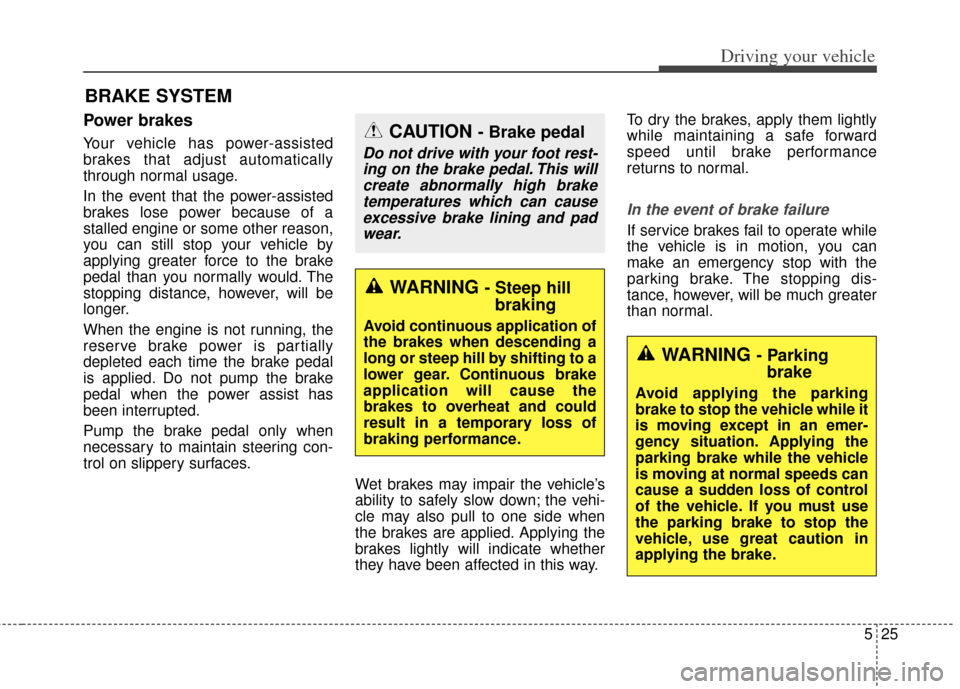
Power brakes
Your vehicle has power-assisted
brakes that adjust automatically
through normal usage.
In the event that the power-assisted
brakes lose power because of a
stalled engine or some other reason,
you can still stop your vehicle by
applying greater force to the brake
pedal than you normally would. The
stopping distance, however, will be
longer.
When the engine is not running, the
reserve brake power is partially
depleted each time the brake pedal
is applied. Do not pump the brake
pedal when the power assist has
been interrupted.
Pump the brake pedal only when
necessary to maintain steering con-
trol on slippery surfaces.Wet brakes may impair the vehicle’s
ability to safely slow down; the vehi-
cle may also pull to one side when
the brakes are applied. Applying the
brakes lightly will indicate whether
they have been affected in this way.To dry the brakes, apply them lightly
while maintaining a safe forward
speed until brake performance
returns to normal.
In the event of brake failure
If service brakes fail to operate while
the vehicle is in motion, you can
make an emergency stop with the
parking brake. The stopping dis-
tance, however, will be much greater
than normal.
CAUTION - Brake pedal
Do not drive with your foot rest-
ing on the brake pedal. This willcreate abnormally high braketemperatures which can causeexcessive brake lining and padwear.
WARNING - Steep hill braking
Avoid continuous application of
the brakes when descending a
long or steep hill by shifting to a
lower gear. Continuous brake
application will cause the
brakes to overheat and could
result in a temporary loss of
braking performance.
WARNING - Parkingbrake
Avoid applying the parking
brake to stop the vehicle while it
is moving except in an emer-
gency situation. Applying the
parking brake while the vehicle
is moving at normal speeds can
cause a sudden loss of control
of the vehicle. If you must use
the parking brake to stop the
vehicle, use great caution in
applying the brake.
Page 256 of 393
Driving your vehicle
34
5
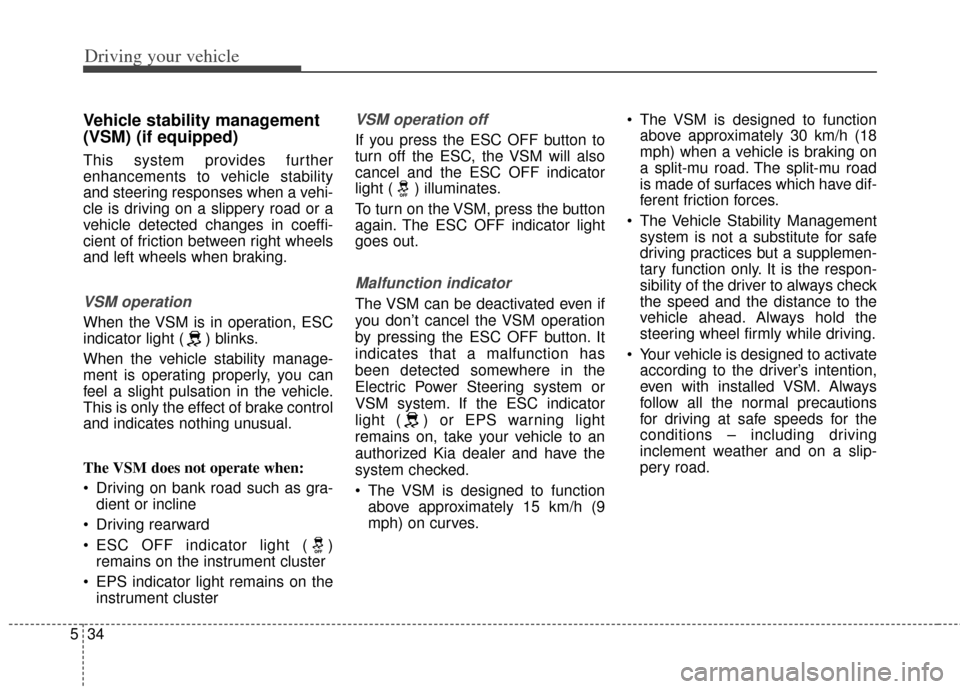
Vehicle stability management
(VSM) (if equipped)
This system provides further
enhancements to vehicle stability
and steering responses when a vehi-
cle is driving on a slippery road or a
vehicle detected changes in coeffi-
cient of friction between right wheels
and left wheels when braking.
VSM operation
When the VSM is in operation, ESC
indicator light ( ) blinks.
When the vehicle stability manage-
ment is operating properly, you can
feel a slight pulsation in the vehicle.
This is only the effect of brake control
and indicates nothing unusual.
The VSM does not operate when:
Driving on bank road such as gra-
dient or incline
Driving rearward
ESC OFF indicator light ( ) remains on the instrument cluster
EPS indicator light remains on the instrument cluster
VSM operation off
If you press the ESC OFF button to
turn off the ESC, the VSM will also
cancel and the ESC OFF indicator
light ( ) illuminates.
To turn on the VSM, press the button
again. The ESC OFF indicator light
goes out.
Malfunction indicator
The VSM can be deactivated even if
you don’t cancel the VSM operation
by pressing the ESC OFF button. It
indicates that a malfunction has
been detected somewhere in the
Electric Power Steering system or
VSM system. If the ESC indicator
light ( ) or EPS warning light
remains on, take your vehicle to an
authorized Kia dealer and have the
system checked.
The VSM is designed to functionabove approximately 15 km/h (9
mph) on curves. The VSM is designed to function
above approximately 30 km/h (18
mph) when a vehicle is braking on
a split-mu road. The split-mu road
is made of surfaces which have dif-
ferent friction forces.
The Vehicle Stability Management system is not a substitute for safe
driving practices but a supplemen-
tary function only. It is the respon-
sibility of the driver to always check
the speed and the distance to the
vehicle ahead. Always hold the
steering wheel firmly while driving.
Your vehicle is designed to activate according to the driver’s intention,
even with installed VSM. Always
follow all the normal precautions
for driving at safe speeds for the
conditions – including driving
inclement weather and on a slip-
pery road.