light KIA VENGA 2013 Owners Manual
[x] Cancel search | Manufacturer: KIA, Model Year: 2013, Model line: VENGA, Model: KIA VENGA 2013Pages: 751, PDF Size: 27.49 MB
Page 389 of 751
Index
6
I
Power outlet . . . . . . . . . . . . . . . . . . . . . . . . . . . . . . . . 4-96
Sunvisor . . . . . . . . . . . . . . . . . . . . . . . . . . . . . . . . . . . 4-95
Interior light . . . . . . . . . . . . . . . . . . . . . . . . . . . . . . . . . 4-70
Interior overview . . . . . . . . . . . . . . . . . . . . . . . . . . . . . . 2-2
ISG (Idle stop and go) system . . . . . . . . . . . . . . . . . . . 5-14
ISOFIX system . . . . . . . . . . . . . . . . . . . . . . . . . . . . . . . 3-32
Jack and tools . . . . . . . . . . . . . . . . . . . . . . . . . . . . . . . . . 6-7
Jump starting. . . . . . . . . . . . . . . . . . . . . . . . . . . . . . . . . . 6-4
Key positions . . . . . . . . . . . . . . . . . . . . . . . . . . . . . . . . . 5-4
Keys . . . . . . . . . . . . . . . . . . . . . . . . . . . . . . . . . . . . . . . . 4-2 Label Air bag warning label . . . . . . . . . . . . . . . . . . . . . . . . . 3-59
Tire sidewall labeling . . . . . . . . . . . . . . . . . . . . . . . . . 7-48
Tire specification and pressure label . . . . . . . . . . . . . . 8-8
Vehicle certification label . . . . . . . . . . . . . . . . . . . . . . . 8-7
Lap/shoulder belt . . . . . . . . . . . . . . . . . . . . . . . . . . . . . 3-16
Light bulbs . . . . . . . . . . . . . . . . . . . . . . . . . . . . . . . . . . 7-63 Lighting. . . . . . . . . . . . . . . . . . . . . . . . . . . . . . . . . . . . . 4-61
Battery saver function . . . . . . . . . . . . . . . . . . . . . . . . 4-61
Lubricants and capacities . . . . . . . . . . . . . . . . . . . . . . . . 8-4
Main fuse, see memory fuse . . . . . . . . . . . . . . . . . . . . . 7-54 Maintenance Explanation of scheduled maintenance items . . . . . . 7-20
Maintenance services . . . . . . . . . . . . . . . . . . . . . . . . . . 7-3
Maintenance under severe usage conditions . . . . . 7-12,18
Normal maintenance schedule. . . . . . . . . . . . . . . . . 7-8,14
Owner maintenance . . . . . . . . . . . . . . . . . . . . . . . . . . . 7-5
Scheduled maintenance service . . . . . . . . . . . . . . . . . . 7-7
Tire maintenance . . . . . . . . . . . . . . . . . . . . . . . . . . . . 7-47
Maintenance schedule Maintenance under severe usage conditions . . . . . 7-12,18
Normal maintenance schedule. . . . . . . . . . . . . . . . . 7-8,14
Maintenance services . . . . . . . . . . . . . . . . . . . . . . . . . . . 7-7
Manual climate control system. . . . . . . . . . . . . . . . . . . 4-72 Air conditioning . . . . . . . . . . . . . . . . . . . . . . . . . . . . . 4-77
Climate control air filter . . . . . . . . . . . . . . . . . . . . . . . 4-79
Heating and air conditioning . . . . . . . . . . . . . . . . . . . 4-73
Manual transaxle. . . . . . . . . . . . . . . . . . . . . . . . . . . . . . 5-16
Manual window . . . . . . . . . . . . . . . . . . . . . . . . . . . . . . 4-23
Memory fuse . . . . . . . . . . . . . . . . . . . . . . . . . . . . . . . . . 7-54
J
K
L
M
YN eng INDEX.QXP 2011.09.22. 16:35 Page 6
Page 390 of 751
I7
Index
Mirrors . . . . . . . . . . . . . . . . . . . . . . . . . . . . . . . . . . . . . 4-35
Day/night rearview mirror . . . . . . . . . . . . . . . . . . . . . 4-35
Folding the outside rearview mirror. . . . . . . . . . . . . . 4-38
Inside rearview mirror . . . . . . . . . . . . . . . . . . . . . . . . 4-35
Outside rearview mirror . . . . . . . . . . . . . . . . . . . . . . . 4-36
Odometer . . . . . . . . . . . . . . . . . . . . . . . . . . . . . . . . . . . 4-43
Oil (Engine) . . . . . . . . . . . . . . . . . . . . . . . . . . . . . . . . . 7-24
Outside rearview mirror . . . . . . . . . . . . . . . . . . . . . . . . 4-36
Overheats . . . . . . . . . . . . . . . . . . . . . . . . . . . . . . . . . . . . 6-6
Owner maintenance . . . . . . . . . . . . . . . . . . . . . . . . . . . . 7-5
Parking brake . . . . . . . . . . . . . . . . . . . . . . . . . . . . . . . . 5-25
Power brakes. . . . . . . . . . . . . . . . . . . . . . . . . . . . . . . . . 5-24
Power outlet . . . . . . . . . . . . . . . . . . . . . . . . . . . . . . . . . 4-96
Power window lock button . . . . . . . . . . . . . . . . . . . . . . 4-22
Pre-tensioner seat belt. . . . . . . . . . . . . . . . . . . . . . . . . . 3-21
Push starting . . . . . . . . . . . . . . . . . . . . . . . . . . . . . . . . . . 6-5
Rear combination light bulb replacement . . . . . . . . . . 7-68
Rear parking assist system . . . . . . . . . . . . . . . . . . . . . . 4-57
Rear seat . . . . . . . . . . . . . . . . . . . . . . . . . . . . . . . . . . . . . 3-9 Rear view camera . . . . . . . . . . . . . . . . . . . . . . . . . . . . . 4-60
Recommended cold tire inflation pressures . . . . . . . . . 7-42
Recommended lubricants and capacities . . . . . . . . . . . . 8-4
Recommended SAE viscosity number . . . . . . . . . . . . . 8-6
Remote keyless entry . . . . . . . . . . . . . . . . . . . . . . . . . . . 4-5Replacement light bulb Fog light (front) . . . . . . . . . . . . . . . . . . . . . . . . . . . . . 7-66
Fog light (rear) . . . . . . . . . . . . . . . . . . . . . . . . . . . . . . 7-69
Headlight bulb replacement . . . . . . . . . . . . . . . . . . . . 7-63
Interior light bulb replacement . . . . . . . . . . . . . . . . . . 7-71
Rear combination light bulb replacement . . . . . . . . . 7-68
Road warning . . . . . . . . . . . . . . . . . . . . . . . . . . . . . . . . . 6-2
Rocking the vehicle . . . . . . . . . . . . . . . . . . . . . . . . . . . 5-44
Scheduled maintenance service . . . . . . . . . . . . . . . . . . . 7-7
Maintenance under severe usage conditions . . . . . 7-12,18
Normal maintenance schedule. . . . . . . . . . . . . . . . . 7-8,14
Seat belt warning (front). . . . . . . . . . . . . . . . . . . . . . . . 3-16
Seat belt warning (rear) . . . . . . . . . . . . . . . . . . . . . . . . 3-18
Seat belts . . . . . . . . . . . . . . . . . . . . . . . . . . . . . . . . . . . . 3-14 Height adjustment. . . . . . . . . . . . . . . . . . . . . . . . . . . . 3-16
Lap/shoulder belt . . . . . . . . . . . . . . . . . . . . . . . . . . . . 3-16
Pre-tensioner seat belt . . . . . . . . . . . . . . . . . . . . . . . . 3-21
Seat belt warning (front) . . . . . . . . . . . . . . . . . . . . . . 3-15
Seat warmer(front) . . . . . . . . . . . . . . . . . . . . . . . . . . . . . 3-8
O
SP
R
YN eng INDEX.QXP 2011.09.22. 16:35 Page 7
Page 397 of 751
Introduction
2
1
We want to help you get the greatest
possible driving pleasure from your vehi-
cle. Your Owner’s Manual can assist you
in many ways. We strongly recommend
that you read the entire manual. In order
to minimize the chance of death or injury,
you must read the WARNING and CAU-
TION sections in the manual.
Illustrations complement the words in this
manual to best explain how to enjoy your
vehicle. By reading your manual, you
learn about features, important safety
information, and driving tips under vari-
ous road conditions.
The general layout of the manual is pro-
vided in the Table of Contents. A good
place to start is the index; it has an alpha-
betical listing of all information in your
manual.
Sections: This manual has eight sections
plus an index. Each section begins with a
brief list of contents so you can tell at a
glance if that section has the information
you want. You will find various WARNINGs,
CAUTIONs, and NOTICEs in this manu-
al. These WARNINGs were prepared to
enhance your personal safety. You should
carefully read and follow ALL procedures
and recommendations provided in these
WARNINGs, CAUTIONs and NOTICEs.
✽✽
NOTICE
A NOTICE indicates interesting or help-
ful information is being provided.
Petrol engine
Unleaded
For Europe
For the optimal vehicle performance, we
recommend you to use unleaded petrol
with an octane rating of RON (Research
Octane Number) 95 / AKI (Anti Knock
Index) 91 or higher.
You may use unleaded petrol with an
octane rating of RON 91~94 / AKI 87~90
but it may result in slight performance
reduction of the vehicle.
Except Europe
Your new Kia vehicle is designed to use
only unleaded fuel having an Octane
Rating of RON (Research Octane
Number) 91 / AKI (Anti-Knock Index) 87
or higher.
Your new vehicle is designed to obtain
maximum performance with UNLEADED
FUEL, as well as minimize exhaust emis-
sions and spark plug fouling.
HOW TO USE THIS MANUAL
WARNING
A WARNING indicates a situation in
which harm, serious bodily injury ordeath could result if the warning isignored.
CAUTION
A CAUTION indicates a situation in which damage to your vehicle could
result if the caution is ignored.
FUEL REQUIREMENTS
YN RHD 1.QXP 3/31/2012 4:00 PM Page 2
Page 401 of 751
Introduction
6
1
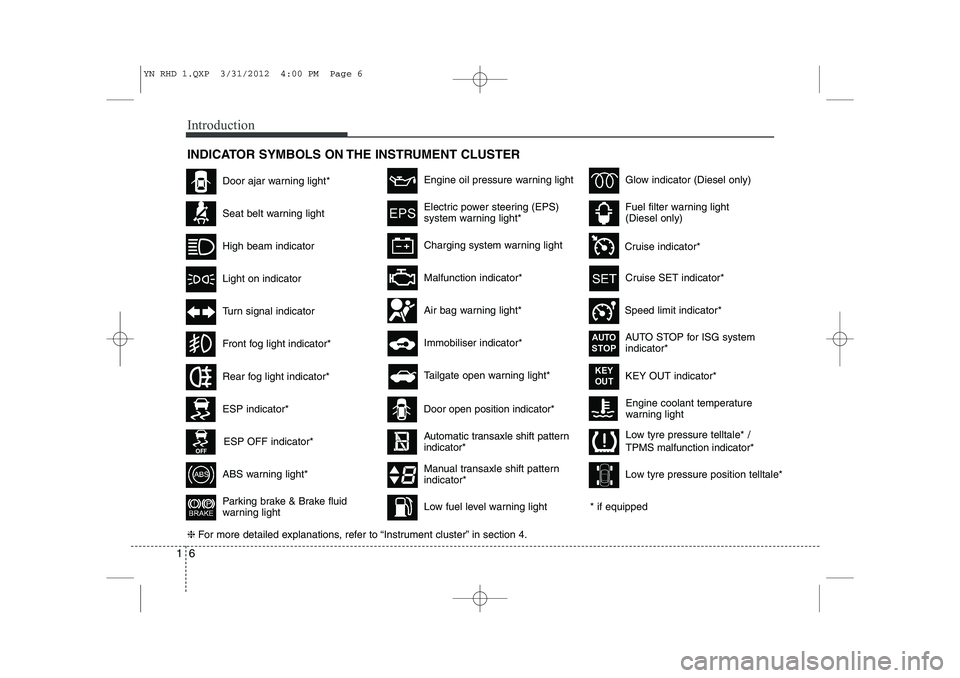
INDICATOR SYMBOLS ON THE INSTRUMENT CLUSTER
Engine coolant temperature
warning light
Seat belt warning light
High beam indicator
Turn signal indicator
ABS warning light*
Parking brake & Brake fluid
warning light
Malfunction indicator*
Immobiliser indicator*
Glow indicator (Diesel only)
Fuel filter warning light (Diesel only)
Tailgate open warning light*
❈ For more detailed explanations, refer to “Instrument cluster” in section 4.
Charging system warning light
Door ajar warning light*
ESP indicator*
ESP OFF indicator*
Front fog light indicator*
Engine oil pressure warning light
Electric power steering (EPS)
system warning light*
Air bag warning light*
Low tyre pressure telltale* / TPMS malfunction indicator*
Rear fog light indicator*
Cruise SET indicator*
Speed limit indicator* AUTO STOP for ISG system indicator*
Cruise indicator*
AUTOSTOP
KEY OUT indicator*KEY
OUT
Light on indicator
Automatic transaxle shift pattern indicator*
Manual transaxle shift pattern indicator*
* if equipped
Door open position indicator*
Low fuel level warning light Low tyre pressure position telltale*
YN RHD 1.QXP 3/31/2012 4:00 PM Page 6
Page 404 of 751
23
Your vehicle at a glance
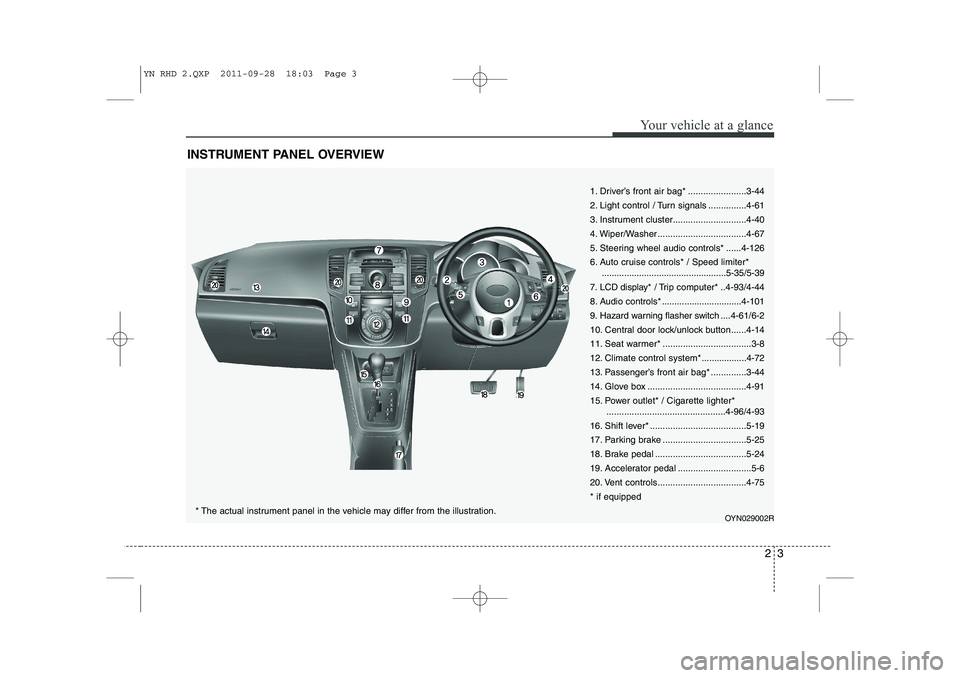
INSTRUMENT PANEL OVERVIEW
1. Driver’s front air bag* .......................3-44
2. Light control / Turn signals ...............4-61
3. Instrument cluster.............................4-40
4. Wiper/Washer ...................................4-67
5. Steering wheel audio controls* ......4-126
6. Auto cruise controls* / Speed limiter*..................................................5-35/5-39
7. LCD display* / Trip computer* ..4-93/4-44
8. Audio controls * ................................4-101
9. Hazard warning flasher switch ....4-61/6-2
10. Central door lock/unlock button......4-14
11. Seat warmer* ...................................3-8
12. Climate control system*..................4-72
13. Passenger’s front air bag* ..............3-44
14. Glove box .......................................4-91
15. Power outlet* / Cigarette lighter* ...............................................4-96/4-93
16. Shift lever* ......................................5-19
17. Parking brake .................................5-25
18. Brake pedal ....................................5-24
19. Accelerator pedal .............................5-6
20. Vent controls...................................4-75* if equipped
OYN029002R
* The actual instrument panel in the vehicle may differ from the illustration.
YN RHD 2.QXP 2011-09-28 18:03 Page 3
Page 409 of 751
Safety features of your vehicle
4
3
(Continued)
When resetting the seatback to
the upright position, make sure it
is securely latched by pushing it
forward and backwards.
To avoid the possibility of burns, do not remove the carpet in the
cargo area. Emission control
devices beneath this floor gener-ate high temperatures.WARNING - Rear seatbacks
The rear seatback must be securely latched. If not, passen-
gers and objects could be thrown
forward resulting in serious
injury or death in the event of a
sudden stop or collision.
Luggage and other cargo should be laid flat in the cargo area. If
objects are large, heavy, or must
be piled, they must be secured.
Under no circumstances should
cargo be piled higher than the
seatbacks. Failure to follow thesewarnings could result in serious
injury or death in the event of a
sudden stop, collision or rollover.
No passenger should ride in the cargo area or sit or lie on folded
seatbacks whilst the vehicle is
moving. All passengers must be
properly seated in seats and
restrained properly whilst riding.
(Continued)
WARNING
After adjusting the seat, always
check that it is securely locked into
place by attempting to move the
seat forward or backward without
using the lock release lever.
Sudden or unexpected movement
of the driver's seat could cause you
to lose control of the vehicle result-ing in an accident.
WARNING
Do not adjust the seat whilst wearing seat belts. Moving the
seat cushion forward may cause
strong pressure on the abdomen.
Use extreme caution so that hands or other objects are not
caught in the seat mechanisms
whilst the seat is moving.
Do not put a cigarette lighter on the floor or seat. When you oper-
ate the seat, gas may gush out of
the lighter and cause fire.
YN RHD 3.QXP 3/31/2012 4:01 PM Page 4
Page 420 of 751
315
Safety features of your vehicle
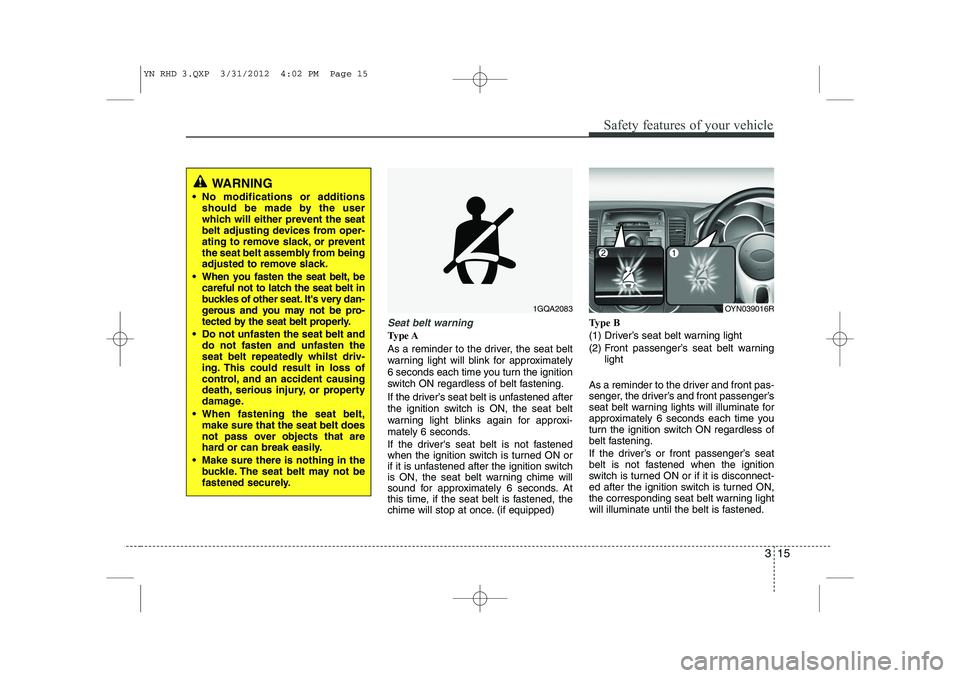
Seat belt warning
Type A
As a reminder to the driver, the seat belt
warning light will blink for approximately
6 seconds each time you turn the ignition
switch ON regardless of belt fastening.
If the driver’s seat belt is unfastened after
the ignition switch is ON, the seat belt
warning light blinks again for approxi-
mately 6 seconds.
If the driver's seat belt is not fastened
when the ignition switch is turned ON or
if it is unfastened after the ignition switch
is ON, the seat belt warning chime will
sound for approximately 6 seconds. At
this time, if the seat belt is fastened, the
chime will stop at once. (if equipped)Type B
(1) Driver’s seat belt warning light
(2) Front passenger’s seat belt warning
light
As a reminder to the driver and front pas-
senger, the driver’s and front passenger’s
seat belt warning lights will illuminate for
approximately 6 seconds each time you
turn the ignition switch ON regardless of
belt fastening.
If the driver’s or front passenger’s seat
belt is not fastened when the ignition
switch is turned ON or if it is disconnect-
ed after the ignition switch is turned ON,
the corresponding seat belt warning light
will illuminate until the belt is fastened.
1GQA2083OYN039016R
WARNING
No modifications or additions should be made by the user
which will either prevent the seat
belt adjusting devices from oper-
ating to remove slack, or prevent
the seat belt assembly from being
adjusted to remove slack.
When you fasten the seat belt, be careful not to latch the seat belt in
buckles of other seat. It's very dan-
gerous and you may not be pro-
tected by the seat belt properly.
Do not unfasten the seat belt and do not fasten and unfasten the
seat belt repeatedly whilst driv-
ing. This could result in loss of
control, and an accident causing
death, serious injury, or property
damage.
When fastening the seat belt, make sure that the seat belt does
not pass over objects that are
hard or can break easily.
Make sure there is nothing in the buckle. The seat belt may not be
fastened securely.
YN RHD 3.QXP 3/31/2012 4:02 PM Page 15
Page 421 of 751
Safety features of your vehicle
16
3
If you continue not to fasten the seat belt
and you drive over 9km/h, the illuminated
warning light will start to blink until you
drive under 6km/h.
If you continue not to fasten the seat belt
and you drive over 20km/h the seat belt
warning chime will sound for approxi-mately 100 seconds and the correspon-
ding warning light will blink.
✽✽
NOTICE
Page 426 of 751
321
Safety features of your vehicle
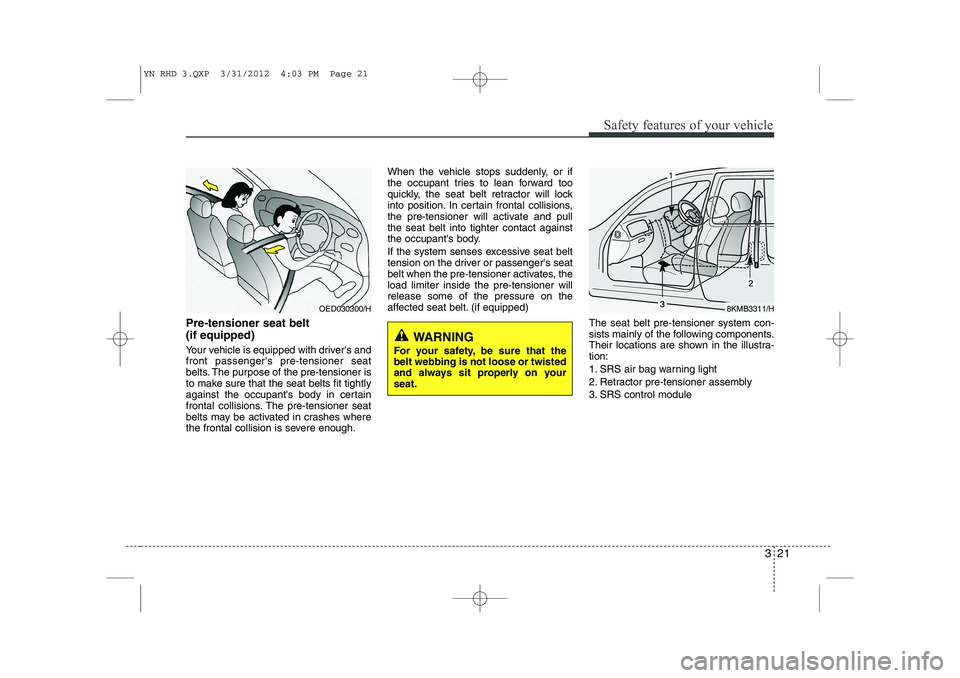
Pre-tensioner seat belt (if equipped)
Your vehicle is equipped with driver's and front passenger's pre-tensioner seat
belts. The purpose of the pre-tensioner is
to make sure that the seat belts fit tightly
against the occupant's body in certain
frontal collisions. The pre-tensioner seat
belts may be activated in crashes where
the frontal collision is severe enough.When the vehicle stops suddenly, or if
the occupant tries to lean forward too
quickly, the seat belt retractor will lock
into position. In certain frontal collisions,
the pre-tensioner will activate and pullthe seat belt into tighter contact against
the occupant's body.
If the system senses excessive seat belt
tension on the driver or passenger's seat
belt when the pre-tensioner activates, theload limiter inside the pre-tensioner willrelease some of the pressure on the
affected seat belt. (if equipped)
The seat belt pre-tensioner system con-
sists mainly of the following components.
Their locations are shown in the illustra-tion:
1. SRS air bag warning light
2. Retractor pre-tensioner assembly
3. SRS control module
OED030300/H8KMB3311/H
WARNING
For your safety, be sure that the belt webbing is not loose or twisted
and always sit properly on yourseat.
YN RHD 3.QXP 3/31/2012 4:03 PM Page 21
Page 429 of 751
Safety features of your vehicle
24
3
Larger children
Children who are too large for child
restraint systems should always occupy
the rear seat and use the available
lap/shoulder belts. The lap portion should
be fastened and snugged on the hips
and as low as possible. Check if belt fits
periodically. A child's squirming could put
the belt out of position. Children are
given the most safety in the event of an
accident when they are restrained by a
proper restraint system in the rear seat. If
a larger child (over age 12) must be seat-ed in the front seat, the child should be
securely restrained by the availablelap/shoulder belt and the seat should be
placed in the rearmost position. Children
age 12 and under should be restrained
securely in the rear seat. NEVER place achild age 12 and under in the front seat.
NEVER place a rear facing child seat in
the front seat of a vehicle.
If the shoulder belt portion slightly touch-
es the child’s neck or face, try placing the
child closer to the centre of the vehicle. If
the shoulder belt still touches their face
or neck they need to be returned to a
child restraint system.
Pregnant women
The use of a seat belt is recommended
for pregnant women to lessen the chance
of injury in an accident. When a seat belt
is used, the lap belt portion should be
placed as low and snugly as possible on
the hips, not across the abdomen. For
specific recommendations, consult a
physician.
Injured person
A seat belt should be used when an
injured person is being transported.
When this is necessary, you should con-
sult a physician for recommendations.
One person per belt
Two people (including children) should
never attempt to use a single seat belt.
This could increase the severity of
injuries in case of an accident.
WARNING - Shoulder belts
on small children
Never allow a shoulder belt to be in contact with a child’s neck or
face whilst the vehicle is inmotion.
If seat belts are not properly worn and adjusted on children, there is
a risk of death or serious injury.
WARNING - Pregnant
women
Pregnant women must never place
the lap portion of the safety belt
over the area of the abdomen
where the fetus is located or abovethe abdomen where the belt could
crush the fetus during an impact.
YN RHD 3.QXP 3/31/2012 4:03 PM Page 24