wheel KIA VENGA 2013 Manual Online
[x] Cancel search | Manufacturer: KIA, Model Year: 2013, Model line: VENGA, Model: KIA VENGA 2013Pages: 751, PDF Size: 27.49 MB
Page 370 of 751
777
Maintenance
Interior care
Interior general precautions
Prevent chemicals such as perfume, cos-
metic oil, sun cream, hand cleaner, and
air freshener from contacting the interior
parts because they may cause damage
or discoloration. If they do contact the
interior parts, wipe them off immediately.
See the instructions that follow for the
proper way to clean vinyl.
Cleaning the upholstery and interiortrim
Vinyl
Remove dust and loose dirt from vinyl
with a whisk broom or vacuum cleaner.
Clean vinyl surfaces with a vinyl cleaner. Fabric
Remove dust and loose dirt from fabric
with a whisk broom or vacuum cleaner.Clean with a mild soap solution recom-
mended for upholstery or carpets.
Remove fresh spots immediately with a
fabric spot cleaner. If fresh spots do not
receive immediate attention, the fabriccan be stained and its color can be
affected. Also, its fire-resistant properties
can be reduced if the material is not
properly maintained.
Cleaning the lap/shoulder belt web- bing
Clean the belt webbing with any mild
soap solution recommended for cleaning
upholstery or carpet. Follow the instruc-
tions provided with the soap. Do not
bleach or re-dye the webbing because
this may weaken it.
Cleaning the interior window glass
If the interior glass surfaces of the vehi-
cle become fogged (that is, covered with
an oily, greasy or waxy film), they should
be cleaned with glass cleaner. Follow the
directions on the glass cleaner container.
CAUTION
Never allow water or other liquidsto come in contact with electrical/
electronic components inside the vehicle as this may damage them.
CAUTION
Using anything but recommended
cleaners and procedures may affectthe fabric’s appearance and fire- resistant properties.
CAUTION
Do not scrape or scratch the insideof the rear window. This may resultin damage to the rear window defroster grid.
CAUTION
When cleaning leather products(steering wheel, seats etc.), use neutral detergents or low alcoholcontent solutions. If you use high
alcohol content solutions oracid/alkaline detergents, the colorof the leather may fade or the sur- face may get stripped off.
YN ENG 7.QXP 4/16/2012 10:11 AM Page 77
Page 375 of 751
8
Dimensions / 8-2 Bulb wattage / 8-2
Tires and wheels / 8-3Recommended lubricants and capacities / 8-4
Vehicle identification number (VIN) / 8-7
Vehicle certification label / 8-7
Tire specification and pressure label / 8-8
Engine number / 8-8
Air conditioner compressor label / 8-9
Specifications & Consumer information
YN eng 8.QXP 19.9.2011 19:05 Page 1
Page 376 of 751
Specifications & Consumer information
2
8
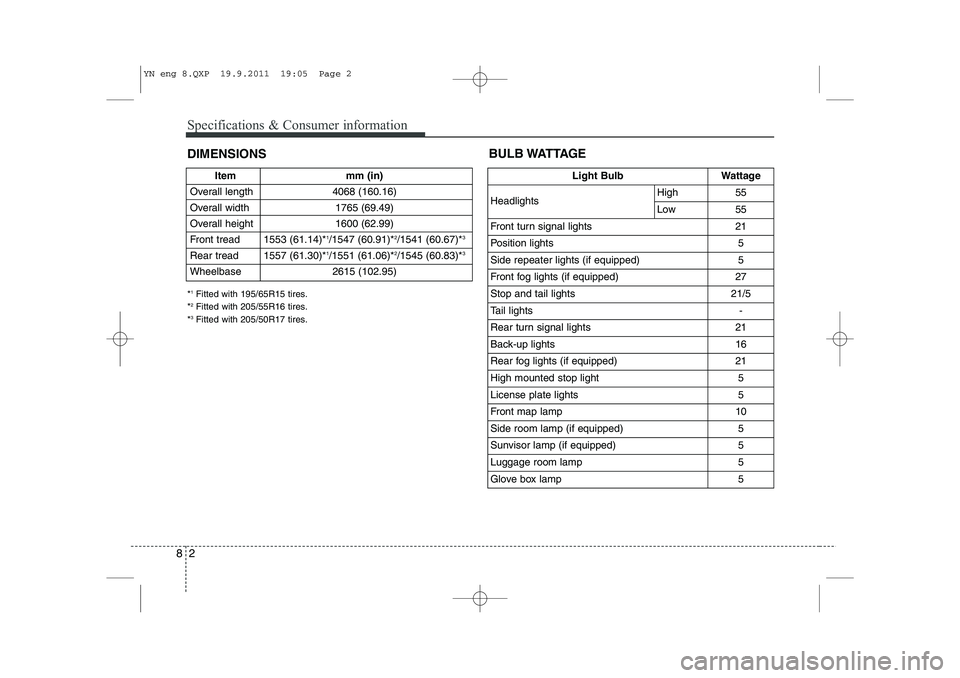
DIMENSIONS BULB WATTAGE
Item mm (in)
Overall length 4068 (160.16)
Overall width 1765 (69.49)
Overall height 1600 (62.99)
Front tread 1553 (61.14)* 1
/1547 (60.91)* 2
/1541 (60.67)* 3
Rear tread 1557 (61.30)* 1
/1551 (61.06)* 2
/1545 (60.83)* 3
Wheelbase 2615 (102.95)
* 1
Fitted with 195/65R15 tires.
* 2
Fitted with 205/55R16 tires.
* 3
Fitted with 205/50R17 tires.
Light BulbWattage
HeadlightsHigh55
Low55
Front turn signal lights21
Position lights5
Side repeater lights (if equipped)5
Front fog lights (if equipped) 27
Stop and tail lights21/5
Tail lights-
Rear turn signal lights 21
Back-up lights16
Rear fog lights (if equipped)21
High mounted stop light5
License plate lights5
Front map lamp10
Side room lamp (if equipped)5
Sunvisor lamp (if equipped)5
Luggage room lamp5
Glove box lamp5
YN eng 8.QXP 19.9.2011 19:05 Page 2
Page 377 of 751
83
Specifications & Consumer information
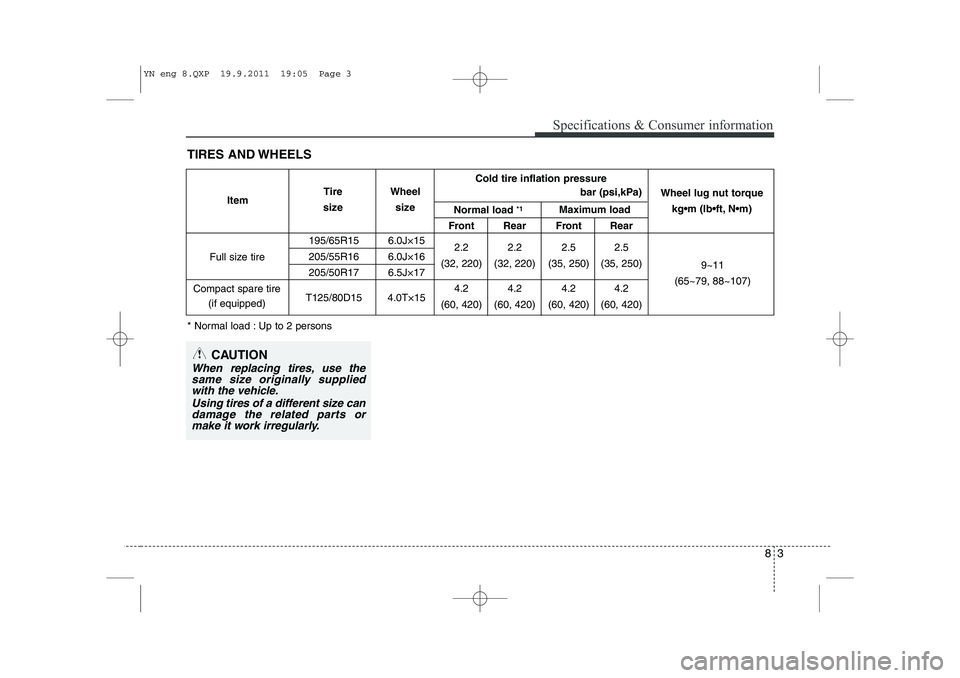
TIRES AND WHEELS
* Normal load : Up to 2 persons
CAUTION
When replacing tires, use the same size originally suppliedwith the vehicle.
Using tires of a different size candamage the related parts ormake it work irregularly.
Front Rear Front Rear
195/65R15 6.0J×15 2.2 2.2 2.5 2.5
205/55R16 6.0J×16 (32, 220) (32, 220) (35, 250) (35, 250)
205/50R17 6.5J×17
T125/80D15 4.0T×15 4.2 4.2 4.2 4.2
(60, 420) (60, 420) (60, 420) (60, 420)
Full size tire
Compact spare tire (if equipped) Normal load
*1
Maximum load Wheel lug nut torque
kg•m (lbft, Nm)
9~11
(65~79, 88~107)
Item
Tire
size Wheel
size Cold tire inflation pressure
bar (psi,kPa)
YN eng 8.QXP 19.9.2011 19:05 Page 3
Page 391 of 751

Index
8
I
Seatback pocket . . . . . . . . . . . . . . . . . . . . . . . . . . . . . . . 3-9
Seats . . . . . . . . . . . . . . . . . . . . . . . . . . . . . . . . . . . . . . . . 3-2
Folding the rear seat . . . . . . . . . . . . . . . . . . . . . . . . . . 3-10
Front seat adjustment . . . . . . . . . . . . . . . . . . . . . . . . . . 3-5
Headrest(front) . . . . . . . . . . . . . . . . . . . . . . . . . . . . . . . 3-6
Headrest(rear) . . . . . . . . . . . . . . . . . . . . . . . . . . . . . . . 3-12
Rear seat . . . . . . . . . . . . . . . . . . . . . . . . . . . . . . . . . . . . 3-9
Seat warmer(front) . . . . . . . . . . . . . . . . . . . . . . . . . . . . 3-8
Seatback pocket . . . . . . . . . . . . . . . . . . . . . . . . . . . . . . 3-9
Shift lock system . . . . . . . . . . . . . . . . . . . . . . . . . . . . . 5-22
Side impact air bag . . . . . . . . . . . . . . . . . . . . . . . . . . . . 3-49
Smart key . . . . . . . . . . . . . . . . . . . . . . . . . . . . . . . . . . . . 4-8
Smooth cornering . . . . . . . . . . . . . . . . . . . . . . . . . . . . . 5-45
Snow tires . . . . . . . . . . . . . . . . . . . . . . . . . . . . . . . . . . . 5-48Spare tire Compact spare tire . . . . . . . . . . . . . . . . . . . . . . . . . . . 6-13
Compact spare tire replacement . . . . . . . . . . . . . . . . . 7-47
Removing and storing the spare tire . . . . . . . . . . . . . . 6-8
Special driving conditions . . . . . . . . . . . . . . . . . . . . . . 5-43
Driving at night . . . . . . . . . . . . . . . . . . . . . . . . . . . . . 5-45
Driving in flooded areas . . . . . . . . . . . . . . . . . . . . . . . 5-46
Driving in the rain . . . . . . . . . . . . . . . . . . . . . . . . . . . 5-46
Hazardous driving conditions. . . . . . . . . . . . . . . . . . . 5-43
Highway driving . . . . . . . . . . . . . . . . . . . . . . . . . . . . . 5-47
Rocking the vehicle . . . . . . . . . . . . . . . . . . . . . . . . . . 5-44
Smooth cornering . . . . . . . . . . . . . . . . . . . . . . . . . . . . 5-45
Speed limit control system . . . . . . . . . . . . . . . . . . . . . . 5-39 Speedometer . . . . . . . . . . . . . . . . . . . . . . . . . . . . . . . . . 4-42
SRS components and functions . . . . . . . . . . . . . . . . . . 3-42
Starting difficulties, see engine will not start . . . . . . . . . 6-3
Steering wheel. . . . . . . . . . . . . . . . . . . . . . . . . . . . . . . . 4-33
Electric power steering . . . . . . . . . . . . . . . . . . . . . . . . 4-33
Horn . . . . . . . . . . . . . . . . . . . . . . . . . . . . . . . . . . . . . . 4-34
Tilt steering . . . . . . . . . . . . . . . . . . . . . . . . . . . . . . . . . 4-33
Storage compartment . . . . . . . . . . . . . . . . . . . . . . . . . . 4-91
Center console storage . . . . . . . . . . . . . . . . . . . . . . . . 4-91
Cool box . . . . . . . . . . . . . . . . . . . . . . . . . . . . . . . . . . . 4-92
Glove box . . . . . . . . . . . . . . . . . . . . . . . . . . . . . . . . . . 4-91
Sunroof . . . . . . . . . . . . . . . . . . . . . . . . . . . . . . . . . . . . . 4-29
Sunvisor . . . . . . . . . . . . . . . . . . . . . . . . . . . . . . . . . . . . 4-95
Tachometer . . . . . . . . . . . . . . . . . . . . . . . . . . . . . . . . . . 4-42
Tailgate . . . . . . . . . . . . . . . . . . . . . . . . . . . . . . . . . . . . . 4-17 Emergency tailgate safety release . . . . . . . . . . . . . . . 4-18
Tether anchor system . . . . . . . . . . . . . . . . . . . . . . . . . . 3-31
Theft-alarm system . . . . . . . . . . . . . . . . . . . . . . . . . . . . 4-11
Tilt steering . . . . . . . . . . . . . . . . . . . . . . . . . . . . . . . . . . 4-33
Tire chains. . . . . . . . . . . . . . . . . . . . . . . . . . . . . . . . . . . 5-49
Tire pressure monitoring system (TPMS) . . . . . . . . . . 6-20
Tire specification and pressure label . . . . . . . . . . . . . . . 8-8
Tire mobility kit . . . . . . . . . . . . . . . . . . . . . . . . . . . . . . 6-15
Tires and wheels . . . . . . . . . . . . . . . . . . . . . . . . . . . . . . 7-42
T
YN eng INDEX.QXP 2011.09.22. 16:35 Page 8
Page 392 of 751
I9
Index
Checking tire inflation pressure . . . . . . . . . . . . . . . . . 7-43
Compact spare tire replacement . . . . . . . . . . . . . . . . . 7-47
Recommended cold tire inflation pressures . . . . . . . . 7-42
Tire care . . . . . . . . . . . . . . . . . . . . . . . . . . . . . . . . . . . 7-42
Tire maintenance . . . . . . . . . . . . . . . . . . . . . . . . . . . . 7-47
Tire replacement . . . . . . . . . . . . . . . . . . . . . . . . . . . . . 7-46
Tire rotation . . . . . . . . . . . . . . . . . . . . . . . . . . . . . . . . 7-44
Tire sidewall labeling . . . . . . . . . . . . . . . . . . . . . . . . . 7-48
Tire traction . . . . . . . . . . . . . . . . . . . . . . . . . . . . . . . . 7-47
Wheel alignment and tire balance . . . . . . . . . . . . . . . 7-45
Wheel replacement . . . . . . . . . . . . . . . . . . . . . . . . . . . 7-47
TMK, see tiremobilitykit . . . . . . . . . . . . . . . . . . . . . . . 6-15
Towing . . . . . . . . . . . . . . . . . . . . . . . . . . . . . . . . . . . . . 6-25
TPMS . . . . . . . . . . . . . . . . . . . . . . . . . . . . . . . . . . . . . . 6-20
Trailer towing . . . . . . . . . . . . . . . . . . . . . . . . . . . . . . . . 5-52
Transaxle Automatic transaxle . . . . . . . . . . . . . . . . . . . . . . . . . . 5-19
Manual transaxle . . . . . . . . . . . . . . . . . . . . . . . . . . . . 5-16
Trip computer . . . . . . . . . . . . . . . . . . . . . . . . . . . . . . . . 4-44
Using the tiremobilitykit. . . . . . . . . . . . . . . . . . . . . . . . 6-15 Vehicle break-in process . . . . . . . . . . . . . . . . . . . . . . . . . 1-5
Vehicle certification label . . . . . . . . . . . . . . . . . . . . . . . . 8-7
Vehicle identification number (VIN) . . . . . . . . . . . . . . . 8-7
Vehicle stability management . . . . . . . . . . . . . . . . . . . . 5-33
Vehicle weight . . . . . . . . . . . . . . . . . . . . . . . . . . . . . . . 5-60
Warning and indicators . . . . . . . . . . . . . . . . . . . . . . . . . 4-47
Washer fluid . . . . . . . . . . . . . . . . . . . . . . . . . . . . . . . . . 7-31
Wheel alignment and tire balance . . . . . . . . . . . . . . . . 7-45
Wheel replacement . . . . . . . . . . . . . . . . . . . . . . . . . . . . 7-47
Windows . . . . . . . . . . . . . . . . . . . . . . . . . . . . . . . . . . . . 4-19
Auto up/down window . . . . . . . . . . . . . . . . . . . . . . . . 4-21
Manual window . . . . . . . . . . . . . . . . . . . . . . . . . . . . . 4-23
Power window lock button. . . . . . . . . . . . . . . . . . . . . 4-22
Winter driving . . . . . . . . . . . . . . . . . . . . . . . . . . . . . . . . 5-48
Snow tires . . . . . . . . . . . . . . . . . . . . . . . . . . . . . . . . . . 5-48
Tire chains . . . . . . . . . . . . . . . . . . . . . . . . . . . . . . . . . 5-49
Wiper blades . . . . . . . . . . . . . . . . . . . . . . . . . . . . . . . . . 7-36
Wipers and washers . . . . . . . . . . . . . . . . . . . . . . . . . . . 4-67
U
V
W
YN eng INDEX.QXP 2011.09.22. 16:35 Page 9
Page 403 of 751
Your vehicle at a glance
2
2
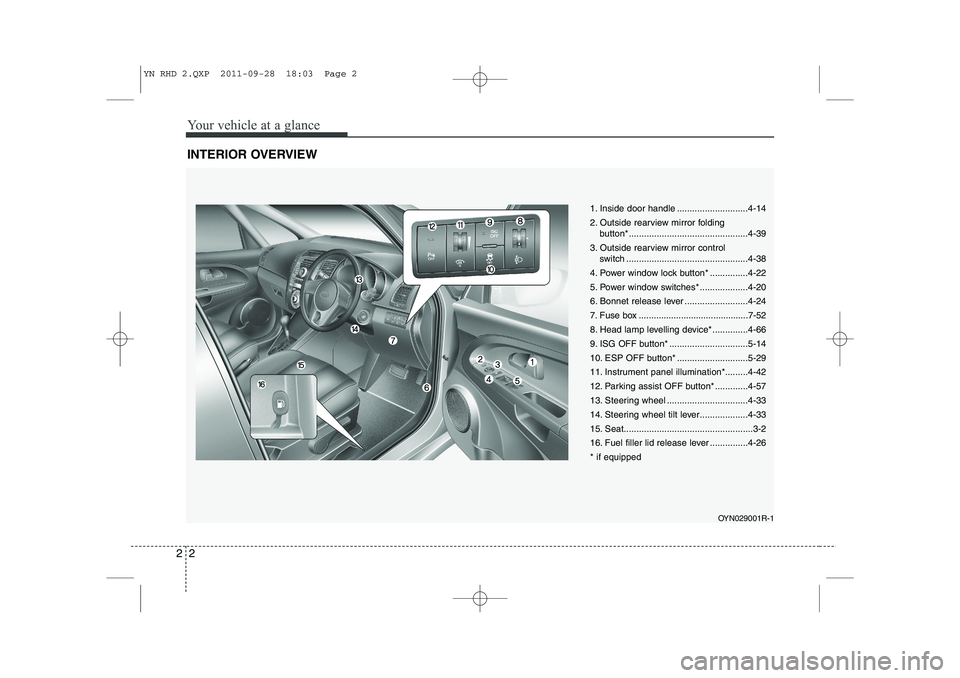
INTERIOR OVERVIEW
1. Inside door handle ............................4-14
2. Outside rearview mirror folding
button*...............................................4-39
3. Outside rearview mirror control switch ................................................4-38
4. Power window lock button* ...............4-22
5. Power window switches* ...................4-20
6. Bonnet release lever .........................4-24
7. Fuse box ............................................7-52
8. Head lamp levelling device* ..............4-66
9. ISG OFF button* ...............................5-14
10. ESP OFF button* ............................5-29
11. Instrument panel illumination*.........4-42
12. Parking assist OFF button* .............4-57
13. Steering wheel ................................4-33
14. Steering wheel tilt lever...................4-33
15. Seat...................................................3-2
16. Fuel filler lid release lever ...............4-26* if equipped
OYN029001R-1
YN RHD 2.QXP 2011-09-28 18:03 Page 2
Page 404 of 751
23
Your vehicle at a glance
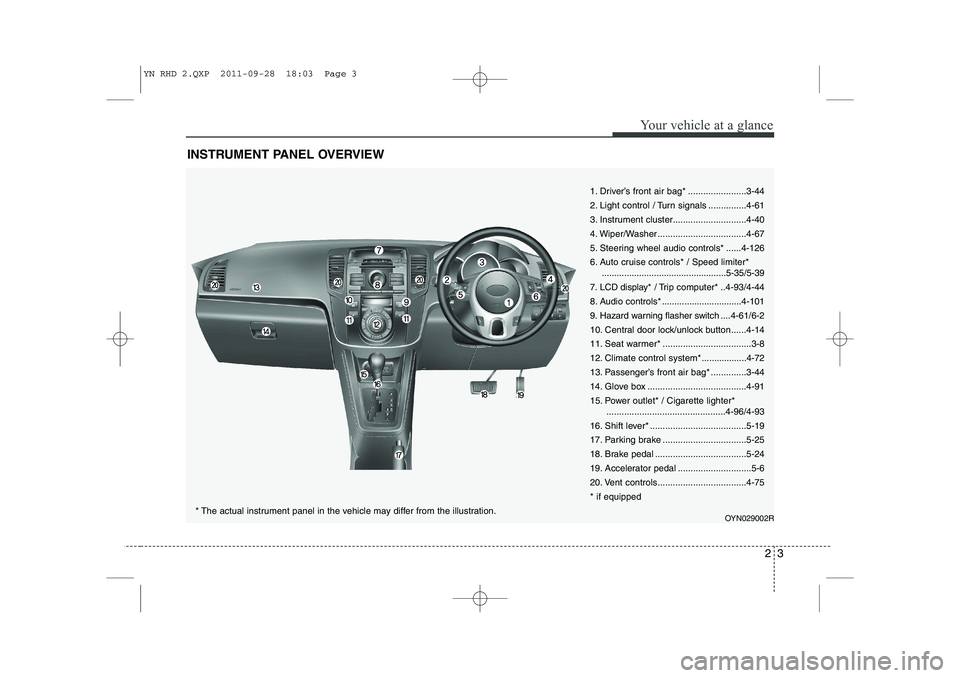
INSTRUMENT PANEL OVERVIEW
1. Driver’s front air bag* .......................3-44
2. Light control / Turn signals ...............4-61
3. Instrument cluster.............................4-40
4. Wiper/Washer ...................................4-67
5. Steering wheel audio controls* ......4-126
6. Auto cruise controls* / Speed limiter*..................................................5-35/5-39
7. LCD display* / Trip computer* ..4-93/4-44
8. Audio controls * ................................4-101
9. Hazard warning flasher switch ....4-61/6-2
10. Central door lock/unlock button......4-14
11. Seat warmer* ...................................3-8
12. Climate control system*..................4-72
13. Passenger’s front air bag* ..............3-44
14. Glove box .......................................4-91
15. Power outlet* / Cigarette lighter* ...............................................4-96/4-93
16. Shift lever* ......................................5-19
17. Parking brake .................................5-25
18. Brake pedal ....................................5-24
19. Accelerator pedal .............................5-6
20. Vent controls...................................4-75* if equipped
OYN029002R
* The actual instrument panel in the vehicle may differ from the illustration.
YN RHD 2.QXP 2011-09-28 18:03 Page 3
Page 408 of 751
33
Safety features of your vehicle
WARNING- Driver’s seat
Never attempt to adjust seat whilst the vehicle is moving. This
could result in loss of control,and an accident causing death,
serious injury, or property dam-
age.
Do not allow anything to interfere with the normal position of the
seatback. Storing items against a
seatback or in any other way
interfering with proper locking of
a seatback could result in serious
or fatal injury in a sudden stop orcollision.
Always drive and ride with your seatback upright and the lap por-
tion of the seat belt snug and low
across the hips. This is the best
position to protect you in case ofan accident.
In order to avoid unnecessary and perhaps severe air bag
injuries, always sit as far back as
possible from the steering wheel
whilst maintaining comfortable
control of the vehicle. We recom-
mend that your chest be at least
250 mm (10 inches) away fromthe steering wheel.
WARNING - Uprighting seat
When you return the seatback to its
upright position, hold the seatback
and return it slowly and be surethere are no other occupants
around the seat. If the seatback isreturned without being held and
controlled, the back of the seat
could move forward or backward
resulting in accidental injury to a
person struck by the seatback.
WARNING - Driver respon-
sibility for passengers
Riding in a vehicle with seatback
reclined could lead to serious or
fatal injury in an accident. If a seat is
reclined during an accident, the
occupant’s hips may slide under the
lap portion of the seat belt applying
great force to the unprotected
abdomen. Serious or fatal internal
injuries could result. The driver
must advise the passenger to keep
the seatback in an upright position
whenever the vehicle is in motion.WARNING - Loose objects
Loose objects in the driver’s foot
area could interfere with the opera-
tion of the foot pedals, possibly
causing an accident. Do not place
anything under the front seats.
WARNING
Do not use a sitting cushion that reduces friction between the seat
and passenger. The passenger's
hips may slide under the lap por-tion of the seat belt during an acci-
dent or a sudden stop. Serious orfatal internal injuries could resultbecause the seat belt can't operate
normally.
YN RHD 3.QXP 3/31/2012 4:01 PM Page 3
Page 443 of 751
Safety features of your vehicle
38
3
How does the air bag system operate
Air bags are activated (able to inflate if
necessary) only when the ignition
switch is turned to the ON or STARTposition.
Air bags inflate instantly in the event of serious frontal or side collision (ifequipped with side impact air bag or
curtain air bag) in order to help protect
the occupants from serious physical
injury.
There is no single speed at which the air bags will inflate.
Generally, air bags are designed to
inflate based upon the severity of a col-
lision and its direction. These two fac-
tors determine whether the sensors
produce an electronic deployment/inflation signal.
Air bag deployment depends on a number of factors including vehiclespeed, angles of impact and the densi-
ty and stiffness of the vehicles or
objects which your vehicle hits in the
collision. The determining, factors are
not limited to those mentioned above.
The front air bags will completely inflate and deflate in an instant. It is virtually impossible for you to see
the air bags inflate during an accident.
It is much more likely that you will sim-ply see the deflated air bags hanging
out of their storage compartments afterthe collision.
In order to help provide protection in a severe collision, the air bags must
inflate rapidly. The speed of air bag
inflation is a consequence of extremely
short time in which a collision occursand the need to get the air bag
between the occupant and the vehicle
structures before the occupant impacts
those structures. This speed of inflation
reduces the risk of serious or life-
threatening injuries in a severe collision
and is thus a necessary part of air bagdesign.
However, air bag inflation can also
cause injuries which can include facial
abrasions, bruises and broken bonesbecause the inflation speed also caus-
es the air bags to expand with a great
deal of force.
There are even circumstances under which contact with the steer-
ing wheel air bag can cause fatal
injuries, especially if the occupant
is positioned excessively close tothe steering wheel.
WARNING
To avoid severe personal injury or death caused by deploying air
bags in a collision, the driver
should sit as far back from the
steering wheel air bag as possible
(at least 250 mm (10 inches)
away). The front passenger should
always move their seat as far
back as possible and sit back intheir seat.
Air bag inflates instantly in an event of a collision, passengers
may be injured by the air bag
expansion force if they are not in
a proper position.
Air bag inflation may cause injuries including facial or bodily
abrasions, injuries from broken
glasses or burns.
YN RHD 3.QXP 3/31/2012 4:03 PM Page 38