ABS LINCOLN CONTINENTAL 2000 User Guide
[x] Cancel search | Manufacturer: LINCOLN, Model Year: 2000, Model line: CONTINENTAL, Model: LINCOLN CONTINENTAL 2000Pages: 232, PDF Size: 1.7 MB
Page 146 of 232
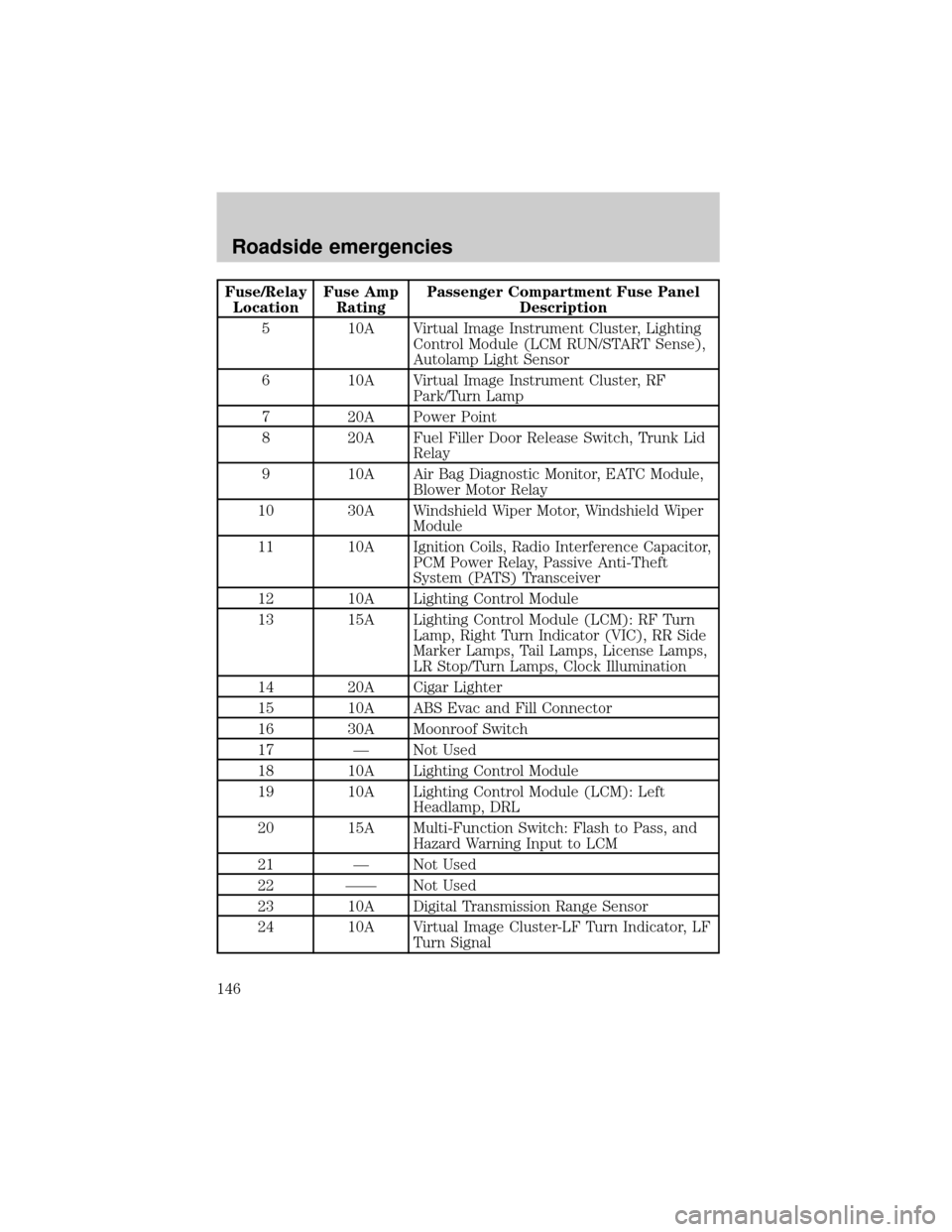
Fuse/Relay
LocationFuse Amp
RatingPassenger Compartment Fuse Panel
Description
5 10A Virtual Image Instrument Cluster, Lighting
Control Module (LCM RUN/START Sense),
Autolamp Light Sensor
6 10A Virtual Image Instrument Cluster, RF
Park/Turn Lamp
7 20A Power Point
8 20A Fuel Filler Door Release Switch, Trunk Lid
Relay
9 10A Air Bag Diagnostic Monitor, EATC Module,
Blower Motor Relay
10 30A Windshield Wiper Motor, Windshield Wiper
Module
11 10A Ignition Coils, Radio Interference Capacitor,
PCM Power Relay, Passive Anti-Theft
System (PATS) Transceiver
12 10A Lighting Control Module
13 15A Lighting Control Module (LCM): RF Turn
Lamp, Right Turn Indicator (VIC), RR Side
Marker Lamps, Tail Lamps, License Lamps,
LR Stop/Turn Lamps, Clock Illumination
14 20A Cigar Lighter
15 10A ABS Evac and Fill Connector
16 30A Moonroof Switch
17 Ð Not Used
18 10A Lighting Control Module
19 10A Lighting Control Module (LCM): Left
Headlamp, DRL
20 15A Multi-Function Switch: Flash to Pass, and
Hazard Warning Input to LCM
21 Ð Not Used
22 ÐÐ Not Used
23 10A Digital Transmission Range Sensor
24 10A Virtual Image Cluster-LF Turn Indicator, LF
Turn Signal
Roadside emergencies
146
Page 149 of 232
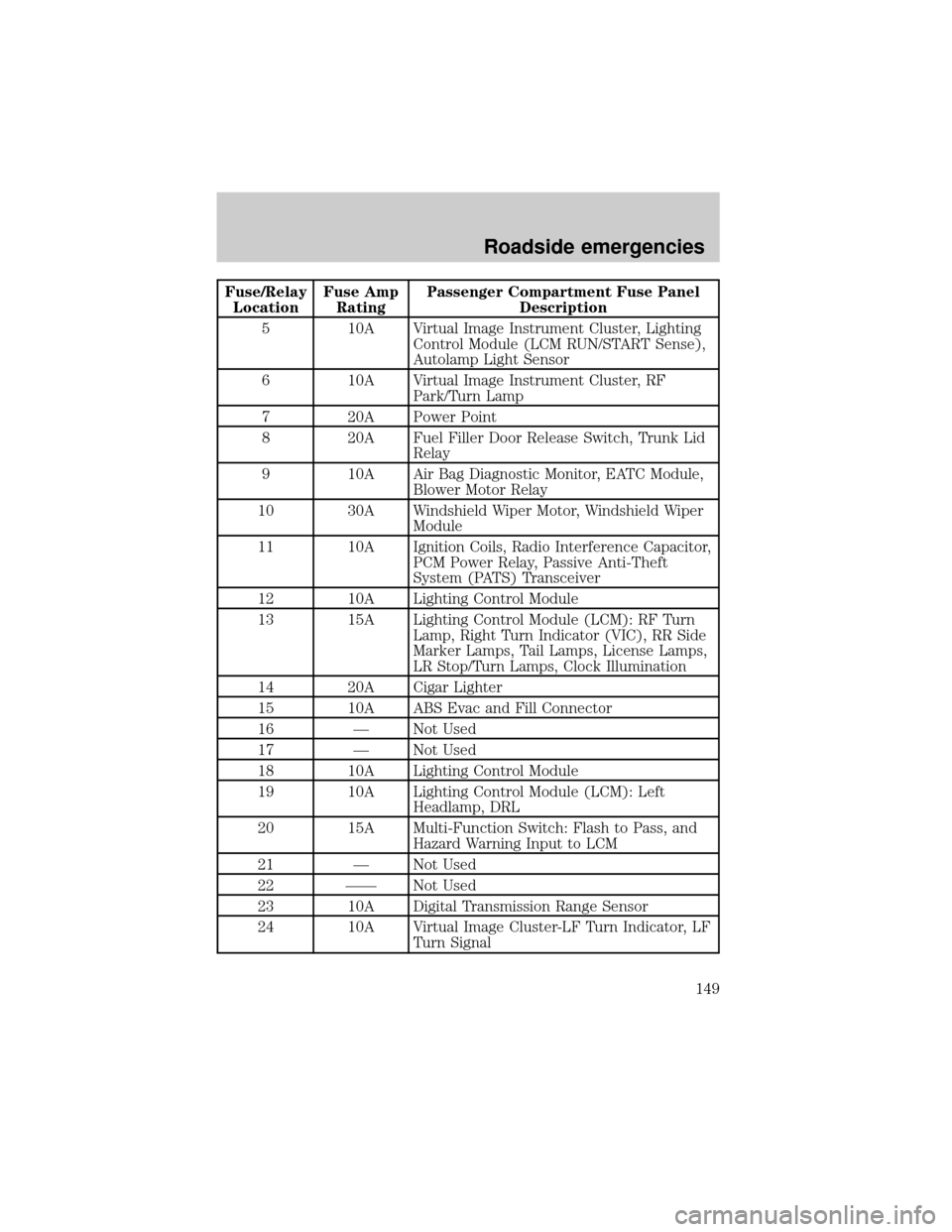
Fuse/Relay
LocationFuse Amp
RatingPassenger Compartment Fuse Panel
Description
5 10A Virtual Image Instrument Cluster, Lighting
Control Module (LCM RUN/START Sense),
Autolamp Light Sensor
6 10A Virtual Image Instrument Cluster, RF
Park/Turn Lamp
7 20A Power Point
8 20A Fuel Filler Door Release Switch, Trunk Lid
Relay
9 10A Air Bag Diagnostic Monitor, EATC Module,
Blower Motor Relay
10 30A Windshield Wiper Motor, Windshield Wiper
Module
11 10A Ignition Coils, Radio Interference Capacitor,
PCM Power Relay, Passive Anti-Theft
System (PATS) Transceiver
12 10A Lighting Control Module
13 15A Lighting Control Module (LCM): RF Turn
Lamp, Right Turn Indicator (VIC), RR Side
Marker Lamps, Tail Lamps, License Lamps,
LR Stop/Turn Lamps, Clock Illumination
14 20A Cigar Lighter
15 10A ABS Evac and Fill Connector
16 Ð Not Used
17 Ð Not Used
18 10A Lighting Control Module
19 10A Lighting Control Module (LCM): Left
Headlamp, DRL
20 15A Multi-Function Switch: Flash to Pass, and
Hazard Warning Input to LCM
21 Ð Not Used
22 ÐÐ Not Used
23 10A Digital Transmission Range Sensor
24 10A Virtual Image Cluster-LF Turn Indicator, LF
Turn Signal
Roadside emergencies
149
Page 180 of 232
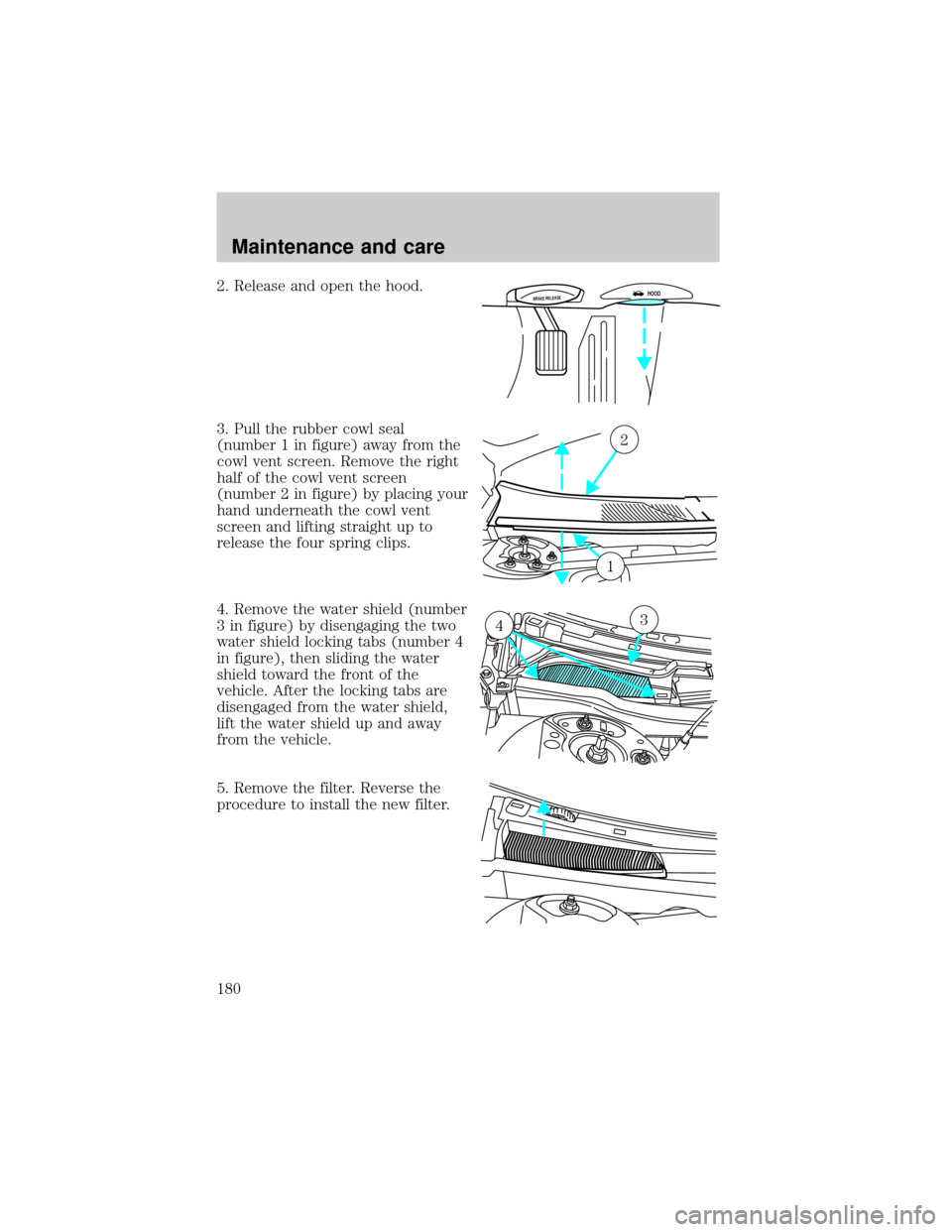
2. Release and open the hood.
3. Pull the rubber cowl seal
(number 1 in figure) away from the
cowl vent screen. Remove the right
half of the cowl vent screen
(number 2 in figure) by placing your
hand underneath the cowl vent
screen and lifting straight up to
release the four spring clips.
4. Remove the water shield (number
3 in figure) by disengaging the two
water shield locking tabs (number 4
in figure), then sliding the water
shield toward the front of the
vehicle. After the locking tabs are
disengaged from the water shield,
lift the water shield up and away
from the vehicle.
5. Remove the filter. Reverse the
procedure to install the new filter.BRAKE RELEASEHOOD
2
1
34
Maintenance and care
180
Page 188 of 232
Observe the following guidelines when handling automotive fuel:
²Extinguish all smoking materials
and any open flames before
fueling your vehicle.
²Always turn off the vehicle before
fueling.
²Automotive fuels can be harmful
or fatal if swallowed. Fuel such as
gasoline is highly toxic and if
swallowed can cause death or
permanent injury. If fuel is
swallowed, call a physician immediately, even if no symptoms are
immediately apparent. The toxic effects of fuel may not be visible for
hours.
²Avoid inhaling fuel vapors. Inhaling too much fuel vapor of any kind
can lead to eye and respiratory tract irritation. In severe cases,
excessive or prolonged breathing of fuel vapor can cause serious
illness and permanent injury.
²Avoid getting fuel liquid in your eyes. If fuel is splashed in the eyes,
remove contact lenses (if worn), flush with water for 15 minutes and
seek medical attention. Failure to seek proper medical attention could
lead to permanent injury.
²Fuels can also be harmful if absorbed through the skin. If fuel is
splashed on the skin and/or clothing, promptly remove contaminated
clothing and wash skin thoroughly with soap and water. Repeated or
prolonged skin contact with fuel liquid or vapor causes skin irritation.
²Be particularly careful if you are taking ªAntabuseº or other forms of
disulfiram for the treatment of alcoholism. Breathing gasoline vapors,
or skin contact could cause an adverse reaction. In sensitive
individuals, serious personal injury or sickness may result. If fuel is
splashed on the skin, promptly wash skin thoroughly with soap and
water. Consult a physician immediately if you experience an adverse
reaction.
When refueling always shut the engine off and never allow
sparks or open flames near the filler neck. Never smoke while
refueling. Fuel vapor is extremely hazardous under certain conditions.
Care should be taken to avoid inhaling excess fumes.
Maintenance and care
188
Page 189 of 232
The flow of fuel through a fuel pump nozzle can produce static
electricity, which can cause a fire if fuel is pumped into an
ungrounded fuel container.
Use the following guidelines to avoid static build-up when filling an
ungrounded fuel container:
²Place approved fuel container on the ground.
²DO NOT fill a fuel container while it is in the vehicle.
²Keep the fuel pump nozzle in contact with the fuel container while
filling.
²DO NOT use a device that would hold the fuel pump handle in the fill
position.
Fuel Filler Cap
Your fuel tank filler cap has an indexed design with a 1/8 turn on/off
feature.
When fueling your vehicle:
1. Turn the engine off.
2. Carefully turn the filler cap counterclockwise 1/8 of a turn until it
stops.
3. Pull to remove the cap from the fuel filler pipe.
4. To install the cap, align the tabs on the cap with the notches on the
filler pipe.
5. Turn the filler cap clockwise 1/8 of a turn until it stops.
If the ªService Engine Soon/Check Engineº indicator comes on and stays
on when you start the engine, the fuel filler cap may not be properly
installed. Turn off the engine, remove the fuel filler cap, align the cap
properly and reinstall it.
If you must replace the fuel filler cap, replace it with a fuel filler
cap that is designed for your vehicle. The customer warranty may
be void for any damage to the fuel tank or fuel system if the
correct genuine Ford or Motorcraft fuel filler cap is not used.
Maintenance and care
189
Page 198 of 232
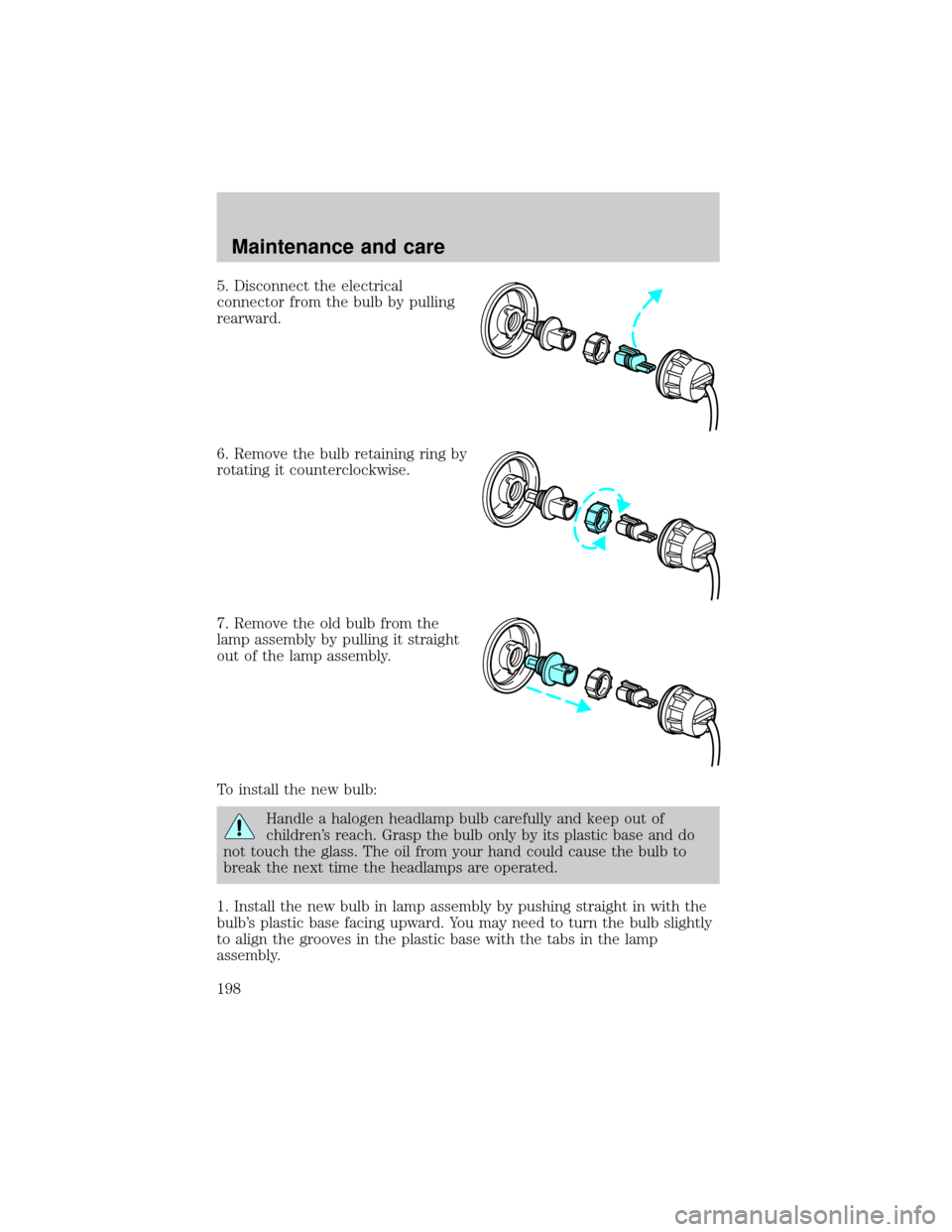
5. Disconnect the electrical
connector from the bulb by pulling
rearward.
6. Remove the bulb retaining ring by
rotating it counterclockwise.
7. Remove the old bulb from the
lamp assembly by pulling it straight
out of the lamp assembly.
To install the new bulb:
Handle a halogen headlamp bulb carefully and keep out of
children's reach. Grasp the bulb only by its plastic base and do
not touch the glass. The oil from your hand could cause the bulb to
break the next time the headlamps are operated.
1. Install the new bulb in lamp assembly by pushing straight in with the
bulb's plastic base facing upward. You may need to turn the bulb slightly
to align the grooves in the plastic base with the tabs in the lamp
assembly.
Maintenance and care
198
Page 199 of 232
2. Install the bulb retaining ring over the plastic base and lock the ring
by rotating clockwise until it snaps into place.
3. Connect the electrical connector to the bulb.
4. Install the protective dust shield and lock the shield by rotating it
clockwise until it locks into position.
5. Carefully position the headlamp assembly onto the vehicle making sure
the alignment pins are inserted into the proper holes.
6. Hold the headlamp assembly snugly against the vehicle and push down
on the retainer pins to lock the lamp into place.
7. Before reinstalling the protective cover, make sure the cover tabs are
fully seated under the grille molding.
8. Turn the headlamps on and make sure they work properly. If the
headlamp was correctly aligned before you changed the bulb, you should
not need to align it again.
Replacing front parking lamp/turn signal/cornering lamp bulbs
1. Make sure the headlamp control is in the OFF position.
2. Open the hood and remove the protective cover from the top of the
headlamps by lifting up on the rear corners and release the velcro
attachments. Lift the cover and pull towards the windshield.
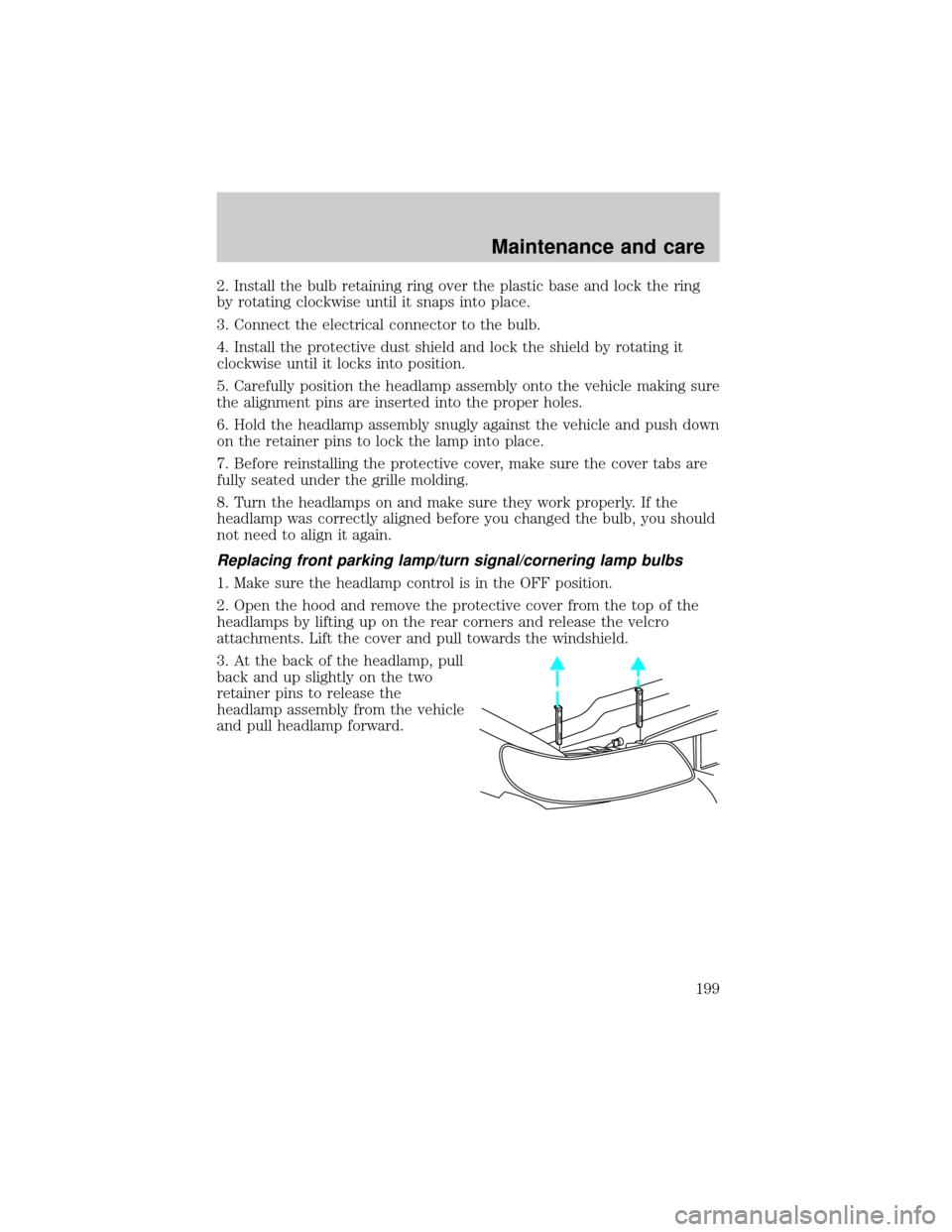
3. At the back of the headlamp, pull
back and up slightly on the two
retainer pins to release the
headlamp assembly from the vehicle
and pull headlamp forward.
Maintenance and care
199
Page 226 of 232

Accessory delay ..........................76
Air bag supplemental
restraint system ..........104,105,109
and child safety seats ............106
description .......................105,109
disposal ....................................112
driver air bag ...................107,110
indicator light ...............9,108,111
operation ..........................107,110
passenger air bag ............107,110
side air bag ..............................109
Air cleaner filter .......................209
Air conditioning ..........................24
automatic temperature
control system ..........................24
Air filter, cabin ..........................179
Air suspension ...........................129
description ..............................129
Antifreeze
(see Engine coolant) ................169
Anti-lock brake system
(see Brakes) .......................125,126
Anti-theft system ........................79
arming the system ....................79
disarming a triggered system ..80
Audio system (see Radio) .........30
Automatic transaxle .................130
driving with .............................132
fluid, adding ............................174
fluid, checking ........................174
fluid, refill capacities ..............209
fluid, specification ..................211
Axle
lubricant specifications ..........210
Battery .......................................177
acid, treating emergencies .....177
charging system
warning light .............................11
jumping a disabled battery ....156
maintenance-free ....................177
replacement, specifications ...209
servicing ..................................177Belt minder ...............................100
Brakes ........................................125
anti-lock ............................125,126
anti-lock brake system
(ABS) warning light ..........10,126
brake warning light ..................10
fluid, checking and adding ....168
fluid, refill capacities ..............209
fluid, specifications ..........210,211
lubricant specifications ...210,211
shift interlock ..........................130
Break-in period .............................3
Capacities for refilling fluids ....209
CD changer .................................42
Certification Label ....................213
Child safety restraints ..............112
child safety belts ....................112
Child safety seats ......................113
attaching with tether straps ..117
in front seat ............................115
in rear seat ..............................115
Cleaning your vehicle ...............204
engine compartment ..............206
exterior ....................................205
exterior lamps .........................206
instrument panel ....................207
instrument panel lens ............207
interior ..............................207,208
mirrors .....................................205
plastic parts ............................205
safety belts ..............................208
washing ....................................204
waxing .....................................204
wheels ......................................205
windows ..................................208
wiper blades ............................206
woodtone trim ........................208
Climate control (see Air
conditioning or Heating) ............24
Clock ............................................30
Compass, electronic ....................69
calibration ............................71,73
Index
226
Page 228 of 232

gauge .........................................12
improving fuel economy ........192
octane rating ....................190,211
quality ......................................190
running out of fuel .................191
safety information relating to
automotive fuels .....................187
Fuses ...................................143,144
Garage door opener ....................65
Gas cap (see Fuel cap) ............189
Gas mileage
(see Fuel economy) .................192
Gauges .........................................12
engine coolant
temperature gauge ...................13
fuel gauge ..................................12
odometer ...................................13
speedometer .............................13
tachometer ................................13
GAWR
(Gross Axle Weight Rating) .....135
definition .................................135
driving with a heavy load ......135
location ....................................135
GVWR (Gross
Vehicle Weight Rating) .............135
calculating ...............................135
definition .................................135
driving with a heavy load ......135
location ....................................135
Hazard flashers .........................142
Head restraints ...........................92
Headlamps ...................................22
aiming ........................201,202,203
autolamp system .......................23
bulb specifications ..................201
daytime running lights .............22
flash to pass ..............................23
high beam ............................10,22
replacing bulbs .......................197
turning on and off ...............11,22
warning chime ..........................12Heating ........................................24
HomeLink universal
transceiver (see Garage
door opener) ................65,66,67,68
Hood ..........................................163
Ignition .......................................211
positions of the ignition ...........46
Infant seats
(see Safety seats) .....................113
Inspection/maintenance
(I/M) testing ..............................196
Instrument panel
cleaning ...................................207
cluster ...................................8,207
lighting up
panel and interior .....................23
location of components ..............8
Jump-starting your vehicle ......156
Keyless entry system .................85
autolock .....................................88
keypad .......................................85
programming entry code .........86
Keys .............................................47
key in ignition chime ...............12
positions of the ignition ...........46
Lamps
autolamp system .......................23
bulb replacement
specifications chart ................201
cargo lamps ...............................23
daytime running light ...............22
headlamps .................................22
headlamps, flash to pass ..........23
instrument panel, dimming .....23
interior lamps ...............53,54,200
replacing bulbs ..196,197,199,200
Lane change indicator
(see Turn signal) ........................48
Lights, warning and indicator ......8
air bag ..........................................9
anti-lock brakes (ABS) .....10,126
brake ..........................................10
Index
228