steering wheel LINCOLN CONTINENTAL 2000 User Guide
[x] Cancel search | Manufacturer: LINCOLN, Model Year: 2000, Model line: CONTINENTAL, Model: LINCOLN CONTINENTAL 2000Pages: 232, PDF Size: 1.7 MB
Page 152 of 232
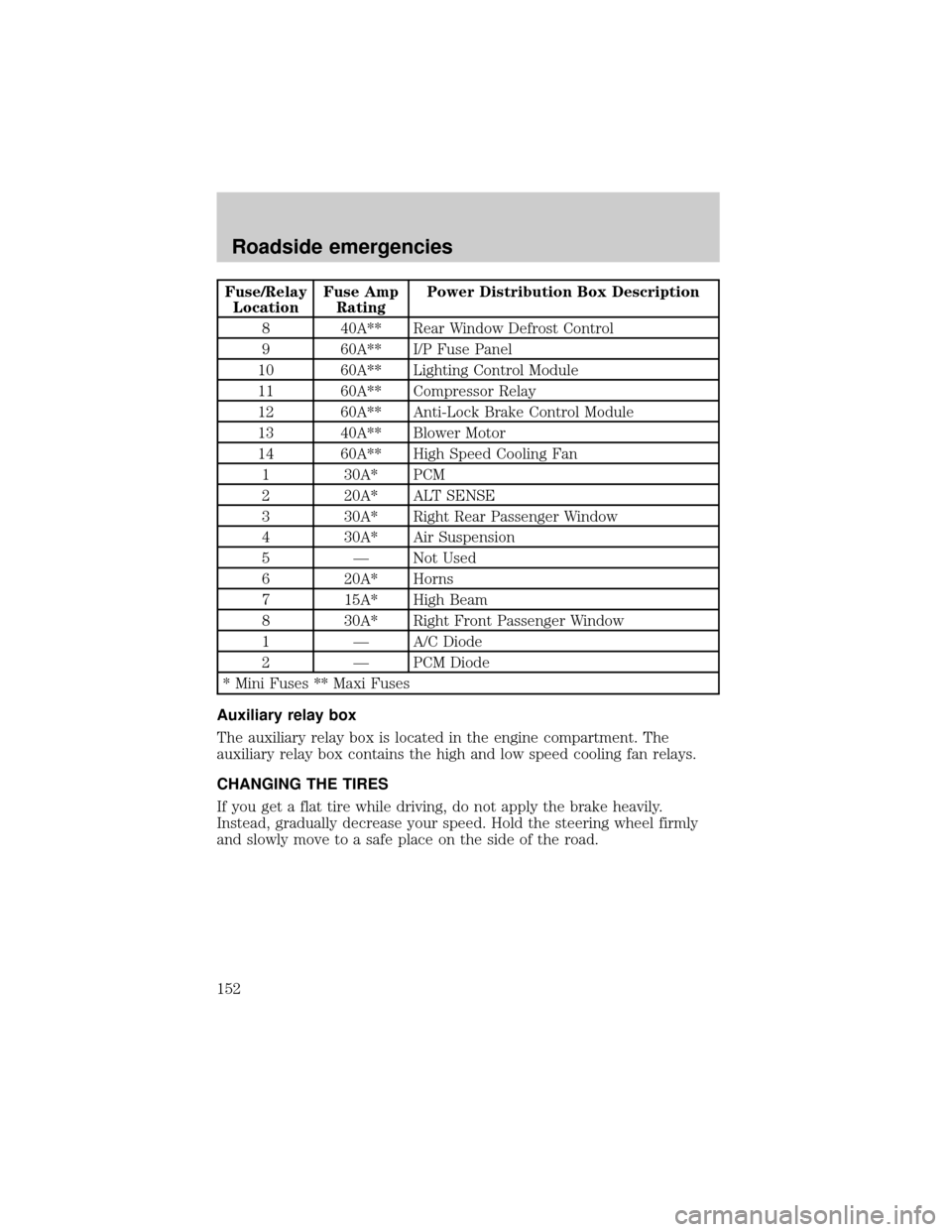
Fuse/Relay
LocationFuse Amp
RatingPower Distribution Box Description
8 40A** Rear Window Defrost Control
9 60A** I/P Fuse Panel
10 60A** Lighting Control Module
11 60A** Compressor Relay
12 60A** Anti-Lock Brake Control Module
13 40A** Blower Motor
14 60A** High Speed Cooling Fan
1 30A* PCM
2 20A* ALT SENSE
3 30A* Right Rear Passenger Window
4 30A* Air Suspension
5 Ð Not Used
6 20A* Horns
7 15A* High Beam
8 30A* Right Front Passenger Window
1 Ð A/C Diode
2 Ð PCM Diode
* Mini Fuses ** Maxi Fuses
Auxiliary relay box
The auxiliary relay box is located in the engine compartment. The
auxiliary relay box contains the high and low speed cooling fan relays.
CHANGING THE TIRES
If you get a flat tire while driving, do not apply the brake heavily.
Instead, gradually decrease your speed. Hold the steering wheel firmly
and slowly move to a safe place on the side of the road.
Roadside emergencies
152
Page 174 of 232
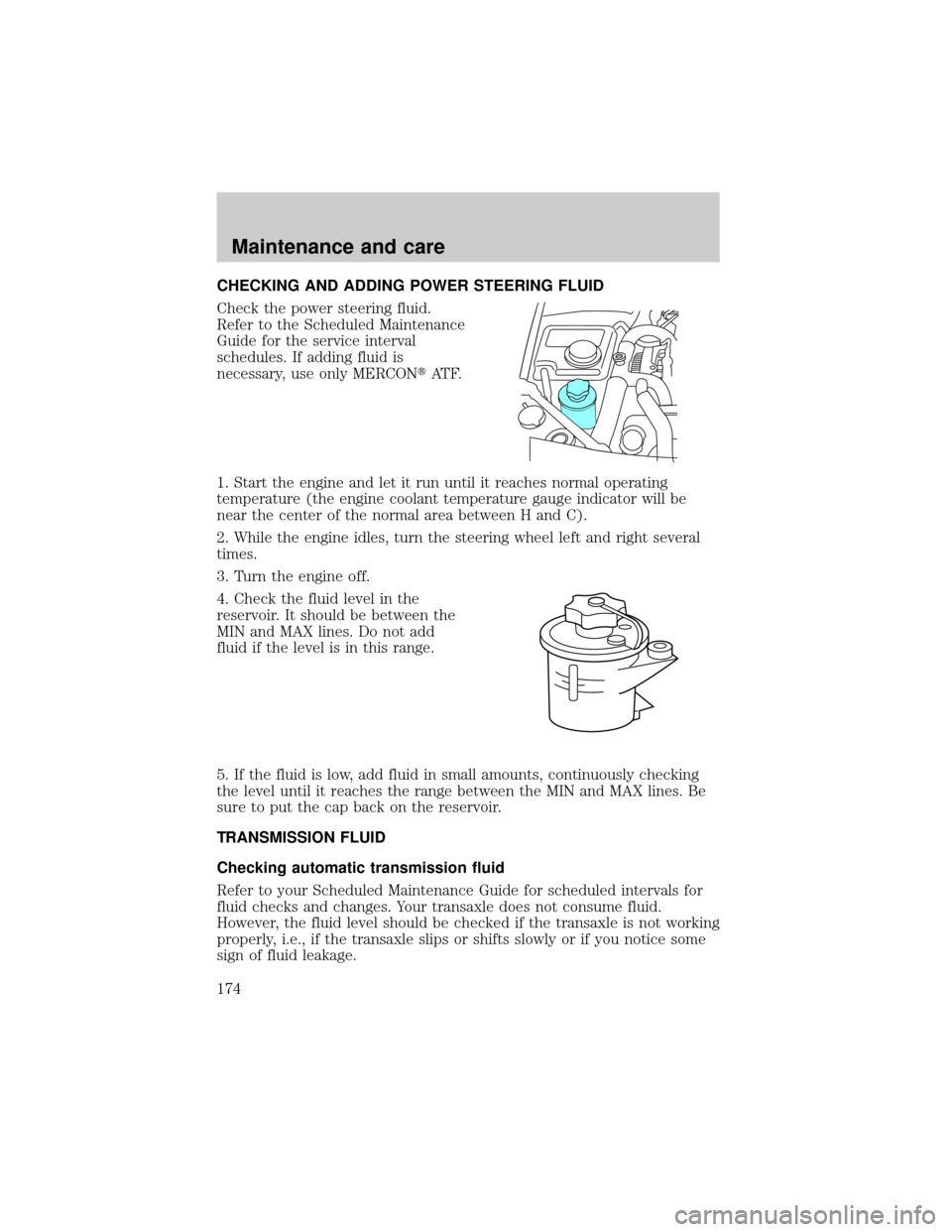
CHECKING AND ADDING POWER STEERING FLUID
Check the power steering fluid.
Refer to the Scheduled Maintenance
Guide for the service interval
schedules. If adding fluid is
necessary, use only MERCONtAT F.
1. Start the engine and let it run until it reaches normal operating
temperature (the engine coolant temperature gauge indicator will be
near the center of the normal area between H and C).
2. While the engine idles, turn the steering wheel left and right several
times.
3. Turn the engine off.
4. Check the fluid level in the
reservoir. It should be between the
MIN and MAX lines. Do not add
fluid if the level is in this range.
5. If the fluid is low, add fluid in small amounts, continuously checking
the level until it reaches the range between the MIN and MAX lines. Be
sure to put the cap back on the reservoir.
TRANSMISSION FLUID
Checking automatic transmission fluid
Refer to your Scheduled Maintenance Guide for scheduled intervals for
fluid checks and changes. Your transaxle does not consume fluid.
However, the fluid level should be checked if the transaxle is not working
properly, i.e., if the transaxle slips or shifts slowly or if you notice some
sign of fluid leakage.
Maintenance and care
174
Page 207 of 232
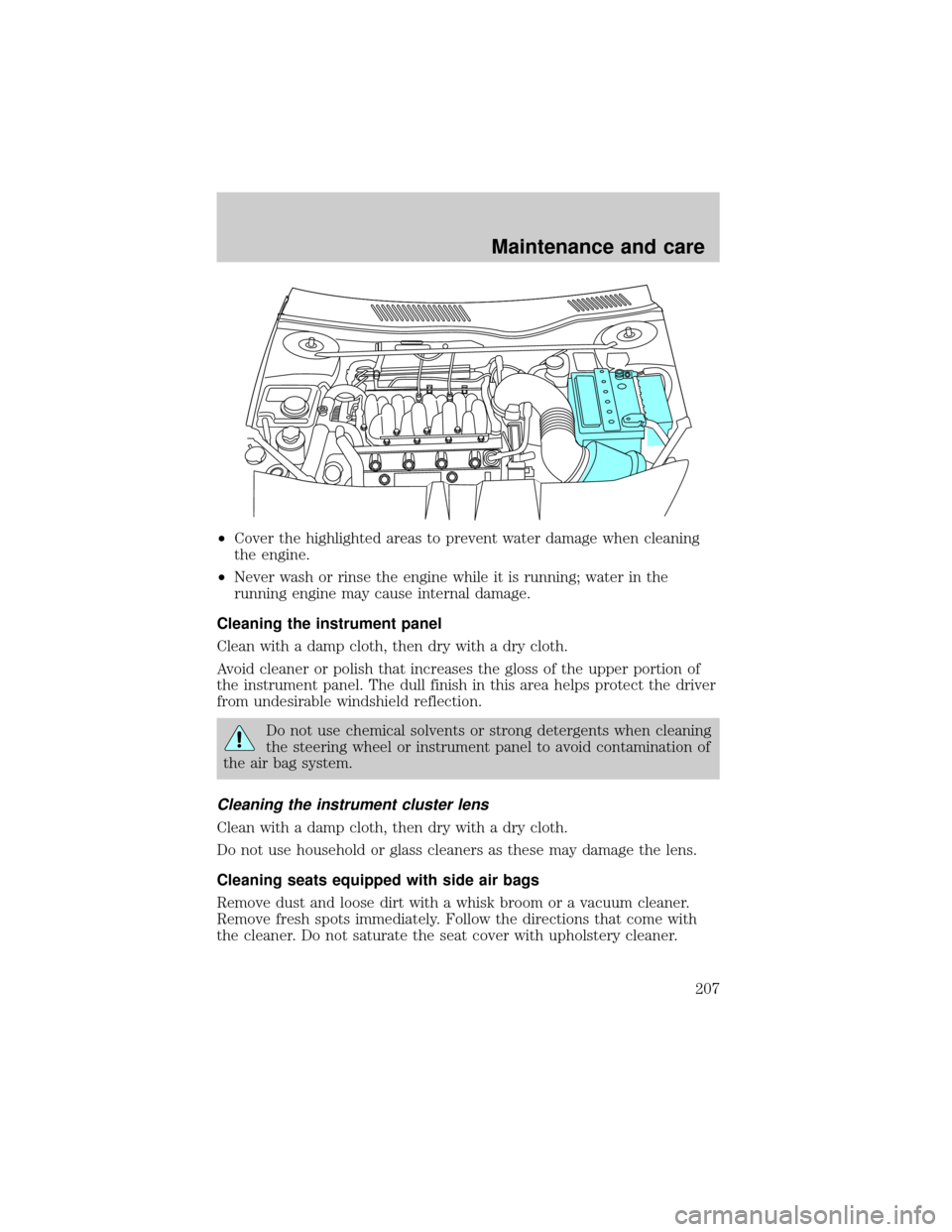
²Cover the highlighted areas to prevent water damage when cleaning
the engine.
²Never wash or rinse the engine while it is running; water in the
running engine may cause internal damage.
Cleaning the instrument panel
Clean with a damp cloth, then dry with a dry cloth.
Avoid cleaner or polish that increases the gloss of the upper portion of
the instrument panel. The dull finish in this area helps protect the driver
from undesirable windshield reflection.
Do not use chemical solvents or strong detergents when cleaning
the steering wheel or instrument panel to avoid contamination of
the air bag system.
Cleaning the instrument cluster lens
Clean with a damp cloth, then dry with a dry cloth.
Do not use household or glass cleaners as these may damage the lens.
Cleaning seats equipped with side air bags
Remove dust and loose dirt with a whisk broom or a vacuum cleaner.
Remove fresh spots immediately. Follow the directions that come with
the cleaner. Do not saturate the seat cover with upholstery cleaner.
Maintenance and care
207
Page 230 of 232

SecuriLock passive
anti-theft system ...............88,89,90
Servicing your vehicle ..............162
Spark plugs,
specifications ......................209,211
Specification chart,
lubricants ............................210,211
Speed control ..............................49
Speedometer ...............................13
Starting your vehicle .........120,122
jump starting ..........................156
Steering
speed sensitive .......................129
Steering wheel
controls ......................................48
tilting .........................................53
Tachometer .................................13
Tilt steering wheel ......................53
Tires ........152,181,182,183,184,185
changing ...........................152,153
checking the pressure ............185
replacing ..................................186
rotating ....................................185
snow tires and chains ............186
tire grades ...............................184
treadwear ................................184
Towing .......................................185
recreational towing .................140
wrecker ....................................161
Traction control ........................127off light ......................................11
Transaxle
automatic operation ...............130
fluid, refill capacities ..............209
lubricant specifications ..........211
Transmission
fluid, checking and adding
(automatic) .............................174
lubricant specifications ..........210
Trunk ...........................................91
remote release .....................77,82
Turn signal .............................10,48
Vehicle dimensions ...................211
Vehicle Identification
Number (VIN) ...........................213
Vehicle loading ..........................135
Ventilating your vehicle ...........124
Warning chimes ......................11,12
Warning lights (see Lights) .........8
Washer fluid ..............................169
Water, Driving through .............135
Windows
power .........................................75
Windshield washer
fluid and wipers
checking and adding fluid .....169
checking and cleaning ............181
operation ...................................47
replacing wiper blades ...........181
Wrecker towing .........................161
Index
230