hood release LINCOLN TOWN CAR 2000 Owners Manual
[x] Cancel search | Manufacturer: LINCOLN, Model Year: 2000, Model line: TOWN CAR, Model: LINCOLN TOWN CAR 2000Pages: 224, PDF Size: 1.73 MB
Page 119 of 224
ABS warning lampABS
TheABSwarning lamp in the instrument cluster momentarily illuminates
when the ignition is turned to the ON position. If the light does not
illuminate momentarily at start up, remains on or continues to flash, the
ABS needs to be serviced.
With the ABS light on, the anti-lock
brake system is disabled and normal
braking is still effective unless the
brake warning light also remains
illuminated with parking brake
released. (If your brake warning lamp illuminates, have your vehicle
serviced immediately.)
Using ABS
²In an emergency or when maximum efficiency from the ABS is
required, apply continuous force on the brake. The ABS will be
activated immediately, thus allowing you to retain full steering control
of your vehicle and, providing there is sufficient space, will enable you
to avoid obstacles and bring the vehicle to a controlled stop.
²The Anti-Lock system does not decrease the time necessary to apply
the brakes or always reduce stopping distance. Always leave enough
room between your vehicle and the vehicle in front of you to stop.
²We recommend that you familiarize yourself with this braking
technique. However, avoid taking any unnecessary risks.
Parking brake with auto-release
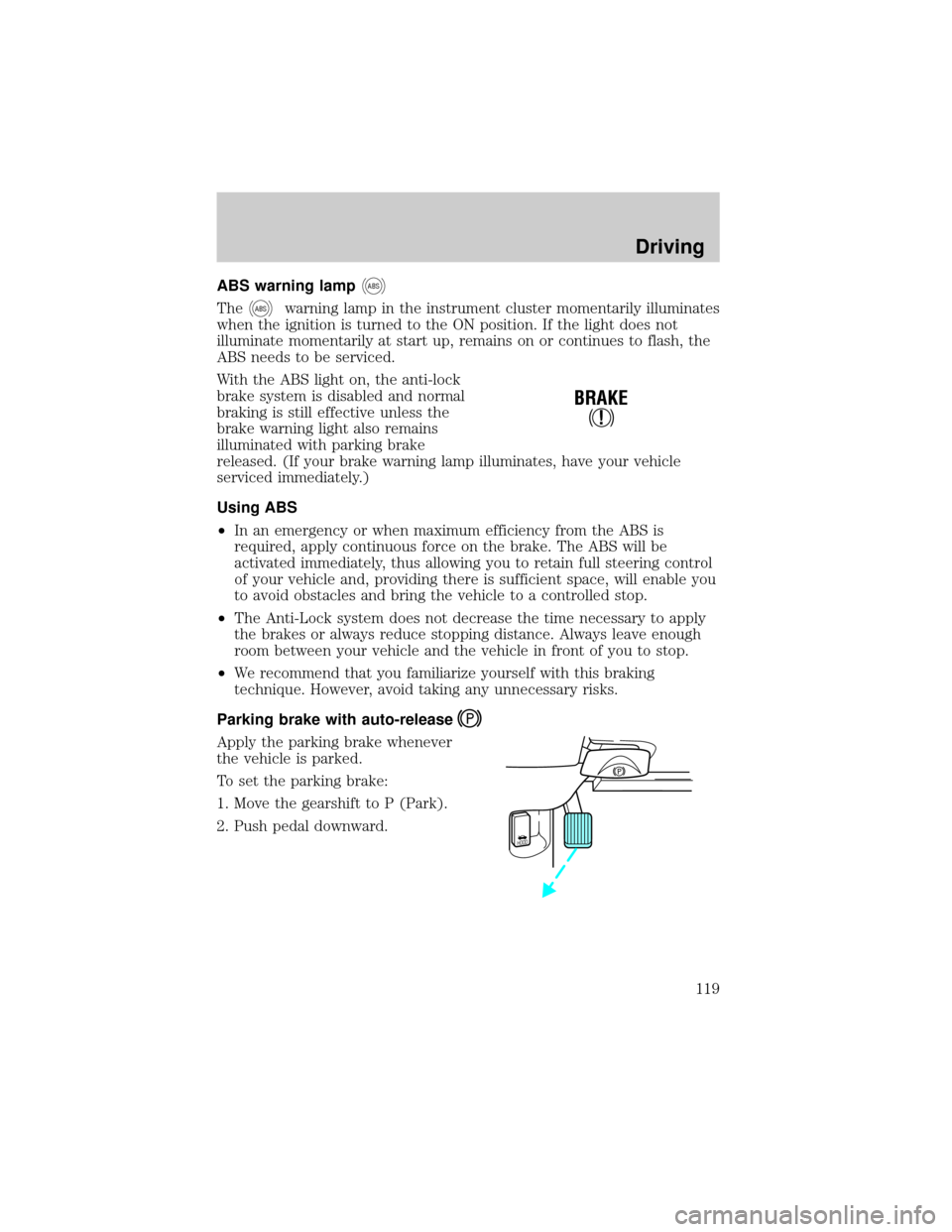
Apply the parking brake whenever
the vehicle is parked.
To set the parking brake:
1. Move the gearshift to P (Park).
2. Push pedal downward.
!
BRAKE
HOOD
Driving
119
Page 120 of 224
The BRAKE warning lamp in the
instrument cluster illuminates and
remains illuminated (when the
ignition is turned ON) until the
parking brake is fully released.
Always set the parking brake fully and make sure the gearshift is
latched in P (Park). Turn off the ignition whenever you leave
your vehicle.
The parking brake is not recommended to stop a moving vehicle.
However, if the normal brakes fail, the parking brake can be used to stop
your vehicle in an emergency. Since the parking brake applies only the
rear brakes, the vehicle's stopping distance will increase greatly and the
handling of your vehicle will be adversely affected.
Your vehicle has an automatic parking brake release. To release the
parking brake:
1. Turn the ignition to the ON position.
2. Press the brake pedal.
3. Move the gearshift from the P (Park) position to one of the forward
gears (the parking brake will not release automatically when you shift
into reverse). The brake pedal must remain pressed while the gearshift is
moved.
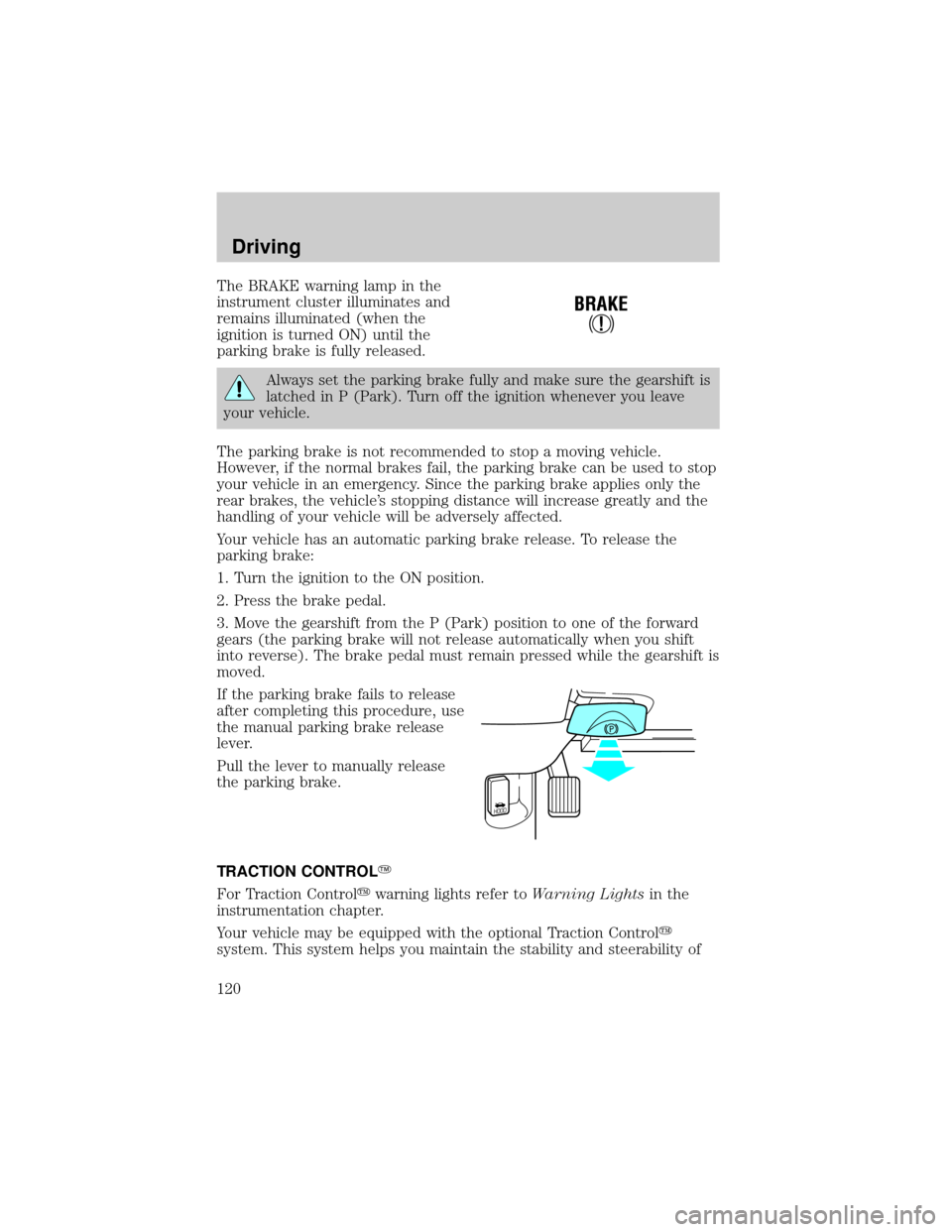
If the parking brake fails to release
after completing this procedure, use
the manual parking brake release
lever.
Pull the lever to manually release
the parking brake.
TRACTION CONTROLY
For Traction Controlywarning lights refer toWarning Lightsin the
instrumentation chapter.
Your vehicle may be equipped with the optional Traction Controly
system. This system helps you maintain the stability and steerability of
!
BRAKE
HOOD
Driving
120
Page 151 of 224
Working with the engine off
1. Set the parking brake and ensure the gearshift is securely latched in P
(Park).
2. Turn off the engine and remove the key.
3. Block the wheels to prevent the vehicle from moving unexpectedly.
Working with the engine on
1. Set the parking brake and ensure the gearshift is securely latched in P
(Park).
2. Block the wheels to prevent the vehicle from moving unexpectedly.
Do not start your engine with the air cleaner removed and do
not remove it while the engine is running.
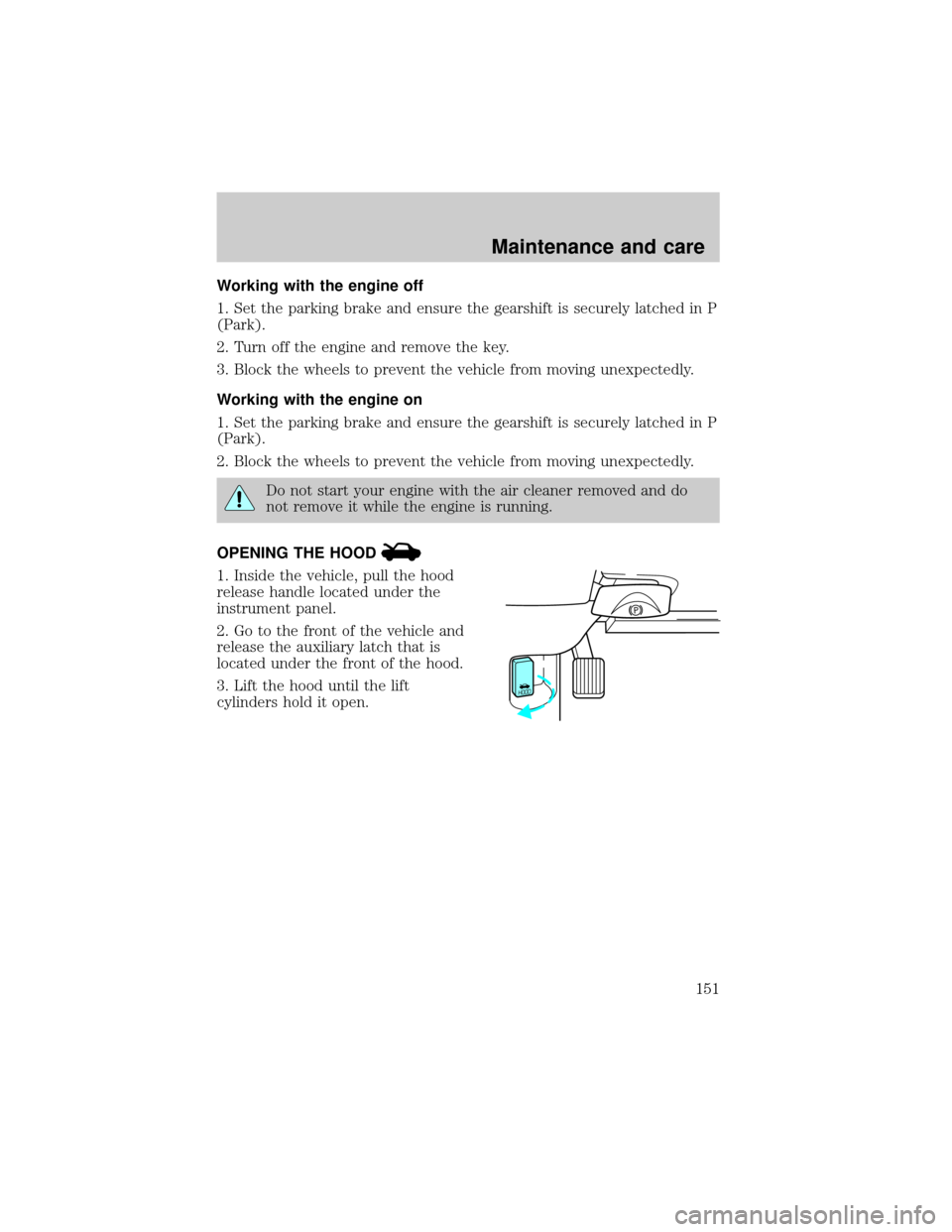
OPENING THE HOOD
1. Inside the vehicle, pull the hood
release handle located under the
instrument panel.
2. Go to the front of the vehicle and
release the auxiliary latch that is
located under the front of the hood.
3. Lift the hood until the lift
cylinders hold it open.
HOOD
Maintenance and care
151
Page 216 of 224

filter, specifications .........178,195
fuel filler door override ............67
fuel filler door release ..............66
fuel pump shut-off switch .....133
gauge .........................................15
improving fuel economy ........179
octane rating ....................177,198
quality ......................................177
running out of fuel .................178
safety information relating
to automotive fuels ................174
Fuses ...................................134,135
Garage door opener ....................61
Gas cap (see Fuel cap) ............176
Gas mileage
(see Fuel economy) .................179
Gauges .........................................15
engine coolant
temperature gauge ...................16
fuel gauge ..................................15
odometer ...................................15
speedometer .............................16
GAWR
(Gross Axle Weight Rating) .....127
definition .................................127
driving with a heavy load ......127
location ....................................127
GVWR (Gross Vehicle
Weight Rating) ..........................127
calculating ...............................127
definition .................................127
driving with a heavy load ......127
location ....................................127
Hazard flashers .........................133
Head restraints ...........................84
Headlamps ...................................23
aiming ........................188,189,190
autolamp system .......................23
bulb specifications ..................188
daytime running lights .............23
flash to pass ..............................24
high beam ............................10,24replacing bulbs .......................184
turning on and off ....................23
warning chime ..........................14
Heating ........................................24
HomeLink universal
transceiver (see
Garage door opener) ...61,62,63,64
Hood ..........................................151
Ignition .......................................198
positions of the ignition ...........54
Infant seats
(see Safety seats) .....................107
Inspection/maintenance
(I/M) testing ..............................183
Instrument panel
cleaning ...................................193
cluster ..........................................8
lighting up
panel and interior .....................23
location of components ..............8
Jump-starting your vehicle ......144
Keyless entry system .................77
autolock .....................................75
keypad .......................................77
programming entry code .........78
Keys .............................................55
key in ignition chime ...............14
positions of the ignition ...........54
Lamps
autolamp system .......................23
bulb replacement
specifications chart ................188
cargo lamps ...............................23
daytime running light ...............23
headlamps .................................23
headlamps, flash to pass ..........24
instrument panel, dimming .....23
interior lamps ....................65,188
replacing bulbs .........184,186,187
Lane change indicator
(see Turn signal) ........................55
Lights, warning and indicator ......8
Index
216
Page 224 of 224
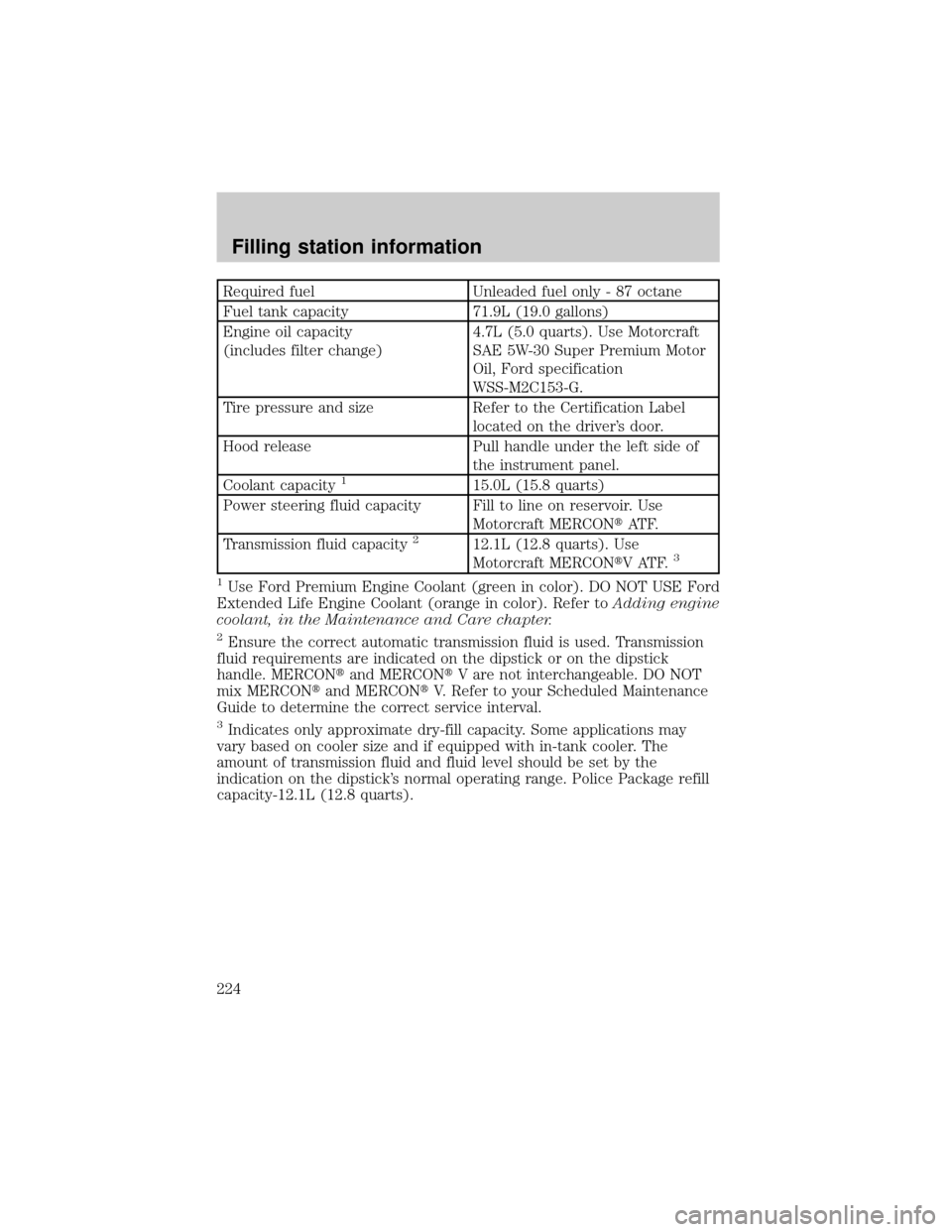
Required fuel Unleaded fuel only - 87 octane
Fuel tank capacity 71.9L (19.0 gallons)
Engine oil capacity
(includes filter change)4.7L (5.0 quarts). Use Motorcraft
SAE 5W-30 Super Premium Motor
Oil, Ford specification
WSS-M2C153-G.
Tire pressure and size Refer to the Certification Label
located on the driver's door.
Hood release Pull handle under the left side of
the instrument panel.
Coolant capacity
115.0L (15.8 quarts)
Power steering fluid capacity Fill to line on reservoir. Use
Motorcraft MERCONtAT F.
Transmission fluid capacity
212.1L (12.8 quarts). Use
Motorcraft MERCONtV ATF.3
1
Use Ford Premium Engine Coolant (green in color). DO NOT USE Ford
Extended Life Engine Coolant (orange in color). Refer toAdding engine
coolant, in the Maintenance and Care chapter.
2Ensure the correct automatic transmission fluid is used. Transmission
fluid requirements are indicated on the dipstick or on the dipstick
handle. MERCONtand MERCONtV are not interchangeable. DO NOT
mix MERCONtand MERCONtV. Refer to your Scheduled Maintenance
Guide to determine the correct service interval.
3Indicates only approximate dry-fill capacity. Some applications may
vary based on cooler size and if equipped with in-tank cooler. The
amount of transmission fluid and fluid level should be set by the
indication on the dipstick's normal operating range. Police Package refill
capacity-12.1L (12.8 quarts).
Filling station information
224