belt LOTUS ELISE 2005 Owners Manual
[x] Cancel search | Manufacturer: LOTUS, Model Year: 2005, Model line: ELISE, Model: LOTUS ELISE 2005Pages: 205, PDF Size: 4.51 MB
Page 3 of 205
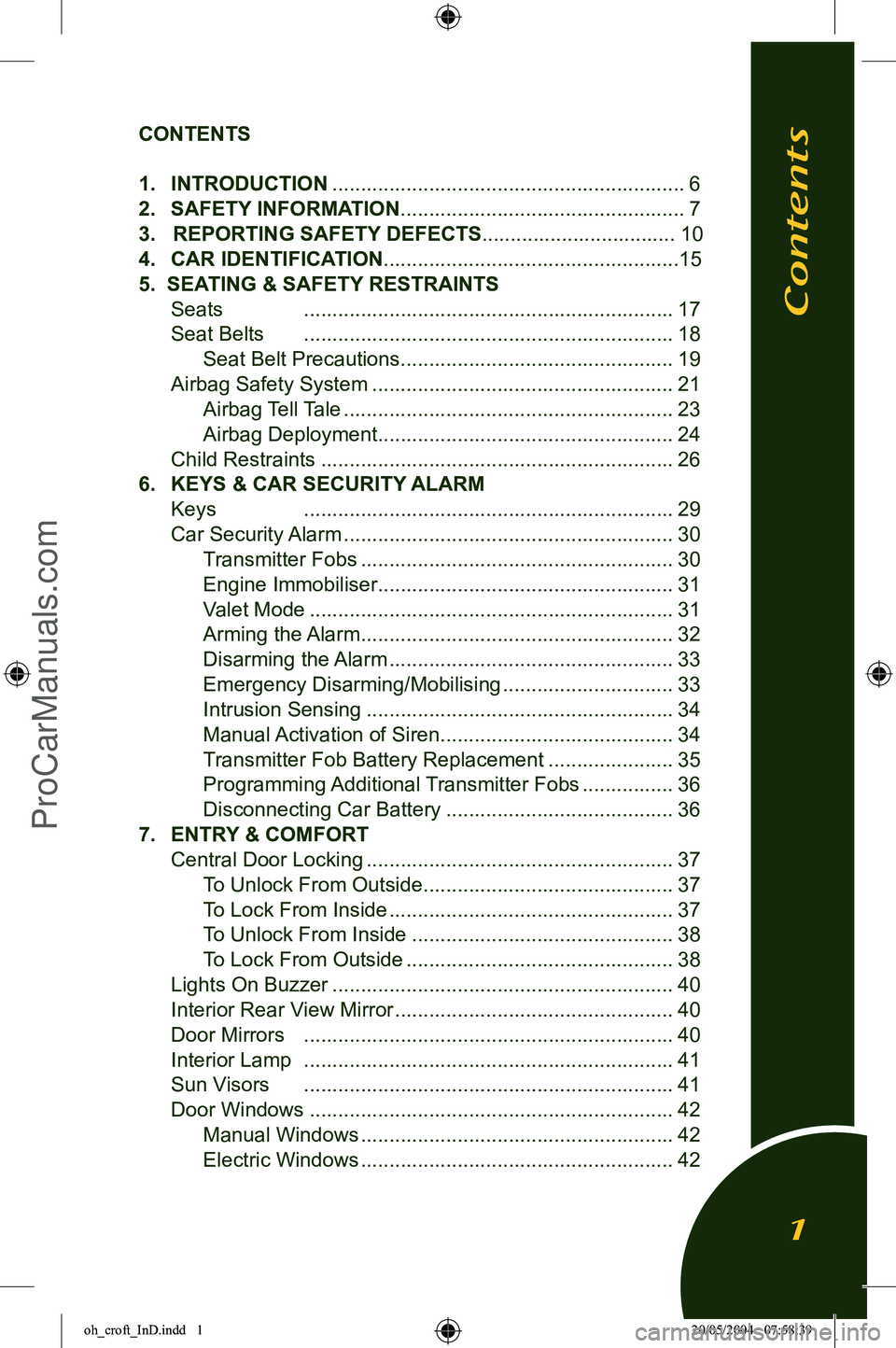
CONTENTS
1. INTRODUCTION ..............................................................
6
2. SAFETY INFORMATION ..................................................7
3. REPORTING SAFETY DEFECTS
.................................. 10
4. CAR IDENTIFICATION
....................................................15
5. SEATING & SAFETY REST
RAINTS
Seats .................................................................
17
Seat Belts .................................................................
18
Seat Belt Precautions ................................................
19
Airbag Safety System .....................................................
21
Airbag Tell Tale ..........................................................
23
Airbag Deployment ....................................................
24
Child Restraints ..............................................................
26
6. KEYS & CAR SECURITY ALARM
Keys .................................................................
29
Car Security Alarm ..........................................................
30
Transmitter Fobs .......................................................
30
Engine Immobiliser ....................................................
31
Valet Mode ................................................................
31
Arming the Alarm .......................................................
32
Disarming the Alarm ..................................................
33
Emergency Disarming/Mobilising ..............................
33
Intrusion Sensing ......................................................
34
Manual Activation of Siren .........................................
34
Transmitter Fob Battery Replacement ......................
35
Programming Additional Transmitter Fobs ................
36
Disconnecting Car Battery ........................................
36
7. ENTRY & COMFORT
Central Door Locking ......................................................
37
To Unlock From Outside ............................................
37
To Lock From Inside ..................................................
37
To Unlock From Inside ..............................................
38
To Lock From Outside ...............................................
38
Lights On Buzzer ............................................................
40
Interior Rear View Mirror .................................................
40
Door Mirrors .................................................................
40
Interior Lamp .................................................................
41
Sun Visors .................................................................
41
Door Windows ................................................................
42
Manual Windows .......................................................
42
Electric Windows .......................................................
42
Contents
1
oh_croft_InD.indd 120/05/2004 07:58:39ProCarManuals.com
Page 4 of 205
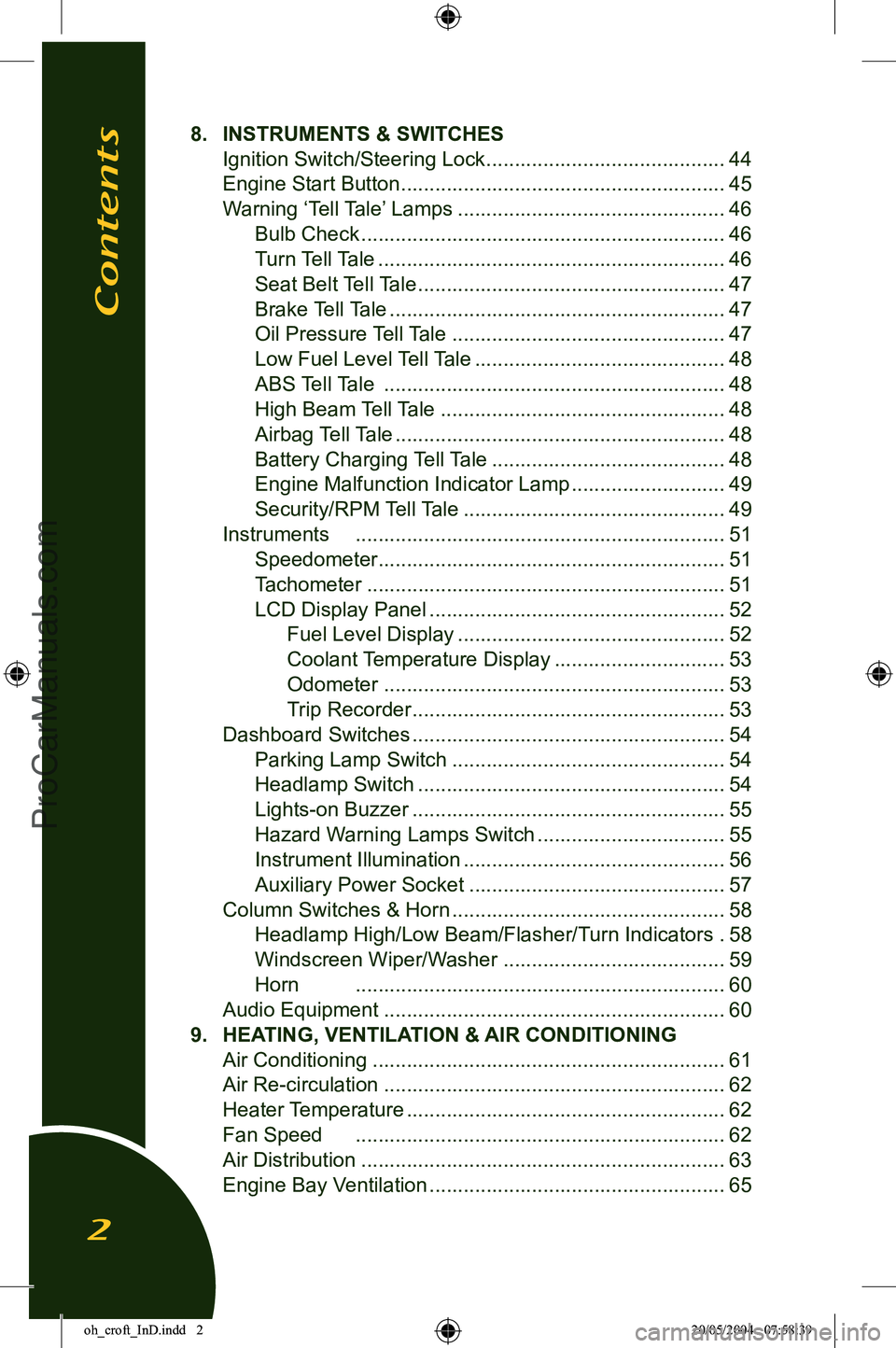
8. INSTRUMENTS & SWITCHES
Ignition Switch/Steering Lock ..........................................
44
Engine Start Button .........................................................
45
Warning ‘Tell Tale’ Lamps ...............................................
46
Bulb Check ................................................................
46
Turn Tell Tale .............................................................
46
Seat Belt Tell Tale ......................................................
47
Brake Tell Tale ...........................................................
47
Oil Pressure Tell Tale ................................................
47
Low Fuel Level Tell Tale ............................................
48
ABS Tell Tale ............................................................
48
High Beam Tell Tale ..................................................
48
Airbag Tell Tale ..........................................................
48
Battery Charging Tell Tale .........................................
48
Engine Malfunction Indicator Lamp ...........................
49
Security/RPM Tell Tale ..............................................
49
Instruments .................................................................
51
Speedometer .............................................................
51
Tachometer ...............................................................
51
LCD Display Panel ....................................................
52
Fuel Level Display ...............................................
52
Coolant Temperature Display ..............................
53
Odometer ............................................................
53
Trip Recorder .......................................................
53
Dashboard Switches .......................................................
54
Parking Lamp Switch ................................................
54
Headlamp Switch ......................................................
54
Lights-on Buzzer .......................................................
55
Hazard Warning Lamps Switch .................................
55
Instrument Illumination ..............................................
56
Auxiliary Power Socket .............................................
57
Column Switches & Horn ................................................
58
Headlamp High/Low Beam/Flasher/Turn Indicators .
58
Windscreen Wiper/Washer .......................................
59
Horn .................................................................
60
Audio Equipment ............................................................
60
9. HEATING, VENTILATION & AIR CONDITIONING
Air Conditioning ..............................................................
61
Air Re-circulation ............................................................
62
Heater Temperature ........................................................
62
Fan Speed .................................................................
62
Air Distribution ................................................................
63
Engine Bay Ventilation ....................................................
65
Contents
2
oh_croft_InD.indd 220/05/2004 07:58:39ProCarManuals.com
Page 5 of 205
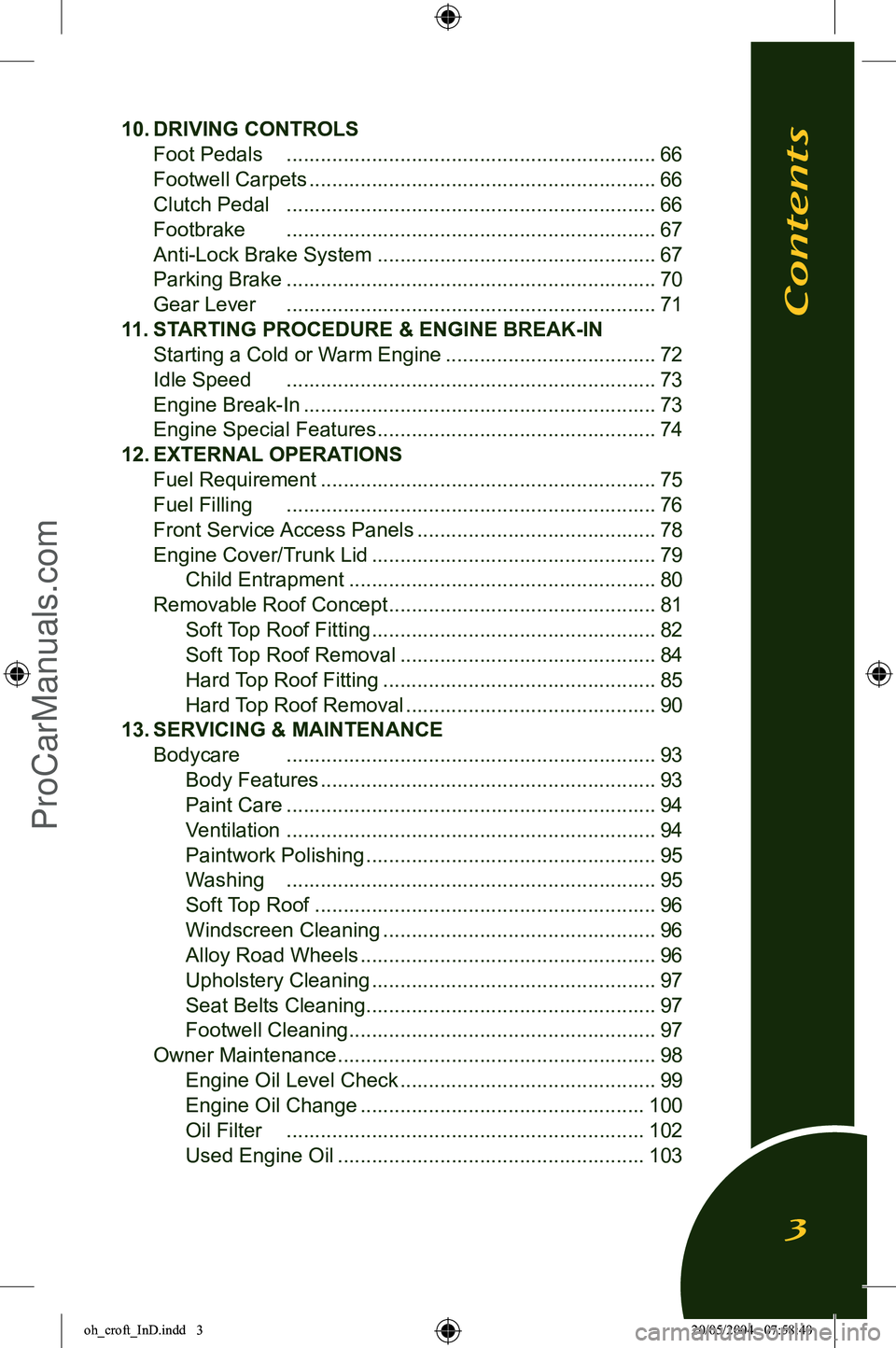
10. DRIVING CONTROLS
Foot Pedals .................................................................
66
Footwell Carpets .............................................................
66
Clutch Pedal .................................................................
66
Footbrake .................................................................
67
Anti-Lock Brake System .................................................
67
Parking Brake .................................................................
70
Gear Lever .................................................................
71
11. STARTING PROCEDURE & ENGINE BREAK-IN
Starting a Cold or Warm Engine .....................................
72
Idle Speed .................................................................
73
Engine Break-In ..............................................................
73
Engine Special Features .................................................
74
12. EXTERNAL OPERATIONS
Fuel Requirement ...........................................................
75
Fuel Filling .................................................................
76
Front Service Access Panels ..........................................
78
Engine Cover/Trunk Lid ..................................................
79
Child Entrapment ......................................................
80
Removable Roof Concept ...............................................
81
Soft Top Roof Fitting ..................................................
82
Soft Top Roof Removal .............................................
84
Hard Top Roof Fitting ................................................
85
Hard Top Roof Removal ............................................
90
13. SERVICING & MAINTENANCE
Bodycare .................................................................
93
B
ody Features ...........................................................93
Paint Care .................................................................
94
Ventilation .................................................................
94
Paintwork Polishing ...................................................
95
Washing .................................................................
95
Soft Top Roof ............................................................
96
Windscreen Cleaning ................................................
96
Alloy Road Wheels ....................................................
96
Upholstery Cleaning ..................................................
97
Seat Belts Cleaning ...................................................
97
Footwell Cleaning ......................................................
97
Owner Maintenance ........................................................
98
Engine Oil Level Check .............................................
99
Engine Oil Change ..................................................
100
Oil Filter ...............................................................
102
Used Engine Oil ......................................................
103
Contents
3
oh_croft_InD.indd 320/05/2004 07:58:40ProCarManuals.com
Page 6 of 205
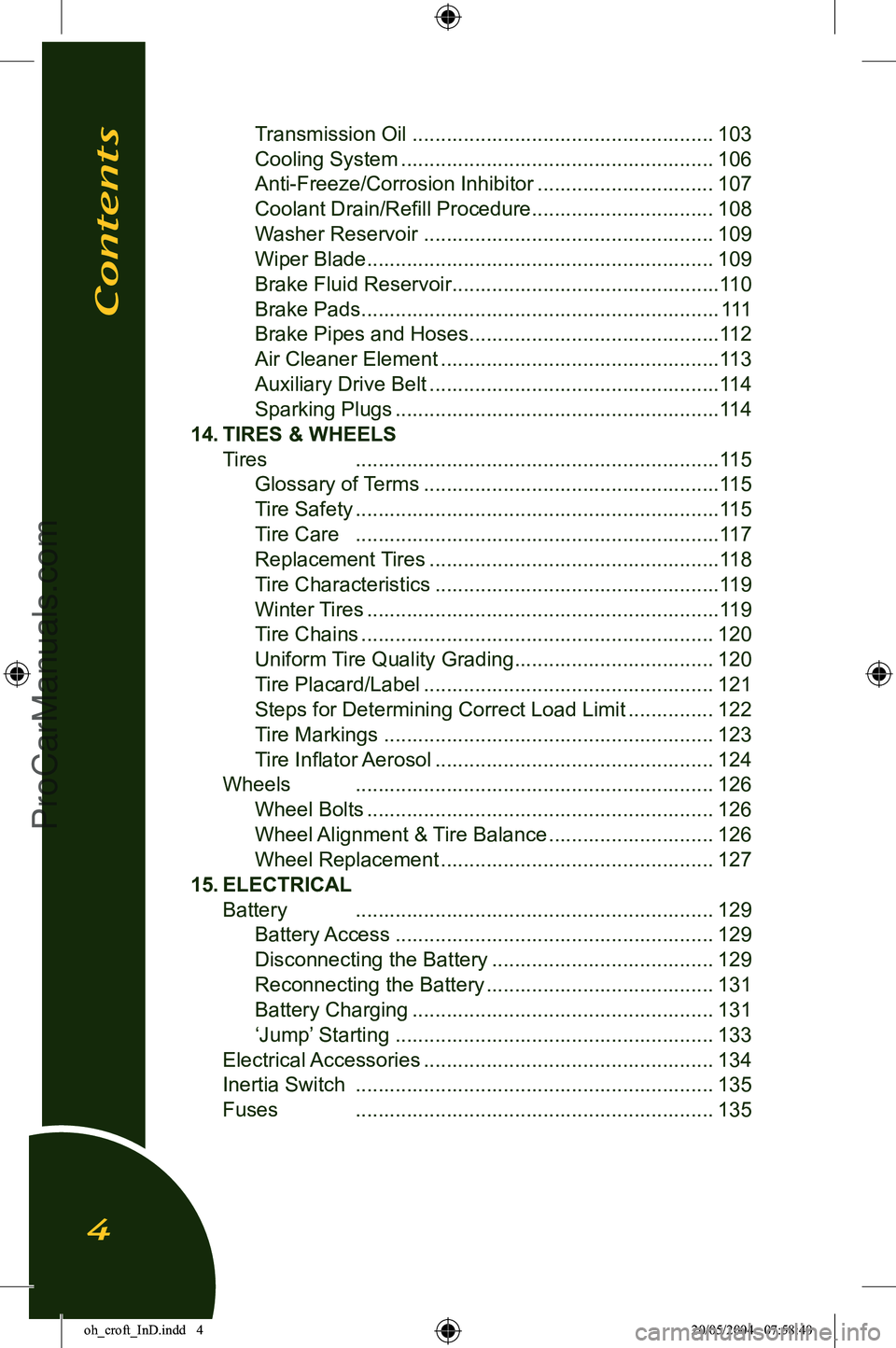
Transmission Oil .....................................................103
Cooling System .......................................................
106
Anti-Freeze/Corrosion Inhibitor ...............................
107
Coolant Drain/Refill Procedure ................................
108
Washer Reservoir ...................................................
109
Wiper Blade .............................................................
109
Brake Fluid Reservoir ............................................... 110
Brake Pads ............................................................... 111
Brake Pipes and Hoses ............................................112
Air Cleaner Element ................................................. 113
Auxiliary Drive Belt ................................................... 114
Sparking Plugs ......................................................... 114
14. TIRES & WHEE
LS
Tires ................................................................ 115
Glossary of Terms .................................................... 115
T
ire Safety ................................................................ 115
Tire Care ................................................................ 117
Replacement Tires ................................................... 118
Tire Characteristics .................................................. 119
Winter T
ires .............................................................. 119
Tire Cha
ins ..............................................................120
Uniform T
ire Quality Grading ...................................120
Tire Placard
/Label ...................................................121
Steps
for Determining Correct Load Limit ...............122
Tire Ma
rkings ..........................................................123
T ire Inflator Aerosol .................................................
124
Wheels ...............................................................
126
Wheel Bolts .............................................................
126
Wheel Alignment & Tire Balance .............................
126
Wheel Replacement ................................................
127
15. ELECTRICAL
Battery ...............................................................129
Battery Access ........................................................
129
Disconnecting the Battery .......................................
129
Reconnecting the Battery ........................................
131
Battery Charging .....................................................
131
‘Jump’ Starting ........................................................
133
Electrical Accessories ...................................................
134
Inertia Switch ...............................................................
135
Fuses ...............................................................
135
Contents
4
oh_croft_InD.indd 420/05/2004 07:58:40ProCarManuals.com
Page 9 of 205
Safety InformationTo help you make informed decisions about safety, important
safety information is provided in forms including:
• Safety labels on the car
• Safety messages in this handbook are shown as follows:
WARNING: The hazard and instructions to avoid the hazard are
given. If you do not take these instructions you and /or
others can be KILLED OR SERIOUSLY INJURED.
Messages prefac ed by
‘NOTICE’ are intended to help
y o u a v o i d d a m a g e t o y o u r c a r, o t h e r p r o p e r t y o r t h e
environment.
Important Safety Precautions You’ll find many safety recommendations throughout this sec
-
tion, and throughout this manual. The recommendations on this page are the ones we consider to be the most important.
Always Wear Your Seat Belt A seat belt is your best protection in accidents (including colli
-
sions). Airbags supplement seat belts, but airbags are designed
to inflate only in a moderate to severe frontal collision. So even
though your car is equipped with airbags, make sure you and
your passenger always wear your seat belts, and wear them properly. (See page 18).
Your Car is Not Recommended for Child Passengers Since all children are safest in the back seat of a car, and
your car does not have a back seat, we strongly recommend that you do not carry a child passenger. Children should be
carried in the Elise only if they are large enough to be able to
use the standard seat belt (see page 26). You should never
carry an infant in a rear-facing child seat in this car because
the Elise has a passenger airbag which cannot be switched off or disabled (see page 26).
Be Aware of Airbag Hazards While airbags can save lives, they can cause serious or
fatal injuries to occupants who sit too close to them, or are not
Safety Information
7
oh_croft_InD.indd 720/05/2004 07:58:41ProCarManuals.com
Page 10 of 205
properly restrained. Children, and short adults are at the great-
est risk. Be sure to follow all instructions and warnings in the handbook (See page 21 to 27).
Don’t Drink and Drive Alcohol and driving don’t mix. Even one drink can reduce your
ability to respond to changing conditions, and your reaction time
gets worse with every additional drink. So don’t drink and drive,
and don’t let your friends drink and drive, either.
Control Your Speed Excessive speed is a major factor in crash injuries and deaths.
Generally, the higher the speed the greater the risk, but serious accidents can also occur at lower speeds. Never drive faster
than is safe for current conditions, regardless of the maximum speed posted.
Keep Your Car in Safe Condition Having a tire blowout or a mechanical failure can be extremely
hazardous. To reduce the possibility of such problems, check
your tire pressures and condition frequently, and perform all
regularly scheduled maintenance (see separate Maintenance
Record booklet).
Safety Features Your car is equipped with many features that work together
to protect you and your passenger during a crash. The Lotus Elise has been designed to comply with applicable safety regulations. The Elise has passive safety features which include:
• A cockpit tub surrounded by substantial chassis side
frames.
• Energy absorbing front
composite ‘crash structure’.
• Energy absorbing rear steel
‘crash structure’.
• Side sill foam pads.
• A seat belt mounting frame incorporating a roof hoop
• Extruded aluminium door beams.
• A collapsible steering column.
• Airbags for both driver and passenger. Active safety features include:
• Lap and diagonal inertia reel seat belts with impact sensing
pre-tensioners.
Safety Information
8
oh_croft_InD.indd 820/05/2004 07:58:41ProCarManuals.com
Page 11 of 205
• Powerful anti-lock four wheel disc brakes.
• High geared responsive steering requiring only small steering
wheel movements to alter course
• Exceptional road holding with optimised handling character
-
istics
You and your passenger cannot take full advantage of these
safety features unless you remain sitting in a proper position
and always wear your seat belt properly. In fact, some safety
features can contribute to injuries if they are not used properly. Drivers should be aware of their own limitations as well as
those of the car, and ensure that all road driving is conducted
well within both sets of capabilities, particularly on wet roads, or under adverse weather conditions.
Remember:
Driving a car requires:
• Care;
• Attention; and
• Sensible judgement.
Be aware that any motor car has the potential to cause death
or injury both to its occupants and/or other persons, and must
be used only in a responsible and cautious manner. This entire
handbook is filled with important safety information.
Please
read it carefully.
Remember:
• ALWAYS WEAR YOUR SEAT BELT.
• Never drive while under the influence of alcohol or drugs.
• Never drive when excessively tired.
• Never use mobile phones, map read or attempt other distract
-
ing activities whilst driving.
• Always obey all speed and traffic laws and regulations and never drive faster than the posted speed limit or than condi
-
tions allow.
• Be particularly careful driving on slippery or wet surfaces.
• Familiarise yourself with the car and always drive prudently, being aware of your own limitations and the limitations of the
car. Failure to operate the car properly can result in an ac
-
cident and serious injury.
Safety Information
9
oh_croft_InD.indd 920/05/2004 07:58:41ProCarManuals.com
Page 16 of 205
NOTICE: DO NOT push or tow start the car; or turn off the igni-
tion at engine speeds above idle; or run the fuel tank dry: Any of these actions may damage the catalytic converter.
Before driving the car:
• Check tires for damage, wear and proper inflation.
Under-infla-
tion causes increased rolling resistance and uses more fuel.
(Please refer to the section in this handbook on tires, page 115).
• Check all windows, mirrors and lights are clear and unob
-
structed and all lights are correctly working.
• Check that the engine cover and front body access panels
are correctly latched;
• Adjust the seat and mirrors, and familiarise yourself with
the controls.
• Check all instruments and warning lamps (‘tell tales’) are reading correctly.
• Ensure that both driver and passenger are properly restrained
by their seat belts.
Care of the Environment By virtue of its light weight, simple content, constructional
process and fuel efficiency, the Elise has a low environmental im
-
pact compared with many road cars. All drivers should, however,
be aware of the effect of motor car exhaust emissions on the
environment and drive in a way which minimises pollution by:
• Anticipating traffic flow to avoid needless acceleration
and braking.
• Using the highest suitable gear.
• Switching off rather than idling for long periods.
• Driving off as soon as it is safe to do so; it is not necessary or beneficial to the engine to allow extended idling from cold.
• Having the car serviced regularly as a poorly maintained car will use more fuel; have any engine faults attended to imme
-
diately.
• Considering the need to use the car for very short journeys.
The emissions produced by an engine are many times greater
when cold than when warm.
Safety Information
14
oh_croft_InD.indd 1420/05/2004 07:58:42ProCarManuals.com
Page 20 of 205
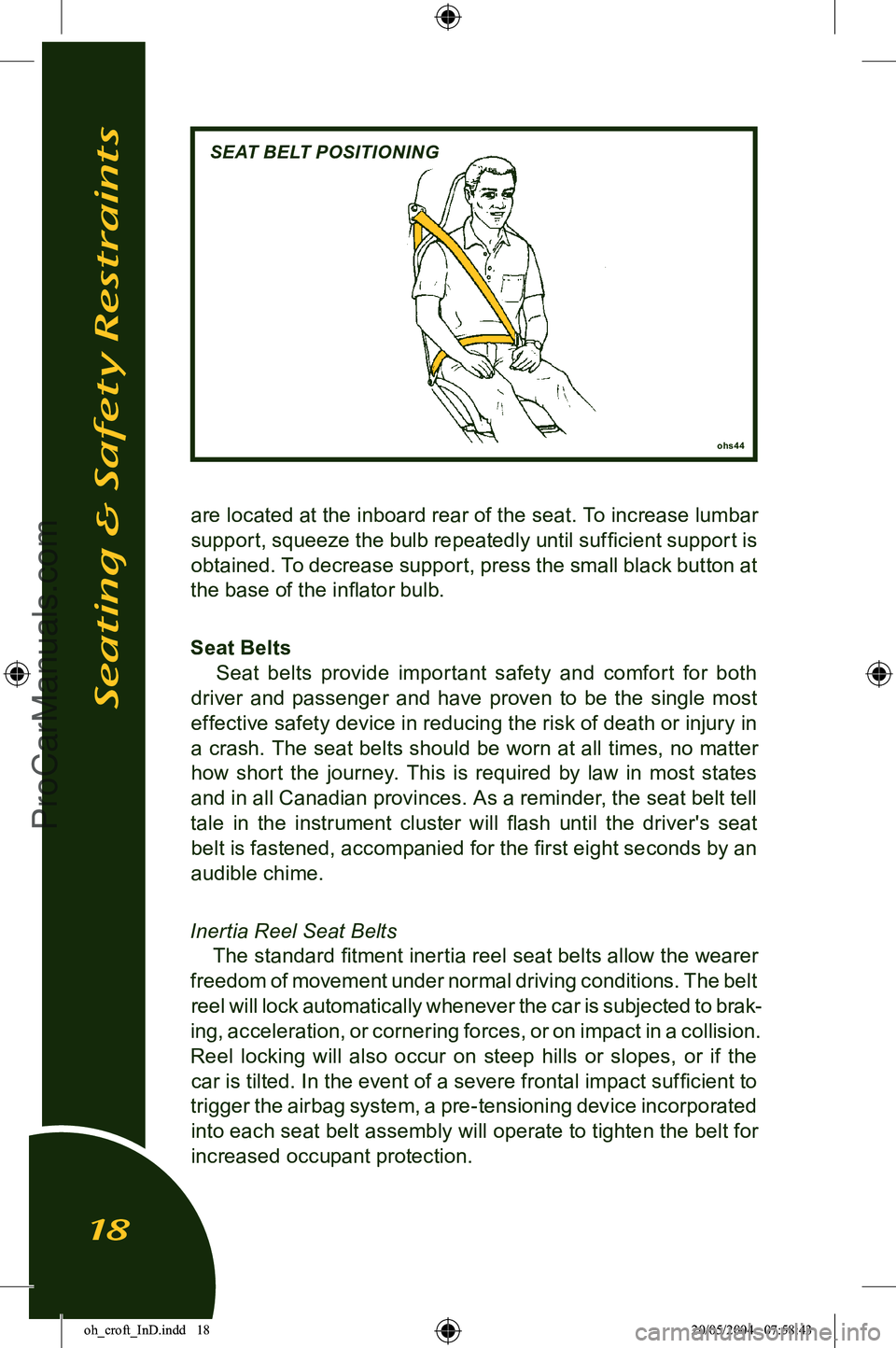
are located at the inboard rear of the seat. To increase lumbar
support, squeeze the bulb repeatedly until sufficient support is obtained. To decrease support, press the small black button at
the base of the inflator bulb.
Seat Belts Seat belts provide important safety and comfort for both
driver and passenger and have proven to be the single most
effective safety device in reducing the risk of death or injury in
a crash. The seat belts should be worn at all times, no matter how short the journey. This is required by law in most states
and in all Canadian provinces. As a reminder, the seat belt tell
tale in the instrument cluster will flash until the driver's seat
belt is fastened, accompanied for the first eight seconds by an
audible chime.
Inertia Reel Seat Belts The standard fitment inertia reel seat belts allow the wearer
freedom of movement under normal driving conditions. The belt reel will lock automatically whenever the car is subjected to brak
-
ing, acceleration, or cornering forces, or on impact in a collision. Reel locking will also occur on steep hills or slopes, or if the
car is tilted. In the event of a severe frontal impact sufficient to
trigger the airbag system, a pre-tensioning device incorporated into each seat belt assembly will operate to tighten the belt for
increased occupant protection.
ohs44
SEAT BELT POSITIONING
Seating & Safety Restraints
18
oh_croft_InD.indd 1820/05/2004 07:58:43ProCarManuals.com
Page 21 of 205
To use the belt, sit erect and fully back in the seat before
taking the buckle tongue in the outer hand, and drawing the belt through the top slide, pass the belt across the body and
push the tongue into the buckle lock at the inboard side of the
seat, until a positive ‘click’ is heard. Pull on the belt to check for correct latching and ensure that the belt fits snugly against the body with all the slack taken up by the reel. The belt should be
worn low across the front of the pelvis, and across the chest and shoulder. The belts are released by pressing the red button on the
buckle lock, and will retract automatically for tidy storage and
to permit easy access to the passenger compartment.
Seat Belt Precautions
WARNING:
• Be sure you and your passenger always wear seat belts and wear them properly. Not wearing a seat belt
correctly, increases the chance of serious injury or death
in a crash, even with airbags.
• On fastening the seat belt, ensure that no part of the belt is twisted, or is entangled in the door or seat
mechanism.
• Seat belts are designed to bear upon the bone structure
of the body and should be worn low across the front of
the pelvis, and across the chest and shoulder. Wearing
the lap section of the belt across the abdominal area must be avoided.
• Improperly positioning the seat belts can cause serious injury or death in a crash. Ensure the seat belts are
correctly positioned before driving.
• Pregnant women should always wear seat belts to protect
both themselves and the unborn child. The lap belt por
-
tion of the belt should be kept as low as possible across the hips. Consult your doctor regularly to check if you
should drive.
• The shoulder portion of the belt must never be worn beneath the arm, or behind the back.
• Each seat belt assembly is designed for use by one
occupant of adult build, and should not be used by
children unable to meet the requirements set forth
herein.
Seating & Safety Restraints
19
oh_croft_InD.indd 1920/05/2004 07:58:43ProCarManuals.com