hood LUCID AIR 2023 User Guide
[x] Cancel search | Manufacturer: LUCID, Model Year: 2023, Model line: AIR, Model: LUCID AIR 2023Pages: 241, PDF Size: 5.15 MB
Page 172 of 241
Wiper Blades and Washer Jets
Checking the Wiper BladesCAUTION: Only use cleaning products
that have been approved for use
on automotive glass and rubber.
Inappropriate products may cause
damage, smearing, or increased glare
on the screen.
You should periodically check and clean the
wiping edge of the wiper blade. Clean the blade edge using a soft cloth or sponge,
and isopropyl (rubbing) alcohol or windshield
washer fluid. Also, check the blade rubber for
cracks, splits, or roughness. If any damage
is found, replace the blade immediately to
prevent damage to the glass.
Replacing Wiper Blades
Note: For optimum performance, replace the
wiper blades at least every year.
Life expectancy of wiper blades can
vary, depending on geographical area
and frequency of use. Poor wiper blade
performance can result in “chattering” (that is, skipping across the glass), or leaving behind
marks, streaks of water, or wet spots. If any of
these conditions are present, clean the wiper
blades or replace them as needed.
Replacing the front wiper blades
CAUTION: Only install wiper blades
that are the same length and identical to the original specification. Failure to
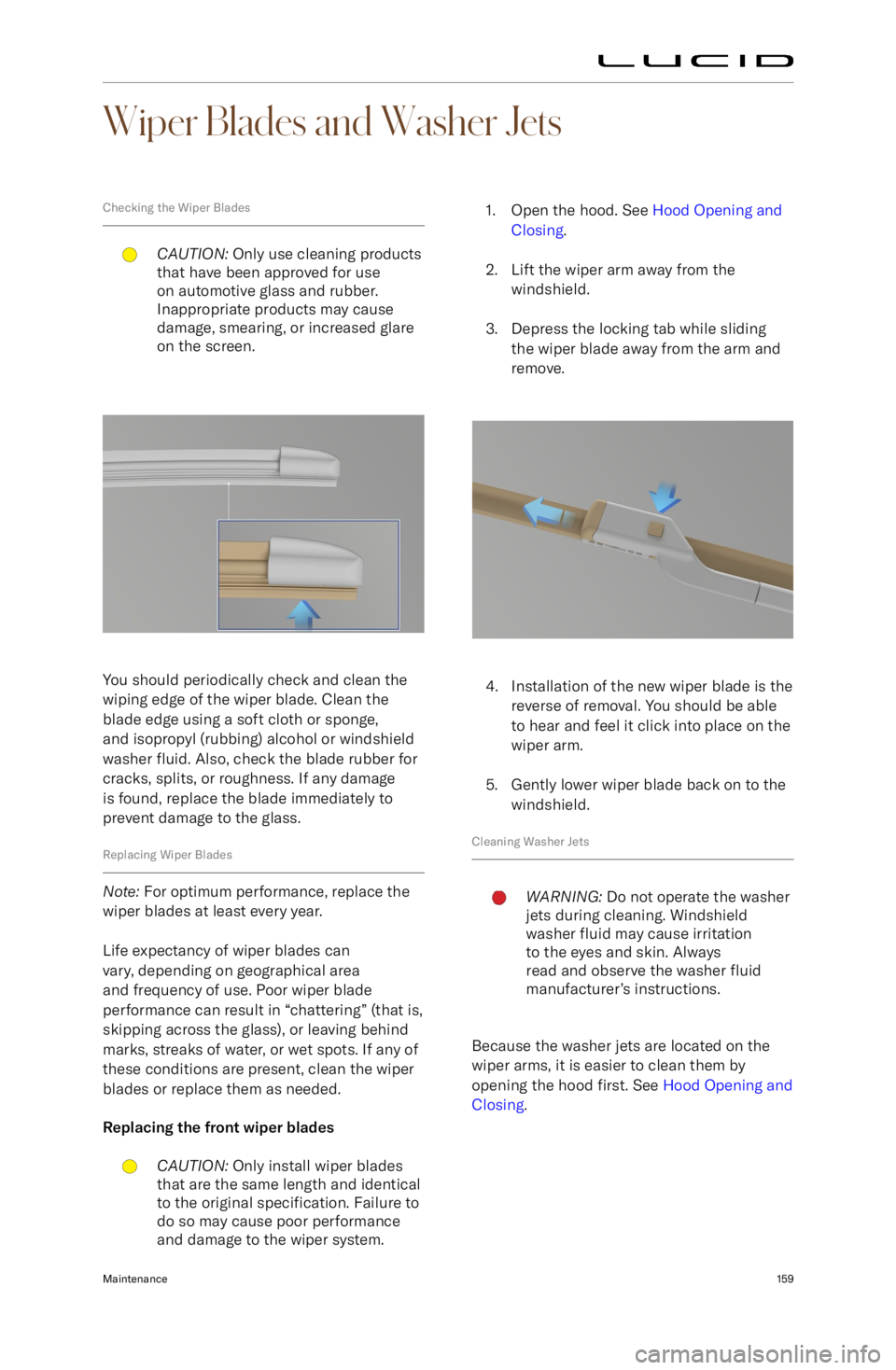
do so may cause poor performance and damage to the wiper system.1. Open the hood. See Hood Opening and
Closing .
2. Lift the wiper arm away from the windshield.
3. Depress the locking tab while sliding the wiper blade away from the arm and
remove.
4. Installation of the new wiper blade is the reverse of removal. You should be able
to hear and feel it click into place on the
wiper arm.
5. Gently lower wiper blade back on to the windshield.
Cleaning Washer Jets
WARNING: Do not operate the washer
jets during cleaning. Windshield
washer fluid may cause irritation
to the eyes and skin. Always
read and observe the washer fluid
manufacturer
Page 175 of 241
Vehicle Care
Cleaning the ExteriorWARNING: Never charge your vehicle
while washing it. Unplug the charging
cable and close the charge port cover.
Liquids entering the charge port while
the cable is plugged in could result
in serious personal injury, as well
as damage to the vehicle, charging
equipment, or property.WARNING: After washing the vehicle,
wet brakes can result in longer
stopping distances. To dry the brakes,
drive the vehicle slowly while gently
pressing the brake pedal a few times
to warm up the brakes.
Your vehicle should be washed regularly to
preserve the finish and maintain its overall
appearance.
To protect the paint surfaces, wash your
vehicle as soon as possible:
-When mud, dust, soot, or dirt builds up
on the surface
- After driving on coastal roads or winter
roads treated with salt
- When corrosive contaminants such as
tree sap, bird droppings, or bugs collect
on the surface
- After a rainfall to prevent possible
damage from acid rain
Environmental: It is illegal to pollute
drains, rivers, and waterways. Some cleaning
products contain chemicals that are
hazardous to the environment. Used toxic
chemicals must be disposed of at authorized
waste disposal sites only. Always take
precautions to prevent fluids from spilling.
Hand washing
CAUTION: Avoid using rough or
tightly-napped cloths (such as
washing mitts) on the vehicle, as
these can be abrasive enough to
damage the finish.CAUTION: Avoid washing your vehicle
in direct sunlight. Water and cleansers
dry faster on a hot surface and can
leave water spots or stains.
When washing your vehicle by hand, follow
these steps:
-Rinse the entire vehicle first to remove
as much excess dirt and dust as
possible and reduce the risk of
scratches from washing.
- Wash using a clean, soft cloth or sponge
and cold or lukewarm water mixed with
a mild car soap.
- Rinse your cleaning tools often to avoid
rubbing debris into the finish, especially
if your vehicle is exceptionally dirty.
- Do not aim water hoses directly
at window, door, or hood seals, or
through wheel apertures onto brake
components.
- After washing, rinse the vehicle
thoroughly with clean, cool water until
all the soap has been removed.
- To avoid leaving water spots on the
finish, dry the vehicle thoroughly with a
chamois or cotton cloth.
Removing tar spots
CAUTION: Do not use acidic, abrasive,
or petroleum-based cleansers, as
these can damage the vehicle
Page 199 of 241
Vehicle Dimensions and Weights
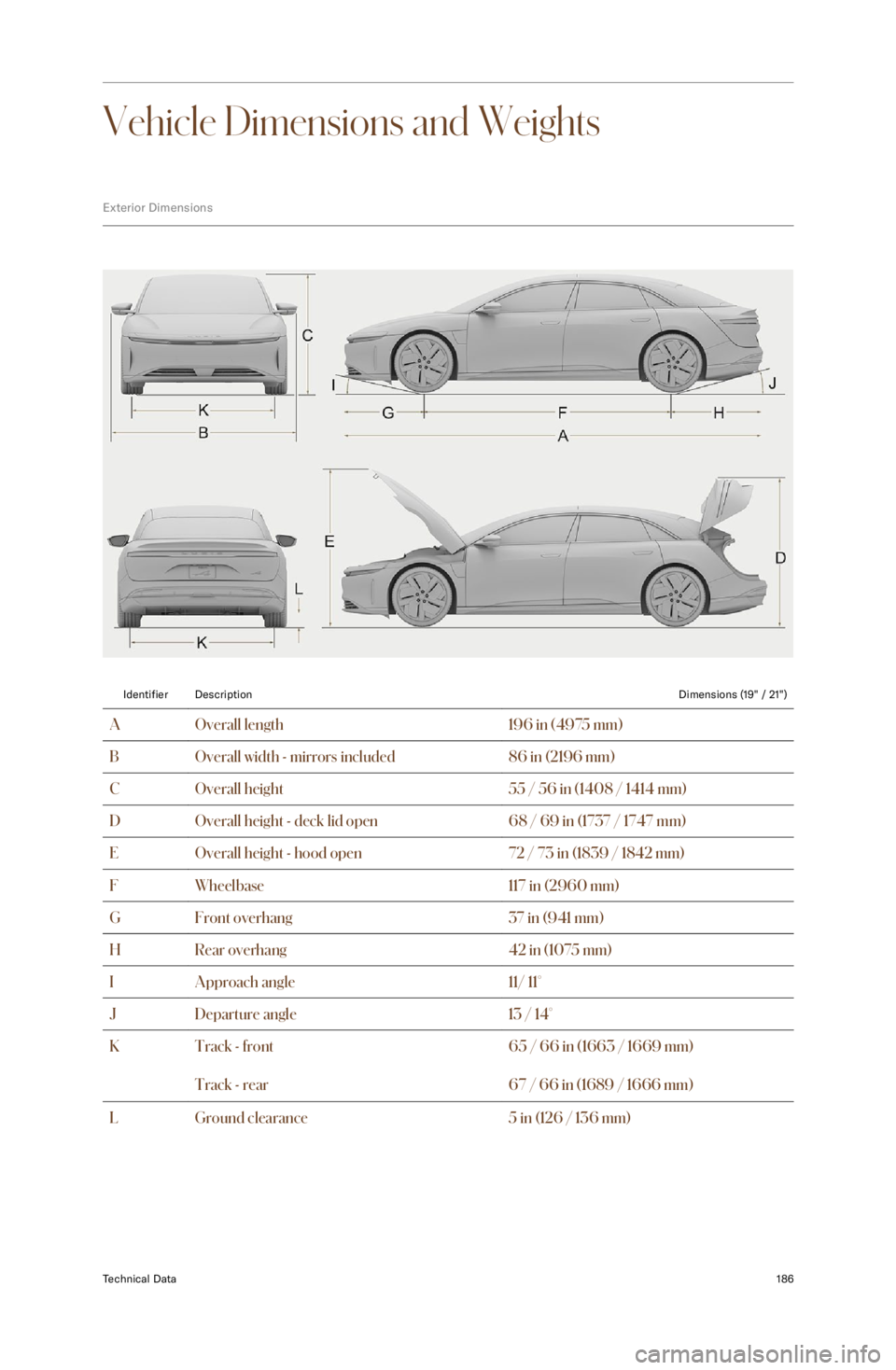
Exterior DimensionsIdentifierDescriptionDimensions (19" / 21")AOverall length196 in (4975 mm)BOverall width - mirrors included86 in (2196 mm)COverall height55 / 56 in (1408 / 1414 mm)DOverall height - deck lid open68 / 69 in (1737 / 1747 mm)EOverall height - hood open72 / 73 in (1839 / 1842 mm)FWheelbase117 in (2960 mm)GFront overhang37 in (941 mm)HRear overhang42 in (1075 mm)IApproach angle11/ 11
Page 213 of 241
Disabling the Power System
Safety PrecautionsWARNING: In the event of fire,
immediately contact your local fire
emergency responders.WARNING: ALWAYS ASSUME THAT
HIGH-VOLTAGE COMPONENTS ARE
ENERGIZED. Cutting, crushing, or
touching high-voltage components
can result in serious injury or death.WARNING: High-voltage cables and
components may remain energized for
up to 2 minutes after disabling.WARNING: High-voltage batteries can
self-ignite even after extinguishing the
initial fire.WARNING: The airbags and other
supplemental restraint systems may
remain powered for up to 2 minutes
after disabling.WARNING: In the event of a fire
involving a charging station, treat it as
an energized electrical fire until power
to the charger is confirmed to shut off.WARNING: This vehicle does not
have an internal combustion engine.
Lack of engine noise does not mean
the vehicle is OFF. Silent movement
capability exists until the vehicle
completely shuts down.
Emergency Responder Cut Loop
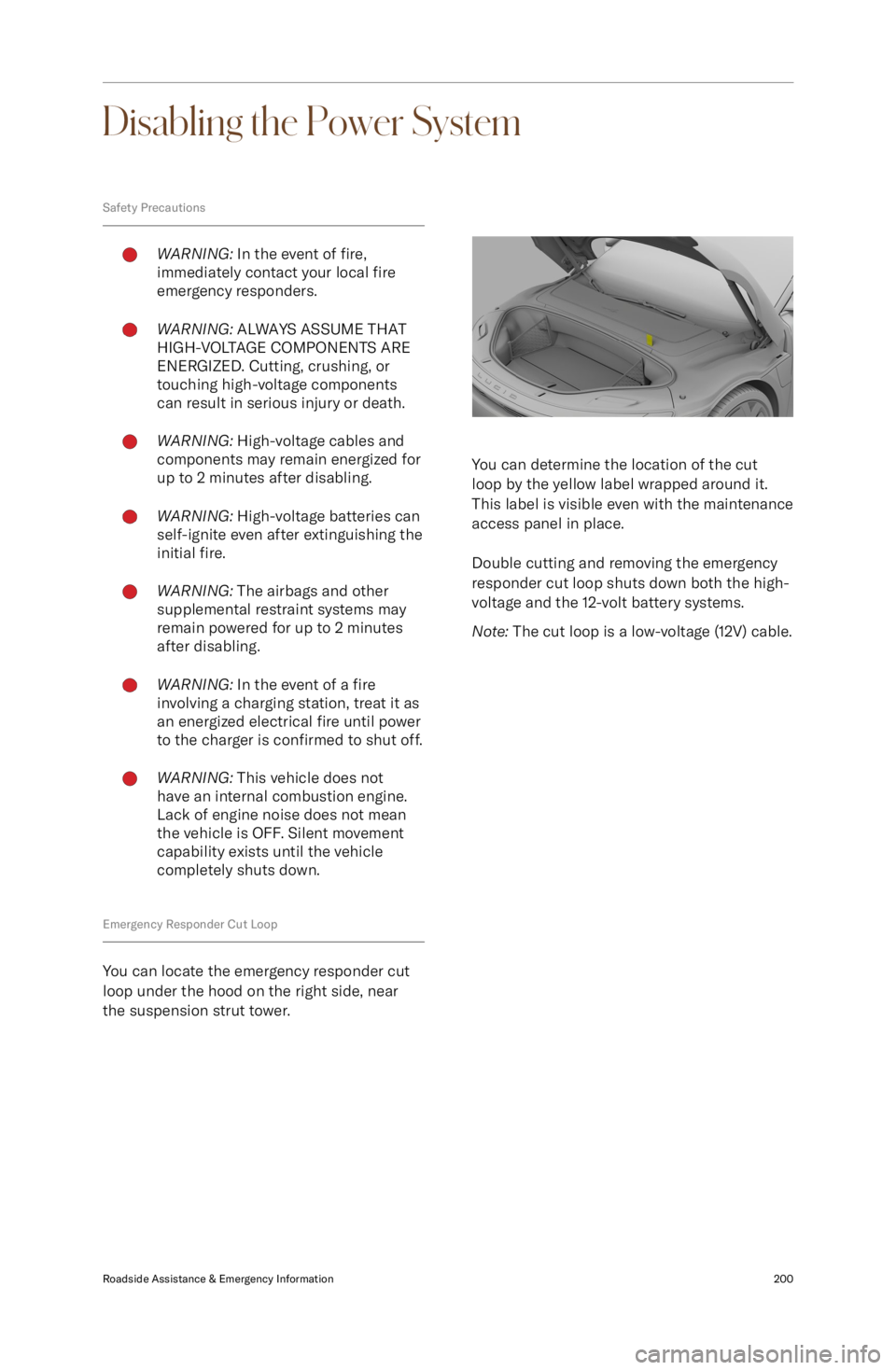
You can locate the emergency responder cut
loop under the hood on the right side, near
the suspension strut tower.
You can determine the location of the cut
loop by the yellow label wrapped around it.
This label is visible even with the maintenance
access panel in place.
Double cutting and removing the emergency
responder cut loop shuts down both the high-
voltage and the 12-volt battery systems.
Note: The cut loop is a low-voltage (12V) cable.
Roadside Assistance & Emergency Information200
Page 219 of 241

-Upholstery and trim
- Steering Wheel
- Floor coverings
Service parts include, but are not limited to: -Filters
- Lubricants
- Items replaced during routine
maintenance
Service adjustments required after the first
service, including but not limited to:
-Adjustment to doors and hoods
- Head lamp adjustment
- Wheel alignment
- Wheel balancing
Tires
The original factory fitted tires are covered
against manufacturing defects by the tire
manufacturer, who provides a separate
warranty to you with its own terms and
conditions. Warranty claims must be made
directly with the tire manufacturer. The Lucid
New Vehicle Limited Warranty does not cover
tires.
Performance Modi