automatic NISSAN PATHFINDER 2002 R50 / 2.G Owners Manual
[x] Cancel search | Manufacturer: NISSAN, Model Year: 2002, Model line: PATHFINDER, Model: NISSAN PATHFINDER 2002 R50 / 2.GPages: 288, PDF Size: 2.49 MB
Page 9 of 288
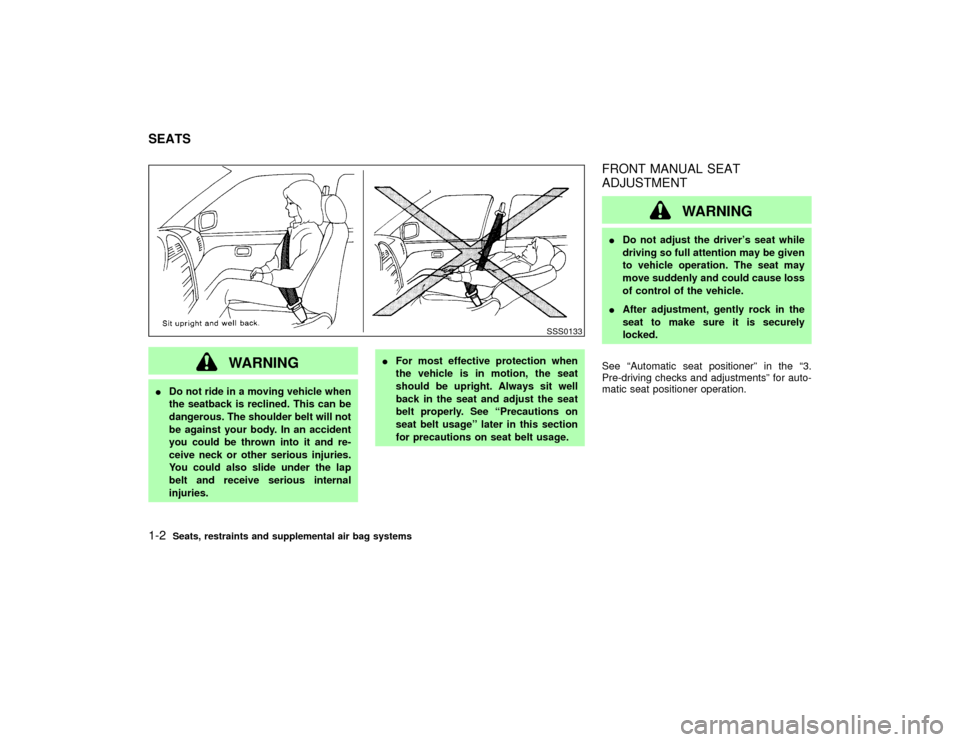
WARNING
IDo not ride in a moving vehicle when
the seatback is reclined. This can be
dangerous. The shoulder belt will not
be against your body. In an accident
you could be thrown into it and re-
ceive neck or other serious injuries.
You could also slide under the lap
belt and receive serious internal
injuries.IFor most effective protection when
the vehicle is in motion, the seat
should be upright. Always sit well
back in the seat and adjust the seat
belt properly. See ªPrecautions on
seat belt usageº later in this section
for precautions on seat belt usage.
FRONT MANUAL SEAT
ADJUSTMENT
WARNING
IDo not adjust the driver's seat while
driving so full attention may be given
to vehicle operation. The seat may
move suddenly and could cause loss
of control of the vehicle.
IAfter adjustment, gently rock in the
seat to make sure it is securely
locked.
See ªAutomatic seat positionerº in the ª3.
Pre-driving checks and adjustmentsº for auto-
matic seat positioner operation.
SSS0133
SEATS1-2
Seats, restraints and supplemental air bag systems
Z
01.9.21/R50-D/V5
X
Page 33 of 288
you could be thrown into it and re-
ceive neck or other serious injuries.
You could also slide under the lap
belt and receive serious internal inju-
ries.
IFor most effective protection when
the vehicle is in motion, the seat
should be upright. Always sit well
back in the seat and adjust the seat
belt properly.
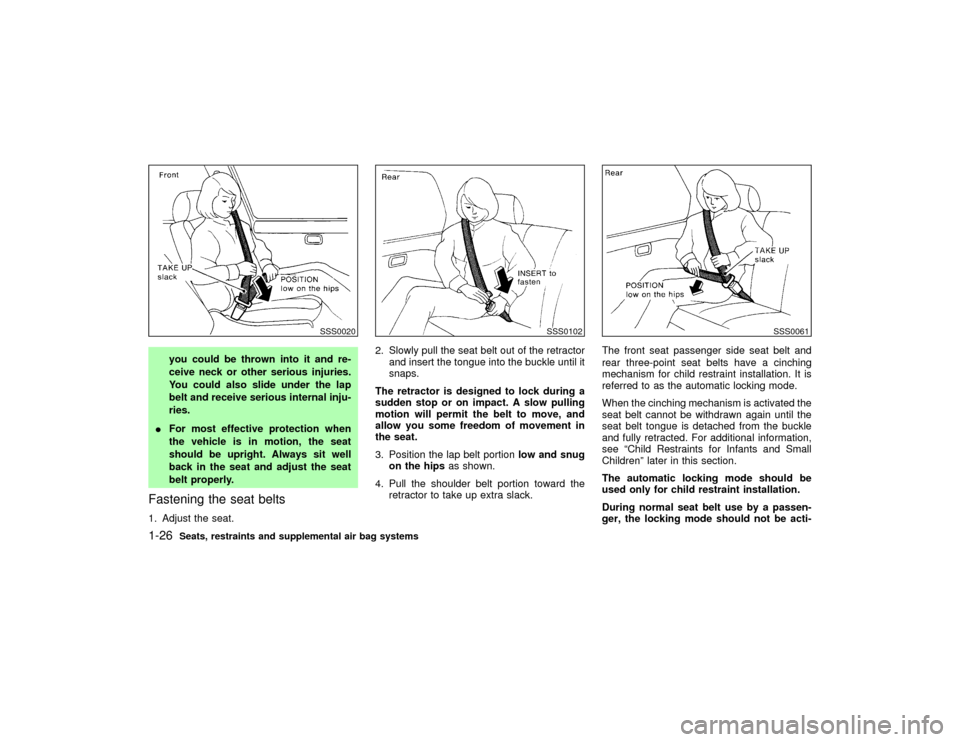
Fastening the seat belts1. Adjust the seat.2. Slowly pull the seat belt out of the retractor
and insert the tongue into the buckle until it
snaps.
The retractor is designed to lock during a
sudden stop or on impact. A slow pulling
motion will permit the belt to move, and
allow you some freedom of movement in
the seat.
3. Position the lap belt portionlow and snug
on the hipsas shown.
4. Pull the shoulder belt portion toward the
retractor to take up extra slack.The front seat passenger side seat belt and
rear three-point seat belts have a cinching
mechanism for child restraint installation. It is
referred to as the automatic locking mode.
When the cinching mechanism is activated the
seat belt cannot be withdrawn again until the
seat belt tongue is detached from the buckle
and fully retracted. For additional information,
see ªChild Restraints for Infants and Small
Childrenº later in this section.
The automatic locking mode should be
used only for child restraint installation.
During normal seat belt use by a passen-
ger, the locking mode should not be acti-
SSS0020
SSS0102
SSS0061
1-26
Seats, restraints and supplemental air bag systems
Z
01.9.21/R50-D/V5
X
Page 34 of 288
vated. If it is activated it may cause uncom-
fortable seat belt tension.
WARNING
When fastening the seat belts, be certain
that seatbacks are completely secured
in the latched position. If they are not
completely secured in the right position,
passengers may be injured in an acci-
dent or sudden stop.
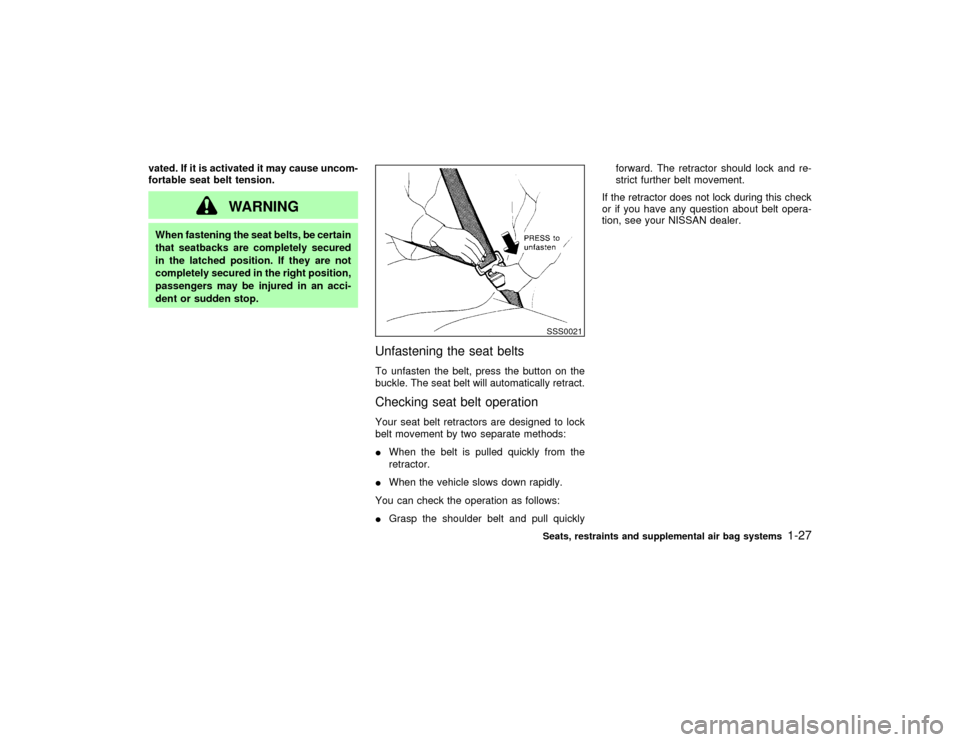
Unfastening the seat beltsTo unfasten the belt, press the button on the
buckle. The seat belt will automatically retract.Checking seat belt operationYour seat belt retractors are designed to lock
belt movement by two separate methods:
IWhen the belt is pulled quickly from the
retractor.
IWhen the vehicle slows down rapidly.
You can check the operation as follows:
IGrasp the shoulder belt and pull quicklyforward. The retractor should lock and re-
strict further belt movement.
If the retractor does not lock during this check
or if you have any question about belt opera-
tion, see your NISSAN dealer.
SSS0021Seats, restraints and supplemental air bag systems
1-27
Z
01.9.21/R50-D/V5
X
Page 43 of 288
restraint not being properly secured.
It could tip over or otherwise be un-
secured and cause injury to the child
in a sudden stop or collision.
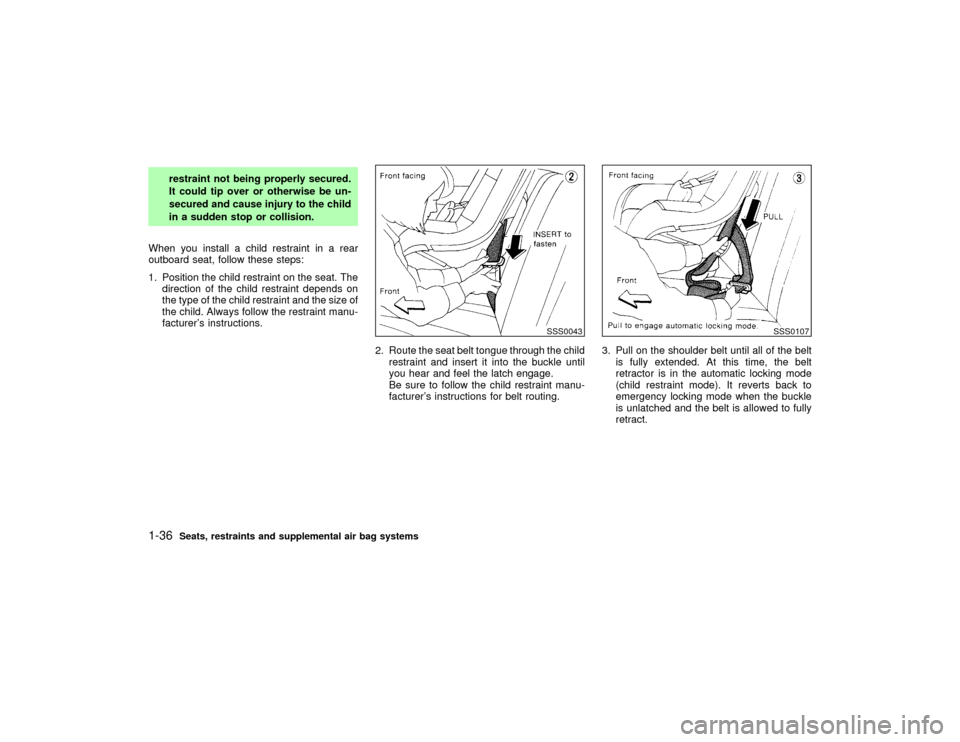
When you install a child restraint in a rear
outboard seat, follow these steps:
1. Position the child restraint on the seat. The
direction of the child restraint depends on
the type of the child restraint and the size of
the child. Always follow the restraint manu-
facturer's instructions.
2. Route the seat belt tongue through the child
restraint and insert it into the buckle until
you hear and feel the latch engage.
Be sure to follow the child restraint manu-
facturer's instructions for belt routing.3. Pull on the shoulder belt until all of the belt
is fully extended. At this time, the belt
retractor is in the automatic locking mode
(child restraint mode). It reverts back to
emergency locking mode when the buckle
is unlatched and the belt is allowed to fully
retract.
SSS0043
SSS0107
1-36
Seats, restraints and supplemental air bag systems
Z
01.9.21/R50-D/V5
X
Page 44 of 288
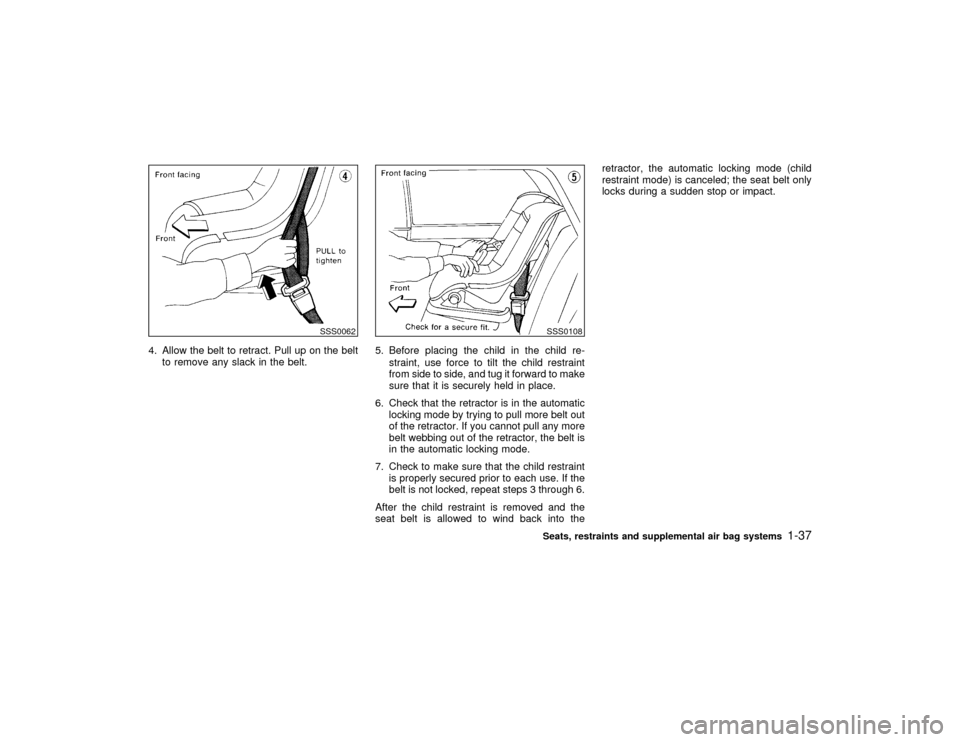
4. Allow the belt to retract. Pull up on the belt
to remove any slack in the belt.5. Before placing the child in the child re-
straint, use force to tilt the child restraint
from side to side, and tug it forward to make
sure that it is securely held in place.
6. Check that the retractor is in the automatic
locking mode by trying to pull more belt out
of the retractor. If you cannot pull any more
belt webbing out of the retractor, the belt is
in the automatic locking mode.
7. Check to make sure that the child restraint
is properly secured prior to each use. If the
belt is not locked, repeat steps 3 through 6.
After the child restraint is removed and the
seat belt is allowed to wind back into theretractor, the automatic locking mode (child
restraint mode) is canceled; the seat belt only
locks during a sudden stop or impact.
SSS0062
SSS0108Seats, restraints and supplemental air bag systems
1-37
Z
01.9.21/R50-D/V5
X
Page 46 of 288
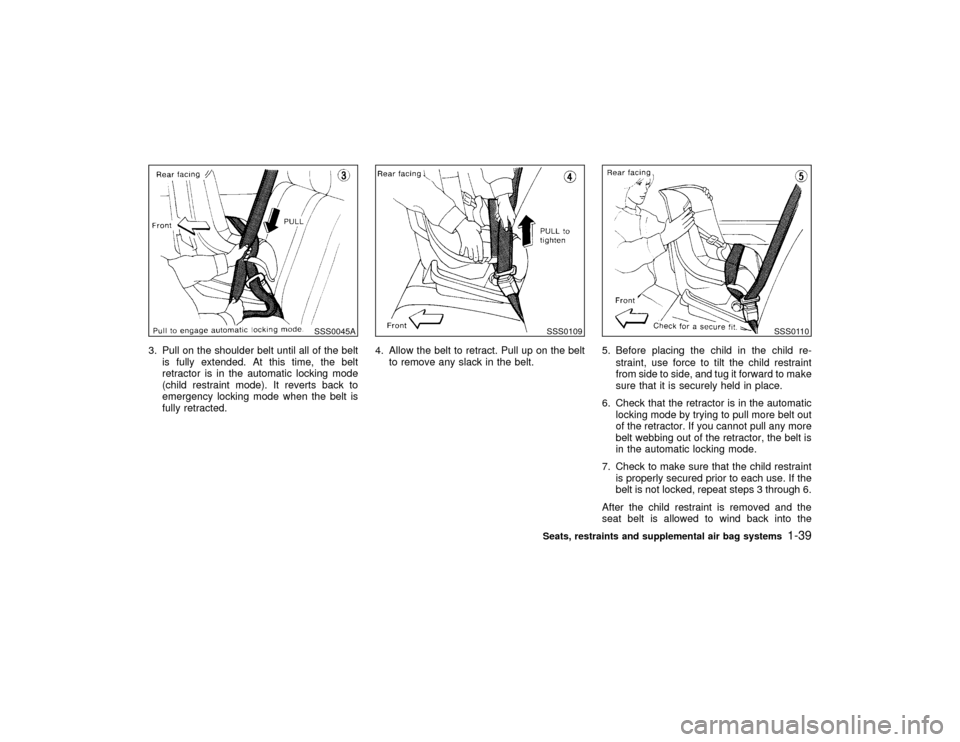
3. Pull on the shoulder belt until all of the belt
is fully extended. At this time, the belt
retractor is in the automatic locking mode
(child restraint mode). It reverts back to
emergency locking mode when the belt is
fully retracted.4. Allow the belt to retract. Pull up on the belt
to remove any slack in the belt.5. Before placing the child in the child re-
straint, use force to tilt the child restraint
from side to side, and tug it forward to make
sure that it is securely held in place.
6. Check that the retractor is in the automatic
locking mode by trying to pull more belt out
of the retractor. If you cannot pull any more
belt webbing out of the retractor, the belt is
in the automatic locking mode.
7. Check to make sure that the child restraint
is properly secured prior to each use. If the
belt is not locked, repeat steps 3 through 6.
After the child restraint is removed and the
seat belt is allowed to wind back into the
SSS0045A
SSS0109
SSS0110
Seats, restraints and supplemental air bag systems
1-39
Z
01.9.21/R50-D/V5
X
Page 47 of 288
retractor, the automatic locking mode (child
restraint mode) is canceled; the seat belt only
locks during a sudden stop or impact.
TOP TETHER STRAP CHILD
RESTRAINT
WARNING
The child restraint anchor points are
designed to withstand only those loads
imposed by correctly fitted child re-
straints. Under no circumstances are
they to be used for adult seat belts or
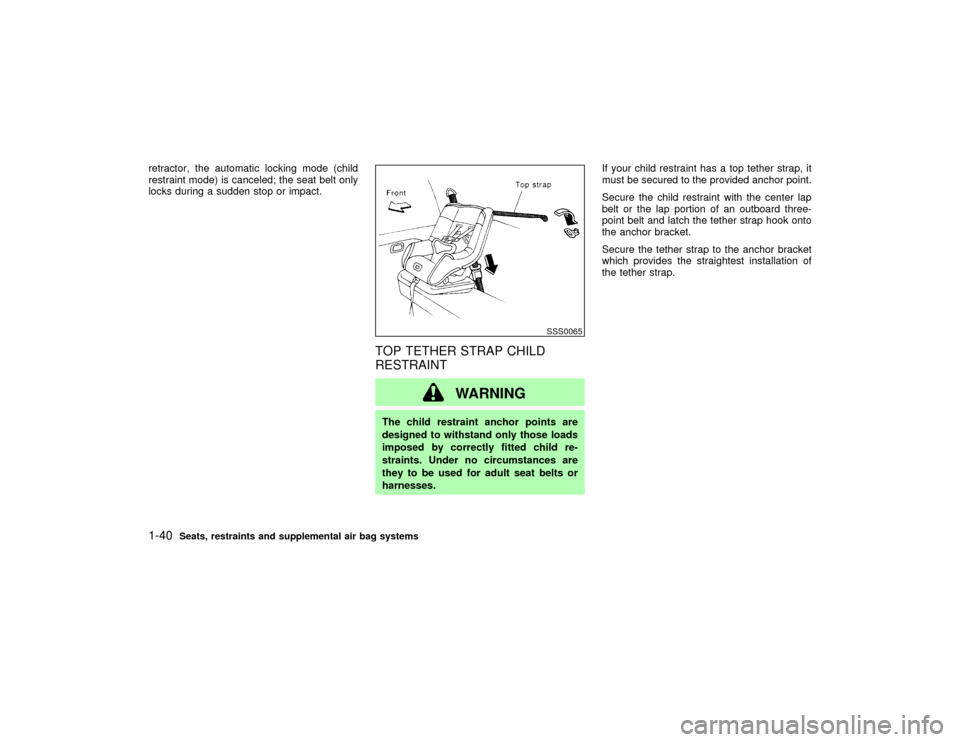
harnesses.If your child restraint has a top tether strap, it
must be secured to the provided anchor point.
Secure the child restraint with the center lap
belt or the lap portion of an outboard three-
point belt and latch the tether strap hook onto
the anchor bracket.
Secure the tether strap to the anchor bracket
which provides the straightest installation of
the tether strap.
SSS0065
1-40
Seats, restraints and supplemental air bag systems
Z
01.9.21/R50-D/V5
X
Page 50 of 288
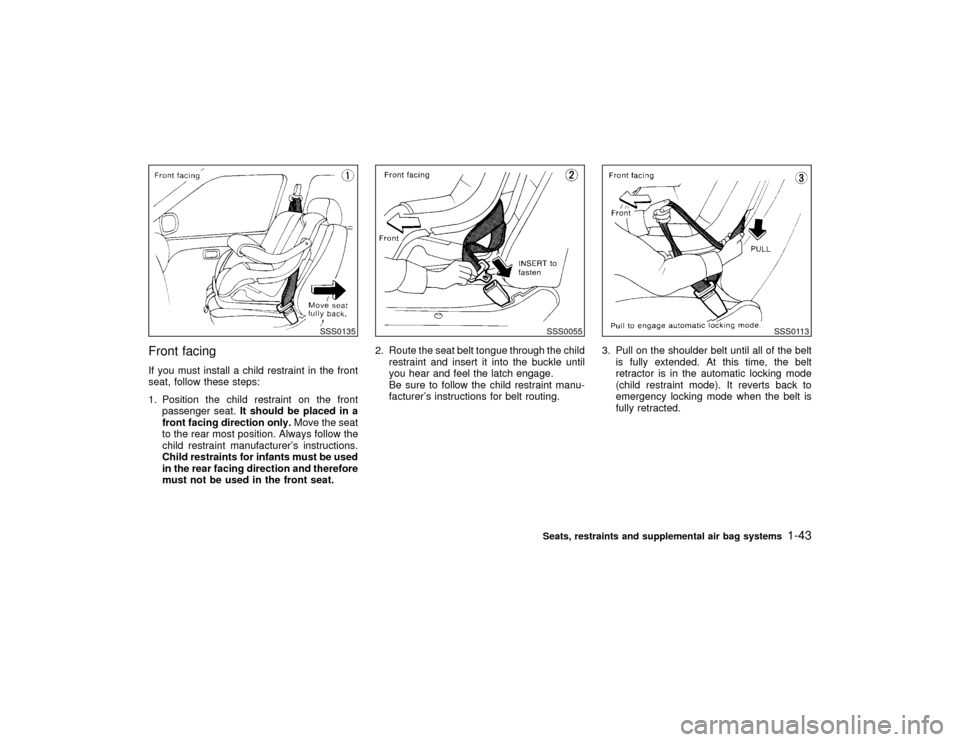
Front facingIf you must install a child restraint in the front
seat, follow these steps:
1. Position the child restraint on the front
passenger seat.It should be placed in a
front facing direction only.Move the seat
to the rear most position. Always follow the
child restraint manufacturer's instructions.
Child restraints for infants must be used
in the rear facing direction and therefore
must not be used in the front seat.2. Route the seat belt tongue through the child
restraint and insert it into the buckle until
you hear and feel the latch engage.
Be sure to follow the child restraint manu-
facturer's instructions for belt routing.3. Pull on the shoulder belt until all of the belt
is fully extended. At this time, the belt
retractor is in the automatic locking mode
(child restraint mode). It reverts back to
emergency locking mode when the belt is
fully retracted.
SSS0135
SSS0055
SSS0113
Seats, restraints and supplemental air bag systems
1-43
Z
01.9.21/R50-D/V5
X
Page 51 of 288
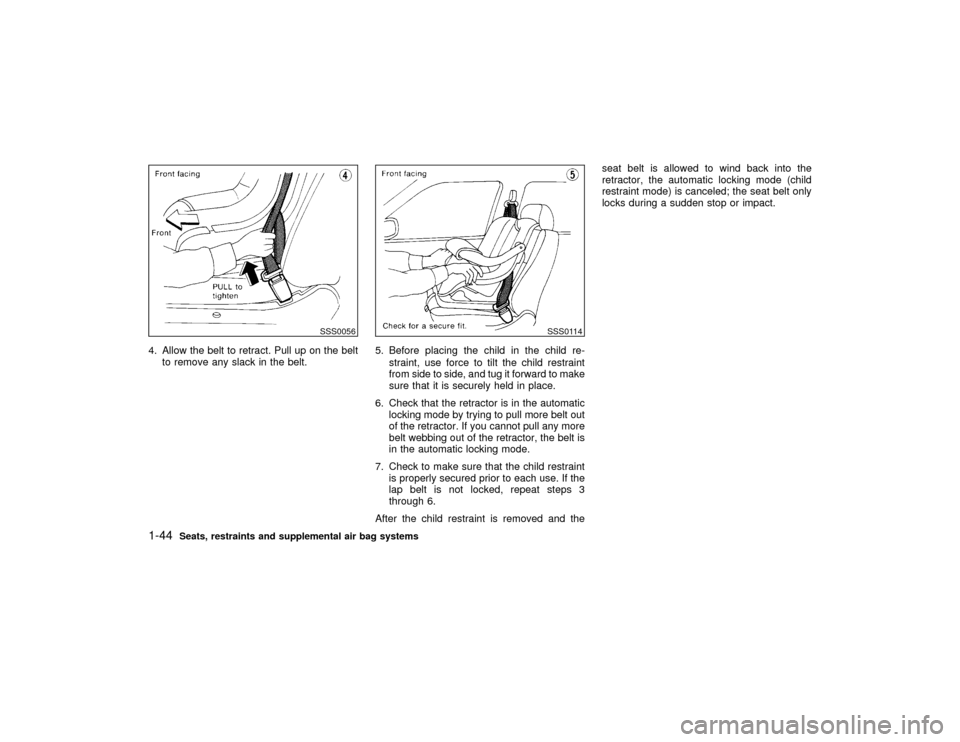
4. Allow the belt to retract. Pull up on the belt
to remove any slack in the belt.5. Before placing the child in the child re-
straint, use force to tilt the child restraint
from side to side, and tug it forward to make
sure that it is securely held in place.
6. Check that the retractor is in the automatic
locking mode by trying to pull more belt out
of the retractor. If you cannot pull any more
belt webbing out of the retractor, the belt is
in the automatic locking mode.
7. Check to make sure that the child restraint
is properly secured prior to each use. If the
lap belt is not locked, repeat steps 3
through 6.
After the child restraint is removed and theseat belt is allowed to wind back into the
retractor, the automatic locking mode (child
restraint mode) is canceled; the seat belt only
locks during a sudden stop or impact.
SSS0056
SSS0114
1-44
Seats, restraints and supplemental air bag systems
Z
01.9.21/R50-D/V5
X
Page 61 of 288
IIf a magnet is located near the compass
or the vehicle is driven where the terres-
trial magnetism is disturbed, the com-
pass display may not indicate the cor-
rect direction.
IIn places where the terrestrial magne-
tism is disturbed, the correction of the
direction starts automatically, extin-
guishing the direction bar. If turn is
made one or two times, the correction is
complete and the direction bar comes
back on.Correction functions of the compass
displayThe compass display is equipped with auto-
matic correction function. If the direction is not
shown correctly, carry out manual correction
procedure set out below.Manual correction procedure1. Push the switch for about 10 seconds. The
direction bar starts blinking.
2. Drive the vehicle slowly in an open and safe
area. The initial correction is completed
while turning one or two turns.
CAUTION
In places where the earth's magnetism
is disturbed, the initial correction proce-
dure may start automatically.
2-8
Instruments and controls
Z
01.9.21/R50-D/V5
X