fuel cap NISSAN VERSA NOTE 2020 Owner´s Manual
[x] Cancel search | Manufacturer: NISSAN, Model Year: 2020, Model line: VERSA NOTE, Model: NISSAN VERSA NOTE 2020Pages: 492, PDF Size: 6.12 MB
Page 461 of 492
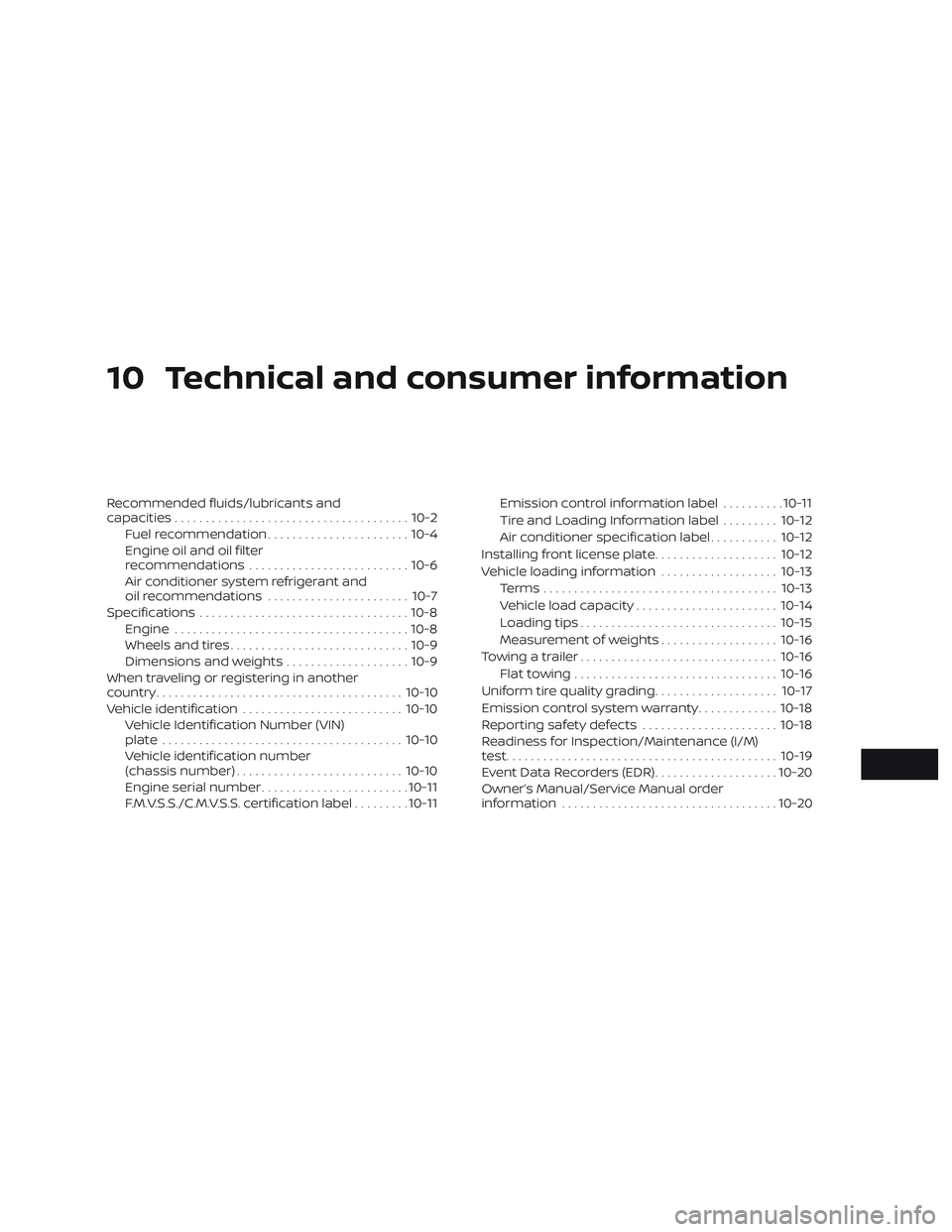
10 Technical and consumer information
Recommended fluids/lubricants and
capacities...................................... 10-2
Fuel recommendation ....................... 10-4
Engine oil and oil filter
recommendations .......................... 10-6
Air conditioner system refrigerant and
oil recommendations ....................... 10-7
Specifications .................................. 10-8
Engine ...................................... 10-8
Wheels and tires ............................. 10-9
Dimensions and weights ....................10-9
When traveling or registering in another
country ........................................ 10-10
Vehicle identification .......................... 10-10
Vehicle Identification Number (VIN)
plate ....................................... 10-10
Vehicle identification number
(chassis number) ........................... 10-10
Engine serial number ........................ 10-11
F.M.V.S.S./C.M.V.S.S. certification label .........10-11 Emission control information label
..........10-11
Tire and Loading Information label .........10-12
Air conditioner specification label ...........10-12
Installing front license plate ....................10-12
Vehicle loading information ...................10-13
Terms ...................................... 10-13
Vehicle load capacity ....................... 10-14
Loading tips ................................ 10-15
Measurement of weights ...................10-16
Towing a trailer ................................ 10-16
Flat towing ................................. 10-16
Uniform tire quality grading ....................10-17
Emission control system warranty .............10-18
Reporting safety defects ......................10-18
Readiness for Inspection/Maintenance (I/M)
test ............................................ 10-19
Event Data Recorders (EDR) ....................10-20
Owner’s Manual/Service Manual order
information ................................... 10-20
Page 462 of 492
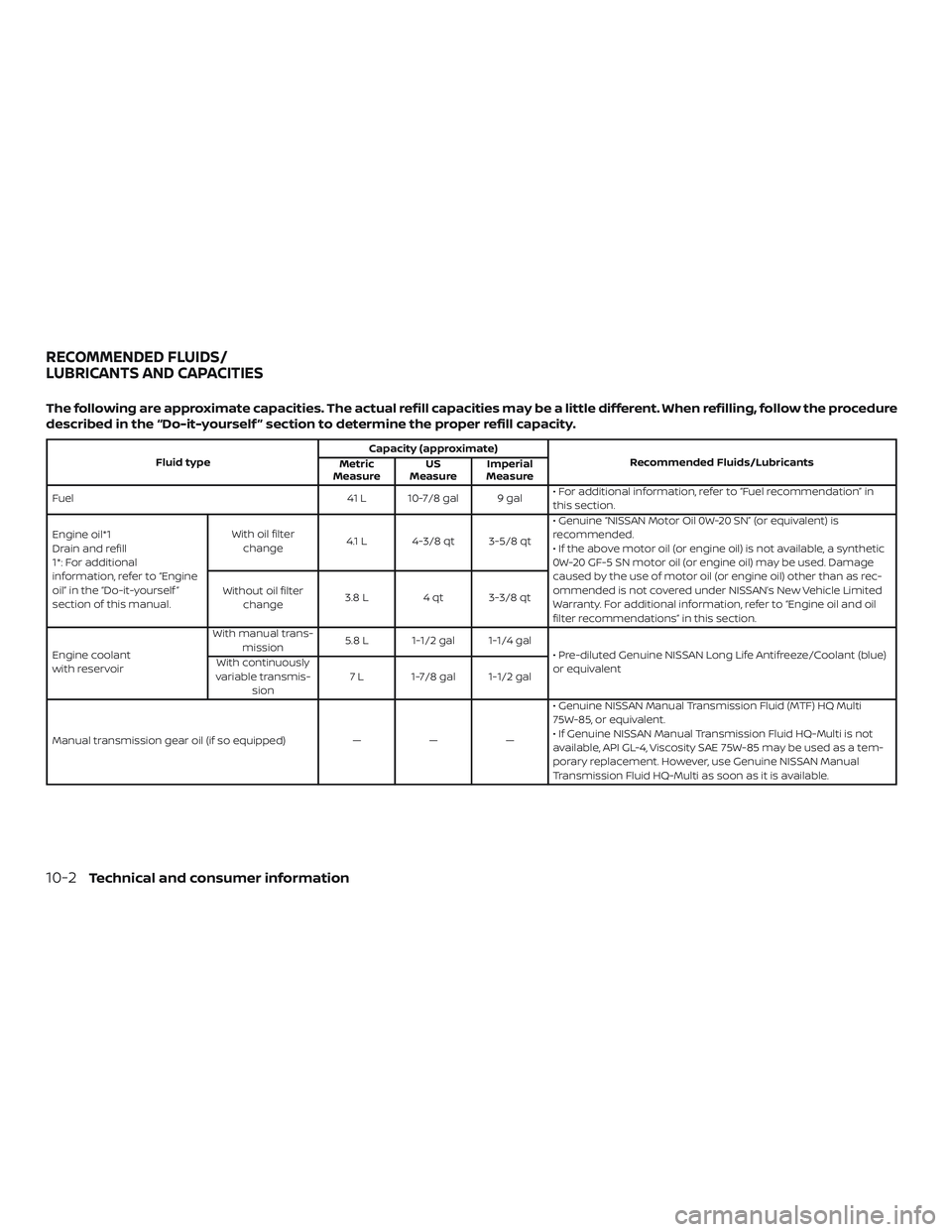
The following are approximate capacities. The actual refill capacities may be a little different. When refilling, follow the procedure
described in the “Do-it-yourself ” section to determine the proper refill capacity.
Fluid typeCapacity (approximate)
Recommended Fluids/Lubricants
Metric
Measure US
Measure Imperial
Measure
Fuel 41 L 10-7/8 gal 9 gal• For additional information, refer to “Fuel recommendation” in
this section.
Engine oil*1
Drain and refill
1*: For additional
information, refer to “Engine
oil” in the “Do-it-yourself ”
section of this manual. With oil filter
change 4.1 L 4-3/8 qt 3-5/8 qt • Genuine “NISSAN Motor Oil 0W-20 SN” (or equivalent) is
recommended.
• If the above motor oil (or engine oil) is not available, a synthetic
0W-20 GF-5 SN motor oil (or engine oil) may be used. Damage
caused by the use of motor oil (or engine oil) other than as rec-
ommended is not covered under NISSAN’s New Vehicle Limited
Warranty. For additional information, refer to “Engine oil and oil
filter recommendations” in this section.
Without oil filter
change 3.8 L
4 qt 3-3/8 qt
Engine coolant
with reservoir With manual trans-
mission 5.8 L 1-1/2 gal 1-1/4 gal
• Pre-diluted Genuine NISSAN Long Life Antifreeze/Coolant (blue)
or equivalent
With continuously
variable transmis- sion 7 L 1-7/8 gal 1-1/2 gal
Manual transmission gear oil (if so equipped) ———• Genuine NISSAN Manual Transmission Fluid (MTF) HQ Multi
75W-85, or equivalent.
• If Genuine NISSAN Manual Transmission Fluid HQ-Multi is not
available, API GL-4, Viscosity SAE 75W-85 may be used as a tem-
porary replacement. However, use Genuine NISSAN Manual
Transmission Fluid HQ-Multi as soon as it is available.
RECOMMENDED FLUIDS/
LUBRICANTS AND CAPACITIES
10-2Technical and consumer information
Page 466 of 492
Octane rating tips
Using unleaded gasoline with an octane
rating lower than recommended can
cause persistent, heavy “spark knock.”
(“Spark knock” is a metallic rapping
noise.) If severe, this can lead to engine
damage. If you detect a persistent heavy
spark knock even when using gasoline
of the stated octane rating, or if you hear
steady spark knock while holding a
steady speed on level roads, it is recom-
mended that you have a NISSAN dealer
correct the condition. Failure to correct
the condition is misuse of the vehicle, for
which NISSAN is not responsible.
Incorrect ignition timing may result in
spark knock, af ter-run and/or overheating,
which may cause excessive fuel consump-
tion or engine damage. If any of the above
symptoms are encountered, have your ve-
hicle checked. It is recommended that you
visit a NISSAN dealer for servicing.
However, now and then you may notice
light spark knock for a short time while
accelerating or driving up hills. This is not
a cause for concern, because you get the
greatest fuel benefit when there is light
spark knock for a short time under heavy
engine load.
ENGINE OIL AND OIL FILTER
RECOMMENDATIONS
Selecting the correct oil
It is essential to choose the correct grade,
quality and viscosity engine oil to ensure
satisfactory engine life and performance.
For additional information, refer to “Recom-
mended fluids/lubricants and capacities”
in this section. NISSAN recommends the
use of an energy conserving oil in order to
improve fuel economy.
Select only engine oils that meet the
American Petroleum Institute (API) certifi-cation or International Lubricant Standard-
ization and Approval Committee (ILSAC)
certification and SAE viscosity standard.
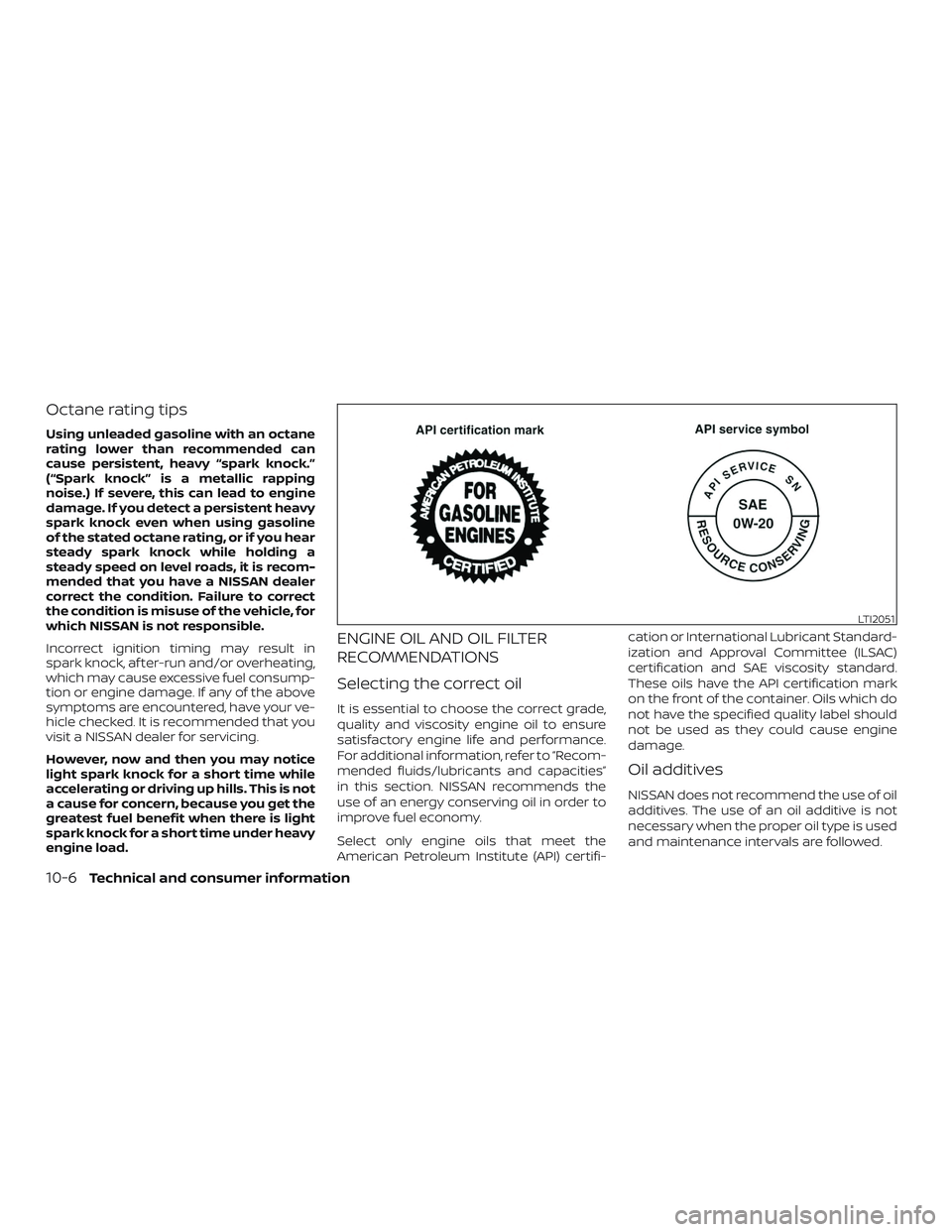
These oils have the API certification mark
on the front of the container. Oils which do
not have the specified quality label should
not be used as they could cause engine
damage.
Oil additives
NISSAN does not recommend the use of oil
additives. The use of an oil additive is not
necessary when the proper oil type is used
and maintenance intervals are followed.
LTI2051
10-6Technical and consumer information
Page 482 of 492
C
Capacities and recommended fuel/
lubricants....................10-2
Cargo
(See vehicle loading information) .....10-13
Car phone or CB radio ............4-53
Check tire press .................2-7
Check tire pressure ..............2-35
Childrestraints........1-19, 1-20, 1-21, 1-24 LATCH (Lower Anchors and Tethers for
CHildren)System............. .1-24
Precautions on child
restraints.........1-21, 1-28, 1-34, 1-39
Top tether strap anchor point
locations.................. .1-26
Child safety rear door lock ..........3-7
Chimes, audible reminders .........2-22
Cleaningexteriorandinterior......7-2,7-5
Clockset.....................4-6
Clutch Clutchfluid.................8-10
Coldweatherdriving.............5-127
Continuously Variable Transmission
(CVT) ....................5 -11, 5-19
Continuously Variable Transmission
(CVT) fluid ...................8-9
Driving with Continuously Variable
Transmission (CVT) .........5-11, 5-19
Control panel buttons .............4-3
Brightness/contrast button .......4-8
Controls Audio controls (steering wheel) ....4-48
Heater and air conditioner controls
(automatic).................4-25 Heater and air conditioner controls
(manual)
...................4-17
Coolant Capacities and recommended
fuel/lubricants...............10-2
Changing engine coolant .........8-5
Checking engine coolant level ......8-5
Corrosionprotection..............7-8
Cruisecontrol..................5-51
Cupholders ..................2-58
D
Daytime Running Light System .......2-47
Defroster switch Rear window and outside mirror
defrosterswitch...........2-42,4-27
Rear window defroster switch . .2-42, 4-19
Dimensions and weights ...........10-9
Dimmer switch for instrument panel . . .2-48
Display controls
(see control panel buttons) ..........4-3
Door locks ..................3-4,3-5
Door open warning light ...........2-14
Drivebelt ....................8-14
Driving Cold weather driving ...........5-127
Driving with Continuously Variable
Transmission (CVT) .........5-11, 5-19
Driving with manual
transmission .............5-12,5-23
Precautions when starting and
driving.....................5-4
Drivingthevehicle...............5-19 E
Economy - fuel ................5-113
Emergency engine shutoff ..........5-15
Emission control information label . . . .10-11
Emission control system warranty . . . .10-18
Engine Before starting the engine ........5-16
Capacities and recommended
fuel/lubricants...............10-2
Changing engine coolant .........8-5
Changing engine oil ............8-6
Changing engine oil filter .........8-6
Checking engine coolant level ......8-5
Checking engine oil level .........8-6
Engine compartment check
locations...................8-3
Engine cooling system ..........8-4
Engine oil ...................8-6
Engine oil and oil filter
r ec
ommendation .............10-6
Engine oil pressure warning light ....2-14
Engine oil viscosity .............10-7
Engine serial number ...........10-11
Engine specifications ...........10-8
Starting the engine ............5-16
Engine Block Heater .............5-128
EventDatarecorders............10-20
Exhaust gas (Carbon monoxide) .......5-4
Explanation of maintenance items .....9-2
Explanation of scheduled maintenance
items .......................9-5
Extended storage switch ..........2-56
11-2
Page 483 of 492
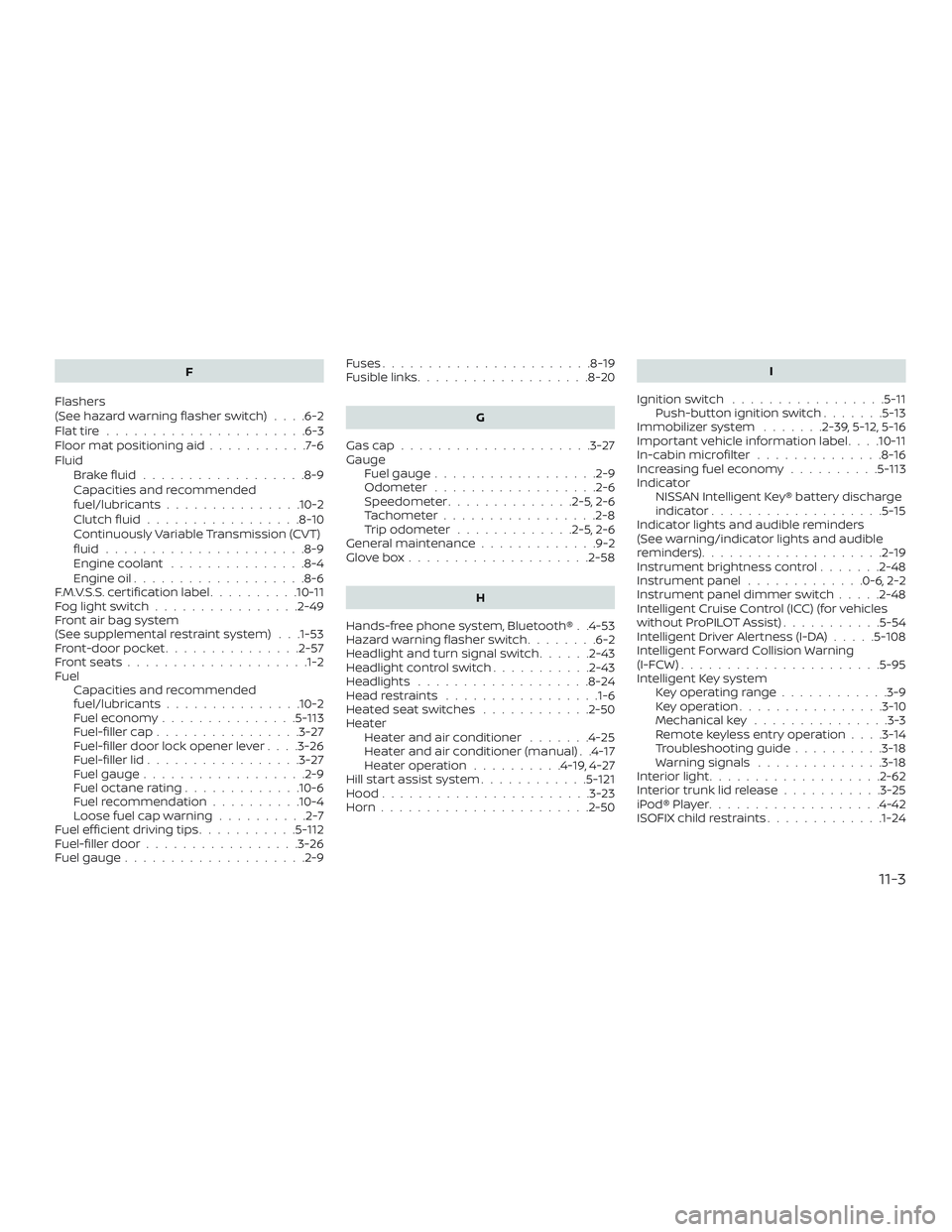
F
Flashers
(See hazard warning flasher switch) ....6-2
Flattire......................6-3
Floormatpositioningaid...........7-6
Fluid Brakefluid..................8-9
Capacities and recommended
fuel/lubricants...............10-2
Clutchfluid.................8-10
Continuously Variable Transmission (CVT)
fluid......................8-9
Engine coolant ...............8-4
Engine oil ...................8-6
F.M.V.S.S. certification label ..........10-11
Foglightswitch................2-49
Front air bag system
(See supplemental restraint system) . . .1-53
Front-door pocket ...............2-57
Frontseats....................1-2
Fuel Capacities and recommended
fuel/lubricants...............10-2
Fuel economy ...............5 -113
Fuel-filler cap ................3-27
Fuel-filler door lock opener lever ....3-26
Fuel-filler lid .................3-27
Fuel gauge ..................2-9
Fueloctanerating.............10-6
Fuel recommendation ..........10-4
Loose fuel cap warning ..........2-7
Fuelefficientdrivingtips...........5 -112
Fuel-filler door .................3-26
Fuel gauge ....................2-9 Fuses
.......................8-19
Fusiblelinks...................8-20
G
Gascap.....................3-27
Gauge Fuel gauge ..................2-9
Odometer ..................2-6
Speedometer ..............2-5,2-6
Tachometer .................2-8
Trip odometer .............2-5,2-6
General maintenance .............9-2
Glovebox....................2-58
H
Hands-free phone system, Bluetooth® . .4-53
Hazard warning flasher switch ........6-2
Headlight and turn signal switch ......2-43
Headlightcontrolswitch...........2-43
Headlights ...................8-24
Headrestraints .................1-6
Heated seat switches ............2-50
Heater Heater and air conditioner .......4-25
Heater and air conditioner (manual) . .4-17
Heater operation ..........4-19,4-27
Hill start assist system ............5-121
Hood .......................3-23
Horn.......................2-50 I
Ignition switch .................5-11
Push-button ignition switch .......5-13
Immobilizer system .......2-39,5-12,5-16
Important vehicle information label . . . .10-11
In-cabinmicrofilter..............8-16
Increasing fuel economy ..........5-113
Indicator NISSAN Intelligent Key® battery discharge
indicator...................5-15
Indicator lights and audible reminders
(See warning/indicator lights and audible
reminders) ....................2-19
Instrument brightness control .......2-48
Instrument panel .............0-6,2-2
Instrument panel dimmer switch .....2-48
Intelligent Cruise Control (ICC) (for vehicles
without ProPILOT Assist) ...........5-54
Intelligent Driver Alertness (I-DA) .....
5
-108
Intelligent Forward Collision Warning
(I-FCW)......................5-95
Intelligent Key system Key operating range ............3-9
Key operation ................3-10
Mechanical key ...............3-3
Remote keyless entry operation ....3-14
Troubleshooting guide ..........3-18
Warning signals ..............3-18
Interiorlight...................2-62
Interiortrunklidrelease...........3-25
iPod®Player...................4-42
ISOFIX child restraints .............1-24
11-3
Page 484 of 492
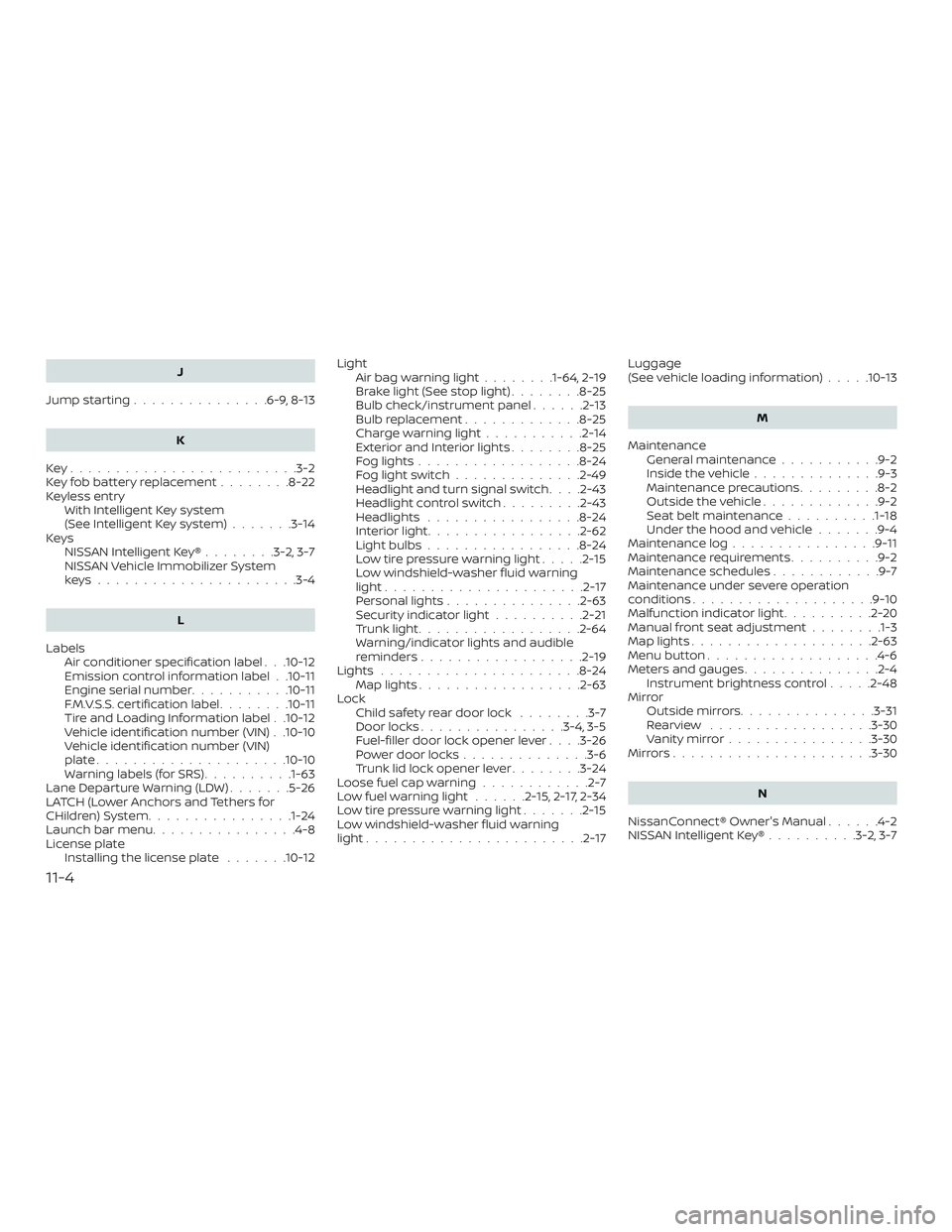
J
Jumpstarting...............6-9,8-13
K
Key.........................3-2
Key fob battery replacement ........8-22
Keyless entry With Intelligent Key system
(See Intelligent Key system) .......3-14
Keys NISSAN Intelligent Key® ........3-2,3-7
NISSAN Vehicle Immobilizer System
keys......................3-4
L
Labels Air conditioner specification label . . .10-12
Emission control information label . .10-11
Engine serial number ...........10-11
F.M.V.S.S. certification label ........10-11
Tire and Loading Information label . .10-12
Vehicle identification number (VIN) . .10-10
Vehicle identification number (VIN)
plate.....................10-10
Warning labels (for SRS) ..........1-63
Lane Departure Warning (LDW) .......5-26
LATCH (Lower Anchors and Tethers for
CHildren)System............... .1-24
Launch bar menu ................4-8
License plate Installing the license plate .......10-12Light
Airbagwarninglight........1-64, 2-19
Brakelight(Seestoplight)........8-25
Bulb check/instrument panel ......2-13
Bulb replacement .............8-25
Charge warning light ...........2-14
ExteriorandInteriorlights........8-25
Foglights..................8-24
Foglightswitch..............2-49
Headlight and turn signal switch ....2-43
Headlightcontrolswitch.........2-43
Headlights .................8-24
Interiorlight.................2-62
Lightbulbs.................8-24
Low tire pressure warning light .....2-15
Low windshield-washer fluid warning
light......................2-17
Personal lights ...............2-63
Security indicator light ..........2-21
Trunklight..................2-64
Warning/indicator lights and audible
reminders ..................2-19
Lights......................8-24 Maplights..................2-63
Lock Child safety rear door lock ........3-7
Door locks ................3-4,3-5
Fuel-filler door lock opener lever . . . .3-26
Power door locks ..............3-6
Trunk lid lock opener lever ........3-24
Loose fuel cap warning ............2-7
Lowfuelwarninglight......2-15,2-17,2-34
Low tire pressure warning light .......2-15
Low windshield-washer fluid warning
light........................2-17 Luggage
(See vehicle loading information)
.....10-13
M
Maintenance General maintenance ...........9-2
Insidethevehicle..............9-3
Maintenance precautions .........8-2
Outsidethevehicle.............9-2
Seat belt maintenance ..........1-18
Under the hood and vehicle .......9-4
Maintenance log ................9-11
Maintenance requirements ..........9-2
Maintenance schedules ............9-7
Maintenance under severe operation
conditions....................9-10
Malfunctionindicatorlight..........2-20
Manual front seat adjustment ........1-3
Maplights................... .2-63
Menu button ...................4-6
Meters and gauges ...............2-4
Instrument brightness control .....2-48
Mirror Outsidemirrors...............3-31
Rearview ..................3-30
Va
nitymirror................3-30
Mirrors......................3-30
N
NissanConnect® Owner's Manual ......4-2
NISSAN Intelligent Key® ..........3-2,3-7
11-4
Page 485 of 492
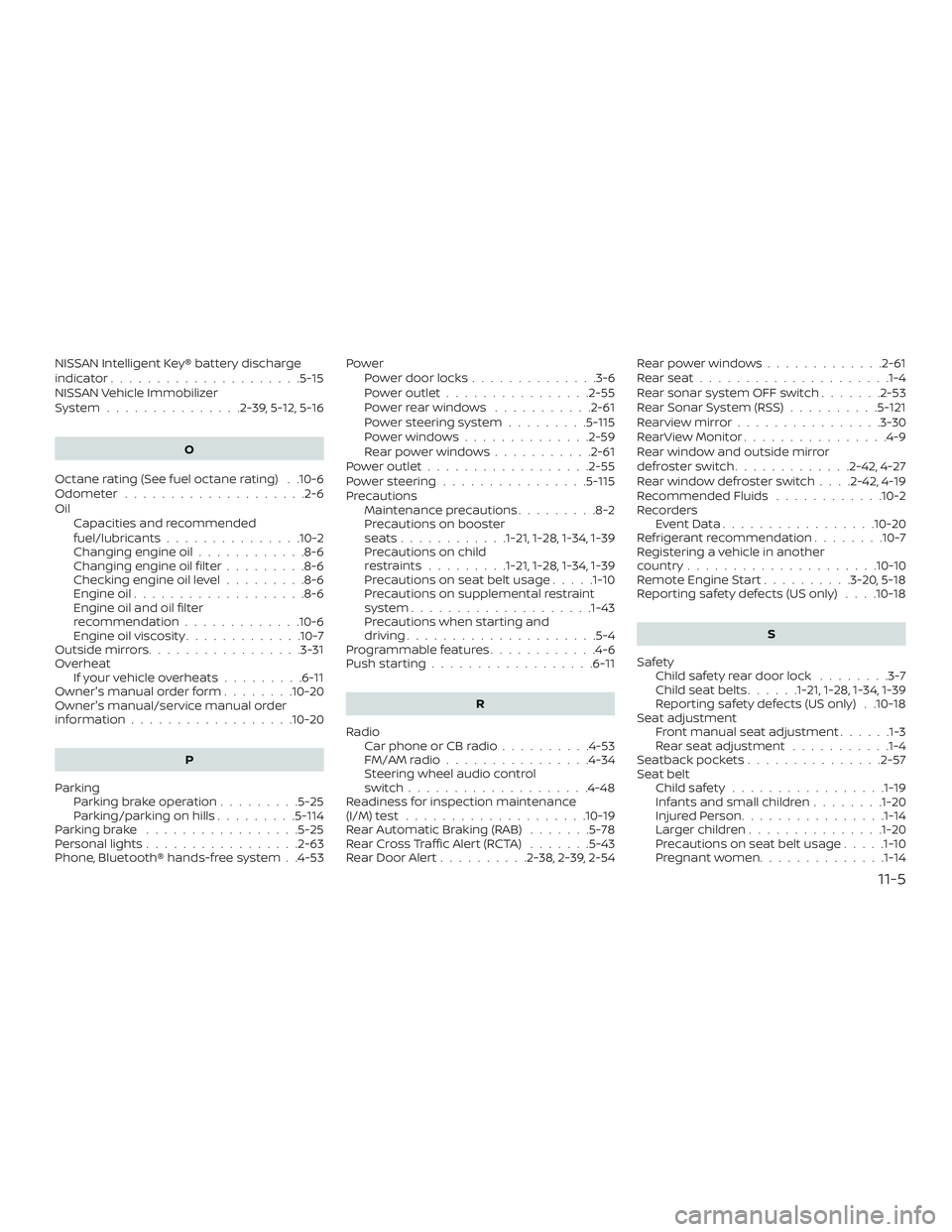
NISSAN Intelligent Key® battery discharge
indicator.....................5-15
NISSAN Vehicle Immobilizer
System...............2-39,5-12,5-16O
Octane rating (See fuel octane rating) . .10-6
Odometer ....................2-6
Oil Capacities and recommended
fuel/lubricants...............10-2
Changing engine oil ............8-6
Changing engine oil filter .........8-6
Checking engine oil level .........8-6
Engine oil ...................8-6
Engine oil and oil filter
recommendation .............10-6
Engine oil viscosity .............10-7
Outsidemirrors.................3-31
Overheat Ifyourvehicleoverheats.........6-11
Owner's manual order form ........10-20
Owner's manual/service manual order
information..................10-20
P
Parking Parking brake operation .........5-25
Parking/parkingonhills.........5 -114
Parkingbrake .................5-25
Personal lights .................2-63
Phone, Bluetooth® hands-free system . .4-53 Power
Power door locks ..............3-6
Poweroutlet................2-55
Powerrearwindows ...........2-61
Power steering system .........5-115
Powerwindows..............2-59
Rearpowerwindows...........2-61
Poweroutlet..................2-55
Powersteering................5 -115
Precautions Maintenance precautions .........8-2
Precautions on booster
seats............1-21, 1-28, 1-34, 1-39
Precautions on child
restraints.........1-21, 1-28, 1-34, 1-39
Precautions on seat belt usage .....1-10
Precautions on supplemental restraint
system ....................1-43
Precautions when starting and
driving.....................5-4
Programmable features ............4-6
Push starting ..................6-11
R
Radio Car phone or CB radio ..........4-53
FM/AMradio................4-34
Steering wheel audio control
switch....................4-48
Readiness for inspection maintenance
(I/M) test ....................10-19
Rear Automatic Braking (RAB) .......5-78
RearCrossTrafficAlert(RCTA) .......5-43
Rear Door Alert ..........2-38,2-39,2-54 Rearpowerwindows.............2-61
Rearseat.....................1-4
Rear sonar system OFF switch
.......2-53
Rear Sonar System (RSS) ..........5-121
Rearviewmirror................3-30
RearViewMonitor................4-9
Rear window and outside mirror
defrosterswitch.............2-42,4-27
Rearwindowdefrosterswitch....2-42,4-19
Recommended Fluids ............10-2
Recorders EventData.................10-20
Refrigerant recommendation ........10-7
Registering a vehicle in another
country .....................10-10
Remote Engine Start ..........3-20,5-18
Reporting safety defects (US only) . . . .10-18
S
Safety Child safety rear door lock ........3-7
Childseatbelts......1-21, 1-28, 1-34, 1-39
Reporting safety defects (US only) . .10-18
Seat adjustment Front manual seat adjustment ......1-3
R e
ar seat adjustment ...........1-4
Seatback pockets ...............2-57
Seat belt Childsafety.................1-19
Infants and small children ........1-20
InjuredPerson............... .1-14
Largerchildren.............. .1-20
Precautionsonseatbeltusage.....1-10
Pregnant women ..............1-14
11-5
Page 487 of 492
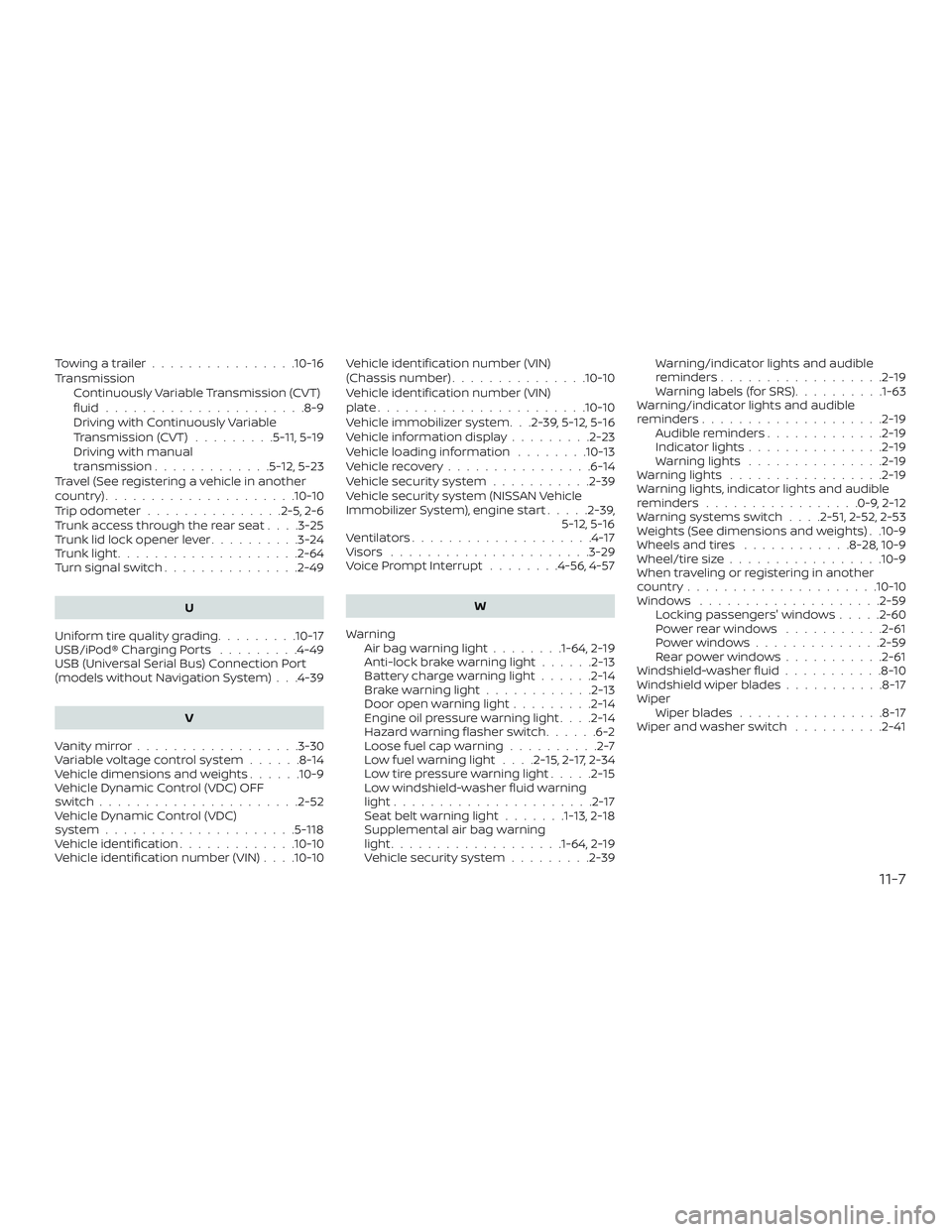
Towingatrailer................10-16
TransmissionContinuously Variable Transmission (CVT)
fluid......................8-9
Driving with Continuously Variable
Transmission (CVT) .........5-11, 5-19
Driving with manual
transmission .............5-12,5-23
Travel (See registering a vehicle in another
country) .....................10-10
Trip odometer ...............2-5,2-6
Trunk access through the rear seat ....3-25
Trunk lid lock opener lever ..........3-24
Trunklight....................2-64
Turn signal switch ...............2-49
U
Uniform tire quality grading .........10-17
USB/iPod® Charging Ports .........4-49
USB (Universal Serial Bus) Connection Port
(models without Navigation System) . . .4-39
V
Vanitymirror..................3-30
Variable voltage control system ......8-14
Vehicle dimensions and weights ......10-9
Vehicle Dynamic Control (VDC) OFF
switch......................2-52
Vehicle Dynamic Control (VDC)
system .....................5 -118
Vehicle identification .............10-10
Vehicle identification number (VIN) . . . .10-10Vehicle identification number (VIN)
(Chassis number)
...............10-10
Vehicle identification number (VIN)
plate.......................10-10
Vehicle immobilizer system. . .2-39, 5-12, 5-16
Vehicleinformationdisplay.........2-23
Vehicle loading information ........10-13
Vehiclerecovery................6-14
Vehicle security system ...........2-39
Vehicle security system (NISSAN Vehicle
Immobilizer System), engine start .....2-39,
5-12, 5-16
Ventilators ....................4-17
Visors ......................3-29
Voice Prompt Interrupt ........4-56,4-57
W
Warning Airbagwarninglight........1-64, 2-19
Anti-lock brake warning light ......2-13
Battery charge warning light ......2-14
Brakewarninglight............2-13
Door open warning light .........2-14
Engine oil pressure warning light ....2-14
Hazard warning flasher switch ......6-2
Loose fuel cap warning ..........2-7
Lowfuelwarninglight....2-15,2-17,2-34
Lowtirepressurewarninglight.....2-15
Low windshield-washer fluid warning
light......................2-17
Seatbeltwarninglight.......1-13, 2-18
Supplemental air bag warning
light...................1-64, 2-19
Vehicle security system .........2-39Warning/indicator lights and audible
reminders
..................2-19
Warning labels (for SRS) ..........1-63
Warning/indicator lights and audible
reminders ....................2-19
Audible reminders .............2-19
Indicatorlights...............2-19
Warninglights ...............2-19
Warninglights .................2-19
Warning lights, indicator lights and audible
reminders .................0-9,2-12
Warningsystemsswitch....2-51,2-52,2-53
Weights (See dimensions and weights) . .10-9
Wheels and tires ............8-28,10-9
Wheel/tire size .................10-9
When traveling or registering in another
country .....................10-10
Windows ....................2-59 Locking passengers' windows .....2-60
Powerrearwindows ...........2-61
Powerwindows............. .2-59
Rearpowerwindows.......... .2-61
Windshield -washer
fluid ...........8-10
Windshield wiper blades ...........8-17
Wiper Wiper blades ................8-17
Wiper and washer switch ..........2-41
11-7
Page 489 of 492
FUEL RECOMMENDATION:
Use unleaded regular gasoline with an oc-
tane rating of at least 87 AKI (Anti-Knock
Index) number (Research octane number
91).
CAUTION
∙ Only vehicles with the E-85 filler doorlabel can operate on E-85. Fuel system
or other damage can occur if E-85 is
used in vehicles that are not designed
to run on E-85.
∙ Using a fuel other than that specified could adversely affect the emission
control system, and may also affect
the warranty coverage.
∙ Under no circumstances should a leaded gasoline be used, because this
will damage the three-way catalyst. ∙ Do not use a fuel containing more
than 15% ethanol in your vehicle. Your
vehicle is not designed to run on a fuel
containing more than 15% ethanol.
Using a fuel containing more than 15%
ethanol in a vehicle not specifically
designed for a fuel containing more
than 15% ethanol can adversely affect
the emission control devices and sys-
tems of the vehicle. Damage caused
by such fuel is not covered by the
NISSAN New Vehicle Limited Warranty.
∙ Do not use fuel that contains the oc- tane booster methylcyclopentadienyl
manganese tricarbonyl (MMT). Using
fuel containing MMT may adversely
affect vehicle performance and ve-
hicle emissions. Not all fuel dispens-
ers are labeled to indicate MMT con-
tent, so you may have to consult your
gasoline retailer for more details.
Note that Federal and California laws
prohibit the use of MMT in reformu-
lated gasoline. ∙ U.S. government regulations require
ethanol dispensing pumps to be iden-
tified by a small, square, orange and
black label with the common abbre-
viation or the appropriate percentage
for that region.
For additional information, refer to “Recom-
mended fluids/lubricants and capacities”
in the “Technical and consumer informa-
tion” section of this manual.
ENGINE OIL RECOMMENDATION:
Refer to “Recommended fluids/lubricants
and capacities” in the “Technical and con-
sumer information” section of this manual.
COLD TIRE PRESSURE:
Refer to the Tire and Loading Information
label.
The label is typically located on the driver
side center pillar or on the driver’s door. For
additional information, refer to “Wheels and
tires” in the “Do-it-yourself ” section of this
manual.
GAS STATION INFORMATION