tow OPEL ASTRA SALOON 2014 User Guide
[x] Cancel search | Manufacturer: OPEL, Model Year: 2014, Model line: ASTRA SALOON, Model: OPEL ASTRA SALOON 2014Pages: 245, PDF Size: 7.12 MB
Page 127 of 245
Climate control125
■Open side air vents as required and
direct them towards door windows.
■ For simultaneous warming of the foot well, set air distribution control
to J.
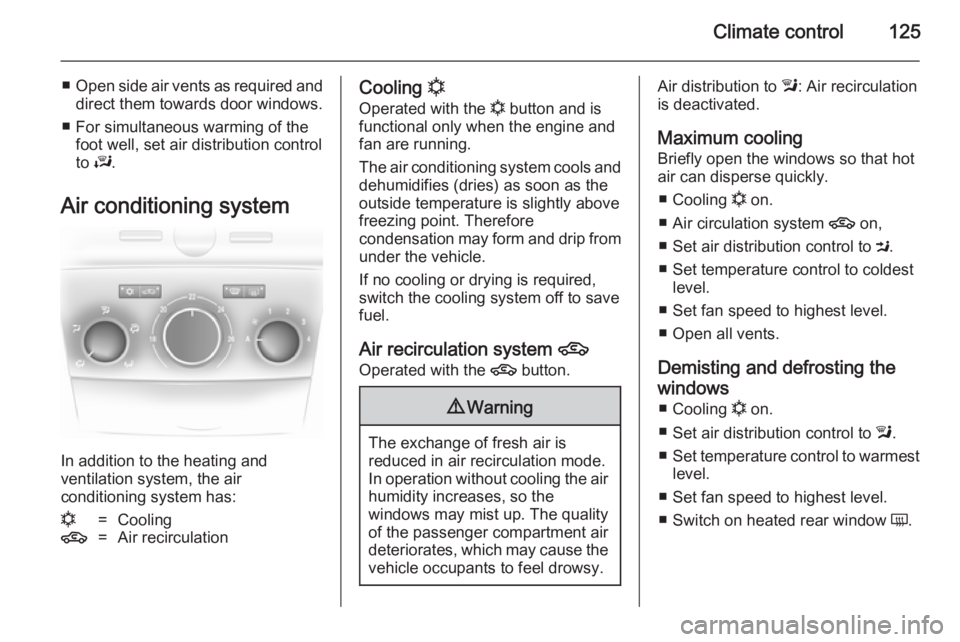
Air conditioning system
In addition to the heating and
ventilation system, the air
conditioning system has:
n=Cooling4=Air recirculationCooling n
Operated with the n button and is
functional only when the engine and
fan are running.
The air conditioning system cools and
dehumidifies (dries) as soon as the
outside temperature is slightly above
freezing point. Therefore
condensation may form and drip from under the vehicle.
If no cooling or drying is required,
switch the cooling system off to save
fuel.
Air recirculation system 4
Operated with the 4 button.9Warning
The exchange of fresh air is
reduced in air recirculation mode.
In operation without cooling the air humidity increases, so the
windows may mist up. The quality
of the passenger compartment air
deteriorates, which may cause the vehicle occupants to feel drowsy.
Air distribution to l: Air recirculation
is deactivated.
Maximum cooling Briefly open the windows so that hot
air can disperse quickly.
■ Cooling n on.
■ Air circulation system 4 on,
■ Set air distribution control to M.
■ Set temperature control to coldest level.
■ Set fan speed to highest level.
■ Open all vents.
Demisting and defrosting the
windows ■ Cooling n on.
■ Set air distribution control to l.
■ Set temperature control to warmest
level.
■ Set fan speed to highest level.
■ Switch on heated rear window Ü.
Page 128 of 245
126Climate control
■Open side air vents as required and
direct them towards door windows.
■ For simultaneous warming of the foot well, set air distribution control
to J.
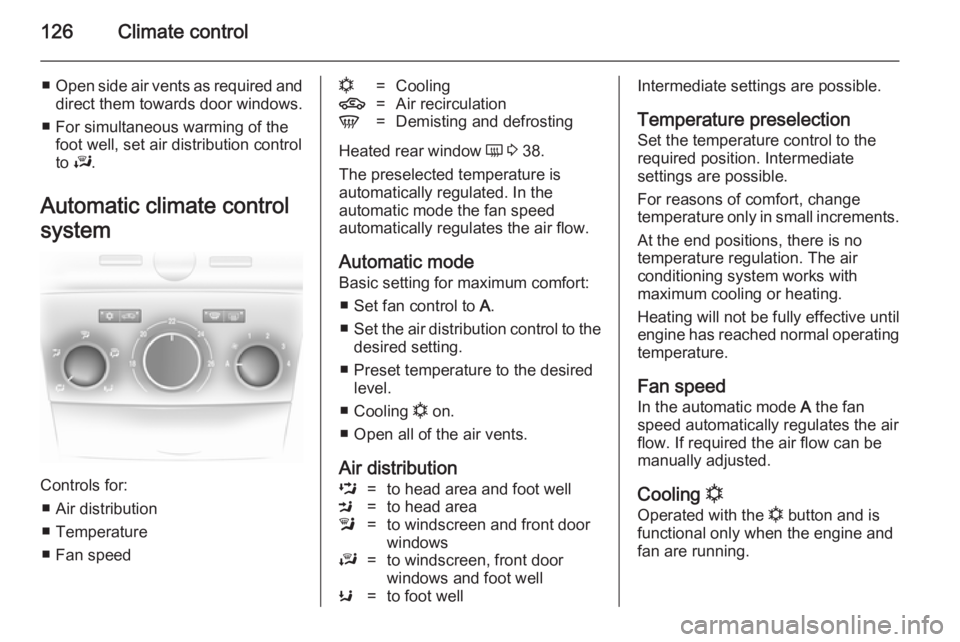
Automatic climate control
system
Controls for: ■ Air distribution
■ Temperature
■ Fan speed
n=Cooling4=Air recirculationV=Demisting and defrosting
Heated rear window Ü 3 38.
The preselected temperature is
automatically regulated. In the
automatic mode the fan speed
automatically regulates the air flow.
Automatic mode Basic setting for maximum comfort:
■ Set fan control to A.
■ Set the air distribution control to the
desired setting.
■ Preset temperature to the desired level.
■ Cooling n on.
■ Open all of the air vents.
Air distribution
L=to head area and foot wellM=to head areal=to windscreen and front door
windowsJ=to windscreen, front door
windows and foot wellK=to foot wellIntermediate settings are possible.
Temperature preselection
Set the temperature control to the
required position. Intermediate
settings are possible.
For reasons of comfort, change
temperature only in small increments.
At the end positions, there is no
temperature regulation. The air
conditioning system works with
maximum cooling or heating.
Heating will not be fully effective until
engine has reached normal operating temperature.
Fan speed In the automatic mode A the fan
speed automatically regulates the air
flow. If required the air flow can be
manually adjusted.
Cooling n
Operated with the n button and is
functional only when the engine and
fan are running.
Page 129 of 245
Climate control127
The air conditioning system cools and
dehumidifies (dries) when outside
temperature is above a specific level. Therefore condensation may form
and drip from under the vehicle.
If no cooling or drying is required,
switch the cooling system off to save
fuel.
Air recirculation system 4
The air recirculation mode is operated
with the 4 button.9Warning
The exchange of fresh air is
reduced in air recirculation mode.
In operation without cooling the air humidity increases, so the
windows may mist up. The quality
of the passenger compartment air
deteriorates, which may cause the vehicle occupants to feel drowsy.
Maximum cooling
Briefly open the windows so that the heated air can disappear quickly.
■ Cooling n on.
■ Set air distribution control to M.
■ Set temperature control to required
temperature value.
■ Set fan control to A.
■ Open all vents.
The automatic climate control
automatically cools to the specified
value with the maximum cooling
power.
With the temperature control turned
to its minimum setting, the system
continually runs at maximum cooling. The system is automatically set to air
recirculation when the air conditioning
is on.
Demisting and defrosting the
windows ■ Cooling n on.
■ Press button V: in position A, fan
automatically switches to maximum speed, the air distribution is
directed towards the windscreen.■ Set temperature control to warmest
level.
■ Switch on heated rear window Ü.
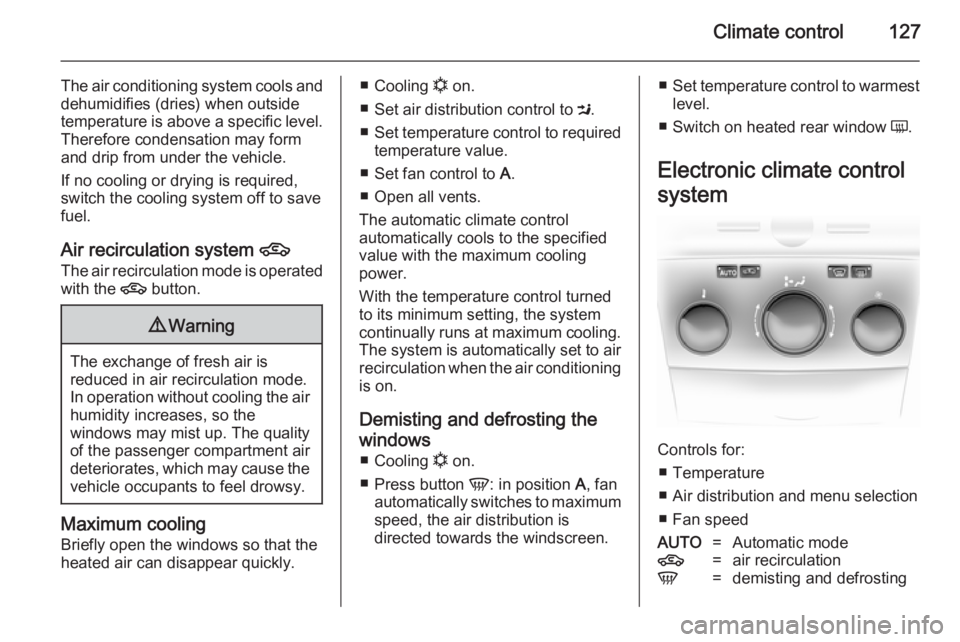
Electronic climate control
system
Controls for: ■ Temperature
■ Air distribution and menu selection
■ Fan speed
AUTO=Automatic mode4=air recirculationV=demisting and defrosting
Page 136 of 245
134Driving and operating
To repeat the starting procedure or to
switch off the engine, press the button again.
Starting the vehicle at low
temperatures
The start of the engine without
additional heaters is possible down to -25 °С for diesel engines and -30 °C
for petrol engines. Required is an engine oil with the correct viscosity,
the correct fuel, performed services
and a sufficiently charged battery.
With temperatures below -30 °C the
automatic transmission and the
manual transmission automated
need a warming phase of approx. 5
minutes. The selector lever must be
in position P respectively N.
Overrun cut-off The fuel supply is automatically cut off
during overrun, i.e. when the vehicle
is driven with a gear engaged but
accelerator is released.Parking
■ Do not park the vehicle on an easily
ignitable surface. The high
temperature of the exhaust system
could ignite the surface.
■ Always apply parking brake without
pressing release button. Apply as
firmly as possible on downhill or
uphill slopes. Depress the foot
brake at the same time to reduce
operating force.
■ Switch off the engine and ignition. Turn the steering wheel until the
steering wheel lock engages.
■ If the vehicle is on a level surface or
uphill slope, engage first gear or set
the selector lever to P before
switching off the ignition. On an uphill slope, turn the front wheels
away from the kerb.
If the vehicle is on a downhill slope, engage reverse gear or set the
selector lever to P before switchingoff the ignition. Turn the front
wheels towards the kerb.
■ Lock the vehicle and activate the anti-theft locking system and the
anti-theft alarm system.
Page 138 of 245
136Driving and operating
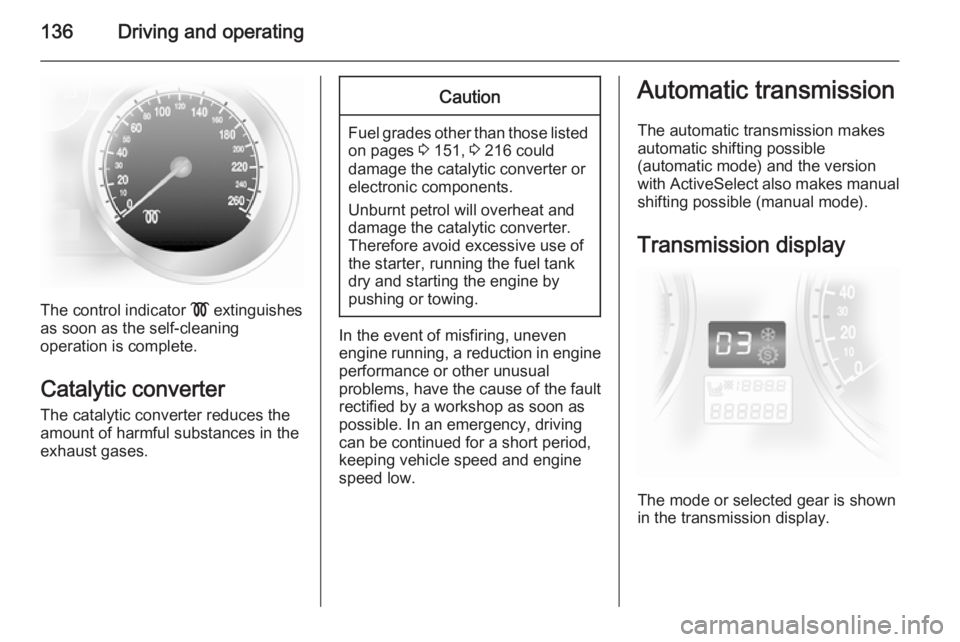
The control indicator ! extinguishes
as soon as the self-cleaning
operation is complete.
Catalytic converter
The catalytic converter reduces the
amount of harmful substances in the
exhaust gases.
Caution
Fuel grades other than those listed on pages 3 151, 3 216 could
damage the catalytic converter or
electronic components.
Unburnt petrol will overheat and
damage the catalytic converter.
Therefore avoid excessive use of the starter, running the fuel tank
dry and starting the engine by
pushing or towing.
In the event of misfiring, uneven
engine running, a reduction in engine performance or other unusual
problems, have the cause of the fault
rectified by a workshop as soon as
possible. In an emergency, driving
can be continued for a short period,
keeping vehicle speed and engine
speed low.
Automatic transmission
The automatic transmission makes
automatic shifting possible
(automatic mode) and the version
with ActiveSelect also makes manual
shifting possible (manual mode).
Transmission display
The mode or selected gear is shown
in the transmission display.
Page 140 of 245
138Driving and operating
Do not accelerate while engaging a
gear. Never depress the accelerator
pedal and brake pedal at the same
time.
When a gear is engaged, the vehicle
slowly begins to creep when the
brake is released.
Gears 3, 2, 13, 2, 1=Transmission does not
shift above the selected
gear.
Press button on selector lever to
engage 3 or 1.
Only select 3, 2 or 1 to prevent
automatic upshifting or as an aid in
engine braking.
Engine braking
To utilise the engine braking effect,
select a lower gear in good time when
driving downhill.
Rocking the vehicle
Rocking the vehicle is only
permissible if the vehicle is stuck in
sand, mud or snow. Move the selector
lever between D and R in a repeat
pattern. Do not race the engine and
avoid sudden acceleration.
Parking
Apply the parking brake and engage P .
The ignition key can only be removed
when the selector lever is in position
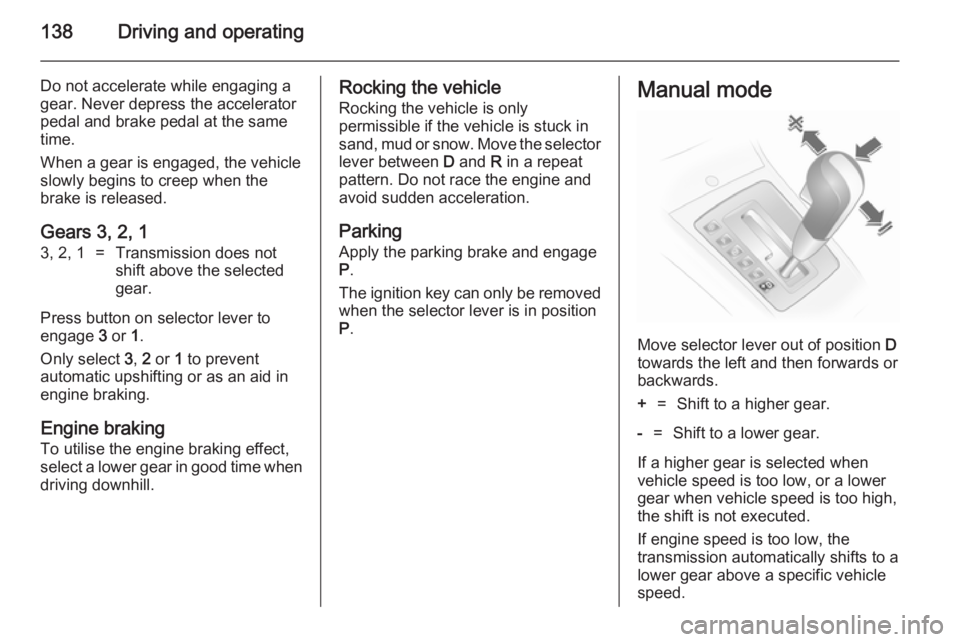
P .Manual mode
Move selector lever out of position D
towards the left and then forwards or backwards.
+=Shift to a higher gear.-=Shift to a lower gear.
If a higher gear is selected when
vehicle speed is too low, or a lower
gear when vehicle speed is too high,
the shift is not executed.
If engine speed is too low, the
transmission automatically shifts to a
lower gear above a specific vehicle
speed.
Page 147 of 245
Driving and operating145
A illuminates in the event of a fault.
Continued driving is possible. Manual
mode cannot be used for shifting.
If F appears in the transmission
display, continued driving is not
possible.
Have the cause of the fault remedied
by a workshop.
Interruption of power
supply
The clutch is not disengaged if there is an interruption of the power supply
when a gear is engaged. The vehicle
cannot move.
If the battery is discharged, start the
vehicle using jump leads 3 200.
If the cause of the fault is not a
discharged battery, seek the
assistance of a workshop.
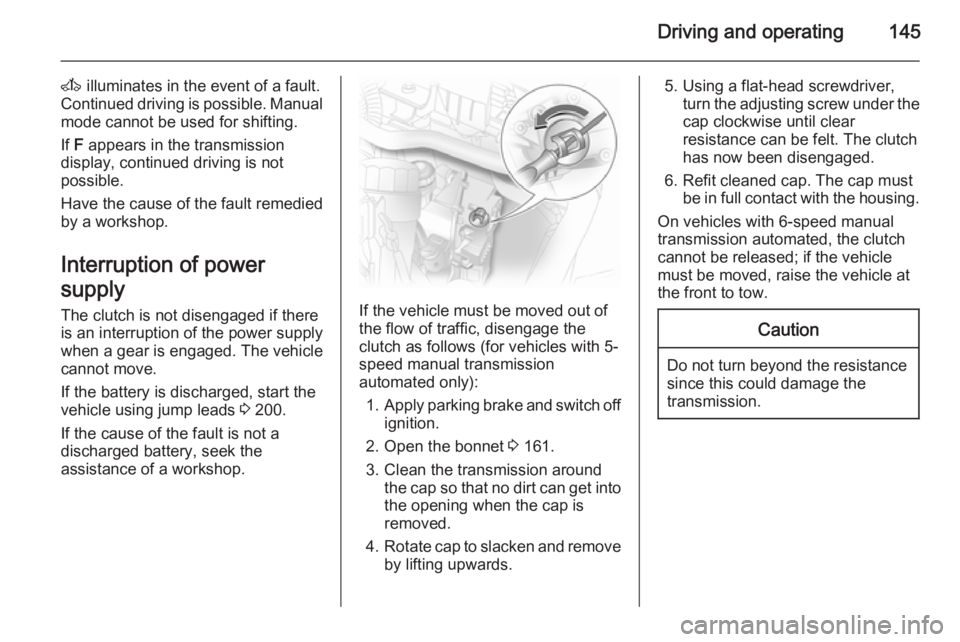
If the vehicle must be moved out of the flow of traffic, disengage the
clutch as follows (for vehicles with 5-
speed manual transmission
automated only):
1. Apply parking brake and switch off
ignition.
2. Open the bonnet 3 161.
3. Clean the transmission around the cap so that no dirt can get intothe opening when the cap is
removed.
4. Rotate cap to slacken and remove
by lifting upwards.
5. Using a flat-head screwdriver, turn the adjusting screw under the
cap clockwise until clear
resistance can be felt. The clutch
has now been disengaged.
6. Refit cleaned cap. The cap must be in full contact with the housing.
On vehicles with 6-speed manual
transmission automated, the clutch cannot be released; if the vehicle
must be moved, raise the vehicle at
the front to tow.Caution
Do not turn beyond the resistance since this could damage the
transmission.
Page 148 of 245
146Driving and operatingCaution
Towing the vehicle and starting
the engine is not permitted when
the clutch has been disengaged in this way, although the vehicle can
be moved a short distance.
Seek the immediate assistance of a
workshop.
Brakes
The brake system comprises two
independent brake circuits.
If a brake circuit fails, the vehicle can
still be braked using the other brake
circuit. However, braking effect is
achieved only when you depress the
brake pedal firmly. Considerably
more force is needed for this. The
braking distance is extended. Seek the assistance of a workshop beforecontinuing your journey.
When the engine is not running, the
support of the brake servo unit
disappears once the brake pedal has
been depressed once or twice.
Braking effect is not reduced, but
braking requires significantly greater
force. It is especially important to bear this in mind when being towed.
Control indicator R 3 98.
Antilock brake system Antilock brake system (ABS)
prevents the wheels from locking.ABS starts to regulate brake pressure as soon as a wheel shows a tendency
to lock. The vehicle remains
steerable, even during hard braking.
ABS control is made apparent
through a pulse in the brake pedal
and the noise of the regulation
process.
For optimum braking, keep the brake
pedal fully depressed throughout the
braking process, despite the fact that
the pedal is pulsating. Do not reduce
the pressure on the pedal.
After starting off the system performs a self-test which may be audible.
Control indicator u 3 98.
Adaptive brake lamp During full braking, all three brake
lamps flash for the duration of ABS
control.
Page 153 of 245

Driving and operating151
Note
Attached parts in the detection area
cause system malfunction.
Activation
When reverse gear is engaged, the
system switches itself on
automatically.
The system can also be activated at
low speed by pressing the r button.
An obstacle is indicated by buzzers.
The interval between the buzzers
becomes shorter as the vehicle gets closer to the obstacle. When the
distance is less than 30 cm, the buzzer is continuous.
9 Warning
Under certain circumstances,
various reflective surfaces on
objects or clothing as well as
external noise sources may cause the system to fail to detect
obstacles.
Deactivation
Deactivate the system by pressing
the r button.
The system deactivates automatically
when reverse gear is disengaged.
Towing equipment The system automatically detects
factory-fitted towing equipment.
When towing, plugging the trailer
cable into the socket automatically
switches the parking assist off.
Fuel
Fuel for petrol engines
Only use unleaded fuel that complies
with European standard EN 228 or
E DIN 51626-1 or equivalent.
Your engine is capable to run with
E10 fuel that fulfills these standards.
E10 fuel contains up to 10 %
bioethanol.
Use fuel with the recommended
octane rating 3 216. Use of fuel with
too low an octane rating can reduce
engine power and torque and slightly increases fuel consumption.Caution
Do not use fuel or fuel additives
that contain metallic compounds
such as manganese-based
additives. This may cause engine
damage.
Page 156 of 245
154Driving and operating
higher fuel consumption and
CO 2 emission levels and a lower
maximum speed.Trailer hitch
General information
Only use towing equipment that has
been approved for your vehicle.
Entrust retrofitting of towing
equipment to a workshop. It may be
necessary to make changes that
affect the cooling system, heat
shields or other equipment.
Do not mount towing equipment to
vehicles with Z 20 LEH engine.
Fitting of towing equipment could
cover the opening of the towing eye.
If this is the case, use the coupling ball bar for towing. Always keep the
coupling ball bar in the vehicle.
Installation dimensions of factory-
fitted towing equipment 3 232.Driving characteristics and
towing tips Before attaching a trailer, lubricate
the coupling ball. However, do not do
so if a stabiliser, which acts on the
coupling ball, is being used to reduce snaking movements.
For trailers with low driving stability
and trailers with a permitted gross
vehicle weight of more than 1300 kg
(Saloon) /1200 kg (Station wagon) a
speed of 80 km/h must not be
exceeded; the use of a stabiliser is
recommended.
If the trailer starts snaking, drive more
slowly, do not attempt to correct the
steering and brake sharply if
necessary.
When driving downhill, drive in the
same gear as if driving uphill and
drive at a similar speed.
Adjust tyre pressure to the value
specified for full load 3 225.