transmission oil OPEL CORSA 2009 Owners Manual
[x] Cancel search | Manufacturer: OPEL, Model Year: 2009, Model line: CORSA, Model: OPEL CORSA 2009Pages: 284, PDF Size: 4.96 MB
Page 16 of 284

10 In BriefControl indicators w
Deflation detection system 3,
3 84, 3164.
r
Ultrasonic parking sensors 3,
fault,
3 162.
B
Adaptive driving light 3, fault,
3 112, 3117.
j
Manual transmission
automated 3, starting the
engine 3,
3 85, 3137.
!
Preheating system 3,
Diesel particle filter 3,
3 85.
Z
Exhaust gases 3,
3 85, 3156.
A
Engine electronics, transmission
electronics 3, immobiliser, diesel
fuel filter 3 , fault,
3 27, 386, 3142, 3148, 3156.
S Engine oil level 3
,
3 86, 3242.
I
Engine oil pressure,
386.
p
Alternator,
3
87.
p
Electro-hydraulic power
assisted steering,
387.
O
Turn signal lamps,
311, 387.
Y
Fuel level,
387, 390.
C
Main beam,
311, 387.
W
Coolant temperature,
387, 3244.
*
Deactivate front passenger
airbag systems,
375.
T
Winter setting for automatic
transmission
3 or automated
transmission 3,
3 140, 3146.
1
Manual transmission
automated SPORT mode
3,
3 139, 3146.
q
Headlamp range adjustment,
375.
8
Exterior lights,
388, 3108.
>
Fog lamps 3,
3 88, 3110.
v
Airbag systems, belt tensioners,
361, 374.
X
Seat belt 3,
3 89, 362.
r
Fog tail lamp,
388, 3110.
R
Brake system, clutch system,
389, 3167, 3246.
u
Anti-lock brake system,
3166.
v
Electronic Stability Programme
(ESP®
Plus
) 3 ,
3 151.
m
Cruise control 3,
3 161.
Back to overview
Page 21 of 284
15
In Brief
Picture no: 18180s.tif
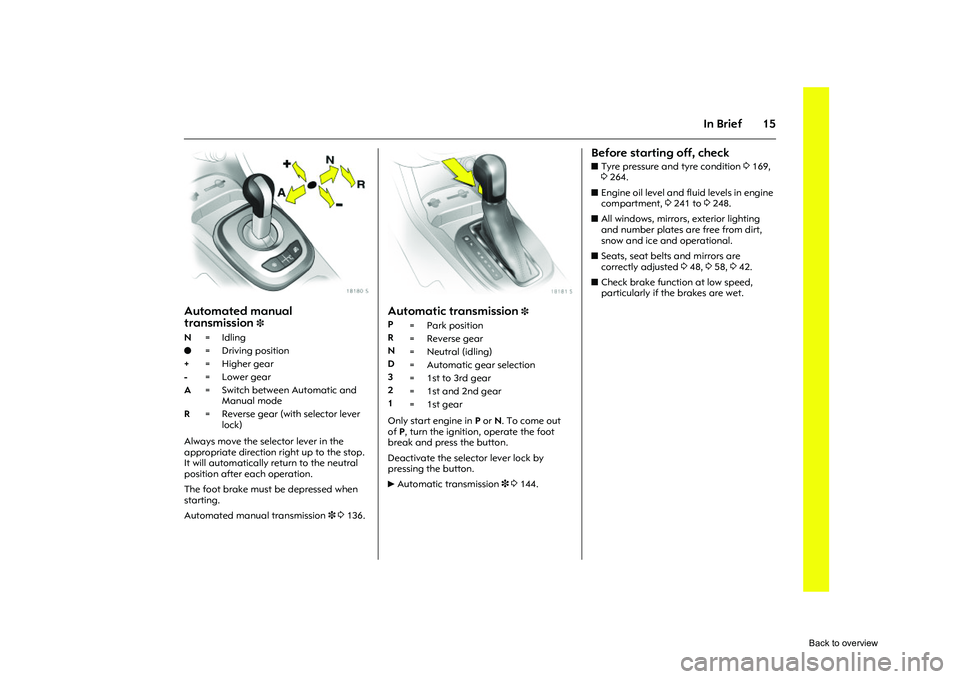
Automated manual
transmission
3
Always move the selector lever in the
appropriate direction right up to the stop.
It will automatically re turn to the neutral
position after each operation.
The foot brake must be depressed when
starting.
Automated manual transmission 3 3 136.
Picture no: 18181s.tif
Automatic transmission
3
Only start engine in P or N. To come out
of P, turn the ignition, operate the foot
break and press the button.
Deactivate the selector lever lock by
pressing the button.
6 Automatic transmission 3 3144.
Before starting off, check z Tyre pressure an d tyre condition 3169,
3 264.
z Engine oil level and fluid levels in engine
compartment, 3241 to 3248.
z All windows, mirrors, exterior lighting
and number plates are free from dirt,
snow and ice and operational.
z Seats, seat belts and mirrors are
correctly adjusted 348, 358, 342.
z Check brake function at low speed,
particularly if the brakes are wet.
N = Idling
o =Driving position
+ =Higher gear
- =Lower gear
A = Switch between Automatic and
Manual mode
R = Reverse gear (with selector lever
lock)
P = Park position
R = Reverse gear
N = Neutral (idling)
D = Automatic gear selection
3 =1st to 3rd gear
2 = 1st and 2nd gear
1 =1st gear
Back to overview
Page 92 of 284

86 Instruments, controls
Picture no: 18469s.tif
A
Engine electronics, transmission
electronics 3, immobiliser,
diesel fuel filter 3
Control indicator lights up and/or flashes
yellow.
It illuminates for a few seconds when the
ignition is switched on.
Illuminates when the engine is running
Fault in engine electronics or transmission
electronics. Electronics switches to
emergency running program, fuel
consumption may increase and driveability
of vehicle may be affected 3156. If the
fault is still there when the engine is started
again, contact a workshop for assistance.
Picture no:
Lamps
together with InSP4 on the service
display: Diesel fuel filter needs to be
drained of water 3244.
Flashes when the ignition is on
Fault in the electronic immobiliser system;
the engine cannot be started 327.
S
Engine oil level 3
Control indicator lights up yellow.
The engine oil level is checked
automatically.
Illuminates when the engine is running
Engine oil level too low. Check engine oil
level and top up engine oil if necessary
3 242.
I
Engine oil pressure
Control indicator lights up red.
It illuminates when the ignition is switched
on and goes out shortly after the engine
starts.
Illuminates when the engine is running
1. Depress clutch.
2. Shift manual transmission or manual
transmission automated 3 into neutral;
for automatic transmission 3, set
selector lever to N.
3. Move out of the flow of traffic as quickly as possible without impeding other
vehicles.
4. Switch off ignition.
Contact a workshop for assistance. Caution
Engine lubrication may be interrupted.
This may result in damage to the engine
and/or locking of the drive wheels.
9
Warning
When the engine is off, considerably
more force is needed to brake and steer.
Do not remove key until vehicle has
come to a standstill, otherwise the
steering column lock could engage
unexpectedly.
Back to overview
Page 152 of 284

146 Driving and operationElectronically controlled driving
programmes
zThe automatic neutral shift function
automatically shifts to idling when the
vehicle is stopped with a forward gear
engaged (depending on transmission
fluid temperature).
z Following a cold start, the operating
temperature programme increases
engine speed to quickly bring the
catalytic converter to the required
temperature.
z The adaptive program automatically
adjusts the gear change to the driving
conditions, e.g. greater load or gradients.
Picture no: 18234s.tif
Winter programme T
Activate the Winter pr ogramme if you have
problems starting off on a slippery road
surface.
To activate Press the T button with P , R , N , D or 3
engaged. The vehicle starts off in 3rd gear.
To deactivate The Winter programme is switched off by:
z pressing the T button again,
z manually selecting 2 or 1 ,
z turning off the ignition,
z or if the transmission oil temperature is
too high.
Picture no: 18451s.tif
Kickdown
If the accelerator pedal is pressed past the
pressure point, the transmission shifts to a
lower gear depending on engine speed.
Back to overview
Page 159 of 284
153
Driving and operation
Fuels, refuelling Fuel consumption
Fuel consumption is determined under
specific driving conditions – see page
3256.
Special equipment increases the weight of
the vehicle. As a result, they can increase
fuel consumption and reduce the specified
maximum speed.
For the first few thousand kilometres,
friction between the engine and
transmission components is higher. This
increases fuel consumption.
Fuel for petrol engines
Only use unleaded fuel that complies
with DIN EN 228.
Fuels with ethanol content greater than 5 %
may only be used if the vehicle has been
specifically developed and approved for
these fuels.
Use fuel with the recommended octane
rating (value in bold 3254). Use of fuel
with too low an octane rating can reduce
engine power and torque and will slightly
increase fuel consumption. Fuel for diesel engines
Only use diesel fuel that complies
with DIN EN 590. The fuel must have
low sulphur content (maximum 50 ppm).
Do not use marine diesel oils, heating oils
or entirely or partially plant-based diesel
fuels, such as rape seed oil or bio diesel,
Aquazole and similar diesel-water
emulsions. Diesel fuels must not be diluted
with fuels for petrol engines.
The flow and filterabilit
y of diesel fuel are
temperature-dependent. When
temperatures are low, refuel with diesel fuel
with guaranteed wi nter properties.
Picture no: 18309s.tif
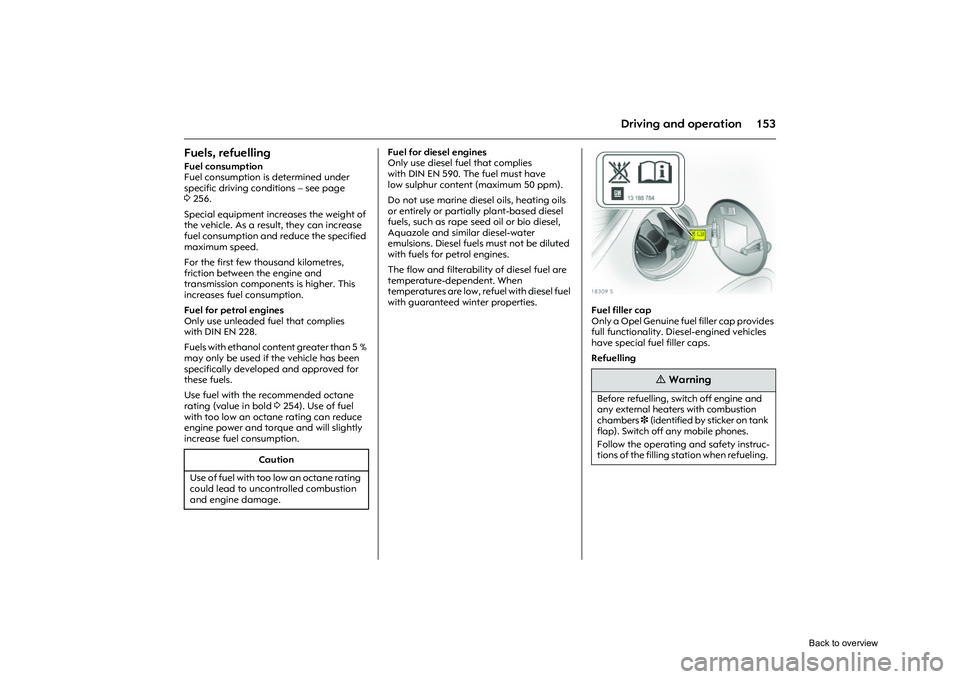
Fuel filler cap
Only a Opel Genuine fuel filler cap provides
full functionality. Di esel-engined vehicles
have special fuel filler caps.
Refuelling
Caution
Use of fuel with too low an octane rating
could lead to uncontrolled combustion
and engine damage.
9
Warning
Before refuelling, switch off engine and
any external heater s with combustion
chambers 3 (identified by sticker on tank
flap). Switch off any mobile phones.
Follow the operating and safety instruc-
tions of the filling stat ion when refueling.
Back to overview
Page 240 of 284
234 Opel Service, maintenance⊕Additional work.
o The intervals are shorter where driving conditions are more arduous or country-specific.
Service work
after year
1)
km (x1000)
1)
1)Depending on what occurs first.
1
30 2
60 3
90 4
120 5
150
⊕o
Remove brake drum, clean, carry out visual check every 4 years/60 000 km
Visually inspect steering system boots, track rods, final drive xxxxx
Check track rod end and supporting ball joint xxxxx
⊕
Change brake and clutch fluids (manual transmission automated) every 2 years
Loosen wheel mounting and tighten to 110 Nm
xx
Grease or apply oil to
bolt taper when fitting.
Check tyre condition and pressure (inclu ding spare wheel), correct if necessary.
If there is a tyre inflation system, check that the set is complete and the use-by date is
still valid. Replace sealant bottle every four years.
⊕
Annual service check if the annual distance travelled is greater than 20000 km.
Visually check the first aid kit (that it is wher e it should be, that it is undamaged and that
the use by date is still valid), lashing eyes and warning triangle every 2 years
Check headlamp settings (including auxi liary headlamps), adjust if necessary x x
⊕o
Lubricate door hinges, check arms, cylinder lo ck, door latch, bonnet catch, rear panel
hinge xx
OPC: check function of central locking system
clean door lock from outside and grease xxxxx
Test run, final check (check steering and ig nition lock, instrument and warning lamps,
entire brake system, steering, air conditioni ng system, engine, bodywork and chassis,
reset service/interval display with TECH 2. xxxxx
⊕
Germany only: carry out emissions check, main inspection
First time after three years, then every 2 years
If used commercially to transport passengers, taxis, ambulances, hire cars etc. annually
Back to overview
Page 243 of 284
237
Opel Service, maintenance
⊕ Additional work.
o The intervals are shorter where driving conditions are more arduous or country-specific.
Service work
after year
1)
km (x1000)
1)
1)Depending on what occurs first.
1
15 2
30 3
45 4
60 5
75
⊕o
Remove brake drum, clean, carry out visual check every 4 years/60000 km
Visually inspect steering system boots, track rods, final drive xxxxx
Check track rod end and supporting ball joint xxxxx
⊕
Change brake and clutch fluids (manual transmission automated) every 2 years
Loosen wheel mountings and tighten to 110 Nm
xx
Grease or apply oil to
bolt taper when fitting.
Check tyre condition and pressure (inclu ding spare wheel), correct if necessary.
If there is a tyre inflation system, check that the set is complete and the use-by date is
still valid. Replace sealant bottle every four years.
⊕
Annual service check if the annual distance travelled is greater than 20000 km.
Visually check the first aid kit (that it is wher e it should be, that it is undamaged and that
the use by date is still valid), lashing eyes and warning triangle every 2 years
Check headlamp settings (including auxi liary headlamps), adjust if necessary x x
⊕o
Lubricate door hinges, check arms, cylinder lo ck, door latch, bonnet catch, rear panel
hinge xx
OPC: check function of central locking system
clean door lock from outside and grease xxxxx
Test run, final check (check steering and ig nition lock, instrument and warning lamps,
entire brake system, steering, air conditioni ng system, engine, bodywork and chassis,
reset service/interval display with TECH 2. xxxxx
Back to overview
Page 255 of 284

249
Opel Service, maintenance
Protecting electronic components In order to prevent faults in electronic
components in the electrical system, never
connect or disconnect battery with engine
running or ignition switched on. Never start
engine with battery disconnected, e.g.
when starting using jump leads.
To avoid damaging th e vehicle, do not
make any modifications to the electrical
system, e. g. connecting additional
consumers or tampering with electronic
control units (chip tuning).
Laying the vehicle up for a long
period of time If the vehicle is to be laid up for several
months, the following work should be
undertaken to prevent damage:
z Wash and wax the vehicle 3228.
z Have the wax in the engine
compartment and underbody checked.
z Clean and preserve rubber seals.
z Change engine oil.
z Check antifreeze and corrosion
protection 3244.
z Check coolant level, add antifreeze if
necessary 3245.
z Drain the windscreen washer system.
z Increase tyre pressure to value given for
full load 3264. z
Park the vehicle in dry and well
ventilated place. Select first gear or
reverse gear, and with automatic
transmission 3 move selector lever to P.
Use chocks or something similar to
prevent vehicle from rolling.
z Do not apply hand brake.
z Disconnect the clamp from the negative
terminal of the vehicle battery.
Putting the vehicle back into
servicePerform the following work before
recommissioning the vehicle:
zConnect the clamp to the negative
terminal of the vehicle battery.
z Check tyre pressure 3264.
z Top up windscreen washer system 3248.
z Check engine oil level 3242.
z Check coolant level 3245.
z Fit the number plate if necessary.
9
Warning
Electronic ignition systems generate very
high voltages. Do not touch the ignition
system; high voltage can be fatal.
Back to overview
Page 280 of 284

274 IndexMMain beam ....................................... 11, 109Bulb replacement ....................... 214, 217
Control indicator .................................. 87
Maintenance .......................................... 231 Air conditioning system ..................... 135
Antifreeze protection ......................... 244
Brake fluid .......................................... 246
Brakes ......................................... 165, 245
Engine oil ............................................ 242
Fuel consumption .............................. 152
Tyre pressure ...................................... 169
Tyres ................................................... 170
Manual transmission – see Transmission ............................ 14, 144
Mirrors ............................................. 4, 43, 44
Misted windows ............................. 125, 131
Mobile telephone ................................... 119
Motorway lighting ................................. 112
Muffler, see Exhaust system ................. 157NNeutral, transmission .............................. 14
Number plate lamps Bulb replacement ............................... 225
Number plate lighting ........................... 225
Number plates ....................................... 249
OOctane numbers ............................ 252, 253
Oil ........................................................... 239 Additives ............................................ 239
Top up ................................................ 239
Viscosity .............................................. 239
Oil consumption .................................... 242
Oil level ................................................... 242
Oil pressure .............................................. 86
Oils .......................................................... 242
Opel Service ........................................... 231
Operating temperature ........................ 150
Outside temperature gauge ................... 95
Overrun .................................................. 152PPark pilot ................................................ 162
Parking ..................................................... 17
Parking lamps .................................. 11, 114 Bulb replacement ...................... 215, 219
Parking the vehicle .................................. 17
Pedals ..................................................... 150
Performance .................................. 254, 256
Peripheral lighting ................................. 113
Personalised key ................. 23, 33, 34, 39, 92, 107, 110
Petrol .............................................. 252, 253
Pollen filter ............................................. 135
Power assisted steering, see electro-hydraulic power
assisted steering .................................. 149 Power steering, see electro-hydraulic
power assisted steering ...................... 149
Preheating ............................................... 85
QQuickheat .............................................. 134RRadio ...................................................... 118
Radio equipment (CB) .......................... 119
Radio reception ..................................... 118
Rain sensor ............................................ 106
Reading lamps .............................. 115, 116
Rear lamp cluster .................................. 108 Bulb replacement .............................. 221
Rear window washer system ...............13, 107, 228, 248
Rear window wiper .......................... 13, 107
Refuelling Fuel filler cap ............................. 153, 154
Remote control Central locking system .................... 2, 31
Steering wheel ............................. 21, 118
Replacement keys ................................... 26
Reversing lamps Bulb replacement .............................. 221
Roof load ................................. 57, 149, 152
Roof rack ..........................57, 152, 173, 259
Roof racks ................................ 57, 152, 259
Run-flat tyres ......................................... 171
Running-in Brakes ......................................... 165, 245
Back to overview