cooling OPEL MOVANO_B 2017 Manual user
[x] Cancel search | Manufacturer: OPEL, Model Year: 2017, Model line: MOVANO_B, Model: OPEL MOVANO_B 2017Pages: 255, PDF Size: 6.12 MB
Page 173 of 255
Vehicle care171End-of-life vehicle recovery
Information on end-of-life vehicle
recovery centres and the recycling of
end-of-life vehicles is available on our website, where legally required. Only
entrust this work to an authorised
recycling centre.Vehicle checks
Performing work9 Warning
Only perform engine compartment
checks when the ignition is off.
The cooling fan may start
operating even if the ignition is off.
9 Danger
The ignition system generates
extremely high voltages. Do not
touch.
The caps for topping up the engine oil, the coolant, the washer fluid and the
oil dipstick handle are yellow for ease
of identification.
Bonnet
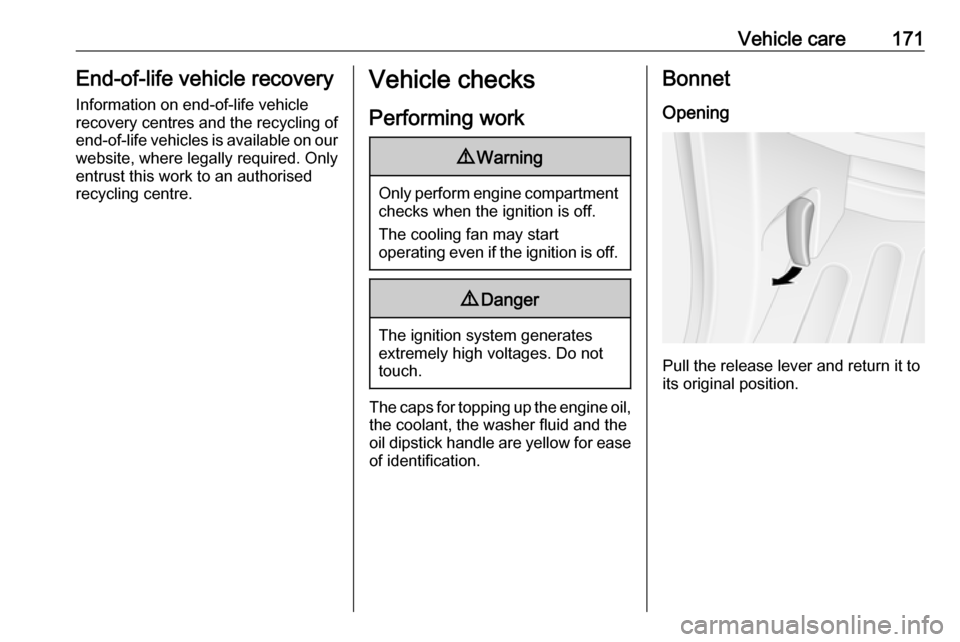
Opening
Pull the release lever and return it to
its original position.
Page 175 of 255
Vehicle care173Caution
Do not allow the engine oil level todrop below the minimum level!
We recommend the use of the same
type of engine oil that was used at the
last change.
The engine oil level must not exceed the maximum mark MAX on the
dipstick.
Caution
Overfilled engine oil must be
drained or suctioned out.
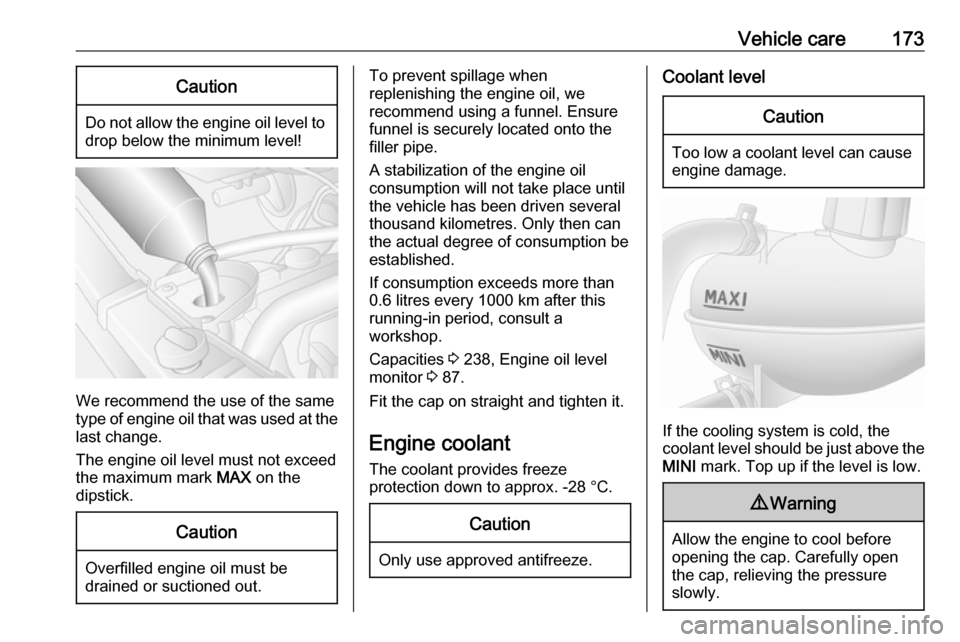
To prevent spillage when
replenishing the engine oil, we
recommend using a funnel. Ensure funnel is securely located onto the
filler pipe.
A stabilization of the engine oil
consumption will not take place until
the vehicle has been driven several
thousand kilometres. Only then can
the actual degree of consumption be
established.
If consumption exceeds more than
0.6 litres every 1000 km after this
running-in period, consult a
workshop.
Capacities 3 238, Engine oil level
monitor 3 87.
Fit the cap on straight and tighten it.
Engine coolant The coolant provides freeze
protection down to approx. -28 °C.Caution
Only use approved antifreeze.
Coolant levelCaution
Too low a coolant level can cause engine damage.
If the cooling system is cold, the
coolant level should be just above the
MINI mark. Top up if the level is low.
9Warning
Allow the engine to cool before
opening the cap. Carefully open
the cap, relieving the pressure
slowly.
Page 176 of 255
174Vehicle careTop up with antifreeze. If no
antifreeze is available, use clean tap
water or distilled water. Install the cap tightly. Have the antifreeze
concentration checked and have the cause of the coolant loss remedied by
a workshop.
If a substantial amount of coolant is
required, it will be necessary to bleed any trapped air from the cooling
system. Seek the assistance of a
workshop.
Power steering fluidCaution
Extremely small amounts of
contamination can cause steering
system damage and cause it to not work properly. Do not allow
contaminates to contact the fluid
side of the reservoir cap or from
entering the reservoir.
The fluid level normally does not need
to be checked. If an unusual noise is
heard during steering or if the power
steering reacts conspicuously, seek
the assistance of a workshop.
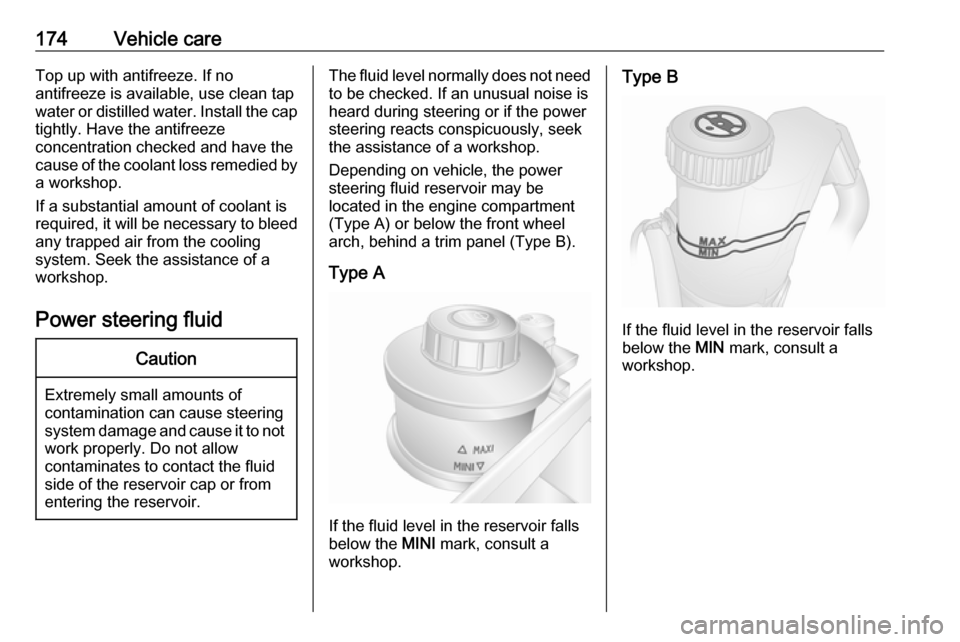
Depending on vehicle, the power
steering fluid reservoir may be
located in the engine compartment
(Type A) or below the front wheel
arch, behind a trim panel (Type B).
Type A
If the fluid level in the reservoir falls
below the MINI mark, consult a
workshop.
Type B
If the fluid level in the reservoir falls
below the MIN mark, consult a
workshop.
Page 199 of 255
Vehicle care197indicators (TWI). Their position is
indicated by markings on the
sidewall.
Tyres age, even if they are not used.
We recommend tyre replacement
every six years.
Changing tyre and wheel
size
If tyres of a different size than those
fitted at the factory are used, it may be
necessary to reprogramme the
speedometer as well as the nominal
tyre pressure and make other vehicle modifications.
After converting to a different tyre
size, have the label with tyre
pressures replaced.9 Warning
Use of unsuitable tyres or wheels
may lead to accidents and will
invalidate the vehicle type
approval.
Wheel covers
Wheel covers and tyres that are
factory approved for the respective
vehicle and comply with all of the
relevant wheel and tyre combination requirements must be used.
If the wheel covers and tyres used are
not factory approved, the tyres must
not have a rim protection ridge.
Wheel covers must not impair brake
cooling.9 Warning
Use of unsuitable tyres or wheel
covers could lead to sudden
pressure loss and thereby
accidents.
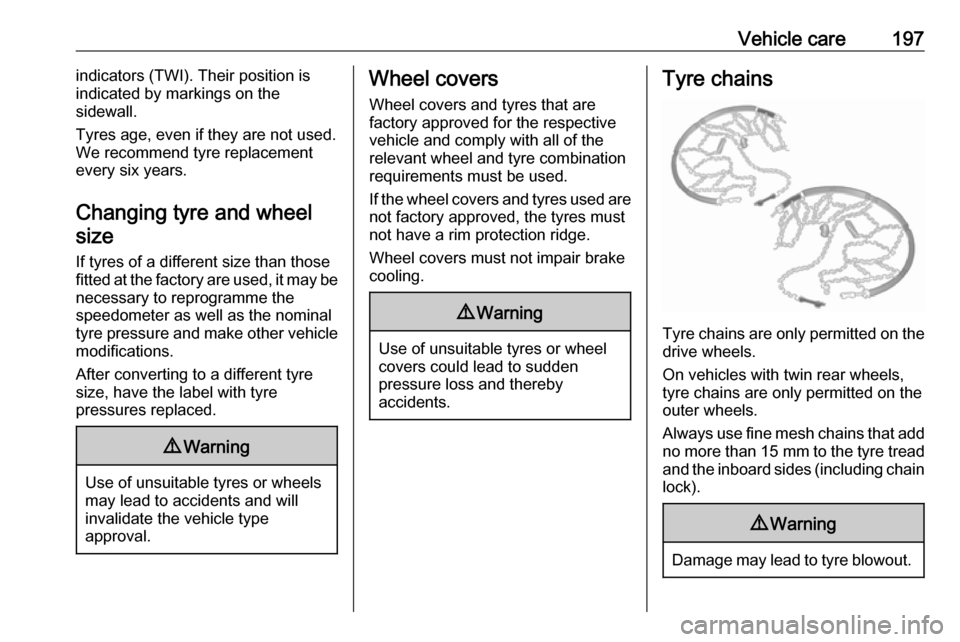
Tyre chains
Tyre chains are only permitted on the
drive wheels.
On vehicles with twin rear wheels,
tyre chains are only permitted on the
outer wheels.
Always use fine mesh chains that add no more than 15 mm to the tyre tread
and the inboard sides (including chain lock).
9 Warning
Damage may lead to tyre blowout.