automatic transmission PONTIAC G3 2010 User Guide
[x] Cancel search | Manufacturer: PONTIAC, Model Year: 2010, Model line: G3, Model: PONTIAC G3 2010Pages: 368, PDF Size: 3.94 MB
Page 163 of 368
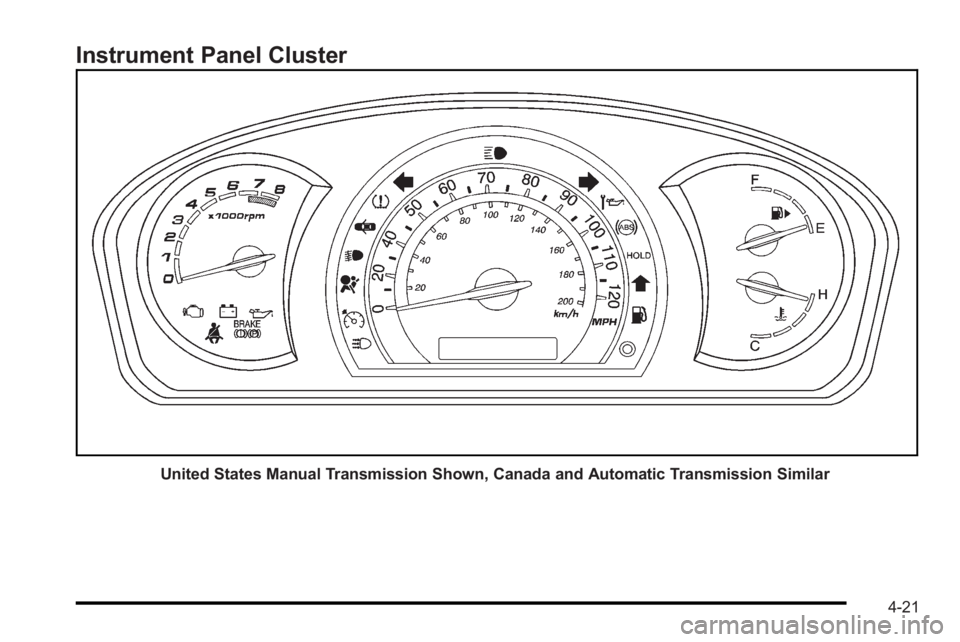
Instrument Panel Cluster
United States Manual Transmission Shown, Canada and Automatic Transmission Similar
4-21
Page 169 of 368

When the ignition is on, the brake system warning light
will also come on when the parking brake is set. The
light will stay on if the parking brake does not fully
release. If it stays on after the parking brake is fully
released, it means there is a brake problem.
If the light comes on while driving, carefully pull off the
road and stop. The pedal may be harder to push or may
go closer to the floor. It may take longer to stop. If the
light is still on, have the vehicle towed for service.
SeeTowing Your Vehicle on page 5‑25.
Antilock Brake System (ABS)
Warning Light
For vehicles with the
Antilock Brake System
(ABS), this light comes on
briefly when the engine is
started.
If the light stays on, turn the ignition to LOCK/OFF or if
the light comes on, stop as soon as possible and turn
the ignition off. Then start the engine again to reset the
system. If the light still stays on, or comes on again while driving, the vehicle needs service. See your
dealer/retailer. If the regular brake system warning light
is not on, the brakes will still work, but the antilock
brakes will not work. If the regular brake system
warning light is also on, the antilock brakes will not
work and there is a problem with the regular brakes.
See
Brake System Warning Light on page 4‑26.
The ABS warning light will come on briefly when the
ignition is turned to ON/RUN. This is normal. If the light
does not come on then, have it fixed so it will be ready
to warn if there is a problem.
Hold Mode Light
If the vehicle has this
feature, this light comes
on when the hold mode
is active.
If the HOLD mode light flashes, have the vehicle
checked. See “Hold Mode”underAutomatic
Transmission Operation
on page 3‑22for more
information.
4-27
Page 222 of 368
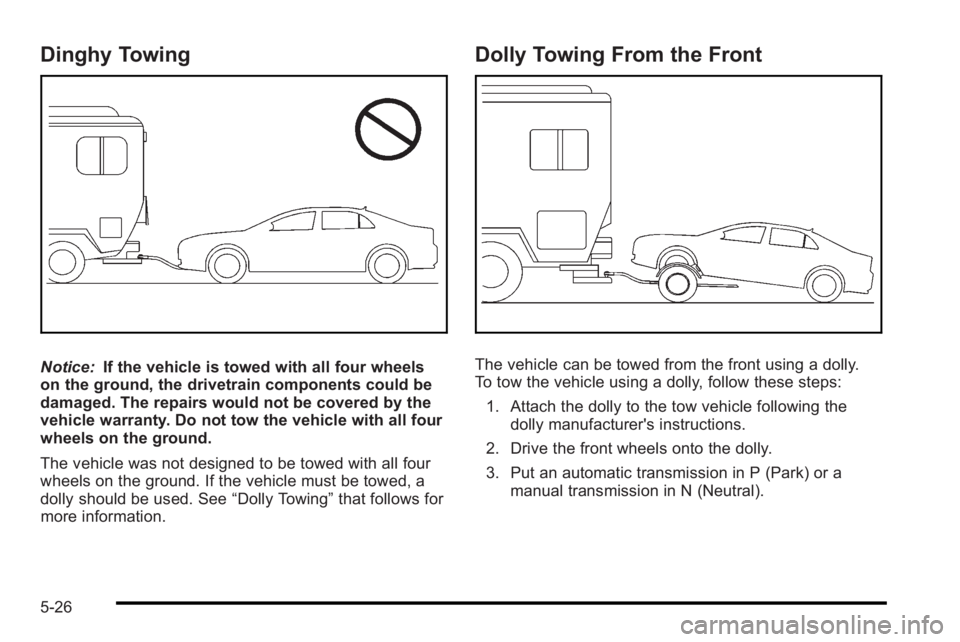
Dinghy Towing
Notice:If the vehicle is towed with all four wheels
on the ground, the drivetrain components could be
damaged. The repairs would not be covered by the
vehicle warranty. Do not tow the vehicle with all four
wheels on the ground.
The vehicle was not designed to be towed with all four
wheels on the ground. If the vehicle must be towed, a
dolly should be used. See “Dolly Towing”that follows for
more information.
Dolly Towing From the Front
The vehicle can be towed from the front using a dolly.
To tow the vehicle using a dolly, follow these steps:
1. Attach the dolly to the tow vehicle following the dolly manufacturer's instructions.
2. Drive the front wheels onto the dolly.
3. Put an automatic transmission in P (Park) or a manual transmission in N (Neutral).
5-26
Page 223 of 368

4. Set the parking brake and remove the key.
5. For an automatic transmission, insert the key intothe shift‐lock release slot and shift to N (Neutral).
See Shifting Out of Park on page 3‑30.
6. Clamp the steering wheel in a straight-ahead position with a clamping device designed for
towing.
7. Release the parking brake.Dolly Towing From the Rear
Notice: Towing the vehicle from the rear with the
front wheels on the ground could cause
transmission damage. Do not tow the vehicle from
the rear with the front wheels on the ground.
Towing a Trailer
The vehicle is neither designed nor intended to tow a
trailer.
5-27
Page 225 of 368
Section 6 Service and Appearance Care
Service. . . . . . . . . . . . . . . . . . . . . . . . . . . . . . . . . . . . . . . . . . . . . 6-3
Accessories and Modifications . . . . . . . . . . . . . . . . . . 6-3
California Proposition 65 Warning . . . . . . . . . . . . . . . 6-4
California Perchlorate Materials Requirements . . . . . . . . . . . . . . . . . . . . . . . . . . . . . . . . . 6-4
Doing Your Own Service Work . . . . . . . . . . . . . . . . . . 6-4
Adding Equipment to the Outside of the Vehicle . . . . . . . . . . . . . . . . . . . . . . . . . . . . . . . . . . . . . . . . 6-5
Fuel . . . . . . . . . . . . . . . . . . . . . . . . . . . . . . . . . . . . . . . . . . . . . . . . . 6-5
Gasoline Octane . . . . . . . . . . . . . . . . . . . . . . . . . . . . . . . . 6-6
Gasoline Specifications . . . . . . . . . . . . . . . . . . . . . . . . . 6-6
California Fuel . . . . . . . . . . . . . . . . . . . . . . . . . . . . . . . . . . 6-6
Additives . . . . . . . . . . . . . . . . . . . . . . . . . . . . . . . . . . . . . . . . 6-7
Fuels in Foreign Countries . . . . . . . . . . . . . . . . . . . . . . 6-8
Filling the Tank . . . . . . . . . . . . . . . . . . . . . . . . . . . . . . . . . . 6-8
Filling a Portable Fuel Container . . . . . . . . . . . . . . . 6-10
Checking Things Under the Hood . . . . . . . . . . . . . . .6-11
Hood Release . . . . . . . . . . . . . . . . . . . . . . . . . . . . . . . . . 6-12
Engine Compartment Overview . . . . . . . . . . . . . . . . 6-14
Engine Oil . . . . . . . . . . . . . . . . . . . . . . . . . . . . . . . . . . . . . 6-15
Engine Oil Life System . . . . . . . . . . . . . . . . . . . . . . . . 6-18
Engine Air Cleaner/Filter . . . . . . . . . . . . . . . . . . . . . . . 6-19
Automatic Transmission Fluid . . . . . . . . . . . . . . . . . . 6-21
Manual Transmission Fluid . . . . . . . . . . . . . . . . . . . . 6-23
Hydraulic Clutch . . . . . . . . . . . . . . . . . . . . . . . . . . . . . . . 6-23
Cooling System . . . . . . . . . . . . . . . . . . . . . . . . . . . . . . . . 6-24 Engine Coolant . . . . . . . . . . . . . . . . . . . . . . . . . . . . . . . . 6-25
Engine Overheating . . . . . . . . . . . . . . . . . . . . . . . . . . . 6-30
Power Steering Fluid . . . . . . . . . . . . . . . . . . . . . . . . . . 6-32
Windshield Washer Fluid . . . . . . . . . . . . . . . . . . . . . . 6-33
Brakes . . . . . . . . . . . . . . . . . . . . . . . . . . . . . . . . . . . . . . . . . 6-34
Battery . . . . . . . . . . . . . . . . . . . . . . . . . . . . . . . . . . . . . . . . . 6-37
Jump Starting . . . . . . . . . . . . . . . . . . . . . . . . . . . . . . . . . . 6-38
Headlamp Aiming . . . . . . . . . . . . . . . . . . . . . . . . . . . . . . . . 6-42
Bulb Replacement . . . . . . . . . . . . . . . . . . . . . . . . . . . . . . . . 6-43
Halogen Bulbs . . . . . . . . . . . . . . . . . . . . . . . . . . . . . . . . . 6-43
Headlamps . . . . . . . . . . . . . . . . . . . . . . . . . . . . . . . . . . . . 6-43
Front Turn Signal, Sidemarker and Parking Lamps . . . . . . . . . . . . . . . . . . . . . . . . . . . . . . . . . . . . . . . 6-45
Center High-Mounted Stoplamp (CHMSL) (Hatchback) . . . . . . . . . . . . . . . . . . . . . . . . . . . . . . . . . 6-46
Center High-Mounted Stoplamp (CHMSL) (Sedan) . . . . . . . . . . . . . . . . . . . . . . . . . . . . . . . . . . . . . . 6-47
Taillamps, Turn Signal, Sidemarker, Stoplamps and Back-up Lamps . . . . . . . . . . . . . . . . . . . . . . . . . 6-47
License Plate Lamp . . . . . . . . . . . . . . . . . . . . . . . . . . . . 6-48
Replacement Bulbs . . . . . . . . . . . . . . . . . . . . . . . . . . . . 6-49
Windshield Wiper Blade Replacement . . . . . . . . . . .6-49
Tires . . . . . . . . . . . . . . . . . . . . . . . . . . . . . . . . . . . . . . . . . . . . . . . 6-50
Tire Sidewall Labeling . . . . . . . . . . . . . . . . . . . . . . . . . 6-51
Tire Terminology and Definitions . . . . . . . . . . . . . . . 6-54
6-1
Page 238 of 368
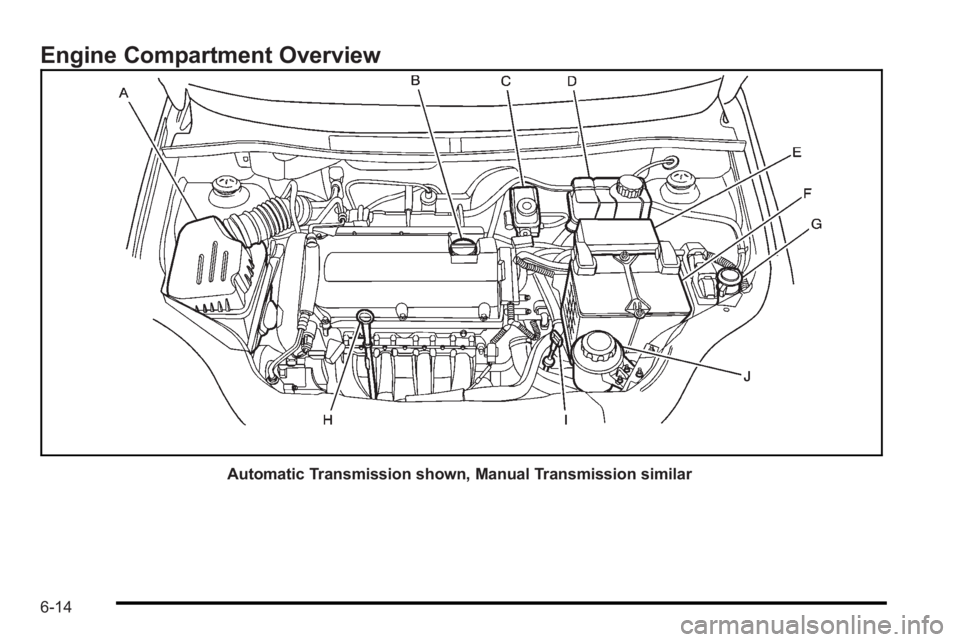
Engine Compartment Overview
Automatic Transmission shown, Manual Transmission similar
6-14
Page 239 of 368
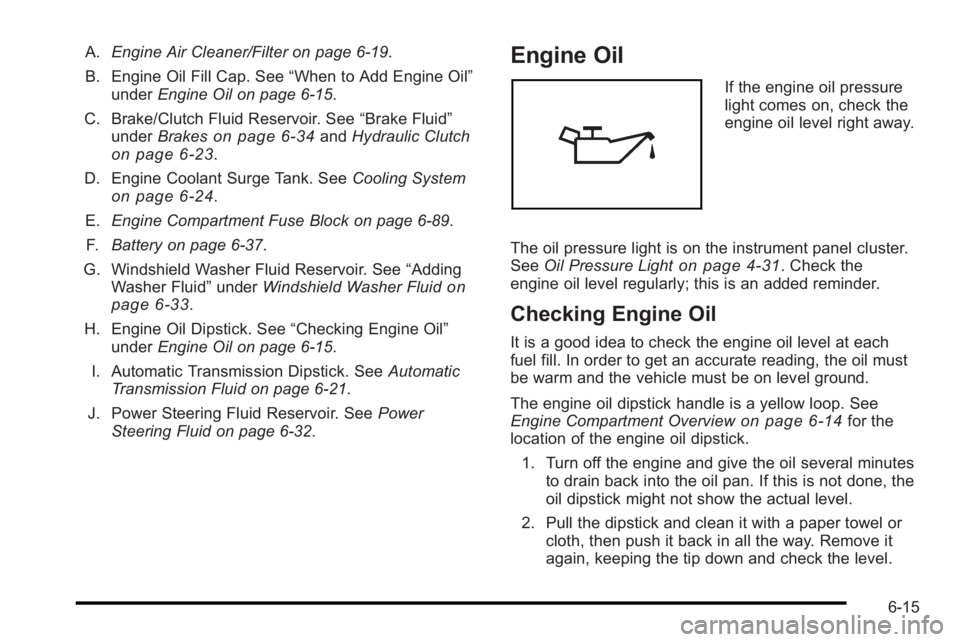
A.Engine Air Cleaner/Filter on page 6‑19.
B. Engine Oil Fill Cap. See “When to Add Engine Oil”
under Engine Oil on page 6‑15.
C. Brake/Clutch Fluid Reservoir. See “Brake Fluid”
under Brakes
on page 6‑34andHydraulic Clutchon page 6‑23.
D. Engine Coolant Surge Tank. See Cooling System
on page 6‑24.
E. Engine Compartment Fuse Block on page 6‑89.
F. Battery on page 6‑37.
G. Windshield Washer Fluid Reservoir. See “Adding
Washer Fluid” underWindshield Washer Fluid
on
page 6‑33.
H. Engine Oil Dipstick. See “Checking Engine Oil”
under Engine Oil on page 6‑15.
I. Automatic Transmission Dipstick. See Automatic
Transmission Fluid on page 6‑21.
J. Power Steering Fluid Reservoir. See Power
Steering Fluid on page 6‑32.
Engine Oil
If the engine oil pressure
light comes on, check the
engine oil level right away.
The oil pressure light is on the instrument panel cluster.
See Oil Pressure Light
on page 4‑31. Check the
engine oil level regularly; this is an added reminder.
Checking Engine Oil
It is a good idea to check the engine oil level at each
fuel fill. In order to get an accurate reading, the oil must
be warm and the vehicle must be on level ground.
The engine oil dipstick handle is a yellow loop. See
Engine Compartment Overview
on page 6‑14for the
location of the engine oil dipstick.
1. Turn off the engine and give the oil several minutes to drain back into the oil pan. If this is not done, the
oil dipstick might not show the actual level.
2. Pull the dipstick and clean it with a paper towel or cloth, then push it back in all the way. Remove it
again, keeping the tip down and check the level.
6-15
Page 245 of 368

Automatic Transmission Fluid
When to Check Automatic
Transmission Fluid
Check the automatic transmission fluid level at least
twice a year. Add fluid if needed. SeeScheduled
Maintenance on page 7‑3.
How to Check Automatic Transmission
Fluid
Because this operation can be a little difficult, you may
choose to have this done at the dealer/retailer service
department.
If you do it yourself, be sure to follow all the instructions
here, or you could get a false reading on the dipstick.
Notice: Too much or too little fluid can damage your
transmission. Too much can mean that some of the
fluid could come out and fall on hot engine parts or
exhaust system parts, starting a fire. Too little fluid
could cause the transmission to overheat. Be sure
to get an accurate reading if you check your
transmission fluid. Wait at least 30 minutes before checking the
transmission fluid level if you have been driving:
.When outside temperatures are above
90°F (32°C).
.At high speed for quite a while.
.In heavy traffic
—especially in hot weather.
To get the right reading, the fluid should be at normal
operating temperature, which is 158°F to 176°F (70°C
to 80°C).
Get the vehicle warmed up by driving about 15 miles
(24 km) when outside temperatures are above 50°F
(10°C). If it is colder than 50°F (10°C), you may have to
drive longer.
Checking the Fluid Level
Prepare the vehicle as follows: 1. Park the vehicle on a level place. Keep the engine running.
2. With the parking brake applied, place the shift lever in P (Park).
3. With your foot on the brake pedal, move the shift lever through each gear range, pausing for about
three seconds in each range. Then, position the
shift lever in P (Park).
4. Let the engine run at idle for three to five minutes.
6-21
Page 246 of 368

Then, without shutting off the engine, follow these
steps:1. Locate the automatic transmission dipstick which is located toward the front of the engine
compartment, near the power steering fluid
reservoir.
See Engine Compartment Overview
on page 6‑14for more information on location.
2. Pull out the dipstick and wipe it with a clean rag or paper towel.
3. Push the dipstick back in all the way, wait three seconds, and then pull it back out again.
4. Check both sides of the dipstick. The fluid shouldbe between MIN (A) and MAX (B) mark of the hot
area of the dipstick.
5. If the fluid level is in the acceptable range, push the dipstick back in all the way.
How to Add Automatic Transmission
Fluid
Refer to the Maintenance Schedule to determine what
kind of transmission fluid to use. See Recommended
Fluids and Lubricants on page 7‑12.
If the fluid level is low, add only enough of the proper
fluid to bring the level into the area between the two
dimples in the hot range on the dipstick.
1. Pull out the dipstick.
2. Using a long-neck funnel, add enough fluid at the dipstick hole to bring it to the proper level.
It does not take much fluid, generally less than one
pint (0.5 L). Do not overfill.
Notice: Use of the incorrect automatic transmission
fluid may damage the vehicle, and the damages may
not be covered by the vehicle's warranty. Always
use the automatic transmission fluid listed in
Recommended Fluids and Lubricants on page 7‑12.
3. After adding fluid, recheck the fluid level as described under “How to Check Automatic
Transmission Fluid” earlier in this section.
4. When the correct fluid level is obtained, push the dipstick back in all the way.
6-22
Page 262 of 368

Jump Starting
If the vehicle's battery has run down, you may want to
use another vehicle and some jumper cables to start
your vehicle. Be sure to use the following steps to do it
safely.
{WARNING:
Batteries can hurt you. They can be dangerous
because:
.They contain acid that can burn you.
.They contain gas that can explode or ignite.
.They contain enough electricity to burn you.
If you do not follow these steps exactly, some or
all of these things can hurt you.
Notice: Ignoring these steps could result in costly
damage to the vehicle that would not be covered by
the warranty.
Trying to start the vehicle by pushing or pulling it
will not work, and it could damage the vehicle.
1. Check the other vehicle. It must have a 12-volt battery with a negative ground system. Notice:
If the other vehicle's system is not a 12-volt
system with a negative ground, both vehicles can
be damaged. Only use vehicles with 12-volt systems
with negative grounds to jump start your vehicle.
2. Get the vehicles close enough so the jumper cables can reach, but be sure the vehicles are not
touching each other. If they are, it could cause a
ground connection you do not want. You would not
be able to start your vehicle, and the bad
grounding could damage the electrical systems.
To avoid the possibility of the vehicles rolling, set
the parking brake firmly on both vehicles involved
in the jump start procedure. Put an automatic
transmission in P (Park) or a manual transmission
in N (Neutral) before setting the parking brake.
Notice: If you leave the radio or other accessories
on during the jump starting procedure, they could
be damaged. The repairs would not be covered by
the warranty. Always turn off the radio and other
accessories when jump starting the vehicle.
3. Turn off the ignition on both vehicles. Unplug unnecessary accessories plugged into the
cigarette lighter or the accessory power outlet.
Turn off the radio and all lamps that are not
needed. This will avoid sparks and help save both
batteries. And it could save the radio!
6-38