warning light PONTIAC G6 2006 Owner's Guide
[x] Cancel search | Manufacturer: PONTIAC, Model Year: 2006, Model line: G6, Model: PONTIAC G6 2006Pages: 416, PDF Size: 2.66 MB
Page 297 of 416

Checking Coolant
The engine coolant surge tank is located in the rear of
the engine compartment. SeeEngine Compartment
Overview on page 5-12for more information on location.
{CAUTION:
Turning the surge tank pressure cap when the
engine and radiator are hot can allow steam
and scalding liquids to blow out and burn you
badly. Never turn the surge tank pressure
cap — even a little — when the engine and
radiator are hot.
The vehicle must be on a level surface. When your
engine is cold, the coolant level should be at the
FULL COLD mark or slightly higher.
If the LOW COOLANT message is displayed in the
Driver Information Center (DIC), it means you are low
on engine coolant. Have the system serviced by a
technician as soon as possible. SeeDIC Warnings
and Messages on page 3-48for more information.
5-29
Page 309 of 416

{CAUTION:
The brake wear warning sound means that
soon your brakes will not work well. That
could lead to an accident. When you hear the
brake wear warning sound, have your vehicle
serviced.
Notice:Continuing to drive with worn-out brake
pads could result in costly brake repair.
Some driving conditions or climates may cause a brake
squeal when the brakes are rst applied or lightly
applied. This does not mean something is wrong with
your brakes.
Properly torqued wheel nuts are necessary to help
prevent brake pulsation. When tires are rotated, inspect
brake pads for wear and evenly tighten wheel nuts in
the proper sequence to GM torque specications.
Brake linings should always be replaced as complete
axle sets.
Brake Pedal Travel
See your dealer if the brake pedal does not return to
normal height, or if there is a rapid increase in
pedal travel. This could be a sign of brake trouble.
Brake Adjustment
Every time you apply the brakes, with or without the
vehicle moving, your brakes adjust for wear.
Replacing Brake System Parts
The braking system on a vehicle is complex. Its many
parts have to be of top quality and work well together if
the vehicle is to have really good braking. Your
vehicle was designed and tested with top-quality GM
brake parts. When you replace parts of your braking
system — for example, when your brake linings
wear down and you need new ones put in — be sure
you get new approved GM replacement parts. If you do
not, your brakes may no longer work properly. For
example, if someone puts in brake linings that are wrong
for your vehicle, the balance between your front and
rear brakes can change — for the worse. The braking
performance you have come to expect can change
in many other ways if someone puts in the wrong
replacement brake parts.
5-41
Page 338 of 416
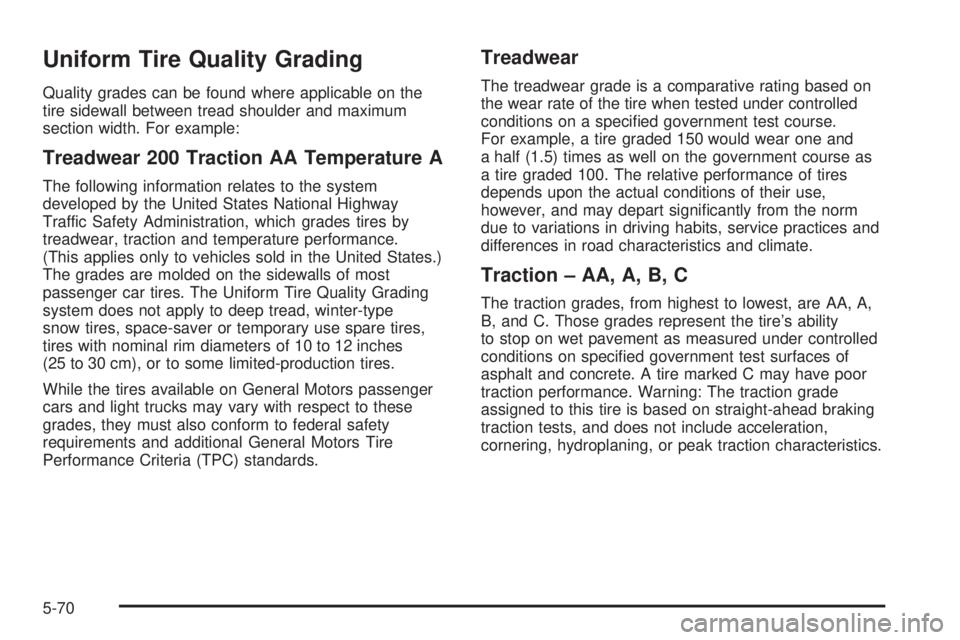
Uniform Tire Quality Grading
Quality grades can be found where applicable on the
tire sidewall between tread shoulder and maximum
section width. For example:
Treadwear 200 Traction AA Temperature A
The following information relates to the system
developed by the United States National Highway
Traffic Safety Administration, which grades tires by
treadwear, traction and temperature performance.
(This applies only to vehicles sold in the United States.)
The grades are molded on the sidewalls of most
passenger car tires. The Uniform Tire Quality Grading
system does not apply to deep tread, winter-type
snow tires, space-saver or temporary use spare tires,
tires with nominal rim diameters of 10 to 12 inches
(25 to 30 cm), or to some limited-production tires.
While the tires available on General Motors passenger
cars and light trucks may vary with respect to these
grades, they must also conform to federal safety
requirements and additional General Motors Tire
Performance Criteria (TPC) standards.
Treadwear
The treadwear grade is a comparative rating based on
the wear rate of the tire when tested under controlled
conditions on a specied government test course.
For example, a tire graded 150 would wear one and
a half (1.5) times as well on the government course as
a tire graded 100. The relative performance of tires
depends upon the actual conditions of their use,
however, and may depart signicantly from the norm
due to variations in driving habits, service practices and
differences in road characteristics and climate.
Traction – AA, A, B, C
The traction grades, from highest to lowest, are AA, A,
B, and C. Those grades represent the tire’s ability
to stop on wet pavement as measured under controlled
conditions on specied government test surfaces of
asphalt and concrete. A tire marked C may have poor
traction performance. Warning: The traction grade
assigned to this tire is based on straight-ahead braking
traction tests, and does not include acceleration,
cornering, hydroplaning, or peak traction characteristics.
5-70
Page 403 of 416
A
Accessories and Modications............................ 5-3
Accessory Power Outlet(s)...............................3-19
Adding Equipment to Your Airbag-Equipped
Vehicle.......................................................1-70
Additives, Fuel................................................. 5-6
Add-On Electrical Equipment............................5-97
Adjustable Throttle and Brake Pedal..................2-26
Air Cleaner/Filter, Engine.................................5-22
Air Conditioning......................................3-20, 3-23
Airbag
Passenger Status Indicator...........................3-34
Readiness Light..........................................3-33
Airbag Sensing and Diagnostic Module (SDM)...... 7-9
Airbag System................................................1-56
Adding Equipment to Your Airbag-Equipped
Vehicle...................................................1-70
How Does an Airbag Restrain?......................1-63
Passenger Sensing System...........................1-65
Servicing Your Airbag-Equipped Vehicle..........1-70
What Makes an Airbag Inate?......................1-63
What Will You See After an Airbag Inates?....1-64
When Should an Airbag Inate?....................1-61
Where Are the Airbags?...............................1-58Antenna, Backglass.........................................3-89
Antenna, Fixed Mast.......................................3-88
Antenna, XM™ Satellite Radio Antenna
System......................................................3-89
Anti-Lock Brake System (ABS)........................... 4-7
Anti-Lock Brake, System Warning Light..............3-37
Appearance Care............................................5-87
Aluminum Wheels........................................5-93
Care of Safety Belts....................................5-91
Chemical Paint Spotting...............................5-94
Cleaning Exterior Lamps/Lenses....................5-91
Cleaning the Inside of Your Vehicle................5-88
Fabric/Carpet..............................................5-89
Finish Care.................................................5-92
Finish Damage............................................5-94
Instrument Panel, Vinyl, and Other Plastic
Surfaces.................................................5-90
Leather......................................................5-90
Sheet Metal Damage...................................5-94
Tires..........................................................5-93
Underbody Maintenance...............................5-94
Vehicle Care/Appearance Materials................5-95
Washing Your Vehicle...................................5-91
Weatherstrips..............................................5-91
Windshield and Wiper Blades........................5-92
1
Page 404 of 416

Audio System(s).............................................3-54
Audio Steering Wheel Controls..............3-86, 3-87
Backglass Antenna......................................3-89
Care of Your CD and DVD Player..................3-88
Care of Your CDs and DVDs........................3-88
Fixed Mast Antenna.....................................3-88
Radio with CD....................................3-56, 3-61
Radio with Six-Disc CD................................3-71
Setting the Time for Radios with Radio Data
Systems (RDS)........................................3-55
Setting the Time for Radios without Radio
Data Systems (RDS)................................3-55
Theft-Deterrent Feature................................3-86
Understanding Radio Reception.....................3-87
XM™ Satellite Radio Antenna System............3-89
Automatic Climate Control System.....................3-23
Automatic Door Lock.......................................2-12
Automatic Headlamp System............................3-16
Automatic Transaxle
Fluid..................................................5-23, 5-24
Operation...................................................2-28
B
Backglass Antenna..........................................3-89
Battery..........................................................5-42
Run-Down Protection...................................3-18
Before Leaving on a Long Trip.........................4-24Bench Seat, Split (60/40)................................... 1-9
Brake
Anti-Lock Brake System (ABS)........................ 4-7
Emergencies................................................ 4-8
Parking......................................................2-33
System Warning Light..................................3-36
Brake Pedal, Throttle.......................................2-26
Brakes..........................................................5-39
Braking........................................................... 4-6
Braking in Emergencies..................................... 4-8
Break-In, New Vehicle.....................................2-22
Bulb Replacement...........................................5-49
Center High-Mounted Stoplamp (CHMSL)........5-51
Halogen Bulbs............................................5-49
Headlamp Aiming........................................5-47
Headlamps, Front Turn Signal, Sidemarker,
and Parking Lamps..................................5-50
Replacement Bulbs......................................5-55
Taillamps, Turn Signal, Sidemarker, Stoplamps,
and Back-Up Lamps.................5-52, 5-53, 5-54
Buying New Tires...........................................5-68
C
California Fuel.................................................. 5-6
California Proposition 65 Warning....................... 5-3
Canadian Owners................................................ ii
2
Page 407 of 416

E
Easy Entry Seat............................................... 1-6
Electrical System
Add-On Equipment......................................5-97
Engine Compartment Fuse Block.................5-100
Fuses........................................................5-97
Instrument Panel Fuse Block.........................5-98
Power Windows and Other Power Options......5-97
Rear Compartment Fuse Block....................5-102
Windshield Wiper Fuses...............................5-97
Engine
Air Cleaner/Filter.........................................5-22
Battery.......................................................5-42
Check and Service Engine Soon Light............3-40
Coolant......................................................5-27
Coolant Heater............................................2-27
Coolant Temperature Gage...........................3-40
Engine Compartment Overview......................5-12
Exhaust.....................................................2-37
Oil .............................................................5-17
Oil Life System...........................................5-20
Overheated Protection Operating Mode...........5-32
Overheating................................................5-30
Starting......................................................2-24Enhanced Traction System (ETS)......................4-11
Active Light................................................3-39
Warning Light.............................................3-38
Entry/Exit Lighting...........................................3-18
Event Data Recorders (EDR)............................. 7-9
Extender, Safety Belt.......................................1-29
F
Filter
Engine Air Cleaner......................................5-22
Finish Damage...............................................5-94
Fixed Mast Antenna........................................3-88
Flash-to-Pass................................................... 3-8
Flat Tire........................................................5-74
Flat Tire, Changing.........................................5-74
Flat Tire, Storing.............................................5-83
Fluid
Automatic Transaxle.............................5-23, 5-24
Manual Transaxle........................................5-26
Power Steering...........................................5-37
Windshield Washer......................................5-38
Fog Lamps....................................................3-17
5
Page 408 of 416
Fuel............................................................... 5-5
Additives...................................................... 5-6
California Fuel.............................................. 5-6
Filling a Portable Fuel Container....................5-10
Filling Your Tank........................................... 5-8
Fuels in Foreign Countries.............................. 5-7
Gage.........................................................3-45
Gasoline Octane........................................... 5-5
Gasoline Specications.................................. 5-5
Low Warning Light.......................................3-45
Fuses...........................................................5-97
Engine Compartment Fuse Block.................5-100
Instrument Panel Fuse Block.........................5-98
Rear Compartment Fuse Block....................5-102
Windshield Wiper.........................................5-97
G
Gage
Engine Coolant Temperature.........................3-40
Fuel..........................................................3-45
Speedometer..............................................3-31
Tachometer.................................................3-31
Gasoline
Octane........................................................ 5-5
Specications............................................... 5-5
Glove Box.....................................................2-45
GM Mobility Reimbursement Program.................. 7-5
H
Hazard Warning Flashers................................... 3-6
Head Restraints............................................... 1-6
Headlamp
Aiming.......................................................5-47
Headlamps....................................................3-14
Automatic Headlamp System.........................3-16
Bulb Replacement.......................................5-49
Daytime Running Lamps...............................3-15
Delayed.....................................................3-15
Flash-to-Pass............................................... 3-8
Halogen Bulbs............................................5-49
Headlamps, Front Turn Signal, Sidemarker,
and Parking Lamps..................................5-50
High/Low Beam Changer................................ 3-8
On Reminder..............................................3-14
Headlamps Off in Park (P)...............................3-14
Heated Seats................................................... 1-4
Heater...................................................3-20, 3-23
Highbeam On Light.........................................3-44
Highway Hypnosis...........................................4-25
Hill and Mountain Roads..................................4-26
Hood
Checking Things Under................................5-10
Release.....................................................5-11
6
Page 409 of 416

Horn............................................................... 3-6
How to Use This Manual...................................... ii
How to Wear Safety Belts Properly...................1-15
Hydraulic Clutch.............................................5-26
I
Ignition Positions.............................................2-23
Infants and Young Children, Restraints...............1-33
Ination -- Tire Pressure..................................5-64
Instrument Panel
Overview..................................................... 3-4
Instrument Panel (I/P)
Brightness..................................................3-17
Cluster.......................................................3-29
J
Jump Starting.................................................5-42
K
Keyless Entry System....................................... 2-4
Keys............................................................... 2-3
L
Labelling, Tire Sidewall....................................5-59
Lamps
Battery Run-Down Protection.........................3-18
Courtesy....................................................3-17
Dome........................................................3-18
Fog ...........................................................3-17
Overhead Console Reading..........................3-18
Trunk.........................................................3-18
LATCH System
Child Restraints...........................................1-41
Lift Seat, Power............................................... 1-8
Light
Airbag Readiness........................................3-33
Anti-Lock Brake System Warning...................3-37
Brake System Warning.................................3-36
Charging System.........................................3-36
Cruise Control.............................................3-44
Enhanced Traction System (ETS)
Active Light.............................................3-39
Enhanced Traction System (ETS)
Warning Light..........................................3-38
Highbeam On.............................................3-44
Low Fuel Warning.......................................3-45
Malfunction Indicator....................................3-40
Oil Pressure...............................................3-43
Passenger Airbag Status Indicator..................3-34
Passenger Safety Belt Reminder....................3-32
7
Page 410 of 416

Light (cont.)
Safety Belt Reminder...................................3-32
Security.....................................................3-44
Service Vehicle Soon...................................3-44
StabiliTrak
®Indicator....................................3-39
StabiliTrak®Not Ready.................................3-39
TCS Warning Light......................................3-38
Traction Control System Active......................3-38
Traction Control System (TCS) Warning..........3-38
Lighting
Entry/Exit...................................................3-18
Loading Your Vehicle.......................................4-33
Lockout Protection..........................................2-13
Locks
Automatic Door Lock....................................2-12
Delayed Locking..........................................2-12
Door..........................................................2-10
Lockout Protection.......................................2-13
Power Door................................................2-11
Programmable Automatic Door Unlock............2-13
Loss of Control...............................................4-17
Low Fuel Warning Light...................................3-45
Lowering the Retractable Hardtop......................2-49
Lumbar
Manual Controls............................................ 1-3
M
Maintenance Schedule
Additional Required Services........................... 6-6
At Each Fuel Fill........................................... 6-8
At Least Once a Month.................................. 6-9
At Least Once a Year.................................... 6-9
Introduction.................................................. 6-2
Maintenance Footnotes.................................. 6-7
Maintenance Record....................................6-14
Maintenance Requirements............................. 6-2
Normal Maintenance Replacement Parts.........6-13
Owner Checks and Services........................... 6-8
Recommended Fluids and Lubricants.............6-12
Scheduled Maintenance................................. 6-4
Using.......................................................... 6-3
Your Vehicle and the Environment................... 6-2
Malfunction Indicator Light................................3-40
Manual Lumbar Controls.................................... 1-3
Manual Seats................................................... 1-2
Manual Transaxle
Fluid..........................................................5-26
Operation...................................................2-32
Message
DIC Warnings and Messages........................3-48
8
Page 411 of 416

Mirrors
Automatic Dimming Rearview
with Compass..........................................2-41
Automatic Dimming Rearview with OnStar
®
and Compass..........................................2-39
Manual Rearview Mirror................................2-39
Manual Rearview Mirror with OnStar
®.............2-39
Outside Convex Mirror.................................2-43
Outside Power Mirrors..................................2-43
MyGMLink.com................................................ 7-3
N
New Vehicle Break-In......................................2-22
Normal Maintenance Replacement Parts............6-13
O
Odometer......................................................3-31
Odometer, Trip...............................................3-31
Off-Road Recovery..........................................4-15
Oil
Engine.......................................................5-17
Pressure Light.............................................3-43
Oil, Engine Oil Life System..............................5-20
Older Children, Restraints................................1-30
Online Owner Center........................................ 7-3OnStar
®System, see OnStar®Manual...............2-44
Other Warning Devices...................................... 3-6
Outlet Adjustment............................................3-28
Outside
Convex Mirror.............................................2-43
Power Mirrors.............................................2-43
Overhead Console Reading Lamps....................3-18
Overheated Engine Protection
Operating Mode..........................................5-32
Owner Checks and Services.............................. 6-8
Owners, Canadian............................................... ii
P
Park (P)
Shifting Into................................................2-34
Shifting Out of............................................2-36
Park (P) Headlamps Off in Park (P)..................3-14
Parking
Brake........................................................2-33
Over Things That Burn.................................2-37
Parking Your Vehicle.......................................2-36
Passenger Airbag Status Indicator.....................3-34
Passenger Sensing System..............................1-65
Passing.........................................................4-16
PASS-Key
®III+..............................................2-20
PASS-Key®III+ Operation................................2-21
9