seat adjustment PONTIAC G6 2006 Owners Manual
[x] Cancel search | Manufacturer: PONTIAC, Model Year: 2006, Model line: G6, Model: PONTIAC G6 2006Pages: 416, PDF Size: 2.66 MB
Page 7 of 416
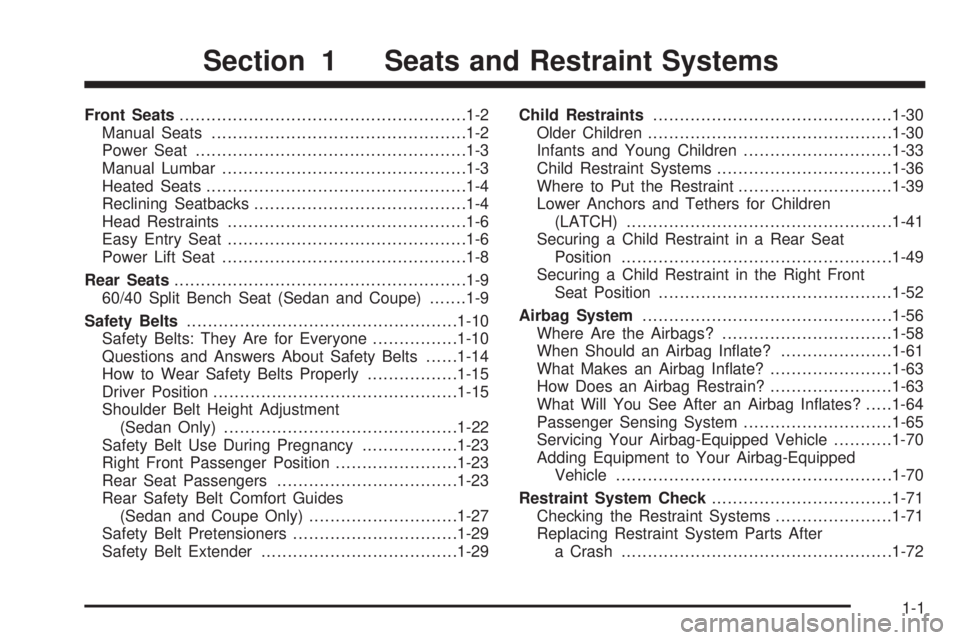
Front Seats......................................................1-2
Manual Seats................................................1-2
Power Seat...................................................1-3
Manual Lumbar..............................................1-3
Heated Seats.................................................1-4
Reclining Seatbacks........................................1-4
Head Restraints.............................................1-6
Easy Entry Seat.............................................1-6
Power Lift Seat..............................................1-8
Rear Seats.......................................................1-9
60/40 Split Bench Seat (Sedan and Coupe).......1-9
Safety Belts...................................................1-10
Safety Belts: They Are for Everyone................1-10
Questions and Answers About Safety Belts......1-14
How to Wear Safety Belts Properly.................1-15
Driver Position..............................................1-15
Shoulder Belt Height Adjustment
(Sedan Only)............................................1-22
Safety Belt Use During Pregnancy..................1-23
Right Front Passenger Position.......................1-23
Rear Seat Passengers..................................1-23
Rear Safety Belt Comfort Guides
(Sedan and Coupe Only)............................1-27
Safety Belt Pretensioners...............................1-29
Safety Belt Extender.....................................1-29Child Restraints.............................................1-30
Older Children..............................................1-30
Infants and Young Children............................1-33
Child Restraint Systems.................................1-36
Where to Put the Restraint.............................1-39
Lower Anchors and Tethers for Children
(LATCH)..................................................1-41
Securing a Child Restraint in a Rear Seat
Position...................................................1-49
Securing a Child Restraint in the Right Front
Seat Position............................................1-52
Airbag System...............................................1-56
Where Are the Airbags?................................1-58
When Should an Airbag Inate?.....................1-61
What Makes an Airbag Inate?.......................1-63
How Does an Airbag Restrain?.......................1-63
What Will You See After an Airbag Inates?.....1-64
Passenger Sensing System............................1-65
Servicing Your Airbag-Equipped Vehicle...........1-70
Adding Equipment to Your Airbag-Equipped
Vehicle....................................................1-70
Restraint System Check..................................1-71
Checking the Restraint Systems......................1-71
Replacing Restraint System Parts After
a Crash...................................................1-72
Section 1 Seats and Restraint Systems
1-1
Page 158 of 416
Rear Window Defogger
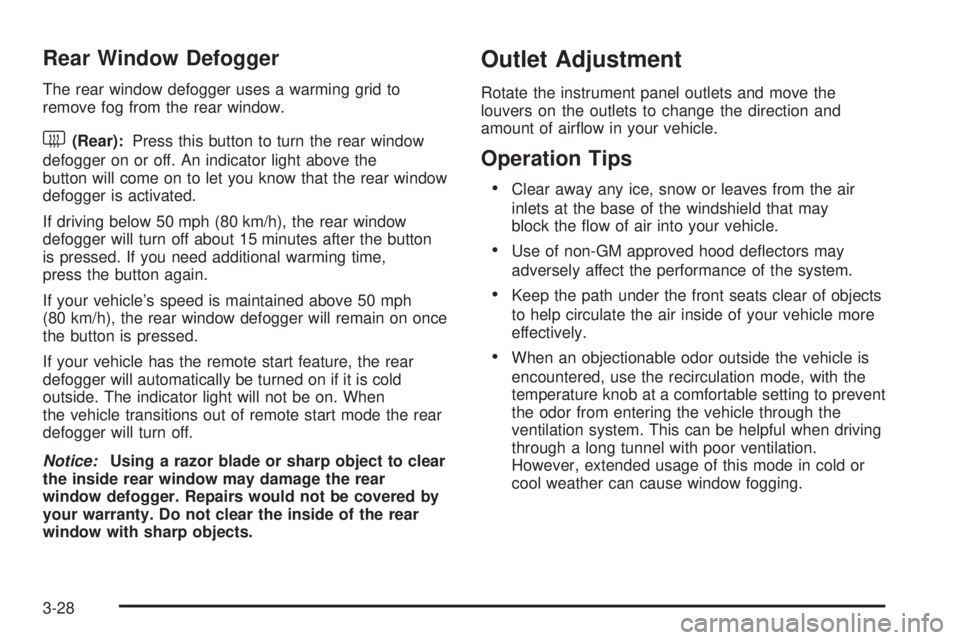
The rear window defogger uses a warming grid to
remove fog from the rear window.
<(Rear):Press this button to turn the rear window
defogger on or off. An indicator light above the
button will come on to let you know that the rear window
defogger is activated.
If driving below 50 mph (80 km/h), the rear window
defogger will turn off about 15 minutes after the button
is pressed. If you need additional warming time,
press the button again.
If your vehicle’s speed is maintained above 50 mph
(80 km/h), the rear window defogger will remain on once
the button is pressed.
If your vehicle has the remote start feature, the rear
defogger will automatically be turned on if it is cold
outside. The indicator light will not be on. When
the vehicle transitions out of remote start mode the rear
defogger will turn off.
Notice:Using a razor blade or sharp object to clear
the inside rear window may damage the rear
window defogger. Repairs would not be covered by
your warranty. Do not clear the inside of the rear
window with sharp objects.
Outlet Adjustment
Rotate the instrument panel outlets and move the
louvers on the outlets to change the direction and
amount of airow in your vehicle.
Operation Tips
Clear away any ice, snow or leaves from the air
inlets at the base of the windshield that may
block the ow of air into your vehicle.
Use of non-GM approved hood deectors may
adversely affect the performance of the system.
Keep the path under the front seats clear of objects
to help circulate the air inside of your vehicle more
effectively.
When an objectionable odor outside the vehicle is
encountered, use the recirculation mode, with the
temperature knob at a comfortable setting to prevent
the odor from entering the vehicle through the
ventilation system. This can be helpful when driving
through a long tunnel with poor ventilation.
However, extended usage of this mode in cold or
cool weather can cause window fogging.
3-28
Page 315 of 416
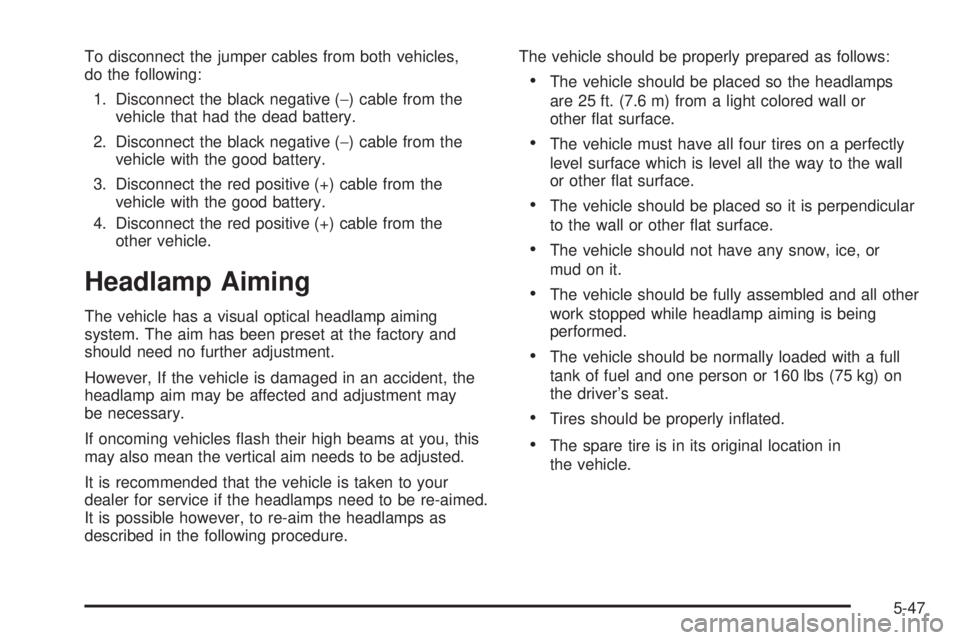
To disconnect the jumper cables from both vehicles,
do the following:
1. Disconnect the black negative (−) cable from the
vehicle that had the dead battery.
2. Disconnect the black negative (−) cable from the
vehicle with the good battery.
3. Disconnect the red positive (+) cable from the
vehicle with the good battery.
4. Disconnect the red positive (+) cable from the
other vehicle.
Headlamp Aiming
The vehicle has a visual optical headlamp aiming
system. The aim has been preset at the factory and
should need no further adjustment.
However, If the vehicle is damaged in an accident, the
headlamp aim may be affected and adjustment may
be necessary.
If oncoming vehicles ash their high beams at you, this
may also mean the vertical aim needs to be adjusted.
It is recommended that the vehicle is taken to your
dealer for service if the headlamps need to be re-aimed.
It is possible however, to re-aim the headlamps as
described in the following procedure.The vehicle should be properly prepared as follows:
The vehicle should be placed so the headlamps
are 25 ft. (7.6 m) from a light colored wall or
other at surface.
The vehicle must have all four tires on a perfectly
level surface which is level all the way to the wall
or other at surface.
The vehicle should be placed so it is perpendicular
to the wall or other at surface.
The vehicle should not have any snow, ice, or
mud on it.
The vehicle should be fully assembled and all other
work stopped while headlamp aiming is being
performed.
The vehicle should be normally loaded with a full
tank of fuel and one person or 160 lbs (75 kg) on
the driver’s seat.
Tires should be properly inated.
The spare tire is in its original location in
the vehicle.
5-47
Page 405 of 416

Capacities and Specications..........................5-105
Carbon Monoxide...................2-14, 2-37, 4-27, 4-40
Care of
Safety Belts................................................5-91
Your CD and DVD Player.............................3-88
Your CDs and DVDs....................................3-88
Center Console Storage Area...........................2-45
Center High-Mounted Stoplamp (CHMSL)...........5-51
Chains, Tire...................................................5-73
Charging System Light....................................3-36
Check
Engine Light...............................................3-40
Checking Things Under the Hood......................5-10
Chemical Paint Spotting...................................5-94
Child Restraints
Child Restraint Systems...............................1-36
Infants and Young Children...........................1-33
Lower Anchors and Tethers for Children..........1-41
Older Children.............................................1-30
Securing a Child Restraint in a Rear Seat
Position..................................................1-49
Securing a Child Restraint in the Right Front
Seat Position...........................................1-52
Where to Put the Restraint...........................1-39
Cleaning
Aluminum Wheels........................................5-93
Exterior Lamps/Lenses.................................5-91
Fabric/Carpet..............................................5-89Cleaning (cont.)
Finish Care.................................................5-92
Inside of Your Vehicle..................................5-88
Instrument Panel, Vinyl, and Other Plastic
Surfaces.................................................5-90
Leather......................................................5-90
Tires..........................................................5-93
Underbody Maintenance...............................5-94
Washing Your Vehicle...................................5-91
Weatherstrips..............................................5-91
Windshield and Wiper Blades........................5-92
Climate Control System...................................3-20
Automatic...................................................3-23
Outlet Adjustment........................................3-28
Clutch, Hydraulic.............................................5-26
Comfort Guides, Rear Safety Belt.....................1-27
Compact Spare Tire........................................5-86
Content Theft-Deterrent....................................2-19
Control of a Vehicle.......................................... 4-5
Convenience Net............................................2-46
Coolant
Engine Temperature Gage............................3-40
Heater, Engine............................................2-27
Surge Tank Pressure Cap.............................5-30
Cooling System..............................................5-32
Courtesy Lamps.............................................3-17
Cruise Control................................................3-10
Cruise Control Light........................................3-44
3