check engine light PONTIAC GRAND PRIX 2005 User Guide
[x] Cancel search | Manufacturer: PONTIAC, Model Year: 2005, Model line: GRAND PRIX, Model: PONTIAC GRAND PRIX 2005Pages: 444, PDF Size: 2.6 MB
Page 317 of 444
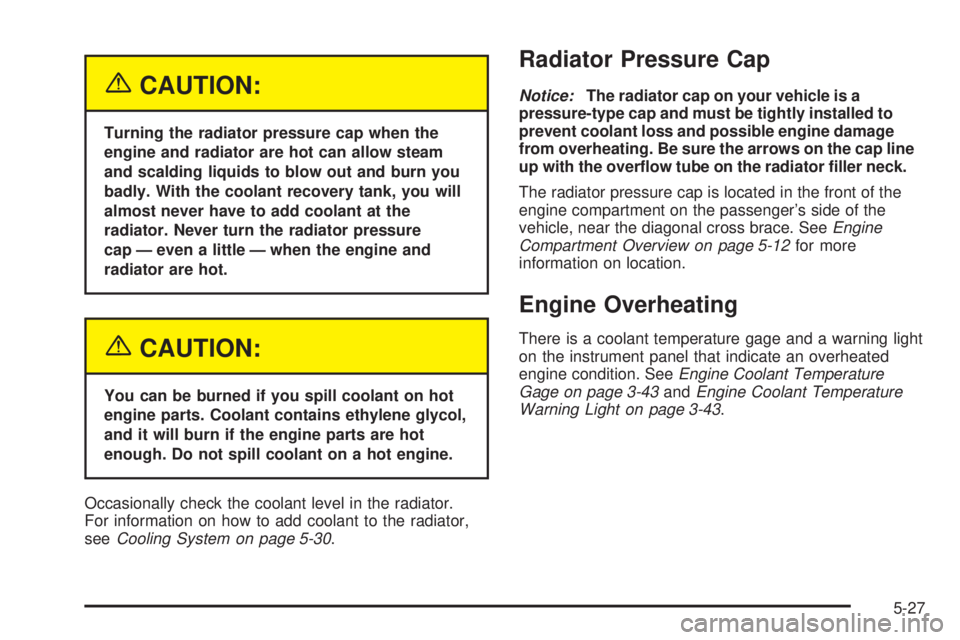
{CAUTION:
Turning the radiator pressure cap when the
engine and radiator are hot can allow steam
and scalding liquids to blow out and burn you
badly. With the coolant recovery tank, you will
almost never have to add coolant at the
radiator. Never turn the radiator pressure
cap — even a little — when the engine and
radiator are hot.
{CAUTION:
You can be burned if you spill coolant on hot
engine parts. Coolant contains ethylene glycol,
and it will burn if the engine parts are hot
enough. Do not spill coolant on a hot engine.
Occasionally check the coolant level in the radiator.
For information on how to add coolant to the radiator,
seeCooling System on page 5-30.
Radiator Pressure Cap
Notice:The radiator cap on your vehicle is a
pressure-type cap and must be tightly installed to
prevent coolant loss and possible engine damage
from overheating. Be sure the arrows on the cap line
up with the overow tube on the radiator ller neck.
The radiator pressure cap is located in the front of the
engine compartment on the passenger’s side of the
vehicle, near the diagonal cross brace. SeeEngine
Compartment Overview on page 5-12for more
information on location.
Engine Overheating
There is a coolant temperature gage and a warning light
on the instrument panel that indicate an overheated
engine condition. SeeEngine Coolant Temperature
Gage on page 3-43andEngine Coolant Temperature
Warning Light on page 3-43.
5-27
Page 335 of 444
{CAUTION:
Fans or other moving engine parts can injure
you badly. Keep your hands away from moving
parts once the engine is running.
{CAUTION:
Using a match near a battery can cause battery
gas to explode. People have been hurt doing
this, and some have been blinded. Use a
ashlight if you need more light.
Be sure the battery has enough water. You do
not need to add water to the battery installed
in your new vehicle. But if a battery has ller
caps, be sure the right amount of uid is there.
CAUTION: (Continued)
CAUTION: (Continued)
If it is low, add water to take care of that rst.
If you do not, explosive gas could be present.
Battery uid contains acid that can burn you.
Do not get it on you. If you accidentally get it
in your eyes or on your skin, ush the place
with water and get medical help immediately.
5. Check that the jumper cables do not have loose or
missing insulation. If they do, you could get a
shock. The vehicles could be damaged too.
Before you connect the cables, here are some
basic things you should know. Positive (+) will
go to positive (+) or to a remote positive (+)
terminal if the vehicle has one. Negative will go to
a heavy, unpainted metal engine part or to a remote
negative (−) terminal if the vehicle has one.
Do not connect positive (+) to negative (−), or you
will get a short that would damage the battery
and maybe other parts too. And do not connect the
negative (−) cable to the negative (−) terminal on
the dead battery because this can cause sparks.
5-45
Page 408 of 444
(e)Make sure the safety belt reminder light and all your
belts, buckles, latch plates, retractors and anchorages
are working properly. Look for any other loose or
damaged safety belt system parts. If you see anything
that might keep a safety belt system from doing its
job, have it repaired. Have any torn or frayed safety belts
replaced. Also look for any opened or broken airbag
coverings, and have them repaired or replaced.
(The airbag system does not need regular maintenance.)
(f)Lubricate all key lock cylinders. Lubricate all hinges
and latches, including those for the body doors,
hood, secondary latch, pivots, spring anchor, release
pawl, rear compartment, glove box door, console
door and any folding seat hardware. More frequent
lubrication may be required when exposed to a corrosive
environment. Applying silicone grease on weatherstrips
with a clean cloth will make them last longer, seal
better and not stick or squeak.
(g)If you drive regularly under dusty conditions, the
lter may require replacement more often.
(h)Change automatic transaxle uid and lter if the
vehicle is mainly driven under one or more of these
conditions:
In heavy city traffic where the outside temperature
regularly reaches 90°F (32°C) or higher.
In hilly or mountainous terrain.When doing frequent trailer towing.
Uses such as found in taxi, police or delivery
service.
(i)Drain, ush and rell cooling system. See Engine
Coolant on page 5-24for what to use. Inspect hoses.
Clean radiator, condenser, pressure cap and ller neck.
Pressure test the cooling system and pressure cap.
(j)Check throttle system for interference or binding and
for damaged or missing parts. Replace parts as
needed. Replace any components that have high effort
or excessive wear. Do not lubricate accelerator or
cruise control cables.
(k)A uid loss in any vehicle system could indicate a
problem. Have the system inspected and repaired
and the uid level checked. Add uid if needed.
(l)For supercharged engines only: Check the
supercharger oil level and add the proper supercharger
oil as needed (or every 36 months, whichever occurs
rst). See Recommended Fluids and Lubricants on
page 6-12.
(m)If you drive regularly under dusty conditions, inspect
the lter at each engine oil change.
6-8
Page 432 of 444

Audio System(s) (cont.)
Understanding Radio Reception...................3-134
XM™ Satellite Radio Antenna System...........3-135
Automatic Transaxle
Fluid..........................................................5-22
Operation...................................................2-25
B
Backglass Antenna........................................3-134
Battery..........................................................5-42
Exterior Lighting Battery Saver......................3-17
Run-Down Protection...................................3-20
Before Leaving on a Long Trip.........................4-24
Brake
Anti-Lock Brake System (ABS)........................ 4-6
Emergencies................................................ 4-8
Parking......................................................2-30
System Warning Light..................................3-40
Brakes..........................................................5-40
Braking........................................................... 4-6
Braking in Emergencies..................................... 4-8
Break-In, New Vehicle.....................................2-21
Bulb Replacement...........................................5-50
Back-Up Lamps...........................................5-55
Front Turn Signal, Parking and Fog Lamps.....5-53
Halogen Bulbs............................................5-50
Headlamp Aiming........................................5-48Bulb Replacement (cont.)
Replacement Bulbs......................................5-56
Taillamps, Turn Signal, and Stoplamps............5-54
Buying New Tires...........................................5-68
C
California Fuel.................................................. 5-6
Canadian Owners................................................ ii
Capacities and Specications..........................5-108
Carbon Monoxide...................2-13, 2-33, 4-28, 4-40
Care of
Safety Belts................................................5-97
Your CD Player.........................................3-134
Your CDs .................................................3-134
Center Console Storage Area...........................2-40
Chains, Tire...................................................5-72
Check
Engine Light...............................................3-44
Checking Things Under the Hood......................5-10
Chemical Paint Spotting.................................5-100
Child Restraints
Child Restraint Systems...............................1-35
Infants and Young Children...........................1-32
Lower Anchorages and Top Tethers for
Children (LATCH System)..........................1-40
Older Children.............................................1-29
Securing a Child Restraint Designed for
the LATCH System...................................1-42
2
Page 434 of 444

D
Daytime Running Lamps..................................3-15
Defensive Driving............................................. 4-2
Delayed Entry Lighting.....................................3-18
Delayed Exit Lighting.......................................3-19
Delayed Locking.............................................2-11
Doing Your Own Service Work........................... 5-4
Door
Delayed Locking..........................................2-11
Locks........................................................2-10
Power Door Locks.......................................2-11
Programmable Automatic Door Locks.............2-12
Driver
Position, Safety Belt.....................................1-16
Driver Information Center (DIC).........................3-49
DIC Controls and Displays....................3-49, 3-57
DIC Warnings and Messages........................3-69
Driving
At Night.....................................................4-18
City...........................................................4-22
Defensive..................................................... 4-2
Drunken....................................................... 4-2
Freeway.....................................................4-23
Hill and Mountain Roads..............................4-26
In Rain and on Wet Roads...........................4-19
Rocking Your Vehicle to Get it Out.................4-33
Winter........................................................4-28
Dual Automatic Climate Control System.............3-29
E
Electrical System
Add-On Equipment.....................................5-103
Fuses and Circuit Breakers.........................5-103
Headlamp Wiring.......................................5-103
Instrument Panel Fuse Block.......................5-104
Power Windows and Other Power Options....5-103
Underhood Fuse Block...............................5-105
Windshield Wiper Fuses.............................5-103
Engine
Air Cleaner/Filter.........................................5-20
Battery.......................................................5-42
Check and Service Engine Soon Light............3-44
Coolant......................................................5-24
Coolant Heater............................................2-24
Coolant Temperature Gage...........................3-43
Coolant Temperature Warning Light................3-43
Engine Compartment Overview......................5-12
Exhaust.....................................................2-33
Oil .............................................................5-14
Overheated Protection Operating Mode...........5-29
Overheating................................................5-27
Starting......................................................2-23
Supercharger Oil.........................................5-19
Enhanced Traction System (ETS)......................4-10
Warning Light.............................................3-42
Entry Lighting.................................................3-18
Event Data Recorders (EDR)............................7-10
4
Page 438 of 444
M
Maintenance Schedule
Additional Required Services........................... 6-6
At Each Fuel Fill........................................... 6-9
At Least Once a Month.................................. 6-9
At Least Once a Year..................................6-10
Introduction.................................................. 6-2
Maintenance Footnotes.................................. 6-7
Maintenance Record....................................6-14
Maintenance Requirements............................. 6-2
Normal Maintenance Replacement Parts.........6-13
Owner Checks and Services........................... 6-9
Recommended Fluids and Lubricants.............6-12
Scheduled Maintenance................................. 6-4
Using Your................................................... 6-3
Your Vehicle and the Environment................... 6-2
Malfunction Indicator Light................................3-44
Manual Seats................................................... 1-2
Message
DIC Warnings and Messages........................3-69
Mirrors
Manual Rearview Mirror................................2-35
Manual Rearview Mirror with OnStar
®.............2-35
Outside Convex Mirror.................................2-36
Outside Power Mirrors..................................2-35
MyGMLink.com................................................ 7-4
N
Navigation/Radio System................................3-132
New Vehicle Break-In......................................2-21
Normal Maintenance Replacement Parts............6-13
O
Odometer......................................................3-37
Off-Road Recovery..........................................4-15
Oil
Engine.......................................................5-14
Pressure Light.............................................3-47
Supercharger, Engine...................................5-19
Older Children, Restraints................................1-29
Online Owner Center........................................ 7-4
OnStar
®System.............................................2-36
Other Warning Devices...................................... 3-6
Outlet Adjustment............................................3-33
Outside
Convex Mirror.............................................2-36
Power Mirrors.............................................2-35
Overhead Console..........................................2-39
Overhead Console Reading Lamps....................3-19
Overheated Engine Protection
Operating Mode..........................................5-29
Owner Checks and Services.............................. 6-9
Owners, Canadian............................................... ii
8
Page 440 of 444
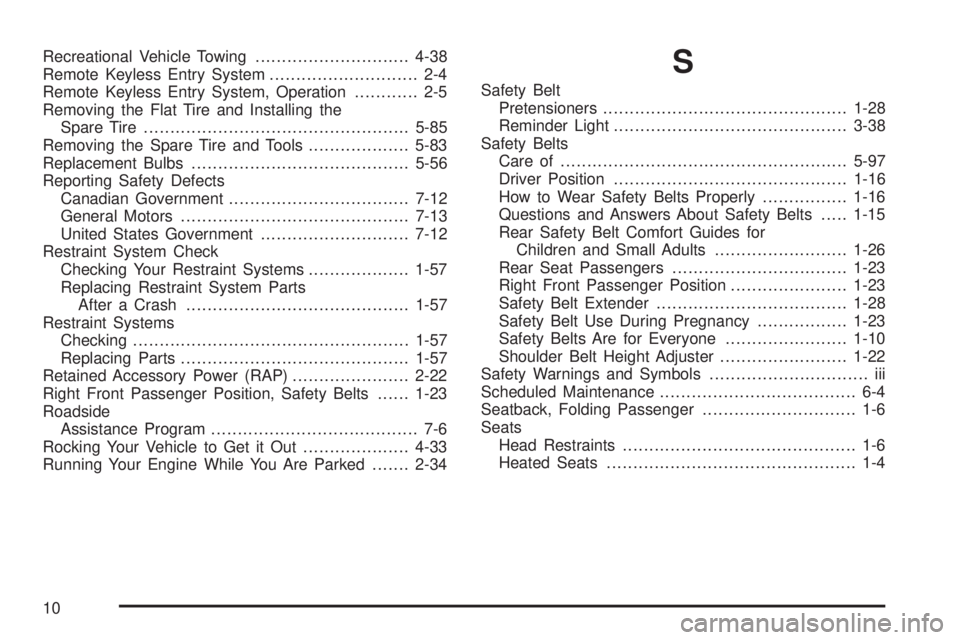
Recreational Vehicle Towing.............................4-38
Remote Keyless Entry System............................ 2-4
Remote Keyless Entry System, Operation............ 2-5
Removing the Flat Tire and Installing the
Spare Tire..................................................5-85
Removing the Spare Tire and Tools...................5-83
Replacement Bulbs.........................................5-56
Reporting Safety Defects
Canadian Government..................................7-12
General Motors...........................................7-13
United States Government............................7-12
Restraint System Check
Checking Your Restraint Systems...................1-57
Replacing Restraint System Parts
After a Crash..........................................1-57
Restraint Systems
Checking....................................................1-57
Replacing Parts...........................................1-57
Retained Accessory Power (RAP)......................2-22
Right Front Passenger Position, Safety Belts......1-23
Roadside
Assistance Program....................................... 7-6
Rocking Your Vehicle to Get it Out....................4-33
Running Your Engine While You Are Parked.......2-34S
Safety Belt
Pretensioners..............................................1-28
Reminder Light............................................3-38
Safety Belts
Care of......................................................5-97
Driver Position............................................1-16
How to Wear Safety Belts Properly................1-16
Questions and Answers About Safety Belts.....1-15
Rear Safety Belt Comfort Guides for
Children and Small Adults.........................1-26
Rear Seat Passengers.................................1-23
Right Front Passenger Position......................1-23
Safety Belt Extender....................................1-28
Safety Belt Use During Pregnancy.................1-23
Safety Belts Are for Everyone.......................1-10
Shoulder Belt Height Adjuster........................1-22
Safety Warnings and Symbols.............................. iii
Scheduled Maintenance..................................... 6-4
Seatback, Folding Passenger............................. 1-6
Seats
Head Restraints............................................ 1-6
Heated Seats............................................... 1-4
10