Oil pressure Ram 1500 2017 Diesel Supplement
[x] Cancel search | Manufacturer: RAM, Model Year: 2017, Model line: 1500, Model: Ram 1500 2017Pages: 228, PDF Size: 1.35 MB
Page 135 of 228
Engine Warm-Up
Avoid full throttle operation when the engine is cold. When
starting a cold engine, bring the engine up to operating
speed slowly to allow the oil pressure to stabilize as the
engine warms up.
NOTE:High-speed, no-load running of a cold engine can
result in excessive white smoke and poor engine perfor-
mance. No-load engine speeds should be kept under 1,200
RPM during the warm-up period, especially in cold ambi-
ent temperature conditions.
Your vehicle is equipped with a turbo speed limiter, this
feature limits the engine speed to 1,200 RPM when engine
coolant temperatures are below 70°F (21°C). This feature is
designed to protect the turbocharger from damage and will
only operate in PARK or NEUTRAL.
If temperatures are below 32°F (0°C), operate the engine at
moderate speeds for five minutes before full loads are
applied.
NOTE: If ambient temperatures are low and the coolant
temperature is below 180°F (82°C), the engine idle speed
will slowly increase to 1,000 RPM after two minutes of idle,
if the following conditions are met:
• Foot is off brake pedal and throttle pedal. •
Automatic transmission is in PARK.
• Vehicle speed is 0 mph (0 km/h).
• Applying the throttle will cancel fast idle.
• Operating the exhaust brake at idle will greatly improve
warm up rate and will help keep the engine close to
operating temperature during extended idle.
Engine Idling
Avoid prolonged idling, long periods of idling may be
harmful to your engine because combustion chamber tem-
peratures can drop so low that the fuel may not burn
completely. Incomplete combustion allows carbon and
varnish to form on piston rings, engine valves, and injector
nozzles. Also, the unburned fuel can enter the crankcase,
diluting the oil and causing rapid wear to the engine.
If the engine is allowed to idle or the truck is driven on low
engine speed drive cycles for more than 2 hours, the
system will automatically enter an emissions operating
mode that will increase the engine idle speed to 900 RPM
(1050 RPM for Chassis Cab). While in this mode, which is
designed to help maintain the diesel particulate filter, the
engine idle speed will return to normal when the brake
pedal is applied. A small change in engine tone or a slight
change in engine performance while accelerating may also5
STARTING AND OPERATING 133
Page 138 of 228
Programmable Maximum Vehicle Speed (Chassis
Cab Only)
This feature allows the owner to set a maximum vehicle
speed for the vehicle. The 3500 Series maximum vehicle
speed can be set between 40 mph (64 km/h) and 87 mph
(140 km/h). The 4500/5500 Series maximum vehicle speed
can be set between 40 mph (64 km/h) and 85 mph
(136 km/h). See your local authorized dealer to enable this
feature.
NOTE:DO NOT set the maximum vehicle speed to a value
greater than what the vehicle tires are rated for.
Operating Precautions
Avoid Overheating The Engine
The temperature of the engine coolant (antifreeze) (a
mixture of 50% ethylene-glycol and 50% water) must not
exceed the normal range of the temperature gauge 240°F
(116°C) with a 21 psi (145 kPa) coolant pressure cap.
Usually the engine coolant (antifreeze) temperature indi-
cated during operation will be to the left of center in the
normal range of the gauge.
Avoid Low Coolant Temperature Operation
Continual operation at low engine coolant (antifreeze)
temperature below the normal range on the gauge 140°F
(60°C) can be harmful to the engine. Low engine coolant
(antifreeze) temperature can cause incomplete combustion
which allows carbon and varnish to form on piston rings
and injector nozzles. Also, the unburned fuel can enter the
crankcase, diluting the lubricating oil and causing rapid
wear to the engine.
Cooling System Tips — Automatic Transmission
To reduce potential for engine and transmission overheat-
ing in high ambient temperature conditions, take the
following actions:
• City Driving —
When stopped, shift the transmission into NEUTRAL and
increase engine idle speed.
• Highway Driving —
Reduce your speed.
• Up Steep Hills —
Select a lower transmission gear.
• Air Conditioning —
Turn it off temporarily.
136 STARTING AND OPERATING
Page 139 of 228
Do Not Operate The Engine With Low Oil Pressure
When the engine is at normal operating temperature, the
minimum oil pressures required are:
Idle 700 to 800 RPM 10 psi (69 kPa)
Full speed and load 30 psi (207 kPa)
CAUTION!
If oil pressure falls to less than normal readings, shut
the engine off immediately. Failure to do so could
result in immediate and severe engine damage.
Do Not Operate The Engine With Failed Parts
All engine failures give some warning before the parts fail.
Be on the alert for changes in performance, sounds, and
visual evidence that the engine requires service. Some
important clues are:
•Engine misfiring or vibrating severely.
• Sudden loss of power.
• Unusual engine noises. •
Fuel, oil or coolant leaks.
• Sudden change, outside the normal operating range, in
the engine operating temperature.
• Excessive smoke.
• Oil pressure drop.
ENGINE BLOCK HEATER — IF EQUIPPED
The engine block heater warms engine coolant and permits
quicker starts in cold weather. Connect the heater cord to a
ground-fault interrupter protected 110–115 Volt AC electri-
cal outlet with a grounded, three-wire extension cord.
The engine block heater cord is routed under the hood to
the right side and can be located just behind the grille near
the headlamp.
NOTE: The engine block heater cord is a factory installed
option. If your vehicle is not equipped, heater cords are
available from your authorized MOPAR dealer.
The block heater must be plugged in at least one hour to
have an adequate warming effect on the coolant.5
STARTING AND OPERATING 137
Page 179 of 228
Checking the oil while the vehicle is on level ground will
improve the accuracy of the oil level readings. Add oil only
when the level on the dipstick is below the “ADD” mark.
The total capacity from the ADD mark to the Full mark is
2 qts (1.9L).
CAUTION!
Overfilling or underfilling the crankcase will cause oil
aeration or loss of oil pressure. This could damage your
engine.
Never operate the engine with oil level below the “ADD”
mark or above the upper “SAFE” mark.
Change Engine Oil
Refer to the “Maintenance Schedule” for the proper main-
tenance intervals.
Engine Oil Selection
For best performance and maximum protection under all
types of operating conditions, the manufacturer only rec-
ommends engine oils that are API CJ-4 certified and meet
the requirements of FCA LLC. Use MOPAR or an equiva-
lent oil meeting FCA Material Standard MS-10902. Prod-
ucts meeting Cummins CES 20081 may also be used. The
identification of these engine oils are typically located on
the back of the oil container.
Engine Oil Dipstick
1 — ADD Range
2—FullMark
3 — SAFE Range7
MAINTAINING YOUR VEHICLE 177
Page 220 of 228
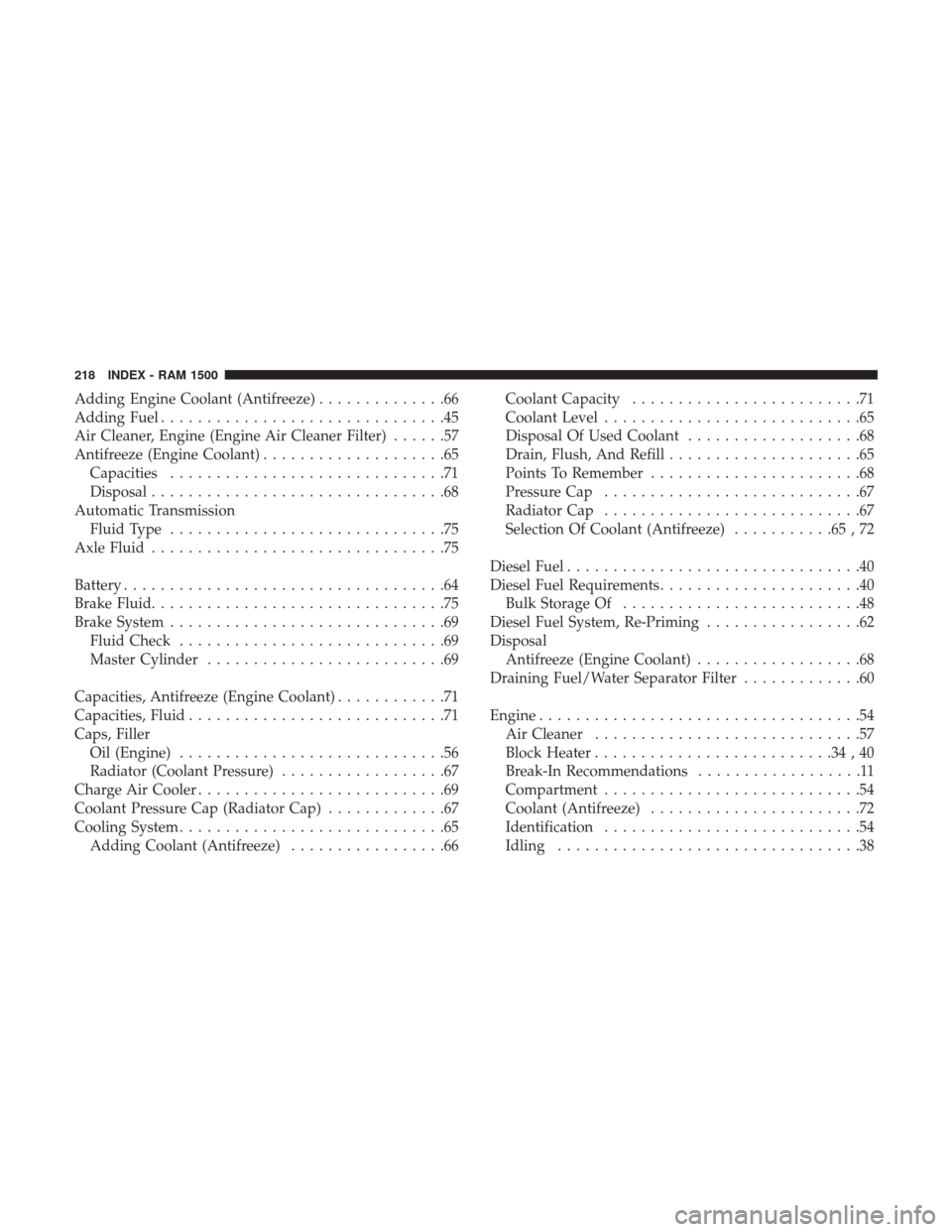
Adding Engine Coolant (Antifreeze)..............66
Adding Fuel ...............................45
Air Cleaner, Engine (Engine Air Cleaner Filter) ......57
Antifreeze (Engine Coolant) ....................65
Capacities ..............................71
Disposal ................................68
Automatic Transmission Fluid Type ..............................75
Axle Fluid ................................75
Battery ...................................64
Brake Fluid................................75
Brake System ..............................69
Fluid Check .............................69
Master Cylinder ..........................69
Capacities, Antifreeze (Engine Coolant) ............71
Capacities, Fluid ............................71
Caps, Filler Oil (Engine) .............................56
Radiator (Coolant Pressure) ..................67
Charge Air Cooler ...........................69
Coolant Pressure Cap (Radiator Cap) .............67
Cooling System .............................65
Adding Coolant (Antifreeze) .................66 Coolant Capacity
.........................71
Coolant Level ............................65
Disposal Of Used Coolant ...................68
Drain, Flush, And Refill .....................65
Points To Remember .......................68
Pressure Cap ............................67
Radiator Cap ............................67
Selection Of Coolant (Antifreeze) ...........65,72
Diesel Fuel ................................40
Diesel Fuel Requirements ......................40
Bulk Storage Of ..........................48
Diesel Fuel System, Re-Priming .................62
Disposal Antifreeze (Engine Coolant) ..................68
Draining Fuel/Water Separator Filter .............60
Engine ...................................54
Air Cleaner .............................57
Block Heater ..........................34,40
Break-In Recommendations ..................11
Compartment ............................54
Coolant (Antifreeze) .......................72
Identification ............................54
Idling .................................38
218 INDEX - RAM 1500
Page 221 of 228
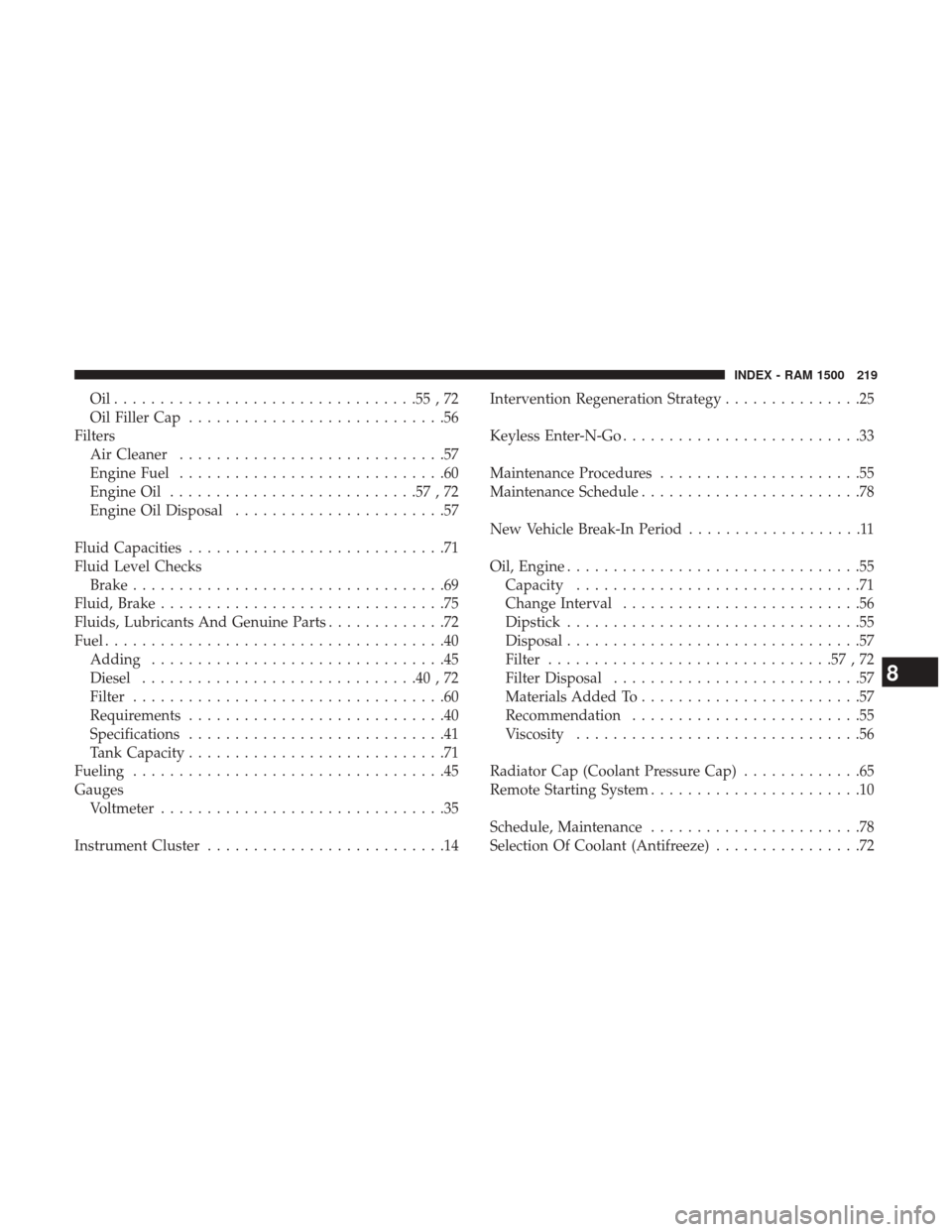
Oil.................................55,72
Oil Filler Cap............................56
Filters Air Cleaner .............................57
Engine Fuel .............................60
Engine Oil ...........................57,72
Engine Oil Disposal .......................57
Fluid Capacities ............................71
Fluid Level Checks Brake ..................................69
Fluid, Brake...............................75
Fluids, Lubricants And Genuine Parts .............72
Fuel .....................................40
Adding ................................45
Diesel ..............................40,72
Filter ..................................60
Requirements ............................40
Specifications ............................41
Tank Capacity ............................71
Fueling ..................................45
Gauges Voltmeter ...............................35
Instrument Cluster ..........................14 Intervention Regeneration Strategy
...............25
Keyless Enter-N-Go ..........................33
Maintenance Procedures ......................55
Maintenance Schedule ........................78
New Vehicle Break-In Period ...................11
Oil, Engine ................................55
Capacity ...............................71
Change Interval ..........................56
Dipstick ................................55
Disposal ................................57
Filter ...............................57,72
Filter Disposal ...........................57
Materials Added To ........................57
Recommendation .........................55
Viscosity ...............................56
Radiator Cap (Coolant Pressure Cap) .............65
Remote Starting System .......................10
Schedule, Maintenance .......................78
Selection Of Coolant (Antifreeze) ................72
8
INDEX - RAM 1500 219
Page 223 of 228
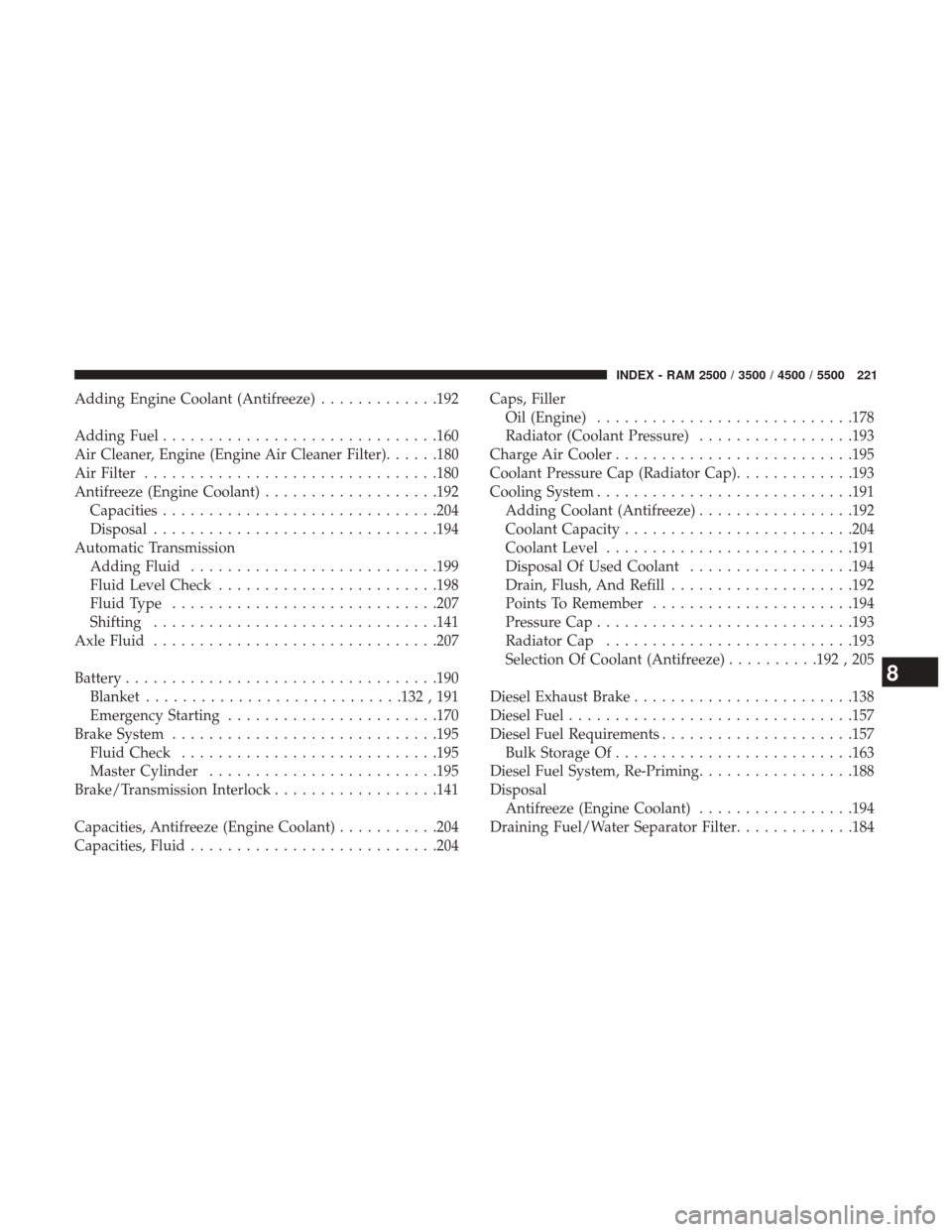
Adding Engine Coolant (Antifreeze).............192
Adding Fuel ............................. .160
Air Cleaner, Engine (Engine Air Cleaner Filter) ......180
Air Filter ............................... .180
Antifreeze (Engine Coolant) ...................192
Capacities ............................. .204
Disposal .............................. .194
Automatic Transmission Adding Fluid .......................... .199
Fluid Level Check ....................... .198
Fluid Type ............................ .207
Shifting .............................. .141
Axle Fluid .............................. .207
Battery ................................. .190
Blanket ........................... .132 , 191
Emergency Starting ...................... .170
Brake System ............................ .195
Fluid Check ........................... .195
Master Cylinder ........................ .195
Brake/Transmission Interlock ..................141
Capacities, Antifreeze (Engine Coolant) ...........204
Capacities, Fluid .......................... .204Caps, Filler
Oil (Engine) ........................... .178
Radiator (Coolant Pressure) .................193
Charge Air Cooler ......................... .195
Coolant Pressure Cap (Radiator Cap) .............193
Cooling System ........................... .191
Adding Coolant (Antifreeze) .................192
Coolant Capacity ........................ .204
Coolant Level .......................... .191
Disposal Of Used Coolant ..................194
Drain, Flush, And Refill ....................192
Points To Remember ..................... .194
Pressure Cap ........................... .193
Radiator Cap .......................... .193
Selection
Of Coolant (Antifreeze) ..........192 , 205
Diesel Exhaust Brake ....................... .138
Diesel Fuel .............................. .157
Diesel Fuel Requirements .....................157
Bulk Storage Of ......................... .163
Diesel Fuel System, Re-Priming .................188
Disposal Antifreeze (Engine Coolant) .................194
Draining Fuel/Water Separator Filter .............184
8
INDEX - RAM 2500 / 3500 / 4500 / 5500 221
Page 225 of 228
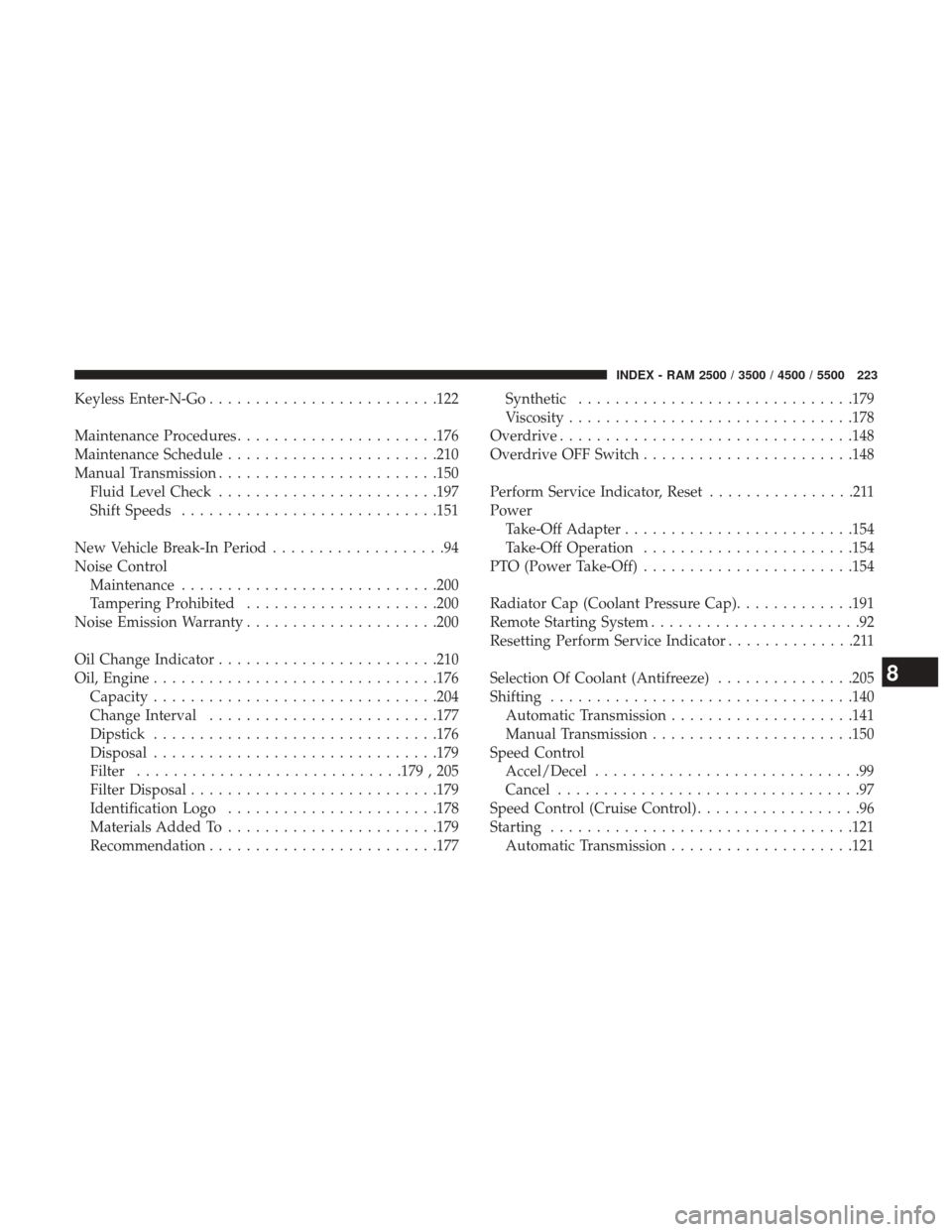
Keyless Enter-N-Go........................ .122
Maintenance Procedures ..................... .176
Maintenance Schedule ...................... .210
Manual Transmission ....................... .150
Fluid Level Check ....................... .197
Shift Speeds ........................... .151
New Vehicle Break-In Period ...................94
Noise Control Maintenance ........................... .200
Tampering Prohibited .....................200
Noise Emission Warranty .....................200
Oil Change Indicator ....................... .210
Oil, Engine .............................. .176
Capacity .............................. .204
Change Interval ........................ .177
Dipstick .............................. .176
Disposal .............................. .179
Filter ............................ .179 , 205
Filter Disposal .......................... .179
Identification Logo ...................... .178
Materials Added To ...................... .179
Recommendation ........................ .177Synthetic
............................. .179
Viscosity .............................. .178
Overdrive ............................... .148
Overdrive OFF Switch ...................... .148
Perform Service Indicator, Reset ................211
Power Take-Off Adapter ........................ .154
Take-Off Operation ...................... .154
PTO (Power Take-Off) ...................... .154
Radiator Cap (Coolant Pressure Cap) .............191
Remote Starting System .......................92
Resetting Perform Service Indicator ..............211
Selection Of Coolant (Antifreeze) ...............205
Shifting ................................ .140
Automatic Transmission ....................141
Manual
Transmission ..................... .150
Speed Control Accel/Decel .............................99
Cancel .................................97
Speed Control (Cruise Control) ..................96
Starting ................................ .121
Automatic Transmission ....................121
8
INDEX - RAM 2500 / 3500 / 4500 / 5500 223