heating RENAULT KANGOO 2017 X61 / 2.G User Guide
[x] Cancel search | Manufacturer: RENAULT, Model Year: 2017, Model line: KANGOO, Model: RENAULT KANGOO 2017 X61 / 2.GPages: 260, PDF Size: 5.68 MB
Page 137 of 260

3.1
Section 3: Your comfort
Air vents: air outlets . . . . . . . . . . . . . . . . . . . . . . . . . . . . . . . . . . . . \
. . . . . . . . . . . . . . . . . . . . . . . . . . 3.2
Heating/air conditioning . . . . . . . . . . . . . . . . . . . . . . . . . . . . . . . . . . . . \
. . . . . . . . . . . . . . . . . . . . . . . 3.4
Automatic climate control . . . . . . . . . . . . . . . . . . . . . . . . . . . . . . . . . . . .\
. . . . . . . . . . . . . . . . . . . . . 3.7
Air conditioning: information and advice on use . . . . . . . . . . . . . . . . . . . . . . . . . . . . . . . . . . . .\
. . . . 3.15
Interior lighting . . . . . . . . . . . . . . . . . . . . . . . . . . . . . . . . . . . . \
. . . . . . . . . . . . . . . . . . . . . . . . . . . . . . 3.17
Sun visor/Mirrors . . . . . . . . . . . . . . . . . . . . . . . . . . . . . . . . . . . . \
. . . . . . . . . . . . . . . . . . . . . . . . . . . . 3.19
Electric windows . . . . . . . . . . . . . . . . . . . . . . . . . . . . . . . . . . . .\
. . . . . . . . . . . . . . . . . . . . . . . . . . . . 3.20
Half-opening window . . . . . . . . . . . . . . . . . . . . . . . . . . . . . . . . . . . . \
. . . . . . . . . . . . . . . . . . . . . . . . . 3.21
Manual sunroof . . . . . . . . . . . . . . . . . . . . . . . . . . . . . . . . . . . .\
. . . . . . . . . . . . . . . . . . . . . . . . . . . . . 3.22
Ashtray/cigar lighter/accessories sockets . . . . . . . . . . . . . . . . . . . . . . . . . . . . . . . . . . . .\
. . . . . . . . . 3.23
Passenger compartment storage/fittings . . . . . . . . . . . . . . . . . . . . . . . . . . . . . . . . . . . . \
. . . . . . . . . . 3.24
Rear bench seat . . . . . . . . . . . . . . . . . . . . . . . . . . . . . . . . . . . .\
. . . . . . . . . . . . . . . . . . . . . . . . . . . . 3.29
Transporting objects . . . . . . . . . . . . . . . . . . . . . . . . . . . . . . . . . . . .\
. . . . . . . . . . . . . . . . . . . . . . . . . 3.31 in the boot . . . . . . . . . . . . . . . . . . . . . . . . . . . . . . . . . . . .\
. . . . . . . . . . . . . . . . . . . . . . . . . . . 3.31
Towbar . . . . . . . . . . . . . . . . . . . . . . . . . . . . . . . . . . . .\
. . . . . . . . . . . . . . . . . . . . . . . . . . . . . . 3.32
Luggage cover . . . . . . . . . . . . . . . . . . . . . . . . . . . . . . . . . . . . \
. . . . . . . . . . . . . . . . . . . . . . . . . . . . . . 3.33
Luggage net. . . . . . . . . . . . . . . . . . . . . . . . . . . . . . . . . . . . \
. . . . . . . . . . . . . . . . . . . . . . . . . . . . . . . . 3.34
Roof bars . . . . . . . . . . . . . . . . . . . . . . . . . . . . . . . . . . . . \
. . . . . . . . . . . . . . . . . . . . . . . . . . . . . . . . . . 3.35
Multimedia equipment . . . . . . . . . . . . . . . . . . . . . . . . . . . . . . . . . . . . \
. . . . . . . . . . . . . . . . . . . . . . . . 3.37
Page 140 of 260
3.4
Switching air conditioning on
or off
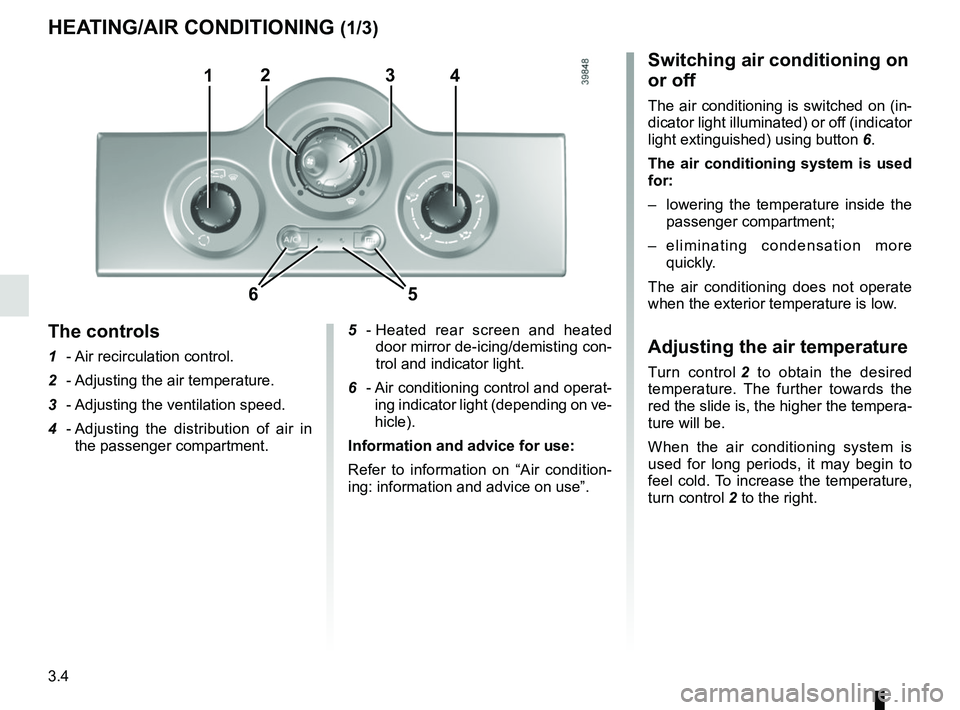
The air conditioning is switched on (in-
dicator light illuminated) or off (indicator
light extinguished) using button 6.
The air conditioning system is used
for:
– lowering the temperature inside the passenger compartment;
– eliminating condensation more quickly.
The air conditioning does not operate
when the exterior temperature is low.
Adjusting the air temperature
Turn control 2 to obtain the desired
temperature. The further towards the
red the slide is, the higher the tempera-
ture will be.
When the air conditioning system is
used for long periods, it may begin to
feel cold. To increase the temperature,
turn control 2 to the right.
5 -
Heated rear screen and heated
door mirror de-icing/demisting con-
trol and indicator light.
6 - Air conditioning control and operat-
ing indicator light (depending on ve-
hicle).
Information and advice for use:
Refer to information on “Air condition-
ing: information and advice on use”.
The controls
1 - Air recirculation control.
2 - Adjusting the air temperature.
3 - Adjusting the ventilation speed.
4 - Adjusting the distribution of air in
the passenger compartment.
HEATING/AIR CONDITIONING (1/3)
1423
65
Page 141 of 260
3.5
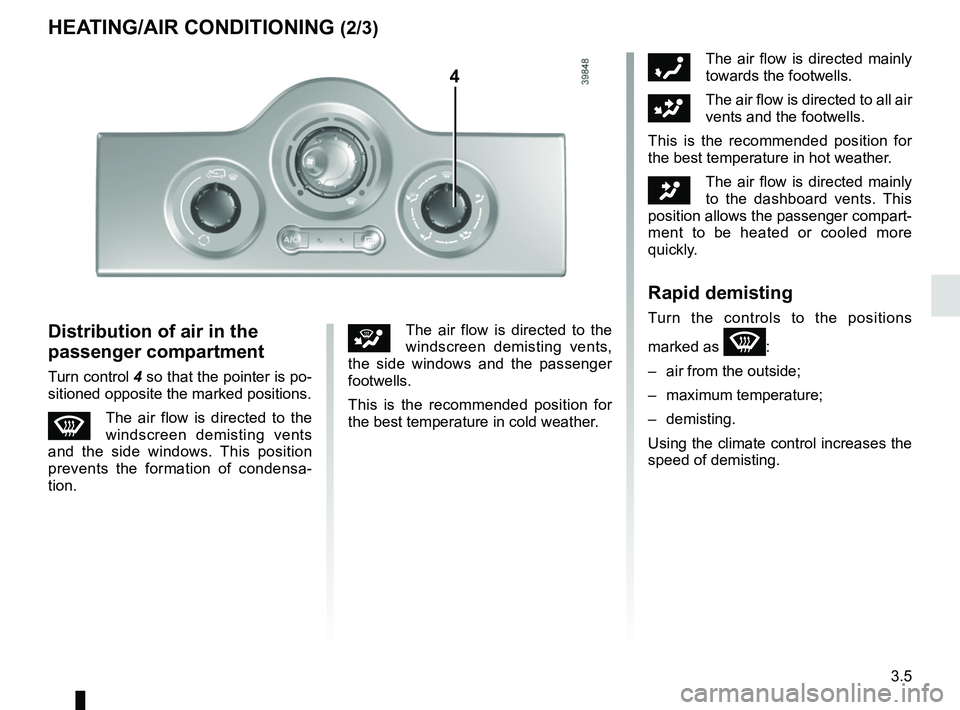
óThe air flow is directed mainly
towards the footwells.
GThe air flow is directed to all air
vents and the footwells.
This is the recommended position for
the best temperature in hot weather.
JThe air flow is directed mainly
to the dashboard vents. This
position allows the passenger compart-
ment to be heated or cooled more
quickly.
Rapid demisting
Turn the controls to the positions
marked as
W:
– air from the outside;
– maximum temperature;
– demisting.
Using the climate control increases the
speed of demisting.iThe air flow is directed to the
windscreen demisting vents,
the side windows and the passenger
footwells.
This is the recommended position for
the best temperature in cold weather.
HEATING/AIR CONDITIONING (2/3)
Distribution of air in the
passenger compartment
Turn control 4 so that the pointer is po-
sitioned opposite the marked positions.
WThe air flow is directed to the
windscreen demisting vents
and the side windows. This position
prevents the formation of condensa-
tion.
4
Page 142 of 260
3.6
Adjusting the ventilation
speed
Normal use
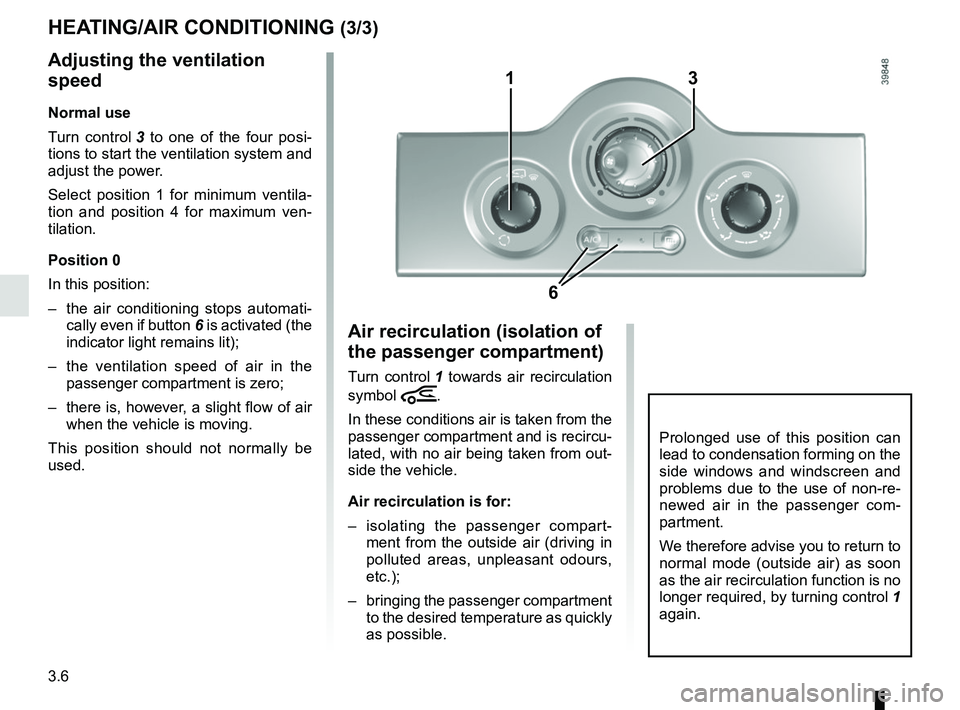
Turn control 3 to one of the four posi-
tions to start the ventilation system and
adjust the power.
Select position 1 for minimum ventila-
tion and position 4 for maximum ven-
tilation.
Position 0
In this position:
– the air conditioning stops automati- cally even if button 6 is activated (the
indicator light remains lit);
– the ventilation speed of air in the passenger compartment is zero;
– there is, however, a slight flow of air when the vehicle is moving.
This position should not normally be
used.
HEATING/AIR CONDITIONING (3/3)
Air recirculation (isolation of
the passenger compartment)
Turn control 1 towards air recirculation
symbol
â.
In these conditions air is taken from the
passenger compartment and is recircu-
lated, with no air being taken from out-
side the vehicle.
Air recirculation is for:
– isolating the passenger compart- ment from the outside air (driving in
polluted areas, unpleasant odours,
etc.);
– bringing the passenger compartment to the desired temperature as quickly
as possible.
Prolonged use of this position can
lead to condensation forming on the
side windows and windscreen and
problems due to the use of non-re-
newed air in the passenger com-
partment.
We therefore advise you to return to
normal mode (outside air) as soon
as the air recirculation function is no
longer required, by turning control 1
again.
13
6
Page 220 of 260
5.28
FUSES (2/2)
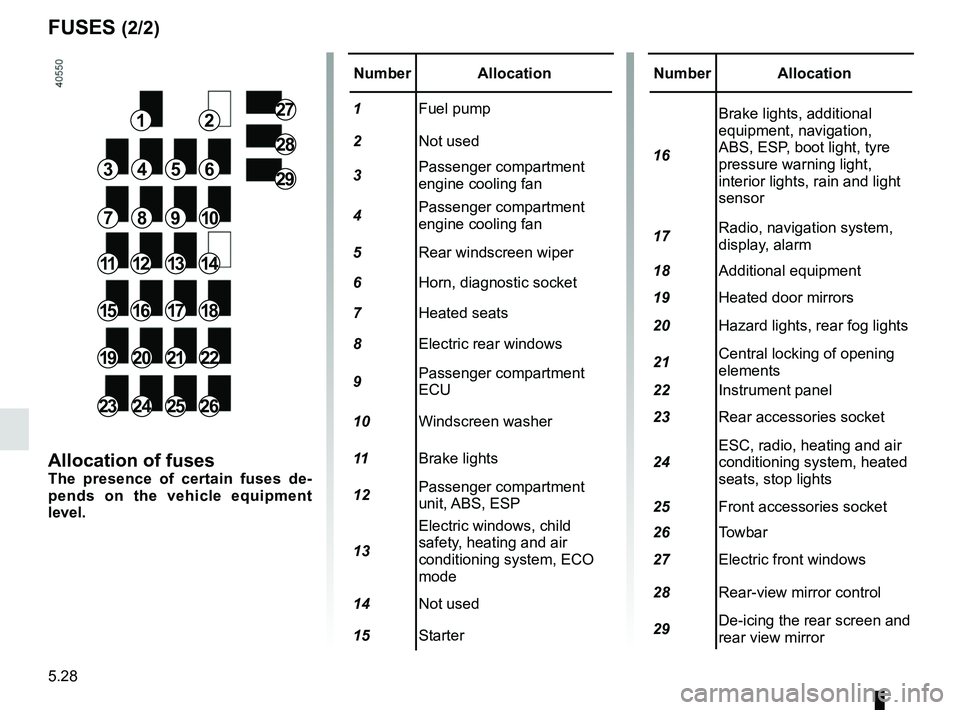
Number Allocation
1 Fuel pump
2 Not used
3 Passenger compartment
engine cooling fan
4 Passenger compartment
engine cooling fan
5 Rear windscreen wiper
6 Horn, diagnostic socket
7 Heated seats
8 Electric rear windows
9 Passenger compartment
ECU
10 Windscreen washer
11 Brake lights
12 Passenger compartment
unit, ABS, ESP
13 Electric windows, child
safety, heating and air
conditioning system, ECO
mode
14 Not used
15 StarterNumber Allocation
16 Brake lights, additional
equipment, navigation,
ABS, ESP, boot light, tyre
pressure warning light,
interior lights, rain and light
sensor
17 Radio, navigation system,
display, alarm
18 Additional equipment
19 Heated door mirrors
20 Hazard lights, rear fog lights
21 Central locking of opening
elements
22 Instrument panel
23 Rear accessories socket
24 ESC, radio, heating and air
conditioning system, heated
seats, stop lights
25 Front accessories socket
26 Towbar
27 Electric front windows
28 Rear-view mirror control
29 De-icing the rear screen and
rear view mirror
12
3456
78910
11121314
15161718
19202122
23242526
27
28
29
Allocation of fusesThe presence of certain fuses de-
pends on the vehicle equipment
level.
Page 222 of 260
5.30
WINDSCREEN WIPER BLADES (2/2)
– In frosty weather, make
sure that the wiper blades
are not stuck by ice (to
avoid the risk of the motor
overheating).
– Check the condition of the wiper
blades.
Replace the wiper blades as soon
as they begin to lose efficiency
(approximately once a year).
Whilst changing the blade, take care
not to drop the arm onto the window
after it has been removed as this
may break the window.Replacing the rear screen
wiper blade
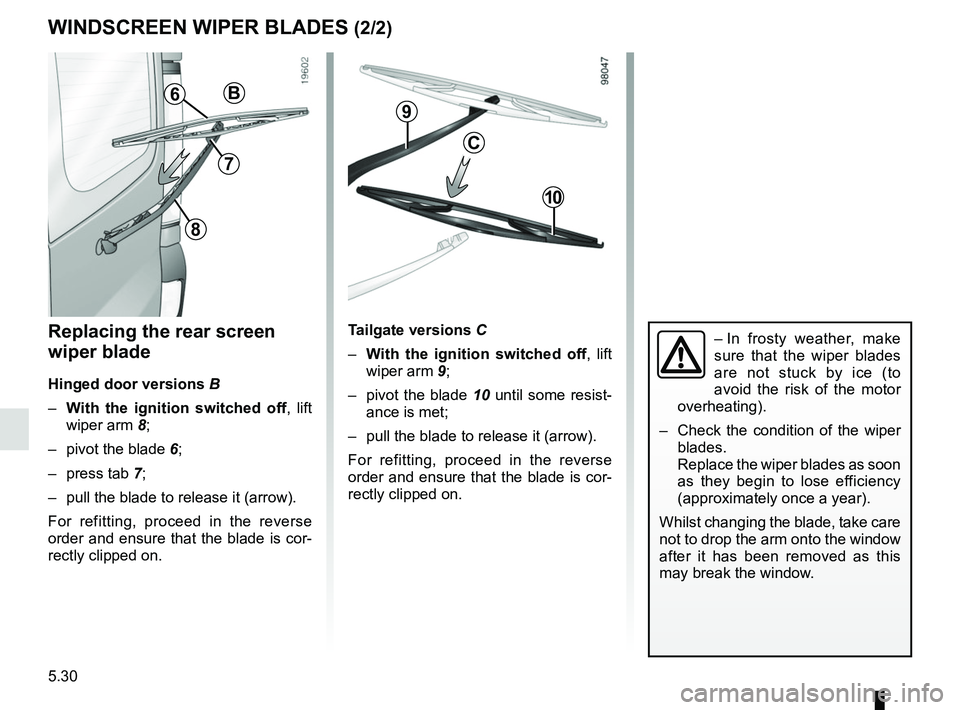
Hinged door versions B
– With the ignition switched off , lift
wiper arm 8;
– pivot the blade 6;
– press tab 7;
– pull the blade to release it (arrow).
For refitting, proceed in the reverse
order and ensure that the blade is cor-
rectly clipped on.
B6
8
Tailgate versions C
– With the ignition switched off , lift
wiper arm 9;
– pivot the blade 10 until some resist-
ance is met;
– pull the blade to release it (arrow).
For refitting, proceed in the reverse
order and ensure that the blade is cor-
rectly clipped on.
C
9
10
7
Page 231 of 260
5.39
On the roadPOSSIBLE CAUSESWHAT TO DO
Steering becomes heavy. Assistance overheating.Consult an approved Dealer.
The engine overheats. The coolant
temperature indicator and the STOP
warning light come on. Engine cooling fan not working. Stop the vehicle, switch off the engine and
contact an approved Dealer.
Coolant leaks. Check the coolant reservoir: it should con-
tain fluid. If there is no coolant, consult an
approved Dealer as soon as possible.
OPERATING FAULTS (3/4)
Radiator: If there is a lack of coolant, remember that it must never be topped up \
using cold coolant while the engine is
very warm. After any procedure on the vehicle which has involved even partial drain\
ing of the cooling system, it must
be refilled with a new mixture prepared in the correct proportions. Remi\
nder: only products approved by our Technical
Department may be used for this purpose.
Page 254 of 260

ECO mode ........................................................................\
. 2.12
electric windows ..................................................... 3.20 – 3")
7.2
ALPHABETICAL INDEX (2/5)
ECO mode ........................................................................\
. 2.12
electric windows ..................................................... 3.20 – 3.21
electronic stability control: ESC .............................2.26 → 2.30
emergency brake assist.........................................2.26 → 2.30
emergency braking ................................................2.26 → 2.30
emergency spare wheel ...................................................... 5.2
engine technical specifications .................................................. 6.4
engine coolant ..................................................................... 4.9
engine oil ..........................................................1.56, 4.4 → 4.7
engine oil capacity ...................................................... 4.6 – 4.7
engine oil level ...........................................................4.4 → 4.7
engine specifications ........................................................... 6.4
environment ............................................................\
........... 2.16
ESC: electronic stability control ....................1.57, 2.26 → 2.30
external temperature .............................................. 1.70 – 1.71
F
faults operating faults ................................................5.37 → 5.40
filter .................................................................\
................... 4.10
fitting a radio ........................................................... 5.33 – 5.34
fittings ...............................................................\
.....3.24 → 3.28
fog lights ................................................................... 1.77, 5.18
front lights changing bulbs .................................................. 5.16 – 5.17
front passenger air bag deactivation .....................1.46 → 1.48
front seat adjustment .............................................1.19 → 1.21
front seats adjustment .......................................................1.19 → 1.21
fuel advice on fuel economy ................................... 2.11 → 2.14
capacity ...............................................................\
......... 1.83
consumption .................................................... 2.11 → 2.14
filling ........................................................1.56, 1.83 → 1.85
grade ..................................................................\
.......... 1.83 fuel consumption ................................................... 2.11
→ 2.14
fuel filler cap ..........................................................1.83 → 1.85
fuel tank capacity ............................................................1.83 → 1.85
fuel tank capacity ...................................................1.83 → 1.85
fuses ....................................................................... 5.27 – 5.28
G
gear lever........................................................................\
..... 2.7
glove box ........................................................................\
... 3.24
grip control ........................................................................\
. 2.29
H
handbrake................................................................... 1.55, 2.8
hazard warning lights signal .............................................. 1.74
headlight beam adjustment .................................... 1.78 – 1.79
headrest.................................................................1.15 → 1.18
heated seats ..........................................................1.19 → 1.21
heating and air conditioning system ........................3.4 → 3.15
heating system ........................................................3.4 → 3.16
horn ...................................................................\
................ 1.74
horn: flash ..................................................................\
........... 1.74
sounding the horn ........................................................ 1.74
hubcap tool ........................................................................\
.. 5.8
I
ignition switch ...................................................................... 2.2
indicators ................................................ 1.54, 1.74, 5.17, 5.22
indicators: direction indicators .............................................. 5.17, 5.22
instrument panel ..............................................1.58 → 1.60
instrument panel ....................................................1.54 → 1.69
instrument panel messages...................................1.61 → 1.69
interior lighting: changing bulbs .................................................. 5.23 – 5.24