lights RENAULT KANGOO Z.E. 2018 Owners Manual
[x] Cancel search | Manufacturer: RENAULT, Model Year: 2018, Model line: KANGOO Z.E., Model: RENAULT KANGOO Z.E. 2018Pages: 230, PDF Size: 5.03 MB
Page 7 of 230

1.1
Section 1: Getting to know your vehicle
Electric vehicle: introduction . . . . . . . . . . . . . . . . . . . . . . . . . . . . . . . . . . . .\
. . . . . . . . . . . . . . . . . . . 1.2
Important recommendations . . . . . . . . . . . . . . . . . . . . . . . . . . . . . . . . . . . .\
. . . . . . . . . . . . . . . . . . . 1.8
Electric vehicle: charging . . . . . . . . . . . . . . . . . . . . . . . . . . . . . . . . . . . . \
. . . . . . . . . . . . . . . . . . . . . . 1.9
Key, radio frequency remote control: general information, use, deadlocking . . . . . . . . . . . . . . . . . . 1.17
Doors . . . . . . . . . . . . . . . . . . . . . . . . . . . . . . . . . . . . \
. . . . . . . . . . . . . . . . . . . . . . . . . . . . . . . . . . . . . 1.22
Automatic locking when driving . . . . . . . . . . . . . . . . . . . . . . . . . . . . . . . . . . . . \
. . . . . . . . . . . . . . . . . 1.28
Headrests/Front seats . . . . . . . . . . . . . . . . . . . . . . . . . . . . . . . . . . . . \
. . . . . . . . . . . . . . . . . . . . . . . . 1.29
Roof flap . . . . . . . . . . . . . . . . . . . . . . . . . . . . . . . . . . . .\
. . . . . . . . . . . . . . . . . . . . . . . . . . . . . . . . . . 1.34
Swivelling partition . . . . . . . . . . . . . . . . . . . . . . . . . . . . . . . . . . . . \
. . . . . . . . . . . . . . . . . . . . . . . . . . . 1.36
Seat belts. . . . . . . . . . . . . . . . . . . . . . . . . . . . . . . . . . . . \
. . . . . . . . . . . . . . . . . . . . . . . . . . . . . . . . . . 1.37
Methods of restraint in addition to the front seat belts . . . . . . . . . . . . . . . . . . . . . . . . . . . . . . . . . . . . 1.41
Side protection devices . . . . . . . . . . . . . . . . . . . . . . . . . . . . . . . . . . . . \
. . . . . . . . . . . . . . . . . . . . . . . 1.44
Additional methods of restraint . . . . . . . . . . . . . . . . . . . . . . . . . . . . . . . . . . . .\
. . . . . . . . . . . . . . . . . 1.45
Child safety: General information . . . . . . . . . . . . . . . . . . . . . . . . . . . . . . . . . . . .\
. . . . . . . . . . . . . . . 1.46 Choosing a child seat mounting . . . . . . . . . . . . . . . . . . . . . . . . . . . . . . . . . . . . \
. . . . . . . . . . . 1.49
Fitting a child seat . . . . . . . . . . . . . . . . . . . . . . . . . . . . . . . . . . . .\
. . . . . . . . . . . . . . . . . . . . . 1.52
Deactivating/activating the front passenger airbag . . . . . . . . . . . . . . . . . . . . . . . . . . . . . . . . 1.58
Steering wheel/Power-assisted steering . . . . . . . . . . . . . . . . . . . . . . . . . . . . . . . . . . . . \
. . . . . . . . . . 1.61
Driving position . . . . . . . . . . . . . . . . . . . . . . . . . . . . . . . . . . . .\
. . . . . . . . . . . . . . . . . . . . . . . . . . . . . 1.62
Warning lights . . . . . . . . . . . . . . . . . . . . . . . . . . . . . . . . . . . .\
. . . . . . . . . . . . . . . . . . . . . . . . . . . . . . 1.66
Displays and indicators . . . . . . . . . . . . . . . . . . . . . . . . . . . . . . . . . . . .\
. . . . . . . . . . . . . . . . . . . . . . . 1.69
Trip computer . . . . . . . . . . . . . . . . . . . . . . . . . . . . . . . . . . . .\
. . . . . . . . . . . . . . . . . . . . . . . . . . . . . . 1.72
Clock and outdoor temperature . . . . . . . . . . . . . . . . . . . . . . . . . . . . . . . . . . . . \
. . . . . . . . . . . . . . . . . 1.81
Rear view mirrors . . . . . . . . . . . . . . . . . . . . . . . . . . . . . . . . . . . .\
. . . . . . . . . . . . . . . . . . . . . . . . . . . 1.82
Audible and visual signals . . . . . . . . . . . . . . . . . . . . . . . . . . . . . . . . . . . . \
. . . . . . . . . . . . . . . . . . . . . 1.83
Pedestrian horn . . . . . . . . . . . . . . . . . . . . . . . . . . . . . . . . . . . . \
. . . . . . . . . . . . . . . . . . . . . . . . . . . . . 1.84
External lighting and signals . . . . . . . . . . . . . . . . . . . . . . . . . . . . . . . . . . . .\
. . . . . . . . . . . . . . . . . . . 1.85
Headlight beam adjustment . . . . . . . . . . . . . . . . . . . . . . . . . . . . . . . . . . . . \
. . . . . . . . . . . . . . . . . . . . 1.88
Washers, wipers . . . . . . . . . . . . . . . . . . . . . . . . . . . . . . . . . . . .\
. . . . . . . . . . . . . . . . . . . . . . . . . . . . 1.90
Additional heating tank . . . . . . . . . . . . . . . . . . . . . . . . . . . . . . . . . . . .\
. . . . . . . . . . . . . . . . . . . . . . . 1.93
Page 10 of 230
1.4
ELECTRIC VEHICLE: introduction (3/6)
Batteries
Your electric vehicle has two types of
battery:
– a 400V traction battery;
– a standard 12V battery, identical to the one used in conventional vehi-
cles. Traction battery
This battery stores the energy neces-
sary to operate the motor in your elec-
tric vehicle properly. As with any bat-
tery, it discharges after use, and must
be regularly recharged.
You do not have to wait until the traction
battery hits the reserve level in order to
recharge it.
Battery charging times vary depending
on the type of specific wall unit socket
or public terminal you connect to.
Your vehicle range will depend on the
charge level of the traction battery, and
also on your driving style, the outdoor
temperature and the type of road.
Please refer to information on “Vehicle
range: recommendations” in Section 2. 12 volt battery
The second battery on your vehicle is
a 12V battery, similar to those used
on conventional vehicles: this supplies
the energy required to operate vehicle
equipment (lights, windscreen wipers,
ABS, etc).
Page 21 of 230
1.15
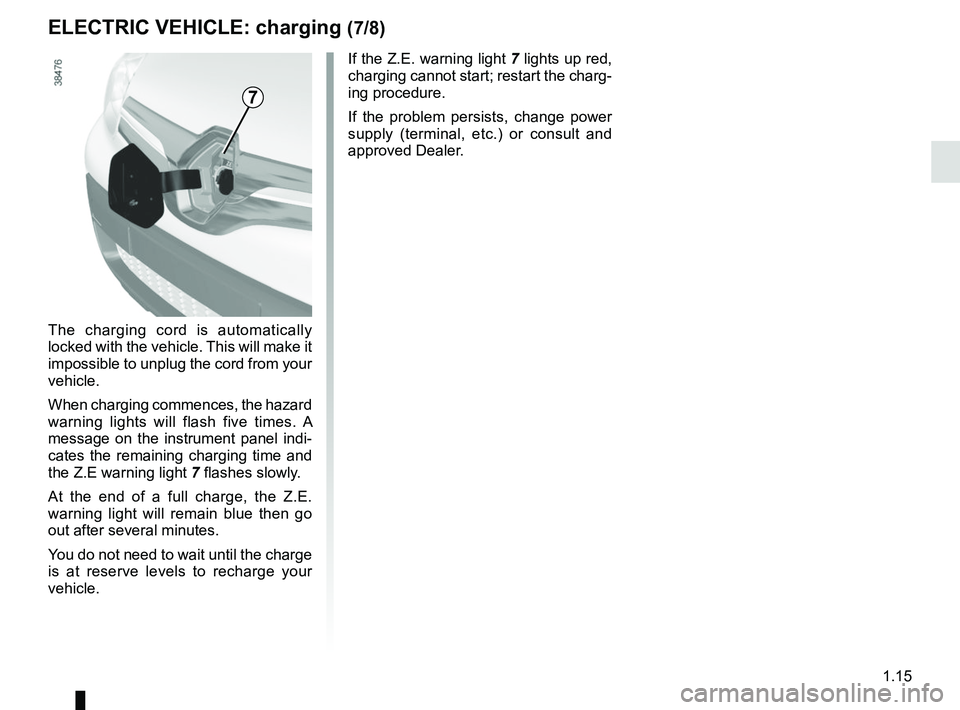
The charging cord is automatically
locked with the vehicle. This will make it
impossible to unplug the cord from your
vehicle.
When charging commences, the hazard
warning lights will flash five times. A
message on the instrument panel indi-
cates the remaining charging time and
the Z.E warning light 7 flashes slowly.
At the end of a full charge, the Z.E.
warning light will remain blue then go
out after several minutes.
You do not need to wait until the charge
is at reserve levels to recharge your
vehicle.
ELECTRIC VEHICLE: charging (7/8)
7
If the Z.E. warning light 7 lights up red,
charging cannot start; restart the charg-
ing procedure.
If the problem persists, change power
supply (terminal, etc.) or consult and
approved Dealer.
Page 25 of 230

1.19
KEY, RADIO FREQUENCY REMOTE CONTROL: Use (1/2)
The doors are locked and unlocked
using the remote control unit.
It is powered by a battery which must
be replaced (refer to the information on
the “Key, radio frequency remote con-
trol: batteries” in Section 5).Locking the doors
Remote control A or B
Press locking button 1.
The hazard warning lights and side in-
dicator lights flash twice to indicate
that the doors have locked.
If a door or the tailgate is open or not
properly shut, the doors and tailgate
lock then quickly unlock and the hazard
warning lights and side indicator lights
do not flash.
1
AB
1
Driver’s responsibility
when parking or stopping
the vehicle
Never leave an animal,
child or adult who is not self-suffi-
cient alone in your vehicle, even for
a short time.
They may pose a risk to themselves
or to others by starting the engine,
activating equipment such as the
electric windows or locking the
doors, for example.
Also, in hot and/or sunny weather,
please remember that the tempera-
ture inside the passenger compart-
ment increases very quickly.
RISK OF DEATH OR SERIOUS
INJURY.
Page 26 of 230
1.20
2
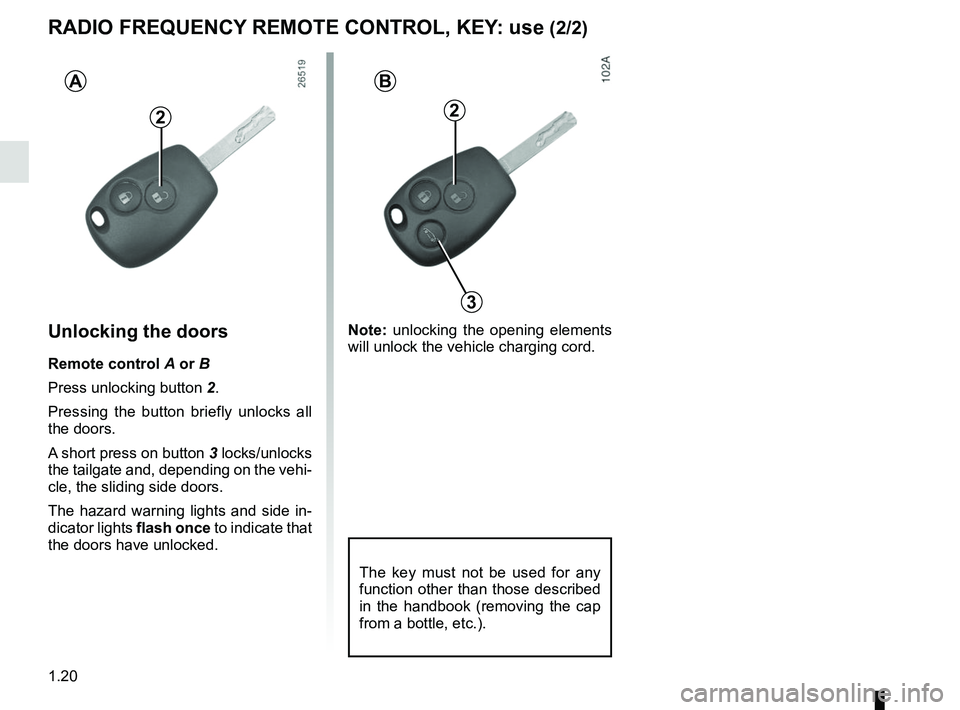
Unlocking the doors
Remote control A or B
Press unlocking button 2.
Pressing the button briefly unlocks all
the doors.
A short press on button 3 locks/unlocks
the tailgate and, depending on the vehi-
cle, the sliding side doors.
The hazard warning lights and side in-
dicator lights flash once to indicate that
the doors have unlocked.
AB
2
3
RADIO FREQUENCY REMOTE CONTROL, KEY: use (2/2)
The key must not be used for any
function other than those described
in the handbook (removing the cap
from a bottle, etc.).
Note: unlocking the opening elements
will unlock the vehicle charging cord.
Page 27 of 230
1.21
DEADLOCKING
Never use deadlocking if
someone is still inside the
vehicle.
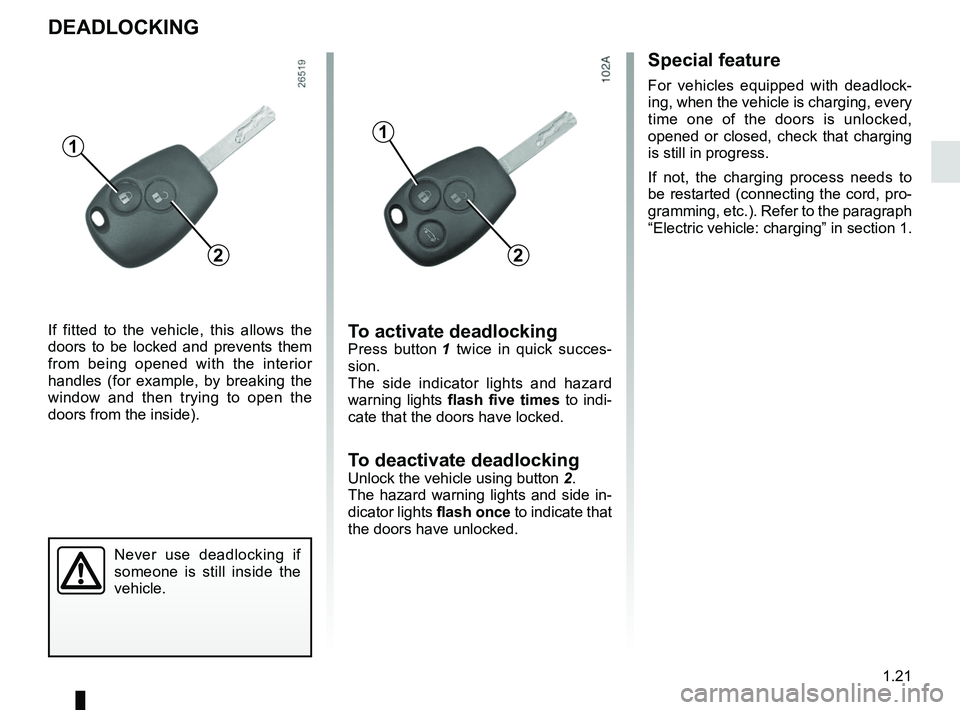
1
If fitted to the vehicle, this allows the
doors to be locked and prevents them
from being opened with the interior
handles (for example, by breaking the
window and then trying to open the
doors from the inside).
2
To activate deadlockingPress button 1 twice in quick succes-
sion.
The side indicator lights and hazard
warning lights flash five times to indi-
cate that the doors have locked.
To deactivate deadlocking
Unlock the vehicle using button 2.
The hazard warning lights and side in-
dicator lights flash once to indicate that
the doors have unlocked.
1
2
Special feature
For vehicles equipped with deadlock-
ing, when the vehicle is charging, every
time one of the doors is unlocked,
opened or closed, check that charging
is still in progress.
If not, the charging process needs to
be restarted (connecting the cord, pro-
gramming, etc.). Refer to the paragraph
“Electric vehicle: charging” in section 1.
Page 28 of 230
1.22
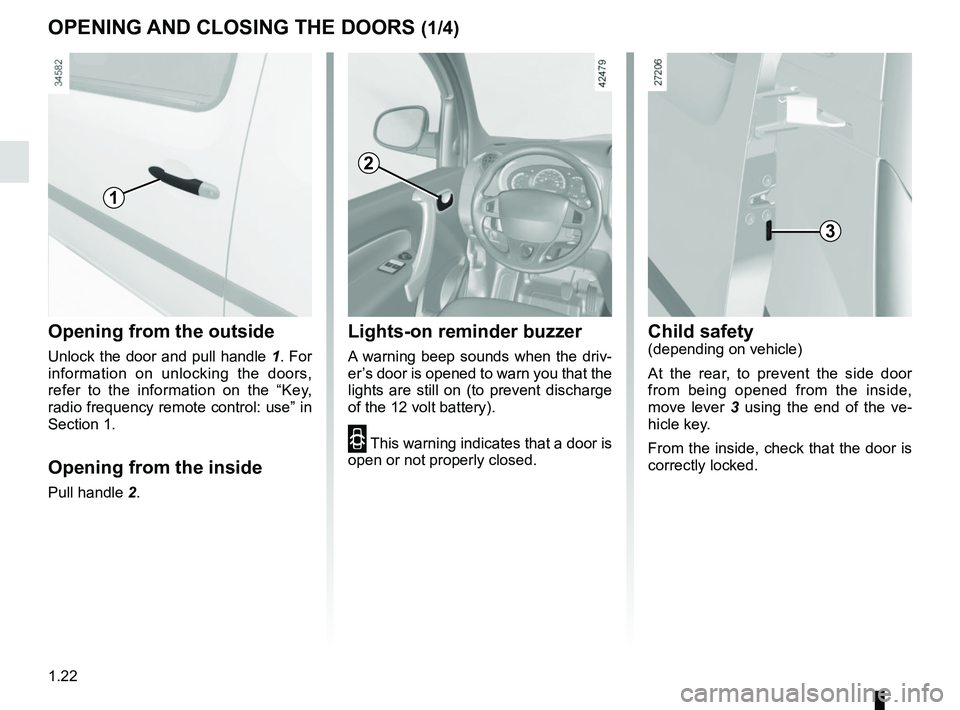
Opening from the outside
Unlock the door and pull handle 1. For
information on unlocking the doors,
refer to the information on the “Key,
radio frequency remote control: use” in
Section 1.
Opening from the inside
Pull handle 2.
OPENING AND CLOSING THE DOORS (1/4)
1
2
Child safety(depending on vehicle)
At the rear, to prevent the side door
from being opened from the inside,
move lever 3 using the end of the ve-
hicle key.
From the inside, check that the door is
correctly locked.
3
Lights-on reminder buzzer
A warning beep sounds when the driv-
er’s door is opened to warn you that the
lights are still on (to prevent discharge
of the 12 volt battery).
2 This warning indicates that a door is
open or not properly closed.
Page 30 of 230
1.24
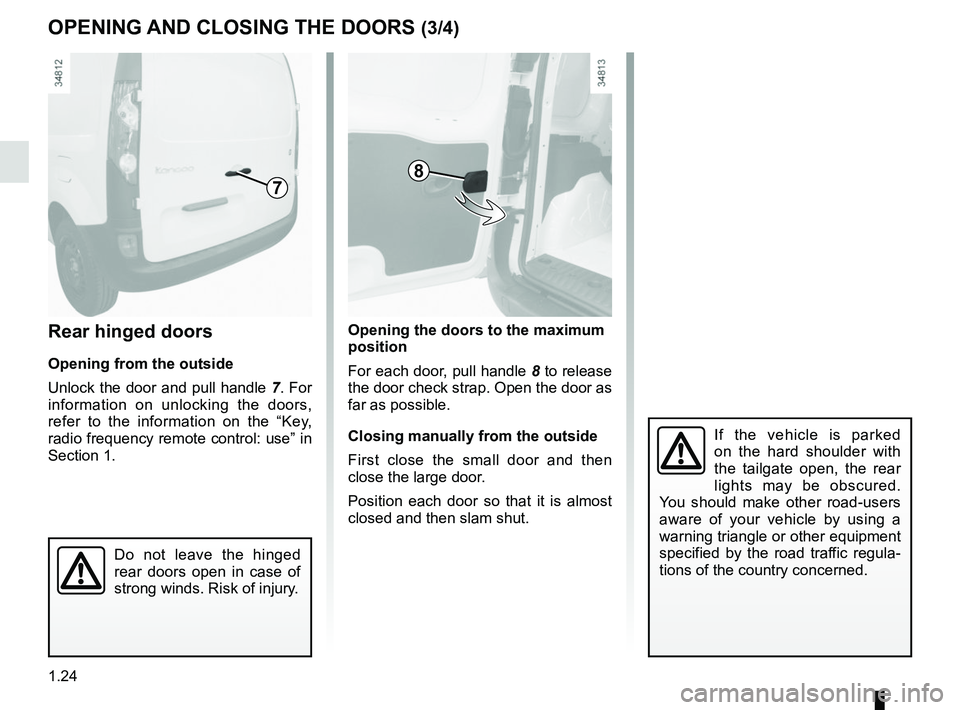
Opening the doors to the maximum
position
For each door, pull handle 8 to release
the door check strap. Open the door as
far as possible.
Closing manually from the outside
First close the small door and then
close the large door.
Position each door so that it is almost
closed and then slam shut.Rear hinged doors
Opening from the outside
Unlock the door and pull handle 7. For
information on unlocking the doors,
refer to the information on the “Key,
radio frequency remote control: use” in
Section 1.
OPENING AND CLOSING THE DOORS (3/4)
If the vehicle is parked
on the hard shoulder with
the tailgate open, the rear
lights may be obscured.
You should make other road-users
aware of your vehicle by using a
warning triangle or other equipment
specified by the road traffic regula-
tions of the country concerned.
Do not leave the hinged
rear doors open in case of
strong winds. Risk of injury.
7
8
Page 64 of 230

1.58
Deactivating the front
passenger airbags
(on equipped vehicles)
Before fitting a child seat on the front
passenger seat you must deactivate
the passenger airbag.To deactivate the
airbags: with the
vehicle stationary and the ignition
off, press and turn lock 1 to the OFF
position.
With the ignition on, you must check
that the warning light 2 is lit on the cen-
tral display and, depending on the ve-
hicle, that the message “passenger
airbag off” is displayed.
Note: on vehicles fitted with this, the
side airbag is also deactivated.
This light remains permanently lit to
let you know that you can fit a child
seat.
CHILD SAFETY: deactivating, activating the front passenger airbag (1/3)
The passenger airbag must
only be deactivated or acti-
vated when the vehicle is
stationary.
If it is interfered with when the ve-
hicle is being driven, indicator lights
å and © will come on.
Switch the ignition off then on again
to reset the airbag in accordance
with the lock position.
2
1
Page 66 of 230
1.60
The passenger airbag must
only be deactivated or acti-
vated when the vehicle is
stationary.
If it is interfered with when the ve-
hicle is being driven, indicator lights
å and © will come on.
Switch the ignition off then on again
to reset the airbag in accordance
with the lock position.
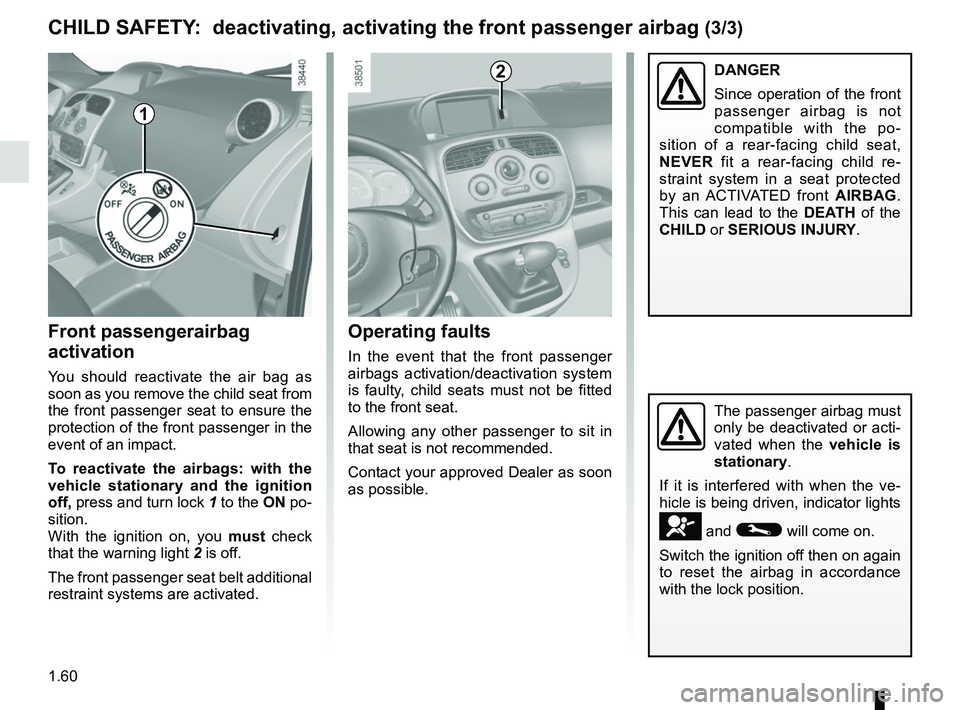
Operating faults
In the event that the front passenger
airbags activation/deactivation system
is faulty, child seats must not be fitted
to the front seat.
Allowing any other passenger to sit in
that seat is not recommended.
Contact your approved Dealer as soon
as possible.
Front passengerairbag
activation
You should reactivate the air bag as
soon as you remove the child seat from
the front passenger seat to ensure the
protection of the front passenger in the
event of an impact.
To reactivate the airbags: with the
vehicle stationary and the ignition
off, press and turn lock 1 to the ON po-
sition.
With the ignition on, you must check
that the warning light 2 is off.
The front passenger seat belt additional
restraint systems are activated.
2
CHILD SAFETY: deactivating, activating the front passenger airbag (3/3)
1
DANGER
Since operation of the front
passenger airbag is not
compatible with the po-
sition of a rear-facing child seat,
NEVER fit a rear-facing child re-
straint system in a seat protected
by an ACTIVATED front AIRBAG. This can lead to the DEATH of the
CHILD or SERIOUS INJURY.