coolant temperature SATURN AURA 2010 User Guide
[x] Cancel search | Manufacturer: SATURN, Model Year: 2010, Model line: AURA, Model: SATURN AURA 2010Pages: 428, PDF Size: 2.78 MB
Page 298 of 428

3. Fill the coolant surge tank with the proper mixture,
to the FULL COLD mark. Wait about five minutes,
then check to see if the level is below the mark.
If the level is below the FULL COLD mark,
add additional coolant to bring the level up to the
mark. Repeat this procedure until the level remains
constant at the FULL COLD mark for at least
five minutes.
4. With the coolant surge tank pressure cap off,
start the engine and let it run until you can feel
the upper radiator hose getting hot. Watch out for
the engine cooling fans.
By this time, the coolant level inside the coolant
surge tank might be lower. If the level is lower than
the FULL COLD mark, add more of the proper
mixture to the coolant surge tank until the level
reaches the FULL COLD mark.
5. Then replace the pressure cap. Be sure the
pressure cap is hand-tight and fully seated.
Notice:If the pressure cap is not tightly installed,
coolant loss and possible engine damage may
occur. Be sure the cap is properly and tightly
secured.Engine Overheating
The vehicle has several indicators to warn of engine
overheating.
You will find an engine coolant temperature gage as
well as an engine coolant temperature warning light on
your vehicle’s instrument panel cluster. SeeEngine
Coolant Temperature Gage on page 4-33andEngine
Coolant Temperature Warning Light on page 4-33.
You may decide not to lift the hood when this warning
appears, but instead get service help right away.
SeeRoadside Assistance Program on page 8-6.
If you do decide to lift the hood, make sure the vehicle
is parked on a level surface.
Then check to see if the engine cooling fans are
running. If the engine is overheating, both fans should
be running. If they are not, do not continue to run
the engine and have the vehicle serviced.
Notice:Engine damage from running the engine
without coolant is not covered by the warranty.
Notice:If the engine catches re while driving with
no coolant, the vehicle can be badly damaged.
The costly repairs would not be covered by
the vehicle warranty. SeeOverheated Engine
Protection Operating Mode on page 6-30for
information on driving to a safe place in an
emergency.
6-28
ProCarManuals.com
Page 299 of 428

If Steam Is Coming From The Engine
Compartment
{WARNING:
Steam from an overheated engine can burn you
badly, even if you just open the hood. Stay away
from the engine if you see or hear steam coming
from it. Turn it off and get everyone away from the
vehicle until it cools down. Wait until there is no sign
of steam or coolant before you open the hood.
If you keep driving when the vehicles engine is
overheated, the liquids in it can catch fire. You or
others could be badly burned. Stop the engine if it
overheats, and get out of the vehicle until the
engine is cool.
SeeOverheated Engine Protection Operating Mode
on page 6-30for information on driving to a safe
place in an emergency.
If No Steam Is Coming From The
Engine Compartment
If an engine overheat warning is displayed but no steam
can be seen or heard, the problem may not be too
serious. Sometimes the engine can get a little too hot
when the vehicle:
•Climbs a long hill on a hot day.
•Stops after high-speed driving.
•Idles for long periods in traffic.
•Tows a trailer.
If the overheat warning is displayed with no sign of
steam:
1. Turn the air off.
2. Turn the heater on to the highest temperature and
to the highest fan speed. Open the windows as
necessary.
3. In heavy traffic, let the engine idle in N (Neutral)
while stopped. If it is safe to do so, pull off the
road, shift to P (Park) or N (Neutral) and let
the engine idle.
6-29
ProCarManuals.com
Page 300 of 428

If the temperature overheat gage is no longer in the
overheat zone or an overheat warning no longer
displays, the vehicle can be driven. Continue to drive
the vehicle slow for about 10 minutes. Keep a safe
vehicle distance from the car in front of you. If the
warning does not come back on, continue to drive
normally.
If the warning continues, pull over, stop, and park the
vehicle right away.
If there is no sign of steam, idle the engine for three
minutes while parked. If the warning is still displayed,
turn off the engine until it cools down. Also, see
“Overheated Engine Protection Operating Mode”
following.
Overheated Engine Protection
Operating Mode
This emergency operating mode allows your vehicle to
be driven to a safe place in an emergency situation.
If an overheated engine condition exists, an overheat
protection mode which alternates firing groups of
cylinders helps prevent engine damage. In this mode,
you will notice a significant loss in power and engine
performance. The temperature gage will indicate
an overheat condition exists. Driving extended miles
(km) and/or towing a trailer in the overheat protection
mode should be avoided.Notice:After driving in the overheated engine
protection operating mode, to avoid engine damage,
allow the engine to cool before attempting any
repair. The engine oil will be severely degraded.
Repair the cause of coolant loss, change the oil and
reset the oil life system. SeeEngine Oil on
page 6-17.
Power Steering Fluid
SeeEngine Compartment
Overview on page 6-14for
reservoir location.
6-30
ProCarManuals.com
Page 302 of 428

Windshield Washer Fluid
What to Use
When you need windshield washer fluid, be sure to read
the manufacturer’s instructions before use. If you will
be operating your vehicle in an area where the
temperature may fall below freezing, use a fluid that has
sufficient protection against freezing.
Adding Washer Fluid
When the windshield washer fluid reservoir is low, a
LOW WASHER FLUID message displays on the Driver
Information Center (DIC). SeeDIC Warnings and
Messages on page 4-42for more information.
Open the cap with the
washer symbol on it. Add
washer fluid until the
tank is full. SeeEngine
Compartment Overview on
page 6-14for reservoir
location.Notice:
When using concentrated washer uid, follow
the manufacturer’s instructions for adding
water.
Do not mix water with ready-to-use washer uid.
Water can cause the solution to freeze and
damage your washer uid tank and other parts
of the washer system. Also, water does not
clean as well as washer uid.
Fill the washer uid tank only three-quarters full
when it is very cold. This allows for uid
expansion if freezing occurs, which could
damage the tank if it is completely full.
Do not use engine coolant (antifreeze) in your
windshield washer. It can damage the vehicle’s
windshield washer system and paint.
6-32
ProCarManuals.com
Page 414 of 428

Cleaning (cont.)
Underbody Maintenance...............................6-95
Washing Your Vehicle...................................6-92
Weatherstrips..............................................6-92
Windshield and Wiper Blades........................6-93
Cleaning the Mirror.........................................3-32
Clearing the System........................................4-78
Climate Control System...................................4-16
Outlet Adjustment........................................4-23
Climate Control Systems
Automatic...................................................4-19
Climate Controls.............................................1-13
Clock, Setting.................................................4-51
Cold Temperature Operation.............................6-19
Collision Damage Repair..................................8-10
Collision Parts................................................8-10
Compact Spare Tire........................................6-88
Compass.......................................................3-33
Compass Calibration.......................................3-33
Compass Operation.........................................3-33
Compass Variance..........................................3-33
Compressor Kit, Tire Sealant............................6-67
Configurations for Use of Child Restraints..........2-43
Connecting a USB Storage Device or iPod
®.......4-64
Content Theft-Deterrent....................................3-16
Control of a Vehicle.......................................... 5-3
Convenience Net............................................3-42Coolant
Engine.......................................................6-25
Engine Temperature Gage............................4-33
Engine Temperature Warning Light.................4-33
Cooling System..............................................6-24
Courtesy Transportation Program........................ 8-9
Coverage........................................................ 8-7
Cruise Control.................................................. 4-7
Light..........................................................4-38
Cupholders....................................................3-41
Customer Assistance......................................... 8-5
Offices......................................................... 8-5
Text Telephone (TTY) Users........................... 8-5
Customer Information
Service Publications Ordering Information........8-14
Customer Satisfaction Procedure........................ 8-2
D
Damage Repair, Collision.................................8-10
Data Recorders, Event....................................8-16
Daytime Running Lamps (DRL).........................4-11
Defensive Driving............................................. 5-2
Delayed Headlamps........................................4-11
Delayed Locking............................................... 3-9
Deleting Name Tags........................................4-73
4
ProCarManuals.com
Page 416 of 428

Electronic Immobilizer Operation
PASS-Key®III+...........................................3-17
Electronic Stability Control................................. 5-5
Electronic Stability Control Indicator Light...........4-32
Emergency Trunk Release Handle.....................3-12
Emissions Inspection and Maintenance
Programs...................................................4-36
Ending a Call.................................................4-76
Engine
Air Cleaner/Filter.........................................6-21
Check and Service Engine Soon Lamp...........4-34
Compartment Overview................................6-14
Coolant......................................................6-25
Coolant Heater............................................3-22
Coolant Temperature Gage...........................4-33
Coolant Temperature Warning Light................4-33
Cooling System...........................................6-24
Drive Belt Routing.......................................7-12
Exhaust.....................................................3-30
Oil .............................................................6-17
Overheated Protection Operating Mode...........6-30
Overheating................................................6-28
Starting......................................................3-20
Engine Cooling When Trailer Towing..................5-33
Engine Identification........................................6-96
Engine Oil
Life System................................................6-20
Engine Oil Additives / Engine Oil Flushes...........6-20Entering Personalization Menu..........................4-46
Entry/Exit Lighting...........................................4-13
Erasing Universal Home Remote Buttons...........3-40
Event Data Recorders.....................................8-16
Exiting Personalization Menu............................4-50
Express Window Anti-Pinch Feature...................3-15
Express Window Anti-Pinch Override.................3-15
Express-Down Window....................................3-14
Express-Up Window........................................3-14
Extender, Safety Belt
.......................................2-31
Exterior Mirrors...............................................1-10
F
Federal Communications Commission (FCC) and
Industry and Science Canada........................6-54
Filter
Engine Air Cleaner......................................6-21
Finding a Category (CAT) Station (XM Satellite
Radio Service Only).....................................4-56
Finding a Station............................................4-53
Finish Damage...............................................6-95
Flashers, Hazard Warning.................................. 4-3
Flash-to-Pass................................................... 4-5
Flat Tire........................................................6-66
Flat Tire, Changing.........................................6-74
Flat Tire, Storing.............................................6-84
6
ProCarManuals.com
Page 417 of 428
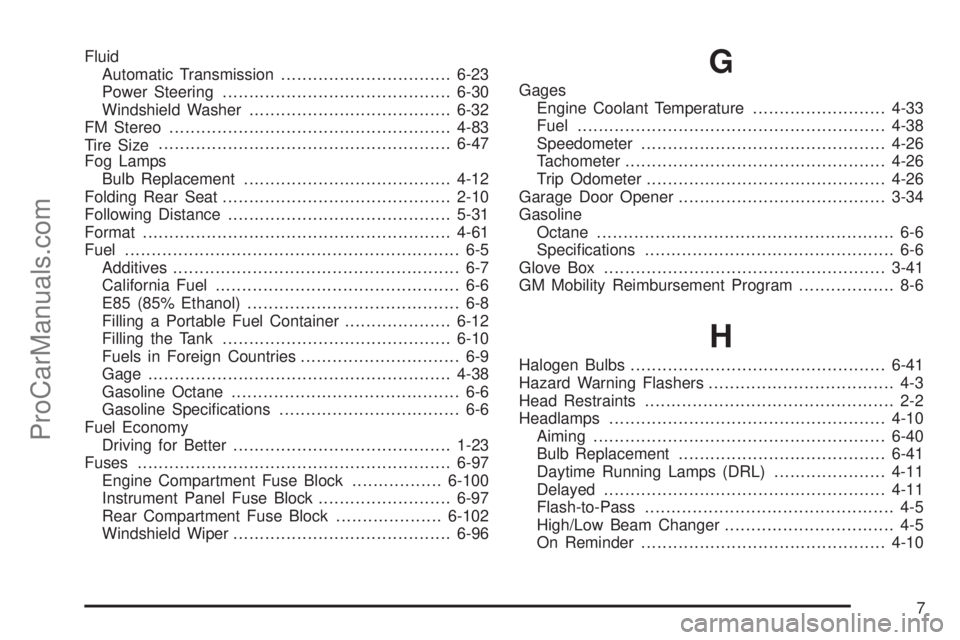
Fluid
Automatic Transmission................................6-23
Power Steering...........................................6-30
Windshield Washer......................................6-32
FM Stereo.....................................................4-83
Tire Size.......................................................6-47
Fog Lamps
Bulb Replacement.......................................4-12
Folding Rear Seat...........................................2-10
Following Distance..........................................5-31
Format..........................................................4-61
Fuel............................................................... 6-5
Additives...................................................... 6-7
California Fuel.............................................. 6-6
E85 (85% Ethanol)........................................ 6-8
Filling a Portable Fuel Container....................6-12
Filling the Tank...........................................6-10
Fuels in Foreign Countries.............................. 6-9
Gage .........................................................4-38
Gasoline Octane........................................... 6-6
Gasoline Specifications.................................. 6-6
Fuel Economy
Driving for Better.........................................1-23
Fuses...........................................................6-97
Engine Compartment Fuse Block.................6-100
Instrument Panel Fuse Block.........................6-97
Rear Compartment Fuse Block....................6-102
Windshield Wiper.........................................6-96G
Gages
Engine Coolant Temperature.........................4-33
Fuel..........................................................4-38
Speedometer..............................................4-26
Tachometer.................................................4-26
Trip Odometer.............................................4-26
Garage Door Opener.......................................3-34
Gasoline
Octane........................................................ 6-6
Specifications............................................... 6-6
Glove Box.....................................................3-41
GM Mobility Reimbursement Program.................. 8-6
H
Halogen Bulbs................................................6-41
Hazard Warning Flashers................................... 4-3
Head Restraints............................................... 2-2
Headlamps....................................................4-10
Aiming .......................................................6-40
Bulb Replacement.......................................6-41
Daytime Running Lamps (DRL).....................4-11
Delayed.....................................................4-11
Flash-to-Pass............................................... 4-5
High/Low Beam Changer................................ 4-5
On Reminder..............................................4-10
7
ProCarManuals.com
Page 419 of 428

K
Keyless Entry
Remote (RKE) System................................... 3-3
Keyless Entry System....................................... 3-3
Keys............................................................... 3-2
L
Labeling, Tire Sidewall.....................................6-45
Lamps
Daytime Running (DRL)................................4-11
Dome ........................................................4-13
License Plate..............................................6-43
Malfunction Indicator....................................4-34
Reading.....................................................4-13
Lap-Shoulder Belt...........................................2-25
LATCH System for Child Restraints...................2-44
Leaving After Parking on a Hill.........................5-33
Leaving the Vehicle with the Engine Running......3-28
Lift Seat, Power............................................... 2-9
Lighting
Entry/Exit...................................................4-13
Parade Dimming..........................................4-13
Lights............................................................4-10
Airbag Readiness........................................4-28
Antilock Brake System (ABS) Warning............4-31
Brake System Warning.................................4-30Lights (cont.)
Charging System.........................................4-30
Cruise Control.............................................4-38
Engine Coolant Temperature Warning.............4-33
Flash-to-Pass............................................... 4-5
Highbeam On.............................................4-38
High/Low Beam Changer................................ 4-5
Oil Pressure...............................................4-37
On Reminder..............................................4-10
Passenger Airbag Status Indicator..................4-29
Safety Belt Reminders..................................4-26
Security.....................................................4-37
Tire Pressure..............................................4-34
Loading a CD................................................4-57
Loading Your Vehicle.......................................5-19
Locks
Delayed Locking........................................... 3-9
Door ........................................................... 3-8
Lockout Protection.......................................3-10
Power Door .................................................. 3-8
Programmable Automatic Door Locks............... 3-9
Rear Door Security Locks
.............................3-10
Loss of Control...............................................5-11
Lower Anchors and Tethers for Children.............2-44
Lumbar
Power Controls............................................. 2-5
9
ProCarManuals.com
Page 426 of 428

Tires.............................................................6-44
Aluminum Wheels, Cleaning..........................6-94
Buying New Tires........................................6-60
Chains.......................................................6-65
Changing a Flat Tire....................................6-74
Cleaning....................................................6-94
Compact Spare...........................................6-88
Different Size..............................................6-61
High-Speed Operation..................................6-52
If a Tire Goes Flat.......................................6-66
Inflation - Tire Pressure................................6-51
Inspection and Rotation................................6-57
Installing the Spare Tire................................6-78
Pressure Light.............................................4-34
Pressure Monitor Operation...........................6-54
Pressure Monitor System..............................6-53
Removing the Flat Tire.................................6-78
Removing the Spare Tire and Tools...............6-76
Sealant and Compressor Kit.................6-67, 6-74
Sidewall Labeling.........................................6-45
Storing a Flat or Spare Tire and Tools............6-84
Terminology and Definitions...........................6-48
Uniform Tire Quality Grading.........................6-62
Wheel Alignment and Tire Balance.................6-63
Wheel Replacement.....................................6-64
When It Is Time for New Tires......................6-59
To Use the Engine Coolant Heater....................3-22Torque Lock...................................................3-28
Total Weight on the Vehicle’s Tires....................5-30
Towing
Recreational Vehicle.....................................5-24
Towing a Trailer..........................................5-27
Your Vehicle...............................................5-24
TPMS Malfunction Light and Message...............6-55
TPMS Sensor Matching Process
.......................6-56
Traction
Control System (TCS).................................... 5-7
Traction Control Operation................................. 5-8
Traction – AA, A, B, C.....................................6-62
Trailer Brakes.................................................5-30
Transferring a Call..........................................4-76
Transmission
Fluid, Automatic...........................................6-23
Transmission Operation, Automatic....................3-23
Transportation Options...................................... 8-9
Transportation Program, Courtesy....................... 8-9
Treadwear.....................................................6-62
Treadwear 200 Traction AA Temperature A.........6-62
Trip Odometer................................................4-26
Trunk............................................................3-11
Turn and Lane-Change Signals.......................... 4-4
Turn Signal/Multifunction Lever........................... 4-4
Turn Signals When Towing a Trailer..................5-32
16
ProCarManuals.com