stop start Seat Altea 2010 Owner's Guide
[x] Cancel search | Manufacturer: SEAT, Model Year: 2010, Model line: Altea, Model: Seat Altea 2010Pages: 310, PDF Size: 7.46 MB
Page 233 of 310
Checking and refilling levels231
Safety First
Operating instructions
Practical tips
Technical Data
Checking oil level
– Park the vehicle in a horizontal position.
– Briefly run the engine at idle speed until the service temperature
is reached then stop.
– Wait two minutes.
– Pull out the dipstick. Wipe the dipstick with a clean cloth and insert it again, pushing it in as far as it will go.
– Then pull it out once more and check the oil level ⇒page 230,
fig. 164 . Top up with engine oil if necessary.Oil level in area
– Do not add oil.
Oil level in area
–Oil can be topped up. The indicated oil level should be after zone .
Oil level in area
–Oil must be topped up. The indicated oil level should be after in zone .
Depending on how you drive and the conditions in which the car is used, oil
consumption can be up to 0.5 l/1,000 km. Oil consumption is likely to be
higher for the first 5,000 km. For this reason the engine oil level must be
checked at regular intervals, preferably when filling the tank and before a
journey.
WARNING
Any work carried out in the engine compartment or on the engine must be
carried out cautiously.•When working in the engine compartment, always observe the safety
warnings ⇒page 226.
Caution
If the oil level is above the area do not start the engine. This could result
in damage to the engine and catalytic converter. Contact an Authorised
Service Centre.Topping up engine oil
Top up gradually with small quantities of oil.
Before opening the bonnet, read and observe the warnings ⇒ in
“Safety instructions on working in the engine compartment” on
page 226.
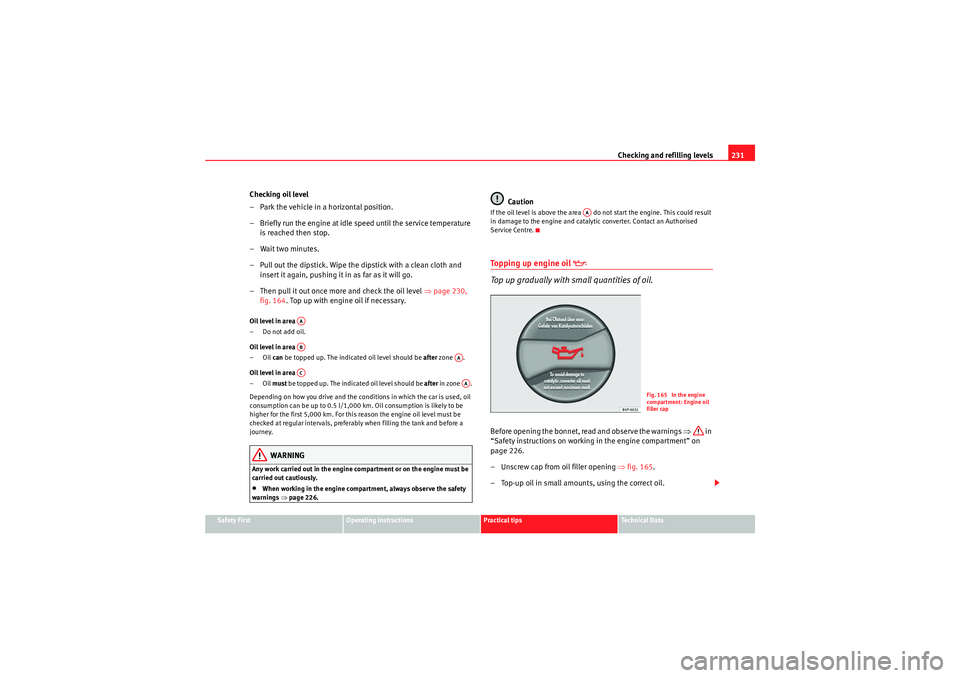
– Unscrew cap from oil filler opening ⇒fig. 165 .
– Top-up oil in small amounts, using the correct oil.
AAAB
AA
AC
AA
AA
Fig. 165 In the engine
compartment: Engine oil
filler cap
altea_EN Seite 231 Mittwoch, 26. August 2009 6:00 18
Page 249 of 310
Wheels and tyres247
Safety First
Operating instructions
Practical tips
Technical Data
Driving with anti-puncture tyres (emergency gear)
– Leave the ESP/TCS (electronic stabilisation programme)
switched on, or switch on ⇒page 194.
– Continue driving carefully and slowly (80 km/h maximum).
– Avoid sudden manoeuvres and sharp turns.
– Avoid driving over obstacles (for example kerbs) or potholes.
– Look out for the ESP/TCS intervening often, smoke coming from the tyres or the smell of rubber, the vehicle vibrating or a clat-
tering noise. If any of these occur, stop the vehicle.The anti-puncture tyres have a tag on the side of the tyre, with the description:
“DSST”, “Eufonia”, “RFT”, “ROF”, “RSC”, “SSR” or “ZP”.
The sides of this type of tyre are reinforced. When the tyres lose air they are
supported on the sides (emergency driving).
The loss of pressure in the tyre is shown on the instrument panel. You can
then drive a maximum of 80 km and if the circumstances are favourable (for
example, low load), even more.
The damaged tyre should be changed as soon as possible. The rim should be
checked in a specialist workshop to detect possible damage and replace it if
necessary. We recommend you contact Technical Service. If more than one
tyre is being used under emergency conditions, this reduces the distance
which can be travelled.
Starting driving in emergency conditions
When the loss in tyre pressure is displayed on the instrument panel, this
implies that at least one tyre is being driven in emergency conditions ⇒.
End of emergency operation
Do not drive on if:
•smoke is coming from one of the tyres,•there is a smell of rubber,•the vehicle vibrates,•there is a rattling noise.
When is it no longer possible to continue driving even using anti-puncture
tyres?•If one of the tyres has been severely damaged in an accident, etc. If a tyre
has been badly damaged there is a risk that parts of the tread can be thrown
off and cause damage to the fuel lines, brake pipes or fuel filler.•It is also advisable to stop driving if severe vibrations occur, or if the wheel
starts overheating and gives off smoke.WARNING
When driving in emergency conditions, the driving quality of the vehicle is
considerably impaired.•The maximum permitted speed of 80 km/h is subject to road and
weather conditions. Please observe legal requirements when doing so.•Avoid sharp turns and rapid manoeuvres, and brake earlier than usual.•Avoid driving over obstacles (for example kerbs) or potholes.•If one or more tyres is being driven in emergency conditions, the driving
quality of the vehicle is impaired and there is a risk of accident.Note
•The anti-puncture tyres do not “deflate” on losing pressure because they
are supported on the reinforced sides. Therefore defects in the tyre can not be
detected with a visual inspection.•Snow chains must not be used on front tyres used in emergency
conditions.
altea_EN Seite 247 Mittwoch, 26. August 2009 6:00 18
Page 266 of 310
If and when
264Fuses on left side of dash panelFusesNumber
Consumer
Amps
1
Va can t
2
Va can t
3
Va can t
4
Va can t
5
Va can t
6
Va can t
7
Va can t
8
Va can t
9
Airbag
5
10
RSE input (roof screen)
10
11
Va can t
12
Left xenon headlight
10
13
Instrument panel (oil level)/Switchboard wiring
(BCM)/Heater / ABS, ESP/ Park Pilot/ Gate-
way/Flow meter
5
14
Gearbox/Servosteering/Brake light sensor/
Trailer/ ABS, ESP/ Haldex/ Light switch
10
15
Heated windscreen / Instrument lighting / Diag-
nosis switchboard/Engine management/Addi-
tional heating/AFS headlamps/Park Pilot
10
16
Right xenon headlight
10
17
Engine management / RSE system with START
STOP
10
18
Kombi / levers with START STOP
5
19
Navigation/ radio with START STOP
15
20
Park Pilot (Parking assistant) / Gear lever/ ESP
switchboard
10
21
Vacant
22
Volumetric alarm sensor/ Alarm horn
5
23
Diagnosis / Rain sensor / Light switch
10
24
Trailer hook pre-installation assistant
15
25
Switchboard coupling automatic gearbox
20
26
Vacuum pump
20
27
RSE supply (Ceiling display) without START STOP
10
28
Rear window wiper motor
20
29
Vacant
30
Cigarette lighter / socket
20
31
Vacant
32
Vacant
33
Heater
40
34
Vacant
35
Vacant
36
Vacant
37
Vacant
38
Vacant
39
Trailer control unit (coupling)
15
Number
Co nsum er
Amps
altea_EN Seite 264 Mittwoch, 26. August 2009 6:00 18
Page 267 of 310
If and when265
Safety First
Operating instructions
Practical tips
Technical Data
Some of the electrical items listed in the table are only fitted on certain
models or are optional extras. Please note that the above list, while correct at the time of printing, is subject
to alterations. If discrepancies should occur, please refer to the sticker on the
inside of the fuse cover for the correct information for your model.
Fuses layout, engine compartment, left partFuses
40
Trailer control unit (indicators, brakes and left
side)
20
41
Trailer control unit (fog light, reversing light and
right side)
20
42
BCM wiring switchboard
20
43
Trailer pre-installation
40
44
Rear window heater
25
45
Electric windows (front)
30
46
Rear electric windows
30
47
Engine (Fuel control unit, petrol relay)
15
48
Convenience controls
20
49
Heating controls
40
50
Heated seats
30
51
Sunroof
20
52
Headlight washer system
20
53
Trailer hook pre-installation assistant
20
54
Taxi (taximeter power supply)
5
55
Trailer hook pre-installation assistant
20
56
Taxi (taximeter power supply)
15
57
Telephone power supply with START STOP
10
58
Central locking control unit
30
Number
Consumer
Amps
Number
Consumer
Amps
1
Windscreen wipers
20
2
DQ200 gearbox
30
3
Cable control unit
5
4
ABS
20
5
AQ gearbox
15
6
Instrument panel/Steering column
5
7
Ignition key
40
8
Radio
15
9
Telephone/TomTom Navigator
5
10
Engine management
5
Engine management
10
11
Vaca nt
12
Electronic control unit
5
13
Petrol injection module supply
15
Diesel injection module supply
30
14
Coil
20
altea_EN Seite 265 Mittwoch, 26. August 2009 6:00 18
Page 307 of 310
Index305
Safety notes
Airbags . . . . . . . . . . . . . . . . . . . . . . . . . . . . . . 32
Belt tension devices . . . . . . . . . . . . . . . . . . . 28
Curtain airbags . . . . . . . . . . . . . . . . . . . . . . . 42
Disabling front passenger airbag . . . . . . . . . 45
frontal airbags . . . . . . . . . . . . . . . . . . . . . . . . 37
side airbags . . . . . . . . . . . . . . . . . . . . . . . . . . 40
Using child seats . . . . . . . . . . . . . . . . . . . . . . 47
Using seat belts . . . . . . . . . . . . . . . . . . . . . . . 23
Safety system- safe . . . . . . . . . . . . . . . . . . . . . . . 96
Seals . . . . . . . . . . . . . . . . . . . . . . . . . . . . . . . . . . 213
Seat adjustment . . . . . . . . . . . . . . . 132, 135, 137
Seat belt position Pregnant women . . . . . . . . . . . . . . . . . . . . . . 26
Seat belts . . . . . . . . . . . . . . . . . . . . . . . . . . . . 25
Seat belt release . . . . . . . . . . . . . . . . . . . . . . . . . 27
Seat belt warning lamp . . . . . . . . . . . . . . . . . . . . 19
Seat belts . . . . . . . . . . . . . . . . . . . . . . . . . . . . . . . 19 adjustment . . . . . . . . . . . . . . . . . . . . . . . . . . . 24
Incorrectly fastened . . . . . . . . . . . . . . . . . . . . 28
Not worn . . . . . . . . . . . . . . . . . . . . . . . . . . . . . 22
Safety notes . . . . . . . . . . . . . . . . . . . . . . . . . . 23
Warning lamp . . . . . . . . . . . . . . . . . . . . . . . . . 19
Seat belts cleaning . . . . . . . . . . . . . . . . . . . . . . 217
Seat belts protection . . . . . . . . . . . . . . . . . . . . . . 23
Seat heating . . . . . . . . . . . . . . . . . . . . . . . . . . . . 136
Seats . . . . . . . . . . . . . . . . . . . . . . . . . . . . . . . . . . . 19
Selective opening* . . . . . . . . . . . . . . . . . . . . . . . 96
Selector lever locking . . . . . . . . . . . . . . . . . . . . 179
Selector lever positions . . . . . . . . . . . . . . . . . . . 178
Service interval display . . . . . . . . . . . . . . . . . . . . 62 servotronic . . . . . . . . . . . . . . . . . . . . . . . . . . . . . 199
Shoes . . . . . . . . . . . . . . . . . . . . . . . . . . . . . . . . . . 16
Side airbags . . . . . . . . . . . . . . . . . . . . . . . . . . . . . 37
Description . . . . . . . . . . . . . . . . . . . . . . . . . . . 37
Function . . . . . . . . . . . . . . . . . . . . . . . . . . . . . 39
Safety notes . . . . . . . . . . . . . . . . . . . . . . . . . . 40
Side lights . . . . . . . . . . . . . . . . . . . . . . . . . . . . . 113
Sitting position Driver . . . . . . . . . . . . . . . . . . . . . . . . . . . . . . . 10
Front passenger . . . . . . . . . . . . . . . . . . . . . . . 11
Incorrect sitting position . . . . . . . . . . . . . . . . 15
Passengers . . . . . . . . . . . . . . . . . . . . . . . . . . . 12
Sitting position, occupants . . . . . . . . . . . . . . . . . 10
Sliding/tilting roof . . . . . . . . . . . . . . . . . . . . . . . 110
Snow chains . . . . . . . . . . . . . . . . . . . . . . . 250, 284
Soot accumulation in the diesel engine particulate filter
Indicator . . . . . . . . . . . . . . . . . . . . . . . . . . . . . 81
Spare parts . . . . . . . . . . . . . . . . . . . . . . . . . . . . . 218
Spare wheel . . . . . . . . . . . . . . . . . . . . . . . . . . . . 252
Starting Petrol engines . . . . . . . . . . . . . . . . . . . 171
Starting the engine . . . . . . . . . . . . . . . . . 170, 171 After the fuel tank has been run dry . . . . . . 171
Start-Stop deactivating and activating . . . . . . . . . . . . 176
function . . . . . . . . . . . . . . . . . . . . . . . . . . . . 174
Steam jets . . . . . . . . . . . . . . . . . . . . . . . . . . . . . 211
Steering . . . . . . . . . . . . . . . . . . . . . . . . . . . . . . . 167 Steering lock . . . . . . . . . . . . . . . . . . . . . . . . 169 Steering wheel audio controls
audio + telephone version . . . . . . . . . . . . . . 87
audio version . . . . . . . . . . . . . . . . . . . . . . . . . 87
Steering wheel height adjustment . . . . . . . . . . 167
Storage compartment Lock . . . . . . . . . . . . . . . . . . . . . . . . . . . . . . . 153
Stowage area Centre arm rest . . . . . . . . . . . . . . . . . . . . . . 139
Front seats . . . . . . . . . . . . . . . . . . . . . . . . . . 140
Other stowage areas . . . . . . . . . . . . . . . . . . 143
Stowage compartment Front passenger side . . . . . . . . . . . . . . . . . . 139
Stowage in the luggage compartment . . . . . . . 142
Sun visors . . . . . . . . . . . . . . . . . . . . . . . . . . . . . 124
Sunroof . . . . . . . . . . . . . . . . . . . . . . . . . . . . . . . . 110
Sunroof blind Sliding/tilting roof . . . . . . . . . . . . . . . . . . . . 111
Switch Hazard warning lights . . . . . . . . . . . . . . . . . 118
Switches Electric windows . . . . . . . . . . . . . . . . . . . . . 108
Electrical exterior mirrors . . . . . . . . . . . . . . 130
Sliding/tilting roof . . . . . . . . . . . . . . . . . . . . 110
Switching off the engine . . . . . . . . . . . . . . . . . . 172
TTailgate . . . . . . . . . . . . . . . . . . . . . . . . . . . . . . . 106 Emergency opening . . . . . . . . . . . . . . . . . . . 107
Warning lamp . . . . . . . . . . . . . . . . . . . . . . . . 84
altea_EN Seite 305 Mittwoch, 26. August 2009 6:00 18