door lock Seat Exeo 2012 Owner's Guide
[x] Cancel search | Manufacturer: SEAT, Model Year: 2012, Model line: Exeo, Model: Seat Exeo 2012Pages: 317, PDF Size: 5.29 MB
Page 126 of 317
124Lights and visibility
Interior light switched on
–Move switch A
to position I.
Interior light switched off
– Move switch A
to position O.
Front reading lights
– Press one of the switches B
to turn the left and right reading
lights on and off.
Glove compartment light
– Open the glove compartment on the front passenger side. The
glove compartment light will come on automatically if the side
lights or headlights are switched on, and will go out again
when the glove compartment is closed.
Footwell* and door lighting
– This is switched on when the doors are opened and off when
they are closed.
If the switch is in the courtesy light position, the interior light comes on au-
tomatically when the vehicle is unlocked or the doors are opened. The light
also comes on when the key is pulled out of the ignition. The light turns off
about 30 seconds after closing the doors. The interior light is switched off
immediately when the vehicle is locked or when the ignition is switched on.
If a door is left open, the light is switched off after about 10 minutes to pre-
vent the battery from running flat.
The brightness of the lights is automatically adjusted by a dimmer when
they are switched on. Ambient lighting*
The ambient lighting illuminates a number of important
controls.
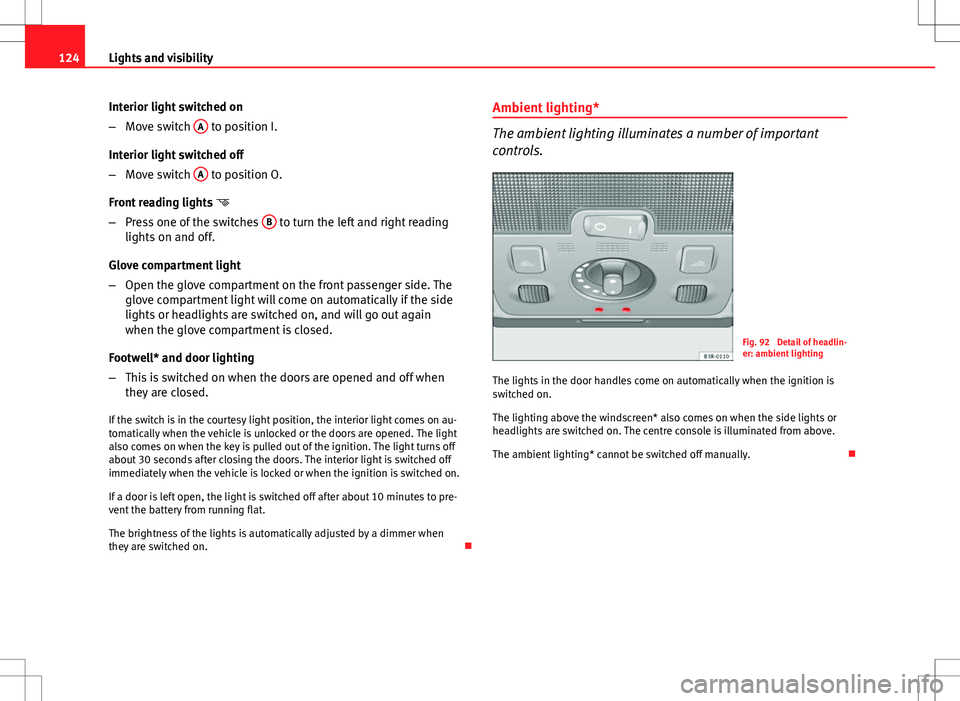
Fig. 92 Detail of headlin-
er: ambient lighting
The lights in the door handles come on automatically when the ignition is
switched on.
The lighting above the windscreen* also comes on when the side lights or
headlights are switched on. The centre console is illuminated from above.
The ambient lighting* cannot be switched off manually.
Page 140 of 317
138Seats and storage compartments
system when the vehicle is being driven temporarily by a different driver
whose settings do not need to be stored in the memory.
Note
You can also use the remote control to call up the stored settings
⇒ page 139.
Storing settings
The STOP button must be in its down position (pressed in) before
you can store the desired settings.
– Adjust the driver seat as required ⇒ page 135.
– Adjust both exterior mirrors ⇒ page 131.
– Press and hold the MEMO
button. At the same time, press one
of the memory buttons for at least a second.
– Release both buttons. The setting is now stored on the selected
memory button.
Any new setting selected automatically cancels the existing setting stored
on the memory button. It is best to begin with memory button No. 1 for the
first driver and then assign the other memory buttons to each subsequent
driver.
The seat and mirror positions are stored when the vehicle is locked with the
remote control and are assigned to the remote control key. The exterior mir-
rors adjust automatically to the previous position when you unlock the vehi-
cle; the driver seat adjusts automatically when you open the driver door.
However, this does not delete the settings stored in memory buttons 1 to 4.
These settings can be enabled at any time. Activating settings
Stored settings can be recalled using either the memory but-
tons or the remote control (remote control key).
Using the memory buttons
– If the driver door is open, press the desired memory button
briefly.
– If the driver door is closed, press and hold down the appropri-
ate memory button until the seat and exterior mirrors reach
their programmed positions.
Using the remote control
– Unlock the vehicle using the remote control and open the driver
door within the next ten minutes.
The seat adjustment will have to be called up using the memory buttons if
the driver door is not opened within 10 minutes after unlocking the vehicle
with the remote control.
WARNING
● For safety reasons, the seat must only be adjusted when the vehicle
is at a standstill. Failure to do so could result in an accident.
● In an emergency, the memory function can be stopped at any time by
pressing the STOP button or by briefly pressing any of the memory but-
tons.
Page 154 of 317

152Seats and storage compartments
●In some countries this socket is 115 volts. Therefore the socket should
have a different inverter installed at the factory. You can obtain retrofit kits
from your Technical Service. Do not connect 115 Volt appliances to the
230 Volt socket.
● The use of electrical equipment in the vicinity of the aerial in the rear
window may cause interference to the reception of stations broadcasting in
AM.
Compartments Overview
There are several storage compartments at various points in
the vehicle.
Your vehicle has the following storage compartments:
First-aid kit* Emergency triangle* Glove compartment⇒ page 152Storage compartment in the centre console On-board documentation compartment* Compartments in the door trims⇒ page 153Coat hooks⇒ page 153Rear shelf⇒ page 143Side storage compartment in luggage com-
partment
Some of the compartments listed are only provided in certain models or are
optional extras. Glove compartment
The lockable glove compartment is equipped with a light.
Fig. 125 Glove compart-
ment
Opening the glove compartment
– Pull the handle on the lid in the direction indicated (arrow)
⇒ Fig. 125 and open the lid.
Closing the glove compartment
– Close the lid and push it in until it engages.
If the side lights or headlights are switched on, the light in the glove com-
partment comes on when it is opened.
The lid has separate holders for a pen and a note pad.
WARNING
For safety reasons, the glove compartment must always be closed when
the vehicle is moving. Failure to do so could result in an accident.
Page 175 of 317

173
Driving
Releasing the handbrake
– Pull the lever up slightly and at the same time press in the re-
lease button ⇒ Fig. 141 (arrow).
– Keep the release button pressed and push the lever all the way
down ⇒
.
If you drive by mistake with the handbrake still applied, you will hear a
warning buzzer and the display will show the message: Handbrake on
The handbrake warning switches on after driving for 3 seconds at speeds
above 5 km/h.
The handbrake warning lamp lights up when the handbrake is applied
with the ignition on.
WARNING
Please note that the handbrake should be released all the way. If it is on-
ly partially released, this will cause rear brakes overheating, which can
impair the function of the brake system and could lead to an accident.
CAUTION
Once the vehicle has come to a standstill, always apply the handbrake firm-
ly and then, on a manual gearbox, engage a gear, or select P on an auto-
matic. Parking
The following points will ensure there is no risk of the vehi-
cle rolling away accidentally after it is parked:
– Use the foot brake to stop the vehicle.
– Apply the handbrake firmly.
– Switch the engine off.
– On a manual gearbox engage 1st gear or on an automatic move
the selector lever to P ⇒
.
When parking on slopes:
Turn the steering wheel so that the, if the vehicle moves, it will do so to-
wards the curb.
WARNING
● Do not leave anyone (especially children) in the vehicle when it is
locked. Locked doors could delay assistance in an emergency, potentially
putting lives at risk.
● Never leave children unsupervised in the vehicle. They could release
e.g. the handbrake or gear lever, moving the vehicle and causing an acci-
dent.
Safety FirstOperating InstructionsPractical TipsTechnical Specifications
Page 202 of 317

200Trailer towing
Where possible, operate the trailer with the maximum permitted drawbar
load on the ball joint of the towing bracket, but do not exceed the specified
limit.
Tyre pressure
Check the tyre pressures on your vehicle, and adjust for “full load” condi-
tions (refer to the sticker listing the tyre pressures on the door pillar). It may
also be necessary to adjust the tyre pressures on the trailer according to the
recommendations of the trailer manufacturer.
Exterior mirrors
Check whether you can see enough of the road behind the trailer with the
standard mirrors. If this is not the case you should have additional mirrors
fitted. The two exterior mirrors should be fitted on folding arms. Adjust the
mirrors to give sufficient rear vision.
Headlights
Before starting a journey, check the headlight beam settings with the trailer
hitched up. If necessary, alter the height of the headlight beams by means
of the headlight range control. See ⇒ page 119.
Power supply
When you remove the ignition key, the power supply to the trailer is inter-
rupted.
Removable ball joint coupling
Vehicles with a factory-fitted towing bracket are equipped with a removable
ball joint coupling. This is stored in the spare wheel well in the luggage
compartment together with the necessary fitting instructions.
Note
If you frequently tow, we recommend you also have the vehicle serviced be-
tween services. Notes on towing
Towing a trailer involves additional attention by the driver.
Weight distribution
The weight distribution of a loaded trailer with an unladen vehicle is very
unfavourable. However, if this cannot be avoided, drive extra slow to allow
for the unbalanced weight distribution.
Speed
The stability of the vehicle and trailer is reduced with increasing speed.
Therefore, it is advisable not to drive at the maximum permissible speed in
unfavourable road, weather or wind conditions. This especially applies
when driving downhill.
You should always reduce speed immediately if the trailer shows the slight-
est sign of swaying. Never try to stabilise the trailer by accelerating.
Anticipate hazards and brake in good time. If towing a trailer with an inertia
brake, first brake gently and then harder. This will prevent brake tapping by
the trailer wheels when they lock. Select a low gear in due course before go-
ing down a steep downhill. This enables you to use the engine braking to
slow down the vehicle.
Swaying and pitching can be reduced by stabiliser aids. We recommend
having stabiliser aids installed when towing trailers with a high trailer
weight. They can be purchased and installed at a Technical Service.
Reheating
When climbing long hills in hot weather with the engine running fast in low
gear, you should keep an eye on the coolant temperature gauge ⇒ page 60.
Reduce speed immediately if the needle moves to the right end of the scale.
If the temperature warning lamp in the instrument panel should start
flashing, stop the vehicle and let the engine cool down by running it at
idling speed for a few minutes.
Page 213 of 317
211
Vehicle maintenance and cleaning
CAUTION
● Never remove dirt, mud or dust if the vehicle surface is dry. Never use a
dry cloth or sponge for cleaning purposes. This could scratch the paintwork
or glass on your vehicle.
● Washing the vehicle in low temperatures: when washing the vehicle
with a hose, do not direct water into the lock cylinders or the gaps around
the doors, rear lid, or sunroof. Risk of freezing.
For the sake of the environment
To protect environment, the vehicle should be washed only in specially pro-
vided wash bays. This prevents toxic, oil-laden waste water entering the
sewerage system. In some places, washing vehicles outside wash bays is
prohibited.
Note
Do not wash the vehicle in direct sunlight.
Washing the vehicle with a high pressure cleaner
Be particularly careful when using a high pressure cleaner!
– Always observe the instructions for the high-pressure cleaner,
particularly those concerning the pressure and the spraying
distance.
– Increase the spraying distance for soft materials and painted
bumpers.
– Do not use a high pressure cleaner to remove ice or snow from
windows ⇒ page 212.
– Never use concentrated jet nozzles (“rotating jets”) ⇒
. –
After washing, avoid sudden and sharp braking. “Dry” the
brakes by braking several times ⇒ page 194.
WARNING
● Never wash tyres with a concentrated jet (“rotating nozzle”). Even at
large spraying distances and short cleaning times, visible and invisible
damage can occur to the tyres. This may cause an accident.
● Water, ice and salt on the brakes can reduce braking efficiency. Risk
of accident.
CAUTION
● Do not use water hotter than 60 °C. This could damage the car.
● To avoid damage to the vehicle, keep a sufficient distance from sensitive
materials such as flexible hoses, plastic, soundproofing material, etc. This
is also important for bumpers painted in the colour of the bodywork. The
closer the nozzle is to the surface, the greater the wear on the material.
Vehicle paint maintenance
Regular waxing protects the paintwork. You need to apply wax to your vehicle if water does not form small drops
and run off the paintwork when it is clean.
Good quality hard wax products are available at your Technical Service.
Regular wax applications help to protect the paintwork from environmental
contaminants ⇒ page 209. It is also effective in protecting against minor
scratches.
Even if a wax solution is used regularly in the vehicle washing tunnel, it is
advisable to protect the paint with a hard wax coating at least twice a year.
Safety FirstOperating InstructionsPractical TipsTechnical Specifications
Page 215 of 317
213
Vehicle maintenance and cleaning
CAUTION
● Never use warm or hot water to remove snow and ice from windows and
mirrors. This could cause the glass to crack!
● The heating element for the rear window is located on the inner side of
the window. To prevent damage, do not put stickers over the heating ele-
ments on the inside of the window.
Cleaning windscreen wiper blades
Clean wiper blades improve visibility.
1. Use a soft cloth to remove dust and dirt from the windscreen wiper blades.
2. Use window cleaner to clean the windscreen wiper blades. Use a sponge or a cloth to remove stubborn dirt.
Rubber seals maintenance
If rubber seals are well looked after, they will not freeze so
quickly. 1. Use a soft cloth to remove dust and dirt from the rubber seals.
2. Apply a specialist care product to the rubber seals.
The rubber strips on the doors, windows, bonnet and rear lid will remain
pliable and last longer if they are treated with a suitable care product (for
example silicone spray). Caring for rubber seals will also prevent premature ageing and leaks. The
doors will be easier to open. If rubber seals are well looked after, they will
not freeze so quickly in winter.
Door lock cylinders
The door lock cylinders can freeze up in winter.
To de-ice the lock cylinders you should only use spray with lubricating and
anti-corrosive properties.
Cleaning chrome parts
1. Clean chrome parts with a damp cloth.
2. Polish chrome parts with a soft, dry cloth. If this does not provide satisfying results, use a specialist chrome cleaning
product. Chrome cleaning products will remove stains from the surface.
CAUTION
To prevent scratching chrome surfaces:
● Never use an abrasive cleaning product on chrome.
● Do not clean or polish chrome parts in a sandy or dusty environment.
Steel wheel rims
– Clean steel wheel rims regularly using a separate sponge.
Safety FirstOperating InstructionsPractical TipsTechnical Specifications
Page 308 of 317

Bonnet . . . . . . . . . . . . . . . . . . . . . . . . . . . . . . . 226Closing . . . . . . . . . . . . . . . . . . . . . . . . . . . . 228
Opening . . . . . . . . . . . . . . . . . . . . . . . . . . . 227
Releasing . . . . . . . . . . . . . . . . . . . . . . . . . . 226
Brake light Failure control . . . . . . . . . . . . . . . . . . . . . . . . 81
Brake pads . . . . . . . . . . . . . . . . . . . . . . . . . . . . 194
Brakes . . . . . . . . . . . . . . . . . . . . . . . . . . . . . . . . 194 Brake assist system . . . . . . . . . . . . . . . . . . 189
Brake fluid . . . . . . . . . . . . . . . . . . . . . . . . . 236
Worn brake pads . . . . . . . . . . . . . . . . . . . . . 82
Brake servo . . . . . . . . . . . . . . . . . . . . . . . . . . . . 194
Brake system Brakes . . . . . . . . . . . . . . . . . . . . . . . . . . . . . 192
Brake servo . . . . . . . . . . . . . . . . . . . . . . . . . 192
Malfunction . . . . . . . . . . . . . . . . . . . . . . . . . 78
Braking distance . . . . . . . . . . . . . . . . . . . . . . . 194
Bulb change general notes . . . . . . . . . . . . . . . . . . . . . . . 264
C
Car care Exterior . . . . . . . . . . . . . . . . . . . . . . . . . . . . 210
Catalytic converter . . . . . . . . . . . . . . . . . . . . . . 195
CCS . . . . . . . . . . . . . . . . . . . . . . . . . . . . . . . . . . 176
Central locking . . . . . . . . . . . . . . . . . . . . . . . . . . 99 Manual locking . . . . . . . . . . . . . . . . . . . . . . 103
Sunroof: opening and closing . . . . . . . . . . 113
Central locking system Anti-theft security system . . . . . . . . . . . . . 101
Locking . . . . . . . . . . . . . . . . . . . . . . . . . . . . 100 Locking and unlocking the vehicle from in-
side . . . . . . . . . . . . . . . . . . . . . . . . . . . . . 101
Opening and closing the windows . . . . . . 111
Rear lid . . . . . . . . . . . . . . . . . . . . . . . . . . . . 104
Security central locking . . . . . . . . . . . . . . . 102
Switch on the driver door . . . . . . . . . . . . . . 101
Unlocking . . . . . . . . . . . . . . . . . . . . . . . . . . 100
Cetane number . . . . . . . . . . . . . . . . . . . . . . . . . 225
Changing tail light bulbs . . . . . . . . . . . . . . . . . 275
Changing the main headlight bulb Main headlight . . . . . . . . . . . . . . . . . . . . . . 268
Changing the main headlight bulbs Dipped beam headlight . . . . . . . . . . . . . . . 269
Changing the tail lights Luggage compartment lights . . . . . . . . . . 284
Changing windscreen wiper blades . . . . . . . . 235
Chassis number . . . . . . . . . . . . . . . . . . . . . . . . 293
Checklist Seat upholstery . . . . . . . . . . . . . . . . . . . . . 216
Childproof lock Rear doors . . . . . . . . . . . . . . . . . . . . . . . . . . 105
Child safety . . . . . . . . . . . . . . . . . . . . . . . . . . . . . 46
Child safety seat ISOFIX system . . . . . . . . . . . . . . . . . . . . . . . . 52
Child seat . . . . . . . . . . . . . . . . . . . . . . . . . . . . . . 48 Categorisation in groups . . . . . . . . . . . . . . . 48
Group 1 . . . . . . . . . . . . . . . . . . . . . . . . . . . . . 49
Group 2 . . . . . . . . . . . . . . . . . . . . . . . . . . . . . 49
Group 3 . . . . . . . . . . . . . . . . . . . . . . . . . . . . . 49
Groups 0 and 0+ . . . . . . . . . . . . . . . . . . . . . . 48
Safety notes . . . . . . . . . . . . . . . . . . . . . . . . . 46
Securing . . . . . . . . . . . . . . . . . . . . . . . . . . . . 51 Child seats
on the front passenger seat . . . . . . . . . . . . . 29
Cigarette lighter . . . . . . . . . . . . . . . . . . . . . . . . 148
Cleaning alloy wheel rims . . . . . . . . . . . . . . . . 214
Cleaning chrome . . . . . . . . . . . . . . . . . . . . . . . 213
Cleaning engine compartment . . . . . . . . . . . . 215
Cleaning steel wheel rims . . . . . . . . . . . . . . . . 213
Cleaning windows . . . . . . . . . . . . . . . . . . . . . . 212
Clock, setting . . . . . . . . . . . . . . . . . . . . . . . . . . . 61
Coat hooks . . . . . . . . . . . . . . . . . . . . . . . . . . . . 153
Cockpit . . . . . . . . . . . . . . . . . . . . . . . . . . . . . . . . 57 Overview . . . . . . . . . . . . . . . . . . . . . . . . . . . . 57
Compartments . . . . . . . . . . . . . . . . . . . . . . . . . 152 In the door trim . . . . . . . . . . . . . . . . . . . . . . 153
In the front seats . . . . . . . . . . . . . . . . . . . . 154
Coolant Checking the level . . . . . . . . . . . . . . . . . . . 232
Coolant fluid Topping up . . . . . . . . . . . . . . . . . . . . . . . . . 233
Cooling system Coolant temperature gauge . . . . . . . . . . . . . 60
Malfunction . . . . . . . . . . . . . . . . . . . . . . . . . 79
Correct adjustment of front seat head re- straints . . . . . . . . . . . . . . . . . . . . . . . . . . . . . . . 13
Correct adjustment of rear seat head restraints In-use and non-use positions . . . . . . . . . . . 14
Correct sitting position Front passenger . . . . . . . . . . . . . . . . . . . . . . 12
Incorrect sitting position . . . . . . . . . . . . . . . 14
Cruise control system . . . . . . . . . . . . . . . . . . . . 176 Adjust the stored speed . . . . . . . . . . . . . . . 178
Deactivating . . . . . . . . . . . . . . . . . . . . . . . . 179
306 Index
Page 309 of 317

Deactivating temporarily . . . . . . . . . . . . . . 178
Setting the speed . . . . . . . . . . . . . . . . . . . . 177
Cruise speed . . . . . . . . . . . . . . . . . . . . . . . . . . . 176
Curtain airbags . . . . . . . . . . . . . . . . . . . . . . . . . . 41 Description . . . . . . . . . . . . . . . . . . . . . . . . . . 41
Operation . . . . . . . . . . . . . . . . . . . . . . . . . . . 42
Safety notes . . . . . . . . . . . . . . . . . . . . . . . . . 42
D Danger of fitting a child seat on the front pas- senger seat . . . . . . . . . . . . . . . . . . . . . . . . . . . 29
Dash panel cleaning . . . . . . . . . . . . . . . . . . . . 219
Data entry control . . . . . . . . . . . . . . . . . . . . . . . . 90
Date display . . . . . . . . . . . . . . . . . . . . . . . . . . . . 61
Daytime running lights . . . . . . . . . . . . . . . . . . 120
Deactivating front passenger airbag Safety notes . . . . . . . . . . . . . . . . . . . . . . . . . 45
Deactivating the airbag Front passenger airbag . . . . . . . . . . . . . . . . 44
Diesel . . . . . . . . . . . . . . . . . . . . . . . . . . . . . . . . 225
Diesel engine Winter driving . . . . . . . . . . . . . . . . . . . . . . . 226
Diesel engine particulate filter . . . . . . . . . . . . 196
Diesel particulate filter . . . . . . . . . . . . . . . . . . . 81 Engine oil . . . . . . . . . . . . . . . . . . . . . . . . . . 228
Digital clock . . . . . . . . . . . . . . . . . . . . . . . . . . . . 61
Dipped beam headlights . . . . . . . . . . . . . . . . . 115
DIS Average fuel consumption . . . . . . . . . . . . . . 86
Average speed . . . . . . . . . . . . . . . . . . . . . . . 86 Driving time . . . . . . . . . . . . . . . . . . . . . . . . . 86
Instantaneous fuel consumption . . . . . . . . 86
Disposal Airbags . . . . . . . . . . . . . . . . . . . . . . . . . . . . . 30
Seat belt tensioners . . . . . . . . . . . . . . . . . . . 27
Distance covered . . . . . . . . . . . . . . . . . . . . . . . . 87
Distance to empty . . . . . . . . . . . . . . . . . . . . 74, 86
Door and rear lid warning . . . . . . . . . . . . . . . . . 75
Door lock cylinders . . . . . . . . . . . . . . . . . . . . . . 213
Doors Childproof lock . . . . . . . . . . . . . . . . . . . . . . 105
Locking the doors manually if the centrallocking fails to work . . . . . . . . . . . . . . . . 103
Driver see Correct sitting position . . . . . . . 10, 11, 12
Driver information system . . . . . . . . . . . . . . . . . 72 Auto-check system . . . . . . . . . . . . . . . . . . . . 76
CD, radio and telephone display . . . . . . . . . 73
Door and rear lid warning . . . . . . . . . . . . . . 75
Driver messages . . . . . . . . . . . . . . . . . . . . . . 77
Handbrake warning . . . . . . . . . . . . . . . . . . . 77
Menu display . . . . . . . . . . . . . . . . . . . . . . . . 89
Onboard computer . . . . . . . . . . . . . . . . . . . . 86
Outside temperature display . . . . . . . . . . . . 73
Red symbols . . . . . . . . . . . . . . . . . . . . . . . . . 78
Speed warning . . . . . . . . . . . . . . . . . . . . . . . 83
Warning messages . . . . . . . . . . . . . . . . . . . . 77
Yellow symbols . . . . . . . . . . . . . . . . . . . . . . . 80
Driver messages . . . . . . . . . . . . . . . . . . . . . . . . . 77
driver seat Assigning the key to the seat . . . . . . . . . . 139 Driver seat
Activating stored settings . . . . . . . . . . . . . 138
With memory . . . . . . . . . . . . . . . . . . . . . . . 137
Driving Driving abroad . . . . . . . . . . . . . . . . . . . . . . 198
Economically / Environmentally friendly . 196
Driving abroad . . . . . . . . . . . . . . . . . . . . . . . . . 198 Headlights . . . . . . . . . . . . . . . . . . . . . . . . . 198
Driving safety . . . . . . . . . . . . . . . . . . . . . . . . . . . . 9
DRP see Dynamic gear control programme . . . 184
Dynamic gear control programme . . . . . . . . . . 184
E
Economical driving . . . . . . . . . . . . . . . . . . . . . . 196
Electric windows . . . . . . . . . . . . . . . . . . . . . . . . 109 Central locking system . . . . . . . . . . . . . . . . 111
Possible malfunctions . . . . . . . . . . . . . . . . 111
Rear doors . . . . . . . . . . . . . . . . . . . . . . . . . . 110
Switches on the driver door . . . . . . . . . . . . 110
Switch on front passenger's door . . . . . . . 110
Electronic differential lock How it works . . . . . . . . . . . . . . . . . . . . . . . . 190
Electronic immobiliser . . . . . . . . . . . . . . . . . . . . 99
Electronic Stability Control . . . . . . . . . . . . . . . . 69 description . . . . . . . . . . . . . . . . . . . . . . . . . 165
Operation . . . . . . . . . . . . . . . . . . . . . . . . . . 188
warning lamp . . . . . . . . . . . . . . . . . . . . . . . 166
307
Index
Page 311 of 317

Horn . . . . . . . . . . . . . . . . . . . . . . . . . . . . . . . . . . 57
How to jump start description . . . . . . . . . . . . . 286
I
Identification number . . . . . . . . . . . . . . . . . . . 293
Identification plate . . . . . . . . . . . . . . . . . . . . . . 293
Ignition key Safety interlock . . . . . . . . . . . . . . . . . . . . . . 166
Ignition lock . . . . . . . . . . . . . . . . . . . . . . . . . . . 166
Indicator lamps Glow plug system . . . . . . . . . . . . . . . . . . . . . 70
Main beam headlights . . . . . . . . . . . . . . . . . 70
Indicator lamps - overview . . . . . . . . . . . . . . . . . 65
Instruments Lighting . . . . . . . . . . . . . . . . . . . . . . . . . 62, 119
Interior lights Ambient lighting . . . . . . . . . . . . . . . . . . . . 124
Front . . . . . . . . . . . . . . . . . . . . . . . . . . . . . . 123
Luggage compartment . . . . . . . . . . . . . . . . 125
Rear . . . . . . . . . . . . . . . . . . . . . . . . . . . . . . . 125
Interior mirror With manual anti-dazzle setting . . . . . . . . 130
Interior monitoring . . . . . . . . . . . . . . . . . . . . . . 108
Intermittent wipe . . . . . . . . . . . . . . . . . . . . . . . 128
ISOFIX . . . . . . . . . . . . . . . . . . . . . . . . . . . . . . . . . 52
J
Jack . . . . . . . . . . . . . . . . . . . . . . . . . . . . . . 251, 256
Jump-starting . . . . . . . . . . . . . . . . . . . . . . . . . . 285
Jump leads . . . . . . . . . . . . . . . . . . . . . . . . . . . . 285 K
Keys . . . . . . . . . . . . . . . . . . . . . . . . . . . . . . . . . . . 97 Air conditioner settings . . . . . . . . . . . . . . . 163
Battery . . . . . . . . . . . . . . . . . . . . . . . . . . . . . . 98
Remote control key . . . . . . . . . . . . . . . . . . . 105
Settings for the driver seat . . . . . . . . . . . . 139
Kick-down feature . . . . . . . . . . . . . . . . . . . . . . . 184
L
Lamps Cruise control . . . . . . . . . . . . . . . . . . . . . . . . 67
Cruise speed . . . . . . . . . . . . . . . . . . . . . . . . . 67
Lighting . . . . . . . . . . . . . . . . . . . . . . . . . . . . . . . 115 Instruments . . . . . . . . . . . . . . . . . . . . . 62, 119
Lights Adaptive headlights . . . . . . . . . . . . . . . . . . 121
Automatic headlight control . . . . . . . . . . . 115
Coming home function . . . . . . . . . . . . . . . 117
Cornering light . . . . . . . . . . . . . . . . . . . . . . 121
Dipped beam headlights faulty . . . . . . . . . . 83
Dynamic headlight range control . . . . . . . 120
Headlight flasher . . . . . . . . . . . . . . . . . . . . 123
Leaving home function . . . . . . . . . . . . . . . 117
Parking light . . . . . . . . . . . . . . . . . . . . . . . . 123
Reverse lights faulty . . . . . . . . . . . . . . . . . . . 83
Switching on and off . . . . . . . . . . . . . . . . . 115
Xenon lights . . . . . . . . . . . . . . . . . . . . . . . . 120
Load compartment in the luggage compart- ment
see Loading the luggage compartment . . . 16
Loading the luggage compartment . . . . . . . . . . 16 Locking the doors manually if the central lock-
ing fails to work
Locking the doors manually if the centrallocking fails to work . . . . . . . . . . . . . . . . 103
Locks . . . . . . . . . . . . . . . . . . . . . . . . . . . . . . . . . 213
Long periods of non-use Battery . . . . . . . . . . . . . . . . . . . . . . . . . . . . . 237
Luggage compartment . . . . . . . . . . . . . . . . . . . 142 Extending . . . . . . . . . . . . . . . . . . . . . . . . . . 143
Light . . . . . . . . . . . . . . . . . . . . . . . . . . . . . . 125
Loading . . . . . . . . . . . . . . . . . . . . . . . . . . . . 142
Ski bag . . . . . . . . . . . . . . . . . . . . . . . . . . . . 144
see also Loading the luggage compartment . .16
Luggage rack see Roof rack . . . . . . . . . . . . . . . . . . . . . . . 145
M
Main beam headlights . . . . . . . . . . . . . . . 115, 122
Maintenance Airbags . . . . . . . . . . . . . . . . . . . . . . . . . . . . . 30
Maintenance and cleaning . . . . . . . . . . . . . . . 209
Manual gearbox . . . . . . . . . . . . . . . . . . . . . . . . 179
Mirrors Activating stored settings . . . . . . . . . . . . . 138
Automatic exterior mirror adjustment . . . . 137
Heated exterior mirrors . . . . . . . . . . . . . . . 131
Storing settings . . . . . . . . . . . . . . . . . . . . . 138
Vanity mirrors . . . . . . . . . . . . . . . . . . . . . . . 126
Mobile phones and two-way radios . . . . . . . . 222
multitronic® . . . . . . . . . . . . . . . . . . . . . . . . . . . 180 Driving . . . . . . . . . . . . . . . . . . . . . . . . . . . . . 181
309
Index