instrument panel Seat Ibiza 5D 2011 Owner's manual
[x] Cancel search | Manufacturer: SEAT, Model Year: 2011, Model line: Ibiza 5D, Model: Seat Ibiza 5D 2011Pages: 278, PDF Size: 3.83 MB
Page 5 of 278
Table of Contents
Manual structure . . . . . . . . . . . . . . . . . . . . 5
Content . . . . . . . . . . . . . . . . . . . . . . . . . . . . . . . . 6
Safety First . . . . . . . . . . . . . . . . . . . . . . . . . . . . 7
Safe driving . . . . . . . . . . . . . . . . . . . . . . . . . . . . . . . 7
Brief introduction . . . . . . . . . . . . . . . . . . . . . . . . . 7
Proper sitting position for occupants . . . . . . . . . 10
Pedal area . . . . . . . . . . . . . . . . . . . . . . . . . . . . . . . 16
Storing objects . . . . . . . . . . . . . . . . . . . . . . . . . . . 16
Seat belts . . . . . . . . . . . . . . . . . . . . . . . . . . . . . . . . . 18
Brief introduction . . . . . . . . . . . . . . . . . . . . . . . . . 18
Why wear seat belts? . . . . . . . . . . . . . . . . . . . . . . 20
Seat belts . . . . . . . . . . . . . . . . . . . . . . . . . . . . . . . 24
Seat belt tensioners* . . . . . . . . . . . . . . . . . . . . . . 27
Airbag system . . . . . . . . . . . . . . . . . . . . . . . . . . . . . 29
Brief introduction . . . . . . . . . . . . . . . . . . . . . . . . . 29
Front airbags . . . . . . . . . . . . . . . . . . . . . . . . . . . . . 33
Side airbags . . . . . . . . . . . . . . . . . . . . . . . . . . . . . 37
Deactivating airbags* . . . . . . . . . . . . . . . . . . . . . . 40
Child safety . . . . . . . . . . . . . . . . . . . . . . . . . . . . . . . 42
Brief introduction . . . . . . . . . . . . . . . . . . . . . . . . . 42
Child seats . . . . . . . . . . . . . . . . . . . . . . . . . . . . . . . 44
Securing child seats . . . . . . . . . . . . . . . . . . . . . . . 47
Operating Instructions . . . . . . . . . . . . . 51
Cockpit . . . . . . . . . . . . . . . . . . . . . . . . . . . . . . . . . . . 51
Overview . . . . . . . . . . . . . . . . . . . . . . . . . . . . . . . . 51
Instruments . . . . . . . . . . . . . . . . . . . . . . . . . . . . . . 53 LPG system* . . . . . . . . . . . . . . . . . . . . . . . . . . . . . 54
Digital instrument panel display . . . . . . . . . . . . . 55
Warning lamps . . . . . . . . . . . . . . . . . . . . . . . . . . . 61
Steering column controls* . . . . . . . . . . . . . . . . . 74
General information . . . . . . . . . . . . . . . . . . . . . . . 74
Audio Control . . . . . . . . . . . . . . . . . . . . . . . . . . . . . 75
Audio + Telephone Control . . . . . . . . . . . . . . . . . . 76
Unlocking and locking . . . . . . . . . . . . . . . . . . . . . 77
Central locking . . . . . . . . . . . . . . . . . . . . . . . . . . . 77
Keys . . . . . . . . . . . . . . . . . . . . . . . . . . . . . . . . . . . . 82
Radio frequency remote control* . . . . . . . . . . . . . 83
Anti-theft alarm system* . . . . . . . . . . . . . . . . . . . 85
Tailgate . . . . . . . . . . . . . . . . . . . . . . . . . . . . . . . . . 88
Windows . . . . . . . . . . . . . . . . . . . . . . . . . . . . . . . . 90
Panorama tilting sunroof* . . . . . . . . . . . . . . . . . . 93
Lights and visibility . . . . . . . . . . . . . . . . . . . . . . . . 95
Lights . . . . . . . . . . . . . . . . . . . . . . . . . . . . . . . . . . . 95
Interior lights . . . . . . . . . . . . . . . . . . . . . . . . . . . . . 102
Visibility . . . . . . . . . . . . . . . . . . . . . . . . . . . . . . . . . 103
Windscreen wipers . . . . . . . . . . . . . . . . . . . . . . . . 104
Rear view mirrors . . . . . . . . . . . . . . . . . . . . . . . . . . 107
Seats and storage compartments . . . . . . . . . . 111
The importance of correct seat adjustment . . . . . 111
Head restraints . . . . . . . . . . . . . . . . . . . . . . . . . . . 112
Front seats . . . . . . . . . . . . . . . . . . . . . . . . . . . . . . . 114
Rear seats . . . . . . . . . . . . . . . . . . . . . . . . . . . . . . . 116
Storage compartment . . . . . . . . . . . . . . . . . . . . . . 118
Ashtrays, cigarette lighter and power socket . . . 121
First-aid kit, warning triangle, fire extinguisher* 123
Luggage compartment . . . . . . . . . . . . . . . . . . . . . 124
Air conditioning . . . . . . . . . . . . . . . . . . . . . . . . . . . 126
Heating . . . . . . . . . . . . . . . . . . . . . . . . . . . . . . . . . 126
Air conditioning* . . . . . . . . . . . . . . . . . . . . . . . . . . 129 Climatronic . . . . . . . . . . . . . . . . . . . . . . . . . . . . . . 132
General notes . . . . . . . . . . . . . . . . . . . . . . . . . . . . 134
Driving . . . . . . . . . . . . . . . . . . . . . . . . . . . . . . . . . . . . 136
Steering . . . . . . . . . . . . . . . . . . . . . . . . . . . . . . . . . 136
Safety . . . . . . . . . . . . . . . . . . . . . . . . . . . . . . . . . . . 137
Ignition lock . . . . . . . . . . . . . . . . . . . . . . . . . . . . . . 137
Starting and stopping the engine . . . . . . . . . . . . 139
Start-Stop function* . . . . . . . . . . . . . . . . . . . . . . . 142
Manual gearbox . . . . . . . . . . . . . . . . . . . . . . . . . . 145
Automatic gearbox* . . . . . . . . . . . . . . . . . . . . . . . 146
Handbrake . . . . . . . . . . . . . . . . . . . . . . . . . . . . . . . 153
Acoustic parking aid system* . . . . . . . . . . . . . . . 155
Cruise speed* (Cruise control system) . . . . . . . . 158
Practical Tips . . . . . . . . . . . . . . . . . . . . . . . . . 162
Intelligent technology . . . . . . . . . . . . . . . . . . . . . 162
Brakes . . . . . . . . . . . . . . . . . . . . . . . . . . . . . . . . . . 162
Anti-lock brake system and traction control ABS 163
Electronic Stability Programme (ESP)* . . . . . . . . 164
Driving and the environment . . . . . . . . . . . . . . . 167
Running-in . . . . . . . . . . . . . . . . . . . . . . . . . . . . . . . 167
Exhaust gas purification system . . . . . . . . . . . . . 168
Economical and environmentally friendly driving 170
Driving abroad . . . . . . . . . . . . . . . . . . . . . . . . . . . . 172
Trailer towing . . . . . . . . . . . . . . . . . . . . . . . . . . . . . 173
Vehicle maintenance and cleaning . . . . . . . . . 175
General notes . . . . . . . . . . . . . . . . . . . . . . . . . . . . 175
Care of the vehicle exterior . . . . . . . . . . . . . . . . . . 176
Vehicle interior maintenance . . . . . . . . . . . . . . . . 181
3
Table of Contents
Page 21 of 278
19
Seat belts
The warning lamp in the instrument panel lights up 1)
if the driver or pas-
senger seat belt is not fastened 1)
when the ignition is switched on. More-
over, an acoustic signal 1)
is heard on exceeding 25 km/h. This acoustic sig-
nal stops when the seat belt is fastened.
The warning lamp* is switched off if the driver seat belt is fastened while
the ignition is switched on.
1)
Depending on the model version
Safety FirstOperating InstructionsPractical TipsTechnical Specifications
Page 35 of 278
33
Airbag system
Front airbags
Description of front airbags
The airbag system is not a substitute for the seat belts.
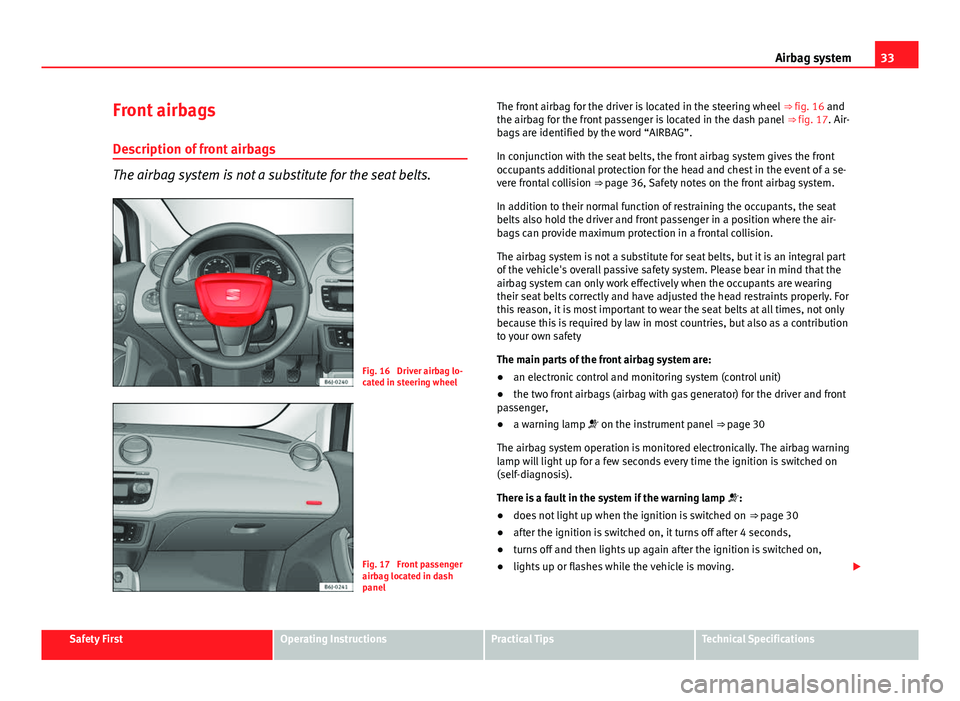
Fig. 16 Driver airbag lo-
cated in steering wheel
Fig. 17 Front passenger
airbag located in dash
panel The front airbag for the driver is located in the steering wheel
⇒ fig. 16 and
the airbag for the front passenger is located in the dash panel ⇒ fig. 17. Air-
bags are identified by the word “AIRBAG”.
In conjunction with the seat belts, the front airbag system gives the front
occupants additional protection for the head and chest in the event of a se-
vere frontal collision ⇒ page 36, Safety notes on the front airbag system.
In addition to their normal function of restraining the occupants, the seat
belts also hold the driver and front passenger in a position where the air-
bags can provide maximum protection in a frontal collision.
The airbag system is not a substitute for seat belts, but it is an integral part
of the vehicle's overall passive safety system. Please bear in mind that the
airbag system can only work effectively when the occupants are wearing
their seat belts correctly and have adjusted the head restraints properly. For
this reason, it is most important to wear the seat belts at all times, not only
because this is required by law in most countries, but also as a contribution
to your own safety
The main parts of the front airbag system are:
● an electronic control and monitoring system (control unit)
● the two front airbags (airbag with gas generator) for the driver and front
passenger,
● a warning lamp on the instrument panel ⇒ page 30
The airbag system operation is monitored electronically. The airbag warning
lamp will light up for a few seconds every time the ignition is switched on
(self-diagnosis).
There is a fault in the system if the warning lamp :
● does not light up when the ignition is switched on ⇒ page 30
● after the ignition is switched on, it turns off after 4 seconds,
● turns off and then lights up again after the ignition is switched on,
● lights up or flashes while the vehicle is moving.
Safety FirstOperating InstructionsPractical TipsTechnical Specifications
Page 39 of 278
37
Airbag system
Side airbags Description of side airbags
The airbag system is not a substitute for the seat belts.
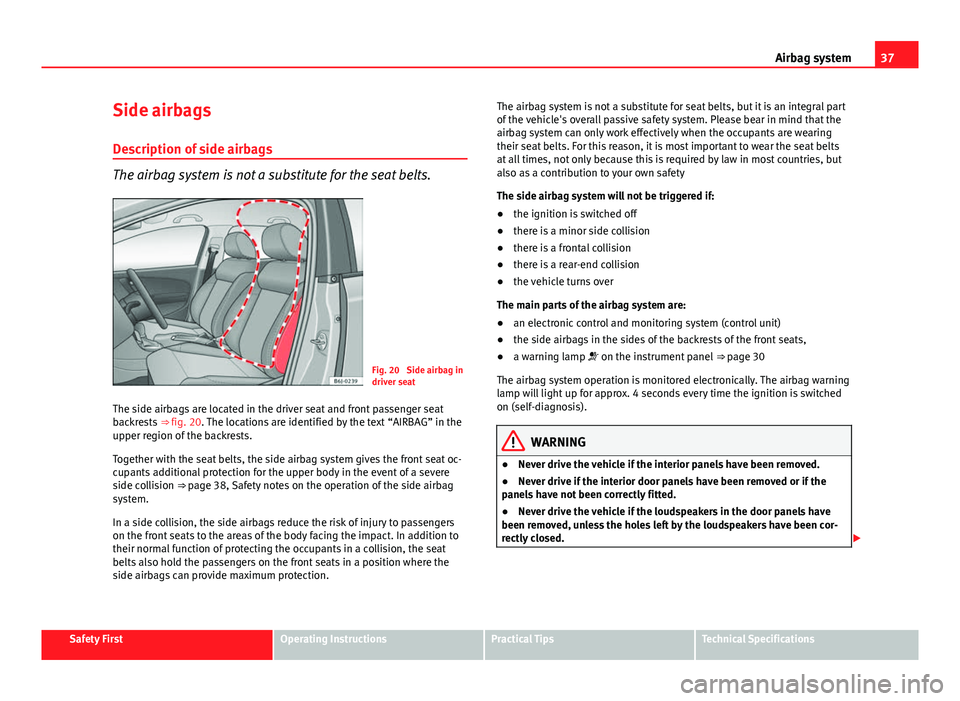
Fig. 20 Side airbag in
driver seat
The side airbags are located in the driver seat and front passenger seat
backrests ⇒ fig. 20. The locations are identified by the text “AIRBAG” in the
upper region of the backrests.
Together with the seat belts, the side airbag system gives the front seat oc-
cupants additional protection for the upper body in the event of a severe
side collision ⇒ page 38, Safety notes on the operation of the side airbag system.
In a side collision, the side airbags reduce the risk of injury to passengers
on the front seats to the areas of the body facing the impact. In addition to
their normal function of protecting the occupants in a collision, the seat
belts also hold the passengers on the front seats in a position where the
side airbags can provide maximum protection. The airbag system is not a substitute for seat belts, but it is an integral part
of the vehicle's overall passive safety system. Please bear in mind that the
airbag system can only work effectively when the occupants are wearing
their seat belts. For this reason, it is most important to wear the seat belts
at all times, not only because this is required by law in most countries, but
also as a contribution to your own safety
The side airbag system will not be triggered if:
●
the ignition is switched off
● there is a minor side collision
● there is a frontal collision
● there is a rear-end collision
● the vehicle turns over
The main parts of the airbag system are:
● an electronic control and monitoring system (control unit)
● the side airbags in the sides of the backrests of the front seats,
● a warning lamp on the instrument panel ⇒ page 30
The airbag system operation is monitored electronically. The airbag warning
lamp will light up for approx. 4 seconds every time the ignition is switched
on (self-diagnosis).
WARNING
● Never drive the vehicle if the interior panels have been removed.
● Never drive if the interior door panels have been removed or if the
panels have not been correctly fitted.
● Never drive the vehicle if the loudspeakers in the door panels have
been removed, unless the holes left by the loudspeakers have been cor-
rectly closed.
Safety FirstOperating InstructionsPractical TipsTechnical Specifications
Page 53 of 278
51
Cockpit
Operating Instructions Cockpit
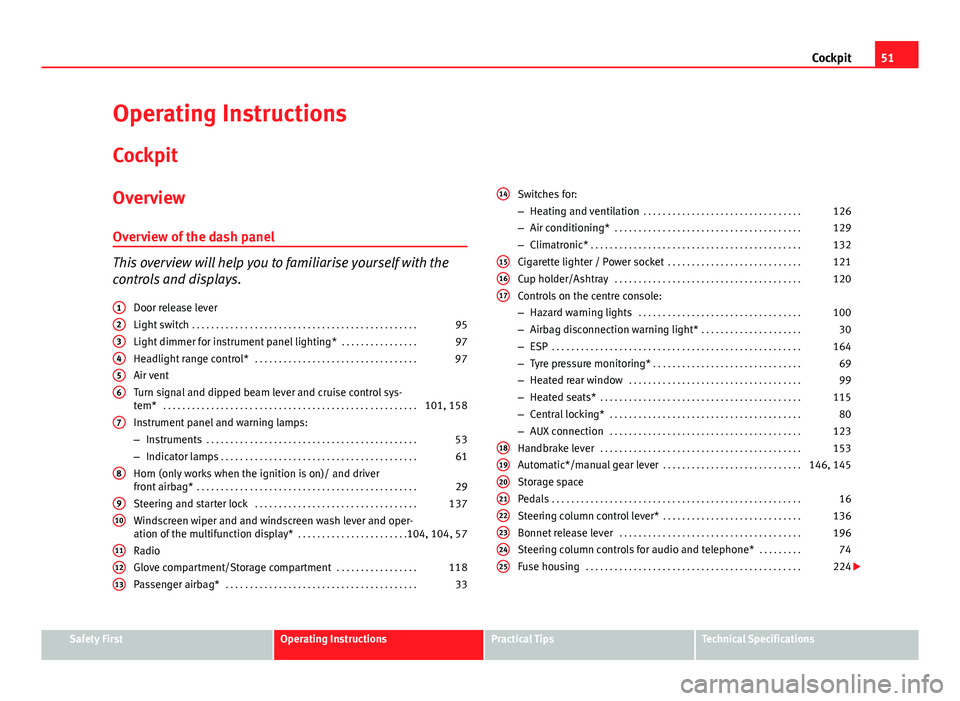
Overview Overview of the dash panel
This overview will help you to familiarise yourself with the
controls and displays. Door release lever
Light switch . . . . . . . . . . . . . . . . . . . . . . . . . . . . . . . . . . . . . . . . . . . . . . . 95
Light dimmer for instrument panel lighting* . . . . . . . . . . . . . . . .97
Headlight range control* . . . . . . . . . . . . . . . . . . . . . . . . . . . . . . . . . . 97
Air vent
Turn signal and dipped beam lever and cruise control sys-
tem* . . . . . . . . . . . . . . . . . . . . . . . . . . . . . . . . . . . . . . . . . . . . . . . . . . . . . 101, 158
Instrument panel and warning lamps:
– Instruments . . . . . . . . . . . . . . . . . . . . . . . . . . . . . . . . . . . . . . . . . . . . 53
– Indicator lamps . . . . . . . . . . . . . . . . . . . . . . . . . . . . . . . . . . . . . . . . . 61
Horn (only works when the ignition is on)/ and driver
front airbag* . . . . . . . . . . . . . . . . . . . . . . . . . . . . . . . . . . . . . . . . . . . . . . 29
Steering and starter lock . . . . . . . . . . . . . . . . . . . . . . . . . . . . . . . . . . 137
Windscreen wiper and and windscreen wash lever and oper-
ation of the multifunction display* . . . . . . . . . . . . . . . . . . . . . . . . .104, 104, 57
Radio
Glove compartment/Storage compartment . . . . . . . . . . . . . . . . .118
Passenger airbag* . . . . . . . . . . . . . . . . . . . . . . . . . . . . . . . . . . . . . . . . 33
1
23456
7
8
910
111213
Switches for:
–
Heating and ventilation . . . . . . . . . . . . . . . . . . . . . . . . . . . . . . . . . 126
– Air conditioning* . . . . . . . . . . . . . . . . . . . . . . . . . . . . . . . . . . . . . . . 129
– Climatronic* . . . . . . . . . . . . . . . . . . . . . . . . . . . . . . . . . . . . . . . . . . . . 132
Cigarette lighter / Power socket . . . . . . . . . . . . . . . . . . . . . . . . . . . . 121
Cup holder/Ashtray . . . . . . . . . . . . . . . . . . . . . . . . . . . . . . . . . . . . . . . 120
Controls on the centre console:
– Hazard warning lights . . . . . . . . . . . . . . . . . . . . . . . . . . . . . . . . . . 100
– Airbag disconnection warning light* . . . . . . . . . . . . . . . . . . . . .30
– ESP . . . . . . . . . . . . . . . . . . . . . . . . . . . . . . . . . . . . . . . . . . . . . . . . . . . . 164
– Tyre pressure monitoring* . . . . . . . . . . . . . . . . . . . . . . . . . . . . . . . 69
– Heated rear window . . . . . . . . . . . . . . . . . . . . . . . . . . . . . . . . . . . . 99
– Heated seats* . . . . . . . . . . . . . . . . . . . . . . . . . . . . . . . . . . . . . . . . . . 115
– Central locking* . . . . . . . . . . . . . . . . . . . . . . . . . . . . . . . . . . . . . . . . 80
– AUX connection . . . . . . . . . . . . . . . . . . . . . . . . . . . . . . . . . . . . . . . . 123
Handbrake lever . . . . . . . . . . . . . . . . . . . . . . . . . . . . . . . . . . . . . . . . . . 153
Automatic*/manual gear lever . . . . . . . . . . . . . . . . . . . . . . . . . . . . . 146, 145
Storage space
Pedals . . . . . . . . . . . . . . . . . . . . . . . . . . . . . . . . . . . . . . . . . . . . . . . . . . . . 16
Steering column control lever* . . . . . . . . . . . . . . . . . . . . . . . . . . . . . 136
Bonnet release lever . . . . . . . . . . . . . . . . . . . . . . . . . . . . . . . . . . . . . . 196
Steering column controls for audio and telephone* . . . . . . . . .74
Fuse housing . . . . . . . . . . . . . . . . . . . . . . . . . . . . . . . . . . . . . . . . . . . . . 224
14
151617
1819202122232425
Safety FirstOperating InstructionsPractical TipsTechnical Specifications
Page 55 of 278
53
Cockpit
Instruments Instrument overview
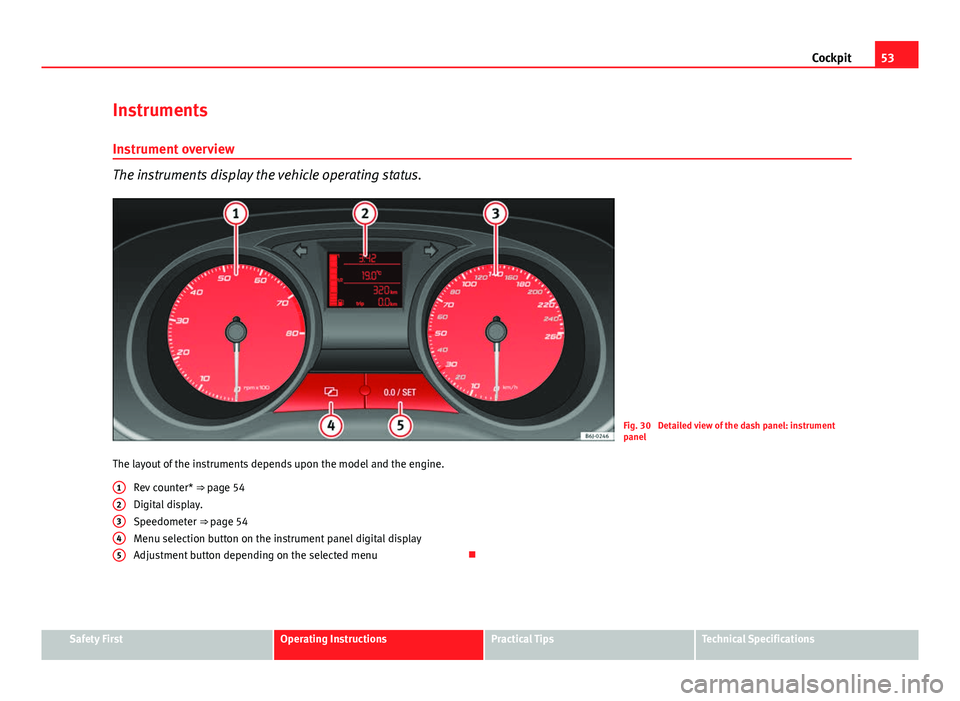
The instruments display the vehicle operating status.
Fig. 30 Detailed view of the dash panel: instrument
panel
The layout of the instruments depends upon the model and the engine. Rev counter* ⇒ page 54
Digital display.
Speedometer ⇒ page 54
Menu selection button on the instrument panel digital display
Adjustment button depending on the selected menu
12345
Safety FirstOperating InstructionsPractical TipsTechnical Specifications
Page 56 of 278
54Cockpit
Rev counter
The rev counter displays the engine speed in revolutions per
minute.
The start of the red zone ⇒ fig. 30 1
indicates the maximum engine speed
operating at service temperature. However, it is advisable to change up a in-
to a higher gear, move the selector lever to D or lift your foot off the acceler-
ator before the needle reaches the red zone.
CAUTION
The rev counter needle must never enter the red zone on the scale. Risk of
engine damage.
For the sake of the environment
Changing up into higher gears sooner, following the recommended gear in-
dications ⇒ fig. 33 will help you to reduce fuel consumption, emissions and
also engine noise.
Speedometer
The speedometer is equipped with a digital odometer and a trip recorder, in
addition to a service intervals display.
During the running-in period, the instructions shown on ⇒ page 167
should be followed. LPG system*
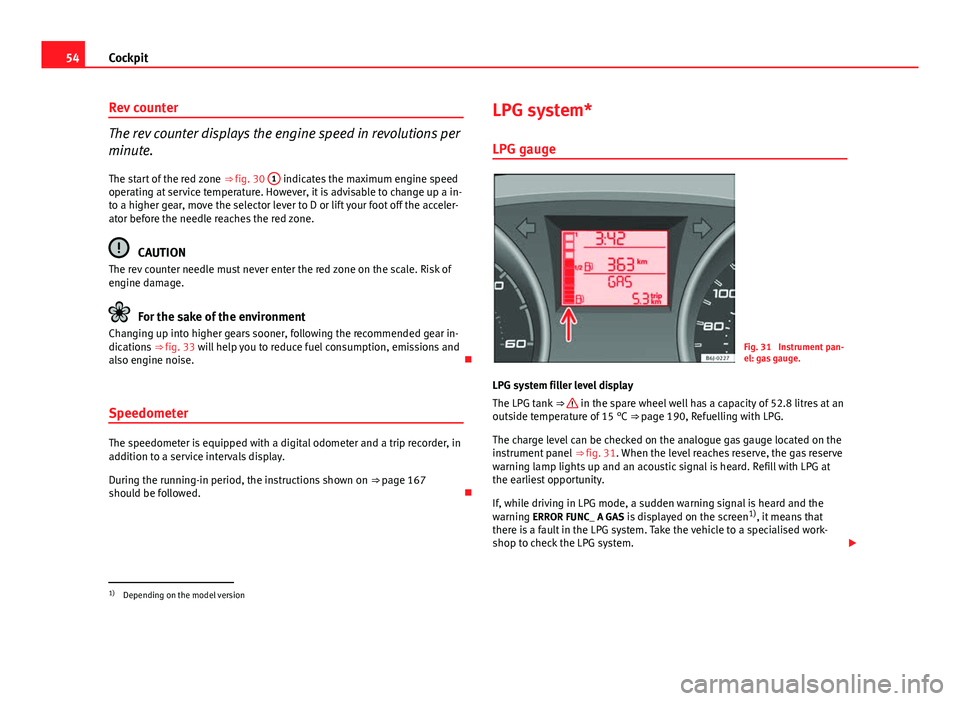
LPG gauge
Fig. 31 Instrument pan-
el: gas gauge.
LPG system filler level display
The LPG tank ⇒
in the spare wheel well has a capacity of 52.8 litres at an
outside temperature of 15 °C ⇒ page 190, Refuelling with LPG.
The charge level can be checked on the analogue gas gauge located on the
instrument panel ⇒ fig. 31. When the level reaches reserve, the gas reserve
warning lamp lights up and an acoustic signal is heard. Refill with LPG at
the earliest opportunity.
If, while driving in LPG mode, a sudden warning signal is heard and the
warning ERROR FUNC_ A GAS is displayed on the screen 1)
, it means that
there is a fault in the LPG system. Take the vehicle to a specialised work-
shop to check the LPG system.
1)
Depending on the model version
Page 57 of 278
55
Cockpit
WARNING
LPG is a highly explosive and inflammable substance. It may cause se-
vere burns and other injury.
● Due care must be taken to avoid any risk of fire or explosion.
● When parking the vehicle in a closed area (for example in a garage),
make sure that there is adequate ventilation, either natural or mechani-
cal, to neutralise the LPG in the event of a leak.
Note
● The values shown in the average fuel consumption and distance to emp-
ty indications on the multifunction display (MFI) 1)
on the instrument panel 2)
are approximate values only.
● Two different consumption values are given on the MFI, depending on
whether the vehicle is running in GAS or Petrol mode.
● Please check the fuel level on the fuel level gauge on the instrument
panel ⇒ page 55
● If frequent short journeys are made, especially when the outside tem-
perature is low, the vehicle will tend to run on petrol more often than on
LPG. Therefore, the petrol tank may empty before the LPG tank. Digital instrument panel display
Fuel gauge and reserve indicator
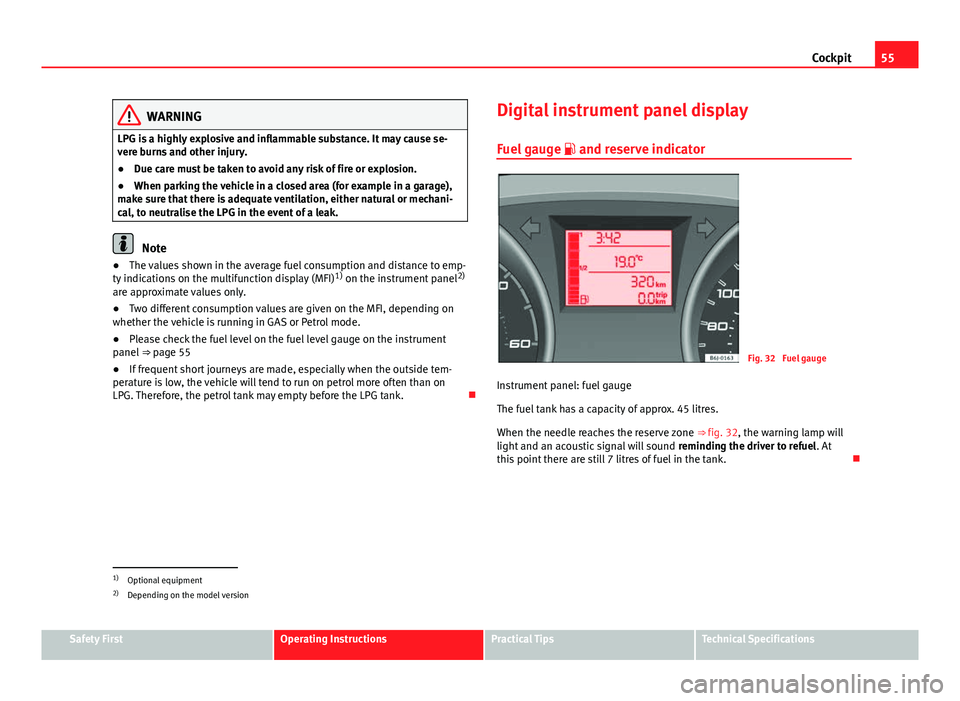
Fig. 32 Fuel gauge
Instrument panel: fuel gauge
The fuel tank has a capacity of approx. 45 litres.
When the needle reaches the reserve zone ⇒ fig. 32, the warning lamp will
light and an acoustic signal will sound reminding the driver to refuel. At
this point there are still 7 litres of fuel in the tank.
1)
Optional equipment
2) Depending on the model version
Safety FirstOperating InstructionsPractical TipsTechnical Specifications
Page 61 of 278
59
Cockpit
This may be deactivated by pressing the RESET
button. The speed may be
altered using the rocker switch B in steps of 5 km/h within 5 seconds of
the initial memory value.
WARNING
There could be black ice on the road surface even if the “snowflake sym-
bol” is not shown. For this reason you should not rely exclusively on this
display - Risk of accident!
Note
When the vehicle is stationary or travelling at very low speeds, the tempera-
ture displayed may be slightly higher than the actual outside temperature
as a result of the heat radiated from the engine.
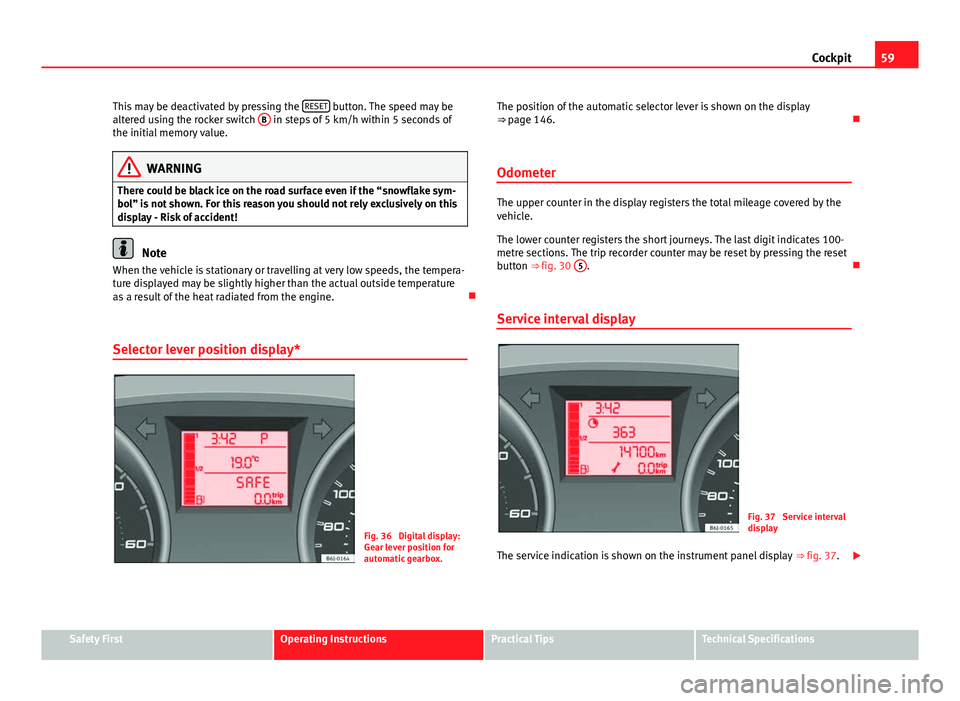
Selector lever position display*
Fig. 36 Digital display:
Gear lever position for
automatic gearbox. The position of the automatic selector lever is shown on the display
⇒ page 146.
Odometer
The upper counter in the display registers the total mileage covered by the
vehicle.
The lower counter registers the short journeys. The last digit indicates 100-
metre sections. The trip recorder counter may be reset by pressing the reset
button ⇒ fig. 30 5
.
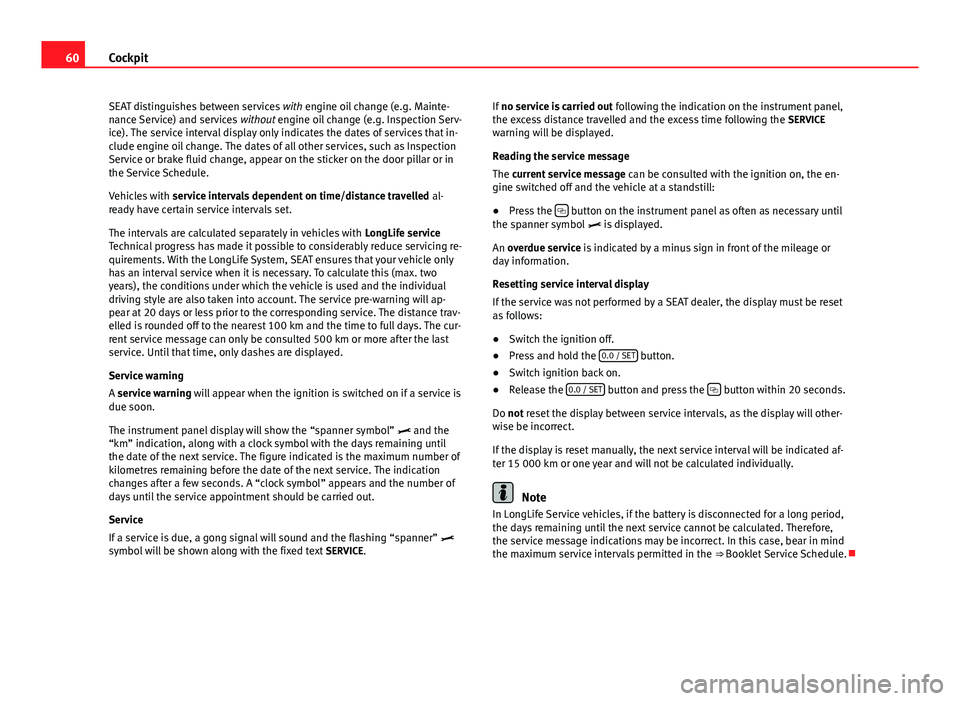
Service interval display
Fig. 37 Service interval
display
The service indication is shown on the instrument panel display ⇒ fig. 37.
Safety FirstOperating InstructionsPractical TipsTechnical Specifications
Page 62 of 278
60Cockpit
SEAT distinguishes between services with engine oil change (e.g. Mainte-
nance Service) and services without engine oil change (e.g. Inspection Serv-
ice). The service interval display only indicates the dates of services that in-
clude engine oil change. The dates of all other services, such as Inspection
Service or brake fluid change, appear on the sticker on the door pillar or in
the Service Schedule.
Vehicles with service intervals dependent on time/distance travelled al-
ready have certain service intervals set.
The intervals are calculated separately in vehicles with LongLife service
Technical progress has made it possible to considerably reduce servicing re-
quirements. With the LongLife System, SEAT ensures that your vehicle only
has an interval service when it is necessary. To calculate this (max. two
years), the conditions under which the vehicle is used and the individual
driving style are also taken into account. The service pre-warning will ap-
pear at 20 days or less prior to the corresponding service. The distance trav-
elled is rounded off to the nearest 100 km and the time to full days. The cur-
rent service message can only be consulted 500 km or more after the last
service. Until that time, only dashes are displayed.
Service warning
A service warning will appear when the ignition is switched on if a service is
due soon.
The instrument panel display will show the “spanner symbol” and the
“km” indication, along with a clock symbol with the days remaining until
the date of the next service. The figure indicated is the maximum number of
kilometres remaining before the date of the next service. The indication
changes after a few seconds. A “clock symbol” appears and the number of
days until the service appointment should be carried out.
Service
If a service is due, a gong signal will sound and the flashing “spanner”
symbol will be shown along with the fixed text SERVICE.If
no service is carried out following the indication on the instrument panel,
the excess distance travelled and the excess time following the SERVICE
warning will be displayed.
Reading the service message
The current service message can be consulted with the ignition on, the en-
gine switched off and the vehicle at a standstill:
● Press the
button on the instrument panel as often as necessary until
the spanner symbol is displayed.
An overdue service is indicated by a minus sign in front of the mileage or
day information.
Resetting service interval display
If the service was not performed by a SEAT dealer, the display must be reset
as follows:
● Switch the ignition off.
● Press and hold the 0.0 / SET
button.
● Switch ignition back on.
● Release the 0.0 / SET
button and press the button within 20 seconds.
Do not reset the display between service intervals, as the display will other-
wise be incorrect.
If the display is reset manually, the next service interval will be indicated af-
ter 15 000 km or one year and will not be calculated individually.
Note
In LongLife Service vehicles, if the battery is disconnected for a long period,
the days remaining until the next service cannot be calculated. Therefore,
the service message indications may be incorrect. In this case, bear in mind
the maximum service intervals permitted in the ⇒ Booklet Service Schedule.